

Development and validation of the short version of the Psychological General Well-Being Index (PGWB-S)
Open accessThe DOI matches its Crossref record; 27 of the 27 references it cites were found in a registry or an index.
Abstract
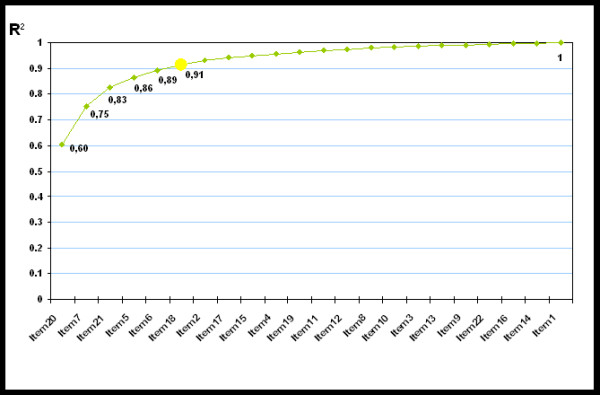
BACKGROUND: The PGWBI is a 22-item health-related Quality of Life (HRQoL) questionnaire developed in US which produces a self-perceived evaluation of psychological well-being expressed by a summary score. The PGWBI has been validated and used in many countries on large samples of the general population and on specific patient groups. Recently a study was carried out in Italy to reduce the number of items of the original questionnaire, yielding the creation of a shorter validated version of the questionnaire (PGWB-S). The purpose of the present paper is to describe the methods adopted and to report and discuss the relevance of results. METHODS: Data for this study were collected from 4 different population samples: two general population samples a student and a patient sample. On the basis of the results of the first (development) sample population, six relevant items were identified statistically from the original questionnaire and grouped to assemble a new summary scale. Following the newly created 6-item questionnaire was administered in three independent population samples. Descriptive statistics, correlation coefficients, univariate and multivariate regression analyses were used to compare the performance of the long and short questionnaire, within and between population samples and across relevant subgroups. A further independent sample extracted by an ongoing cancer clinical trial served as final validation step. RESULTS: Overall, the questionnaires were administered to 1443 subjects. Six items were selected by a step-wise approach to explain 90% of the variance of the summary measure of the original questionnaire. Response rates reached 100%, while missing items were not observed. University students (n = 400) showed the highest mean value of the summary measure (75.3); while the patient sample (n = 28) had the lowest score (71.5). The correlation coefficients between the summary measures and the single items according to the different studies were satisfactory, reaching the highest estimates in the student sample. The internal consistency showed high values of the Cronbach's alpha coefficient (range 0.80-0.92) for all three study samples, coming close to the value of the coefficient established for the original questionnaire (0.94). A cross-validation in an independent sample of 755 cancer patients confirmed the item selection procedure and amount of variance explained by the new shorter questionnaire (ranging from 90. 2 to 95.1 %, across age and sex strata). CONCLUSION: The newly identified PGWB-S showed good acceptability and validity for the use in various settings in Italy. The translation of the PGWB-S into different languages, and its use in other linguistic settings will add evidence about its cross-cultural validity.
Overview
The claims and statistics of this paper haven’t been checked yet.
Free: it reads the open-access text and checks the first 5 claims that cite a source we can check. Create a free account to check every claim.
Integrity signals
Registry
Cites
Statistics
Figures
Verification
Claims the paper makes
The claims and statistics of this paper haven’t been checked yet.
Free: it reads the open-access text and checks the first 5 claims that cite a source we can check. Create a free account to check every claim.
Claims other papers make about this one
Each is checked against this paper’s own text: does it say what the citing paper says it does?
The source backs part of the claim, not all of it — or backs it for a different population, condition or comparison.
In the citing paper
“We recruited 53 E-meter users who had previously passed a short screener (PG-WBI) [33].”
From Progressive Disclosure: When, Why, and How Do Users Want Algorithmic Transparency Information? (2020) · cites this paper as [33]
Experimental — accuracy not yet measured
Self-check
Percentages, sums and reported differences re-computed from the paper’s own numbers.
The self-check needs the paper’s full text.
Citations
Cites
(1992) · PubMed · Cited by 33,716
WARE, J. E., KOSINSKI, M., & KELLER, S. D. (1996) · Medical Care · doi:10.1097/00005650-199603000-00003 · Cited by 17,392 · cited 7×
“Kodraliu G, Mosconi P, Groth N, Carmosino GC, Donzelli A, Gianicolo E, Rossi C, Apolone G: Subjective health status assessment: evaluation of the Italian version of the SF-12 Health Survey.”
InfluentialMcHorney, C. A., Ware, J. E., Rachel Lu, J. F., & Sherbourne, C. D. (1994) · Medical Care · doi:10.1097/00005650-199401000-00004 · Cited by 4,458
Cross-Validation of Item Selection and Scoring for the SF-12 Health Survey in Nine Countries
Gandek, B., Ware, J. E., Aaronson, N. K., Apolone, G., Bjorner, J. B., Brazier, J. E., Bullinger, M., Kaasa, S., Leplege, A., Prieto, L., et al. (1998) · Journal of Clinical Epidemiology · doi:10.1016/s0895-4356(98)00109-7 · Cited by 2,907 · cited 6×
“Kodraliu G, Mosconi P, Groth N, Carmosino GC, Donzelli A, Gianicolo E, Rossi C, Apolone G: Subjective health status assessment: evaluation of the Italian version of the SF-12 Health Survey.”
InfluentialSelf-citationMeasuring Functioning and Well-Being: The Medical Outcomes Study Approach
Stewart, A., & Ware, J. (1992) · doi:10.7249/cb361 · Cited by 2,689 · cited 1×
“As emphasised in the literature [18,20-22], great care was taken to ensure and document the basic characteristics of the questionnaire in terms of acceptability, internal consistency (Cronbach's alpha coefficient), known-group validity and stability of results across samples and subgroups.”
Assessment of quality of life in clinical trials of cardiovascular therapies
Wenger, N. K., Mattson, M. E., Furberg, C. D., & Elinson, J. (1984) · The American Journal of Cardiology · doi:10.1016/s0002-9149(84)80232-5 · Cited by 982
(1984) · Medical Entomology and Zoology · Cited by 741
Methods for Testing Data Quality, Scaling Assumptions, and Reliability
Ware, J. E., & Gandek, B. (1998) · Journal of Clinical Epidemiology · doi:10.1016/s0895-4356(98)00085-7 · Cited by 618 · cited 1×
“As emphasised in the literature [18,20-22], great care was taken to ensure and document the basic characteristics of the questionnaire in terms of acceptability, internal consistency (Cronbach's alpha coefficient), known-group validity and stability of results across samples and subgroups.”
Dimenäs, E., Carlsson, G., Glise, H., Israelsson, B., & Wiklund, I. (1996) · Scandinavian Journal of Gastroenterology · doi:10.3109/00365529609095544 · Cited by 380
Assessment of Quality of Life in Clinical Trials of Cardiovascular Therapies
DMG (1985) · Thorax · doi:10.1136/thx.40.7.543 · Cited by 339
Wiklund, I., Karlberg, J., & Mattsson, L.-Å. (1993) · American Journal of Obstetrics and Gynecology · doi:10.1016/s0002-9378(12)90828-5 · Cited by 272
Outcome assessment in low back pain: how low can you go?
Mannion, A. F., Elfering, A., Staerkle, R., Junge, A., Grob, D., Semmer, N. K., Jacobshagen, N., Dvorak, J., & Boos, N. (2005) · European Spine Journal · doi:10.1007/s00586-005-0911-9 · Cited by 245
Kodraliu, P. M. (2001) · Journal of Epidemiology and Biostatistics · doi:10.1080/135952201317080715 · Cited by 209 · cited 8×
“Kodraliu G, Mosconi P, Groth N, Carmosino GC, Donzelli A, Gianicolo E, Rossi C, Apolone G: Subjective health status assessment: evaluation of the Italian version of the SF-12 Health Survey.”
InfluentialWiklund, I. E., Berg, G. E., Hammar, M. L., KARLBERG, J. P. E., Lindgren, R., & Sandin, K. (1992) · Maturitas · doi:10.1016/0378-5122(92)90117-m · Cited by 152 · cited 1×
“Background The PGWBI questionnaire is a validated Health Related Quality of Life (HRQoL) measure, widely used in clinical trials and epidemiological research to provide a general evaluation of self-perceived psychological health and well-being [1-10].”
Havelund, T., Lind, T., Wiklund, I., Glise, H., Hernqvist, H., Lauritsen, K., Lundell, L., Pedersen, S. A., Carlsson, R., Junghard, O., et al. (1999) · The American Journal of Gastroenterology · doi:10.1016/s0002-9270(99)00262-2 · Cited by 148
Evaluation of quality of life in clinical trials
Wiklund, I. E., & KARLBERG, J. P. E. (1991) · Controlled Clinical Trials · doi:10.1016/s0197-2456(05)80024-8 · Cited by 145 · cited 1×
“Background The PGWBI questionnaire is a validated Health Related Quality of Life (HRQoL) measure, widely used in clinical trials and epidemiological research to provide a general evaluation of self-perceived psychological health and well-being [1-10].”
Omvik, P., Thaulow, E., Herland, O. B., Eide, I., Midha, R., & Turner, R. R. (1993) · Journal of Hypertension · doi:10.1097/00004872-199301000-00015 · Cited by 92 · cited 1×
“Background The PGWBI questionnaire is a validated Health Related Quality of Life (HRQoL) measure, widely used in clinical trials and epidemiological research to provide a general evaluation of self-perceived psychological health and well-being [1-10].”
Follow-up of colorectal cancer patients after resection with curative intent—the GILDA trial
Grossmann, E. M., Johnson, F. E., Virgo, K. S., Longo, W. E., & Fossati, R. (2004) · Surgical Oncology · doi:10.1016/j.suronc.2004.08.005 · Cited by 90 · cited 1×
“Waiting for further independent validation of our exercise, in order to add information about the performance of the new questionnaire, we further tested the robustness of our findings by performing a cross-validation in an independent sample of 755 cases, extracted from an on-going clinical trial where the original (…”
Revicki, Crawley, Zodet, Levine, & Joelsson (1999) · Alimentary Pharmacology & Therapeutics · doi:10.1046/j.1365-2036.1999.00669.x · Cited by 87
Blomqvist, A., Lönroth, H., Dalenbäck, J., Ruth, M., Wiklund, I. E., & Lundell, L. R. (1996) · Scandinavian Journal of Gastroenterology · doi:10.3109/00365529609036886 · Cited by 72
Methods of assessing the impact of climacteric complaints on quality of life
Wiklund, I. E. (1998) · Maturitas · doi:10.1016/s0378-5122(98)00027-9 · Cited by 70
The effect of testosterone on health-related quality of life in elderly males - a pilot study
Reddy, P., White, C. M., Dunn, A. B., Moyna, N. M., & Thompson, P. D. (2000) · Journal of Clinical Pharmacy and Therapeutics · doi:10.1046/j.1365-2710.2000.00309.x · Cited by 57 · cited 1×
“Background The PGWBI questionnaire is a validated Health Related Quality of Life (HRQoL) measure, widely used in clinical trials and epidemiological research to provide a general evaluation of self-perceived psychological health and well-being [1-10].”
Women with Turner syndrome: psychological well-being, self-rated health and social life
Boman, U. W., Bryman, I., Hailing, K., & Möller, A. (2001) · Journal of Psychosomatic Obstetrics & Gynecology · doi:10.3109/01674820109049961 · Cited by 46 · cited 1×
“Background The PGWBI questionnaire is a validated Health Related Quality of Life (HRQoL) measure, widely used in clinical trials and epidemiological research to provide a general evaluation of self-perceived psychological health and well-being [1-10].”
Psychometric validation of two Italian quality of life questionnaires in menopausal women
Wool, C., Cerutti, R., Marquis, P., Cialdella, P., & Hervié, C. (2000) · Maturitas · doi:10.1016/s0378-5122(00)00093-1 · Cited by 29
Self-citationAziz, A., Bergquist, C., Brännström, M., Nordholm, L. A., & Silfverstolpe, G. (2005) · Acta Obstetricia Et Gynecologica Scandinavica · doi:10.1111/j.0001-6349.2005.00658.x · Cited by 27
Walle, P. O., Westergren, G., Dimenäs, E., Olofsson, B., & Albrektsen, T. (1994) · The Journal of Clinical Pharmacology · doi:10.1002/j.1552-4604.1994.tb02034.x · Cited by 19 · cited 1×
“Background The PGWBI questionnaire is a validated Health Related Quality of Life (HRQoL) measure, widely used in clinical trials and epidemiological research to provide a general evaluation of self-perceived psychological health and well-being [1-10].”
Gambacciani, M., & Grossi, E. (1999) · Menopause The Journal of The North American Menopause Society · doi:10.1097/00042192-199906040-00129 · Cited by 3 · cited 3×
“The results of this study were published of the Italian user manual and were recognized as reference data for the selfperceived health in the Italian general population [13-15].”
Self-citation
Research works printed but not linked: 5
- Hunt SM McKenna S A British adaptation of the general Well-being Index: a new tool for clinical research British J Med Economics 1992 2 49 60
- Bullinger M Heinisch M Ludwig M Geier S Skalen zur Erfassung des Wohlbefindens. Psychometrische Ueberpruefung des Profile of Mood States (POMS) und des Psychological General Well-Being Index (PGWBI) Z Differentielle Diagn Psychol 1990 11 53 61
- Rasmussen NA Norholm V Bech P The internal and external validity of the Psychological General Well-Being Schedule (PGWB) Quality of Life News Letter 1999 22 7
- Grossi E Mosconi P Groth N Niero M Apolone G IL Questionario Psychological General Well Being. Questionario per la valutazione dello stato generale di benessere psicologico. Versione Italiana. Istituto di Ricerche Farmacologiche "Mario Negri", Milan 2002
- Apolone G Mosconi P Quattrociochi L Gianicolo EAL Groth N Ware JE Jr Questionario sullo stato di salute SF-12 Versione Italiana Guerini e Associati Editore, Milan 2001
Cited by
Linton, M.-J., Dieppe, P., & Medina-Lara, A. (2016) · BMJ Open · doi:10.1136/bmjopen-2015-010641 · Cited by 638
The Empirical Evidence for Telemedicine Interventions in Mental Disorders
Bashshur, R. L., Shannon, G. W., Bashshur, N., & Yellowlees, P. M. (2016) · Telemedicine and e-Health · doi:10.1089/tmj.2015.0206 · Cited by 430
Cusinato, M., Iannattone, S., Spoto, A., Poli, M., Moretti, C., Gatta, M., & Miscioscia, M. (2020) · International Journal of Environmental Research and Public Health · doi:10.3390/ijerph17228297 · Cited by 336
NARUSHIMA, M., LIU, J., & DIESTELKAMP, N. (2018) · Ageing and Society · doi:10.1017/s0144686x16001136 · Cited by 232
Amsterdam, J. D., Li, Y., Soeller, I., Rockwell, K., Mao, J. J., & Shults, J. (2009) · Journal of Clinical Psychopharmacology · doi:10.1097/jcp.0b013e3181ac935c · Cited by 218
Metadata
- Authors
- Grossi, E., Groth, N., Mosconi, P., Cerutti, R., Pace, F., Compare, A., & Apolone, G.
- Affiliations
- Bracco (Italy) (IT)
- Novartis (Italy) (IT)
- Mario Negri Institute for Pharmacological Research (IT)
- Università Cattolica del Sacro Cuore (IT)
- Corresponding author
- Grossi, Enzo
- Venue
- Health and Quality of Life Outcomes
- Published
- 2006-11-14
- Volume
- 4
- Issue
- 1
- Pages
- 88-88
- ISSN
- 1477-7525 (ISSN-L)
- PMC
- PMC1647268
- OpenAlex
- W2135639115
- Cited by
- 291
- References
- 27
- Citations by year
- 2026: 20 · 2025: 29 · 2024: 25 · 2023: 25 · 2022: 24 · 2021: 20 · 2020: 26 · 2019: 13 · 2018: 15 · 2017: 8 · 2016: 14 · 2015: 16 · 2014: 7 · 2013: 16 · 2012: 9
- FWCI
- 2.42
- Type
- journal article
- Language
- en
- Open access
- gold
- doi.org
- Licence
- cc-by
- creativecommons.org/licenses/by/2.0 (tdm)
- Locations
- Health and Quality of Life Outcomes (publishedVersion, cc-by)
- PubMed (publishedVersion)
- Aisberg (University of Bergamo) (submittedVersion, other-oa)
- DOAJ (DOAJ: Directory of Open Access Journals) (submittedVersion)
- Topics
- Social Sciences › Decision Sciences › Management Science and Operations Research › Psychometric Methodologies and Testing
- Social Sciences › Psychology › Social Psychology › Psychological Well-being and Life Satisfaction
- Social Sciences › Economics, Econometrics and Finance › Economics and Econometrics › Health Systems, Economic Evaluations, Quality of Life
- Keywords
- Psychological General Well-Being Index, psychological well-being, health-related quality of life, questionnaire validation, item selection, cancer patients, university students, internal consistency, cross-cultural adaptation, Italian adaptation, psychometric properties, patient-reported outcomes, translation and back-translation, cross-cultural invariance
- MeSH terms
- Adolescent, Adult, Aged, Attitude to Health, Family Practice, Female, Humans, Italy, Male, Mental Health, Middle Aged, Psychometrics, Quality of Life, Surveys and Questionnaires, Self Concept, Stress, Psychological, Discriminant Analysis
About these checks
Registry, retraction, Cites and statistics results are computed, not judged, with one exception: a printed reference that no index lists is read once by a model before it counts as a citation error. Claims are extracted by a model and kept only when their quote appears verbatim in the text; each cited source is then checked, with a model’s help, for whether it says what the claim relies on. Those verdicts can be wrong — read the claim’s quote and the cited source before relying on one.
Statistics and arithmetic are recomputed, not judged.
Confidence bands are shown only for fields calibrated on our annotated test set. None is calibrated yet, so no band is shown.
What counts as a claim ›How we measure confidence ›How we check this ›
Are you an author, or do you see a problem with this page? Request a review
Data sources
Bibliographic data: Semantic Scholar, OpenAlex, Crossref.
Contains information from the Semantic Scholar Academic Graph Datasets, made available under the ODC Attribution License (ODC-BY 1.0).
Semantic Scholar’s data is described in: Kinney, R., et al. (2023). The Semantic Scholar Open Data Platform. arXiv:2301.10140.
