

Association of hypoglycemic symptoms with patients’ rating of their health-related quality of life state: A cross sectional study
Open accessThe DOI matches its Crossref record; 25 of the 25 references it cites were found in a registry or an index.
Abstract
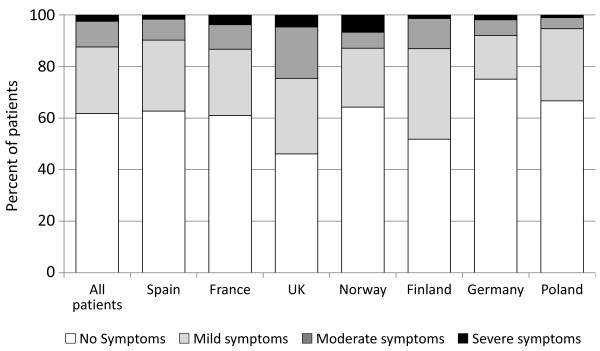
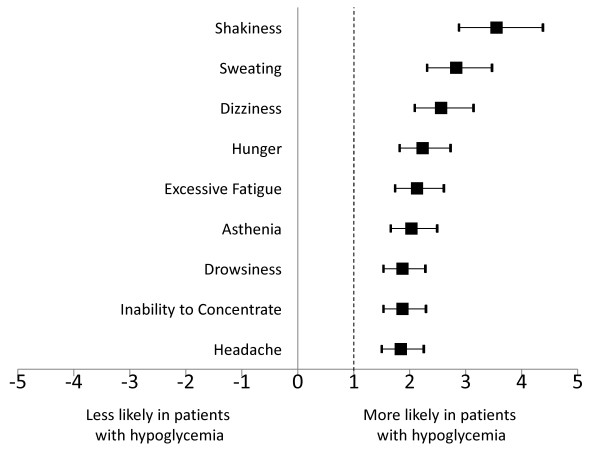
Background: To evaluate the association between patient-reported hypoglycemic symptoms with ratings of their health-related quality of life state and patient-reported adverse events in patients with type 2 diabetes mellitus (T2DM). Methods: This observational, multicenter, cross sectional study was based on a sample of patients with T2DM from seven European countries who added sulfonylurea or thiazolidinedione to metformin monotherapy between January 2001 and January 2006. Included patients were required to have at least one hemoglobin A 1c (HbA 1c) measurement in the 12 months before enrollment and to not be receiving insulin. Demographic and clinical data from medical records were collected using case report forms. Questionnaires measured patient-reported hypoglycemic symptoms, health-related quality of life (EuroQol visual analogue scale, EQ-5D VAS), and treatment-related adverse events. Results: A total of 1,709 patients were included in the study. Mean patient age was 63 years, 45% were female, mean HbA 1c was 7.06%, and 28% were at HbA 1c goal (HbA 1c < 6.5%). Hypoglycemic symptoms during the 12 months before enrollment were reported by 38% of patients; among whom 68% reported their most severe symptoms were mild, 27% moderate, and 5% severe. Adjusted linear regression analyses revealed that patients reporting hypoglycemic symptoms had significantly lower EQ-5D VAS scores indicating worse patient-reported quality of life (mean difference -4.33, p < 0.0001). Relative to those not reporting symptoms, the adjusted decrement to quality of life increased with greater hypoglycemic symptom severity (mild: -2.68, p = 0.0039; moderate: -6.42, p < 0.0001; severe: -16.09, p < 0.0001). Patients with hypoglycemia reported significantly higher rates of shakiness, sweating, excessive fatigue, drowsiness, inability to concentrate, dizziness, hunger, asthenia, and headache (p < 0.0001 for each comparison). Conclusions: Hypoglycemic symptoms and symptom severity have an adverse effect on patients' rating of their health related quality of life state. Hypoglycemic symptoms are correlated with treatment-related adverse effects. Minimizing the risk and severity of hypoglycemia may improve patients' quality of life and clinical outcomes. Results are subject to limitations associated with observational studies including the potential biases due to unobserved patient heterogeneity and the use of a convenience sample of patients.
Overview
The claims and statistics of this paper haven’t been checked yet.
Free: it reads the open-access text and checks the first 5 claims that cite a source we can check. Create a free account to check every claim.
Integrity signals
Registry
Cites
Statistics
Figures
Verification
Claims the paper makes
The claims and statistics of this paper haven’t been checked yet.
Free: it reads the open-access text and checks the first 5 claims that cite a source we can check. Create a free account to check every claim.
Claims other papers make about this one
Each is checked against this paper’s own text: does it say what the citing paper says it does?
The source backs part of the claim, not all of it — or backs it for a different population, condition or comparison.
In the citing paper
“Frequency and severity of hypoglycemia negatively impact on quality of life (1) and promote fear of future hypoglycemia (2,3).”
From Hypoglycemia (2018) · cites this paper as [1]
Experimental — accuracy not yet measuredThe source backs part of the claim, not all of it — or backs it for a different population, condition or comparison.
In the citing paper
“The frequency and severity of hypoglycemia can negatively impact quality of life [4,5] in individuals with diabetes and promote fear of future episodes of hypoglycemia [6,7].”
From Hypoglycemia in Adults (2023) · cites this paper as [4]
Experimental — accuracy not yet measured
Self-check
Percentages, sums and reported differences re-computed from the paper’s own numbers.
The self-check needs the paper’s full text.
Citations
Cites
EuroQol: a new facility for the measurement of health-related quality of life
(1990) · Health Policy · doi:10.1016/0168-8510(90)90421-9 · Cited by 15,736
Diagnosis and Classification of Diabetes Mellitus
American Diabetes Association (2011) · Diabetes Care · doi:10.2337/dc11-s062 · Cited by 13,988
Turner, R. C., Fox, C., Matthews, McElroy, H. H., Cull, C. A., Holman, R. R., Neil, P., Hadden, D. R., Wright, D., Manley, E., et al. (1998) · The Lancet · Cited by 8,419
EQ-SD: a measure of health status from the EuroQol Group
Rabin, R., & Charro, F. D. (2001) · Annals of Medicine · doi:10.3109/07853890109002087 · Cited by 5,613
Gupta, A., & Uribarri, J. (2016) · Hormone Research in Paediatrics · doi:10.1159/000444053 · Cited by 4,006
Glycemic durability of rosiglitazone, metformin, or glyburide monotherapy
Kahn, S. E., Haffner, S. M., Heise, M. A., Herman, W. H., Holman, R. R., Jones, N. P., Kravitz, B. G., Lachin, J. M., O'Neill, M. C., Zinman, B., et al. (2006) · New England Journal of Medicine · doi:10.1056/nejmoa066224 · Cited by 2,962
Bolen, S., Feldman, L., Vassy, J., Wilson, L., Yeh, H.-C., Marinopoulos, S., Wiley, C., Selvin, E., Wilson, R., Bass, E. B., et al. (2007) · Annals of Internal Medicine · doi:10.7326/0003-4819-147-6-200709180-00178 · Cited by 823
The Measurement and Valuation of Health Status Using EQ-5D: A European Perspective
(2003) · Springer eBooks · doi:10.1007/978-94-017-0233-1 · Cited by 638
Diagnosis and Classification of Diabetes Mellitus
American Diabetes Association (2007) · Diabetes Care · doi:10.2337/dc07-s042 · Cited by 576
Hypoglycemia in Type 2 Diabetes
Zammitt, N. N., & Frier, B. M. (2005) · Diabetes Care · doi:10.2337/diacare.28.12.2948 · Cited by 435 · cited 2×
“Although improved glycemic control reduces the risks of macrovascular and microvascular complications, treatment aimed toward increasingly stringent, consensus-guided glycemic targets may be associated with hypoglycemia [ 1-3 ].”
BackgroundBodmer, M., Meier, C., Krähenbühl, S., Jick, S. S., & Meier, C. R. (2008) · Diabetes Care · doi:10.2337/dc08-1171 · Cited by 426
Diverse causes of hypoglycemia-associated autonomic failure in diabetes.
Cryer, P. E. (2004) · New England Journal of Medicine · doi:10.1056/nejmra031354 · Cited by 411 · cited 1×
“Although improved glycemic control reduces the risks of macrovascular and microvascular complications, treatment aimed toward increasingly stringent, consensus-guided glycemic targets may be associated with hypoglycemia [1-3].”
BackgroundHealth-related quality of life in diabetes: The associations of complications with EQ-5D scores
Solli, O., Stavem, K., & Kristiansen, I. (2010) · Health and Quality of Life Outcomes · doi:10.1186/1477-7525-8-18 · Cited by 373
Frequency and Morbidity of Severe Hypoglycaemia in Insulin‐treated Diabetic Patients
MacLeod, K. M., Hepburn, D. A., & Frier, B. M. (1993) · Diabetic Medicine · doi:10.1111/j.1464-5491.1993.tb00051.x · Cited by 251
Brooks, R. G., Rabin, R., & de Charro, F. (2003) · Cited by 238
Impact of hypoglycaemia on quality of life and productivity in type 1 and type 2 diabetes
Davis, R. E., Morrissey, M., Peters, J. R., Wittrup-Jensen, K., Kennedy-Martin, T., & Currie, C. J. (2005) · Current Medical Research and Opinion · doi:10.1185/030079905x61929 · Cited by 218
Guisasola, F. Á., Povedano, S. T., Krishnarajah, G., Lyu, R., Mavros, P., & Yin, D. (2008) · Diabetes, Obesity and Metabolism · doi:10.1111/j.1463-1326.2008.00882.x · Cited by 192
Self-citationThe economic and quality of life impact of hypoglycemia
Lundkvist, J., Berne, C., Bolinder, B., & Jönsson, L. (2005) · The European Journal of Health Economics · doi:10.1007/s10198-005-0276-3 · Cited by 165
Hay, L. C., Wilmshurst, E. G., & Fulcher, G. (2003) · Diabetes Technology & Therapeutics · doi:10.1089/152091503763816427 · Cited by 143
Turner, R. C., Mann, J. I., Iceton, G., Oakes, S., Smith, A., Moore, J., Hockaday, T. D. R., Holman, R. R., Stowers, J., Stowers, M., et al. (1983) · Diabetologia · doi:10.1007/bf00257337 · Cited by 139
Stahl, M., & Berger, W. (1999) · Diabetic Medicine · doi:10.1046/j.1464-5491.1999.00110.x · Cited by 125
Slow response to loss of glycemic control in type 2 diabetes mellitus.
Brown, J. B., & Nichols, G. A. (2003) · PubMed · Cited by 112
Glycemia and the Quality of Well-Being in Patients with Diabetes
Tabaei, B. P., Shill-Novak, J., Brändle, M., Burke, R., Kaplan, R. M., & Herman, W. H. (2004) · Quality of Life Research · doi:10.1023/b:qure.0000031336.81580.52 · Cited by 37
Hypoglycemia and Insulin Analogues:
Heinemann, L. (1999) · Journal of Diabetes and its Complications · doi:10.1016/s1056-8727(99)00031-8 · Cited by 34
Cited by
Bolinder, J., Antuna, R., Geelhoed-Duijvestijn, P., Kröger, J., & Weitgasser, R. (2016) · The Lancet · doi:10.1016/s0140-6736(16)31535-5 · Cited by 893
Haak, T., Hanaire, H., Ajjan, R., Hermanns, N., Riveline, J.-P., & Rayman, G. (2017) · Diabetes Therapy · doi:10.1007/s13300-016-0223-6 · Cited by 623
“However, intensification of insulin therapy increases the risk of hypoglycemia [4] which is associated with adverse clinical outcome [5], impacts on quality of life [6], and increases treatment costs secondary to hospital admissions, ambulance call-outs, and clinic attendance [7].”
BackgroundSalivary secretion in health and disease
Pedersen, A. M. L., Sørensen, C. E., Proctor, G. B., Carpenter, G. H., & Ekström, J. (2018) · Journal of Oral Rehabilitation · doi:10.1111/joor.12664 · Cited by 571
Hypoglycemia: The neglected complication
Kalra, S., Mukherjee, J. J., Venkataraman, S., Bantwal, G., Shaikh, S., Saboo, B., Das, A. K., & Ramachandran, A. (2013) · Indian Journal of Endocrinology and Metabolism · doi:10.4103/2230-8210.117219 · Cited by 255
“5) and 2-fold increased risks of excessive fatigue, drowsiness, inability to concentrate, dizziness, hunger, asthenia and headache.[80] Using Insulin Treatment Satisfaction Questionnaire in an insulin-treated population, Brod and colleagues found no signifi cant relationship between the type of minor hypoglycemic even…”
BackgroundInfluentialHypoglycemia: An overview of fear of hypoglycemia, quality-of-life, and impact on costs
Fidler, C., Elmelund Christensen, T., & Gillard, S. (2011) · Journal of Medical Economics · doi:10.3111/13696998.2011.610852 · Cited by 244
Metadata
- Authors
- Alvarez-Guisasola, F., Yin, D. D., Nocea, G., Qiu, Y., & Mavros, P.
- Affiliations
- Merck & Co., Inc., Rahway, NJ, USA (United States) (US)
- MSD (Spain) (ES)
- Corresponding author
- Mavros, Panagiotis
- Venue
- Health and Quality of Life Outcomes
- Published
- 2010-08-19
- Volume
- 8
- Issue
- 1
- Pages
- 86-86
- ISSN
- 1477-7525 (ISSN-L)
- PMC
- PMC2936440
- OpenAlex
- W2147007805
- Cited by
- 78
- References
- 25
- Citations by year
- 2026: 2 · 2024: 1 · 2023: 4 · 2021: 1 · 2020: 4 · 2019: 4 · 2018: 12 · 2017: 4 · 2016: 6 · 2015: 10 · 2014: 9 · 2013: 11 · 2012: 8
- FWCI
- 4.82
- Type
- journal article
- Language
- en
- Open access
- gold
- doi.org
- Licence
- cc-by
- Locations
- Health and Quality of Life Outcomes (publishedVersion, cc-by)
- PubMed Central (publishedVersion, cc-by)
- PubMed (publishedVersion)
- DOAJ (DOAJ: Directory of Open Access Journals) (submittedVersion, cc-by-sa)
- Topics
- Health Sciences › Medicine › Endocrinology, Diabetes and Metabolism › Diabetes Treatment and Management
- Health Sciences › Medicine › Endocrinology, Diabetes and Metabolism › Diabetes Management and Research
- Health Sciences › Medicine › Endocrinology, Diabetes and Metabolism › Diabetes Management and Education
- Keywords
- hypoglycemia, hypoglycemic symptoms, health-related quality of life, type 2 diabetes, sulfonylureas, thiazolidinediones, metformin, treatment-related adverse events, symptom severity, patient-reported outcomes, EQ-5D, glycemic control, HbA1c, adverse drug reactions, patient satisfaction
- MeSH terms
- Activities of Daily Living, Aged, Cross-Sectional Studies, Diabetes Mellitus, Type 2, Europe, Female, Health Status Indicators, Humans, Hypoglycemia, Life Style, Male, Middle Aged, Quality of Life, Surveys and Questionnaires, Linear Models, Sickness Impact Profile, Observation
About these checks
Registry, retraction, Cites and statistics results are computed, not judged, with one exception: a printed reference that no index lists is read once by a model before it counts as a citation error. Claims are extracted by a model and kept only when their quote appears verbatim in the text; each cited source is then checked, with a model’s help, for whether it says what the claim relies on. Those verdicts can be wrong — read the claim’s quote and the cited source before relying on one.
Statistics and arithmetic are recomputed, not judged.
Confidence bands are shown only for fields calibrated on our annotated test set. None is calibrated yet, so no band is shown.
What counts as a claim ›How we measure confidence ›How we check this ›
Are you an author, or do you see a problem with this page? Request a review
Data sources
Bibliographic data: Semantic Scholar, OpenAlex, Crossref.
Contains information from the Semantic Scholar Academic Graph Datasets, made available under the ODC Attribution License (ODC-BY 1.0).
Semantic Scholar’s data is described in: Kinney, R., et al. (2023). The Semantic Scholar Open Data Platform. arXiv:2301.10140.
