

The DOI matches its Crossref record; 30 of the 30 references it cites were found in a registry or an index.
The role and molecular mechanism of D-aspartic acid in the release and synthesis of LH and testosterone in humans and rats
Open accessAbstract
Background: D-aspartic acid is an amino acid present in neuroendocrine tissues of invertebrates and vertebrates, including rats and humans. Here we investigated the effect of this amino acid on the release of LH and testosterone in the serum of humans and rats. Furthermore, we investigated the role of D-aspartate in the synthesis of LH and testosterone in the pituitary and testes of rats, and the molecular mechanisms by which this amino acid triggers its action. Methods: For humans: A group of 23 men were given a daily dose of D-aspartate (DADAVIT®) for 12 days, whereas another group of 20 men were given a placebo. For rats: A group of 10 rats drank a solution of either 20 mM D-aspartate or a placebo for 12 days. Then LH and testosterone accumulation was determined in the serum and D-aspartate accumulation in tissues. The effects of D-aspartate on the synthesis of LH and testosterone were gauged on isolated rat pituitary and Leydig cells. Tissues were incubated with D-aspartate, and then the concentration (synthesis) of LH and cGMP in the pituitary and of testosterone and cAMP in the Leydig cells was determined. Results: In humans and rats, sodium D-aspartate induces an enhancement of LH and testosterone release. In the rat pituitary, sodium D-aspartate increases the release and synthesis of LH through the involvement of cGMP as a second messenger, whereas in rat testis Leydig cells, it increases the synthesis and release of testosterone and cAMP is implicated as second messenger. In the pituitary and in testes D-Asp is synthesized by a D-aspartate racemase which convert L-Asp into D-Asp. The pituitary and testes possesses a high capacity to trapping circulating D-Asp from hexogen or endogen sources. Conclusion: D-aspartic acid is a physiological amino acid occurring principally in the pituitary gland and testes and has a role in the regulation of the release and synthesis of LH and testosterone in humans and rats.
Overview
The claims and statistics of this paper haven’t been checked yet.
Run the check — free, no account needed. It reads the open-access text and checks the sources it cites.
Integrity signals
Registry
Cites
Statistics
Figures
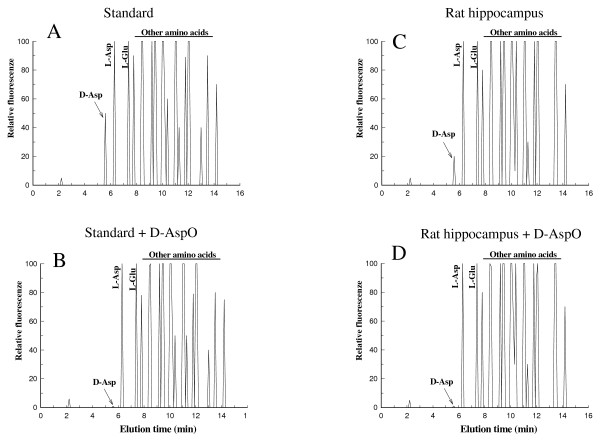
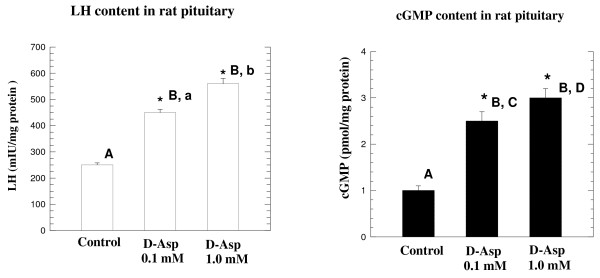
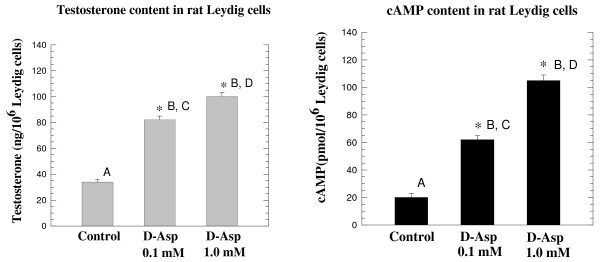
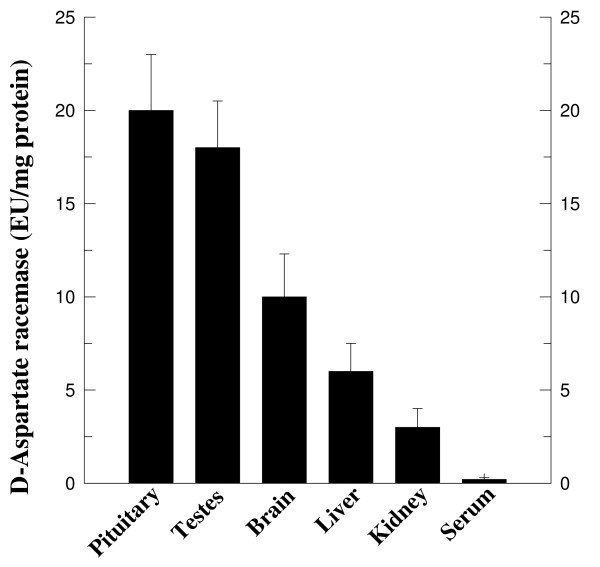
Verification
Claims the paper makes
The claims and statistics of this paper haven’t been checked yet.
Run the check — free, no account needed. It reads the open-access text and checks the sources it cites.
Claims other papers make about this one
Each is checked against this paper’s own text: does it say what the citing paper says it does?
The cited source doesn’t support the claim as written.
In the citing paper
“Overall, from our included studies on D-Aspartic acid and creatine, no clear benefit towards elevating testosterone was established.[77][78][79][80]”
From A systematic appraisal of emerging alternative therapies in men’s health and wellness (2025) · cites this paper as [77]
Checked by a reasoning model — may be wrong.
Experimental — accuracy not yet measured
Self-check
Percentages, sums and reported differences re-computed from the paper’s own numbers.
The self-check needs the paper’s full text.
Citations
Cites
Leydig Cells: Endocrine, Paracrine, and Autocrine Regulation
Saez, J. M. (1994) · Endocrine Reviews · doi:10.1210/edrv-15-5-574 · Cited by 637
Metabolic Control and Disease.
(1980) · Annals of Internal Medicine · doi:10.7326/0003-4819-92-6-887_2 · Cited by 541
d-Aspartic acid: An endogenous amino acid with an important neuroendocrine role
D’Aniello, A. (2006) · Brain Research Reviews · doi:10.1016/j.brainresrev.2006.08.005 · Cited by 265
Self-citationHashimoto, A., Kumashiro, S., Nishikawa, T., Oka, T., Takahashi, K., Mito, T., Takashima, S., Doi, N., Mizutani, Y., Yamazaki, T., et al. (1993) · Journal of Neurochemistry · doi:10.1111/j.1471-4159.1993.tb03575.x · Cited by 255
D‧Aniello, A., Di Fiore, M. M., Fisher, G. H., Milone, A., Seleni, A., D'Aniello, S., Perna, A. F., & Ingrosso, D. (2000) · The FASEB Journal · doi:10.1096/fasebj.14.5.699 · Cited by 227
Self-citationd-Aspartate disposition in neuronal and endocrine tissues: ontogeny, biosynthesis and release
Wolosker, H., D’Aniello, A., & Snyder, S. H. (2000) · Neuroscience · doi:10.1016/s0306-4522(00)00321-3 · Cited by 190
Self-citationInvolvement of D-Aspartic acid in the synthesis of testosterone in rat testes
D'Aniello, A., Cosmo, A. D., Cristo, C. D., Annunziato, L., Petrucelli, L., & Fisher, G. (1996) · Life Sciences · doi:10.1016/0024-3205(96)00266-4 · Cited by 189
Self-citationd ‐Aspartate stimulation of testosterone synthesis in rat Leydig cells
Nagata, Y., Homma, H., Lee, J.-A., & Imai, K. (1999) · FEBS Letters · doi:10.1016/s0014-5793(99)00045-9 · Cited by 185
Developmental changes in free D-aspartic acid in the chicken embryo and in the neonatal rat
Neidle, A., & Dunlop, D. S. (1990) · Life Sciences · doi:10.1016/0024-3205(90)90424-p · Cited by 166
IDENTIFICATION OF D‐ASPARTIC ACID IN THE BRAIN OF OCTOPUS VULGARIS LAM
D’Aniello, A., & Giuditta, A. (1977) · Journal of Neurochemistry · doi:10.1111/j.1471-4159.1977.tb06508.x · Cited by 125
Self-citation
Cited by
Sorted by citations
Items 101–122 of 122
Dietary D-Amino Acids as Context-Dependent Contronymic Molecules in Health and Oxidative Stress
Yamasaki, H., Mizumoto, K. B., Naomasa, R. F., & Cohen, M. F. (2026) · Nutraceuticals · doi:10.3390/nutraceuticals6010015 · Cited by 2
Din, S. F. G., El-Nashaar, A., Elkhiat, Y., Hussein, T. M., Salam, M. A. A. E., Alam, A., Ramzy, D., Moatamed, I., Zeidan, A., Elahwany, A., et al. (2025) · Archivio Italiano di Urologia e Andrologia · doi:10.4081/aiua.2025.13554 · Cited by 2
Narzary, H., & Basumatary, S. (2019) · Current Biotechnology · doi:10.2174/2211550108666190614155321 · Cited by 2
A systematic appraisal of emerging alternative therapies in men’s health and wellness
Qaoud, Y., Morcos, M., Macdonald, M., Shoeib, A., Qureshi, Y., Mak, M., Ross, A., Vigil, H., & Witherspoon, L. (2025) · Canadian Urological Association Journal · doi:10.5489/cuaj.9368 · Cited by 1
Testosterone Booster Recommendation Report
LeBaron, T. W. (2011) · Cited by 1
Ayuba, S. A., Bashar, F., Yusuf, A., Onu, A., Muhammad, A. B., Saidu, Y., Bilbis, L. S., & Abba, A. Y. (2020) · Annals of Basic and Medical Sciences · doi:10.51658/abms.202011.4 · Cited by 1
Exploring the nutritional factors and health benefits of artisanal alcoholic rice beverages
Das, S., & Khan, M. R. (2023) · International Journal of Science and Research Archive · doi:10.30574/ijsra.2023.8.2.0236 · Cited by 1
Sarcopenia and aspartic acid magnesium
Yamada, S., Kizaki, E., Ozeki, A., Nakagawa, M., & Fujita, H. (2015) · The Journal of Physical Fitness and Sports Medicine · doi:10.7600/jpfsm.4.287 · Cited by 1
THE EFFECT OF D-ASPARTIC ACID ON SPERM QUALITY OF BROILER BREEDER ROOSTERS
Ansari, M., Zhandi, M., Hamid, K., Zaghari, M., & Sadeghi, M. (2016) · Cited by 1
D-AMINO ACIDS AND THEIR OXIDASE IN FARM ANIMALS — THE ROLE AND OPPORTUNITIES
Галочкина, В. П., Agafonova, A. V., & Анатольевич, Г. В. (2017) · Sel skokhozyaistvennaya Biologiya · doi:10.15389/agrobiology.2017.4.635eng · Cited by 1
Functional Properties of Camel Milk
Alhaj, O. A. (2016) · Advances in environmental engineering and green technologies book series · doi:10.4018/978-1-5225-0591-4.ch007
Sexual Dysfunctions and Nutraceutical Therapy: An Examination of Human Research
Bruno, G. (2015) · CRC Press eBooks · doi:10.1201/b19308-47
D-Aspartic Acid As a Nutritional Aid To Increase Serum Testosterone
Rodgers, L. J. (2014)
Organic Synthesis with Isomerases
Cheng, C. (2022) · Wiley eBooks · doi:10.1002/9781118995167.ch6
(2019) · Elsevier eBooks · doi:10.1016/b978-0-12-812212-9.16001-4
Functional Properties of Camel Milk
Alhaj, O. A. (2018) · IGI Global eBooks · doi:10.4018/978-1-5225-5207-9.ch020
Lak, M., Goudarzi, K., & Shahrbaf, M. A. (2022) · Asian Journal of Sports Medicine · doi:10.5812/asjsm-120161
Akomolafe, S. F. (2022) · Tropical Journal of Natural Product Research · doi:10.26538/tjnpr/v6i5.21
Sciarra, F., Nardi, S., & Pacchiarotti, A. (2025) · Journal of Biosciences and Medicines · doi:10.4236/jbm.2025.1310021
D-Aspartate-Induced Fructose Elevation and Its Impact on Sperm Motility: A Systematic Review
Purushothaman, R. P. R., Lokesh, K. L. K., Paul, P. K. P. P. K., Kumari, J. V., & ganeshan, S. (2025) · International Journal of Pharmaceutical Research and Applications · doi:10.35629/4494-1005165176
Pati, S. S., Choudhary, N. L., Kumar, U., Verma, A., Jain, S., & Kumar, A. (2026) · Current Pharmaceutical Design · doi:10.2174/0113816128467570260622104030
Metadata
- Authors
- Topo, E., Soricelli, A., D'Aniello, A., Ronsini, S., & D'Aniello, G.
- Affiliations
- Stazione Zoologica Anton Dohrn (IT)
- Parthenope University of Naples (IT)
- ORCID
- Soricelli, Andrea
- Venue
- Reproductive Biology and Endocrinology
- Published
- 2009-10-27
- Volume
- 7
- Issue
- 1
- Pages
- 120-120
- ISSN
- 1477-7827 (ISSN-L)
- PMC
- PMC2774316
- OpenAlex
- W2135320785
- Cited by
- 125
- References
- 30
- Citations by year
- 2026: 2 · 2025: 8 · 2024: 7 · 2023: 11 · 2022: 10 · 2021: 5 · 2020: 11 · 2019: 10 · 2018: 6 · 2017: 12 · 2016: 10 · 2015: 8 · 2014: 11 · 2013: 3 · 2012: 3
- FWCI
- 3.94
- Type
- journal article
- Language
- en
- Open access
- gold
- doi.org
- Licence
- cc-by
- Locations
- Reproductive Biology and Endocrinology (publishedVersion, cc-by)
- PubMed Central (publishedVersion, cc-by)
- PubMed (publishedVersion)
- DOAJ (DOAJ: Directory of Open Access Journals) (submittedVersion, cc-by-sa)
- CINECA IRIS Institutial research information system (Parthenope University of Naples) (submittedVersion)
- Topics
- Health Sciences › Medicine › Reproductive Medicine › Hypothalamic control of reproductive hormones
- Health Sciences › Medicine › Endocrinology, Diabetes and Metabolism › Hormonal and reproductive studies
- Health Sciences › Medicine › Reproductive Medicine › Sperm and Testicular Function
- Keywords
- D-aspartic acid, luteinizing hormone, testosterone, pituitary gland, Leydig cells, cyclic GMP, cyclic AMP, second messengers, male fertility
- MeSH terms
- Adult, Animals, Blood Chemical Analysis, Chromatography, High Pressure Liquid, Humans, Luteinizing Hormone, Male, Pituitary Gland, Placebos, Testis, Testosterone, Signal Transduction, Rats, Wistar, D-Aspartic Acid, Rats
About these checks
Registry, retraction, Cites and statistics results are computed, not judged, with one exception: a printed reference that no index lists is read once by a model before it counts as a citation error. Claims are extracted by a model and kept only when their quote appears verbatim in the text; each cited source is then checked, with a model’s help, for whether it says what the claim relies on. Those verdicts can be wrong — read the claim’s quote and the cited source before relying on one.
Statistics and arithmetic are recomputed, not judged.
Confidence bands are shown only for fields calibrated on our annotated test set. None is calibrated yet, so no band is shown.
What counts as a claim ›How we measure confidence ›How we check this ›
Are you an author, or do you see a problem with this page? Request a review
