

Increasing community health worker productivity and effectiveness: a review of the influence of the work environment
Open accessThe DOI matches its Crossref record; 27 of the 29 references it cites were found in a registry or an index.
Abstract
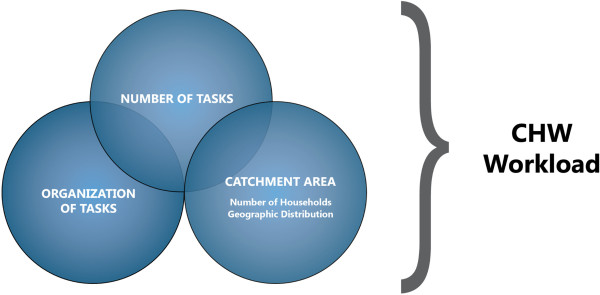
BACKGROUND: Community health workers (CHWs) are increasingly recognized as a critical link in improving access to services and achieving the health-related Millennium Development Goals. Given the financial and human resources constraints in developing countries, CHWs are expected to do more without necessarily receiving the needed support to do their jobs well. How much can be expected of CHWs before work overload and reduced organizational support negatively affect their productivity, the quality of services, and in turn the effectiveness of the community-based programmes that rely on them? This article presents policy-makers and programme managers with key considerations for a model to improve the work environment as an important approach to increase CHW productivity and, ultimately, the effectiveness of community-based strategies. METHODS: A desk review of selective published and unpublished articles and reports on CHW programs in developing countries was conducted to analyse and organize findings on the elements that influence CHW productivity. The search was not exhaustive but rather was meant to gather information on general themes that run through the various documents to generate perspectives on the issue and provide evidence on which to formulate ideas. After an initial search for key terminology related to CHW productivity, a snowball technique was used where a reference in one article led to the discovery of additional documents and reports. RESULTS: CHW productivity is determined in large part by the conditions under which they work. Attention to the provision of an enabling work environment for CHWs is essential for achieving high levels of productivity. We present a model in which the work environment encompasses four essential elements-workload, supportive supervision, supplies and equipment, and respect from the community and the health system-that affect the productivity of CHWs. We propose that when CHWs have a manageable workload in terms of a realistic number of tasks and clients, an organized manner of carrying out these tasks, a reasonable geographic distance to cover, the needed supplies and equipment, a supportive supervisor, and respect and acceptance from the community and the health system, they can function more productively and contribute to an effective community-based strategy. CONCLUSIONS: As more countries look to scale up CHW programmes or shift additional tasks to CHWs, it is critical to pay attention to the elements that affect CHW productivity during programme design as well as implementation. An enabling work environment is crucial to maximize CHW productivity. Policy-makers, programme managers, and other stakeholders need to carefully consider how the productivity elements related to the work environment are defined and incorporated in the overall CHW strategy. Establishing a balance among the four elements that constitute a CHW's work environment will help make great strides in improving the effectiveness and quality of the services provided by CHWs.
Overview
The claims and statistics of this paper haven’t been checked yet.
Free: it reads the open-access text and checks the first 5 claims that cite a source we can check. Create a free account to check every claim.
Integrity signals
Registry
Cites
Statistics
Figures

Verification
Claims the paper makes
The claims and statistics of this paper haven’t been checked yet.
Free: it reads the open-access text and checks the first 5 claims that cite a source we can check. Create a free account to check every claim.
Claims other papers make about this one
Each is checked against this paper’s own text: does it say what the citing paper says it does?
The source backs part of the claim, not all of it — or backs it for a different population, condition or comparison.
In the citing paper
“CHWs are overburdened as they are expected to accomplish more although they may not obtain the required support to perform their duties well, such as supportive supervision, training, remuneration, transportation, supplies and equipment, and respect from the community and health system [8].”
From Using mobile phones to improve community health workers performance in low-and-middle-income countries (2020) · cites this paper as [8]
Experimental — accuracy not yet measuredThe cited source says what the claim attributes to it.
In the citing paper
“A supportive work environment, motivation, and competency building are the key factors identified by the framework for strengthening CHW performance [8,9].”
In the citing paper
“This strategy can foster HWs’ motivation to change and promote positive attitudes and behaviours that ultimately improve women’s experiences and health outcomes around childbirth [69–71].”
From Health workers’ perspectives on the quality of maternal and newborn health care around the time of childbirth: Results of the Improving MAternal Newborn carE in the EURO Region (IMAgiNE EURO) project in 12 countries of the World Health Organization European Region (2024) · cites this paper as [70]
Self-check
Percentages, sums and reported differences re-computed from the paper’s own numbers.
The self-check needs the paper’s full text.
Citations
Cites
Achieving child survival goals: potential contribution of community health workers
Haines, A., Sanders, D., Lehmann, U., Rowe, A. K., Lawn, J. E., Jan, S., Walker, D. G., & Bhutta, Z. (2007) · The Lancet · doi:10.1016/s0140-6736(07)60325-0 · Cited by 911 · cited 3×
“provide a supportive environment for CHWs [26].”
BackgroundInfluentialEthiopian Journal of Health Development
Ejhd, E. (2018) · Ethiopian Journal of Health Development · Cited by 906
Baqui, A. H., El-Arifeen, S., Darmstadt, G. L., Ahmed, S., Williams, E. K., Seraji, H. R., Mannan, I., Rahman, S. M., Shah, R., Saha, S. K., et al. (2008) · The Lancet · doi:10.1016/s0140-6736(08)60835-1 · Cited by 588 · cited 1×
“all births because of their high workload, travel distances, and difficulty receiving timely notification of deliveries” [34].”
BackgroundOutcome Effectiveness of Community Health Workers: An Integrative Literature Review
Swider, S. M. (2002) · Public Health Nursing · doi:10.1046/j.1525-1446.2002.19003.x · Cited by 502 · cited 1×
“Success is more likely when CHWs have a clear job description that defines a limited number of tasks [25].”
BackgroundBhattacharyya, K., WINCH, P. J., LeBan, K., & Tien, M.-H. (2001) · Cited by 293
Hermann, K., Van Damme, W., Pariyo, G. W., Schouten, E., Assefa, Y., Cirera, A., & Massavon, W. (2009) · Human Resources for Health · doi:10.1186/1478-4491-7-31 · Cited by 252
Improving health worker performance : in search of promising practices
Dieleman, M. A., & Harnmeijer, J. W. (2006) · Data Archiving and Networked Services (DANS) · Cited by 210
Standing, H., & Chowdhury, A. M. R. (2008) · Social Science & Medicine · doi:10.1016/j.socscimed.2008.01.046 · Cited by 173 · cited 1×
“For example, BRAC’s Shasthya Shebikas in Bangladesh have a broad set of job responsibilities to accomplish and yet are considered highly productive and effective in their work [41,42].”
BackgroundCelletti, F., Wright, A., Palen, J., Frehywot, S., Markus, A., Greenberg, A., de Aguiar, R. A. T., Campos, F., Buch, E., & Samb, B. (2010) · AIDS · doi:10.1097/01.aids.0000366082.68321.d6 · Cited by 155 · cited 3×
“Offering CHWs supportive supervision within the structures and functions of the health team demonstrated better outcomes [2].”
BackgroundInfluentialWhat difference does ("good") HRM make?
Buchan, J. (2004) · Human Resources for Health · doi:10.1186/1478-4491-2-6 · Cited by 154
Sauerborn, R., Nougtara, A., & Diesfeld, H. J. (1989) · Social Science & Medicine · doi:10.1016/0277-9536(89)90359-6 · Cited by 138 · cited 1×
“The cost of travel is an important determinant of CHW effectiveness [39] and should be factored in when considering how the supplies, materials, and equipment that CHWs need will be replenished.”
BackgroundJob stress among community health workers: a multi-method study from Pakistan
Haq, Z., Iqbal, Z., & Rahman, A. (2008) · International Journal of Mental Health Systems · doi:10.1186/1752-4458-2-15 · Cited by 122 · cited 1×
“An assessment in Pakistan showed that Lady Health Workers become stressed in their job because they have little say regarding their increasingly expanding job scope and are seldom consulted when their job description changes [24].”
BackgroundPoor performance of community health workers in Kalabo District, Zambia
Stekelenburg, J., Kyanamina, S. S., & Wolffers, I. (2003) · Health Policy · doi:10.1016/s0168-8510(02)00207-5 · Cited by 98
Community Health Workers: A Review of Concepts, Practice and Policy ConcernsPreprint
Prasad, B. M., & Muraleedharan, V. R. (2007) · SSRN Electronic Journal · Cited by 89
Nayeri, N. D., Nazari, A. A., Salsali, M., Ahmadi, F., & Adib‐Hajbaghery, M. (2006) · Nursing and Health Sciences · doi:10.1111/j.1442-2018.2006.00254.x · Cited by 86
Study of the Working Conditions of Health Extension Workers in Ethiopia
Teklehaimanot, A., Kitaw, Y., G/Yohannes, A., Girma, S., Seyoum, S., Desta, S., & Ye-Ebiyo, Y. (2008) · Ethiopian Journal of Health Development · doi:10.4314/ejhd.v21i3.10055 · Cited by 71 · cited 3×
““Working conditions, part of the broader human resources management system, are important in terms of creating the conditions for effective and efficient work, boosting morale, and reducing turnover and attrition” [16,17].”
BackgroundHealth for all in Bangladesh: Lessons in primary health care for the twenty-first century
Perry, H. B. (2000) · Cited by 64
Nayeri, N. D., Nazari, A. A., Salsali, M., & Ahmadi, F. (2005) · Human Resources for Health · doi:10.1186/1478-4491-3-9 · Cited by 60 · cited 1×
“From an economic standpoint, productivity is often defined as the ratio of outputs to inputs [9] or the ratio of what is produced to what is required to produce it [10].”
BackgroundNational experience in the use of community health workers. A review of current issues and problems.
Ofosu-Amaah, V. (1983) · PubMed · Cited by 57
Edward, A., Ernst, P., Taylor, C., Becker, S., Mazive, E., & Perry, H. (2007) · Transactions of the Royal Society of Tropical Medicine and Hygiene · doi:10.1016/j.trstmh.2007.02.025 · Cited by 54 · cited 2×
“Another important factor contributing to the success of the Care Group model in increasing use of child health services and reducing child mortality in Gaza province, Mozambique was the supportive environment created among the volunteers within a “care group” as well as the close supervision from programme staff, whic…”
BackgroundWork motivation : models for developing countries
KANUNGO, R. N., & Mendonça, M. (1994) · Sage eBooks · Cited by 48
Afsar, H. A., & Younus, M. (2005) · PubMed · Cited by 34
International Dividend Repatriations
Lehmann, A., & Mody, A. (2004) · IMF Working Paper · doi:10.5089/9781451842210.001 · Cited by 19
Creanga, A. A., Bradley, H. M., Kidanu, A., Melkamu, Y., & TSUI, A. O. (2007) · Health Policy and Planning · doi:10.1093/heapol/czm034 · Cited by 15 · cited 1×
“agents must spend with each client [30].”
Systematic screening: A strategy for determining and meeting clients' reproductive health needs
Foreit, J. R. (2006) · doi:10.31899/rh15.1027 · Cited by 12
Increasing the productivity of community health workers in rural Nigeria through supervision
Ojofeitimi, E. O., Jinadu, M. K., & Elegbe, I. A. (1988) · Socio-Economic Planning Sciences · doi:10.1016/0038-0121(88)90032-8 · Cited by 9 · cited 2×
“– An evaluation in the Federal Republic of Nigeria found that the majority of CHWs were not engaging in such critical components of the primary health care programme as home visiting due in part to inadequate or infrequent supervision [35].”
BackgroundMake better use of provider time in public health clinics
Janowitz, B. (2006) · doi:10.31899/rh15.1029 · Cited by 3
Research works printed but not linked: 15
- Bhutta ZA Lassi ZS Pariyo G Huicho L Global experience of community health workers for delivery of health related Millennium Development Goals: a systematic review, country case studies, and recommendations for integration into national health systems 2010 Geneva, WHO/Global Health Workforce Alliance
- Lehmann U Sanders D Community health workers: what do we know about them? The state of the evidence on programmes, activities, costs and impact on health outcomes of using community health workers 2007 Geneva, WHO Department for Health
- Gilroy KE Winch P Management of sick children by community health workers:intervention models and programme examples 2006 Geneva, WHO/UNICEF
- Ruwoldt P Hassett P Zanzibar health care worker productivity study: preliminary study findings 2007 Chapel Hill, NC, Capacity Project
- Crigler L Hill K Furth R Bjerregaard D Community Health Worker Assessment and Improvement Matrix (CHW AIM): A Toolkit for Improving Community Health Worker Programs and Services 2011 USAID Health Care Improvement Project, Bethesda, MD University Research Co., LLC (URC)
- Ruwoldt P Stilwell B Schaefer L Achieving a more efficient health care workforce. Capacity Project. Presentation at the October 2006 USAID Global Health Mini-University 2006 http://www.login.mini-university.org/connect/d_connect_itemframer.cfm?vsDTTitle=click%20here%2E%2E%2E&dseq=12475&dtseq=49645&emdisc=2&mkey=public1108&vbDTA=0&viNA=0&vsDTA=&PAN=1&bDTC=0&blog=0&vsSH=A
- International Council of Nurses Nurse retention and recruitment: developing a motivated workforce 2005 ICN/WHO, Geneva
- Strachan D Health focused community based agents: motivation and incentives SCALE Project 2010 http://www.malariaconsortium.org/inscale/downloads/motivation-and-incentives-for-community-based-agents-daniel-strachen.pdf. November 8, 2011
- Global Health Work force Alliance Community health workers: key messages 2010 Global Consultation on Community Health Workers, Montreux, Switzerland
- Abbatt F Scaling up health and education workers: community health workers 2005 London, DFID Health Systems Resource Centre
- Perry H Freeman P Gupta S Rassekh BM Community-Based Primary Health Care Working Group, International Health Section. How effective is community-based primary health care in improving the health of children? Summary findings, report to the expert review panel 2009 American Public Health Association, Washington, DC
- Kadzandira JM Chilowa WR The role of health surveillance assistants (HSAs) in the delivery of health services and immunisation in Malawi. Zomba 2001 Centre of Social Science, University of Malawi, Malawi
- UNICEF Evaluation report. Voices from the community in the Sultanate of Oman: local women’s perceptions of community support group volunteers 2000 UNICEF, Oman, Oman
- UNICEF What works for children in South Asia: community health workers 2004 UNICEF South Asia, Katmandu, Nepal
- Ahmed F Community empowerment through micro-finance to improve community health: BRAC’s experience in Bangladesh WHO/SEARO Regional Conference on Revitalizing Primary Health Care 2008 WHO/SEAR, Jakarta 6–8 August 2008. WHO/SEAR, 2008 (http://www.searo.who.int/LinkFiles/Conference_Panel-D1.pdf.)
Cited by
A scoping review of scoping reviews: advancing the approach and enhancing the consistency
Pham, M. T., Rajić, A., Greig, J. D., Sargeant, J. M., Papadopoulos, A., & McEwen, S. A. (2014) · Research Synthesis Methods · doi:10.1002/jrsm.1123 · Cited by 3,078
“A ‘snowball’ technique was also adopted in which citations within articles were searched if they appeared relevant to the review (Hepplestone et al., 2011; Jaskiewicz and Tulenko, 2012).”
MethodScott, K., Beckham, S. W., Gross, M., Pariyo, G., Rao, K. D., Cometto, G., & Perry, H. B. (2018) · Human Resources for Health · doi:10.1186/s12960-018-0304-x · Cited by 732
Kok, M. C., Dieleman, M., Taegtmeyer, M., Broerse, J. E., Kane, S. S., Ormel, H., Tijm, M. M., & de Koning, K. A. (2015) · Health Policy and Planning · doi:10.1093/heapol/czu126 · Cited by 569
“Existing studies show that CHW services could be enhanced by measures regarding recruitment, workload and retention policies (Prasad and Muraleedharan 2007; Campbell and Scott 2011; Jaskiewicz and Tulenko 2012).”
BackgroundThe Lancet Commission on diagnostics: transforming access to diagnostics
Fleming, K. A., Horton, S., Wilson, M. L., Atun, R., DeStigter, K., Flanigan, J., Sayed, S., Adam, P., Aguilar, B., Andronikou, S., et al. (2021) · The Lancet · doi:10.1016/s0140-6736(21)00673-5 · Cited by 471
Glenton, C., Colvin, C., Carlsen, B., Swartz, A., Lewin, S., Noyes, J., & Rashidian, A. (2013) · Cochrane Database of Systematic Reviews · doi:10.1002/14651858.cd010414.pub2 · Cited by 454
Metadata
- Authors
- Jaskiewicz, W., & Tulenko, K.
- Affiliations
- IntraHealth International (US)
- Corresponding author
- Jaskiewicz, Wanda
- ORCID
- Jaskiewicz, Wanda
- Venue
- Human Resources for Health
- Published
- 2012-09-27
- Volume
- 10
- Issue
- 1
- Pages
- 38-38
- ISSN
- 1478-4491 (ISSN-L)
- PMC
- PMC3472248
- OpenAlex
- W2115117400
- Cited by
- 381
- References
- 29
- Citations by year
- 2026: 16 · 2025: 17 · 2024: 30 · 2023: 49 · 2022: 32 · 2021: 41 · 2020: 33 · 2019: 28 · 2018: 30 · 2017: 24 · 2016: 21 · 2015: 22 · 2014: 26 · 2013: 12
- FWCI
- 33.09
- Type
- journal article
- Language
- en
- Open access
- gold
- doi.org
- Licence
- cc-by
- creativecommons.org/licenses/by/2.0 (tdm)
- Locations
- Human Resources for Health (publishedVersion, cc-by)
- Europe PMC (PubMed Central) (publishedVersion, cc-by)
- PubMed Central (publishedVersion, cc-by)
- PubMed (publishedVersion)
- DOAJ (DOAJ: Directory of Open Access Journals) (submittedVersion)
- Funders
- United States Agency for International Development
- Topics
- Health Sciences › Medicine › Public Health, Environmental and Occupational Health › Global Health Workforce Issues
- Health Sciences › Medicine › Pediatrics, Perinatology and Child Health › Global Maternal and Child Health
- Health Sciences › Medicine › Public Health, Environmental and Occupational Health › Healthcare Systems and Practices
- Keywords
- community health workers, work environment, workload, supportive supervision, community acceptance, community health programs, healthcare workers, developing countries
About these checks
Registry, retraction, Cites and statistics results are computed, not judged, with one exception: a printed reference that no index lists is read once by a model before it counts as a citation error. Claims are extracted by a model and kept only when their quote appears verbatim in the text; each cited source is then checked, with a model’s help, for whether it says what the claim relies on. Those verdicts can be wrong — read the claim’s quote and the cited source before relying on one.
Statistics and arithmetic are recomputed, not judged.
Confidence bands are shown only for fields calibrated on our annotated test set. None is calibrated yet, so no band is shown.
What counts as a claim ›How we measure confidence ›How we check this ›
Are you an author, or do you see a problem with this page? Request a review
Data sources
Bibliographic data: Semantic Scholar, OpenAlex, Crossref.
Contains information from the Semantic Scholar Academic Graph Datasets, made available under the ODC Attribution License (ODC-BY 1.0).
Semantic Scholar’s data is described in: Kinney, R., et al. (2023). The Semantic Scholar Open Data Platform. arXiv:2301.10140.
