

TGF-β – an excellent servant but a bad master
Open accessThe DOI matches its Crossref record; 288 of the 288 references it cites were found in a registry or an index.
Abstract
The transforming growth factor (TGF-β) family of growth factors controls an immense number of cellular responses and figures prominently in development and homeostasis of most human tissues. Work over the past decades has revealed significant insight into the TGF-β signal transduction network, such as activation of serine/threonine receptors through ligand binding, activation of SMAD proteins through phosphorylation, regulation of target genes expression in association with DNA-binding partners and regulation of SMAD activity and degradation. Disruption of the TGF-β pathway has been implicated in many human diseases, including solid and hematopoietic tumors. As a potent inhibitor of cell proliferation, TGF-β acts as a tumor suppressor; however in tumor cells, TGF-β looses anti-proliferative response and become an oncogenic factor. This article reviews current understanding of TGF-β signaling and different mechanisms that lead to its impairment in various solid tumors and hematological malignancies.
Overview
The claims and statistics of this paper haven’t been checked yet.
Free: it reads the open-access text and checks the first 5 claims that cite a source we can check. Create a free account to check every claim.
Integrity signals
Registry
Cites
Statistics
Figures
Verification
Claims the paper makes
The claims and statistics of this paper haven’t been checked yet.
Free: it reads the open-access text and checks the first 5 claims that cite a source we can check. Create a free account to check every claim.
Claims other papers make about this one
Each is checked against this paper’s own text: does it say what the citing paper says it does?
In the citing paper
“Some mutations may also drive differential response to a stimulation, as is seen with some tumors in response to transforming growth factor beta (TGF-β)13.”
From Causal identification of single-cell experimental perturbation effects with CINEMA-OT (2023) · cites this paper as [13]
Self-check
Percentages, sums and reported differences re-computed from the paper’s own numbers.
The self-check needs the paper’s full text.
Citations
Cites
1 retracted
Items 201–288 of 288
Lu, S., Zhang, W. C., Akiyama, Y., Nomizu, T., & Yuasa, Y. (1996) · PubMed · Cited by 95
Fu, H., Hu, Z., Wen, J., Wang, K., & Liu, Y. (2009) · Acta Biochimica et Biophysica Sinica · doi:10.1093/abbs/gmp053 · Cited by 95 · cited 1×
“Moreover, signaling pathway based on SMAD proteins is not involved in this process because transitional repression of SMADs did not alter fascin-1 expression [196].”
BackgroundFinnson, K. W., Parker, W. L., Chi, Y., Hoemann, C. D., Goldring, M. B., Antoniou, J., & Philip, A. (2010) · Osteoarthritis and Cartilage · doi:10.1016/j.joca.2010.09.002 · Cited by 94 · cited 1×
“In some cell types, endoglin was found to inhibit TGF-β signaling – for example in chondrocytes, it enhances TGF-β1-induced SMAD1/5 phosphorylation but inhibits TGF-β1-induced SMAD2 phosphorylation [55].”
BackgroundLee, D. K., Kim, B.-C., Brady, J. N., Jeang, K.-T., & Kim, S.-J. (2002) · Journal of Biological Chemistry · doi:10.1074/jbc.m200150200 · Cited by 93 · cited 1×
“Another model of its function is that Tax interacts with the MH2 domains of SMADs 2, 3 and 4 in order to inhibit formation of the SMAD3/4 complex, disturb the interplay of the SMAD proteins with transcriptional factor CBP/ p300, prevent binding of the SMAD complex to its target DNA sequence and thus inhibit TGF-β sign…”
BackgroundTGF-β1 induces bone marrow reticulin fibrosis in hairy cell leukemia
Shehata, M. M., Schwarzmeier, J. D., Hilgarth, M., Hubmann, R., Duechler, M., & Gisslinger, H. (2004) · Journal of Clinical Investigation · doi:10.1172/jci19540 · Cited by 93 · cited 1×
“TGF-β1 is important in fibrosis and is directly involved in the pathogenesis of BM reticulin fibrosis in HCL [256].”
BackgroundHinshelwood, R. A., Huschtscha, L. I., Melki, J. R., Stirzaker, C., Abdipranoto, A., Vissel, B., Ravasi, T., Wells, C. A., Hume, D. A., Reddel, R. R., et al. (2007) · Cancer Research · doi:10.1158/0008-5472.can-07-1284 · Cited by 92 · cited 3×
“Furthermore, TGF-β pathway is modulated by epigenetic mechanisms, such as transcriptional repression of TβRII, DNA methylation of TβRI and TβRII and histone modifications [121-123].”
BackgroundArnulf, B., Villemain, A., Nicot, C., Mordelet, E., Charneau, P., Kersual, J., Zermati, Y., Mauviel, A., Bazarbachi, A., & Hermine, O. (2002) · Blood · doi:10.1182/blood-2001-12-0372 · Cited by 90 · cited 1×
“The Tax repressor effect is mediated by activating JNK leading to increased phosphorylation of c-Jun, which is followed by formation of SMAD3/c-Jun complex that inhibits the ability of SMAD3 to bind DNA [255].”
BackgroundDouglas, R. S., Capocasale, R. J., Lamb, R. J., Nowell̀, P. C., & Moore, J. S. (1997) · Blood · doi:10.1182/blood.v89.3.941 · Cited by 88
Desruisseau, S., Palmari, J., Giusti, C., Romain, S., Martin, P.-M., & Berthois, Y. (2006) · British Journal of Cancer · doi:10.1038/sj.bjc.6602920 · Cited by 86 · cited 1×
“On the other hand, several studies showed that TGF-β over-expression is related to worse outcome [184,185].”
BackgroundImai, Y., Kurokawa, M., Izutsu, K., Hangaishi, A., Maki, K., Ogawa, S., Chiba, S., Mitani, K., & Hirai, H. (2001) · Oncogene · doi:10.1038/sj.onc.1204057 · Cited by 84 · cited 1×
“Mutated SMAD4 lacks transcriptional activity [240].”
Jachimczak, P., Hessdörfer, B., Fabel-Schulte, K., Wismeth, C., Brysch, W., Schlingensiepen, K.-H., Bauer, A., Blesch, A., & Bogdahn, U. (1996) · International Journal of Cancer · doi:10.1002/(sici)1097-0215(19960126)65:3<332::aid-ijc10>3.0.co;2-c · Cited by 84 · cited 1×
“Moreover, high levels of TGF-β indicate that TGF-β is able to induce its own expression and thereby create a malignant autocrine loop and control gliomacell proliferation [152].”
BackgroundAnalysis of Endoglin Expression in Normal Brain Tissue and in Cerebral Arteriovenous Malformations
Matsubara, S., Bourdeau, A., terBrugge, K. G., Wallace, C., & Letarte, M. (2000) · Stroke · doi:10.1161/01.str.31.11.2653 · Cited by 83 · cited 1×
“Moreover, in normal brain, it was found to be expressed in the adventitia of arteries and arterioles, and it is expressed on several types of tumor cells, such as invasive breast cancers and cell lines or renal cell carcinoma [43-45].”
BackgroundDerynck, R., & Miyazono, K. (2008) · Cold Spring Harbor Monograph Archive · doi:10.1101/087969752.50.29 · Cited by 82
Microsatellite instability and mutated type II transforming growth factor-β receptor gene in gliomas
Izumoto, S., Arita, N., Ohnishi, T., Hiraga, S., Taki, T., Tomita, N., Ohue, M., & Hayakawa, T. (1997) · Cancer Letters · doi:10.1016/s0304-3835(96)04583-1 · Cited by 81 · cited 1×
“Several studies describe mutations in TβRI and TβRII in adenomas and gliomas [148,149] as well as correlation between higher expression of TβRI and TβRII with more aggressive glioma cell lines and tumors [150,151].”
BackgroundKb, H., Lee, K. M., Kim, Y. B., Hong, W. S., Lee, W., Han, S., Kim, M. W., Ahn, B. O., Oh, T. Y., Lee, M. H., et al. (2002) · Alimentary Pharmacology & Therapeutics · doi:10.1046/j.1365-2036.16.s2.3.x · Cited by 78 · cited 1×
“It has been shown that conditional loss of TGF-β signaling due to dominant negative mutation in TβRII leads to increased susceptibility to gastrointestinal carcinogenesis in mice [195].”
BackgroundPangas, S. A., & Matzuk, M. M. (2004) · Molecular and Cellular Endocrinology · doi:10.1016/j.mce.2004.02.017 · Cited by 77 · cited 1×
“As homozygous deletions of Tgf-β1, Tgf-β2, Tgf-β3, TβRI and TβRII are lethal in mice, manipulation of TGF-β pathway was achieved mainly through transgene expression or conditional null mutations in vivo [96].”
BackgroundBiswas, S., Trobridge, P., Romero‐Gallo, J., Billheimer, D., Myeroff, L. L., Willson, J. K. V., Markowitz, S. D., & Grady, W. M. (2008) · Genes, Chromosomes and Cancer · doi:10.1002/gcc.20511 · Cited by 75 · cited 3×
“SMAD proteins are not very common in breast cancer; however, inactivating mutations or loss of expression in SMAD4 have been described [164,192].”
BackgroundHenry, L. A., Johnson, D. A., Sarrió, D., Lee, S., Quinlan, P., Crook, T., Thompson, A. M., Reis-Filho, J. S., & Isacke, C. M. (2010) · Oncogene · doi:10.1038/onc.2010.488 · Cited by 74 · cited 1×
“Moreover, in normal brain, it was found to be expressed in the adventitia of arteries and arterioles, and it is expressed on several types of tumor cells, such as invasive breast cancers and cell lines or renal cell carcinoma [43-45].”
BackgroundGain of MYC underlies recurrent trisomy of the MYC chromosome in acute promyelocytic leukemia
Jones, L. C., Wei, G., Ševčíková, S., Phan, V. T., Jain, S., Shieh, A., Wong, J. C. Y., Li, M., Dubansky, J., Maunakea, M. L., et al. (2010) · The Journal of Experimental Medicine · doi:10.1084/jem.20091071 · Cited by 74 · cited 1×
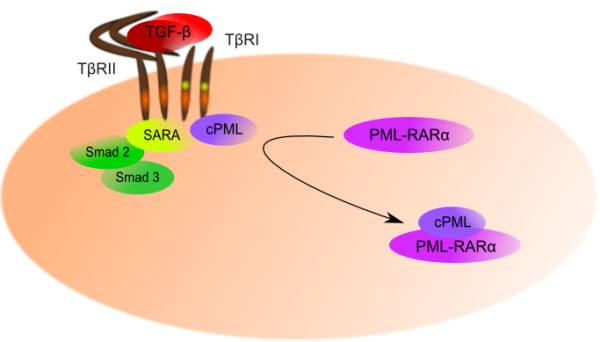
“In acute promyeloytic leukemia (APL), t(15;17) translocation in which the retinoic acid receptor α (RARα) gene on 17q12 fuses with a nuclear regulatory factor PML on 15q22 results in the fusion protein PML-RARα [242].”
BackgroundIncreased Evi-1 expression is frequently observed in blastic crisis of chronic myelocytic leukemia.
Ogawa, S., Kurokawa, M., Tanaka, T., Tanaka, K., Hangaishi, A., Mitani, K., Kamada, N., Yazaki, Y., & Hirai, H. (1996) · PubMed · Cited by 74
Activation of Smad1-mediated transcription by p300/CBP
Pearson, K. L., Hunter, T. R., & Janknecht, R. (1999) · Biochimica et Biophysica Acta (BBA) - Gene Structure and Expression · doi:10.1016/s0167-4781(99)00166-9 · Cited by 73 · cited 1×
“CBP and p300 interact with SMAD1, SMAD2, SMAD3 and SMAD4 in vitro and in vivo, and the interaction between the SMADs and CBP/p300 is stimulated in response to TGF-β [76-79].”
BackgroundChan, M. W. Y., Huang, Y., Hartman-Frey, C., Kuo, C., Deatherage, D. E., Qin, H., Cheng, A. S. L., Yan, P. S., Davuluri, R. V., Huang, T. H. ‐., et al. (2008) · Neoplasia · doi:10.1593/neo.08540 · Cited by 72
Type III TGF-β Receptor Enhances Colon Cancer Cell Migration and Anchorage-Independent Growth
Gatza, C. E., Holtzhausen, A., Kirkbride, K. C., Morton, A. M., Gatza, M. L., Datto, M., & Blobe, G. C. (2011) · Neoplasia · doi:10.1593/neo.11528 · Cited by 71 · cited 1×
“Thus, enhanced expression of TβRIII is possibly involved in cancer progression [222].”
BackgroundDefective TGF-β signaling sensitizes human cancer cells to rapamycin
Gadir, N., Jackson, D. N., Lee, E., & Foster, D. A. (2007) · Oncogene · doi:10.1038/sj.onc.1210721 · Cited by 71
Nakahata, S., Yamazaki, S., Nakauchi, H., & Morishita, K. (2010) · Oncogene · doi:10.1038/onc.2010.172 · Cited by 69 · cited 1×
“Therefore, ZEB1 has an important role in regulation of TGF-β1 signaling pathway by binding to R-SMADs and also I-SMADs [260].”
BackgroundYang, J., Wahdan-Alaswad, R. S., & Danielpour, D. (2009) · Cancer Research · doi:10.1158/0008-5472.can-08-3961 · Cited by 69 · cited 1×
“It is possible that tumor suppressor function of SMAD2 could be lost during differentiation of normal tissues or during prostatic carcinogenesis [177-179].”
BackgroundZhang, H.-T., Chen, X.-F., Wang, M.-H., Wang, J.-C., Qi, Q.-Y., Zhang, R.-M., Xu, W.-Q., Fei, Q.-Y., Wang, F., Cheng, Q.-Q., et al. (2004) · Clinical Cancer Research · doi:10.1158/1078-0432.ccr-0959-3 · Cited by 68 · cited 1×
“Down-regulation of TβRII on transcriptional level could be explained by aberrant methylation of the TβRII promoter [234].”
BackgroundLimiting the location of putative human prostate cancer tumor suppressor genes on chromosome 18q
Yin, Z., Babaian, R. J., Troncoso, P., Strom, S. S., Spitz, M. R., Caudell, J. J., Stein, J. D., & Kagan, J. (2001) · Oncogene · doi:10.1038/sj.onc.1204310 · Cited by 67 · cited 1×
“It is possible that tumor suppressor function of SMAD2 could be lost during differentiation of normal tissues or during prostatic carcinogenesis [177-179].”
BackgroundInvolvement of c-Src kinase in the regulation of TGF-β1-induced apoptosis
Park, S. S., Eom, Y. W., Kim, E. H., Lee, J., Min, D. S., Kim, S., Kim, S., & Choi, K. S. (2004) · Oncogene · doi:10.1038/sj.onc.1207856 · Cited by 67 · cited 1×
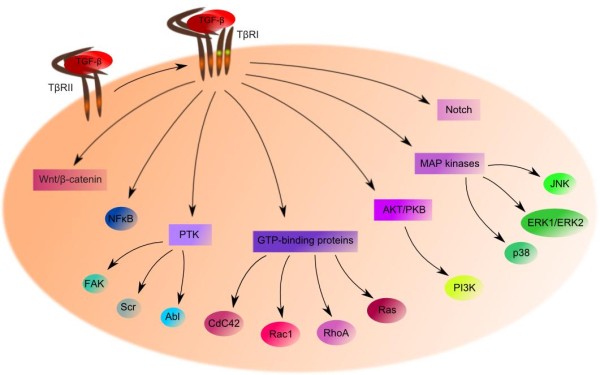
“TGF-β participates in mediating activation of protein tyrosine kinases FAK, SRC and ABL, particularly in mesenchymal or dedifferentiated epithelial cells [90-92].”
BackgroundJeon, H.-S., Dracheva, T., Yang, S. H., Meerzaman, D. M., Fukuoka, J., Shakoori, A., Shilo, K., Travis, W. D., & Jen, J. (2008) · Cancer Research · doi:10.1158/0008-5472.can-08-1083 · Cited by 67 · cited 1×
“Moreover, SMAD6 contributes to lung cancer progression by limiting TGF-β-mediated growth inhibition of cell lines, which was proven by knockdown of SMAD6 that resulted in increased apoptosis in lung cancer cell line [236].”
BackgroundSjölund, J., Boström, A.-K., Lindgren, D., Manna, S., Moustakas, A., Ljungberg, B., Johansson, M., Fredlund, E., & Axelson, H. (2011) · PLoS ONE · doi:10.1371/journal.pone.0023057 · Cited by 66 · cited 1×
“Recently, it was described that inhibition of Notch signaling leads to attenuation of basal TGF-βinduced signaling in CCRCC cells; it also influenced genes involved in cancer migration [159].”
Backgroundde Carvalho, F., Colleoni, G. W. B., Almeida, M. S. S., Carvalho, A. L., & Vettore, A. L. (2009) · International Journal of Cancer · doi:10.1002/ijc.24431 · Cited by 62 · cited 1×
“Possibly, the loss of TβRII expression on the cell surface is the result of gene silencing by hypermehylation correlating to poor survival [277].”
BackgroundLambert, K. E., Huang, H., Mythreye, K., & Blobe, G. C. (2011) · Molecular Biology of the Cell · doi:10.1091/mbc.e10-11-0877 · Cited by 61 · cited 1×
“TβRIII expression is diminished on mRNA and protein level in MM, enhancing cell growth, proliferation, mobility, heterotrophic cell–cell adhesion and contributing to disease progression [278].”
BackgroundMamiya, T., Yamazaki, K., Masugi, Y., Mori, T., Effendi, K., Du, W., Hibi, T., Tanabe, M., Ueda, M., Takayama, T., et al. (2010) · Laboratory Investigation · doi:10.1038/labinvest.2010.105 · Cited by 60
Kyrtsonis, M., Repa, C., Dedoussis, G. V., Mouzaki, Α., Symeonidis, A. S., Stamatelou, M., & Maniatis, A. G. (1998) · Medical Oncology · doi:10.1007/bf02989591 · Cited by 57
Endoglin (CD105) expression in human renal cell carcinoma
Sandlund, J., Hedberg, Y., Bergh, A. R. J., Grankvist, K., Ljungberg, B., & Rasmuson, T. (2006) · British Journal of Urology · doi:10.1111/j.1464-410x.2006.06006.x · Cited by 55 · cited 1×
“Moreover, in normal brain, it was found to be expressed in the adventitia of arteries and arterioles, and it is expressed on several types of tumor cells, such as invasive breast cancers and cell lines or renal cell carcinoma [43-45].”
BackgroundInman, G. J., & Allday, M. J. (2000) · Journal of General Virology · doi:10.1099/0022-1317-81-6-1567 · Cited by 53
Yang, X., Jin, G., Nakao, Y., Rahimtula, M., Pater, M. M., & Pater, A. (1996) · International Journal of Cancer · doi:10.1002/(sici)1097-0215(19960126)65:3<275::aid-ijc1>3.0.co;2-x · Cited by 50
Lagneaux, L., Delforge, A., Bron, D., Massy, M., Bernier, M., & Stryckmans, P. A. (1997) · British Journal of Haematology · doi:10.1046/j.1365-2141.1997.792715.x · Cited by 49 · cited 1×
“The absence of functional TβRI on the surface of CLL cells, in spite of normal mRNA level, could be explained by point mutations in the TβRI gene [266,267].”
BackgroundMouse models of transforming growth factor β impact in breast development and cancer
Serra, R. A., & Crowley, M. R. (2005) · Endocrine Related Cancer · doi:10.1677/erc.1.00936 · Cited by 49 · cited 1×
“However, they have distinct roles in mammary growth regulation, morphogenesis and functional differentiation [180-182].”
BackgroundZhang, Q., Rubenstein, J. N., Jang, T. L., Pins, M., Javonovic, B., Yang, X. J., Kim, S., Park, I. I., & Lee, C. (2005) · Molecular Endocrinology · doi:10.1210/me.2005-0096 · Cited by 48 · cited 1×
“In some cases of prostate cancer, insensitivity to TGF-β is caused by promoter methylation in TβRI [176].”
BackgroundPhosphorylated Smad2 in Advanced Stage Gastric Carcinoma
Shinto, O., Yashiro, M., Toyokawa, T., Nishii, T., Kaizaki, R., Matsuzaki, T., Noda, S., Kubo, N., Tanaka, H., Doi, Y., et al. (2010) · BMC Cancer · doi:10.1186/1471-2407-10-652 · Cited by 48 · cited 1×
“P-SMAD2 protein expression level was significantly higher in patients with diffuse form of carcinoma and metastatic tumors and is associated with worse outcome [197].”
BackgroundBCR-ABL Mutations in Chronic Myeloid Leukemia
Ernst, T., Rosée, P. G. L., Müller, M. C., & Hochhaus, A. (2011) · Hematology/Oncology Clinics of North America · doi:10.1016/j.hoc.2011.09.005 · Cited by 47 · cited 1×
“In chronic myeloid leukemia (CML), t(9;22) (the socalled Philadelphia chromosome) results in the formation of BCR-ABL fusion gene [244].”
BackgroundTransforming growth factor-β1 induces antigen-specific unresponsiveness in naive t cells
Gilbert, K. M., Thoman, M. L., Bauche, K., Pham, T., & Weigle, W. O. (1997) · Immunological Investigations · doi:10.3109/08820139709022702 · Cited by 47 · cited 1×
“In T cells, TGF-β regulates maturation; for example, it is released by regulatory T cells and inhibits the Agspecific proliferation of naive CD4+ cells from T cell receptor (TCR) [135].”
BackgroundBakkebø, M., Huse, K., Hilden, V. I., Smeland, E. B., & Oksvold, M. P. (2010) · BMC Immunology · doi:10.1186/1471-2172-11-57 · Cited by 46
Proteomics of Smad4 regulated transforming growth factor-beta signalling in colon cancer cells
Ali, N., McKay, M. J., & Molloy, M. P. (2010) · Molecular BioSystems · doi:10.1039/c0mb00016g · Cited by 46
Amoroso, S., Huang, N., Roberts, A. B., Potter, M., & Letterio, J. J. (1998) · Proceedings of the National Academy of Sciences · doi:10.1073/pnas.95.1.189 · Cited by 46 · cited 1×
“Resistance to the growth-inhibitory functions of TGF-β signaling develops, possibly due to defective trafficking of TβRI and TβRII to the cell surface in these cells [275,276].”
BackgroundHung, T., Wang, H., Kingsley, E. A., Risbridger, G. P., & Russell, P. J. (2008) · Cancer Letters · doi:10.1016/j.canlet.2008.02.034 · Cited by 46 · cited 1×
“In addition, deregulated TGF-β signaling led to enhanced migration and invasiveness of bladder cancer cells [156].”
BackgroundYeh, K.-T., Chen, T.-H., Yang, H.-W., Chou, J., Chen, L. Y., Yeh, C.-M., Chen, Y. H., Lin, R.-I., Su, H.-Y., Chen, G. C. W., et al. (2011) · Epigenetics · doi:10.4161/epi.6.6.15856 · Cited by 44 · cited 1×
“Deregulation in TGF-β/SMAD4 signaling leads to epigenetic silencing of a putative tumor suppressor, RunX1T1, during ovarian carcinogenesis [169].”
BackgroundSterlacci, W., Wolf, D. G. F., Savic, S., Hilbe, W., Schmid, T. A., Jamnig, H., Fiegl, M., & Tzankov, A. (2011) · Human Pathology · doi:10.1016/j.humpath.2011.05.017 · Cited by 43 · cited 1×
“In non-small cell lung carcinoma (NSCLC), elevated expression of TGF-β correlates with disease progression [232].”
BackgroundKu, J., Park, S. H., Yoon, K., Shin, Y., Kim, K., Choi, J.-S., Kang, H.-C., Kim, I.-J., Han, I., & Park, J. (2006) · Cancer Letters · doi:10.1016/j.canlet.2006.05.008 · Cited by 43 · cited 1×
“SMAD3 mutation is a very rare event in human solid tumors; however, a missense mutation in SMAD3 gene (leading to reduced activity of SMAD3 protein) was found in human colorectal cell lines [211].”
BackgroundTGF-β Induces Growth Arrest in Burkitt Lymphoma Cells via Transcriptional Repression of E2F-1
Spender, L. C., & Inman, G. J. (2008) · Journal of Biological Chemistry · doi:10.1074/jbc.m808080200 · Cited by 42 · cited 1×
“for growth arrest suggesting that TGF-β can effectively exert tumor suppression also in cells without c-Myc, p15 and p21 regulation [271].”
BackgroundTGFβ1 Inhibits Ca2+-Calcineurin-Mediated Activation in Thymocytes
Bommireddy, R., Ormsby, I., Yin, M., Boivin, G. P., Babcock, G. F., & Doetschman, T. (2003) · The Journal of Immunology · doi:10.4049/jimmunol.170.7.3645 · Cited by 42 · cited 1×
“concentration levels low enough to prevent mitogenic response by Ca-independent stimulatory pathways [136].”
BackgroundLee, M.-S., Kim, T. Y., Kim, Y. B., Lee, S.-Y., Ko, S., Jong, H.-S., Kim, T., Bang, Y., & Lee, S. E. (2005) · Molecular and Cellular Biology · doi:10.1128/mcb.25.16.6921-6936.2005 · Cited by 41 · cited 1×
“Different mechanism was observed in gastric carcinoma, where SMAD-dependent TGF-β pathway, in collaboration with PKC-δ expression and phosphorylation and integrin expression and activation, regulates cell invasion and cell spreading [130].”
BackgroundBarlow, J., Yandell, D. W., Weaver, D. L., Casey, T., & Plaut, K. I. (2003) · Breast Cancer Research and Treatment · doi:10.1023/a:1023918026437 · Cited by 40 · cited 2×
“No specific mutations were found in the coding or in the regulatory region of the TβRII gene promoter in breast cancer [187,188].”
BackgroundDisruption of Transforming Growth Factor β Signaling by a Novel Ligand-dependent Mechanism
Fernandez, T., Amoroso, S., Sharpe, S., Jones, G. M., Bliskovski, V., Kovalchuk, A., Wakefield, L. M., Kim, S.-J., Potter, M., & Letterio, J. J. (2002) · The Journal of Experimental Medicine · doi:10.1084/jem.20011521 · Cited by 40 · cited 1×
“Resistance to the growth-inhibitory functions of TGF-β signaling develops, possibly due to defective trafficking of TβRI and TβRII to the cell surface in these cells [275,276].”
BackgroundTGFβ-mediated activation of Smad1 in B-cell non-Hodgkin's lymphoma and effect on cell proliferation
Muñoz, O., Fend, F., de Beaumont, R., Husson, H., Astier, A., & Freedman, A. S. (2004) · Leukemia · doi:10.1038/sj.leu.2403485 · Cited by 39
Møller, G. M. O., Frost, V. J., Melo, J. V., & Chantry, A. (2007) · FEBS Letters · doi:10.1016/j.febslet.2007.02.048 · Cited by 36 · cited 1×
“In Cos-1 cells, the expression of BCR-ABL up-regulates TGF-β-mediated transcriptional activity by interaction between TβRI and kinase domain of BCR-ABL, which leads to increased activity of SMAD3 promoter and increased SMAD2 and SMAD3 protein expression level [249].”
BackgroundTian, X., Du, H., Fu, X., Li, K., Li, A., & Zhang, Y. (2009) · Biochemical and Biophysical Research Communications · doi:10.1016/j.bbrc.2009.01.124 · Cited by 35 · cited 1×
“signaling activity, decrease of β-catenin/Tcf target genes expression and with induction of functional E-cadherin expression [223].”
BackgroundAntony, M. L., Nair, R. P., Sebastian, P., & Karunagaran, D. (2009) · Journal of Cancer Research and Clinical Oncology · doi:10.1007/s00432-009-0703-4 · Cited by 35 · cited 3×
“Reduced expression or loss of SMAD4 protein leads to decreased ability to bind DNA; SMAD4 inactivation is involved in the acquisition of a more aggressive tumor [161].”
BackgroundMolecular Pathology of Pancreatic Cancer: Implications for Molecular Targeting Therapy
Furukawa, T. (2009) · Clinical Gastroenterology and Hepatology · doi:10.1016/j.cgh.2009.07.035 · Cited by 34 · cited 1×
“In pancreatic cancers, SMAD4 is homozygously deleted in approximately 30% of cases, inactivated in 20%, while allelic loss of the whole 18q region was found in almost 90% of cases [225].”
BackgroundKennedy, B. A., Deatherage, D. E., Gu, F., Tang, B., Chan, M. W. Y., Nephew, K. P., Huang, T. H. ‐., & Jin, V. X. (2011) · PLoS ONE · doi:10.1371/journal.pone.0022606 · Cited by 32 · cited 1×
“Recently, genome-wide screening done by ChIP-seq of TGF-β-induced SMAD4 binding in epithelial ovarian cancer revealed that SMAD4-dependent regulatory network was strikingly different in ovarian cancer compared to normal cells and was predictive of patients survival [170].”
BackgroundYu, N., Kozlowski, J. M., Park, I. I., Chen, L., Zhang, Q., Xu, D., Doll, J. A., Crawford, S. E., Brendler, C. B., & Lee, C. (2010) · Urology · doi:10.1016/j.urology.2010.03.061 · Cited by 31 · cited 1×
“On the contrary, in malignant cells, incorrect recruitment of PP2A by TβRI is responsible for protruded production of TGF-β1 [172].”
BackgroundEffects of TGF-β signaling blockade on human A549 lung adenocarcinoma cell lines
Fu, X. (2011) · Molecular Medicine Reports · doi:10.3892/mmr.2011.530 · Cited by 31 · cited 1×
“In a study on LAC cell line A549, knockdown of TβRII resulted in suppression of cell proliferation, invasion and metastasis and induced cell apoptosis [237].”
BackgroundPasche, B., Wisinski, K. B., Sadim, M. S., Kaklamani, V., Pennison, M. J., Zeng, Q., Bellam, N., Zimmerman, J. W., Yi, N., Zhang, K., et al. (2010) · Journal of Experimental & Clinical Cancer Research · doi:10.1186/1756-9966-29-57 · Cited by 30
Zhang, L., Sato, E., Amagasaki, K., Nakao, A., & Naganuma, H. (2006) · Journal of neurosurgery · doi:10.3171/jns.2006.105.1.119 · Cited by 30 · cited 1×
“In glioma cell lines, SMAD3 level and SMAD2 nuclear translocation was lower in 9 out of 10 cell lines [153].”
BackgroundAtfi, A., Abécassis, L., & Bourgeade, M. (2005) · EMBO Reports · doi:10.1038/sj.embor.7400501 · Cited by 30 · cited 1×
“effect of TGF-β1 [245].”
Expression and mutational analysis of theMADR2/smad2 gene in human prostate cancer
Latil, A., Pesche, S., Val�ri, A., Fournier, G., Cussenot, O., & Lidereau, R. (1999) · The Prostate · doi:10.1002/(sici)1097-0045(19990901)40:4<225::aid-pros3>3.0.co;2-3 · Cited by 30 · cited 1×
“It is possible that tumor suppressor function of SMAD2 could be lost during differentiation of normal tissues or during prostatic carcinogenesis [177-179].”
BackgroundLongerich, T., Breuhahn, K., Odenthal, M., Petmecky, K., & Schirmacher, P. (2004) · Archiv für Pathologische Anatomie und Physiologie und für Klinische Medicin · doi:10.1007/s00428-004-1118-x · Cited by 30 · cited 1×
“Mutations in intracellular signaling components have been observed: SMAD2 mutations occur in 5% of HCC, while loss of SMAD4 expression was found in 10% of HCC [201,202].”
BackgroundTakenoshita, S., Mogi, A., Tani, M., Osawa, H., Sunaga, H., Kakegawa, H., Yanagita, Y., Koida, T., Kimura, M., Fujita, K. I., et al. (1998) · Oncology Reports · doi:10.3892/or.5.2.367 · Cited by 28 · cited 1×
“No specific mutations were found in the coding or in the regulatory region of the TβRII gene promoter in breast cancer [187,188].”
BackgroundChen, G., Ghosh, P., Osawa, H., Sasaki, C. Y., Rezanka, L. J., Yang, J., O’Farrell, T. J., & Longo, D. L. (2007) · Blood · doi:10.1182/blood-2006-06-032128 · Cited by 27 · cited 1×
“found that methylation of promoter (CpG methylations at −25 and −140) plays an important role in TβRII gene silencing [263].”
BackgroundIsoe, S., Naganuma, H., Nakano, S., Sasaki, A., Satoh, E., Nagasaka, M., Maeda, S., & NUKUI, H. (1998) · Journal of neurosurgery · doi:10.3171/jns.1998.88.3.0529 · Cited by 27
Schiemann, W. P., Rotzer, D., Pfeifer, W. M., Levi, E., Rai, K. R., Knaus, P. I., & Kadin, M. E. (2004) · Cancer Detection and Prevention · doi:10.1016/j.cdp.2003.11.001 · Cited by 26 · cited 1×
“with an in-frame single Ala deletion) which leads to reduced gene transcription stimulated by TGF-β [268].”
BackgroundAnalysis of SMAD4/DPC4 gene alterations in multiploid colorectal carcinomas
Ando, T., Sugai, T., Habano, W., Jiao, Y., & Suzuki, K. (2005) · Journal of Gastroenterology · doi:10.1007/s00535-005-1614-z · Cited by 23 · cited 1×
“It was identified with less frequency in advanced colon cancers and in 16% of colon carcinomas [212,213].”
BackgroundNikolić, A., Kojić, S., Knĕzević, S., Krivokapić, Z., Ristanović, M., & Radojkovic, D. P. (2010) · Cancer Epidemiology · doi:10.1016/j.canep.2010.10.002 · Cited by 23 · cited 1×
“Obtained preliminary results indicate that SMAD4 gene promoter haplotype -462 T(14)/-4 T(10) represents a potentially relevant genetic marker for pancreatic and colorectal cancer [216].”
ResultLi, Y., Yang, K. G., Mao, Q., Zheng, X., Kong, D., & Xie, L. (2009) · International Urology and Nephrology · doi:10.1007/s11255-009-9620-3 · Cited by 22 · cited 1×
“Silencing of TβRI expression by siRNA led to significant inhibition of TGF-β-induced signal transduction and thereby reduced invasiveness of bladder cancer cells [157].”
BackgroundSantiago, A. E. G., Mendoza-Topete, L. A., Sánchez‐Llamas, F., Troyo‐Sanromán, R., & Gurrola‐Díaz, C. M. (2011) · Journal of Clinical Laboratory Analysis · doi:10.1002/jcla.20465 · Cited by 22
Komiyama, S. (2011) · Oncology Reports · doi:10.3892/or.2011.1151 · Cited by 20 · cited 1×
“TGF-β1 mRNA expression was also significantly lower in tumors with high sensitivity to chemotherapeutics than in those with low sensitivity [160].”
BackgroundScott, S. A., Kimura, T., Dong, W.-F., Ichinohasama, R., Bergen, S., Kerviche, A., Sheridan, D. P., & DeCoteau, J. F. (2004) · Leukemia Research · doi:10.1016/j.leukres.2004.03.019 · Cited by 18 · cited 1×
“In ALL, p15 mRNA absence is often connected with promoter methylation, whereas reduced p21 expression happens independently of promoter methylation, indicating that within the same malignancy, epigenetic silencing of TGF-β signaling is methylationdependent or independent [252].”
BackgroundWang, H., Rajan, S., Liu, G., & Chakrabarty, S. (2008) · Cancer Letters · doi:10.1016/j.canlet.2008.01.039 · Cited by 16
Muñoz-Antonia, T., Torrellas-Ruiz, M., Clavell, J., Mathews, L. A., Muro‐Cacho, C., & Baez, A. C. (2009) · International Journal of Otolaryngology · doi:10.1155/2009/848695 · Cited by 16 · cited 1×
“Inactivation of TβRII leads to increased tumor spreading and metastasis in a variety of carcinomas, including colon [113], breast [114], pancreatic [115], intestinal [116] or head and neck squamous cell carcinoma (HNSCC) [117].”
BackgroundHu, X., Cui, D., Moscinski, L. C., Zhang, X. M., Maccachero, V., & Zuckerman, K. S. (2007) · Cytokine · doi:10.1016/j.cyto.2007.03.009 · Cited by 15 · cited 1×
“TGF-β is a potent inhibitor of human myeloid leukemia cells [238].”
BackgroundMHC-dependent cytolysis of autologous tumor cells by lymphocytes infiltrating urothelial carcinomas
Housseau, F., Zeliszewski, D., Roy, M., Paradis, V., Richon, S., Ricour, A., Bougaran, J., Prapotnich, D., Vallancien, G., Benoît, G., et al. (1997) · International Journal of Cancer · doi:10.1002/(sici)1097-0215(19970516)71:4<556::aid-ijc9>3.0.co;2-t · Cited by 15
Associations between TGF‐β1 receptors in human bone marrow stromal cells
Robledo, M. M., Ursa, M. Á., Sánchez‐Madrid, F., & Teixidó, J. (1998) · British Journal of Haematology · doi:10.1046/j.1365-2141.1998.00820.x · Cited by 14
Fujiwara, K., Ikeda, H., & Yoshimoto, T. (1998) · PubMed · Cited by 13
Smirne, C., Camandona, M., Alabiso, O., Bellone, G., & Emanuelli, G. (1999) · PubMed · Cited by 7
Jiang, X., Liu, R., Lei, Z., You, J., Zhou, Q., & Zhang, H. (2010) · Europe PMC (PubMed Central) · doi:10.3779/j.issn.1009-3419.2010.05.14 · Cited by 6 · cited 1×
“Moreover, reduced expression of TβRIII has been found in NSCLC cells compared to normal human bronchial epithelial cells [235].”
Background
Cited by
Age and Age-Related Diseases: Role of Inflammation Triggers and Cytokines
Rea, I. M., Gibson, D. S., McGilligan, V., McNerlan, S. E., Alexander, H. D., & Ross, O. A. (2018) · Frontiers in Immunology · doi:10.3389/fimmu.2018.00586 · Cited by 1,267
Transforming growth factor‐β in stem cells and tissue homeostasis
Xu, X., Zheng, L., Yuan, Q., Zhen, G., Crane, J. L., Zhou, X., & Cao, X. (2018) · Bone Research · doi:10.1038/s41413-017-0005-4 · Cited by 414
Thrombospondin-1 regulation of latent TGF-β activation: A therapeutic target for fibrotic disease
Murphy-Ullrich, J. E., & Suto, M. J. (2018) · Matrix Biology · doi:10.1016/j.matbio.2017.12.009 · Cited by 332
Clinical development of therapies targeting TGFβ: current knowledge and future perspectives
Ciardiello, D., Elez, E., Tabernero, J., & Seoane, J. (2020) · Annals of Oncology · doi:10.1016/j.annonc.2020.07.009 · Cited by 265
The Emergence of Natural Killer Cells as a Major Target in Cancer Immunotherapy
Souza-Fonseca-Guimaraes, F., Cursons, J., & Huntington, N. D. (2019) · Trends in Immunology · doi:10.1016/j.it.2018.12.003 · Cited by 279
Metadata
- Authors
- Kubiczkova, L., Sedlarikova, L., Hajek, R., & Sevcikova, S.
- Venue
- Journal of Translational Medicine
- Published
- 2012-09-03
- Volume
- 10
- Issue
- 1
- Pages
- 183-183
- ISSN
- 1479-5876 (ISSN-L)
- PMC
- PMC3494542
- OpenAlex
- W2142957616
- Cited by
- 511
- References
- 288
- Citations by year
- 2026: 12 · 2025: 38 · 2024: 58 · 2023: 64 · 2022: 67 · 2021: 62 · 2020: 39 · 2019: 23 · 2018: 24 · 2017: 36 · 2016: 20 · 2015: 29 · 2014: 26 · 2013: 13
- FWCI
- 1.98
- Type
- journal article
- Language
- en
- Open access
- gold
- doi.org
- Licence
- cc-by
- Locations
- Journal of Translational Medicine (publishedVersion, cc-by)
- PubMed Central (publishedVersion, cc-by)
- PubMed (publishedVersion)
- DOAJ (DOAJ: Directory of Open Access Journals) (submittedVersion, cc-by-sa)
- Topics
- Life Sciences › Biochemistry, Genetics and Molecular Biology › Molecular Biology › TGF-β signaling in diseases
- Life Sciences › Biochemistry, Genetics and Molecular Biology › Molecular Biology › Kruppel-like factors research
- Life Sciences › Biochemistry, Genetics and Molecular Biology › Molecular Biology › Signaling Pathways in Disease
- Keywords
- TGF-beta signaling, Smad proteins, TGF-beta receptor, tumor suppressor, solid tumors, hematologic malignancies, cell proliferation
- MeSH terms
- Humans, Neoplasms, Signal Transduction, Transforming Growth Factor beta
About these checks
Registry, retraction, Cites and statistics results are computed, not judged, with one exception: a printed reference that no index lists is read once by a model before it counts as a citation error. Claims are extracted by a model and kept only when their quote appears verbatim in the text; each cited source is then checked, with a model’s help, for whether it says what the claim relies on. Those verdicts can be wrong — read the claim’s quote and the cited source before relying on one.
Statistics and arithmetic are recomputed, not judged.
Confidence bands are shown only for fields calibrated on our annotated test set. None is calibrated yet, so no band is shown.
What counts as a claim ›How we measure confidence ›How we check this ›
Are you an author, or do you see a problem with this page? Request a review
Data sources
Bibliographic data: Semantic Scholar, OpenAlex, Crossref.
Contains information from the Semantic Scholar Academic Graph Datasets, made available under the ODC Attribution License (ODC-BY 1.0).
Semantic Scholar’s data is described in: Kinney, R., et al. (2023). The Semantic Scholar Open Data Platform. arXiv:2301.10140.
