

Oral adenosine-5’-triphosphate (ATP) administration increases blood flow following exercise in animals and humans
Open accessThe DOI matches its Crossref record; 24 of the 24 references it cites were found in a registry or an index.
Abstract
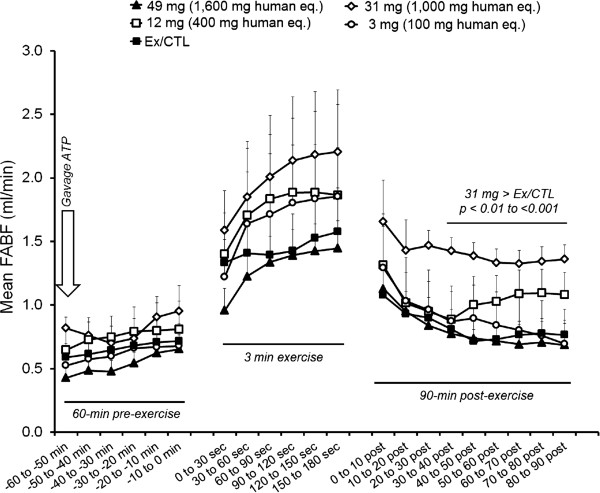
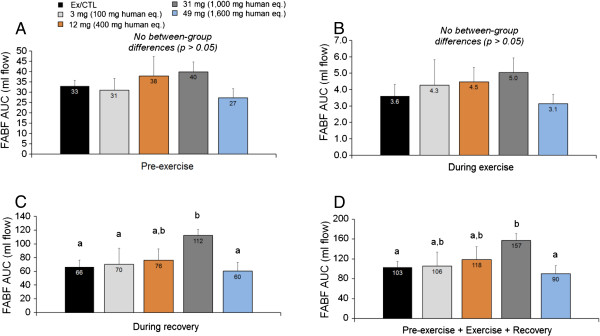
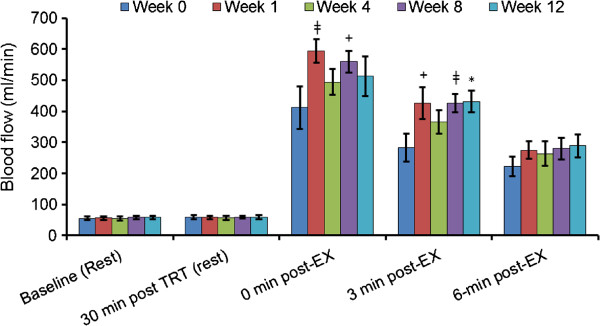
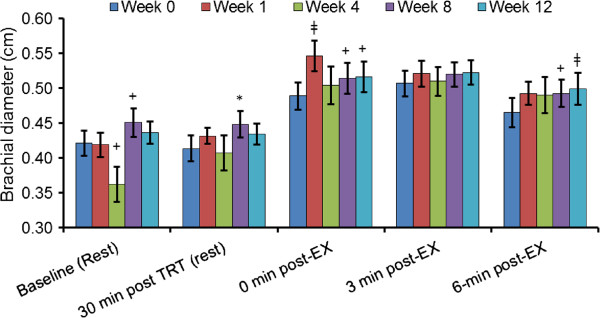
INTRODUCTION: Extracellular adenosine triphosphate (ATP) stimulates vasodilation by binding to endothelial ATP-selective P2Y2 receptors; a phenomenon, which is posited to be accelerated during exercise. Herein, we used a rat model to examine how different dosages of acute oral ATP administration affected the femoral blood flow response prior to, during, and after an exercise bout. In addition, we performed a single dose chronic administration pilot study in resistance trained athletes. ANIMAL STUDY: Male Wistar rats were gavage-fed the body surface area, species adjusted human equivalent dose (HED) of either 100 mg (n=4), 400 mg (n=4), 1,000 mg (n=5) or 1,600 mg (n=5) of oral ATP as a disodium salt (Peak ATP®, TSI, Missoula, MT). Rats that were not gavage-fed were used as controls (CTL, n=5). Blood flow was monitored continuously: a) 60 min prior to, b) during and c) 90 min following an electrically-evoked leg-kicking exercise. Human Study: In a pilot study, 12 college-aged resistance-trained subjects were given 400 mg of ATP (Peak ATP®, TSI, Missoula, MT) daily for 12 weeks, and prior to an acute arm exercise bout at weeks 1, 4, 8, and 12. Ultrasonography-determined volumetric blood flow and vessel dilation in the brachial artery was measured at rest, at rest 30 minutes after supplementation, and then at 0, 3, and 6 minutes after the exercise. ANIMAL STUDY: Rats fed 1,000 mg HED demonstrated significantly greater recovery blood flow (p < 0.01) and total blood flow AUC values (p < 0.05) compared to CTL rats. Specifically, blood flow was elevated in rats fed 1,000 mg HED versus CTL rats at 20 to 90 min post exercise when examining 10-min blood flow intervals (p < 0.05). When examining within-group differences relative to baseline values, rats fed the 1,000 mg and 1,600 mg HED exhibited the most robust increases in blood flow during exercise and into the recovery period. Human study: At weeks 1, 8, and 12, ATP supplementation significantly increased blood flow, along with significant elevations in brachial dilation. CONCLUSIONS: Oral ATP administration can increase post-exercise blood flow, and may be particularly effective during exercise recovery.
Overview
The claims and statistics of this paper haven’t been checked yet.
Free: it reads the open-access text and checks the first 5 claims that cite a source we can check. Create a free account to check every claim.
Integrity signals
Registry
Cites
Statistics
Figures
Verification
Claims the paper makes
The claims and statistics of this paper haven’t been checked yet.
Free: it reads the open-access text and checks the first 5 claims that cite a source we can check. Create a free account to check every claim.
Claims other papers make about this one
Each is checked against this paper’s own text: does it say what the citing paper says it does?
The cited source says what the claim attributes to it.
In the citing paper
“ATP may increase blood flow to the exercising muscle [244] and may reduce fatigue and increase peak power output during later bouts of repeated bouts exercise [242].”
From ISSN exercise & sports nutrition review update: research & recommendations (2018) · cites this paper as [244]
Self-check
Percentages, sums and reported differences re-computed from the paper’s own numbers.
The self-check needs the paper’s full text.
Citations
Cites
Dose translation from animal to human studies revisited.
Reagan‐Shaw, S., Nihal, M., & Ahmad, N. (2008) · The FASEB Journal · doi:10.1096/fj.07-9574lsf · Cited by 6,524 · cited 1×
“[11].”
Corretti, M. C., Anderson, T. J., Benjamin, E. J., Celermajer, D., Charbonneau, F., Creager, M. A., Deanfield, J., Drexler, H., Gerhard-Herman, M., Herrington, D., et al. (2002) · Journal of the American College of Cardiology · doi:10.1016/s0735-1097(01)01746-6 · Cited by 4,604
Yegutkin, G. G. (2008) · Biochimica et Biophysica Acta (BBA) - Molecular Cell Research · doi:10.1016/j.bbamcr.2008.01.024 · Cited by 1,154 · cited 1×
“In other animal studies the administration of oral ATP resulted in a rapid degradation through ectonucleotidase triphosphatase diphosphohydrolase 1 (CD39), present on the luminal side of intestinal enterocytes, which dephosphorylate ATP via ADP to AMP, after which ecto-5′nucleotidase (CD73) degrades AMP to adenosine […”
Adenosine Triphosphate: Established and Potential Clinical Applications
Agteresch, H. J., Dagnelie, P. C., van den Berg, J. W., & Wilson, J. H. (1999) · Drugs · doi:10.2165/00003495-199958020-00002 · Cited by 219
Self-citationRosenmeier, J. B., Hansen, J., & González‐Alonso, J. (2004) · The Journal of Physiology · doi:10.1113/jphysiol.2004.063107 · Cited by 195 · cited 1×
“Infused ATP has been shown to increase blood flow by stimulating endothelial ATP-selective P2Y2 receptors and increasing muscle sympathetic vasoconstrictor activity [8].”
Surface expression, polarization, and functional significance of CD73 in human intestinal epithelia.
Strohmeier, G. R., Lencer, W. I., Patapoff, T. W., Thompson, L. F., Carlson, S. L., Moe, S. J., Carnes, D. K., Mrsny, R. J., & Madara, J. L. (1997) · Journal of Clinical Investigation · doi:10.1172/jci119447 · Cited by 178 · cited 1×
“In other animal studies the administration of oral ATP resulted in a rapid degradation through ectonucleotidase triphosphatase diphosphohydrolase 1 (CD39), present on the luminal side of intestinal enterocytes, which dephosphorylate ATP via ADP to AMP, after which ecto-5′nucleotidase (CD73) degrades AMP to adenosine […”
Calbet, J. A. L., Lundby, C., Sander, M., Robach, P., Saltin, B., & Boushel, R. (2006) · American Journal of Physiology-Regulatory, Integrative and Comparative Physiology · doi:10.1152/ajpregu.00746.2005 · Cited by 108 · cited 1×
“However, despite increased blood flow during ATP infusion, oxygen consumption does not increase [20].”
Rapaport, E., & Fontaine, J. (1989) · Proceedings of the National Academy of Sciences · doi:10.1073/pnas.86.5.1662 · Cited by 81 · cited 1×
“[18,19].”
Rosenmeier, J. B., Yegutkin, G. G., & González‐Alonso, J. (2008) · The Journal of Physiology · doi:10.1113/jphysiol.2008.155432 · Cited by 77 · cited 1×
“The vasodilatory and sympatholytic effects of exogenous ATP are mediated via ATP itself rather than its dephosphorylated metabolites [9].”
Tang, J. E., Lysecki, P. J., Manolakos, J. J., MacDonald, M. J., Tarnopolsky, M. A., & Phillips, S. M. (2011) · The Journal of Nutrition · doi:10.3945/jn.110.130138 · Cited by 77 · cited 1×
“Whereas some studies involving untrained or moderately healthy subjects showed that nitric oxide donors could improve tolerance to aerobic and anaerobic exercise, no significant improvements were measured in healthy [22] or highly-trained subjects [21,23].”
Acute l-arginine supplementation increases muscle blood volume but not strength performance
Álvares, T. S., Conte, C. A., Paschoalin, V. M. F., Silva, J. T., Meirelles, C. D. M., Bhambhani, Y. N., & Gomes, P. S. C. (2012) · Applied Physiology, Nutrition, and Metabolism · doi:10.1139/h11-144 · Cited by 71
Erythrocytes as controllers of perfusion distribution in the microvasculature of skeletal muscle
Sprague, R. S., Bowles, E. A., Achilleus, D., & Ellsworth, M. L. (2011) · Acta Physiologica · doi:10.1111/j.1748-1716.2010.02182.x · Cited by 61
Effect of High Voltage Stimulation on Blood Flow in the Rat Hind Limb
Mohr, T., Akers, T. K., & Wessman, H. C. (1987) · Physical Therapy · doi:10.1093/ptj/67.4.526 · Cited by 61 · cited 1×
“This exercise bout was chosen per previous literature demonstrating that this protocol elicited an increase in femoral blood flow velocity in rats [12].”
Arginine and Citrulline Supplementation in Sports and Exercise: Ergogenic Nutrients?
Sureda, A., & Pons, A. (2012) · Medicine and Sport Science · doi:10.1159/000341937 · Cited by 60 · cited 2×
“However, the daily dose needed to increase blood flow is high (6-24 g) and the ergogenic response may depend on the training status and health of the subjects [21].”
Rapaport, E., & Fontaine, J. (1989) · Biochemical Pharmacology · doi:10.1016/0006-2952(89)90524-8 · Cited by 49 · cited 1×
“[18,19].”
May, C., Weigl, L. G., Karel, A., & HOHENEGGER, M. (2006) · Biochemical Pharmacology · doi:10.1016/j.bcp.2006.02.003 · Cited by 46 · cited 1×
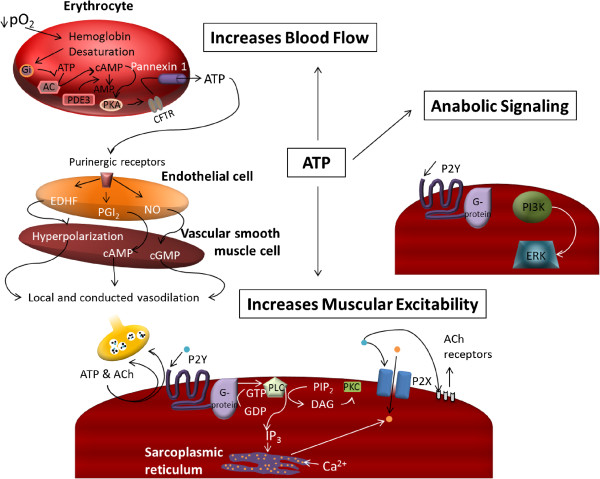
“Three distinct mechanisms-of-action have been proposed for orally administered ATP’s ergogenic benefits: 1) ATP can increase blood flow, resulting in improved oxygen and nutrient delivery to the muscle [5] 2) ATP may increase muscular excitability [6]; 3) ATP can trigger signaling cascades for metabolic adaptation rel…”
Wilson, J. M., Joy, J. M., Lowery, R. P., Roberts, M. D., Lockwood, C. M., Manninen, A. H., Fuller, J. C., De Souza, E. O., Baier, S. M., Wilson, S. M., et al. (2013) · Nutrition & Metabolism · doi:10.1186/1743-7075-10-57 · Cited by 46
Self-citationEffects of Oral ATP Supplementation on Anaerobic Power and Muscular Strength
JORDAN, A. N., JURCA, R., ABRAHAM, E. H., SALIKHOVA, A., MANN, J. K., MORSS, G. M., CHURCH, T. S., LUCIA, A., & EARNEST, C. P. (2004) · Medicine & Science in Sports & Exercise · doi:10.1249/01.mss.0000128198.97260.8b · Cited by 43 · cited 1×
“total bench press lifting volume as well as within-group repetitions to failure on set one of three with 70% of 1RM [3].”
Arts, I. C., Coolen, E. J., Bours, M. J., Huyghebaert, N., Stuart, M. A. C., Bast, A., & Dagnelie, P. C. (2012) · Journal of the International Society of Sports Nutrition · doi:10.1186/1550-2783-9-16 · Cited by 33 · cited 1×
“Studies on the oral availability of ATP showed that it is unlikely that oral ATP administration will directly increase intramuscular ATP stores as a single dose of orally administered ATP in humans did not increase ATP concentrations in blood [15].”
Permittivity of a multiphase and isotropic lattice of spheres at low frequency
Whites, K. W. (2000) · Journal of Applied Physics · doi:10.1063/1.1305828 · Cited by 28
Rathmacher, J. A., Fuller, J. C., Baier, S. M., Abumrad, N. N., Angus, H. F., & Sharp, R. L. (2012) · Journal of the International Society of Sports Nutrition · doi:10.1186/1550-2783-9-48 · Cited by 27 · cited 3×
“Moreover, 15 days of 400 mg per day of ATP supplementation reduced muscle fatigue and enabled a higher force output during repeated high-intensity bouts of exercise [4].”
Self-citationChronic Oral Administration of ATP Modulates Nucleoside Transport and Purine Metabolism in Rats
Kichenin, K., & Seman, M. (2000) · The Journal of Pharmacology and Experimental Therapeutics · doi:10.1016/s0022-3565(24)39047-0 · Cited by 25 · cited 3×
“showed, in rats, that chronic oral administration of ATP increased portal vein ATP concentration and nucleoside uptake by erythrocytes, which resulted in an increase in ATP synthesis in the erythrocytes [10].”
Bannwarth, B., Allaert, F., Avouac, B. P., Rossignol, M., Rozenberg, S., & Valat, J. (2005) · PubMed · Cited by 21
Cardiovascular and pulmonary response to oral administration of ATP in rabbits
Kichenin, K., Decollogne, S., Angignard, J., & Séman, M. (2000) · Journal of Applied Physiology · doi:10.1152/jappl.2000.88.6.1962 · Cited by 19 · cited 1×
“peripheral blood flow, and blood oxygenation [10,14] and human studies have resulted in significant improvements in body composition and performance [4,6].”
Cited by
ISSN exercise & sports nutrition review update: research & recommendations
Kerksick, C. M., Wilborn, C. D., Roberts, M. D., Smith-Ryan, A., Kleiner, S. M., Jäger, R., Collins, R., Cooke, M., Davis, J. N., Galvan, E., et al. (2018) · Journal of the International Society of Sports Nutrition · doi:10.1186/s12970-018-0242-y · Cited by 945
Self-citationBiomarkers for major depressive and bipolar disorders using metabolomics: A systematic review
MacDonald, K., Krishnan, A., Cervenka, E., Hu, G., Guadagno, E., & Trakadis, Y. J. (2018) · American Journal of Medical Genetics Part B Neuropsychiatric Genetics · doi:10.1002/ajmg.b.32680 · Cited by 114
Supplements with purported effects on muscle mass and strength
Valenzuela, P. L., Morales, J. S., Emanuele, E., Pareja-Galeano, H., & Lucia, A. (2019) · European Journal of Nutrition · doi:10.1007/s00394-018-1882-z · Cited by 92
International society of sports nutrition position stand: β-hydroxy-β-methylbutyrate (HMB)
Rathmacher, J. A., Pitchford, L. M., Stout, J. R., Townsend, J. R., Jäger, R., Kreider, R. B., Campbell, B. I., Kerksick, C. M., Harty, P. S., Candow, D. G., et al. (2024) · Journal of the International Society of Sports Nutrition · doi:10.1080/15502783.2024.2434734 · Cited by 50
Self-citationThe ATP-dependent Pathways and Human Diseases
Suwara, J., Radzikowska‐Cieciura, E., Chworoś, A., & Pawłowska, R. (2022) · Current Medicinal Chemistry · doi:10.2174/0929867329666220322104552 · Cited by 37
Metadata
- Authors
- Jäger, R., Roberts, M. D., Lowery, R. P., Joy, J. M., Cruthirds, C. L., Lockwood, C. M., Rathmacher, J. A., Purpura, M., & Wilson, J. M.
- Affiliations
- Increnovo LLC (United States) (US)
- Auburn University (US)
- University of Tampa (US)
- University of Missouri (US)
- 490 BioTech (United States) (US)
- Iowa State University (US)
- Corresponding author
- Wilson, Jacob M
- ORCID
- Venue
- Journal of the International Society of Sports Nutrition
- Publisher
- Informa UK Limited
- Published
- 2014-08-15
- Volume
- 11
- Issue
- 1
- Pages
- 28-28
- ISSN
- 1550-2783 (ISSN-L)
- PMC
- PMC4086998
- OpenAlex
- W2171271675
- Cited by
- 34
- References
- 24
- Citations by year
- 2025: 3 · 2024: 3 · 2023: 4 · 2022: 1 · 2021: 3 · 2020: 3 · 2019: 1 · 2018: 5 · 2017: 4 · 2016: 5 · 2015: 2
- FWCI
- 2.79
- Type
- journal article
- Language
- en
- Open access
- gold
- doi.org
- Licence
- Locations
- Journal of the International Society of Sports Nutrition (publishedVersion, cc-by)
- Europe PMC (PubMed Central) (publishedVersion, cc-by)
- PubMed Central (publishedVersion, cc-by)
- PubMed (publishedVersion)
- Funders
- Metabolic Technologies
- Topics
- Life Sciences › Biochemistry, Genetics and Molecular Biology › Physiology › Adenosine and Purinergic Signaling
- Health Sciences › Medicine › Physiology (medical) › Cardiovascular and exercise physiology
- Health Sciences › Medicine › Physiology (medical) › Exercise and Physiological Responses
- Keywords
- adenosine 5'-triphosphate, vasodilation, P2Y2 receptor, brachial artery, femoral blood flow, resistance-trained athletes, acute exercise, dose-response relationship, human equivalent dose, vascular function, nitric oxide, nitric oxide synthase
About these checks
Registry, retraction, Cites and statistics results are computed, not judged, with one exception: a printed reference that no index lists is read once by a model before it counts as a citation error. Claims are extracted by a model and kept only when their quote appears verbatim in the text; each cited source is then checked, with a model’s help, for whether it says what the claim relies on. Those verdicts can be wrong — read the claim’s quote and the cited source before relying on one.
Statistics and arithmetic are recomputed, not judged.
Confidence bands are shown only for fields calibrated on our annotated test set. None is calibrated yet, so no band is shown.
What counts as a claim ›How we measure confidence ›How we check this ›
Are you an author, or do you see a problem with this page? Request a review
Data sources
Bibliographic data: Semantic Scholar, OpenAlex, Crossref.
Contains information from the Semantic Scholar Academic Graph Datasets, made available under the ODC Attribution License (ODC-BY 1.0).
Semantic Scholar’s data is described in: Kinney, R., et al. (2023). The Semantic Scholar Open Data Platform. arXiv:2301.10140.
