

Acute L-arginine alpha ketoglutarate supplementation fails to improve muscular performance in resistance trained and untrained men
Open accessThe DOI matches its Crossref record; 38 of the 38 references it cites were found in a registry or an index.
Abstract
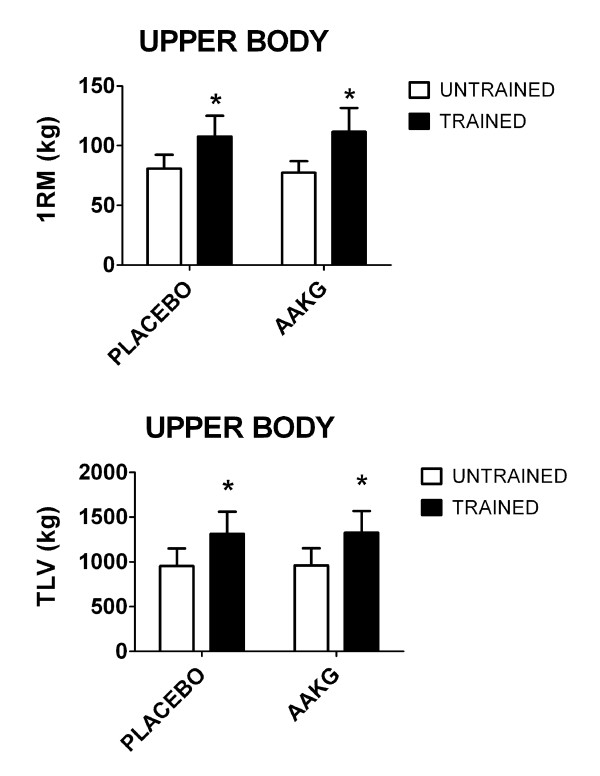
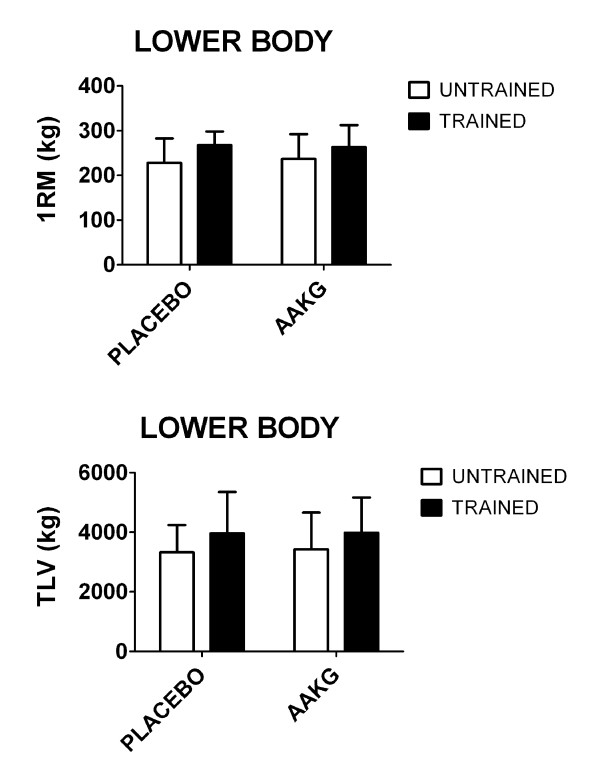
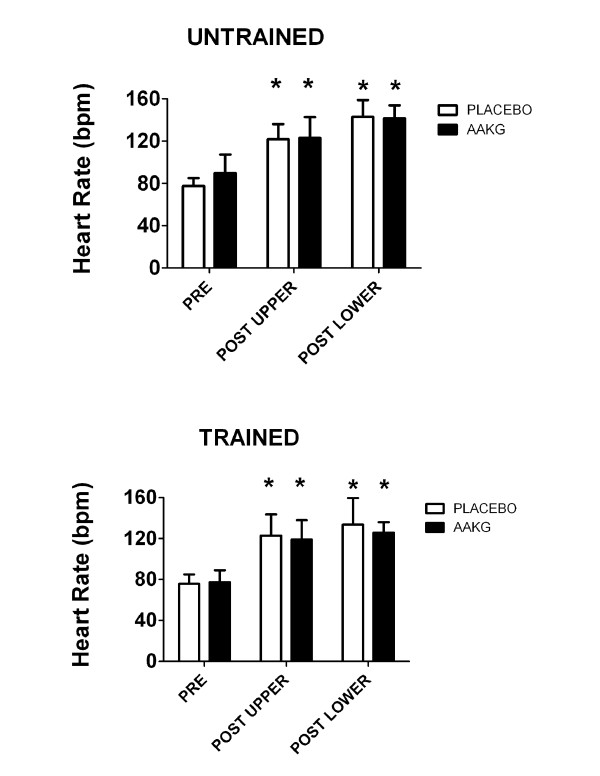
BACKGROUND: Dietary supplements containing L-arginine are marketed to improve exercise performance, but the efficacy of such supplements is not clear. Therefore, this study examined the efficacy of acute ingestion of L-arginine alpha-ketoglutarate (AAKG) muscular strength and endurance in resistance trained and untrained men. METHODS: Eight resistance trained and eight untrained healthy males ingested either 3000mg of AAKG or a placebo 45 minutes prior to a resistance exercise protocol in a randomized, double-blind crossover design. One-repetition maximum (1RM) on the standard barbell bench press and leg press were obtained. Upon determination of 1RM, subjects completed repetitions to failure at 60% 1RM on both the standard barbell bench press and leg press. Heart rate was measured pre and post exercise. One week later, subjects ingested the other supplement and performed the identical resistance exercise protocol. RESULTS: Our data showed statistical significant differences (p<0.05) between resistance trained and untrained males for both 1RM and total load volume (TLV; multiply 60% of 1RM times the number of repetitions to failure) for the upper body. However, 1RM and TLV were not statistically different (p>0.05) between supplementation conditions for either resistance trained or untrained men in the bench press or leg press exercises. Heart rate was similar at the end of the upper and lower body bouts of resistance exercise with AAKG vs. placebo. CONCLUSION: The results from our study indicate that acute AAKG supplementation provides no ergogenic benefit on 1RM or TLV as measured by the standard barbell bench press and leg press, regardless of the subjects training status.
Overview
The claims and statistics of this paper haven’t been checked yet.
Free: it reads the open-access text and checks the first 5 claims that cite a source we can check. Create a free account to check every claim.
Integrity signals
Registry
Cites
Statistics
Figures
Verification
Claims the paper makes
The claims and statistics of this paper haven’t been checked yet.
Free: it reads the open-access text and checks the first 5 claims that cite a source we can check. Create a free account to check every claim.
Claims other papers make about this one
Each is checked against this paper’s own text: does it say what the citing paper says it does?
The cited source says what the claim attributes to it.
In the citing paper
“In accordance, several other studies have failed to positively report on the ability of arginine to operate as an ergogenic aid [278, 640–644].”
From ISSN exercise & sports nutrition review update: research & recommendations (2018) · cites this paper as [640]
Self-check
Percentages, sums and reported differences re-computed from the paper’s own numbers.
The self-check needs the paper’s full text.
Citations
Cites
Physiology of Nitric Oxide in Skeletal Muscle
Stamler, J. S., & Meissner, G. (2001) · Physiological Reviews · doi:10.1152/physrev.2001.81.1.209 · Cited by 1,080 · cited 1×
“These authors did not investigate the underlying mechanism that contributed to the positive effects following chronic L-arginine supplementation; however, speculation regarding increased coronary and peripheral blood flow because of inhibition of endothelin has been proposed [28].”
BackgroundDietary Supplement Use in the United States, 2003–2006
Bailey, R. L., Gahche, J. J., Lentino, C. V., Dwyer, J. T., Engel, J. S., Thomas, P. R., Betz, J. M., Sempos, C. T., & Picciano, M. F. (2011) · The Journal of Nutrition · doi:10.3945/jn.110.133025 · Cited by 812 · cited 1×
“increased in the past decade [1-3].”
Arginine: Biochemistry, Physiology, and Therapeutic Implications
Barbul, A. (1986) · Journal of Parenteral and Enteral Nutrition · doi:10.1177/0148607186010002227 · Cited by 530 · cited 1×
“for improved blood flow [8,9] and this could potentially be”
BackgroundEffect of metabolic products of muscular contraction on discharge of group III and IV afferents
Rotto, D. M., & Kaufman, M. P. (1988) · Journal of Applied Physiology · doi:10.1152/jappl.1988.64.6.2306 · Cited by 524 · cited 1×
“Heart rate increases linearly as exercise intensity increases [29-32] and well documented response of HR can be used as an indicator of exercise intensity [33,34].”
BackgroundPhysiological Response to Water Immersion: A Method for Sport Recovery?
Wilcock, I. M., Cronin, J. B., & Hing, W. A. (2006) · Sports Medicine · doi:10.2165/00007256-200636090-00003 · Cited by 423
Dietary supplement use among U.S. adults has increased since NHANES III (1988-1994).
Gahche, J. J., Bailey, R. L., Burt, V. L., Hughes, J. P., Yetley, E. A., Dwyer, J. T., Picciano, M. F., McDowell, M., & Sempos, C. T. (2011) · PubMed · Cited by 403
Kim, K., Lee, S., Kegelman, T. P., Su, Z., Das, S. K., Dash, R., Dasgupta, S., Barral, P. M., Hedvat, M., Diaz, P., et al. (2011) · Journal of Cellular Physiology · doi:10.1002/jcp.22609 · Cited by 395 · cited 1×
“This is important as alpha ketoglutarate can be replenished through the transamination of glutamate [17], which is an amino acid necessary for protein anabolism and it is also known to be a very important excitatory nervous system neurotransmitter [18,19].”
BackgroundEffect of caffeine ingestion on one-repetition maximum muscular strength
Astorino, T. A., Rohmann, R. L., & Firth, K. (2007) · European Journal of Applied Physiology · doi:10.1007/s00421-007-0557-x · Cited by 183 · cited 1×
“The protocol employed in this study was based on a prior study [25], which tested the efficacy of a proposed ergogenic supplement on muscular force and endurance.”
MethodDietary Supplements and Team-Sport Performance
Bishop, D. (2010) · Sports Medicine · doi:10.2165/11536870-000000000-00000 · Cited by 173 · cited 1×
“increased in the past decade [1-3].”
Vascular effects of dietary l-arginine supplementation
Preli, R. B., Klein, K. P., & Herrington, D. M. (2002) · Atherosclerosis · doi:10.1016/s0021-9150(01)00717-1 · Cited by 156 · cited 1×
“for improved blood flow [8,9] and this could potentially be”
BackgroundL-Arginine as a Potential Ergogenic Aid in Healthy Subjects
Álvares, T. S., Meirelles, C. M., Bhambhani, Y. N., Paschoalin, V. M. F., & Gomes, P. S. C. (2011) · Sports Medicine · doi:10.2165/11538590-000000000-00000 · Cited by 138 · cited 3×
“[4,5].”
Campbell, B., Roberts, M., Kerksick, C., Wilborn, C., Marcello, B., Taylor, L., Nassar, E., Leutholtz, B., Bowden, R., Rasmussen, C., et al. (2006) · Nutrition · doi:10.1016/j.nut.2006.06.003 · Cited by 128 · cited 8×
“However, other investigators (as in the current study) have reported that acute ingestion of AAKG ingestion appears to be safe and well tolerated in healthy subjects [13].”
BackgroundMethodInfluentialPotential Ergogenic Effects of Arginine and Creatine Supplementation
Paddon-Jones, D., Børsheim, E., & Wolfe, R. R. (2004) · The Journal of Nutrition · doi:10.1093/jn/134.10.2888s · Cited by 119 · cited 1×
“Firstly, an acute exogenous dose of AAKG may not be sufficient to facilitate the increased levels of arginine necessary to confer an ergogenic effect in normal healthy individuals [37].”
BackgroundAutonomic nervous control of the heart rate during dynamic exercise in normal man
Maceel, B. C., Gallo, L., Marin Neto, J. A., Lima Filho, E. C., & Martins, L. E. B. (1986) · Clinical Science · doi:10.1042/cs0710457 · Cited by 113 · cited 1×
“Heart rate increases linearly as exercise intensity increases [29-32] and well documented response of HR can be used as an indicator of exercise intensity [33,34].”
BackgroundCastillo, L., Sanchez, M., Vogt, J., Chapman, T. E., DeRojas-Walker, T. C., Tannenbaum, S. R., Ajami, A. M., & Young, V. R. (1995) · American Journal of Physiology-Endocrinology and Metabolism · doi:10.1152/ajpendo.1995.268.2.e360 · Cited by 108
Liu, T.-H., Wu, C.-L., Chiang, C.-W., Lo, Y.-W., Tseng, H.-F., & Chang, C.-K. (2009) · The Journal of Nutritional Biochemistry · doi:10.1016/j.jnutbio.2008.05.005 · Cited by 101 · cited 1×
“The selected dose [26] and the timing of supplementation was based on prior research which reported plasma arginine concentrations peaked approximately 60 minutes following oral ingestion of AAKG [27].”
MethodLamberts, R. P., & Lambert, M. I. (2009) · Journal of Strength and Conditioning Research · doi:10.1519/jsc.0b013e3181a2dcdc · Cited by 88 · cited 1×
“Heart rate increases linearly as exercise intensity increases [29-32] and well documented response of HR can be used as an indicator of exercise intensity [33,34].”
BackgroundPharmacokinetics of Arginine and Related Amino Acids
Cynober, L. (2007) · Journal of Nutrition · doi:10.1093/jn/137.6.1646s · Cited by 86
Zajac, A., Poprzęcki, S., Żebrowska, A., Chalimoniuk, M., & Langfort, J. (2010) · Journal of Strength and Conditioning Research · doi:10.1519/jsc.0b013e3181d321ff · Cited by 85 · cited 1×
“The selected dose [26] and the timing of supplementation was based on prior research which reported plasma arginine concentrations peaked approximately 60 minutes following oral ingestion of AAKG [27].”
MethodMYERS, J. N., & Gullestad, L. L. (1998) · PubMed · Cited by 84
Alpha-ketoglutarate preserves protein synthesis and free glutamine in skeletal muscle after surgery.
Hammarqvist, F., Wernerman, J., von der Decken, A., & Vinnars, E. (1991) · PubMed · Cited by 82
Nutritive and non‐nutritive blood flow: rest and exercise
Clark, M. G., Rattigan, S., Clerk, L. H., Vincent, M. A., Clark, A. D. H., Youd, J. M., & Newman, J. M. B. (2000) · Acta Physiologica Scandinavica · doi:10.1046/j.1365-201x.2000.00704.x · Cited by 80 · cited 1×
“muscles [10-12].”
Rapid Kinetic Studies of Electron Transfer in the Three Isoforms of Nitric Oxide Synthase
Miller, R. T., Martasek, P., Omura, T., & Masters, B. S. S. (1999) · Biochemical and Biophysical Research Communications · doi:10.1006/bbrc.1999.1643 · Cited by 79 · cited 1×
“tric oxide production [7,13,14].”
Ciruela, F., Gómez‐Soler, M., Guidolin, D., Borroto‐Escuela, D. O., Agnati, L. F., Fuxé, K., & Fernández‐Dueñas, V. (2011) · Biochimica et Biophysica Acta (BBA) - Biomembranes · doi:10.1016/j.bbamem.2011.02.007 · Cited by 79 · cited 1×
“This is important as alpha ketoglutarate can be replenished through the transamination of glutamate [17], which is an amino acid necessary for protein anabolism and it is also known to be a very important excitatory nervous system neurotransmitter [18,19].”
BackgroundThe l-arginine: nitric oxide pathway
Palmer, R. M. J. (1993) · Current Opinion in Nephrology and Hypertension · doi:10.1097/00041552-199301000-00018 · Cited by 61
Santos, R. S., Pacheco, M. T. T., Martins, R. A. B. L., Villaverde, A. B., Giana, H. E., Baptista, F., & Zângaro, R. A. (2002) · Isokinetics and Exercise Science · doi:10.3233/ies-2002-0096 · Cited by 60
Adaptation of endothelium to exercise training: Insights from experimental studies
Haram, P. (2008) · Frontiers in Bioscience · doi:10.2741/2683 · Cited by 58 · cited 1×
“Specifically, it has been reported that arginine-based supplementation did not have a large influence on hemodynamics in healthy humans following an exercise protocol that lasted twelve minutes [36].”
BackgroundBloomer, R. J., Farney, T. M., Trepanowski, J. F., McCarthy, C. G., Canale, R. E., & Schilling, B. K. (2010) · Journal of the International Society of Sports Nutrition · doi:10.1186/1550-2783-7-16 · Cited by 56 · cited 2×
“In agreement with these data, Bloomer and collaborators have also reported that HR was not altered after single bouts of anaerobic or resistance exercise following ingestion of nitric-oxide inducing supplements [35].”
ResultElam, R., Hardin, D. H., Sutton, R. A. L., & Hagen, L. E. (1989) · PubMed · Cited by 51
Effects of High-Intensity Training by Heart Rate or Power in Well-Trained Cyclists
Swart, J., Lamberts, R. P., Derman, W. E., & Lambert, M. (2009) · The Journal of Strength and Conditioning Research · doi:10.1519/jsc.0b013e31818cc5f5 · Cited by 50 · cited 1×
“Heart rate increases linearly as exercise intensity increases [29-32] and well documented response of HR can be used as an indicator of exercise intensity [33,34].”
BackgroundLittle, J. P., Forbes, S. C., Candow, D. G., Cornish, S. M., & Chilibeck, P. D. (2008) · International Journal of Sport Nutrition and Exercise Metabolism · doi:10.1123/ijsnem.18.5.493 · Cited by 45 · cited 1×
“muscles [10-12].”
Resting and Postexercise Cardiac Autonomic Control in Trained Masters Athletes
Brown, S. J., & Brown, J. A. (2007) · The Journal of Physiological Sciences · doi:10.2170/physiolsci.rp012306 · Cited by 39 · cited 1×
“Heart rate increases linearly as exercise intensity increases [29-32] and well documented response of HR can be used as an indicator of exercise intensity [33,34].”
BackgroundSelf-citationWilloughby, D. S., Boucher, T., Reid, J., Skelton, G., & Clark, M. (2011) · International Journal of Sport Nutrition and Exercise Metabolism · doi:10.1123/ijsnem.21.4.291 · Cited by 36 · cited 2×
“Furthermore, data obtain from this study are in agreement with previous investigations, which reported that supplementation with nitric-oxide-inducing supplements had no effect on the resting levels of HR [5,35].”
BackgroundResultThe effect of l‐arginine administration on muscle force and power in postmenopausal women
Fricke, O., Baecker, N., Heer, M., Tutlewski, B., & Schoenau, E. (2008) · Clinical Physiology and Functional Imaging · doi:10.1111/j.1475-097x.2008.00809.x · Cited by 34 · cited 1×
“Arginine-based supplementation has produced mixed results with some studies reporting ergogenic benefits in anaerobic power [13], muscular strength [13,20], and muscular endurance [21], while others have found no effect on these same performance variables [22,23].”
BackgroundGreer, B. K., & Jones, B. T. (2011) · Journal of Strength and Conditioning Research · doi:10.1519/jsc.0b013e3181e07569 · Cited by 30 · cited 7×
“To our knowledge, only two studies have investigated the independent effects of AAKG on resistance exercise performance [13,22].”
BackgroundInfluentialThe Role of Exercise on L-Arginine Nitric Oxide Pathway in Chronic Heart Failure
Mendes-Ribeiro, A. C., Mann, G. E., de Meirelles, L. R., Moss, M. B., Matsuura, C., & Brunini, T. M. C. (2009) · The Open Biochemistry Journal · doi:10.2174/1874091x00903010055 · Cited by 23
Tricarboxylic-Acid-Cycle Intermediates and Cycle Endurance Capacity
Brown, A. C., MacRae, H., & Turner, N. S. (2004) · International Journal of Sport Nutrition and Exercise Metabolism · doi:10.1123/ijsnem.14.6.720 · Cited by 19 · cited 2×
“Recently, commercially available L-arginine supplements have been combined with alpha ketoglutarate, in an effort to further improve exercise performance by increasing adenosine triphosphate production through the electron transport chain [15].”
BackgroundAdverse effects associated with arginine α-ketoglutarate containing supplements
Prosser, J., Majlesi, N., Chan, G. M., Olsen, D., Hoffman, R. S., & Nelson, L. S. (2009) · Human & Experimental Toxicology · doi:10.1177/0960327109104498 · Cited by 16 · cited 1×
“In this regard, a recent paper reported that individuals had experienced adverse side effects following ingestion of nitric oxide stimulator supplements [39].”
Background
Research works printed but not linked: 1
- Santos R Pacheco M Martins R Villaverde A Giana H Baptista F Zngaro R Study of the effect of oral administration of L-arginine on muscular performance in healthy volunteers: an isokinetic study Iso Exerc Sci 2002 10 153 158
Cited by
ISSN exercise & sports nutrition review update: research & recommendations
Kerksick, C. M., Wilborn, C. D., Roberts, M. D., Smith-Ryan, A., Kleiner, S. M., Jäger, R., Collins, R., Cooke, M., Davis, J. N., Galvan, E., et al. (2018) · Journal of the International Society of Sports Nutrition · doi:10.1186/s12970-018-0242-y · Cited by 945
Stimuli and sensors that initiate skeletal muscle hypertrophy following resistance exercise
Wackerhage, H., Schoenfeld, B. J., Hamilton, D. L., Lehti, M., & Hulmi, J. J. (2019) · Journal of Applied Physiology · doi:10.1152/japplphysiol.00685.2018 · Cited by 357
Alpha-Ketoglutarate dietary supplementation to improve health in humans
Gyanwali, B., Lim, Z. X., Soh, J., Lim, C., Guan, S. P., Goh, J., Maier, A. B., & Kennedy, B. K. (2021) · Trends in Endocrinology and Metabolism · doi:10.1016/j.tem.2021.11.003 · Cited by 174
Amino acid supplementation and impact on immune function in the context of exercise
Cruzat, V. F., Krause, M., & Newsholme, P. (2014) · Journal of the International Society of Sports Nutrition · doi:10.1186/s12970-014-0061-8 · Cited by 157
“An increase in NO may result in improved blood flow and this could potentially be beneficial for individuals engaged in exercise training [90], by increasing nutrient delivery and/or waste-product removal from exercising skeletal muscles [90].”
BackgroundPleiotropic effects of alpha-ketoglutarate as a potential anti-ageing agent
Bayliak, M. M., & Lushchak, V. I. (2021) · Ageing Research Reviews · doi:10.1016/j.arr.2020.101237 · Cited by 110
Metadata
- Authors
- Wax, B., Kavazis, A. N., Webb, H. E., & Brown, S. P.
- Affiliations
- Mississippi State University (US)
- Corresponding author
- Wax, Benjamin
- Venue
- Journal of the International Society of Sports Nutrition
- Publisher
- Informa UK Limited
- Published
- 2012-02-06
- Volume
- 9
- Issue
- 1
- Pages
- 17-17
- ISSN
- 1550-2783 (ISSN-L)
- PMC
- PMC3428651
- OpenAlex
- W2156029120
- Cited by
- 35
- References
- 38
- Citations by year
- 2025: 2 · 2023: 2 · 2022: 5 · 2021: 1 · 2020: 4 · 2019: 4 · 2018: 5 · 2017: 2 · 2016: 2 · 2015: 4 · 2014: 3 · 2013: 1
- FWCI
- 1.21
- Type
- journal article
- Language
- en
- Open access
- gold
- doi.org
- Licence
- Locations
- Journal of the International Society of Sports Nutrition (publishedVersion, cc-by)
- Europe PMC (PubMed Central) (publishedVersion, cc-by)
- PubMed Central (publishedVersion, cc-by)
- PubMed (publishedVersion)
- DOAJ (DOAJ: Directory of Open Access Journals) (submittedVersion, cc-by-sa)
- Topics
- Health Sciences › Nursing › Nutrition and Dietetics › Muscle metabolism and nutrition
- Health Sciences › Medicine › Orthopedics and Sports Medicine › Sports Performance and Training
- Health Sciences › Medicine › Physiology (medical) › Biochemical effects in animals
- Keywords
- dietary supplementation, ergogenic aids, muscle strength, muscular endurance, resistance training, trained vs untrained men, one-repetition maximum, heart rate, bench press, leg press
About these checks
Registry, retraction, Cites and statistics results are computed, not judged, with one exception: a printed reference that no index lists is read once by a model before it counts as a citation error. Claims are extracted by a model and kept only when their quote appears verbatim in the text; each cited source is then checked, with a model’s help, for whether it says what the claim relies on. Those verdicts can be wrong — read the claim’s quote and the cited source before relying on one.
Statistics and arithmetic are recomputed, not judged.
Confidence bands are shown only for fields calibrated on our annotated test set. None is calibrated yet, so no band is shown.
What counts as a claim ›How we measure confidence ›How we check this ›
Are you an author, or do you see a problem with this page? Request a review
Data sources
Bibliographic data: Semantic Scholar, OpenAlex, Crossref.
Contains information from the Semantic Scholar Academic Graph Datasets, made available under the ODC Attribution License (ODC-BY 1.0).
Semantic Scholar’s data is described in: Kinney, R., et al. (2023). The Semantic Scholar Open Data Platform. arXiv:2301.10140.
