

The DOI matches its Crossref record; 114 of the 117 references it cites were found in a registry or an index.
Strong mitochondrial DNA support for a Cretaceous origin of modern avian lineages
Open accessAbstract
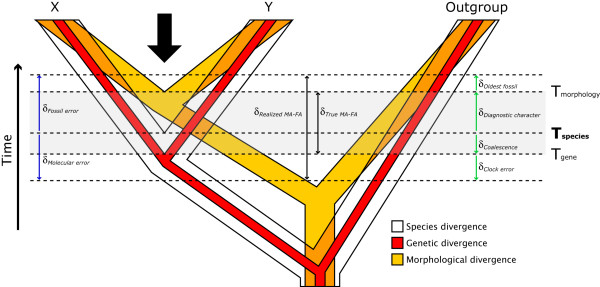
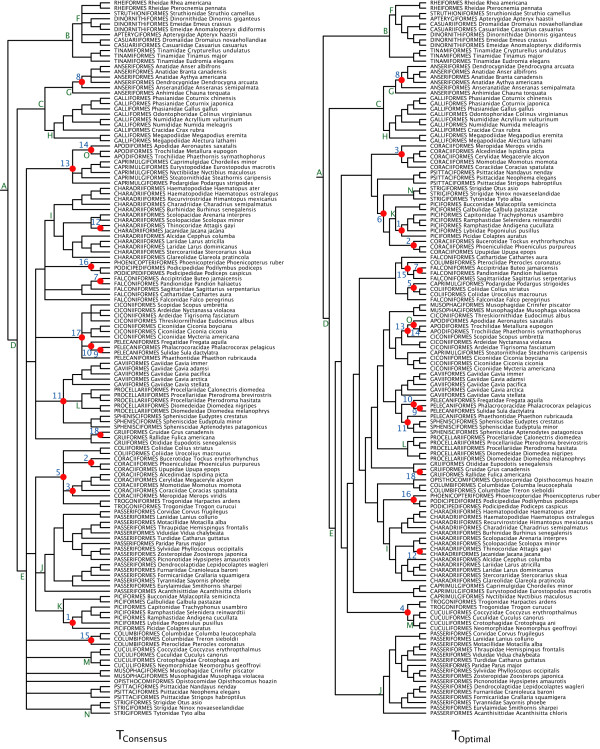
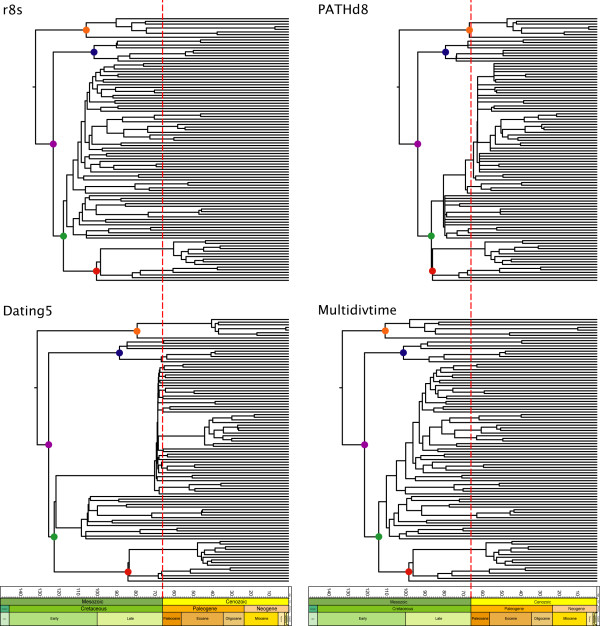
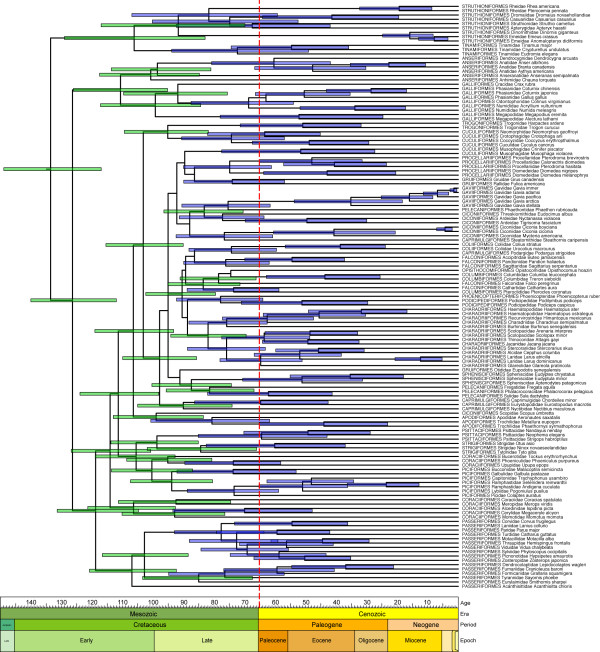
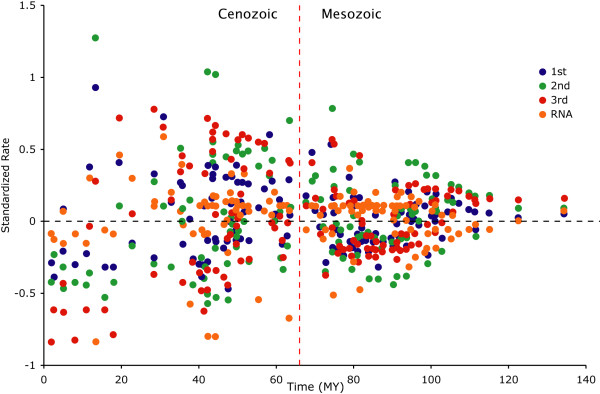
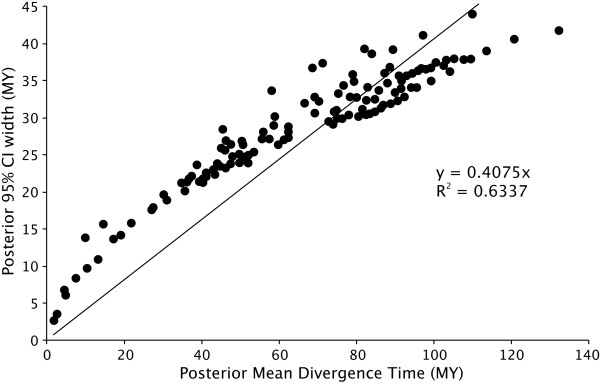
BACKGROUND: Determining an absolute timescale for avian evolutionary history has proven contentious. The two sources of information available, paleontological data and inference from extant molecular genetic sequences (colloquially, 'rocks' and 'clocks'), have appeared irreconcilable; the fossil record supports a Cenozoic origin for most modern lineages, whereas molecular genetic estimates suggest that these same lineages originated deep within the Cretaceous and survived the K-Pg (Cretaceous-Paleogene; formerly Cretaceous-Tertiary or K-T) mass-extinction event. These two sources of data therefore appear to support fundamentally different models of avian evolution. The paradox has been speculated to reflect deficiencies in the fossil record, unrecognized biases in the treatment of genetic data or both. Here we attempt to explore uncertainty and limit bias entering into molecular divergence time estimates through: (i) improved taxon (n = 135) and character (n = 4594 bp mtDNA) sampling; (ii) inclusion of multiple cladistically tested internal fossil calibration points (n = 18); (iii) correction for lineage-specific rate heterogeneity using a variety of methods (n = 5); (iv) accommodation of uncertainty in tree topology; and (v) testing for possible effects of episodic evolution. RESULTS: The various 'relaxed clock' methods all indicate that the major (basal) lineages of modern birds originated deep within the Cretaceous, although temporal intraordinal diversification patterns differ across methods. We find that topological uncertainty had a systematic but minor influence on date estimates for the origins of major clades, and Bayesian analyses assuming fixed topologies deliver similar results to analyses with unconstrained topologies. We also find that, contrary to expectation, rates of substitution are not autocorrelated across the tree in an ancestor-descendent fashion. Finally, we find no signature of episodic molecular evolution related to either speciation events or the K-Pg boundary that could systematically mislead inferences from genetic data. CONCLUSION: The 'rock-clock' gap has been interpreted by some to be a result of the vagaries of molecular genetic divergence time estimates. However, despite measures to explore different forms of uncertainty in several key parameters, we fail to reconcile molecular genetic divergence time estimates with dates taken from the fossil record; instead, we find strong support for an ancient origin of modern bird lineages, with many extant orders and families arising in the mid-Cretaceous, consistent with previous molecular estimates. Although there is ample room for improvement on both sides of the 'rock-clock' divide (e.g. accounting for 'ghost' lineages in the fossil record and developing more realistic models of rate evolution for molecular genetic sequences), the consistent and conspicuous disagreement between these two sources of data more likely reflects a genuine difference between estimated ages of (i) stem-group origins and (ii) crown-group morphological diversifications, respectively. Further progress on this problem will benefit from greater communication between paleontologists and molecular phylogeneticists in accounting for error in avian lineage age estimates.
Overview
The claims and statistics of this paper haven’t been checked yet.
Run the check — free, no account needed. It reads the open-access text and checks the sources it cites.
Integrity signals
Registry
Cites
Statistics
Figures
Verification
Claims the paper makes
The claims and statistics of this paper haven’t been checked yet.
Run the check — free, no account needed. It reads the open-access text and checks the sources it cites.
Claims other papers make about this one
Each is checked against this paper’s own text: does it say what the citing paper says it does?
The cited source says what the claim attributes to it.
In the citing paper
“Although WAIR has been recorded in the Tinamou and some neognaths, the origin of crown Aves (Neornithes) is estimated at approximately 86.5 MYA, using fossils [106], and 130 MYA, using molecular dating [107].”
From Assessing Arboreal Adaptations of Bird Antecedents: Testing the Ecological Setting of the Origin of the Avian Flight Stroke (2011) · cites this paper as [107]
Self-check
Percentages, sums and reported differences re-computed from the paper’s own numbers.
The self-check needs the paper’s full text.
Citations
Cites
PHYLIP-Phylogeny inference package (Version 3.2)
Felsenstein, J. (1989) · Cladistics · Cited by 17,682
BEAST: Bayesian evolutionary analysis by sampling trees
Drummond, A. J., & Rambaut, A. (2007) · BMC Evolutionary Biology · doi:10.1186/1471-2148-7-214 · Cited by 13,104
Relaxed Phylogenetics and Dating with Confidence
Drummond, A. J., Ho, S. Y. W., Phillips, M. J., & Rambaut, A. (2006) · PLoS Biology · doi:10.1371/journal.pbio.0040088 · Cited by 6,463 · cited 6×
“Newly developed methods exist where probability distributions can be applied to calibrated nodes in a Bayesian framework [47,84,85].”
InfluentialPAML: a program package for phylogenetic analysis by maximum likelihood
Yang, Z. (1997) · Computer applications in the biosciences · doi:10.1093/bioinformatics/13.5.555 · Cited by 5,377
Punctuated equilibria: an alternative to phyletic gradualism
Eldredge, N., Gould, S. J., & Schöpf, T. J. M. (1972) · Cited by 3,257
PHYLIP ( PHYLogeny Inference Package)
Cummings, M. P. (2004) · Dictionary of Bioinformatics and Computational Biology · doi:10.1002/9780471650126.dob0534.pub2 · Cited by 3,127
Handbook of the Birds of the World
del Hoyo, J., Elliott, A., Vicens, J. S. I., & Christie, D. G. S. (2010) · Medical Entomology and Zoology · Cited by 2,893
Cellular Scaling Rules for the Brains of Marsupials: Not as “Primitive” as Expected
Santos, S. E. D., Porfírio, J., Cunha, F., Manger, P. R., Tavares, W. C., Pessôa, L. M., Raghanti, M. A., Sherwood, C. C., & Herculano‐Houzel, S. (2017) · Brain Behavior and Evolution · doi:10.1159/000452856 · Cited by 2,652
Phylogeny and Classification of the Birds
Sibley, C. G., & Ahlquist, J. E. (1991) · Yale University Press eBooks · doi:10.2307/j.ctt1xp3v3r · Cited by 2,312
The delayed rise of present-day mammals
Bininda-Emonds, O. R. P., Cardillo, M., Jones, K. E., MacPhee, R. D. E., Beck, R. M. D., Grenyer, R., Price, S. A., Vos, R. A., Gittleman, J. L., & Purvis, A. (2007) · Nature · doi:10.1038/nature05634 · Cited by 2,082
Research works printed but not linked: 4
- Easteal S: Molecular evidence for the early divergence of placental mammals. BioEssays. 1999, 21: 1052-1058. 10.1002/(SICI)1521-1878(199912)22:1<1052::AID-BIES9>3.0.CO;2-6. · DOI
- Swofford DL: PAUP*. Phylogenetic Analysis Using Parsimony (*and Other Methods) 4 (beta 10). 2003, Sunderland, MA: Sinauer Associates
- Britton T, Anderson CL, Jaquet D, Lundqvist S, Bremer K: PATHd8 – a new method for estimating divergence times in large phylogenetic trees without a molecular clock. 2006, [ http://www.math.su.se/PATHd8 ]
- Cutler DJ: Dating5. 2000
Cited by
Sorted by citations
A phylogenomic study of birds reveals their evolutionary history
Hackett, S. J., Kimball, R. T., Reddy, S., Bowie, R. C. K., Braun, E. L., Braun, M. J., Chojnowski, J. L., Cox, W. A., Han, K.-L., Harshman, J., et al. (2008) · Science · doi:10.1126/science.1157704 · Cited by 2,125
Whole-genome analyses resolve early branches in the tree of life of modern birds
Jarvis, E. D., Mirarab, S., Aberer, A. J., Li, B., Houde, P., Li, C., Ho, S. Y. W., Faircloth, B. C., Nabholz, B., Howard, J. T., et al. (2014) · Science · doi:10.1126/science.1253451 · Cited by 1,901
Self-citationAccounting for Calibration Uncertainty in Phylogenetic Estimation of Evolutionary Divergence Times
Ho, S. Y. W., & Phillips, M. J. (2009) · Systematic Biology · doi:10.1093/sysbio/syp035 · Cited by 906
Phylogeny and tempo of diversification in the superradiation of spiny-rayed fishes
Near, T. J., Dornburg, A., Eytan, R. I., Keck, B. P., Smith, W. L., Kuhn, K. L., Moore, J. A., Price, S. A., Burbrink, F. T., Friedman, M., et al. (2013) · Proceedings of the National Academy of Sciences · doi:10.1073/pnas.1304661110 · Cited by 502
Bayesian Total-Evidence Dating Reveals the Recent Crown Radiation of Penguins
Gavryushkina, A., Heath, T. A., Ksepka, D. T., Stadler, T., Welch, D., & Drummond, A. J. (2016) · Systematic Biology · doi:10.1093/sysbio/syw060 · Cited by 372
Metadata
- Authors
- Brown, J. W., Rest, J. S., García-Moreno, J., Sorenson, M. D., & Mindell, D. P.
- Affiliations
- University of Michigan (US)
- University of Chicago (US)
- Boston University (US)
- Corresponding author
- Brown, Joseph W
- Venue
- BMC Biology
- Published
- 2008-01-28
- Volume
- 6
- Issue
- 1
- Pages
- 6-6
- ISSN
- 1741-7007 (ISSN-L)
- PMC
- PMC2267772
- OpenAlex
- W2099180789
- Cited by
- 236
- References
- 117
- Citations by year
- 2026: 1 · 2025: 4 · 2024: 7 · 2023: 2 · 2022: 4 · 2021: 5 · 2020: 5 · 2019: 5 · 2018: 7 · 2017: 5 · 2016: 15 · 2015: 31 · 2014: 29 · 2013: 24 · 2012: 20
- FWCI
- 18.01
- Type
- journal article
- Language
- en
- Open access
- gold
- doi.org
- Licence
- Locations
- BMC Biology (publishedVersion, cc-by)
- Europe PMC (PubMed Central) (publishedVersion, cc-by)
- PubMed Central (publishedVersion, cc-by)
- PubMed (publishedVersion)
- Deep Blue (University of Michigan) (submittedVersion)
- DOAJ (DOAJ: Directory of Open Access Journals) (submittedVersion, cc-by-sa)
- OpenBU (Boston University) (submittedVersion, cc-by)
- Topics
- Physical Sciences › Earth and Planetary Sciences › Paleontology › Evolution and Paleontology Studies
- Physical Sciences › Earth and Planetary Sciences › Paleontology › Paleontology and Evolutionary Biology
- Life Sciences › Agricultural and Biological Sciences › Ecology, Evolution, Behavior and Systematics › Plant Diversity and Evolution
- Keywords
- avian evolution, mitochondrial DNA, K-Pg mass extinction, fossil calibration, relaxed molecular clock, topological uncertainty, avian phylogeny, Cenozoic diversification, fossil record bias
- MeSH terms
- Animals, Bayes Theorem, Birds, DNA, Mitochondrial, Fossils, Phylogeny, Genetic Variation, Evolution, Molecular, Genetic Speciation
About these checks
Registry, retraction, Cites and statistics results are computed, not judged, with one exception: a printed reference that no index lists is read once by a model before it counts as a citation error. Claims are extracted by a model and kept only when their quote appears verbatim in the text; each cited source is then checked, with a model’s help, for whether it says what the claim relies on. Those verdicts can be wrong — read the claim’s quote and the cited source before relying on one.
Statistics and arithmetic are recomputed, not judged.
Confidence bands are shown only for fields calibrated on our annotated test set. None is calibrated yet, so no band is shown.
What counts as a claim ›How we measure confidence ›How we check this ›
Are you an author, or do you see a problem with this page? Request a review
