

The DOI matches its Crossref record; 79 of the 80 references it cites were found in a registry or an index.
Phenotype, donor age and gender affect function of human bone marrow-derived mesenchymal stromal cells
Open accessAbstract
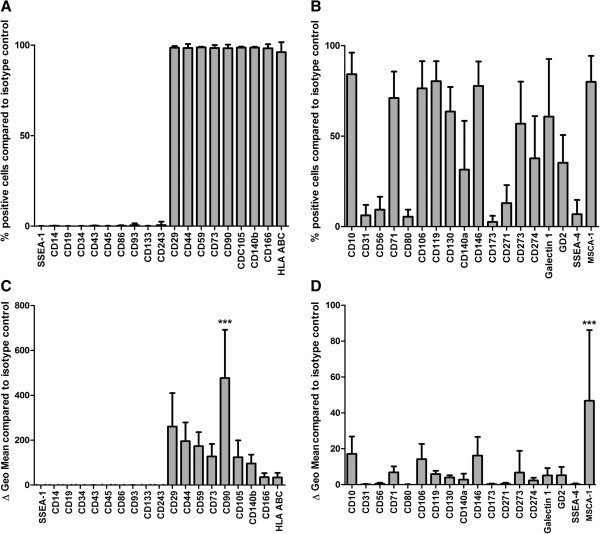
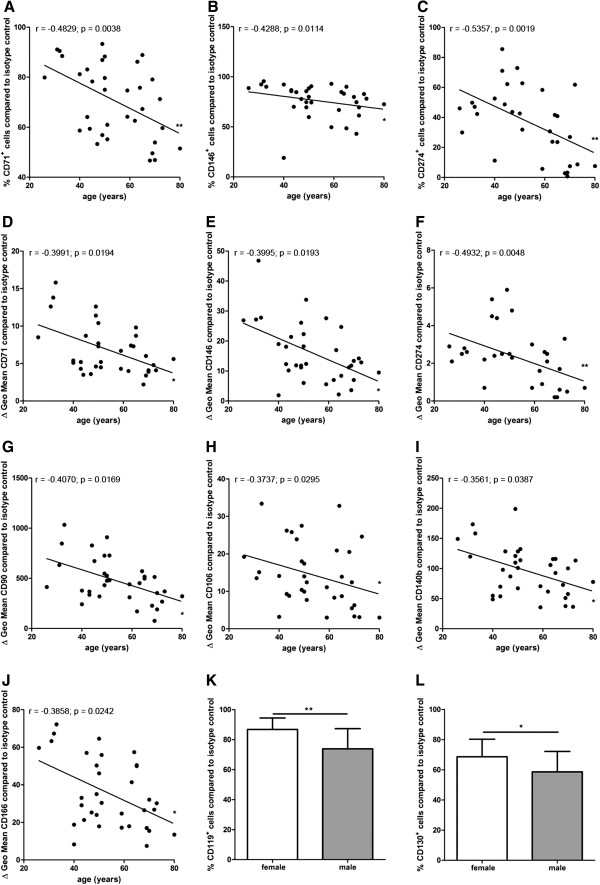
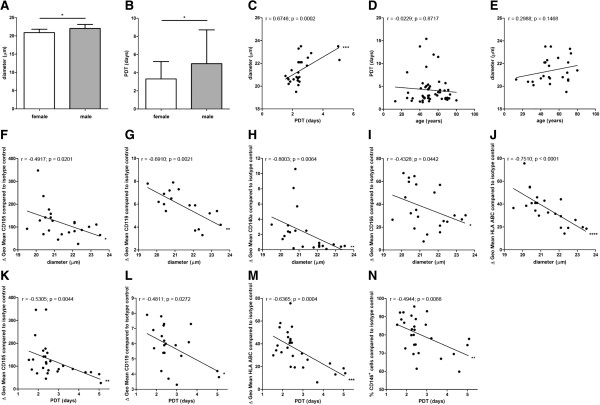
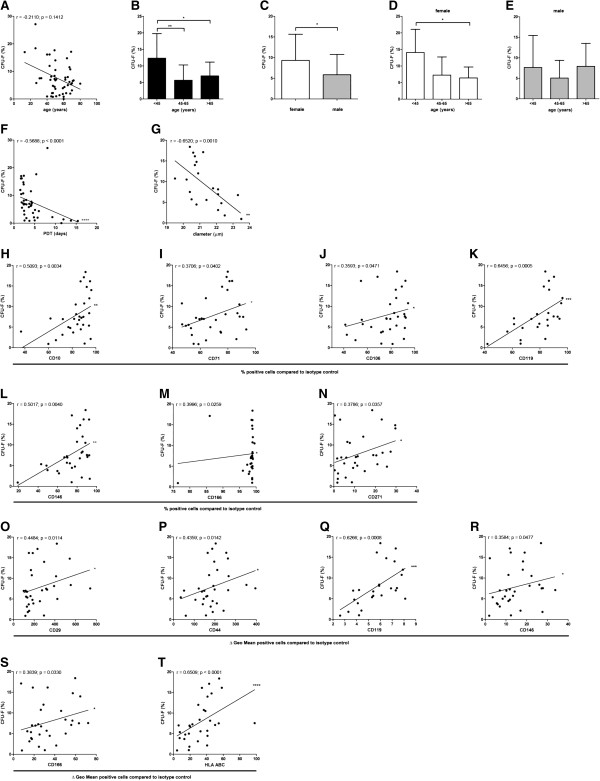
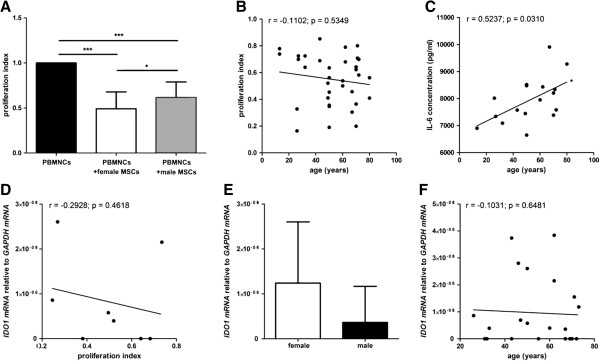
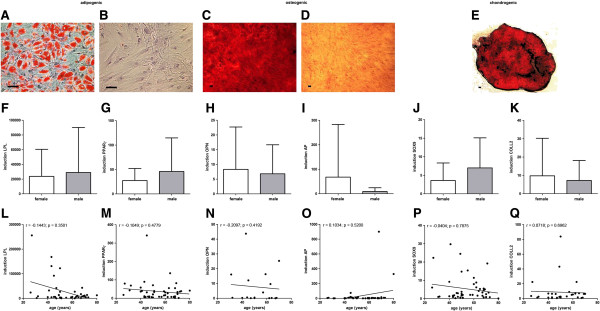
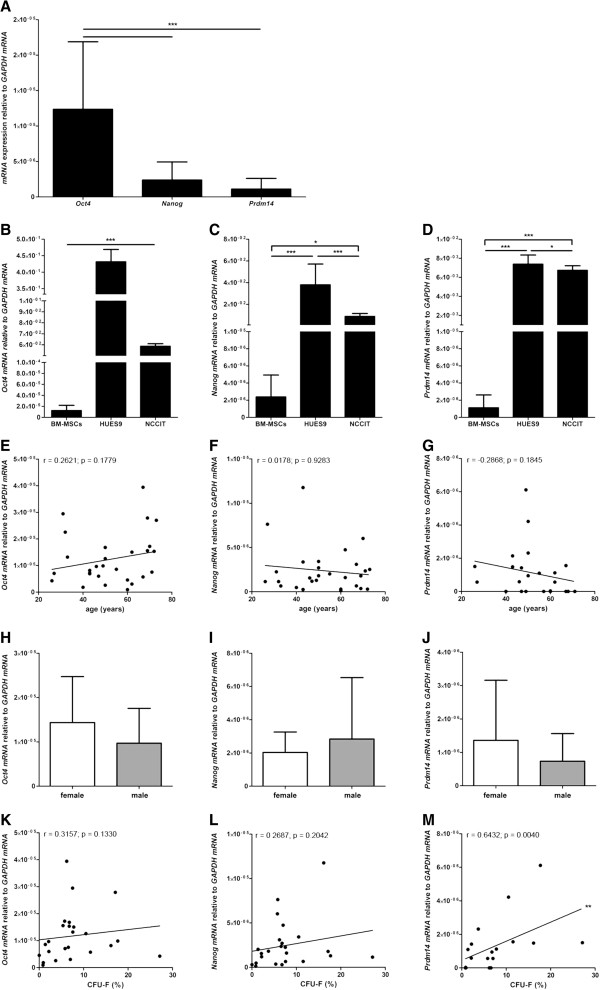
Background: Mesenchymal stromal cells (MSCs) are attractive for cell-based therapies ranging from regenerative medicine and tissue engineering to immunomodulation. However, clinical efficacy is variable and it is unclear how the phenotypes defining bone marrow (BM)-derived MSCs as well as donor characteristics affect their functional properties. Methods: BM-MSCs were isolated from 53 (25 female, 28 male; age: 13 to 80 years) donors and analyzed by: (1) phenotype using flow cytometry and cell size measurement; (2) in vitro growth kinetics using population doubling time; (3) colony formation capacity and telomerase activity; and (4) function by in vitro differentiation capacity, suppression of T cell proliferation, cytokines and trophic factors secretion, and hormone and growth factor receptor expression. Additionally, expression of Oct4 , Nanog , Prdm14 and SOX2 mRNA was compared to pluripotent stem cells. Results: BM-MSCs from younger donors showed increased expression of MCAM, VCAM-1, ALCAM, PDGFRβ, PDL-1, Thy1 and CD71, and led to lower IL-6 production when co-cultured with activated T cells. Female BM-MSCs showed increased expression of IFN-γR1 and IL-6β, and were more potent in T cell proliferation suppression. High-clonogenic BM-MSCs were smaller, divided more rapidly and were more frequent in BM-MSC preparations from younger female donors. CD10, β1integrin, HCAM, CD71, VCAM-1, IFN-γR1, MCAM, ALCAM, LNGFR and HLA ABC were correlated to BM-MSC preparations with high clonogenic potential and expression of IFN-γR1, MCAM and HLA ABC was associated with rapid growth of BM-MSCs. The mesodermal differentiation capacity of BM-MSCs was unaffected by donor age or gender but was affected by phenotype (CD10, IFN-γR1, GD2). BM-MSCs from female and male donors expressed androgen receptor and FGFR3, and secreted VEGF-A, HGF, LIF, Angiopoietin-1, basic fibroblast growth factor (bFGF) and NGFB. HGF secretion correlated negatively to the expression of CD71, CD140b and Galectin 1. The expression of Oct4, Nanog and Prdm14 mRNA in BM-MSCs was much lower compared to pluripotent stem cells and was not related to donor age or gender. Prdm14 mRNA expression correlated positively to the clonogenic potential of BM-MSCs . Conclusions: By identifying donor-related effects and assigning phenotypes of BM-MSC preparations to functional properties, we provide useful tools for assay development and production for clinical applications of BM-MSC preparations.
Overview
The claims and statistics of this paper haven’t been checked yet.
Run the check — free, no account needed. It reads the open-access text and checks the sources it cites.
Integrity signals
Registry
Cites
Statistics
Figures
Verification
Claims the paper makes
The claims and statistics of this paper haven’t been checked yet.
Run the check — free, no account needed. It reads the open-access text and checks the sources it cites.
Claims other papers make about this one
Each is checked against this paper’s own text: does it say what the citing paper says it does?
The source backs part of the claim, not all of it — or backs it for a different population, condition or comparison.
In the citing paper
“One study found more IL-6 from BMSCs from older adults than younger adults”
From Modulation of fracture healing by senescence-associated secretory phenotype (SASP): a narrative review of the current literature (2024) · cites this paper as [83]
Experimental — accuracy not yet measuredThe source backs part of the claim, not all of it — or backs it for a different population, condition or comparison.
In the citing paper
“BMSCs can regulate osteoblast and osteoclast activity through the secretion of SASP [83].”
From Modulation of fracture healing by senescence-associated secretory phenotype (SASP): a narrative review of the current literature (2024) · cites this paper as [83]
Experimental — accuracy not yet measuredThe cited source says what the claim attributes to it.
In the citing paper
“Siegel et al. (2013) showed that phenotype, donor age, and sex significantly affect the function of human bone marrow-derived MSCs.”
From Primary cell cultures versus immortalized cell lines: critical comparative insights into biological fidelity and translational applications (2026) · cites this paper as Siegel et al. (2013)
The cited source says what the claim attributes to it.
In the citing paper
“Their study of 50 MSC preparations demonstrated that younger donors (<45 years) had higher colony-forming efficiency compared to older donors (>65 years), and female donors exhibited greater colony-forming frequencies than male donors, highlighting the impact of donor characteristics on reproducibility and functional uniformity.”
From Primary cell cultures versus immortalized cell lines: critical comparative insights into biological fidelity and translational applications (2026) · cites this paper as Siegel et al. (2013)
Self-check
Percentages, sums and reported differences re-computed from the paper’s own numbers.
The self-check needs the paper’s full text.
Citations
Cites
1 retracted
RETRACTED ARTICLE: Pluripotency of mesenchymal stem cells derived from adult marrow
Jiang, Y., Jahagirdar, B., Reinhardt, R. L., Schwartz, R. E., Keene, C. D., Ortiz-Gonzalez, X. R., Reyes, M., Lenvik, T. R., Lund, T. C., Blackstad, M., et al. (2002) · Nature · doi:10.1038/nature00870 · Cited by 5,523
RetractedDominici, M., Le Blanc, K., Mueller, I., Slaper-Cortenbach, I., Marini, F. C., Krause, D. S., Deans, R. J., Keating, A., Prockop, D. J., & Horwitz, E. M. (2006) · Cytotherapy · doi:10.1080/14653240600855905 · Cited by 17,766
Mesenchymal stem cells as trophic mediators
Caplan, A. I., & Dennis, J. E. (2006) · Journal of Cellular Biochemistry · doi:10.1002/jcb.20886 · Cited by 2,992
Le Blanc, K., Rasmusson, I., Sundberg, B., Götherström, C., Hassan, M., Uzunel, M., & Ringdén, O. (2004) · The Lancet · doi:10.1016/s0140-6736(04)16104-7 · Cited by 2,734
Blanc, K. L., Frassoni, F., Ball, L. M., Locatelli, F., Roelofs, H., Lewis, I., Lanino, E., Sundberg, B., Bernardo, M. E., Remberger, M., et al. (2008) · The Lancet · doi:10.1016/s0140-6736(08)60690-x · Cited by 2,692
Ren, G., Zhang, L., Zhao, X., Xu, G., Zhang, Y., Roberts, A. I., Zhao, R. C., & Shi, Y. (2008) · Cell Stem Cell · doi:10.1016/j.stem.2007.11.014 · Cited by 2,101
Heterotopic of bone marrow. Analysis of precursor cells for osteogenic and hematopoietic tissues.
Friedenstein, A. J., Kv, P., KUROLESOVA, A. I., & Frolova, G. P. (1968) · PubMed · Cited by 1,921
Phinney, D. G., & Prockop, D. J. (2007) · Stem Cells · doi:10.1634/stemcells.2007-0637 · Cited by 1,910
HETEROTOPIC TRANSPLANTS OF BONE MARROW
Friedenstein, A. J., Kv, P., KUROLESOVA, A. I., & Frolova, G. P. (1968) · Transplantation · doi:10.1097/00007890-196803000-00009 · Cited by 1,703
Horwitz, E. M., Gordon, P. L., Koo, W. K. K., Marx, J. C., Neel, M. D., McNall, R. Y., Muul, L., & Hofmann, T. (2002) · Proceedings of the National Academy of Sciences · doi:10.1073/pnas.132252399 · Cited by 1,650
STROMAL CELLS RESPONSIBLE FOR TRANSFERRING THE MICROENVIRONMENT OF THE HEMOPOIETIC TISSUES
Friedenstein, A. J., Chailakhyan, R. K., Latsinik, N. V., Panasyuk, A. F., & Keilis-Borok, I. V. (1974) · Transplantation · doi:10.1097/00007890-197404000-00001 · Cited by 1,433
In Search of the In Vivo Identity of Mesenchymal Stem Cells
da Silva Meirelles, L., Caplan, A. I., & Nardi, N. B. (2008) · Stem Cells · doi:10.1634/stemcells.2007-1122 · Cited by 1,077
Muraglia, A., Cancedda, R., & Quarto, R. (2000) · Journal of Cell Science · doi:10.1242/jcs.113.7.1161 · Cited by 1,025
Williams, A. R., & Hare, J. M. (2011) · Circulation Research · doi:10.1161/circresaha.111.243147 · Cited by 899
François, M., Romieu, R., Li, M., & Galipeau, J. (2011) · Molecular Therapy · doi:10.1038/mt.2011.189 · Cited by 709
Augello, A., Tasso, R., Negrini, S., Amateis, A., Indiveri, F., Cancedda, R., & Pennesi, G. (2005) · European Journal of Immunology · doi:10.1002/eji.200425405 · Cited by 708
Kucia, M., Reca, R., Campbell, F. R., Zuba‐Surma, E. K., Majka, M., Ratajczak, J., & Ratajczak, M. Z. (2006) · Leukemia · doi:10.1038/sj.leu.2404171 · Cited by 698
D’Ippolito, G., Diabira, S., Howard, G. A., Meneï, P., Roos, B. A., & Schiller, P. C. (2004) · Journal of Cell Science · doi:10.1242/jcs.01103 · Cited by 665
Duijvestein, M., Vos, A. C. W., Roelofs, H., Wildenberg, M. E., Wendrich, B. B., Verspaget, H. W., Kooy-Winkelaar, E. M. C., Koning, F., Zwaginga, J. J., Fidder, H. H., et al. (2010) · Gut · doi:10.1136/gut.2010.215152 · Cited by 622
Connick, P., Kolappan, M., Crawley, C. R., Webber, D. J., Patani, R., Michell, A. W., Du, M., Luan, S., Altmann, D. R., Thompson, A. J., et al. (2012) · The Lancet Neurology · doi:10.1016/s1474-4422(11)70305-2 · Cited by 611
Ng, F., Boucher, S., Koh, S., Sastry, K. S. R., Chase, L., Lakshmipathy, U., Choong, C., Yang, Z., Vemuri, M. C., Rao, M. S., et al. (2008) · Blood · doi:10.1182/blood-2007-07-103697 · Cited by 580
Isolation of bone marrow mesenchymal stem cells by anti-nerve growth factor receptor antibodies
Quirici, N., Soligo, D. A., Bossolasco, P., Servida, F., Lumini, C., & Deliliers, G. L. (2002) · Experimental Hematology · doi:10.1016/s0301-472x(02)00812-3 · Cited by 579
van Poll, D., Parekkadan, B., Cho, C. H., Berthiaume, F., Nahmias, Y., Tilles, A. W., & Yarmush, M. L. (2008) · Hepatology · doi:10.1002/hep.22236 · Cited by 501
Henderson, J. K., Draper, J. S., Baillie, H. S., Fishel, S. B., Thomson, J. A., Moore, H. D. M., & Andrews, P. W. (2002) · Stem Cells · doi:10.1634/stemcells.20-4-329 · Cited by 482
Novel Markers for the Prospective Isolation of Human MSC
Bühring, H., Battula, V. L., Treml, S., Schewe, B., Kanz, L., & Vogel, W. (2007) · Annals of the New York Academy of Sciences · doi:10.1196/annals.1392.000 · Cited by 456
Russell, K. C., Phinney, D. G., Lacey, M. R., Barrilleaux, B. L., Meyertholen, K., & O’Connor, K. C. (2010) · Stem Cells · doi:10.1002/stem.312 · Cited by 439
Functional heterogeneity of mesenchymal stem cells: Implications for cell therapy
Phinney, D. G. (2012) · Journal of Cellular Biochemistry · doi:10.1002/jcb.24166 · Cited by 437
Concise Review: Mesenchymal Stem Cells for Acute Lung Injury: Role of Paracrine Soluble Factors
Lee, J. W., Fang, X., Krasnodembskaya, A. D., Howard, J. P., & Matthay, M. A. (2011) · Stem Cells · doi:10.1002/stem.643 · Cited by 437
Kurozumi, K., Nakamura, K., Tamiya, T., Kawano, Y., Ishii, K., Kobune, M., Hirai, S., Uchida, H., Sasaki, K., Ito, Y., et al. (2004) · Molecular Therapy · doi:10.1016/j.ymthe.2004.09.020 · Cited by 398
Transdifferentiation potential of human mesenchymal stem cells derived from bone marrow
Song, L., & Tuan, R. S. (2004) · The FASEB Journal · doi:10.1096/fj.03-1100fje · Cited by 395
Fiorina, P., Jurewicz, M. M., Augello, A., Vergani, A., Dada, S., Rosa, S. L., Selig, M. K., Godwin, J., Law, K., Placidi, C., et al. (2009) · The Journal of Immunology · doi:10.4049/jimmunol.0900803 · Cited by 381
Kucia, M., Hałasa, M., Wysoczynski, M., Baśkiewicz‐Masiuk, M., Moldenhawer, S., Zuba‐Surma, E. K., Czajka, R., Wojakowski, W., Machaliński, B., & Ratajczak, M. Z. (2006) · Leukemia · doi:10.1038/sj.leu.2404470 · Cited by 375
The role of the PD‐1 pathway in autoimmunity and peripheral tolerance
Fife, B. T., & Pauken, K. E. (2011) · Annals of the New York Academy of Sciences · doi:10.1111/j.1749-6632.2010.05919.x · Cited by 366
Battula, V. L., Treml, S., Bareiss, P. M., Gieseke, F., Roelofs, H., de Zwart, P., Müller, I., Schewe, B., Skutella, T., Fibbe, W. E., et al. (2008) · Haematologica · doi:10.3324/haematol.13740 · Cited by 349
Therapeutic Applications of Mesenchymal Stromal Cells: Paracrine Effects and Potential Improvements
Doorn, J., Moll, G., Blanc, K. L., van Blitterswijk, C., & de Boer, J. (2011) · Tissue Engineering Part B Reviews · doi:10.1089/ten.teb.2011.0488 · Cited by 319
Muguruma, Y., Yahata, T., Miyatake, H., Sato, T., Uno, T., Itoh, J., Kato, S., Ito, M., Hotta, T., & Ando, K. (2005) · Blood · doi:10.1182/blood-2005-06-2211 · Cited by 294
Fekete, N., Gadelorge, M., Fürst, D. E., Maurer, C., Dausend, J., Fleury‐Cappellesso, S., Mailänder, V., Lotfi, R., Ignatius, A. A., Sensebé, L., et al. (2012) · Cytotherapy · doi:10.3109/14653249.2012.655420 · Cited by 285
Human bone marrow mesenchymal stem cells in vivo
Jones, E., & McGonagle, D. (2007) · Rheumatology · doi:10.1093/rheumatology/kem206 · Cited by 279
Battula, V. L., Bareiss, P. M., Treml, S., Conrad, S., Albert, I., Hojak, S., Abele, H., Schewe, B., Just, L., Skutella, T., et al. (2006) · Differentiation · doi:10.1111/j.1432-0436.2006.00139.x · Cited by 271
Human multipotent mesenchymal stromal cells use galectin-1 to inhibit immune effector cells
Gieseke, F., Böhringer, J., Bussolari, R., Dominici, M., Handgretinger, R., & Müller, I. (2010) · Blood · doi:10.1182/blood-2010-02-270777 · Cited by 269
Nomura, T., Honmou, O., HARADA, K., Houkin, K., Hamada, H., & Kocsis, J. D. (2005) · Neuroscience · doi:10.1016/j.neuroscience.2005.06.062 · Cited by 259
Martinez, C. A., Hofmann, T. J., Marino, R., Dominici, M., & Horwitz, E. M. (2007) · Blood · doi:10.1182/blood-2006-08-039347 · Cited by 259
Freedman, M. S., Bar‐Or, A., Atkins, H. L., Karussis, D. M., Frassoni, F., Lazarus, H. M., Scolding, N. J., Slavin, S., Blanc, K. L., Uccelli, A., et al. (2010) · Multiple Sclerosis Journal · doi:10.1177/1352458509359727 · Cited by 219
Rose, R. A., Jiang, H., Wang, X., Helke, S., Tsoporis, J. N., Gong, N., Keating, S. C. J., Parker, T. G., Backx, P. H., & Keating, A. (2008) · Stem Cells · doi:10.1634/stemcells.2008-0329 · Cited by 208
The Immunosuppressive Properties of Mesenchymal Stem Cells
Siegel, G., Schäfer, R., & Dazzi, F. (2009) · Transplantation · doi:10.1097/tp.0b013e3181a285b0 · Cited by 193
Self-citationLevo- but not dextro-1-methyl tryptophan abrogates the IDO activity of human dendritic cells
Löb, S., Königsrainer, A., Schäfer, R., Rammensee, H., Opelz, G., & Terness, P. (2007) · Blood · doi:10.1182/blood-2007-10-116111 · Cited by 167
Self-citationGupta, V., Bhasin, S., Guo, W., Singh, R., Miki, R., Chauhan, P., Choong, K., Tchkonia, T., Lebrasseur, N. K., Flanagan, J. N., et al. (2008) · Molecular and Cellular Endocrinology · doi:10.1016/j.mce.2008.08.019 · Cited by 162
Roobrouck, V. D., Clavel, C., Jacobs, S. A., Ulloa‐Montoya, F., Crippa, S., Sohni, A., Roberts, S. J., Luyten, F. P., Gool, S. W. V., Sampaolesi, M., et al. (2011) · Stem Cells · doi:10.1002/stem.633 · Cited by 160
Churchman, S. M., Ponchel, F., Boxall, S., Cuthbert, R., Kouroupis, D., Roshdy, T., Giannoudis, P. V., Emery, P., McGonagle, D., & Jones, E. (2012) · Arthritis & Rheumatism · doi:10.1002/art.34434 · Cited by 139
Crisostomo, P. R., Wang, M., Herring, C. M., Markel, T. A., Meldrum, K. K., Lillemoe, K. D., & Meldrum, D. R. (2006) · Journal of Molecular and Cellular Cardiology · doi:10.1016/j.yjmcc.2006.09.016 · Cited by 129
Coutu, D. L., François, M., & Galipeau, J. (2011) · Blood · doi:10.1182/blood-2010-12-321539 · Cited by 125
Connick, P., Kolappan, M., Patani, R., Scott, M. A., Crawley, C. R., He, X., Richardson, K., Barber, K., Webber, D. J., Wheeler‐Kingshott, C. A. M. G., et al. (2011) · Trials · doi:10.1186/1745-6215-12-62 · Cited by 119
Nguyen, B.-K., Maltais, S., Perrault, L. P., Tanguay, J., Tardif, J., Stevens, L., Borie, M., Harel, F., Mansour, S., & Noiseux, N. (2010) · Journal of Cardiovascular Translational Research · doi:10.1007/s12265-010-9171-0 · Cited by 115
Mesenchymal stromal/stem cells markers in the human bone marrow
Rasini, V., Dominici, M., Kluba, T., Siegel, G., Lusenti, G., Northoff, H., Horwitz, E. M., & Schäfer, R. (2013) · Cytotherapy · doi:10.1016/j.jcyt.2012.11.009 · Cited by 114
Self-citationSerafini, M., Dylla, S. J., Oki, M., Heremans, Y., Tolar, J., Jiang, Y., Buckley, S. M., Pelacho, B., Burns, T. C., Frommer, S. A., et al. (2007) · The Journal of Experimental Medicine · doi:10.1084/jem.20061115 · Cited by 114
Mourcin, F., Breton, C. S., Tellier, J., Narang, P., Chasson, L., Jorquera, A., Coles, M. C., Schiff, C., & Mancini, S. J. C. (2011) · Blood · doi:10.1182/blood-2010-12-323113 · Cited by 106
PRDM14 suppresses expression of differentiation marker genes in human embryonic stem cells
Tsuneyoshi, N., Sumi, T., Onda, H., Nojima, H., Nakatsuji, N., & Suemori, H. (2008) · Biochemical and Biophysical Research Communications · doi:10.1016/j.bbrc.2007.12.189 · Cited by 97
A Mesenchymal Stromal Cell Gene Signature for Donor Age
Alves, H., van Ginkel, J., Gröen, N., Hulsman, M., Mentink, A., Reinders, M. J. T., van Blitterswijk, C., & de Boer, J. (2012) · PLoS ONE · doi:10.1371/journal.pone.0042908 · Cited by 90
Wislet‐Gendebien, S., Bruyére, F., Hans, G. A., Leprince, P., Moonen, G., & Rogister, B. (2004) · BMC Neuroscience · doi:10.1186/1471-2202-5-33 · Cited by 89
Regulation of stem cell therapies under attack in Europe: for whom the bell tolls
Bianco, P., Barker, R. A., Brüstle, O., Cattaneo, E. F., Clevers, H. C., Daley, G. Q., Luca, M. D., Goldstein, L. S. B., Lindvall, O., Mummery, C. L., et al. (2013) · The EMBO Journal · doi:10.1038/emboj.2013.114 · Cited by 86
Lai, W.-T., Krishnappa, V., & Phinney, D. G. (2011) · Stem Cells · doi:10.1002/stem.661 · Cited by 85
Choumerianou, D. M., Martimianaki, G., Stiakaki, E., Kalmanti, L., Kalmanti, M., & Dimitriou, H. (2010) · Cytotherapy · doi:10.3109/14653249.2010.501790 · Cited by 82
Russell, K. C., Lacey, M. R., Gilliam, J. K., Tucker, H. A., Phinney, D. G., & O’Connor, K. C. (2011) · Biotechnology and Bioengineering · doi:10.1002/bit.23193 · Cited by 80
Defective osteogenesis of the stromal stem cells predisposes CD18-null mice to osteoporosis
Miura, Y., Miura, M., Gronthos, S., Allen, M. R., Cao, C., Uveges, T. E., Bi, Y., Ehirchiou, D., Kortesidis, A., Shi, S., et al. (2005) · Proceedings of the National Academy of Sciences · doi:10.1073/pnas.0409397102 · Cited by 75
Dominici, M., Paolucci, P., Conte, P., & Horwitz, E. M. (2009) · Transplantation · doi:10.1097/tp.0b013e3181a283ee · Cited by 73
Siegel, G., Krause, P., Wöhrle, S., Nowak, P. W., Ayturan, M., Kluba, T., Brehm, B. R., Neumeister, B., Köhler, D., Rosenberger, P., et al. (2012) · Stem Cells and Development · doi:10.1089/scd.2011.0626 · Cited by 71
Self-citationOreffo, R. O. C., Kuŝec, V., Romberg, S., & Triffitt, J. T. (1999) · Journal of Cellular Biochemistry · doi:10.1002/(sici)1097-4644(19991201)75:3 · Cited by 68
Measurement of self-renewal in culture of clonogenic cells from human ovarian carcinoma
Buick, R. N., & Mackillop, W. J. (1981) · British Journal of Cancer · doi:10.1038/bjc.1981.191 · Cited by 67
SEX DIMORPHISMS IN ACTIVATED MESENCHYMAL STEM CELL FUNCTION
Crisostomo, P. R., Wang, M., Herring, C. M., Morrell, E. D., Seshadri, P., Meldrum, K. K., & Meldrum, D. R. (2006) · Shock · doi:10.1097/01.shk.0000233195.63859.ef · Cited by 65
Thomson, S. P., & Meyskens, F. L. (1982) · PubMed · Cited by 53
Kim, J. H., Lee, M. C., Seong, S. C., Park, K. H., & Lee, S. (2010) · Tissue Engineering Part A · doi:10.1089/ten.tea.2010.0277 · Cited by 51
Cox, G., Boxall, S., Giannoudis, P. V., Buckley, C. T., Roshdy, T., Churchman, S. M., McGonagle, D., & Jones, E. (2011) · Bone · doi:10.1016/j.bone.2011.07.016 · Cited by 50
Estrogen reduces cellular aging in human mesenchymal stem cells and chondrocytes
Breu, A., Sprinzing, B., Merkl, K., Bechmann, V., Kujat, R., Jenei‐Lanzl, Z., Prantl, L., & Angele, P. (2011) · Journal of Orthopaedic Research® · doi:10.1002/jor.21424 · Cited by 41
Fazzi, R., Pacini, S., Carnicelli, V., Trombi, L., Montali, M., Lazzarini, E., & Petrini, M. (2011) · PLoS ONE · doi:10.1371/journal.pone.0025600 · Cited by 31
Expression of blood group genes by mesenchymal stem cells
Schäfer, R., Schnaidt, M., Klaffschenkel, R. A., Siegel, G., Schüle, M. C., Rädlein, M. A., Hermanutz‐Klein, U., Ayturan, M., Buadze, M., Gassner, C., et al. (2011) · British Journal of Haematology · doi:10.1111/j.1365-2141.2011.08652.x · Cited by 30
Self-citationSchäfer, R., Dominici, M., Müller, I., Horwitz, E. M., Asahara, T., Bulte, J., Bieback, K., Blanc, K. L., Bühring, H.-J., Capogrossi, M. C., et al. (2009) · Cytotherapy · doi:10.1080/14653240802582117 · Cited by 11
Self-citationChen, D., Du, S.-H., Zhang, H., Li, H., Zhou, J.-H., Li, Y.-W., Yi, X., Hou, Q., Wu, J., & Zeng, H. (2009) · Steroids · doi:10.1016/j.steroids.2009.08.008 · Cited by 5
Does the Adult Stroma Contain Stem Cells?
Schäfer, R. (2012) · Advances in biochemical engineering, biotechnology · doi:10.1007/10_2012_160 · Cited by 5
Self-citation
Cited by
Sorted by citations
The Pros and Cons of Mesenchymal Stem Cell-Based Therapies
Musiał-Wysocka, A., Kot, M., & Majka, M. (2019) · Cell Transplantation · doi:10.1177/0963689719837897 · Cited by 553
Adipose-derived and bone marrow mesenchymal stem cells: A donor-matched comparison
Mohamed-Ahmed, S., Fristad, I., Lie, S. A., Suliman, S., Mustafa, K., Vindenes, H., & Idris, S. B. (2018) · Stem Cell Research & Therapy · doi:10.1186/s13287-018-0914-1 · Cited by 515
Effects of Oxidative Stress on Mesenchymal Stem Cell Biology
Denu, R. A., & Hematti, P. (2016) · Oxidative Medicine and Cellular Longevity · doi:10.1155/2016/2989076 · Cited by 338
Beane, O. S., Fonseca, V. C., Cooper, L. L., Koren, G., & Darling, E. M. (2014) · PLoS ONE · doi:10.1371/journal.pone.0115963 · Cited by 325
A Brief Overview of Global Trends in MSC-Based Cell Therapy
Jovic, D., Yu, Y., Wang, D., Wang, K., Li, H., Xu, F., Liu, C., Liu, J., & Luo, Y. (2022) · Stem Cell Reviews and Reports · doi:10.1007/s12015-022-10369-1 · Cited by 305
Metadata
- Authors
- Siegel, G., Kluba, T., Hermanutz-Klein, U., Bieback, K., Northoff, H., & Schäfer, R.
- Affiliations
- Universitätsklinikum Tübingen (DE)
- Heidelberg University (DE)
- Corresponding author
- Schäfer, Richard
- Venue
- BMC Medicine
- Published
- 2013-06-11
- Volume
- 11
- Issue
- 1
- Pages
- 146-146
- ISSN
- 1741-7015 (ISSN-L)
- PMC
- PMC3694028
- OpenAlex
- W2043060398
- Cited by
- 493
- References
- 80
- Citations by year
- 2026: 19 · 2025: 32 · 2024: 42 · 2023: 33 · 2022: 33 · 2021: 69 · 2020: 51 · 2019: 49 · 2018: 28 · 2017: 30 · 2016: 44 · 2015: 32 · 2014: 26 · 2013: 4
- FWCI
- 17.40
- Type
- journal article
- Language
- en
- Open access
- gold
- doi.org
- Licence
- Locations
- BMC Medicine (publishedVersion, cc-by)
- Europe PMC (PubMed Central) (publishedVersion, cc-by)
- PubMed Central (publishedVersion, cc-by)
- PubMed (publishedVersion)
- Funders
- Deutsche Forschungsgemeinschaft
- Eberhard Karls Universität Tübingen
- Harvard Stem Cell Institute
- Topics
- Life Sciences › Biochemistry, Genetics and Molecular Biology › Cell Biology › Mesenchymal stem cell research
- Health Sciences › Medicine › Hematology › Hematopoietic Stem Cell Transplantation
- Life Sciences › Biochemistry, Genetics and Molecular Biology › Molecular Biology › Pluripotent Stem Cells Research
- Keywords
- bone marrow-derived mesenchymal stromal cells, donor age, donor gender, cell phenotype, clonogenicity, T cell proliferation inhibition, immunomodulation, mesoderm differentiation, IFN-gamma receptor 1, hepatocyte growth factor, Oct4, Nanog, pluripotency genes, cell therapy
- MeSH terms
- Adolescent, Adult, Age Factors, Aged, Aged, 80 and over, Cell Differentiation, Cells, Cultured, Female, Humans, Male, Middle Aged, Sex Factors, Immunophenotyping, Living Donors, Young Adult, Mesenchymal Stem Cells
About these checks
Registry, retraction, Cites and statistics results are computed, not judged, with one exception: a printed reference that no index lists is read once by a model before it counts as a citation error. Claims are extracted by a model and kept only when their quote appears verbatim in the text; each cited source is then checked, with a model’s help, for whether it says what the claim relies on. Those verdicts can be wrong — read the claim’s quote and the cited source before relying on one.
Statistics and arithmetic are recomputed, not judged.
Confidence bands are shown only for fields calibrated on our annotated test set. None is calibrated yet, so no band is shown.
What counts as a claim ›How we measure confidence ›How we check this ›
Are you an author, or do you see a problem with this page? Request a review
