

Outpatient antibiotic prescribing in the United States: 2000 to 2010
Open accessThe DOI matches its Crossref record; 29 of the 29 references it cites were found in a registry or an index.
Abstract
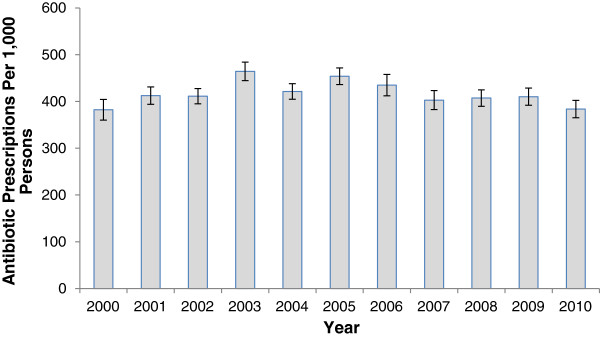
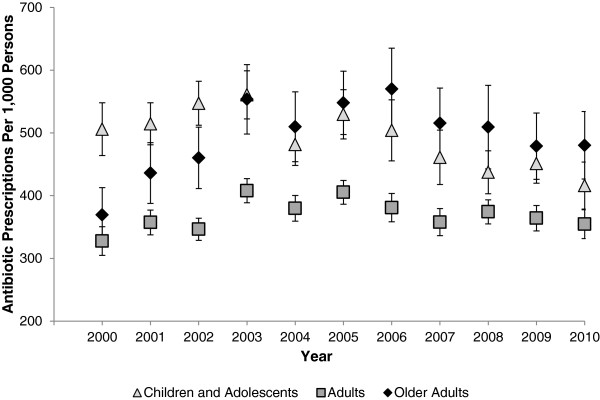
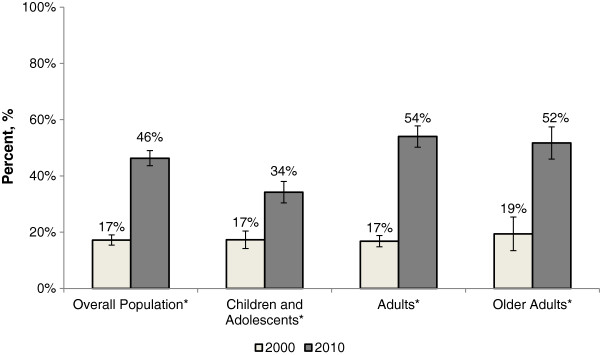
BACKGROUND: The use of antibiotics is the single most important driver in antibiotic resistance. Nevertheless, antibiotic overuse remains common. Decline in antibiotic prescribing in the United States coincided with the launch of national educational campaigns in the 1990s and other interventions, including the introduction of routine infant immunizations with the pneumococcal conjugate vaccine (PCV-7); however, it is unknown if these trends have been sustained through recent measurements. METHODS: We performed an analysis of nationally representative data from the Medical Expenditure Panel Surveys from 2000 to 2010. Trends in population-based prescribing were examined for overall antibiotics, broad-spectrum antibiotics, antibiotics for acute respiratory tract infections (ARTIs) and antibiotics prescribed during ARTI visits. Rates were reported for three age groups: children and adolescents (<18 years), adults (18 to 64 years), and older adults (≥65 years). RESULTS: An estimated 1.4 billion antibiotics were dispensed over the study period. Overall antibiotic prescribing decreased 18% (risk ratio (RR) 0.82, 95% confidence interval (95% CI) 0.72 to 0.94) among children and adolescents, remained unchanged for adults, and increased 30% (1.30, 1.14 to 1.49) among older adults. Rates of broad-spectrum antibiotic prescriptions doubled from 2000 to 2010 (2.11, 1.81 to 2.47). Proportions of broad-spectrum antibiotic prescribing increased across all age groups: 79% (1.79, 1.52 to 2.11) for children and adolescents, 143% (2.43, 2.07 to 2.86) for adults and 68% (1.68, 1.45 to 1.94) for older adults. ARTI antibiotic prescribing decreased 57% (0.43, 0.35 to 0.52) among children and adolescents and 38% (0.62, 0.48 to 0.80) among adults; however, it remained unchanged among older adults. While the number of ARTI visits declined by 19%, patients with ARTI visits were more likely to receive an antibiotic (73% versus 64%; P <0.001) in 2010 than in 2000. CONCLUSIONS: Antibiotic use has decreased among children and adolescents, but has increased for older adults. Broad-spectrum antibiotic prescribing continues to be on the rise. Public policy initiatives to promote the judicious use of antibiotics should continue and programs targeting older adults should be developed.
Overview
The claims and statistics of this paper haven’t been checked yet.
Free: it reads the open-access text and checks the first 5 claims that cite a source we can check. Create a free account to check every claim.
Integrity signals
Registry
Cites
Statistics
Figures
Verification
Claims the paper makes
The claims and statistics of this paper haven’t been checked yet.
Free: it reads the open-access text and checks the first 5 claims that cite a source we can check. Create a free account to check every claim.
Claims other papers make about this one
Each is checked against this paper’s own text: does it say what the citing paper says it does?
In the citing paper
“Many factors require consideration when combining standalone treatments so they do not reflect a synthetic amalgamation, an impractically lengthy protocol, or a treatment where components are delivered at a duration or intensity that ends up diluting the overall clinical efficacy.”
From All together now: utilizing common functional change principles to unify cognitive behavioral and mindfulness-based therapies (2019) · cites this paper as [42]
Self-check
Percentages, sums and reported differences re-computed from the paper’s own numbers.
The self-check needs the paper’s full text.
Citations
Cites
Bad Bugs, No Drugs: No ESKAPE! An Update from the Infectious Diseases Society of America
Boucher, H. W., Talbot, G. H., Bradley, J. S., Edwards, J. E., Gilbert, D., Rice, L. B., Scheld, M., Spellberg, B., & Bartlett, J. (2009) · Clinical Infectious Diseases · doi:10.1086/595011 · Cited by 4,958 · cited 1×
“Infections due to antibiotic-resistant organisms are associated with loss of productivity, poorer health outcomes and greater health care costs [2-4].”
BackgroundSpellberg, B., Guidos, R., Gilbert, D., Bradley, J., Boucher, H. W., Scheld, W. M., Bartlett, J. G., Edwards, J., & the Infectious Diseases Society of America (2008) · Clinical Infectious Diseases · doi:10.1086/524891 · Cited by 1,642
Trends in Antimicrobial Drug Prescribing Among Office-Based Physicians in the United States
McCaig, L. F. (1995) · JAMA: The Journal of the American Medical Association · doi:10.1001/jama.1995.03520270048030 · Cited by 791 · cited 1×
“nearly 50% of outpatient antibiotics prescribed are unnecessary [12-15].”
BackgroundGonzales, R. (1997) · JAMA: The Journal of the American Medical Association · doi:10.1001/jama.1997.03550110039033 · Cited by 717 · cited 1×
“Despite a high probability of viral etiology, acute respiratory tract infections (ARTIs), such as bronchitis, pharyngitis and sinusitis, account for 75% of all antibiotics prescribed by office-based providers [9-11].”
BackgroundThe Relationship between Antimicrobial Use and Antimicrobial Resistance in Europe
Bronzwaer, S. L. A. M., Cars, O., Buchholz, U., Mölstad, S., Goettsch, W., Veldhuijzen, I. K., Kool, J. L., Sprenger, M. J. W., Degener, J. E., & System, P. I. T. E. A. R. S. (2002) · Emerging Infectious Diseases · doi:10.3201/eid0803.010192 · Cited by 690
Antibiotic Prescribing for Children With Colds, Upper Respiratory Tract Infections, and Bronchitis
Nyquist, A.-C. (1998) · JAMA · doi:10.1001/jama.279.11.875 · Cited by 679 · cited 1×
“nearly 50% of outpatient antibiotics prescribed are unnecessary [12-15].”
BackgroundExcessive antibiotic use for acute respiratory infections in the United States
Gonzales, R., Malone, D. C., Maselli, J. H., & Sande, M. A. (2001) · Clinical Infectious Diseases · doi:10.1086/322627 · Cited by 531 · cited 1×
“nearly 50% of outpatient antibiotics prescribed are unnecessary [12-15].”
BackgroundAntibiotic Prescription Rates for Acute Respiratory Tract Infections in US Ambulatory Settings
Grijalva, C. G. (2009) · JAMA · doi:10.1001/jama.2009.1163 · Cited by 513 · cited 3×
“Changes in outpatient visit rates for ARTIs might reflect changes in factors such as public behavior from education, insurance status, disease severity, and internetbased advice and prescribing [24].”
BackgroundResultAntimicrobial Use and Antimicrobial Resistance: A Population Perspective
Lipsitch, M., & Samore, M. H. (2002) · Emerging Infectious Diseases · doi:10.3201/eid0804.010312 · Cited by 497 · cited 1×
“Infections due to antibiotic-resistant organisms are associated with loss of productivity, poorer health outcomes and greater health care costs [2-4].”
BackgroundJódar, L., Butler, J., Carlone, G., Dagan, R., Goldblatt, D., Käyhty, H., Klugman, K., Plikaytis, B., Siber, G., Kohberger, R., et al. (2003) · Vaccine · doi:10.1016/s0264-410x(03)00230-5 · Cited by 388
Cited by
Items 101–200 of 240
Spicer, J. O., Roberts, R. M., & Hicks, L. A. (2020) · Open Forum Infectious Diseases · doi:10.1093/ofid/ofaa544 · Cited by 29
Fourati, S., Talla, A., Mahmoudian, M., Burkhart, J. G., Klén, R., Henao, R., Yu, T. V., Aydın, Z., Yeung, K. Y., Ahsen, M. E., et al. (2018) · Nature Communications · doi:10.1038/s41467-018-06735-8 · Cited by 23
Essigmann, H. T., Aguilar, D. A., Perkison, W. B., Bay, K. G., Deaton, M., Brown, S. A., Hanis, C. L., & Brown, E. L. (2022) · Frontiers in Public Health · doi:10.3389/fpubh.2022.832266 · Cited by 24
Vintilă, B. I., Arseniu, A. M., Morgovan, C., Butucă, A., Bîrluțiu, V., Dobrea, C. M., Rus, L. L., Ghibu, S., Bereanu, A. S., Arseniu, R., et al. (2024) · Antibiotics · doi:10.3390/antibiotics13020144 · Cited by 20
Martínez-González, N. A., Coenen, S., Plate, A., Colliers, A., Rosemann, T. J., Senn, O., & Neuner‐Jehle, S. (2017) · BMJ Open · doi:10.1136/bmjopen-2017-016253 · Cited by 22
The ‘Antibiotic Apocalypse’ – Scaremongering or Scientific Reporting?
Cox, J. A. G., & Worthington, T. (2016) · Trends in Microbiology · doi:10.1016/j.tim.2016.11.016 · Cited by 19
Predictors of Adverse Outcomes in Uncomplicated Lower Respiratory Tract Infections
Moore, M. V., Stuart, B. L., Lown, M. T., den Bruel, A. V., Smith, S., Knox, K., Thompson, M., & Little, P. S. (2019) · The Annals of Family Medicine · doi:10.1370/afm.2386 · Cited by 20
Timbrook, T. T., Glancey, M., Noble, B. A., Eng, S., Heins, Z., Hommel, B., Tessonneau, M., Galvin, B. W., & Macalino, G. E. (2023) · Microbiology Spectrum · doi:10.1128/spectrum.03423-23 · Cited by 18
“Test results from a total of 16 office-based pediatric practices in the United States were included.”
BackgroundInfluentialChanges in Outpatient Use of Antibiotics by Adults in the United States, 2006–2015
Mundkur, M. L., Franklin, J. M., Huybrechts, K. F., Fischer, M. A., Kesselheim, A. S., Linder, J. A., Landon, J. E., & Patorno, E. (2018) · Drug Safety · doi:10.1007/s40264-018-0697-4 · Cited by 18
Cohen, R., Béchet, S., Gelbert, N., Frandji, B., le Sage, F. V., Thiebault, G., Kochert, F., Cahn-Sellem, F., Werner, A., Ouldali, N., et al. (2021) · The Pediatric Infectious Disease Journal · doi:10.1097/inf.0000000000003116 · Cited by 18
Keen, M., & Thompson, M. (2017) · Ophthalmology · doi:10.1016/j.ophtha.2017.05.029 · Cited by 18
The Use of Antibiotics in Hospice and Palliative Care Settings
Shekhar, A. C. (2022) · The Korean Journal of Hospice and Palliative Care · doi:10.14475/jhpc.2022.25.1.50 · Cited by 22
Martínez-González, N. A., Plate, A., Jäger, L., Senn, O., & Neuner‐Jehle, S. (2022) · Antibiotics · doi:10.3390/antibiotics11050543 · Cited by 17
Frost, H. M., Knepper, B. C., Shihadeh, K. C., & Jenkins, T. C. (2019) · Clinical Infectious Diseases · doi:10.1093/cid/ciz466 · Cited by 17
National Trends in Oral Antibiotic Prescribing in United States Physician Offices from 2009 to 2016
Young, E. H., Panchal, R. M., Yap, A., & Reveles, K. R. (2020) · Pharmacotherapy The Journal of Human Pharmacology and Drug Therapy · doi:10.1002/phar.2456 · Cited by 19
“As previous studies have shown, both age groups had an increase in overall antibiotic prescribing and are common recipients of broad-spectrum antibiotics.(6) In this study, fluoroquinolones were the most frequently inappropriately prescribed antibiotic class among older adults.”
BackgroundResultSelf-citationA qualitative approach to examining antimicrobial prescribing in the outpatient dental setting
Hughes, A. M., Evans, C. T., Fitzpatrick, M. A., Kale, I. O., Vivo, A., Boyer, T. L., Solanki, P. A., Gibson, G., Jurasic, M. M., Sharp, L. K., et al. (2022) · Antimicrobial Stewardship & Healthcare Epidemiology · doi:10.1017/ash.2022.242 · Cited by 17
The Burden and Impact of Antibiotic Prescribing in Ambulatory Pediatrics
Yonts, A. B., Kronman, M. P., & Hamdy, R. F. (2018) · Current problems in pediatric and adolescent health care · doi:10.1016/j.cppeds.2018.09.002 · Cited by 23
Entezarjou, A., Calling, S., Bhattacharyya, T., Milos Nymberg, V., Vigren, L., Labaf, A., Jakobsson, U., & Midlöv, P. (2021) · JMIR Medical Informatics · doi:10.2196/25473 · Cited by 16
“Most research has been conducted on data derived from synchronous virtual visits in American health care settings, where antibiotic prescription is historically higher [6], possibly due to a more market-controlled health care system with incentives for high patient satisfaction [7].”
Sharma, V., Saini, M., Das, R., Chauhan, S., Sharma, D., Mujwar, S., Gupta, S., & Mehta, D. K. (2025) · Chemistry & Biodiversity · doi:10.1002/cbdv.202401936 · Cited by 17
“Nowadays, when it comes to antibiotics prescribed for treating different pathogenic illnesses in hospital and out-of-hospital settings, quinolones rank third in terms of prescriptions, after macrolides and beta-lactams [17, 18].”
Delayed Antibiotic Prescribing Strategies—Time to Implement?
McCullough, A. R., & Glasziou, P. (2015) · JAMA Internal Medicine · doi:10.1001/jamainternmed.2015.7095 · Cited by 16
Gastine, S., Rashed, A. N., Hsia, Y., Jackson, C., Barker, C. I. S., Mathur, S., Tomlin, S., Lutsar, I., Bielicki, J. A., Standing, J. F., et al. (2019) · Expert Review of Clinical Pharmacology · doi:10.1080/17512433.2019.1695600 · Cited by 16
Kistler, C. E., Beeber, A., Becker‐Dreps, S., Ward, K., Meade, M., Ross, B., & Sloane, P. D. (2017) · BMC Nursing · doi:10.1186/s12912-017-0203-9 · Cited by 16
Kianmehr, H., Sabounchi, N. S., Sabounchi, S. S., & Cosler, L. E. (2019) · Journal of Evaluation in Clinical Practice · doi:10.1111/jep.13203 · Cited by 18
Shi, Z., Barnett, M. L., Jena, A. B., Ray, K. N., Fox, K. P., & Mehrotra, A. (2020) · Clinical Infectious Diseases · doi:10.1093/cid/ciaa1173 · Cited by 15
Ko, E. R., Reller, M. E., Tillekeratne, L. G., Bodinayake, C. K., Miller, C., Burke, T. W., Henao, R., McClain, M. T., Suchindran, S., Nicholson, B. P., et al. (2023) · Scientific Reports · doi:10.1038/s41598-023-49734-6 · Cited by 14
Use of antibiotics in early life and development of diseases in childhood: nationwide registry study
Brandt, S., Thorsen, J., Rasmussen, M. A., Chawes, B., Bønnelykke, K., Blaser, M. J., Sevelsted, A., & Stokholm, J. (2025) · BMJ Medicine · doi:10.1136/bmjmed-2024-001064 · Cited by 16
“49 50 In Denmark, antibiotics are used cautiously, and human consumption and livestock usage are monitored.”
Mechanisms and Detection of Antimicrobial Resistance
Alby, K., & Miller, M. B. (2017) · Elsevier eBooks · doi:10.1016/b978-0-323-40181-4.00290-5 · Cited by 17
Rapid, Point-of-Care Host-Based Gene Expression Diagnostics Using Giant Magnetoresistive Biosensors
de Olazarra, A. S., Chen, F., Wang, T., & Wang, S. X. (2023) · ACS Sensors · doi:10.1021/acssensors.3c00696 · Cited by 13
Identification of Parents’ Perceptions of Antibiotic Use for Individualized Community Education
Havens, L., & Schwartz, M. (2016) · Global Pediatric Health · doi:10.1177/2333794x16654067 · Cited by 13
Cough: impact, beliefs, and expectations from a national survey
Negro, R. W. D., Mazzolini, M., Turco, P., & Zanasi, A. (2016) · Multidisciplinary Respiratory Medicine · doi:10.1186/s40248-016-0072-1 · Cited by 13
Monteiro, L., Chaúque, A., de Barros, M. P., & Ira, T. (2017) · South African Journal of Child Health · doi:10.7196/sajch.2017.v11i3.1224 · Cited by 13
Abahussin, H. M., Alotaibi, M. S., Alhazzaa, O. A., Alotaibi, A. G., Alsaab, S. M., Aljawini, N., & Alawad, A. O. (2025) · Gut Pathogens · doi:10.1186/s13099-025-00788-z · Cited by 18
Antibiotic exposure in infancy and development of BMI and body composition in childhood
Sejersen, T. S., Vinding, R., Stokholm, J., Chawes, B., Bønnelykke, K., Krakauer, M., & Bisgaard, H. F. (2019) · EClinicalMedicine · doi:10.1016/j.eclinm.2019.10.020 · Cited by 12
van Aerde, K., de Haan, L., van Leur, M., Gerrits, G. P., Schers, H., Moll, H. A., Hagedoorn, N. N., Herberg, J. A., Levin, M., Calle, I. R., et al. (2020) · The Pediatric Infectious Disease Journal · doi:10.1097/inf.0000000000003019 · Cited by 12
Infections in Older Adults: A Case-Based Discussion Series Emphasizing Antibiotic Stewardship
Michener, A. R., Heath, B. M., Crnich, C. J., Moehring, R. W., Schmader, K. E., Mody, L., Branch‐Elliman, W., & Jump, R. (2018) · MedEdPORTAL · doi:10.15766/mep_2374-8265.10754 · Cited by 12
Ortega‐Peña, S., Colín‐Castro, C. A., Hernández-Durán, M., López-Jácome, L. E., & Franco‐Cendejas, R. (2015) · Cirugía y Cirujanos (English Edition) · doi:10.1016/j.circen.2015.10.002 · Cited by 11
Antimicrobial Stewardship (AMS) in the Community
Brink, A. J. (2015) · Clinical Pulmonary Medicine · doi:10.1097/cpm.0000000000000107 · Cited by 13
Outpatient Antibiotic Prescribing in Massachusetts, 2011–2015
Klevens, R. M., Caten, E., Olesen, S. W., DeMaria, A., Troppy, S., & Grad, Y. H. (2019) · Open Forum Infectious Diseases · doi:10.1093/ofid/ofz169 · Cited by 14
Koyama, T., Hagiya, H., Teratani, Y., Tatebe, Y., Ohshima, A., Adachi, M., Funahashi, T., Zamami, Y., Tanaka, H. Y., Tasaka, K., et al. (2020) · Journal of Infection and Chemotherapy · doi:10.1016/j.jiac.2020.02.001 · Cited by 11
Collaborative Antimicrobial Stewardship in the Emergency Department
Acquisto, N. M., & May, L. S. (2020) · Infectious Disease Clinics of North America · doi:10.1016/j.idc.2019.10.004 · Cited by 11
Longstreth, G. F., & Tieu, R. S. (2015) · Digestive Diseases and Sciences · doi:10.1007/s10620-015-3892-5 · Cited by 11
Dowle, C. (2016) · Bioscience Horizons The International Journal of Student Research · doi:10.1093/biohorizons/hzw007 · Cited by 16
“In the US, prescription rates of broad spectrum antibiotics increased two-fold during the same time frame (Lee et al., 2014).”
BackgroundRapid, Sample-to-Answer Host Gene Expression Test to Diagnose Viral Infection
Tsalik, E. L., Khine, A., Talebpour, A., Samiei, A., Parmar, V., Burke, T. W., McClain, M. T., Ginsburg, G. S., Woods, C. W., Henao, R., et al. (2019) · Open Forum Infectious Diseases · doi:10.1093/ofid/ofz466 · Cited by 11
Iglesias-Ussel, M. D., O’Grady, N., Anderson, J. G., Mitsis, P. G., Burke, T. W., Henao, R., Scavetta, J., Camilleri, C., Naderi, S., Carittini, A., et al. (2024) · Open Forum Infectious Diseases · doi:10.1093/ofid/ofae729 · Cited by 11
Ortega‐Peña, S., Colín‐Castro, C. A., Hernández-Durán, M., López-Jácome, L. E., & Franco‐Cendejas, R. (2015) · Cirugía y Cirujanos · doi:10.1016/j.circir.2015.05.030 · Cited by 10
Antimicrobial Stewardship at Transitions of Care to Outpatient Settings: Synopsis and Strategies
Liu, E., Linder, K. E., & Kuti, J. L. (2022) · Antibiotics · doi:10.3390/antibiotics11081027 · Cited by 10
“Population-based community prescribing data demonstrate an alarming rise in the use of broad-spectrum agents, doubling from 2000 to 2010 in the United States, with older adults serving as the primary recipients of antimicrobial prescriptions [10].”
BackgroundOkubo, Y., Uda, K., Kinoshita, N., Horikoshi, Y., Miyairi, I., Michihata, N., Matsui, H., Fushimi, K., & Yasunaga, H. (2020) · Journal of Infection and Chemotherapy · doi:10.1016/j.jiac.2020.04.025 · Cited by 10
Ude, Ž., Flothkötter, N., Sheehan, G., Brennan, M., Kavanagh, K. A., & Marmion, C. J. (2021) · International Journal of Antimicrobial Agents · doi:10.1016/j.ijantimicag.2021.106449 · Cited by 10
Kissler, S. M., Wang, B. H., Mehrotra, A., Barnett, M. L., & Grad, Y. H. (2022) · Clinical Infectious Diseases · doi:10.1093/cid/ciac811 · Cited by 10
Naser, A. Y., & Al-shehri, H. (2025) · BMJ Paediatrics Open · doi:10.1136/bmjpo-2025-003698 · Cited by 9
“9 Accord-ingly, practical surveillance data for newborns and children are needed to provide strategies for developing international medicines to reduce the burden of AMR, especially in low-and middle-income countries.”
Gacheri, J., Hamilton, K., Munywoki, P. N., Wakahiu, S., Kiambi, K., Fèvre, E. M., Oluka, M. N., Guantai, E. M., Moodley, A., & Muloi, D. M. (2024) · PLOS Global Public Health · doi:10.1371/journal.pgph.0003046 · Cited by 10
Correlation of antimicrobial prescription rate and county income in medicare part D
Volpi, C., Shehadeh, F., & Mylonakis, E. E. (2019) · Medicine · doi:10.1097/md.0000000000015914 · Cited by 9
Fluoroquinolone-Associated Tendinopathy of the Hand and Wrist: A Systematic Review and Case Report
Berger, I., Goodwin, I. A., & Buncke, G. M. (2017) · Hand · doi:10.1177/1558944717701237 · Cited by 9
Broad-Spectrum Antibiotic Abuse and its Connection to Obesity
Czaja, K. (2017) · Journal of Nutritional Health & Food Science · doi:10.15226/jnhfs.2017.001102 · Cited by 9
Antibiotic Prescription Trends in Dentistry: A Descriptive Study Using Japan's National Database
Hirayama, K., Kanda, N., Hashimoto, H., Yoshimoto, H., Goda, K., Mitsutake, N., & Hatakeyama, S. (2025) · Journal of Public Health Dentistry · doi:10.1111/jphd.12663 · Cited by 8
Mauro, J., Kannangara, S., Peterson, J., Livert, D. E., & Tuma, R. A. (2021) · JAC-Antimicrobial Resistance · doi:10.1093/jacamr/dlab118 · Cited by 8
Fortanier, A. C., Venekamp, R. P., Stellato, R. K., Sanders, E. A. M., Damoiseaux, R. A. M. J., Hoes, A. W., & Schilder, A. G. (2018) · BMJ Open · doi:10.1136/bmjopen-2017-020619 · Cited by 10
Patterson, L., Maguire, A., Cardwell, C. R., Kee, F., Hughes, C. M., Geoghegan, L., Doherty, L., Dolan, M., Verlander, N. Q., & O’Reilly, D. (2019) · Epidemiology and Infection · doi:10.1017/s0950268818003382 · Cited by 8
“While interventions such as efforts to reduce inappropriate prescribing and national vaccination campaigns have helped to improve prescribing rates in the younger age groups antibiotic prescribing for the older population appears to be increasing [9].”
Choosing Wisely Interventions to Reduce Antibiotic Overuse in the Safety Net
Leuchter, R. K., Sarkisian, C. A., Trotzky-Sirr, R., Wei, E. K., Carrillo, C. A., Vangala, S., Coffey, C., Spellberg, B., Melamed, O., Jeng, A. C., et al. (2023) · The American Journal of Managed Care · doi:10.37765/ajmc.2023.89367 · Cited by 7
Song, I., Park, S. J., Byun, S. J., Choe, Y. J., & Shin, J. (2018) · Pediatrics International · doi:10.1111/ped.13651 · Cited by 7
Prevalence of Extended-Spectrum β-Lactamases Genes in Clinical Isolates of Pseudomonas aeruginosa
Komijani, M., Shahin, K., Barazandeh, M., & Sajadi, M. (2018) · Medical Laboratory Journal · doi:10.29252/mlj.12.5.34 · Cited by 13
Li, Y., Jing, D., Huang, Y., Su, J., Li, J., Li, J., Tao, J., Shan, S., Wang, X., Kang, X., et al. (2021) · BMJ Open · doi:10.1136/bmjopen-2020-047768 · Cited by 7
Dai, D. L., Petersen, C., & Turvey, S. E. (2024) · Frontiers in Public Health · doi:10.3389/fpubh.2024.1455503 · Cited by 7
“Antibiotic stewardship initiatives, which primarily aim at reducing the spread of antimicrobial resistance, may therefore possess the additional benefit of preserving the healthy infant microbiota (60, 71, 74, 75).”
BackgroundLee, H., Kang, B., Hong, M., Lee, H. L., Choi, J., & Lee, J. A. (2020) · Medicine · doi:10.1097/md.0000000000021415 · Cited by 6
“In the USA, antibiotics are prescribed for more than 70% of URTI outpatients.([9]) Additionally, in South Korea, the use of antibiotics for URTI is substantial, though the prescription rate of antibiotics for URTI decreased from 73.”
BackgroundSnyder, B. M., Patterson, M. F., Gebretsadik, T. S., Cacho, F., Ding, T., Turi, K. N., Abreo, A. M., Wu, P., & Hartert, T. V. (2021) · Journal of Asthma · doi:10.1080/02770903.2021.1993247 · Cited by 8
Iwamoto, N., Morisaki, N., Uda, K., Kasai, M., Kodama, E. N., Ohmagari, N., & Miyairi, I. (2022) · Pediatrics International · doi:10.1111/ped.15197 · Cited by 7
A Systematic Review of Misuse of Antibiotics in Jordan
Al-Magableh, M., Eldos, B., Aldughmi, S., Hamad, L. B., Karim, R. A., Damseh, R., & Khlouf, M. (2024) · Jordan Medical Journal · doi:10.35516/jmj.v58i3.998 · Cited by 8
“For example, several studies have shown that the misuse of antibiotics and self-medication, mainly for the common cold or upper respiratory tract infections (RTI), is a common practice in many countries [7–11].”
BackgroundCotteret, C., Vallières, É., Roy, H., Ovetchkine, P., Longtin, J., & Bussières, J. (2016) · Archives de Pédiatrie · doi:10.1016/j.arcped.2016.07.004 · Cited by 6
Brown, C. A. (2018) · Journal of Doctoral Nursing Practice · doi:10.1891/2380-9418.11.1.3 · Cited by 6
Priorities and Progress in Diagnostic Research by the Antibacterial Resistance Leadership Group
Hanson, K. E., Banerjee, R., Doernberg, S. B., Evans, S. R., Komarow, L., Satlin, M. J., Schwager, N., Simner, P. J., Tillekeratne, L. G., Patel, R., et al. (2023) · Clinical Infectious Diseases · doi:10.1093/cid/ciad541 · Cited by 7
Antibiotic prescribing in the pediatric emergency department
Kolyva, S., Gkentzi, D., Koulouri, A., & Dimitriou, G. (2016) · Journal of Chemotherapy · doi:10.1080/1120009x.2015.1121008 · Cited by 6
Modgil, V., Shafiq, N., Gondara, A., Surial, R., Singh, H., Karol, V., Kaur, M., Lambert, H., & Taneja, N. (2025) · Indian Journal of Medical Microbiology · doi:10.1016/j.ijmmb.2025.100829 · Cited by 5
Boaitey, K. P., Bakhit, M., & Hoffmann, T. (2024) · BMC Infectious Diseases · doi:10.1186/s12879-024-09526-3 · Cited by 6
Falsey, A. R., Peterson, D. R., Walsh, E. E., Bhattacharya, S., Baran, A. M., Chu, C., Branche, A. R., Croft, D. P., Peasley, M., Corbett, A. M., et al. (2025) · Nature Communications · doi:10.1038/s41467-025-65361-3 · Cited by 8
Antibiotic Resistance among Iraqi Local E. coli Isolates
Al-Dahmoshi, H. O. M., Al-Khafaji, N. S. K., & Al-Allak, M. H. (2020) · IntechOpen eBooks · doi:10.5772/intechopen.92107 · Cited by 8
T, G. A., Santibañez, L., Sepúlveda, R., Ramírez, V., & Martínez, B. (2022) · Revista médica de Chile · doi:10.4067/s0034-98872022000801000 · Cited by 6
Marchello, C. S., Ebell, M. H., McKay, B., Shen, Y., Harvill, E. T., & Whalen, C. C. (2018) · The American Journal of Emergency Medicine · doi:10.1016/j.ajem.2018.12.007 · Cited by 5
Toth, J. M., Rosenthal, M., Sharma, M., & Barnard, M. (2021) · Journal of Pharmacy Practice · doi:10.1177/08971900211033459 · Cited by 5
“Acute respiratory tract infections are an important disease state to fight antibiotic resistance as they are the reason for 20% of all outpatient visits.(4) In children ages 0–19 years, 34% of antibiotic prescriptions for acute respiratory conditions were considered unnecessary.”
BackgroundFrisbie, L. A., Weissman, S. J., Kapoor, H., D’Angeli, M., Salm, A. E., Radcliff, J. S., & Rabinowitz, P. M. (2022) · Microbiology Spectrum · doi:10.1128/spectrum.02373-21 · Cited by 5
Ishida, T., Hagiya, H., Honda, H., Nakano, Y., Ogawa, H., Obika, M., Ueda, K., Kataoka, H. U., Hanayama, Y., & Otsuka, F. (2021) · PLoS ONE · doi:10.1371/journal.pone.0259633 · Cited by 4
Evaluation of Outpatient Antibiotic Use in Beijing General Hospitals in 2015
Yang, C., Cai, W., & Zhou, Z. (2017) · Chinese Medical Journal · doi:10.4103/0366-6999.198929 · Cited by 4
CANHelp Working Group, Williams, K., Colquhoun, A., Munday, R., & Goodman, K. J. (2019) · BMC Public Health · doi:10.1186/s12889-019-7193-3 · Cited by 6
Temporal dynamics of gut microbiota in triclocarban-exposed weaned rats
Kennedy, R. C. M., Fling, R. R., Robeson, M. S., Saxton, A. M., Schneider, L. G., Darcy, J. L., Bemis, D. A., Zhao, L., & Chen, J. (2018) · Environmental Science and Pollution Research · doi:10.1007/s11356-018-1627-9 · Cited by 5
Bork, J. T., Werzen, A., Davé, R., Morgan, D. J., Talwani, R., & Decker, B. K. (2020) · Current Infectious Disease Reports · doi:10.1007/s11908-020-00722-1 · Cited by 5
Kaur, R., & Guevara, C. L. (2024) · Cureus · doi:10.7759/cureus.59394 · Cited by 3
“The absence of vaccines available for diseases related to H. pylori prompts us to examine the status of antibiotic treatments and their limitations as well as discuss the challenges presented by the increased problem of drug resistance for this pathogen [20].”
BackgroundOlivas, C. R. (2018) · DigitalCommons@UTEP (The University of Texas at El Paso) · Cited by 3
Morrison, J. C., Sax-Bolder, A. N., Gershman, B., Konety, B. R., Clark, P. E., Gonzalez, C. M., Bronsert, M. R., Lloyd, G. L., Pessoa, R. R., Ballon-Landa, E. C., et al. (2022) · Urology · doi:10.1016/j.urology.2022.05.046 · Cited by 4
Mechanisms and Detection of Antimicrobial Resistance
Alby, K., & Miller, M. B. (2022) · Elsevier eBooks · doi:10.1016/b978-0-323-75608-2.00290-1 · Cited by 4
Decreases and Pronounced Geographic Variability in Antibiotic Prescribing in Medicaid
Aguilar, A. G., Canals, P. C., Tian, M. Y., Miller, K. A., & Piper, B. J. (2024) · Pharmacy · doi:10.3390/pharmacy12020046 · Cited by 5
“The South census region had the highest prescribing rate in the US [19,20].”
BackgroundMethodResultInfluentialRisk Factors for Outpatient Use of Antibiotics in Children with Acute Respiratory Illnesses
Zhao, S. R., Griffin, M. R., Patterson, B. L., Mace, R. L., Wyatt, D., Zhu, Y., & Talbot, H. K. (2017) · Southern Medical Journal · doi:10.14423/smj.0000000000000622 · Cited by 3
Divala, T. H., Corbett, E. L., Stagg, H. R., Nliwasa, M., Sloan, D. J., French, N., & Fielding, K. (2018) · Systematic Reviews · doi:10.1186/s13643-018-0917-0 · Cited by 4
Introduction: Coordinated Global Action Is Needed to Combat Antimicrobial Resistance
Fong, I. W. (2018) · Springer eBooks · doi:10.1007/978-3-319-78538-7_1 · Cited by 5
Goldstein, E., MacFadden, D. R., & Lipsitch, M. (2018) · arXiv (Cornell University) · doi:10.48550/arxiv.1803.07189 · Cited by 4
Olson, S. C., Watkins, L. K. F., Walter, E. S., Friedman, C. R., & Nguyen, H. Q. (2024) · Journal of Infection and Public Health · doi:10.1016/j.jiph.2024.102613 · Cited by 2
Topical antibacterial therapy of rhinosinusitis
Shilenkova, V. V. (2024) · Russian Rhinology · doi:10.17116/rosrino20243201139 · Cited by 2
Banerjee, D., Sasidharan, A., Gummersheimer, S., Petty, S., O’Connor, A., Dhar, M., & Selvarangan, R. (2025) · Journal of Clinical Virology · doi:10.1016/j.jcv.2025.105902 · Cited by 2
Reveles, K. R., Young, E. H., Zeidan, A. R., & Dong, Q. (2021) · Elsevier eBooks · doi:10.1016/b978-0-12-815962-0.00017-2 · Cited by 2
Self-citationPersistent Cough: Changes in Prevalence, Impact, and Beliefs From 2006–2015 in Italy
Negro, R. W. D., Povero, M., Zanasi, A., & Turco, P. (2019) · EMJ Respiratory · doi:10.33590/emj/10313090 · Cited by 2
Inappropriate prescription of intravenous antibiotics at a tertiary children's hospital in China
Wang, Y., Wang, G., Zhu, L., Li, X., Li, J., & Li, Z. (2022) · Minerva Pediatrics · doi:10.23736/s2724-5276.21.05902-4 · Cited by 2
Kissler, S. M., Wang, B. H., Mehrotra, A., Barnett, M. L., & Grad, Y. H. (2021) · medRxiv · doi:10.1101/2021.11.17.21266458 · Cited by 2
Metadata
- Authors
- Lee, G. C., Reveles, K. R., Attridge, R. T., Lawson, K. A., Mansi, I. A., Lewis, J. S., & Frei, C. R.
- Affiliations
- The University of Texas at San Antonio Health Science Center (US)
- The University of Texas at Austin (US)
- VA North Texas Health Care System (US)
- Corresponding author
- Frei, Christopher R
- Venue
- BMC Medicine
- Published
- 2014-06-11
- Volume
- 12
- Issue
- 1
- Pages
- 96-96
- ISSN
- 1741-7015 (ISSN-L)
- PMC
- PMC4066694
- OpenAlex
- W2121788289
- Cited by
- 231
- References
- 29
- Citations by year
- 2026: 5 · 2025: 13 · 2024: 12 · 2023: 9 · 2022: 19 · 2021: 18 · 2020: 19 · 2019: 30 · 2018: 30 · 2017: 26 · 2016: 30 · 2015: 16 · 2014: 4
- FWCI
- 21.17
- Type
- journal article
- Language
- en
- Open access
- gold
- doi.org
- Licence
- cc-by
- creativecommons.org/licenses/by/4.0 (tdm)
- Locations
- BMC Medicine (publishedVersion, cc-by)
- PubMed Central (publishedVersion, cc-by)
- PubMed (publishedVersion)
- Texas ScholarWorks (Texas Digital Library) (submittedVersion, other-oa)
- Texas Digital Library (University of Texas)
- Funders
- National Institutes of Health (UL1TR001120, KL2TR001118)
- National Center for Advancing Translational Sciences
- Topics
- Health Sciences › Medicine › Infectious Diseases › Antibiotic Use and Resistance
- Health Sciences › Medicine › Microbiology (medical) › Antibiotic Resistance in Bacteria
- Health Sciences › Health Professions › General Health Professions › Healthcare cost, quality, practices
- Keywords
- antibiotic prescribing, outpatient prescribing, antibiotic resistance, antibiotic overuse, broad-spectrum antibiotics, acute respiratory infections, age differences in prescribing, older adults, children and adolescents, Medical Expenditure Panel Survey, pneumococcal conjugate vaccine, educational campaigns, antibiotic stewardship, appropriateness of antibiotic use
- MeSH terms
- Acute Disease, Adolescent, Adult, Age Factors, Aged, Aged, 80 and over, Anti-Bacterial Agents, Child, Child, Preschool, Female, Humans, Infant, Male, Middle Aged, Outpatients, Drug Prescriptions, Respiratory Tract Infections, United States, Vaccination, Odds Ratio, Vaccines, Conjugate, Pneumococcal Vaccines, Young Adult
About these checks
Registry, retraction, Cites and statistics results are computed, not judged, with one exception: a printed reference that no index lists is read once by a model before it counts as a citation error. Claims are extracted by a model and kept only when their quote appears verbatim in the text; each cited source is then checked, with a model’s help, for whether it says what the claim relies on. Those verdicts can be wrong — read the claim’s quote and the cited source before relying on one.
Statistics and arithmetic are recomputed, not judged.
Confidence bands are shown only for fields calibrated on our annotated test set. None is calibrated yet, so no band is shown.
What counts as a claim ›How we measure confidence ›How we check this ›
Are you an author, or do you see a problem with this page? Request a review
Data sources
Bibliographic data: Semantic Scholar, OpenAlex, Crossref.
Contains information from the Semantic Scholar Academic Graph Datasets, made available under the ODC Attribution License (ODC-BY 1.0).
Semantic Scholar’s data is described in: Kinney, R., et al. (2023). The Semantic Scholar Open Data Platform. arXiv:2301.10140.
