

Outpatient antibiotic prescribing in the United States: 2000 to 2010
Open accessThe DOI matches its Crossref record; 29 of the 29 references it cites were found in a registry or an index.
Abstract
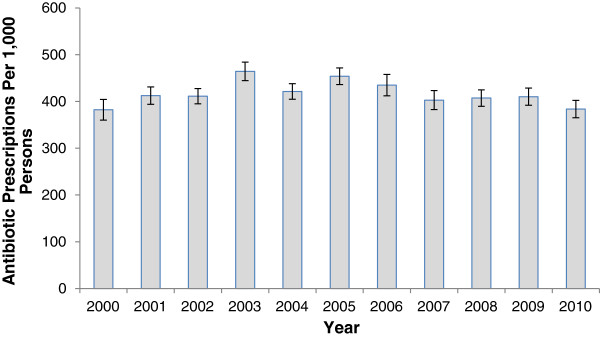
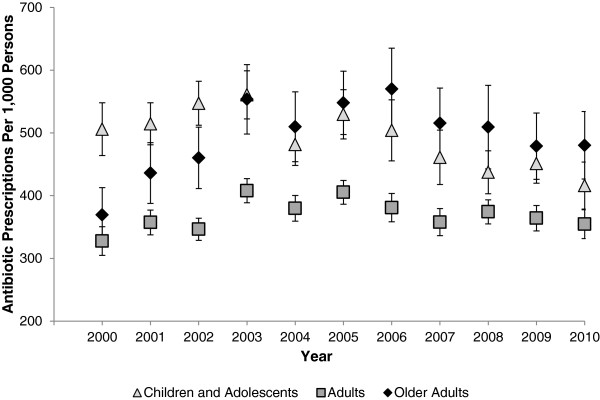
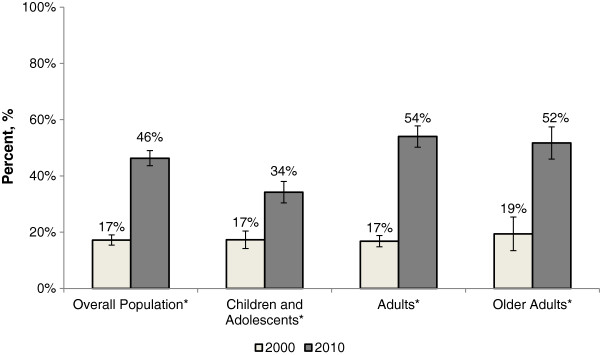
BACKGROUND: The use of antibiotics is the single most important driver in antibiotic resistance. Nevertheless, antibiotic overuse remains common. Decline in antibiotic prescribing in the United States coincided with the launch of national educational campaigns in the 1990s and other interventions, including the introduction of routine infant immunizations with the pneumococcal conjugate vaccine (PCV-7); however, it is unknown if these trends have been sustained through recent measurements. METHODS: We performed an analysis of nationally representative data from the Medical Expenditure Panel Surveys from 2000 to 2010. Trends in population-based prescribing were examined for overall antibiotics, broad-spectrum antibiotics, antibiotics for acute respiratory tract infections (ARTIs) and antibiotics prescribed during ARTI visits. Rates were reported for three age groups: children and adolescents (<18 years), adults (18 to 64 years), and older adults (≥65 years). RESULTS: An estimated 1.4 billion antibiotics were dispensed over the study period. Overall antibiotic prescribing decreased 18% (risk ratio (RR) 0.82, 95% confidence interval (95% CI) 0.72 to 0.94) among children and adolescents, remained unchanged for adults, and increased 30% (1.30, 1.14 to 1.49) among older adults. Rates of broad-spectrum antibiotic prescriptions doubled from 2000 to 2010 (2.11, 1.81 to 2.47). Proportions of broad-spectrum antibiotic prescribing increased across all age groups: 79% (1.79, 1.52 to 2.11) for children and adolescents, 143% (2.43, 2.07 to 2.86) for adults and 68% (1.68, 1.45 to 1.94) for older adults. ARTI antibiotic prescribing decreased 57% (0.43, 0.35 to 0.52) among children and adolescents and 38% (0.62, 0.48 to 0.80) among adults; however, it remained unchanged among older adults. While the number of ARTI visits declined by 19%, patients with ARTI visits were more likely to receive an antibiotic (73% versus 64%; P <0.001) in 2010 than in 2000. CONCLUSIONS: Antibiotic use has decreased among children and adolescents, but has increased for older adults. Broad-spectrum antibiotic prescribing continues to be on the rise. Public policy initiatives to promote the judicious use of antibiotics should continue and programs targeting older adults should be developed.
Overview
The claims and statistics of this paper haven’t been checked yet.
Free: it reads the open-access text and checks the first 5 claims that cite a source we can check. Create a free account to check every claim.
Integrity signals
Registry
Cites
Statistics
Figures
Verification
Claims the paper makes
The claims and statistics of this paper haven’t been checked yet.
Free: it reads the open-access text and checks the first 5 claims that cite a source we can check. Create a free account to check every claim.
Claims other papers make about this one
Each is checked against this paper’s own text: does it say what the citing paper says it does?
In the citing paper
“Many factors require consideration when combining standalone treatments so they do not reflect a synthetic amalgamation, an impractically lengthy protocol, or a treatment where components are delivered at a duration or intensity that ends up diluting the overall clinical efficacy.”
From All together now: utilizing common functional change principles to unify cognitive behavioral and mindfulness-based therapies (2019) · cites this paper as [42]
Self-check
Percentages, sums and reported differences re-computed from the paper’s own numbers.
The self-check needs the paper’s full text.
Citations
Cites
Bad Bugs, No Drugs: No ESKAPE! An Update from the Infectious Diseases Society of America
Boucher, H. W., Talbot, G. H., Bradley, J. S., Edwards, J. E., Gilbert, D., Rice, L. B., Scheld, M., Spellberg, B., & Bartlett, J. (2009) · Clinical Infectious Diseases · doi:10.1086/595011 · Cited by 4,958 · cited 1×
“Infections due to antibiotic-resistant organisms are associated with loss of productivity, poorer health outcomes and greater health care costs [2-4].”
BackgroundSpellberg, B., Guidos, R., Gilbert, D., Bradley, J., Boucher, H. W., Scheld, W. M., Bartlett, J. G., Edwards, J., & the Infectious Diseases Society of America (2008) · Clinical Infectious Diseases · doi:10.1086/524891 · Cited by 1,642
Trends in Antimicrobial Drug Prescribing Among Office-Based Physicians in the United States
McCaig, L. F. (1995) · JAMA: The Journal of the American Medical Association · doi:10.1001/jama.1995.03520270048030 · Cited by 791 · cited 1×
“nearly 50% of outpatient antibiotics prescribed are unnecessary [12-15].”
BackgroundGonzales, R. (1997) · JAMA: The Journal of the American Medical Association · doi:10.1001/jama.1997.03550110039033 · Cited by 717 · cited 1×
“Despite a high probability of viral etiology, acute respiratory tract infections (ARTIs), such as bronchitis, pharyngitis and sinusitis, account for 75% of all antibiotics prescribed by office-based providers [9-11].”
BackgroundThe Relationship between Antimicrobial Use and Antimicrobial Resistance in Europe
Bronzwaer, S. L. A. M., Cars, O., Buchholz, U., Mölstad, S., Goettsch, W., Veldhuijzen, I. K., Kool, J. L., Sprenger, M. J. W., Degener, J. E., & System, P. I. T. E. A. R. S. (2002) · Emerging Infectious Diseases · doi:10.3201/eid0803.010192 · Cited by 690
Antibiotic Prescribing for Children With Colds, Upper Respiratory Tract Infections, and Bronchitis
Nyquist, A.-C. (1998) · JAMA · doi:10.1001/jama.279.11.875 · Cited by 679 · cited 1×
“nearly 50% of outpatient antibiotics prescribed are unnecessary [12-15].”
BackgroundExcessive antibiotic use for acute respiratory infections in the United States
Gonzales, R., Malone, D. C., Maselli, J. H., & Sande, M. A. (2001) · Clinical Infectious Diseases · doi:10.1086/322627 · Cited by 531 · cited 1×
“nearly 50% of outpatient antibiotics prescribed are unnecessary [12-15].”
BackgroundAntibiotic Prescription Rates for Acute Respiratory Tract Infections in US Ambulatory Settings
Grijalva, C. G. (2009) · JAMA · doi:10.1001/jama.2009.1163 · Cited by 513 · cited 3×
“Changes in outpatient visit rates for ARTIs might reflect changes in factors such as public behavior from education, insurance status, disease severity, and internetbased advice and prescribing [24].”
BackgroundResultAntimicrobial Use and Antimicrobial Resistance: A Population Perspective
Lipsitch, M., & Samore, M. H. (2002) · Emerging Infectious Diseases · doi:10.3201/eid0804.010312 · Cited by 497 · cited 1×
“Infections due to antibiotic-resistant organisms are associated with loss of productivity, poorer health outcomes and greater health care costs [2-4].”
BackgroundJódar, L., Butler, J., Carlone, G., Dagan, R., Goldblatt, D., Käyhty, H., Klugman, K., Plikaytis, B., Siber, G., Kohberger, R., et al. (2003) · Vaccine · doi:10.1016/s0264-410x(03)00230-5 · Cited by 388
Cited by
Global increase and geographic convergence in antibiotic consumption between 2000 and 2015
Klein, E. Y., Van Boeckel, T. P., Martinez, E. M., Pant, S., Gandra, S., Levin, S. A., Goossens, H., & Laxminarayan, R. (2018) · Proceedings of the National Academy of Sciences · doi:10.1073/pnas.1717295115 · Cited by 3,232
Antibiotics in early life and obesity
Cox, L. M., & Blaser, M. J. (2015) · Nature Reviews Endocrinology · doi:10.1038/nrendo.2014.210 · Cited by 541
(Dis)Trust your gut: the gut microbiome in age-related inflammation, health, and disease
Buford, T. W. (2017) · Microbiome · doi:10.1186/s40168-017-0296-0 · Cited by 409
Antibiotic Discovery: Where Have We Come from, Where Do We Go?
Ribeiro da Cunha, B., Fonseca, L. P., & Calado, C. R. C. (2019) · Antibiotics · doi:10.3390/antibiotics8020045 · Cited by 353
History of antimicrobial drug discovery: Major classes and health impact
Aminov, R. (2017) · Biochemical Pharmacology · doi:10.1016/j.bcp.2016.10.001 · Cited by 296
A systematic review of the public's knowledge and beliefs about antibiotic resistance
McCullough, A. R., Parekh, S., Rathbone, J., Del Mar, C. B., & Hoffmann, T. C. (2016) · Journal of Antimicrobial Chemotherapy · doi:10.1093/jac/dkv310 · Cited by 263
Antibiotics promote inflammation through the translocation of native commensal colonic bacteria
Knoop, K. A., McDonald, K. G., Kulkarni, D. H., & Newberry, R. D. (2016) · Gut · doi:10.1136/gutjnl-2014-309059 · Cited by 274
A survey of sub-inhibitory concentrations of antibiotics in the environment
Chow, L. K. M., Ghaly, T. M., & Gillings, M. R. (2021) · Journal of Environmental Sciences · doi:10.1016/j.jes.2020.05.030 · Cited by 258
“The mechanisms involved in acquisition or generation of resistance under these circumstances are well understood ( Blair et al., 2015 ; Blair et al., 2014 ; Giedraitien ̇e et al., 2011 ; Levy and Marshall, 2004 ).”
BackgroundPatrick, D. M., Sbihi, H., Dai, D. L. Y., Al Mamun, A., Rasali, D., Rose, C., Marra, F., Boutin, R. C. T., Petersen, C., Stiemsma, L. T., et al. (2020) · The Lancet Respiratory Medicine · doi:10.1016/s2213-2600(20)30052-7 · Cited by 250
Host gene expression classifiers diagnose acute respiratory illness etiology
Tsalik, E. L., Henao, R., Nichols, M., Burke, T., Ko, E. R., McClain, M. T., Hudson, L. L., Mazur, A., Freeman, D. H., Veldman, T., et al. (2016) · Science Translational Medicine · doi:10.1126/scitranslmed.aad6873 · Cited by 254
Systematic Review of Factors Associated with Antibiotic Prescribing for Respiratory Tract Infections
McKay, R., Mah, A., Law, M. R., McGrail, K., & Patrick, D. M. (2016) · Antimicrobial Agents and Chemotherapy · doi:10.1128/aac.00209-16 · Cited by 221
How Can Vaccines Contribute to Solving the Antimicrobial Resistance Problem?
Lipsitch, M., & Siber, G. R. (2016) · mBio · doi:10.1128/mbio.00428-16 · Cited by 225
Long-term use of antibiotics and risk of colorectal adenoma
Cao, Y., Wu, K., Mehta, R., Drew, D. A., Song, M., Lochhead, P., Nguyen, L. H., Izard, J., Fuchs, C. S., Garrett, W. S., et al. (2018) · Gut · doi:10.1136/gutjnl-2016-313413 · Cited by 192
Hou, J., Long, X., Wang, X., Li, L., Mao, D., Luo, Y., & Ren, H. (2023) · Journal of Hazardous Materials · doi:10.1016/j.jhazmat.2022.130042 · Cited by 173
Poolman, J. T., & Anderson, A. S. (2018) · Expert Review of Vaccines · doi:10.1080/14760584.2018.1488590 · Cited by 166
Recent advances in the synthetic and medicinal perspective of quinolones: A review
Dhiman, P., Arora, N. R., Thanikachalam, P. V., & Monga, V. (2019) · Bioorganic Chemistry · doi:10.1016/j.bioorg.2019.103291 · Cited by 161
Changes in US Outpatient Antibiotic Prescriptions From 2011–2016
King, L. M., Bartoces, M., Fleming-Dutra, K. E., Roberts, R. M., & Hicks, L. A. (2020) · Clinical Infectious Diseases · doi:10.1093/cid/ciz225 · Cited by 146
Papoutsi, C., Mattick, K. L., Pearson, M., Brennan, N., Briscoe, S., & Wong, G. (2017) · Journal of Antimicrobial Chemotherapy · doi:10.1093/jac/dkx194 · Cited by 152
Antibiotics, obesity and the link to microbes - what are we doing to our children?
Turta, O., & Rautava, S. (2016) · BMC Medicine · doi:10.1186/s12916-016-0605-7 · Cited by 128
Jones, B. E., Sauer, B. C., Jones, M., Campo, J., Damal, K., He, T., Ying, J., Greene, T., Goetz, M. B., Neuhauser, M. M., et al. (2015) · Annals of Internal Medicine · doi:10.7326/m14-1933 · Cited by 124
Early‐life antibiotic use and subsequent diagnosis of food allergy and allergic diseases
Hirsch, A. G., Pollak, J., Glass, T. A., Poulsen, M. N., Bailey-Davis, L. D., Mowery, J., & Schwartz, B. S. (2016) · Clinical & Experimental Allergy · doi:10.1111/cea.12807 · Cited by 125
Sarwar, M. R., Saqib, A., Iftikhar, S., & Sadiq, T. (2018) · Infection and Drug Resistance · doi:10.2147/idr.s148102 · Cited by 103
“25 Similarly, survey reports of AM use in secondary-and tertiary-care hospitals of Pakistan have shown high AM-prescribing rates of 48.9%, 26 51.5%, 26 and 52%.”
InfluentialAntibiotic-induced acceleration of type 1 diabetes alters maturation of innate intestinal immunity
Zhang, X.-S., Li, J., Krautkramer, K. A., Badri, M., Battaglia, T., Borbet, T. C., Koh, H., Ng, S., Sibley, R. A., Li, Y., et al. (2018) · eLife · doi:10.7554/elife.37816 · Cited by 110
Success stories of implementation of antimicrobial stewardship: a narrative review
Huttner, B. D., Harbarth, S., & Nathwani, D. (2014) · Clinical Microbiology and Infection · doi:10.1111/1469-0691.12803 · Cited by 120
Gut resistome development in healthy twin pairs in the first year of life
Moore, A. M., Ahmadi, S., Patel, S., Gibson, M. K., Wang, B., Ndao, I. M., Deych, E., Shannon, W., Tarr, P. I., Warner, B. B., et al. (2015) · Microbiome · doi:10.1186/s40168-015-0090-9 · Cited by 109
“Children in the United States are heavily antibioticexposed [11, 12], with unclear effects on resistome development.”
BackgroundShi, Z., Mehrotra, A., Gidengil, C. A., Poon, S. J., Uscher-Pines, L., & Ray, K. N. (2018) · Health Affairs · doi:10.1377/hlthaff.2018.05091 · Cited by 108
Martínez-González, N. A., Keizer, E., Plate, A., Coenen, S., Valeri, F., Verbakel, J. Y. J., Rosemann, T. J., Neuner‐Jehle, S., & Senn, O. (2020) · Antibiotics · doi:10.3390/antibiotics9090610 · Cited by 122
Sanchez, G. V., Roberts, R. M., Albert, A. P., Johnson, D. D., & Hicks, L. A. (2014) · Emerging infectious diseases · doi:10.3201/eid2012.140331 · Cited by 108
Khan, M. U., Hassali, M. A., Ahmad, A., Elkalmi, R. M., Zaidi, S. T. R., & Dhingra, S. (2016) · PLoS ONE · doi:10.1371/journal.pone.0149623 · Cited by 115
“Antibiotic prescription rates in the US remained relatively stable during this period from 382 per 1,000 persons in 2000 to 384 per 1,000 persons in 2010 [11].”
BackgroundSalm, F., Ernsting, C., Kuhlmey, A., Kanzler, M., Gastmeier, P., & Gellert, P. R. (2018) · PLoS ONE · doi:10.1371/journal.pone.0193336 · Cited by 98
The emergence and evolution of antimicrobial resistance: Impact on a global scale
Hwang, A. Y., & Gums, J. G. (2016) · Bioorganic & Medicinal Chemistry · doi:10.1016/j.bmc.2016.04.027 · Cited by 109
Antibiotic Prescribing for Acute Respiratory Infections in Direct-to-Consumer Telemedicine Visits
Uscher-Pines, L., Mulcahy, A., Cowling, D., Hunter, G., Burns, R., & Mehrotra, A. (2015) · JAMA Internal Medicine · doi:10.1001/jamainternmed.2015.2024 · Cited by 78
Olesen, S. W., Barnett, M. L., MacFadden, D. R., Lipsitch, M., & Grad, Y. H. (2018) · BMJ · doi:10.1136/bmj.k3155 · Cited by 86
Little, P. S., Stuart, B. L., Smith, S., Thompson, M., Knox, K., den Bruel, A. V., Lown, M. T., Moore, M. V., & Mant, D. (2017) · BMJ · doi:10.1136/bmj.j2148 · Cited by 84
New Molecular Diagnostic Approaches to Bacterial Infections and Antibacterial Resistance
Tsalik, E. L., Bonomo, R. A., & Fowler, V. G. (2018) · Annual Review of Medicine · doi:10.1146/annurev-med-052716-030320 · Cited by 74
Zhang, Z., Hu, Y., Zou, G., Lin, M., Zeng, J., Deng, S., Zachariah, R., Walley, J., Tucker, J. D., & Wei, X. (2017) · Global Health Action · doi:10.1080/16549716.2017.1287334 · Cited by 74
Late-career physicians prescribe longer courses of antibiotics.
Fernandez-Lazaro, C. I., Brown, K. A., Langford, B. J., Daneman, N., Garber, G., & Schwartz, K. L. (2019) · Clinical Infectious Diseases · doi:10.1093/cid/ciy1130 · Cited by 70
Antibiotic use in acute respiratory infections in under-fives in Uganda: findings and implications
Kibuule, D., Kagoya, H. R., & Godman, B. (2016) · Expert Review of Anti-infective Therapy · doi:10.1080/14787210.2016.1206468 · Cited by 75
O’Sullivan, J. W., Harvey, R. T., Glasziou, P., & McCullough, A. R. (2016) · Cochrane Database of Systematic Reviews · doi:10.1002/14651858.cd011360.pub2 · Cited by 87
Daneman, N., Campitelli, M. A., Giannakeas, V., Morris, A. M., Bell, C. M., Maxwell, C. J., Jeffs, L. P., Austin, P. C., & Bronskill, S. E. (2017) · Canadian Medical Association Journal · doi:10.1503/cmaj.161437 · Cited by 75
Multidrug- and Carbapenem-ResistantPseudomonas aeruginosain Children, United States, 1999–2012
Logan, L. K., Gandra, S., Mandal, S., Klein, E. Y., Levinson, J. A., Weinstein, R. A., & Laxminarayan, R. (2016) · Journal of the Pediatric Infectious Diseases Society · doi:10.1093/jpids/piw064 · Cited by 91
The infant gut resistome is associated with E. coli and early-life exposures
Lebeaux, R. M., Coker, M. O., Dade, E. F., Palys, T. J., Morrison, H. G., Ross, B. D., Baker, E. R., Karagas, M. R., Madan, J. C., & Hoen, A. G. (2021) · BMC Microbiology · doi:10.1186/s12866-021-02129-x · Cited by 68
“Page 3/32 Infants and young children are prescribed more antibiotics than any other age group [9,10].”
BackgroundDawson-Hahn, E. E., Mickan, S., Onakpoya, I., Roberts, N., Kronman, M., Butler, C. C., & Thompson, M. J. (2017) · Family Practice · doi:10.1093/fampra/cmx037 · Cited by 63
Outpatient Antibiotic Prescribing for Older Adults in the United States: 2011 to 2014
Kabbani, S., Palms, D. L., Bartoces, M. G., Stone, N. D., & Hicks, L. A. (2018) · Journal of the American Geriatrics Society · doi:10.1111/jgs.15518 · Cited by 68
Aabenhus, R. M., Hansen, M. P., Siersma, V., & Bjerrum, L. (2017) · Scandinavian Journal of Primary Health Care · doi:10.1080/02813432.2017.1333321 · Cited by 66
“In contrast to previous studies [18 – 20], we found that the number of antibiotic prescriptions for UTIs was similar to the number issued for respiratory tract infections.”
ResultValidation of a host response test to distinguish bacterial and viral respiratory infection
Lydon, E., Henao, R., Burke, T. W., Aydın, M., Nicholson, B. P., Glickman, S. W., Fowler, V. G., Quackenbush, E., Cairns, C. B., Kingsmore, S. F., et al. (2019) · EBioMedicine · doi:10.1016/j.ebiom.2019.09.040 · Cited by 65
Pechal, A., Lin, K., Allen, S., & Reveles, K. R. (2016) · BMC Infectious Diseases · doi:10.1186/s12879-016-2027-8 · Cited by 65
Self-citationMoore, M. V., Stuart, B. L., Little, P. S., Smith, S., Thompson, M., Knox, K., den Bruel, A. V., Lown, M. T., & Mant, D. (2017) · European Respiratory Journal · doi:10.1183/13993003.00434-2017 · Cited by 72
Sharma, V., Das, R., Mehta, D. K., Gupta, S., Venugopala, K. N., Mailavaram, R. P., Nair, A. B., Shakya, A. K., & Deb, P. K. (2022) · Bioorganic & Medicinal Chemistry · doi:10.1016/j.bmc.2022.116674 · Cited by 57
Sacred Cow Gone to Pasture: A Systematic Evaluation and Integration of Evidence‐Based Practice
Hanrahan, K., Wagner, M., Matthews, G., Stewart, S., Dawson, C. J., Greiner, J., Pottinger, J. M., Vernon‐Levett, P., Herold, D., Hottel, R. A., et al. (2015) · Worldviews on Evidence-Based Nursing · doi:10.1111/wvn.12072 · Cited by 65
Hardy, V., Thompson, M. J., Keppel, G. A., Alto, W. A., Dirac, M. A., Neher, J. O., Sanford, C. A., Hornecker, J. R., & Cole, A. (2017) · BMJ Open · doi:10.1136/bmjopen-2016-012503 · Cited by 54
Kaur, K., Saxena, A., Debnath, I., O’Brien, J. L., Ajami, N. J., Auchtung, T. A., Petrosino, J. F., Sougiannis, A.-J. T., Depaep, S., Chumanevich, A. A., et al. (2018) · Cancer Medicine · doi:10.1002/cam4.1460 · Cited by 58
Bianco, A., Papadopoli, R., Mascaro, V., Pileggi, C., & Pavía, M. (2018) · Infection and Drug Resistance · doi:10.2147/idr.s170349 · Cited by 58
Discriminating Bacterial and Viral Infection Using a Rapid Host Gene Expression Test*
Tsalik, E. L., Henao, R., Montgomery, J., Nawrocki, J., Aydın, M., Lydon, E., Ko, E. R., Petzold, E., Nicholson, B. P., Cairns, C. B., et al. (2021) · Critical Care Medicine · doi:10.1097/ccm.0000000000005085 · Cited by 53
Development of the infant intestinal microbiome: A bird's eye view of a complex process
Meropol, S. B., & Edwards, A. (2015) · Birth Defects Research Part C Embryo Today Reviews · doi:10.1002/bdrc.21114 · Cited by 59
“…and then plateaued by 2010; children <2 years of age still receive, on average one antibiotic course per child per year (Vaz et al., 2014), and broad spectrum antibiotic use has doubled over the past decade, accounting for 34% of pediatric antibiotic prescriptions in 2010 (Lee et al., 2014).”
Williams, D. J., Edwards, K. M., Self, W. H., Zhu, Y., Arnold, S. R., McCullers, J. A., Ampofo, K., Pavia, A. T., Anderson, E. J., Hicks, L. A., et al. (2017) · Archives of Pediatrics and Adolescent Medicine · doi:10.1001/jamapediatrics.2017.3225 · Cited by 58
Fleming-Dutra, K. E., Demirjian, A., Bartoces, M. G., Roberts, R. M., Taylor, T. H., & Hicks, L. A. (2017) · The Pediatric Infectious Disease Journal · doi:10.1097/inf.0000000000001708 · Cited by 53
Shaver, A. L., Jacobs, D. M., LaMonte, M. J., & Noyes, K. (2019) · BMC Family Practice · doi:10.1186/s12875-019-0980-1 · Cited by 55
White, D. R., Hamilton, K. W., Pegues, D. A., Hanish, A., & Umscheid, C. A. (2017) · Infection Control and Hospital Epidemiology · doi:10.1017/ice.2017.161 · Cited by 47
Antibiotic resistant bacteria: A bibliometric review of literature
Sun, G., Zhang, Q., Dong, Z., Dong, D., Fang, H., Wang, C., Dong, Y., Wu, J., Tan, X., Zhu, P., et al. (2022) · Frontiers in Public Health · doi:10.3389/fpubh.2022.1002015 · Cited by 52
Queen, J., Zhang, J., & Sears, C. L. (2020) · Gut Microbes · doi:10.1080/19490976.2019.1706425 · Cited by 52
Szymczak, J. E., Klieger, S. B., Miller, M. W., Fiks, A. G., & Gerber, J. S. (2017) · Journal of the Pediatric Infectious Diseases Society · doi:10.1093/jpids/pix073 · Cited by 45
Buehrle, D. J., Shively, N. R., Wagener, M. M., Clancy, C. J., & Decker, B. K. (2019) · Clinical Infectious Diseases · doi:10.1093/cid/ciz1180 · Cited by 44
Bodkin, N., Ross, M. H., McClain, M. T., Ko, E. R., Woods, C. W., Ginsburg, G. S., Henao, R., & Tsalik, E. L. (2022) · Genome Medicine · doi:10.1186/s13073-022-01025-x · Cited by 51
Lama, A., Annunziata, C., Coretti, L., Pirozzi, C., Guida, F., Izzo, A. N., Cristiano, C., Mollica, M. P., Chiariotti, L., Pelagalli, A., et al. (2019) · Scientific Reports · doi:10.1038/s41598-019-41295-x · Cited by 57
Kovács, E., Sahin-Tóth, J., Tóthpál, A., van der Linden, M., Tirczka, T., & Dobay, O. (2020) · PLoS ONE · doi:10.1371/journal.pone.0229021 · Cited by 43
Age‐related changes in the marmoset gut microbiome
Reveles, K. R., Patel, S., Forney, L. J., & Ross, C. N. (2019) · American Journal of Primatology · doi:10.1002/ajp.22960 · Cited by 44
“Broad‐spectrum antibiotic use has increased among older adults in recent years, which could contribute to alterations in the microbiome seen in this group (Lee et al., 2014).”
BackgroundSelf-citationSingh-Phulgenda, S., Antoniou, P., Wong, D. M. A. L. F., Iwamoto, K., & Kandelaki, K. (2023) · Frontiers in Public Health · doi:10.3389/fpubh.2023.1274818 · Cited by 44
Nair, M. M., Mahajan, R., Burza, S., & Zeegers, M. P. (2021) · Tropical Medicine & International Health · doi:10.1111/tmi.13550 · Cited by 41
Gómez‐Carballa, A., Cebey‐López, M., Pardo‐Seco, J., Barral‐Arca, R., Calle, I. R., Pischedda, S., Currás-Tuala, M. J., Rial, J. G., Barros, F., Martinón‐Torres, F., et al. (2019) · Scientific Reports · doi:10.1038/s41598-019-48162-9 · Cited by 41
Fleming-Dutra, K. E., Mangione-Smith, R. M., & Hicks, L. A. (2016) · PubMed · Cited by 43
Fresco, D. M., & Mennin, D. S. (2019) · Current Opinion in Psychology · doi:10.1016/j.copsyc.2018.10.014 · Cited by 36
“Without a conceptual treatment development model, combining CBT with MBI is most aptly comparable to a “broad spectrum” antibiotic treatment that act against a wide range of bacteria without identifying and focally targeting the particular disorder indicators [42].”
MethodImpact of antibiotics on off-target infant gut microbiota and resistance genes in cohort studies
Lebeaux, R. M., Madan, J. C., Nguyen, Q. P., Coker, M. O., Dade, E. F., Moroishi, Y., Palys, T. J., Ross, B. D., Pettigrew, M. M., Morrison, H. G., et al. (2022) · Pediatric Research · doi:10.1038/s41390-022-02104-w · Cited by 46
“7 Although most of these antibiotics are prescribed for acute respiratory tract infections including acute otitis media, 8,9 an unintended consequence of antibiotic use is its impact on microbes other than the targeted pathogen.”
Brink, A. J., van Wyk, J., Moodley, V. M., Corcoran, C., Ekermans, P., Nutt, L., Boyles, T. H., Perovic, O., Feldman, C. H., Richards, G. A., et al. (2016) · South African Medical Journal · doi:10.7196/samj.2016.v106i6.10857 · Cited by 36
Antibiotic prescribing for acute respiratory infections in children in Jordan
Ababneh, M., Al-Azzam, S. I., Ababneh, R. A. A., Rababa’h, A. M., & Demour, S. A. (2017) · International Health · doi:10.1093/inthealth/ihx003 · Cited by 36
Kinoshita, N., Morisaki, N., Uda, K., Kasai, M., Horikoshi, Y., & Miyairi, I. (2018) · Journal of Infection and Chemotherapy · doi:10.1016/j.jiac.2018.10.002 · Cited by 36
Clostridium difficile in the Long-Term Care Facility: Prevention and Management
Jump, R. L. P., & Donskey, C. J. (2015) · Current Geriatrics Reports · doi:10.1007/s13670-014-0108-3 · Cited by 35
Communicating Benefits from Vaccines Beyond Preventing Infectious Diseases
Chevalier-Cottin, E.-P., Ashbaugh, H. R., Brooke, N. J., Gavazzi, G., Santillana, M., Burlet, N., & Htar, M. T. T. (2020) · Infectious Diseases and Therapy · doi:10.1007/s40121-020-00312-7 · Cited by 39
Ko, E. R., Henao, R., Frankey, K., Petzold, E., Isner, P. D., Jaehne, A. K., Allen, N., Gardner-Gray, J. M., Hurst, G., Pflaum-Carlson, J., et al. (2022) · JAMA Network Open · doi:10.1001/jamanetworkopen.2022.7299 · Cited by 34
Antibiotic use and colorectal neoplasia: a systematic review and meta-analysis
Aneke-Nash, C. S., Yoon, G. H., Du, M., & Liang, P. S. (2021) · BMJ Open Gastroenterology · doi:10.1136/bmjgast-2021-000601 · Cited by 36
Inappropriate prescription of antibiotics in pediatric practice
Marc, C., Vrignaud, B., Levieux, K., Robine, A., Guen, C. G., & Launay, E. (2016) · Journal of Child Health Care · doi:10.1177/1367493516643421 · Cited by 33
“This problem represents an obstacle in reducing bacterial resistance, as shown in other studies in Europe and the United States (Fossum et al., 2013; Lee et al., 2014).”
Regional variation in antibiotic prescribing among medicare part D enrollees, 2013
Arizpe, A., Reveles, K. R., & Aitken, S. L. (2016) · BMC Infectious Diseases · doi:10.1186/s12879-016-2091-0 · Cited by 33
Self-citationAlmalki, Z. S., Yue, X., Xia, Y., Wigle, P. R., & Guo, J. J. (2016) · PharmacoEconomics - Open · doi:10.1007/s41669-016-0007-y · Cited by 32
Time Trends and Factors Associated with Antibiotic Prescribing in Swiss Primary Care (2008 to 2020)
Martínez-González, N. A., Gangi, S. D., Pichierri, G., Neuner‐Jehle, S., Senn, O., & Plate, A. (2020) · Antibiotics · doi:10.3390/antibiotics9110837 · Cited by 35
Obiakor, C. V., Tun, H. M., Bridgman, S. L., Arrieta, M., & Kozyrskyj, A. L. (2018) · Expert Review of Clinical Immunology · doi:10.1080/1744666x.2018.1521271 · Cited by 32
Shaikhan, F. M., Rawaf, S., Majeed, A., & Hassounah, S. (2018) · JRSM Open · doi:10.1177/2054270418774971 · Cited by 32
Danino, D., Givon‐Lavi, N., Ben‐Shimol, S., Greenberg, D., & Dagan, R. (2018) · Clinical Infectious Diseases · doi:10.1093/cid/ciy926 · Cited by 28
Kim, J., Craft, D. W., & Katzman, M. (2015) · Laboratory Medicine · doi:10.1309/lmc0shrjby0onhi9 · Cited by 33
Tsalik, E. L., Petzold, E., Kreiswirth, B. N., Bonomo, R. A., Banerjee, R., Lautenbach, E., Evans, S. R., Hanson, K. E., Klausner, J. D., Patel, R., et al. (2017) · Clinical Infectious Diseases · doi:10.1093/cid/ciw831 · Cited by 31
Mahmood, R. K., Gillani, S. W., Saeed, M. W., Hafeez, M. U., & Gulam, S. M. (2020) · Frontiers in Pharmacology · doi:10.3389/fphar.2020.585051 · Cited by 28
Trends in the use of prescription antibiotics: NHANES 1999–2012
Frenk, S. M., Kit, B. K., Lukacs, S. L., Hicks, L. A., & Gu, Q. (2015) · Journal of Antimicrobial Chemotherapy · doi:10.1093/jac/dkv319 · Cited by 29
Orenstein, W. A., Gellin, B. G., Beigi, R. H., Despres, S., Lynfield, R., Maldonado, Y., Mouton, C. P., Rawlins, W. S., Rothholz, M. C., Smith, N., et al. (2016) · Public Health Reports · doi:10.1177/003335491613100105 · Cited by 28
Provider Variation in Antibiotic Prescribing and Outcomes of Respiratory Tract Infections
Manne, M. B., Deshpande, A., Hu, B., Patel, A., Taksler, G. B., Misra‐Hebert, A. D., Jolly, S. E., Brateanu, A., Bales, R. W., & Rothberg, M. B. (2018) · Southern Medical Journal · doi:10.14423/smj.0000000000000795 · Cited by 27
Farley, E., van den Bergh, D., Coetzee, R., Stewart, A., & Boyles, T. H. (2019) · Southern African Journal of Infectious Diseases · doi:10.4102/sajid.v34i1.118 · Cited by 29
Hingorani, R., Mahmood, M., & Alweis, R. L. (2015) · Journal of Community Hospital Internal Medicine Perspectives · doi:10.3402/jchimp.v5.27472 · Cited by 25
What Drives Variation in Antibiotic Prescribing for Acute Respiratory Infections?
Gidengil, C. A., Mehrotra, A., Beach, S. R., Setodji, C. M., Hunter, G., & Linder, J. A. (2016) · Journal of General Internal Medicine · doi:10.1007/s11606-016-3643-0 · Cited by 27
Vandevelde, N. M., Tulkens, P. M., & Bambeke, F. V. (2016) · Drug Discovery Today · doi:10.1016/j.drudis.2016.04.001 · Cited by 31
A decade of outpatient antimicrobial use in older adults in Ontario: a descriptive study
Tan, C., Graves, E., Lu, H., Chen, A., Li, S., Schwartz, K. L., & Daneman, N. (2017) · CMAJ Open · doi:10.9778/cmajo.20170100 · Cited by 24
Rušić, D., Božić, J., Bukić, J., Perišin, A. Š., Leskur, D., Modun, D., & Tomić, S. (2019) · Antimicrobial Resistance and Infection Control · doi:10.1186/s13756-019-0495-5 · Cited by 23
Impact of Infectious Diseases Team Consultation on Antimicrobial Use, Length of Stay and Mortality
Butt, A. A., Kaabi, N. A., Khan, T., Saifuddin, M., Khan, M., Krishnanreddy, K. M., Jasim, W. H., Sara, M., Pitout, M. J., & Weber, S. F. (2015) · The American Journal of the Medical Sciences · doi:10.1097/maj.0000000000000546 · Cited by 25
Metadata
- Authors
- Lee, G. C., Reveles, K. R., Attridge, R. T., Lawson, K. A., Mansi, I. A., Lewis, J. S., & Frei, C. R.
- Affiliations
- The University of Texas at San Antonio Health Science Center (US)
- The University of Texas at Austin (US)
- VA North Texas Health Care System (US)
- Corresponding author
- Frei, Christopher R
- Venue
- BMC Medicine
- Published
- 2014-06-11
- Volume
- 12
- Issue
- 1
- Pages
- 96-96
- ISSN
- 1741-7015 (ISSN-L)
- PMC
- PMC4066694
- OpenAlex
- W2121788289
- Cited by
- 231
- References
- 29
- Citations by year
- 2026: 5 · 2025: 13 · 2024: 12 · 2023: 9 · 2022: 19 · 2021: 18 · 2020: 19 · 2019: 30 · 2018: 30 · 2017: 26 · 2016: 30 · 2015: 16 · 2014: 4
- FWCI
- 21.17
- Type
- journal article
- Language
- en
- Open access
- gold
- doi.org
- Licence
- cc-by
- creativecommons.org/licenses/by/4.0 (tdm)
- Locations
- BMC Medicine (publishedVersion, cc-by)
- PubMed Central (publishedVersion, cc-by)
- PubMed (publishedVersion)
- Texas ScholarWorks (Texas Digital Library) (submittedVersion, other-oa)
- Texas Digital Library (University of Texas)
- Funders
- National Institutes of Health (UL1TR001120, KL2TR001118)
- National Center for Advancing Translational Sciences
- Topics
- Health Sciences › Medicine › Infectious Diseases › Antibiotic Use and Resistance
- Health Sciences › Medicine › Microbiology (medical) › Antibiotic Resistance in Bacteria
- Health Sciences › Health Professions › General Health Professions › Healthcare cost, quality, practices
- Keywords
- antibiotic prescribing, outpatient prescribing, antibiotic resistance, antibiotic overuse, broad-spectrum antibiotics, acute respiratory infections, age differences in prescribing, older adults, children and adolescents, Medical Expenditure Panel Survey, pneumococcal conjugate vaccine, educational campaigns, antibiotic stewardship, appropriateness of antibiotic use
- MeSH terms
- Acute Disease, Adolescent, Adult, Age Factors, Aged, Aged, 80 and over, Anti-Bacterial Agents, Child, Child, Preschool, Female, Humans, Infant, Male, Middle Aged, Outpatients, Drug Prescriptions, Respiratory Tract Infections, United States, Vaccination, Odds Ratio, Vaccines, Conjugate, Pneumococcal Vaccines, Young Adult
About these checks
Registry, retraction, Cites and statistics results are computed, not judged, with one exception: a printed reference that no index lists is read once by a model before it counts as a citation error. Claims are extracted by a model and kept only when their quote appears verbatim in the text; each cited source is then checked, with a model’s help, for whether it says what the claim relies on. Those verdicts can be wrong — read the claim’s quote and the cited source before relying on one.
Statistics and arithmetic are recomputed, not judged.
Confidence bands are shown only for fields calibrated on our annotated test set. None is calibrated yet, so no band is shown.
What counts as a claim ›How we measure confidence ›How we check this ›
Are you an author, or do you see a problem with this page? Request a review
Data sources
Bibliographic data: Semantic Scholar, OpenAlex, Crossref.
Contains information from the Semantic Scholar Academic Graph Datasets, made available under the ODC Attribution License (ODC-BY 1.0).
Semantic Scholar’s data is described in: Kinney, R., et al. (2023). The Semantic Scholar Open Data Platform. arXiv:2301.10140.
