

The DOI matches its Crossref record; 76 of the 76 references it cites were found in a registry or an index.
Environmental monitoring using next generation sequencing: rapid identification of macroinvertebrate bioindicator species
Open accessAbstract
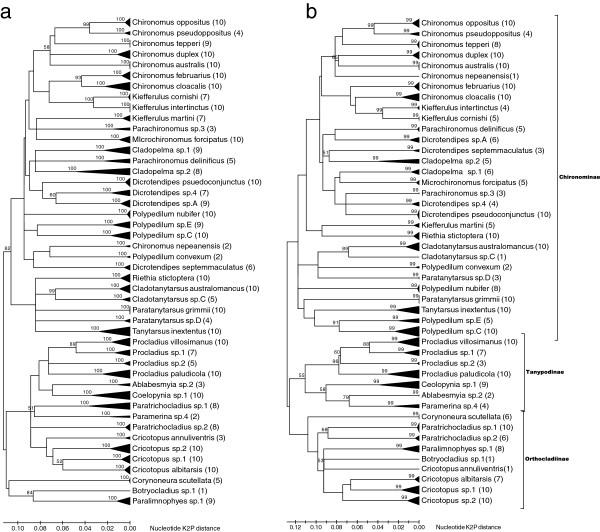
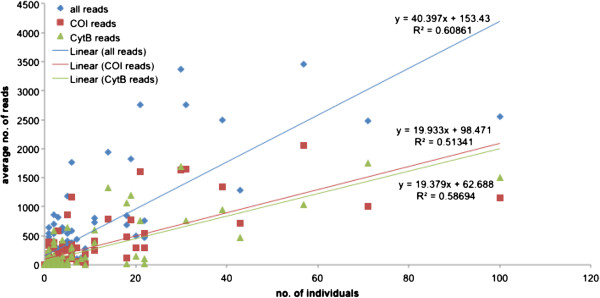
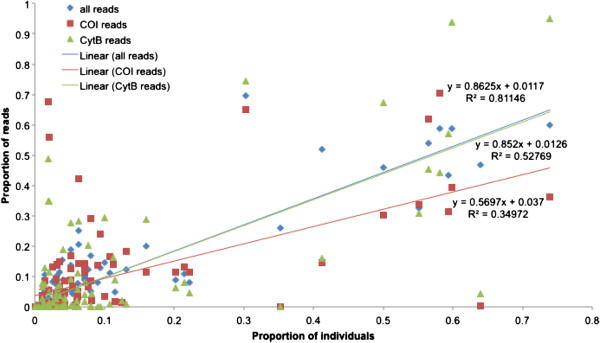
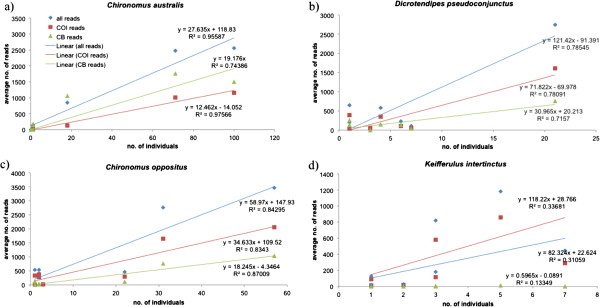
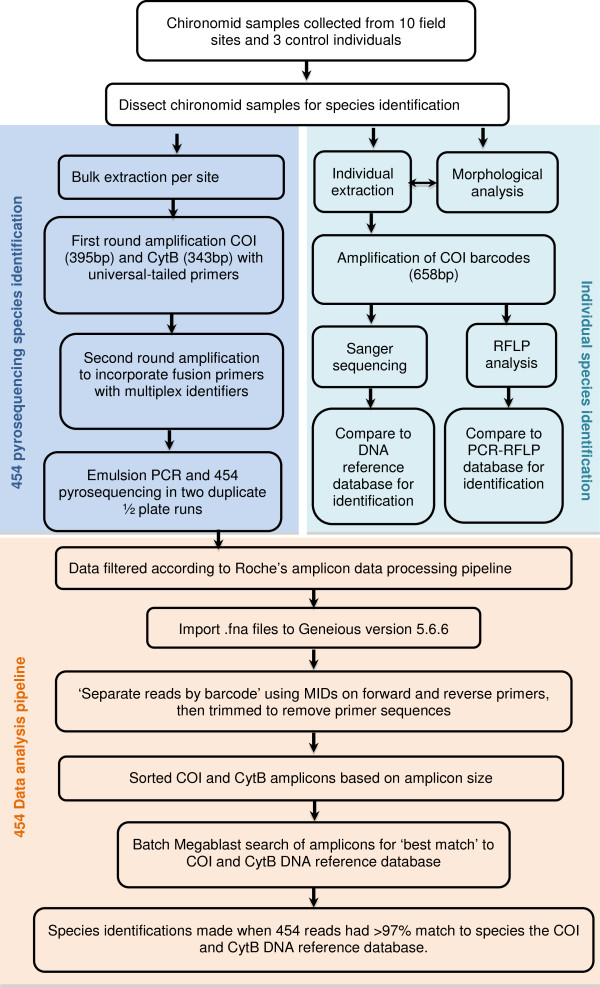
INTRODUCTION: Invertebrate communities are central to many environmental monitoring programs. In freshwater ecosystems, aquatic macroinvertebrates are collected, identified and then used to infer ecosystem condition. Yet the key step of species identification is often not taken, as it requires a high level of taxonomic expertise, which is lacking in most organizations, or species cannot be identified as they are morphologically cryptic or represent little known groups. Identifying species using DNA sequences can overcome many of these issues; with the power of next generation sequencing (NGS), using DNA sequences for routine monitoring becomes feasible. RESULTS: In this study, we test if NGS can be used to identify species from field-collected samples in an important bioindicator group, the Chironomidae. We show that Cytochrome oxidase I (COI) and Cytochrome B (CytB) sequences provide accurate DNA barcodes for chironomid species. We then develop a NGS analysis pipeline to identifying species using megablast searches of high quality sequences generated using 454 pyrosequencing against comprehensive reference libraries of Sanger-sequenced voucher specimens. We find that 454 generated COI sequences successfully identified up to 96% of species in samples, but this increased up to 99% when combined with CytB sequences. Accurate identification depends on having at least five sequences for a species; below this level species not expected in samples were detected. Incorrect incorporation of some multiplex identifiers (MID's) used to tag samples was a likely cause, and most errors could be detected when using MID tags on forward and reverse primers. We also found a strong quantitative relationship between the number of 454 sequences and individuals showing that it may be possible to estimate the abundance of species from 454 pyrosequencing data. CONCLUSIONS: Next generation sequencing using two genes was successful for identifying chironomid species. However, when detecting species from 454 pyrosequencing data sets it was critical to include known individuals for quality control and to establish thresholds for detecting species. The NGS approach developed here can lead to routine species-level diagnostic monitoring of aquatic ecosystems.
Overview
The claims and statistics of this paper haven’t been checked yet.
Run the check — free, no account needed. It reads the open-access text and checks the sources it cites.
Integrity signals
Registry
Cites
Statistics
Figures
Verification
Claims the paper makes
The claims and statistics of this paper haven’t been checked yet.
Run the check — free, no account needed. It reads the open-access text and checks the sources it cites.
Claims other papers make about this one
Each is checked against this paper’s own text: does it say what the citing paper says it does?
In the citing paper
“small organisms may be lost owing to low number of sequence reads [38].”
In the citing paper
“First, sampled organisms have vastly different biomasses, and thus small organisms may be lost owing to low number of sequence reads [38].”
Self-check
Percentages, sums and reported differences re-computed from the paper’s own numbers.
The self-check needs the paper’s full text.
Citations
Cites
Folmer, O., Black, M., Hoeh, W., Lutz, R., & Vrijenhoek, R. (1994) · PubMed · doi:10.5281/zenodo.15145663 · Cited by 15,546
Biological identifications through DNA barcodes
Hebert, P. D. N., Cywinska, A., Ball, S. L., & deWaard, J. R. (2003) · Proceedings of the Royal Society of London. Series B: Biological Sciences · doi:10.1098/rspb.2002.2218 · Cited by 13,376
Freshwater biomonitoring and benthic macroinvertebrates
(1993) · Choice Reviews Online · doi:10.5860/choice.30-6159 · Cited by 1,762
Meier, R., Kwong, S.-Y., Vaidya, G., & Ng, P. (2006) · Systematic Biology · doi:10.1080/10635150600969864 · Cited by 1,409
DEVELOPMENTS IN AQUATIC INSECT BIOMONITORING: A Comparative Analysis of Recent Approaches
Bonada, N., Prat, N., Resh, V. H., & Statzner, B. (2005) · Annual Review of Entomology · doi:10.1146/annurev.ento.51.110104.151124 · Cited by 1,071
Next‐generation sequencing technologies for environmental DNA research
Shokralla, S., Spall, J. L., Gibson, J. F., & Hajibabaei, M. (2012) · Molecular Ecology · doi:10.1111/j.1365-294x.2012.05538.x · Cited by 1,007
Defining operational taxonomic units using DNA barcode data
Blaxter, M., Mann, J., Chapman, T. W., Thomas, F., Whitton, C., Floyd, R., & Abebe, E. (2005) · Philosophical Transactions of the Royal Society B Biological Sciences · doi:10.1098/rstb.2005.1725 · Cited by 885
Biodiversity soup: metabarcoding of arthropods for rapid biodiversity assessment and biomonitoring
Yu, D. W., Ji, Y., Emerson, B. C., Wang, X., Ye, C., Yang, C., & Ding, Z. (2012) · Methods in Ecology and Evolution · doi:10.1111/j.2041-210x.2012.00198.x · Cited by 763
Molecular barcodes for soil nematode identification
Floyd, R., Abebe, E., Papert, A., & Blaxter, M. (2002) · Molecular Ecology · doi:10.1046/j.1365-294x.2002.01485.x · Cited by 750
Hajibabaei, M., Shokralla, S., Zhou, X., Singer, G. A. C., & Baird, D. J. (2011) · PLoS ONE · doi:10.1371/journal.pone.0017497 · Cited by 584
Cited by
Sorted by citations
Items 201–244 of 244
In silico identification and characterization of microRNAs from rotifers, cladocerans, and copepods
Kim, M., Yang, Z., & Lee, J. (2024) · Marine Pollution Bulletin · doi:10.1016/j.marpolbul.2024.117098 · Cited by 1
Checklist when designing a PCR-based DNA metabarcoding experiment
Taberlet, P., Bonin, A., Zinger, L., & Coissac, É. (2018) · Oxford University Press eBooks · doi:10.1093/oso/9780198767220.005.0003 · Cited by 1
Dutheil, L. M., Cottenie, K., Sonnenberg, H., Steinke, D., & Adamowicz, S. J. (2026) · Research Square · doi:10.21203/rs.3.rs-8253547/v1 · Cited by 1
The future of eDNA metabarcoding
Taberlet, P., Bonin, A., Zinger, L., & Coissac, É. (2018) · Oxford University Press eBooks · doi:10.1093/oso/9780198767220.003.0019
Taberlet, P., Bonin, A., Zinger, L., & Coissac, É. (2018) · Oxford University Press eBooks · doi:10.1093/oso/9780198767220.003.0011
Taberlet, P., Bonin, A., Zinger, L., & Coissac, É. (2018) · Oxford University Press eBooks · doi:10.1093/oso/9780198767220.003.0016
Assessing biodiversity: Beyond the taxonomic impediment
Ritter, C. D. (2018) · Gothenburg University Publications Electronic Archive (Gothenburg University)
DNA barcoding in some Belarusian insects
Dromashko, S. E., Semianiak, A. A., & Balashenko, N. A. (2020) · Biologija · doi:10.6001/biologija.v65i4.4120
Kassela, K., Kouvela, A., Williams, M. D. C., Konstantinidis, K., Rosa-Freitas, M. G., Nearchou, A., Gatzidou, E. T., Veletza, S. V., Boulougouris, G. C., Dovrolis, N., et al. (2020) · bioRxiv (Cold Spring Harbor Laboratory) · doi:10.1101/2020.11.22.393140
Insetos como bioindicador de qualidade ambiental em ambientes aquáticos
Santos, J. P. D. O., Lopes, G. N., Gonzaga, K. S., Abreu, K. G., Muniz, L. E. S., & Cartaxo, P. H. D. A. (2021) · Revista Thema · doi:10.15536/thema.v19.2021.356-366.1737
Taberlet, P., Bonin, A., Zinger, L., & Coissac, É. (2018) · Oxford University Press eBooks · doi:10.1093/oso/9780198767220.003.0004
Taberlet, P., Bonin, A., Zinger, L., & Coissac, É. (2018) · Oxford University Press eBooks · doi:10.1093/oso/9780198767220.003.0012
Taberlet, P., Bonin, A., Zinger, L., & Coissac, É. (2018) · Oxford University Press eBooks · doi:10.1093/oso/9780198767220.003.0005
Martin, J. (2022) · CHIRONOMUS Journal of Chironomidae Research · doi:10.5324/cjcr.v0i35.4833
Monitorización de las comunidades de anfibios mediante metabarcoding de ADN ambiental
Caro, A., Ugarte-Zabaleta, I., Vázquez-Sanz, J., Albaina, A., Madeira, M. J., & Gómez‐Moliner, B. J. (2023) · Munibe Monographs Nature Series · doi:10.21630/mmns.2023.5.03
Resensi buku Petunjuk Praktis Aplikasi Biomarker Sederhana_1058Preprint
dodhy, A. (2023) · doi:10.31219/osf.io/vgfzq
Examples of primer pairs available for DNA metabarcoding
Taberlet, P., Bonin, A., Zinger, L., & Coissac, É. (2018) · Oxford University Press eBooks · doi:10.1093/oso/9780198767220.005.0001 · Cited by 3
Taberlet, P., Bonin, A., Zinger, L., & Coissac, É. (2018) · Oxford University Press eBooks · doi:10.1093/oso/9780198767220.005.0002
(2018) · Environmental DNA · doi:10.1093/oso/9780198767220.002.0003
(2018) · Oxford University Press eBooks · doi:10.1093/oso/9780198767220.002.0004
Environmental DNA and toxicogenomics in ecological health risk assessment
Yang, J., Xie, Y., Mu, Y., Li, F., & Zhang, X. (2024) · Elsevier eBooks · doi:10.1016/b978-0-443-14170-6.00022-6
Chen, J., Jialin, L., Guiying, H., Yeshuang, N., Zhiqi, P., Xiao, C., Xinyu, G., Chen, K., & Beixin, W. (2025) · Journal of Lake Sciences · doi:10.18307/2025.0331
Chariton, A. A., Pettigrove, V. J., & Baird, D. J. (2016) · CSIRO Publishing eBooks · doi:10.1071/9781486303854-ch007
Self-citationXie, T., Zhang, Y., CHEN, Y.-Z., Liu, Z., & Lin, X. (2026) · Insects · doi:10.3390/insects17080814
Worku, Y., Asmamaw, M., Melese, D., & Ambelu, A. (2026) · Ecological Processes · doi:10.1186/s13717-026-00712-6
Doloiras-Laraño, A. D., Yaegashi, S., Serrana, J. M., Ishitani, N., & Watanabe, K. (2026) · Ecological Indicators · doi:10.1016/j.ecolind.2026.115390
Carew, M. E., Chung, J., Hehir, G., Hoffmann, A., & Coleman, R. A. (2026) · Molecular Ecology Resources · doi:10.1111/1755-0998.70213
Self-citation
Metadata
- Authors
- Carew, M. E., Pettigrove, V. J., Metzeling, L., & Hoffmann, A. A.
- Affiliations
- The University of Melbourne (AU)
- Environment Protection Authority Victoria (AU)
- Corresponding author
- Carew, Melissa E
- Venue
- Frontiers in Zoology
- Published
- 2013
- Volume
- 10
- Issue
- 1
- Pages
- 45
- ISSN
- 1742-9994 (ISSN-L)
- PMC
- PMC3750358
- OpenAlex
- W2159396143
- Cited by
- 243
- References
- 76
- Citations by year
- 2026: 5 · 2025: 4 · 2024: 5 · 2023: 12 · 2022: 8 · 2021: 16 · 2020: 27 · 2019: 23 · 2018: 50 · 2017: 33 · 2016: 24 · 2015: 24 · 2014: 11
- FWCI
- 17.38
- Type
- journal article
- Language
- en
- Open access
- gold
- doi.org
- Licence
- cc-by
- Locations
- Frontiers in Zoology (publishedVersion, cc-by)
- Europe PMC (PubMed Central) (publishedVersion, cc-by)
- PubMed Central (publishedVersion, cc-by)
- PubMed (publishedVersion)
- Minerva Access (University of Melbourne) (submittedVersion, cc-by)
- Funders
- Melbourne Water
- State Government of Victoria
- Environment Protection Authority Victoria
- Australian Research Council
- Topics
- Physical Sciences › Environmental Science › Ecology › Environmental DNA in Biodiversity Studies
- Life Sciences › Agricultural and Biological Sciences › Ecology, Evolution, Behavior and Systematics › Invertebrate Taxonomy and Ecology
- Physical Sciences › Environmental Science › Ecology › Freshwater macroinvertebrate diversity and ecology
- Keywords
- DNA barcoding, Chironomidae, aquatic macroinvertebrates, bioindicator species, species identification, COI, cytochrome b, 454 pyrosequencing, environmental monitoring, freshwater ecosystems, species abundance estimation, reference library
About these checks
Registry, retraction, Cites and statistics results are computed, not judged, with one exception: a printed reference that no index lists is read once by a model before it counts as a citation error. Claims are extracted by a model and kept only when their quote appears verbatim in the text; each cited source is then checked, with a model’s help, for whether it says what the claim relies on. Those verdicts can be wrong — read the claim’s quote and the cited source before relying on one.
Statistics and arithmetic are recomputed, not judged.
Confidence bands are shown only for fields calibrated on our annotated test set. None is calibrated yet, so no band is shown.
What counts as a claim ›How we measure confidence ›How we check this ›
Are you an author, or do you see a problem with this page? Request a review
