

Enhancing brain-machine interface (BMI) control of a hand exoskeleton using electrooculography (EOG)
Open accessThe DOI matches its Crossref record; 18 of the 18 references it cites were found in a registry or an index.
Abstract
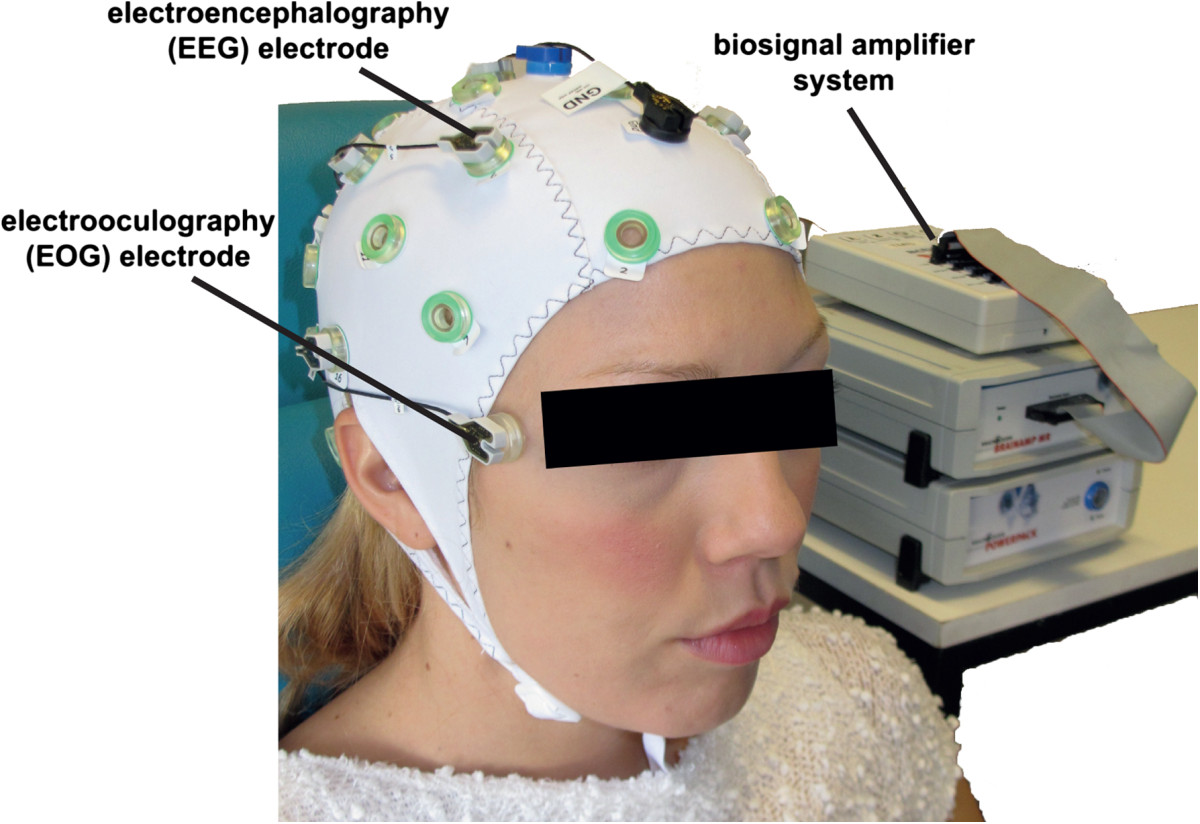
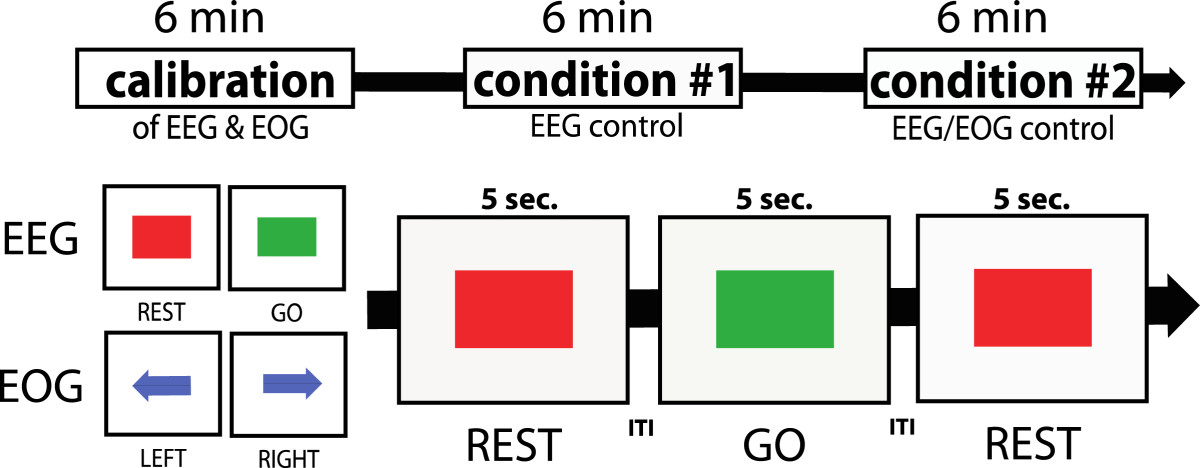
BACKGROUND: Brain-machine interfaces (BMIs) allow direct translation of electric, magnetic or metabolic brain signals into control commands of external devices such as robots, prostheses or exoskeletons. However, non-stationarity of brain signals and susceptibility to biological or environmental artifacts impede reliable control and safety of BMIs, particularly in daily life environments. Here we introduce and tested a novel hybrid brain-neural computer interaction (BNCI) system fusing electroencephalography (EEG) and electrooculography (EOG) to enhance reliability and safety of continuous hand exoskeleton-driven grasping motions. FINDINGS: 12 healthy volunteers (8 male, mean age 28.1 ± 3.63y) used EEG (condition #1) and hybrid EEG/EOG (condition #2) signals to control a hand exoskeleton. Motor imagery-related brain activity was translated into exoskeleton-driven hand closing motions. Unintended motions could be interrupted by eye movement-related EOG signals. In order to evaluate BNCI control and safety, participants were instructed to follow a visual cue indicating either to move or not to move the hand exoskeleton in a random order. Movements exceeding 25% of a full grasping motion when the device was not supposed to be moved were defined as safety violation. While participants reached comparable control under both conditions, safety was frequently violated under condition #1 (EEG), but not under condition #2 (EEG/EOG). CONCLUSION: EEG/EOG biosignal fusion can substantially enhance safety of assistive BNCI systems improving their applicability in daily life environments.
Overview
The claims and statistics of this paper haven’t been checked yet.
Free: it reads the open-access text and checks the first 5 claims that cite a source we can check. Create a free account to check every claim.
Integrity signals
Registry
Cites
Statistics
Figures
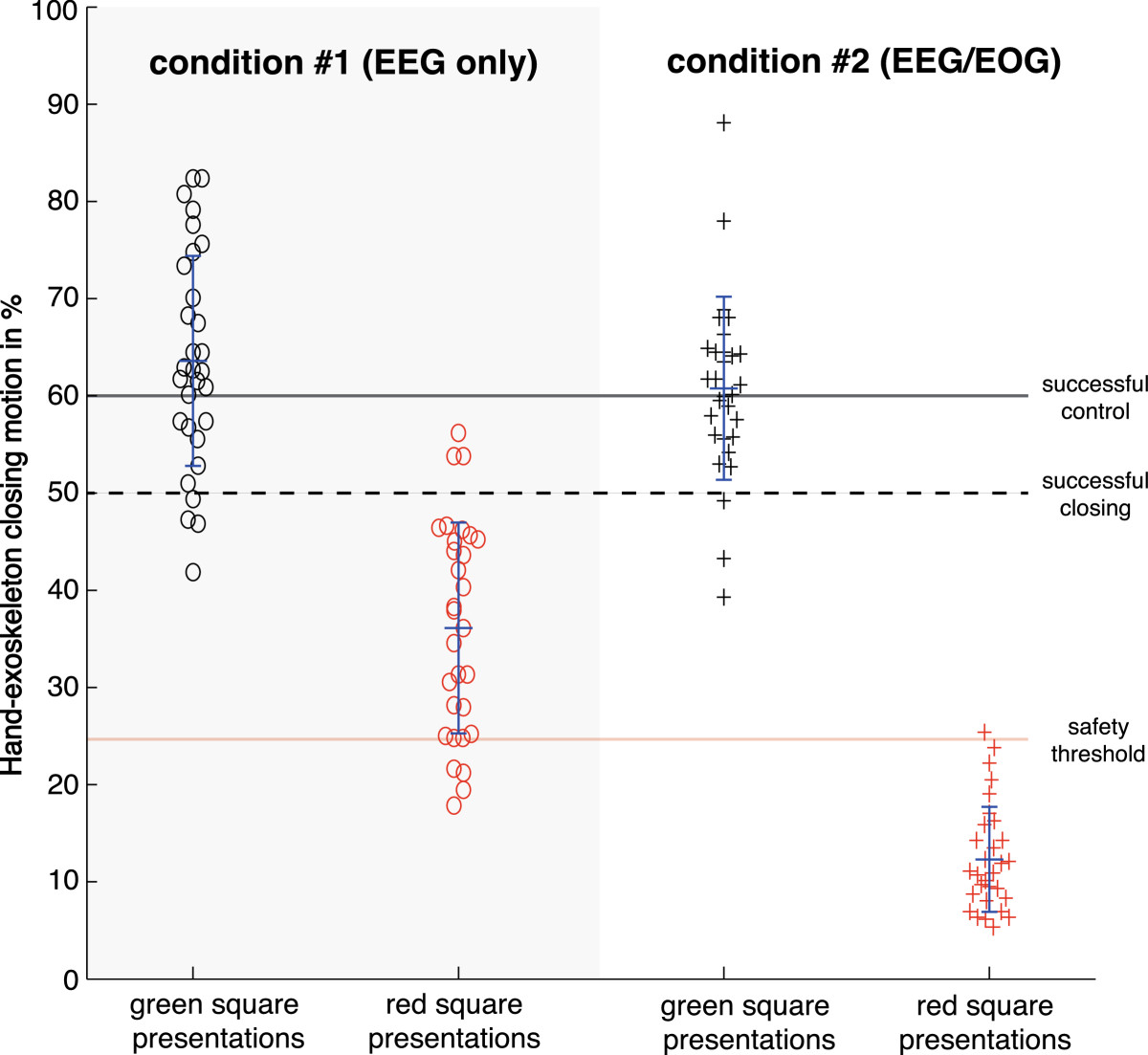
Verification
Claims the paper makes
The claims and statistics of this paper haven’t been checked yet.
Free: it reads the open-access text and checks the first 5 claims that cite a source we can check. Create a free account to check every claim.
Claims other papers make about this one
Each is checked against this paper’s own text: does it say what the citing paper says it does?
The check wasn’t confident either way, so it gives no verdict — never disputed.
In the citing paper
“Surface EMG is therefore, in principle, a low-cost and specific way of detecting what the patient wants the prosthetic to do.[400,401]”
From Flexible Electronics and Devices as Human–Machine Interfaces for Medical Robotics (2022) · cites this paper as [401]
Experimental — accuracy not yet measured
Self-check
Percentages, sums and reported differences re-computed from the paper’s own numbers.
The self-check needs the paper’s full text.
Citations
Cites
The assessment and analysis of handedness: The Edinburgh inventory
Oldfield, R. C. (1971) · Neuropsychologia · doi:10.1016/0028-3932(71)90067-4 · Cited by 35,900 · cited 1×
“All participants were right handed as evaluated by the Edinburgh Handedness Inventory [11], and gave written informed consent before the session.”
MethodMulticlass Brain–Computer Interface Classification by Riemannian Geometry
Barachant, A., Bonnet, S., Congedo, M., & Jutten, C. (2012) · IEEE Transactions on Biomedical Engineering · doi:10.1109/tbme.2011.2172210 · Cited by 878 · cited 1×
“based on Riemannian geometry [17], discriminative models [18] or machine learning are applied.”
MethodCombining brain-computer interfaces and assistive technologies: state-of-the-art and challenges
Millán, J. D. R. (2010) · Frontiers in Neuroscience · doi:10.3389/fnins.2010.00161 · Cited by 866 · cited 3×
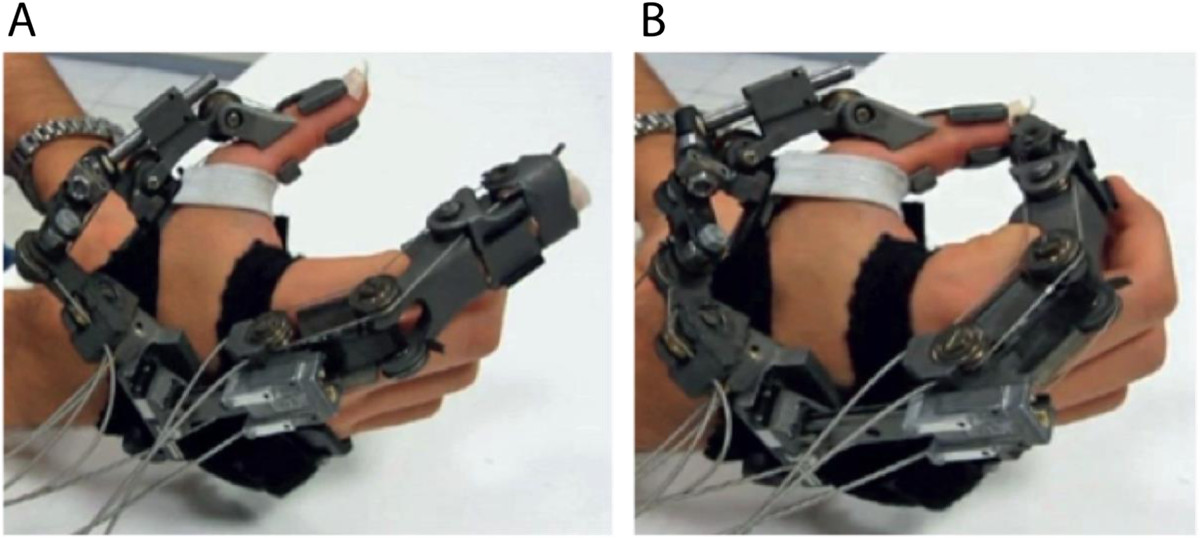
“Real-time translation of brain activity into control signals of external devices, known today as brain-computer or brain-machine interfaces (BCI/BMI), can substantially enhance human-machine interaction (HMI) [1], e.g. allowing impaired individuals to operate assistive systems as hand prostheses or exoskeletons (Figur…”
BackgroundPfurtscheller, G., & Aranibar, A. (1979) · Electroencephalography and Clinical Neurophysiology · doi:10.1016/0013-4694(79)90063-4 · Cited by 758 · cited 1×
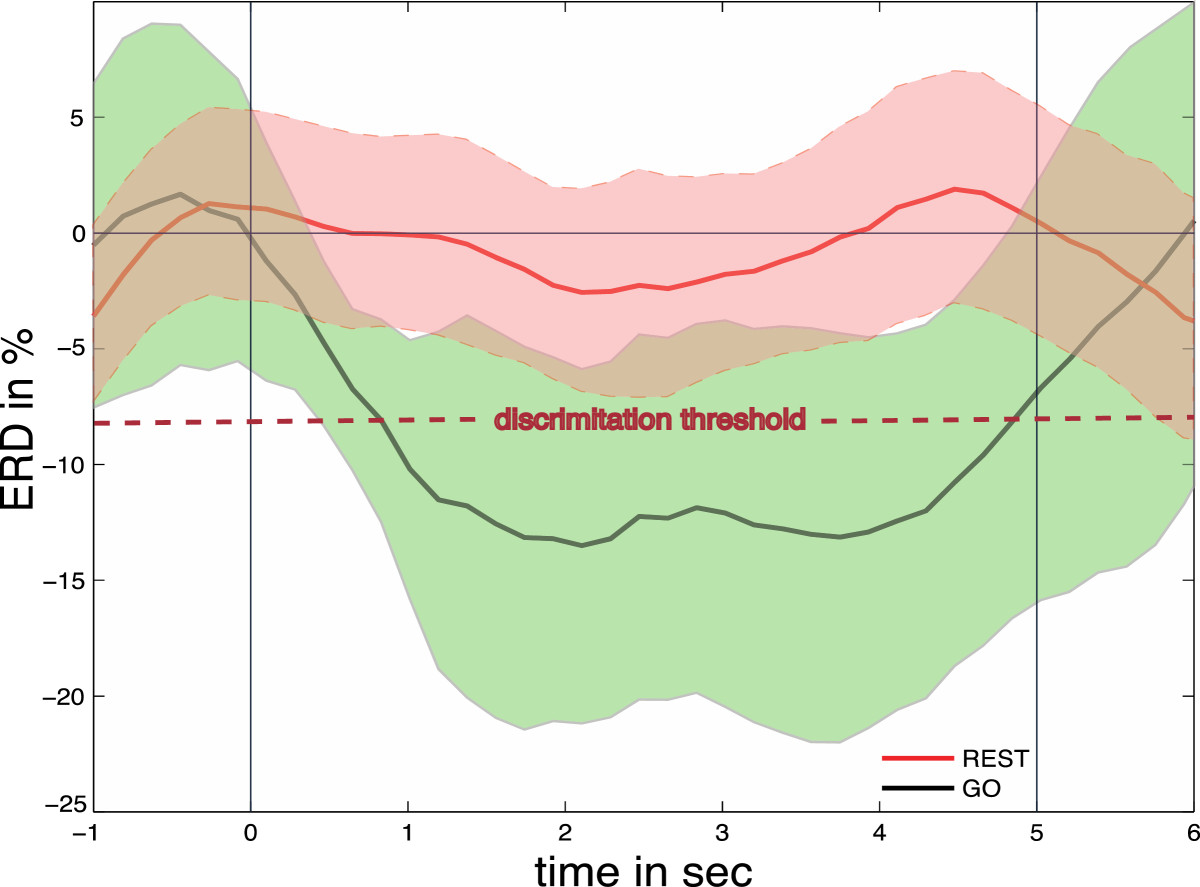
“To identify the optimal frequency for detection of motor-imagery related desynchronization of sensorimotor rhythms (SMR, 8-15Hz) of each participant, a power spectrum estimation (autoregressive model of order 16 using the Yule–Walker algorithm) was performed for each incoming sample, selecting the frequency that showe…”
MethodPfurtscheller, G., Solis-Escalante, T., Ortner, R., Linortner, P., & Muller-Putz, G. R. (2010) · IEEE Transactions on Neural Systems and Rehabilitation Engineering · doi:10.1109/tnsre.2010.2040837 · Cited by 276 · cited 1×
“A possible strategy to increase safety of brain-controlled assistive systems in daily life environments is to use a switch mechanism turning the BMI system off or into sleep mode when active brain control is not needed or desired [7,8].”
BackgroundBlankertz, B., Dornhege, G., Schafer, C., Krepki, R., Kohlmorgen, J., Muller, K.-R., Kunzmann, V., Losch, F., & Curio, G. (2003) · IEEE Transactions on Neural Systems and Rehabilitation Engineering · doi:10.1109/tnsre.2003.814456 · Cited by 226 · cited 1×
“of intelligent machine learning algorithms [5,6] or remarkable technical advances improving active BMI control [1,3], classification accuracy of most BMI systems is still insufficient for many assistive applications, particularly those related to motor control, where misclassification can lead to unwanted actions and…”
BackgroundBCI meeting 2005-workshop on BCI signal processing: feature extraction and translation
McFarland, D. J., Anderson, C. W., Muller, K.-R., Schlogl, A., & Krusienski, D. J. (2006) · IEEE Transactions on Neural Systems and Rehabilitation Engineering · doi:10.1109/tnsre.2006.875637 · Cited by 204 · cited 1×
“of intelligent machine learning algorithms [5,6] or remarkable technical advances improving active BMI control [1,3], classification accuracy of most BMI systems is still insufficient for many assistive applications, particularly those related to motor control, where misclassification can lead to unwanted actions and…”
BackgroundA Powered Finger–Thumb Wearable Hand Exoskeleton With Self-Aligning Joint Axes
Cempini, M., Cortese, M., & Vitiello, N. (2015) · IEEE/ASME Transactions on Mechatronics · doi:10.1109/tmech.2014.2315528 · Cited by 193 · cited 2×
“The illustrated device was developed by The BioRobotics Institute (Scuola Superiore Sant’Anna, Pisa, Italy) to perform opening and closing motions of a hand [2].”
BackgroundMethodSelf-citationAn asynchronous wheelchair control by hybrid EEG–EOG brain–computer interface
Wang, H., Li, Y., Long, J., Yu, T., & Gu, Z. (2014) · Cognitive Neurodynamics · doi:10.1007/s11571-014-9296-y · Cited by 132 · cited 1×
“to navigate a toy truck [9] or wheelchair [10].”
BackgroundSoekadar, S. R., Witkowski, M., Mellinger, J., Ramos‐Murguialday, A., Birbaumer, N., & Cohen, L. G. (2011) · IEEE Transactions on Neural Systems and Rehabilitation Engineering · doi:10.1109/tnsre.2011.2166809 · Cited by 87 · cited 3×
“To identify the optimal frequency for detection of motor-imagery related desynchronization of sensorimotor rhythms (SMR, 8-15Hz) of each participant, a power spectrum estimation (autoregressive model of order 16 using the Yule–Walker algorithm) was performed for each incoming sample, selecting the frequency that showe…”
BackgroundMethodSelf-citation
Cited by
Flexible Electronics and Devices as Human–Machine Interfaces for Medical Robotics
Heng, W., Solomon, S., & Gao, W. (2022) · Advanced Materials · doi:10.1002/adma.202107902 · Cited by 609
Hong, K.-S., & Khan, M. J. (2017) · Frontiers in Neurorobotics · doi:10.3389/fnbot.2017.00035 · Cited by 267
“Real-time video game control of Belkacem et al. (2015a) and exoskeleton control of Witkowski et al. (2014) have also been implemented in the form of hBCI using a thresholding scheme with the accuracies of 77.3 (for six commands) and 63.59% (for four commands), respectively.”
MethodInfluentialBrain–computer interface robotics for hand rehabilitation after stroke: a systematic review
Baniqued, P. D. E., Stanyer, E. C., Awais, M., Alazmani, A., Jackson, A. E., Mon-Williams, M. A., Mushtaq, F., & Holt, R. J. (2021) · Journal of NeuroEngineering and Rehabilitation · doi:10.1186/s12984-021-00820-8 · Cited by 246
Soekadar, S. R., Witkowski, M., Gómez, C., Opisso, E., Medina, J., Cortese, M., Cempini, M., Carrozza, M. C., Cohen, L. G., Birbaumer, N., et al. (2016) · Science Robotics · doi:10.1126/scirobotics.aag3296 · Cited by 242
Self-citationHuang, J., Huo, W., Xu, W., Mohammed, S., & Amirat, Y. (2015) · IEEE Transactions on Automation Science and Engineering · doi:10.1109/tase.2015.2466634 · Cited by 185
“Many bioelectrical signals can be used in the first class of methods, including the electroencephalography (EEG) [15], the electrooculography (EOG) [16], the electromyography (EMG) [17], [18], and so on.”
MethodAdaptive Extreme Edge Computing for Wearable Devices
Covi, E., Donati, E., Liang, X., Kappel, D., Heidari, H., Payvand, M., & Wang, W. (2021) · Frontiers in Neuroscience · doi:10.3389/fnins.2021.611300 · Cited by 177
“EOG can also act as a supplement to provide additional functions or commands to an EEG system (Punsawad et al., 2010; Wang et al., 2014a; Witkowski et al., 2014).”
BackgroundBhagat, N. A., Venkatakrishnan, A., Abibullaev, B., Artz, E. J., Yozbatiran, N., Blank, A. A., French, J., Karmonik, C., Grossman, R. G., O'Malley, M. K., et al. (2016) · Frontiers in Neuroscience · doi:10.3389/fnins.2016.00122 · Cited by 174
EEG-Based Control for Upper and Lower Limb Exoskeletons and Prostheses: A Systematic Review
AL-Quraishi, M. S., Elamvazuthi, I., Daud, S. A., Parasuraman, S., & Borboni, A. (2018) · Sensors · doi:10.3390/s18103342 · Cited by 164
Cantillo-Negrete, J., Carino-Escobar, R. I., Carrillo‐Mora, P., Elías-Viñas, D., & Gutiérrez-Martínez, J. (2018) · Journal of Healthcare Engineering · doi:10.1155/2018/1624637 · Cited by 116
Huang, Q., Zhang, Z., Yu, T., He, S., & Li, Y. (2019) · Frontiers in Neuroscience · doi:10.3389/fnins.2019.01243 · Cited by 114
“…et al., 2012; Li et al., 2013; Bhattacharyya et al., 2014; Ma et al., 2017) or other bioelectrical signals (Punsawad et al., 2010; Jun et al., 2014; Witkowski et al., 2014; Ma et al., 2015; Soekadar et al., 2015; Minati et al., 2016), i.e., using a hybrid brain-computer interfaces (hBCIs)…”
MethodCrea, S., Nann, M., Trigili, E., Cordella, F., Baldoni, A., Badesa, F. J., Catalan, J. M., Zollo, L., Vitiello, N., García-Aracil, N., et al. (2018) · Scientific Reports · doi:10.1038/s41598-018-29091-5 · Cited by 108
Self-citationA hybrid BMI-based exoskeleton for paresis: EMG control for assisting arm movements
Kawase, T., Sakurada, T., Koike, Y., & Kansaku, K. (2017) · Journal of Neural Engineering · doi:10.1088/1741-2552/aa525f · Cited by 107
“Some studies on BMI-based hand exoskeletons have attempted to overcome the limitation of EEG-based control by combinations of EEG and other biological signals, such as near-infrared spectroscopy (Pfurtscheller et al 2010a) and electrooculography (Witkowski et al 2014).”
BackgroundA novel hand exoskeleton with series elastic actuation for modulated torque transfer
Marconi, D., Baldoni, A., McKinney, Z., Cempini, M., Crea, S., & Vitiello, N. (2019) · Mechatronics · doi:10.1016/j.mechatronics.2019.06.001 · Cited by 98
Self-citationA Biomimetic Soft Lens Controlled by Electrooculographic Signal
Li, J., Wang, Y., Liu, L., Xu, S. H., Liu, Y., Leng, J., & Cai, S. (2019) · Advanced Functional Materials · doi:10.1002/adfm.201903762 · Cited by 81
Minati, L., Yoshimura, N., & Koike, Y. (2016) · IEEE Access · doi:10.1109/access.2017.2647851 · Cited by 78
Nann, M., Cordella, F., Trigili, E., Lauretti, C., Bravi, M., Miccinilli, S., Catalan, J. M., Badesa, F. J., Crea, S., Bressi, F., et al. (2020) · IEEE Systems Journal · doi:10.1109/jsyst.2020.3021485 · Cited by 74
“, related to imagined or attempted movements of the paralyzed fingers, into actual finger movements driven by electromechanical actuators [7]–[10].”
BackgroundSelf-citationEOG-Based Human–Computer Interface: 2000–2020 Review
Belkhiria, C., Boudir, A., Hurter, C., & Peysakhovich, V. (2022) · Sensors · doi:10.3390/s22134914 · Cited by 74
“Chen [41] 2000 • • • • Rosander [42] 2000 • • • • Barea [43] 2002 • • • • Ding [44] 2005 • • • Vehkaoja [13] 2005 • • • • Manabe [11] 2006 • • • • • • Ding [45] 2006 • • • • • Trejo [46] 2006 • • • • Yamagishi [31] 2006 • • • • Akan [47] 2007 • • • • Bashashati [48] 2007 • • • • Krueger [49] 2007 • • • • Skotte [50] 2…”
A hybrid brain-computer interface for closed-loop position control of a robot arm
Rakshit, A., Konar, A., & Nagar, A. K. (2020) · IEEE/CAA Journal of Automatica Sinica · doi:10.1109/jas.2020.1003336 · Cited by 66
“Although there exists other sophisticated methods of noise and artifact removal, CAR has been chosen because of its low computational overhead in comparison to other existing filtering algorithms [33].”
MethodBrain–machine interfaces for rehabilitation of poststroke hemiplegia
Ushiba, J., & Soekadar, S. R. (2016) · Progress in brain research · doi:10.1016/bs.pbr.2016.04.020 · Cited by 63
Self-citationHortal, E., Planelles, D., Resquín, F., Climent, J. M., Azorín, J. M., & Pons, J. L. (2015) · Journal of NeuroEngineering and Rehabilitation · doi:10.1186/s12984-015-0082-9 · Cited by 69
“In this regard, multiple works focused on this kind of rehabilitation are being developed [18–20].”
BackgroundEEG Signals Classification: Motor Imagery for Driving an Intelligent Wheelchair
Pinheiro, O. R., Alves, L. R. G., & de Souza, J. R. (2018) · IEEE Latin America Transactions · doi:10.1109/tla.2018.8291481 · Cited by 53
Brain-computer interfaces in safety and security fields: Risks and applications
Brocal, F. (2023) · Safety Science · doi:10.1016/j.ssci.2022.106051 · Cited by 57
Review of sEMG for Exoskeleton Robots: Motion Intention Recognition Techniques and Applications
Zhang, X., Qu, Y., Zhang, G., Wang, Z., Chen, C., & Xu, X. (2025) · Sensors · doi:10.3390/s25082448 · Cited by 44
“Manual care is costly, and the ) [30,31], electrooculographic signals (EOG) [32,33], etc. Bioelectric signals are the potentials and signals excited when neurons carrying behavioral information are transmitted to related tissues/organs.”
Challenges in Task Incremental Learning for Assistive Robotics
Feng, F., Chan, R. H. M., Shi, X., Zhang, Y., & She, Q. (2020) · IEEE Access · doi:10.1109/access.2019.2955480 · Cited by 39
“The ability of lifelong/continual learning is, however, essential in particular to assistive robotics for elderlies or patients with disabilities [1], [2].”
BackgroundAn EOG-based wheelchair robotic arm system for assisting patients with severe spinal cord injuries
Huang, Q., Yang, C., Zhang, Z., He, S., Zhang, R., Liu, J., Zhang, Y., Shao, M., & Li, Y. (2019) · Journal of Neural Engineering · doi:10.1088/1741-2552/aafc88 · Cited by 43
EEG-EOG based Virtual Keyboard: Toward Hybrid Brain Computer Interface
Hosni, S. I., Shedeed, H. A., Mabrouk, M. S., & Tolba, M. F. (2018) · Neuroinformatics · doi:10.1007/s12021-018-9402-0 · Cited by 42
Angerhöfer, C., Colucci, A., Vermehren, M., Hömberg, V., & Soekadar, S. R. (2021) · Frontiers in Neurology · doi:10.3389/fneur.2021.772199 · Cited by 59
“Although improvements have been made to enhance practicability by implementing veto commands (53), establishing hybrid control paradigms (54) and developing user-friendly EEG systems (55, 56), assistive BCI systems that can be applied by the user without any external help are still missing.”
BackgroundSelf-citationSSA with CWT and k-Means for Eye-Blink Artifact Removal from Single-Channel EEG Signals
Maddirala, A. K., & Veluvolu, K. C. (2022) · Sensors · doi:10.3390/s22030931 · Cited by 40
Sattar, N. Y., Kausar, Z., Usama, S. A., Farooq, U., Shah, M. F., Muhammad, S., Khan, R., & Badran, M. (2022) · Sensors · doi:10.3390/s22030726 · Cited by 41
“82% FD features [59] LDA/SVM 15 s 2 83% Raw fNIRS [22] ANN 4 s 4 58% TD features [60] SVM 0.”
BackgroundFeasibility of Machine Learning in Predicting Features Related to Congenital Nystagmus
D’Addio, G., Ricciardi, C., Improta, G., Bifulco, P., & Cesarelli, M. (2019) · World Congress on Medical Physics and Biomedical Engineering, September 7 - 12, 2009, Munich, Germany · doi:10.1007/978-3-030-31635-8_110 · Cited by 34
Catalan, J. M., Trigili, E., Nann, M., Blanco, A., Lauretti, C., Cordella, F., Ivorra, E., Armstrong, E., Crea, S., Alcañíz, M., et al. (2023) · Journal of NeuroEngineering and Rehabilitation · doi:10.1186/s12984-023-01185-w · Cited by 35
“Multi-modal control strategies also employing EEG or MEG in addition to electrooculography (EOG) or electromyography (EMG) have been explored, to improve BCI accuracy or to increase the number of classes to recognize, thus the number of controllable degrees of freedom of the system [16, 17].”
BackgroundSelf-citationKubiak, C. A., Svientek, S. R., Dehdashtian, A., Lawera, N. G., Nadarajan, V., Bratley, J. V., Kung, T. A., Cederna, P. S., & Kemp, S. W. P. (2021) · Journal of Neural Engineering · doi:10.1088/1741-2552/ac1b6b · Cited by 30
“However, these devices have not become widely adopted as current methods for human–machine interfacing are unable to provide the user with accurate and intuitive motor assistance [6, 12, 17].”
InfluentialImprota, G., Ricciardi, C., Cesarelli, G., D’Addio, G., Bifulco, P., & Cesarelli, M. (2020) · Health and Technology · doi:10.1007/s12553-020-00449-y · Cited by 24
Physiological Responses During Hybrid BNCI Control of an Upper-Limb Exoskeleton
Badesa, F. J., Díez, J. A., Catalan, J. M., Trigili, E., Cordella, F., Nann, M., Crea, S., Soekadar, S. R., Zollo, L., Vitiello, N., et al. (2019) · Sensors · doi:10.3390/s19224931 · Cited by 25
“The second approach is based on the fusion or combination of brain signals and other kind of bio-signals, such as sEMG [10,11], ECG [12,13] and electrooculography (EoG) [14,15].”
BackgroundSelf-citationFeasibility and Safety of Bilateral Hybrid EEG/EOG Brain/Neural–Machine Interaction
Nann, M., Peekhaus, N., Angerhöfer, C., & Soekadar, S. R. (2020) · Frontiers in Human Neuroscience · doi:10.3389/fnhum.2020.580105 · Cited by 25
“To enhance BCI control in everyday life environments, maximal horizontal oculoversions (HOVs) assessed by EOG were integrated as an additional control signal to reduce false classifications (Witkowski et al., 2014; Soekadar et al., 2015b).”
MethodSelf-citationBelkhiria, C., & Peysakhovich, V. (2020) · Frontiers in Neuroergonomics · doi:10.3389/fnrgo.2020.606719 · Cited by 30
“…• Soekadar et al. (2015) Huang 2019 10 • ◦ ◦ • ◦ ◦ ◦ ◦ ◦ ◦ • ◦ ◦ • • ◦ ◦ ◦ ◦ ◦ • ◦ ◦ ◦ ◦ ◦ ◦ • • ◦ Huang et al. (2019) Punsawad 2010 3 ◦ • • ◦ • • ◦ ◦ ◦ ◦ ◦ ◦ • ◦ ◦ ◦ ◦ • ◦ ◦ ◦ ◦ ◦ • ◦ ◦ ◦ ◦ • ◦ Punsawad et al. (2010) Usakli 2010 10 • ◦ • ◦ ◦ ◦ ◦ ◦ ◦ • ◦ ◦ • ◦ • ◦ ◦ • ◦ ◦ • ◦ ◦ ◦ ◦ ◦ ◦ ◦ ◦ •…”
Towards Control of EEG-Based Robotic Arm Using Deep Learning via Stacked Sparse Autoencoder
Idowu, O. P., Fang, P., Li, X., Xia, Z., Xiong, J., & Li, G. (2018) · IEEE International Conference on Robotics and Biomimetics (ROBIO) · doi:10.1109/robio.2018.8665089 · Cited by 21
“a wheelchair [8], a prosthetic arm [9] and an exoskeleton robot [10].”
BackgroundSoekadar, S. R., Nann, M., Crea, S., Trigili, E., Gómez, C., Opisso, E., Cohen, L. G., Birbaumer, N., & Vitiello, N. (2019) · Springer briefs in electrical and computer engineering · doi:10.1007/978-3-030-05668-1_5 · Cited by 17
Self-citationLiao, K., Yang, Z., Dong, T., Zhao, L., Pires, N. M. M., Dorao, C. A., Stokke, B. T., Roseng, L. E., Liu, W., & Jiang, Z. (2023) · Advanced Quantum Technologies · doi:10.1002/qute.202300185 · Cited by 22
Bates, M., & Sunderam, S. (2023) · Frontiers in Human Neuroscience · doi:10.3389/fnhum.2023.1121481 · Cited by 14
“The most common devices integrated with BCIs were assistive (Buch et al., 2008; King et al., 2011; Holmes et al., 2012; Ang et al., 2014; Coffey et al., 2014; Witkowski et al., 2014; Barsotti et al., 2015; Bauer et al., 2015; Cantillo-Negrete et al., 2015; Kasashima-Shindo et al., 2015; Ramos-Murguialday and Birbaumer…”
BackgroundBrain-computer interfaces for stroke rehabilitation: summary of the 2016 BCI Meeting in Asilomar
Guger, C., Millán, J. D. R., Mattia, D., Ushiba, J., Soekadar, S. R., Prabhakaran, V., Mrachacz‐Kersting, N., Kamada, K., & Allison, B. Z. (2018) · Brain-Computer Interfaces · doi:10.1080/2326263x.2018.1493073 · Cited by 12
Self-citationChio, N., & Quiles, E. (2024) · Sensors · doi:10.3390/s25010154 · Cited by 12
Angerhöfer, C., Vermehren, M., Colucci, A., Nann, M., Kossmehl, P. P., Niedeggen, A., Kim, W., Chang, W. K., Paik, N., Hömberg, V., et al. (2023) · Journal of NeuroEngineering and Rehabilitation · doi:10.1186/s12984-023-01137-4 · Cited by 10
“Here, desynchronization of sensorimotor rhythms (SMR) associated with the intention to grasp results in exoskeleton-driven closing motions of the paralyzed hand, while horizonal oculoversions (HOV) opens the hand or stops an unintended closing motion [9].”
BackgroundSelf-citationA comprehensive study of EEG-based control of artificial arms
Satam, I. A. (2023) · Vojnotehnicki glasnik · doi:10.5937/vojtehg71-41366 · Cited by 10
Personalization of the 3D-Printed Upper Limb Exoskeleton Design—Mechanical and IT Aspects
Mikołajewski, D., Rojek, I., Kotlarz, P., Dorożyński, J., & Kopowski, J. (2023) · Applied Sciences · doi:10.3390/app13127236 · Cited by 9
“The average increase in range of movement was significant (43%), which places further demands on the safety of the exoskeleton and not exceeding physiological values [89].”
BackgroundRivas, F., Sierra-García, J. E., & Nebreda, J. M. C. (2024) · Electronics · doi:10.3390/electronics13061013 · Cited by 10
Long, X., Liu, D.-X., Liang, S., Yan, Z., & Wu, X. (2018) · International Conference on Control, Automation, Robotics and Vision (ICARCV) · doi:10.1109/icarcv.2018.8581094 · Cited by 10
“[7] proposes a method of using the electrooculography to enhance the BCI to control the arm exoskeleton for grasping.”
MethodMinimizing Biosignal Recording Sites for Noninvasive Hybrid Brain/Neural Control
Cavallo, A., Roth, V., Haslacher, D., Nann, M., & Soekadar, S. R. (2020) · IEEE Systems Journal · doi:10.1109/jsyst.2020.3021751 · Cited by 9
“It was unclear, however, whether online HOV detection can be achieved at similar accuracies using this strategy compared to the established approach recording HOV from the outer canthi [3], [4], [11], [18].”
Self-citationPower Assist Rehabilitation Robot and Motion Intention Estimation
Adeola-Bello, Z. A., & Azlan, N. Z. (2022) · International Journal of Robotics and Control Systems · doi:10.31763/ijrcs.v2i2.650 · Cited by 9
“In this group of procedures, control techniques based on bioelectrical signal measurements, electroencephalography (EEG) [22], electrooculography (EOG), electromyography (EMG) [23], and other bioelectrical signals can be used [24].”
MethodNoninvasive Brain Machine Interfaces for Assistive and Rehabilitation Robotics
Lisi, G., & Morimoto, J. (2016) · Elsevier eBooks · doi:10.1016/b978-0-12-803137-7.00006-9 · Cited by 8
Relevance of Series-Elastic actuation in rehabilitation and assistance robotic: Two cases of study
Cempini, M., Marconi, D., Muscolo, M., Moisè, M., Fantozzi, M., Cortese, M., Parri, A., Yan, T., Crea, S., Giovacchini, F., et al. (2015) · IEEE International Forum on Research and Technology for Society and Industry (RTSI) · doi:10.1109/rtsi.2015.7325074 · Cited by 6
“Conversely, the required forces and torques are usually much lower than the rehabilitation case: however, stability of the device [23] and the ability to reach a constructive synergy between the two agents [19] still passes through the physical human-robot interaction (pHRI).”
BackgroundSelf-citationBrain Signal Classification using Genetic Algorithm for Right-Left Motion Pattern
Rahmad, C., Ariyanto, R., & Rizky, D. L. P. (2018) · International Journal of Advanced Computer Science and Applications · doi:10.14569/ijacsa.2018.091134 · Cited by 6
“Research on the classification of EEG signals has been carried out, including classification of fatigue levels, identification of EEG signals for sound stimulation, identification of alertness, emotional conditions, attention classification, identification of epilepsy, and other studies classifying EEG signals against…”
BackgroundA Review: Sensory System, Data Processing, Actuator Type on a Hand Exoskeleton Design
Triwiyanto, T., Luthfiyah, S., Sumber, S., Pudji, A., Kholiq, A., Utomo, B., Rahmawati, T., & Titisari, D. (2021) · Journal of biomimetics, biomaterials and biomedical engineering · doi:10.4028/www.scientific.net/jbbbe.50.39 · Cited by 6
“Several studies has develop the hand exoskeleton using EMG signal [18] [22] [23], EEG Signal [26], optical [16] and force sensor [24] [25] [15] [17].”
MethodBadesa, F. J., Díez, J. A., Barios, J. A., Catalan, J. M., & García-Aracil, N. (2020) · IEEE/RAS-EMBS International Conference on Biomedical Robotics and Biomechatronics (BioRob) · doi:10.1109/biorob49111.2020.9224322 · Cited by 6
A Comparative Study of Machine Learning Algorithms for EEG Signal Classification
Hashmi, A., Khan, B. A., & Farooq, O. (2021) · Signal & Image Processing An International Journal · doi:10.5121/sipij.2021.12603 · Cited by 5
“The data used in this study was taken from [11].”
MethodSvientek, S. R., Wisely, J. P., Dehdashtian, A., Bratley, J. V., Cederna, P. S., & Kemp, S. W. P. (2022) · Journal of Visualized Experiments · doi:10.3791/63222 · Cited by 9
Phang, C., Su, K.-H., Cheng, Y., Chen, C., & Ko, L. (2024) · Journal of NeuroEngineering and Rehabilitation · doi:10.1186/s12984-024-01330-z · Cited by 8
“Numerous research groups have implemented BCI-based rehabilitation for the upper limbs using EEG beta and mu rhythms [2–6].”
MethodShusharina, N. N., & Bogdanov, E. A. (2016) · Biology and Medicine · doi:10.4172/0974-8369.1000331 · Cited by 5
“A developed EEG-EOG system demonstrated an improvement of the reliability of the long-term use of the arm exoskeleton during the performance of grasping movements [21].”
BackgroundInteraction techniques for a neural-guided hand exoskeleton
Ableitner, T., Soekadar, S. R., Strobbe, C., Schilling, A., & Zimmermann, G. (2018) · Procedia Computer Science · doi:10.1016/j.procs.2018.10.164 · Cited by 6
Self-citationHybrid brain-computer interfacing paradigm for assistive robotics
Ghosh, A., Ghosh, L., & Saha, S. (2024) · Robotics and Autonomous Systems · doi:10.1016/j.robot.2024.104893 · Cited by 4
Brain-Machine Interfaces for Assistance and Rehabilitation of People with Reduced Mobility
Hortal, E. (2018) · Springer theses · doi:10.1007/978-3-319-95705-0 · Cited by 4
Neural-gesteuerte Robotik für Assistenz und Rehabilitation im Alltag
Soekadar, S. R., & Nann, M. (2020) · Springer eBooks · doi:10.1007/978-3-658-28307-0_8 · Cited by 4
Self-citationHybrid Brain/Neural Exoskeleton Enables Bimanual ADL Training in Routine Stroke Rehabilitation
Colucci, A., Vermehren, M., Angerhöfer, C., Peekhaus, N., Kim, W., Chang, W. K., Hömberg, V., Paik, N., & Soekadar, S. R. (2025) · Stroke · doi:10.1161/strokeaha.125.052008 · Cited by 5
“22,23 SMR-ERD and HOV were integrated into a sequential control paradigm (Figure 1B) that maximizes accuracy in a realistic environment and allows self-paced B/NE–supported motor training.”
Self-citationA Review on Robotic Hand Exoskeleton Devices: State-of-the-Art Method
Triwiyanto, T., Yulianto, E., Mak’ruf, M. R., Titisari, D., Rahmawati, T., Luthfiyah, S., Hamzah, T., Syaifudin, S., & Wisana, I. D. G. H. (2021) · Lecture notes in electrical engineering · doi:10.1007/978-981-33-6926-9_28 · Cited by 2
A Survey of Multimodal Human-Machine Interface
Ding, W., Wang, C., Fang, B., Sun, F., & Shan, J. (2021) · Communications in computer and information science · doi:10.1007/978-981-16-2336-3_35 · Cited by 2
Gehirn-Computer Schnittstellen zur Verbesserung von Lebensqualität und sozialer Teilhabe
Soekadar, S. R. (2022) · Schriften der Mathematisch-naturwissenschaftlichen Klasse · doi:10.1007/978-3-658-34859-5_12 · Cited by 2
Self-citationA Review and Classification of Widely used Offline Brain Datasets
Wasim, M., Sajjad, M., Ramzan, F., Khan, M. U. G., & Mahmood, W. (2018) · International Journal of Advanced Computer Science and Applications · doi:10.14569/ijacsa.2018.090254 · Cited by 3
A Study of the Classification of Motor Imagery Signals using Machine Learning Tools
Hashmi, A., Khan, B. A., & Farooq, O. (2021) · doi:10.5121/csit.2021.112104 · Cited by 2
“The data used in this study was taken from [11].”
MethodAdaptation Strategies for Personalized Gait Neuroprosthetics
Koelewijn, A. D., Audu, M. L., del‐Ama, A. J., Colucci, A., Font-Llagunes, J. M., Gogeascoechea, A., Hnat, S. K., Makowski, N. S., Moreno, J. C., Nandor, M. J., et al. (2021) · Frontiers in Neurorobotics · doi:10.3389/fnbot.2021.750519 · Cited by 6
Self-citationPan, H., Song, H., Zhang, Q., Mi, W., & Sun, J. (2021) · Biological Cybernetics · doi:10.1007/s00422-021-00897-3 · Cited by 2
Ho, A. D., Holstein, T. W., & Häfner, H. (2022) · Schriften der Mathematisch-naturwissenschaftlichen Klasse · doi:10.1007/978-3-658-34859-5
Neural coding by electroencephalography (EEG)
Yang, Y. (2019) · Elsevier eBooks · doi:10.1016/b978-0-12-814942-3.00003-9
Adaptive Extreme Edge Computing for Wearable DevicesPreprint
Covi, E., Donati, E., Heidari, H., Kappel, D., Liang, X., Payvand, M., & Wang, W. J. (2020) · Zurich Open Repository and Archive (University of Zurich) · doi:10.5167/uzh-200278
Exploration on Electroencephalogram Controlled Haptic Humanoid Arm for amputees
Anisha, M., Sushmitha, M., Surekha, S., Vigneshwari, N., Ponmozhi, K., Elliot, C. J., Prasath, T. A., & Pooja, S. (2021) · International Conference on Electronics and Sustainable Communication Systems (ICESC) · doi:10.1109/icesc51422.2021.9532900 · Cited by 1
“2014[40] Hand exoskeleton 8/Normal Motor imagery/hand motion EEG based”
BackgroundMotor Imagery Classifcation using Transfer Learning
Hashmi, A. Y., Khan, B. A., & Hashmi, A. (2022) · International Conference on Sustainable Computing and Data Communication Systems (ICSCDS) · doi:10.1109/icscds53736.2022.9761016
De, B., Mondal, A., Konar, A., Saha, A., & Nagar, A. K. (2024) · IEEE International Conference on Fuzzy Systems (FUZZ-IEEE) · doi:10.1109/fuzz-ieee60900.2024.10611877
“The CSP features are fed to a Linear Discriminant Analysis (LDA) classifier to classify true positive motor imagery signals from its competitive false positive class [15].”
MethodBaniqued, P. D. E., Holt, R. J., Mon-Williams, M. A., Morehead, J. R., Alazmani, A., & Mushtaq, F. (2024) · Elsevier eBooks · doi:10.1016/b978-0-323-95439-6.00010-7 · Cited by 2
Advanced Impedance Electromyographic-Based Control for an Upper Limb Exoskeleton Robot
Brahmi, B., Saad, M., & Rahman, M. H. (2025) · Studies in systems, decision and control · doi:10.1007/978-3-031-86977-8_12
Catalan, J. M., Trigili, E., Nann, M., Blanco, A., Lauretti, C., Cordella, F., Ivorra, E., Armstrong, E., Crea, S., Alcañiz, M., et al. (2024) · Figshare · doi:10.6084/m9.figshare.26587635
Self-citationAngerhöfer, C., Vermehren, M., Colucci, A., Nann, M., Kossmehl, P. P., Niedeggen, A., Kim, W.-S., Chang, W. K., Paik, N.-J., Hömberg, V., et al. (2024) · Figshare · doi:10.6084/m9.figshare.26564592
Self-citationRegenerative Peripheral Nerve Interface and the Future of Intuitive Control
Wang, M. J., Kung, T. A., Cederna, P. S., & Kemp, S. W. P. (2026) · Hand Clinics · doi:10.1016/j.hcl.2026.03.009
Metadata
- Authors
- Witkowski, M., Cortese, M., Cempini, M., Mellinger, J., Vitiello, N., & Soekadar, S. R.
- Affiliations
- Universitätsklinikum Tübingen (DE)
- Scuola Superiore Sant'Anna (IT)
- Corresponding author
- Soekadar, Surjo R
- Venue
- Journal of NeuroEngineering and Rehabilitation
- Published
- 2014-12
- Volume
- 11
- Issue
- 1
- Pages
- 165-165
- ISSN
- 1743-0003 (ISSN-L)
- PMC
- PMC4274709
- OpenAlex
- W2142736086
- Semantic Scholar
- 22404083fde958ccb8363963bc57059c864a1cb2
- Cited by
- 83
- References
- 18
- Citations by year
- 2026: 1 · 2025: 3 · 2024: 8 · 2023: 7 · 2022: 8 · 2021: 14 · 2020: 9 · 2019: 9 · 2018: 12 · 2017: 2 · 2016: 7 · 2015: 3
- FWCI
- 2.23
- Type
- journal article
- Language
- en
- Open access
- gold
- doi.org
- Licence
- cc-by
- Locations
- Journal of NeuroEngineering and Rehabilitation (publishedVersion, cc-by)
- Europe PMC (PubMed Central) (publishedVersion, cc-by)
- PubMed Central (publishedVersion, cc-by)
- PubMed (publishedVersion)
- CINECA IRIS Institutional Research Information System (Sant'Anna School of Advanced Studies) (submittedVersion)
- Funders
- European Commission (2007–2013, FP7 2007-2013, FP7/2007, 288551)
- Deutsche Forschungsgemeinschaft (FP7/2007–2013, 01GQ0831)
- Eberhard Karls Universität Tübingen
- Bundesministerium für Bildung und Forschung (01GQ0831)
- Topics
- Life Sciences › Neuroscience › Cognitive Neuroscience › EEG and Brain-Computer Interfaces
- Physical Sciences › Engineering › Biomedical Engineering › Muscle activation and electromyography studies
- Physical Sciences › Engineering › Biomedical Engineering › Prosthetics and Rehabilitation Robotics
- Keywords
- brain-computer interface, hand exoskeleton, electrooculography, EEG, motor imagery, grasp control, assistive robotics, eye movement detection
- MeSH terms
- Exoskeleton Device, Adult, Brain, Electroencephalography, Electrooculography, Eye Movements, Female, Hand, Humans, Male, Movement, Reproducibility of Results, Artifacts, Brain-Computer Interfaces
About these checks
Registry, retraction, Cites and statistics results are computed, not judged, with one exception: a printed reference that no index lists is read once by a model before it counts as a citation error. Claims are extracted by a model and kept only when their quote appears verbatim in the text; each cited source is then checked, with a model’s help, for whether it says what the claim relies on. Those verdicts can be wrong — read the claim’s quote and the cited source before relying on one.
Statistics and arithmetic are recomputed, not judged.
Confidence bands are shown only for fields calibrated on our annotated test set. None is calibrated yet, so no band is shown.
What counts as a claim ›How we measure confidence ›How we check this ›
Are you an author, or do you see a problem with this page? Request a review
Data sources
Bibliographic data: Semantic Scholar, OpenAlex, Crossref.
Contains information from the Semantic Scholar Academic Graph Datasets, made available under the ODC Attribution License (ODC-BY 1.0).
Semantic Scholar’s data is described in: Kinney, R., et al. (2023). The Semantic Scholar Open Data Platform. arXiv:2301.10140.
