

HIV-1 Vpr activates the G2 checkpoint through manipulation of the ubiquitin proteasome system
Open accessThe DOI matches its Crossref record; 34 of the 34 references it cites were found in a registry or an index.
Abstract
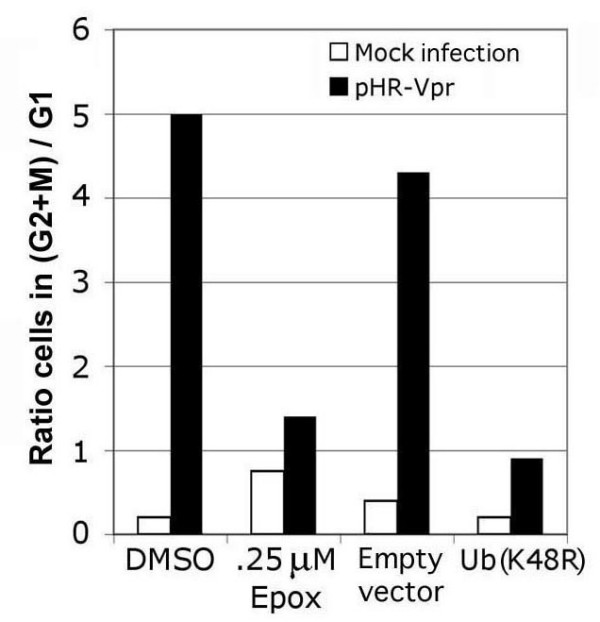
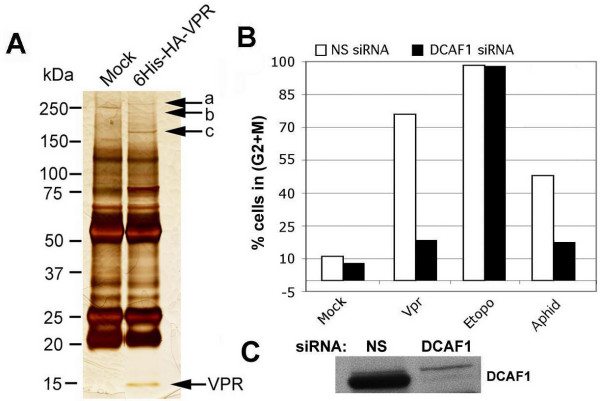
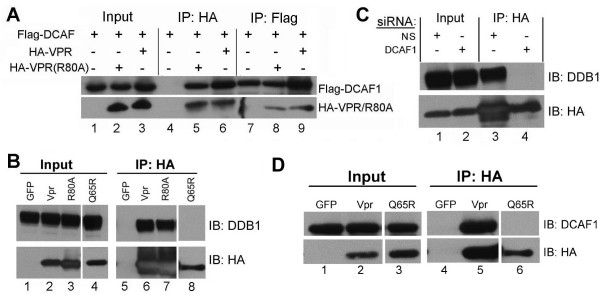
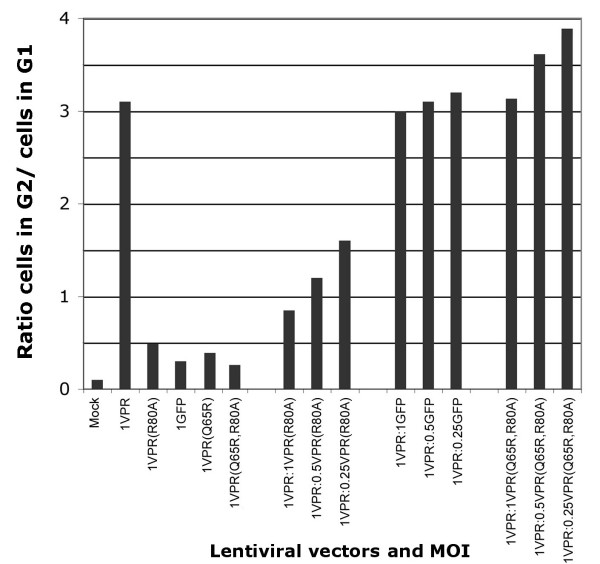
HIV-1 Vpr is a viral accessory protein that activates ATR through the induction of DNA replication stress. ATR activation results in cell cycle arrest in G 2 and induction of apoptosis. In the present study, we investigate the role of the ubiquitin/proteasome system (UPS) in the above activity of Vpr. We report that the general function of the UPS is required for Vpr to induce G 2 checkpoint activation, as incubation of Vpr-expressing cells with proteasome inhibitors abolishes this effect. We further investigated in detail the specific E3 ubiquitin ligase subunits that Vpr manipulates. We found that Vpr binds to the DCAF1 subunit of a cullin 4a/DDB1 E3 ubiquitin ligase. The carboxy-terminal domain Vpr(R80A) mutant, which is able to bind DCAF1, is inactive in checkpoint activation and has dominant-negative character. In contrast, the mutation Q65R, in the leucine-rich domain of Vpr that mediates DCAF1 binding, results in an inactive Vpr devoid of dominant negative behavior. Thus, the interaction of Vpr with DCAF1 is required, but not sufficient, for Vpr to cause G 2 arrest. We propose that Vpr recruits, through its carboxy terminal domain, an unknown cellular factor that is required for G 2 -to-M transition. Recruitment of this factor leads to its ubiquitination and degradation, resulting in failure to enter mitosis.
Overview
The claims and statistics of this paper haven’t been checked yet.
Free: it reads the open-access text and checks the first 5 claims that cite a source we can check. Create a free account to check every claim.
Integrity signals
Registry
Cites
Statistics
Figures
Verification
Claims the paper makes
The claims and statistics of this paper haven’t been checked yet.
Free: it reads the open-access text and checks the first 5 claims that cite a source we can check. Create a free account to check every claim.
Claims other papers make about this one
Each is checked against this paper’s own text: does it say what the citing paper says it does?
The cited source says what the claim attributes to it.
In the citing paper
“Consistent with this, endogenously expressed PU.1 from K562 cells did not coprecipitate with a Vpr mutant (89.6-VprQ65R) protein that is defective for DCAF1 interactions59,60 (Fig. 6E).”
From HIV-1 Vpr combats the PU.1-driven antiviral response in primary human macrophages (2024) · cites this paper as [60]
Self-check
Percentages, sums and reported differences re-computed from the paper’s own numbers.
The self-check needs the paper’s full text.
Citations
Cites
The HPV-16 E6 and E6-AP complex functions as a ubiquitin-protein ligase in the ubiquitination of p53
Scheffner, M., Huibregtse, J. M., Vierstra, R. D., & Howley, P. M. (1993) · Cell · doi:10.1016/0092-8674(93)90384-3 · Cited by 2,054 · cited 1×
“Examples of these viral proteins include hepatitis B protein X [7], human papilloma virus E6 [ 8 ], simian virus 5 V protein [9,10], HIV-1 Vif [11-13], and HIV-1 Vpu [14].”
BackgroundInduction of APOBEC3G Ubiquitination and Degradation by an HIV-1 Vif-Cul5-SCF Complex
Yu, X., Yu, Y., Liu, B., Luo, K., Kong, W., Mao, P., & Yu, X.-F. (2003) · Science · doi:10.1126/science.1089591 · Cited by 1,200 · cited 2×
“Examples of these viral proteins include hepatitis B protein X [7], human papilloma virus E6 [8], simian virus 5 V protein [9,10], HIV-1 Vif [ 11-13 ], and HIV-1 Vpu [14].”
BackgroundThe antiretroviral enzyme APOBEC3G is degraded by the proteasome in response to HIV-1 Vif
Sheehy, A. M., Gaddis, N. C., & Malim, M. H. (2003) · Nature Medicine · doi:10.1038/nm945 · Cited by 967 · cited 5×
“Yu X, Yu Y, Liu B, Luo K, Kong W, Mao P, Yu XF: Induction of APOBEC3G ubiquitination and degradation by an HIV-1 VifCul5-SCF complex.”
BackgroundInfluentialMolecular architecture and assembly of the DDB1–CUL4A ubiquitin ligase machinery
Angers, S., Li, T., Yi, X., MacCoss, M. J., Moon, R. T., & Zheng, N. (2006) · Nature · doi:10.1038/nature05175 · Cited by 674 · cited 9×
“First, a protein known as RIP, that was discovered as an interaction partner of Vpr [15], was recently shown to be part of a family of WDrepeat proteins that are found in association with cullin 4a/DDB1 E3 ubiquitin ligases [9].”
BackgroundInfluentialMargottin, F., Bour, S. P., Durand, H., Selig, L., Benichou, S., Richard, V., Thomas, D., Strebel, K., & Benarous, R. (1998) · Molecular Cell · doi:10.1016/s1097-2765(00)80056-8 · Cited by 672 · cited 2×
“Examples of these viral proteins include hepatitis B protein X [7], human papilloma virus E6 [8], simian virus 5 V protein [9,10], HIV-1 Vif [11-13], and HIV-1 Vpu [ 14 ].”
BackgroundMethodATR Regulates Fragile Site Stability
Casper, A. M., Nghiem, P., Arlt, M. F., & Glover, T. W. (2002) · Cell · doi:10.1016/s0092-8674(02)01113-3 · Cited by 559
Mehle, A., Strack, B., Ancuta, P., Zhang, C., McPike, M., & Gabuzda, D. (2004) · Journal of Biological Chemistry · doi:10.1074/jbc.m313093200 · Cited by 474 · cited 1×
“We resorted to two different methods of proteasome inhibition: incubation with epoxomicin, and overexpression of a dominant-negative ubiquitin mutant, Ub(K48R) [17] that blocks formation of polyubiquitin chain conjugates.”
MethodHiga, L. A., Wu, M., Ye, T., Kobayashi, R., Sun, H., & Zhang, H. (2006) · Nature Cell Biology · doi:10.1038/ncb1490 · Cited by 413 · cited 3×
“These observations confirm that Vpr targets a cullin 4-based E3 ligase, for which DCAF1 is a cognate substrate specificity receptor [9,23,24].”
BackgroundTwo E3 ubiquitin ligases, SCF‐Skp2 and DDB1‐Cul4, target human Cdt1 for proteolysis
Nishitani, H., Sugimoto, N., Roukos, V., Nakanishi, Y., Saijo, M., Obuse, C., Tsurimoto, T., Nakayama, K. I., Nakayama, K., Fujita, M., et al. (2006) · The EMBO Journal · doi:10.1038/sj.emboj.7601002 · Cited by 392 · cited 1×
“The existence of a connection between proteasomal degradation of cell cycle regulators and ATR activation is exemplified in several instances involving Cdt1 [3-5] and Chk1 [6] among others.”
BackgroundTargeted ubiquitination of CDT1 by the DDB1–CUL4A–ROC1 ligase in response to DNA damage
Hu, J., McCall, C. M., Ohta, T., & Xiong, Y. (2004) · Nature Cell Biology · doi:10.1038/ncb1172 · Cited by 348 · cited 1×
“Upon DNA damage or firing of origins of replication, Cdt1 becomes ubiquitinated by the Cul4A-DDB1 E3 ligase complex resulting in its proteasomal degradation [28-30].”
Background
Cited by
Items 101–152 of 152
Hakata, Y., Miyazawa, M., & Landau, N. R. (2014) · Virology Journal · doi:10.1186/1743-422x-11-108 · Cited by 13
“In previous reports, the association of Vpr with DCAF1 and DDB1 was examined by co-immunoprecipitation using several Vpr mutants and the results indicated that the binding to DCAF1 fully coincided with the association with DDB1 for all tested mutants [22-24,27].”
BackgroundInfluentialHIV1‐viral protein R (Vpr) mutations: associated phenotypes and relevance for clinical pathologies
Soares, R., Rocha, G., Meliço-Silvestre, A. A., & Gonçalves, T. (2016) · Reviews in Medical Virology · doi:10.1002/rmv.1889 · Cited by 14
Perinuclear localization of the HIV-1 regulatory protein Vpr is important for induction of G2-arrest
Sörgel, S., Fraedrich, K., Votteler, J., Thomas, M., Stamminger, T., & Schubert, U. (2012) · Virology · doi:10.1016/j.virol.2012.06.027 · Cited by 16
“However, there is evidence that the complex has to be linked to the nuclear envelope (Belzile et al., 2007, 2010; DeHart et al., 2007; Hrecka et al., 2007; Schrofelbauer et al., 2007; Tan et al., 2007) and Cul4A/DDB1/DCAF1/Vpr aggregates have also been observed inside the nucleus (Belzile et al.”
BackgroundVasilenko, N. L., Snider, M., Labiuk, S. L., Lobanov, V. A., Babiuk, L. A., & den Hurk, S. V. D. L. (2012) · Virus Research · doi:10.1016/j.virusres.2012.04.005 · Cited by 16
“The SV5 and type 2 human parainfluenza virus V proteins mediate proteosomal degradation of STAT1 and STAT2, respectively, whereas mumps virus V protein targets STAT1 and STAT3 for proteosomal degradation (Didcock et al., 1999; Kozuka et al., 2003; Precious et al., 2005; Ulane et al., 2005).”
BackgroundE3 Ubiquitin Ligases in Gammaherpesviruses and HIV: A Review of Virus Adaptation and Exploitation
Oswald, J., Constantine, M., Adegbuyi, A., Omorogbe, E., Dellomo, A. J., & Ehrlich, E. S. (2023) · Viruses · doi:10.3390/v15091935 · Cited by 13
Understanding the molecular manipulation of DCAF1 by the lentiviral accessory proteins Vpr and Vpx
Cassiday, P. A., DePaula-Silva, A. B., Chumley, J., Ward, J. P., Barker, E., & Planelles, V. (2014) · Virology · doi:10.1016/j.virol.2014.11.024 · Cited by 14
“HA-Vpr of HIV-1 and HA-Vpx of SIVmac were subcloned from pHR-HA-Vpr-IRES-GFP and pHR-HA-Vpx-IRES-GFP, respectively (Dehart et al., 2007) into pFIN-EF1-GFP-2a-mCherH-WPRE (a kind gift of Dr.”
Self-citationBarbosa, J. A. F., Sparapani, S., Boulais, J., Lodge, R., & Cohen, É. A. (2021) · Journal of Virology · doi:10.1128/jvi.00971-20 · Cited by 16
Jung, J., Byeon, I. L., DeLucia, M., Koharudin, L. M. I., Ahn, J., & Gronenborn, A. M. (2013) · Journal of Biological Chemistry · doi:10.1074/jbc.m113.534453 · Cited by 12
HIV-1 Vpr: A Novel Role in Regulating RNA Splicing
Zhang, X., & Aida, Y. (2009) · Current HIV Research · doi:10.2174/157016209787581517 · Cited by 11
HIV-1 Vpr combats the PU.1-driven antiviral response in primary human macrophages
Virgilio, M. C., Ramnani, B., Chen, T., Disbennett, W. M., Lubow, J., Welch, J. D., & Collins, K. L. (2024) · Nature Communications · doi:10.1038/s41467-024-49635-w · Cited by 14
Eldin, P., Péron, S., Galashevskaya, A., Denis-Lagache, N., Cogné, M., Slupphaug, G., & Briant, L. (2020) · Journal of Translational Medicine · doi:10.1186/s12967-020-02478-7 · Cited by 15
Binding to DCAF1 distinguishes TASOR and SAMHD1 degradation by HIV-2 Vpx
Martin, M. M., Matkovic, R., Larrous, P., Morel, M., Lasserre, A., Vauthier, V., & Margottin-Goguet, F. (2021) · PLoS Pathogens · doi:10.1371/journal.ppat.1009609 · Cited by 15
Restriction of Retroviral Infection of Macrophages
Sharkey, M. E. (2013) · Current topics in microbiology and immunology · doi:10.1007/978-3-642-37765-5_4 · Cited by 12
HIV-1 Viral Protein R: From Structure to Function
Fritz, J. V., Briant, L., Mély, Y., Bouaziz, S., & de ROCQUIGNY, H. (2010) · Future Virology · doi:10.2217/fvl.10.47 · Cited by 14
CRL4-DCAF1 Ubiquitin Ligase Dependent Functions of HIV Viral Protein R and Viral Protein X
Dobransky, A., Root, M., Hafner, N., Marcum, M., & Sharifi, H. J. (2024) · Viruses · doi:10.3390/v16081313 · Cited by 13
“The mechanism by which Vpr induces cell cycle arrest came to light after a burst of publications identified the CRL4-DCAF1 ubiquitin ligase complex as an interaction partner for Vpr [49,66,78–82].”
BackgroundFunctional integrity of naturally occurring mutants of HIV-1 subtype C Vpr
Romani, B., Glashoff, R. H., & Engelbrecht, S. (2010) · Virus Research · doi:10.1016/j.virusres.2010.08.020 · Cited by 9
Fourati, S., Malet, I., Guenzel, C. A., Soulié, C., Maidou-Peindara, P., Morand‐Joubert, L., Wirden, M., Sayon, S., Peytavin, G., Simon, A., et al. (2011) · Antiviral Research · doi:10.1016/j.antiviral.2011.11.008 · Cited by 8
Ubiquitin ligases as therapeutic targets in HIV-1 infection
Votteler, J., & Schubert, U. (2008) · Expert Opinion on Therapeutic Targets · doi:10.1517/14728222.12.2.131 · Cited by 8
“Targets (2008) 12(2) 139 HIV-1, resulting to a virion phenotype resembling that of L-domain mutant viruses [136,137] , it causes incorporporation of APOBEC3G, leading to hypermutation of the HIV-1 genome [71] and, finally, it prevents the induction of G2 cell cycle arrest by Vpr in infected cells [76] .”
BackgroundFábryová, H., Kao, S., Sukegawa, S., Miyagi, E., Taylor, L. J., Ferhadian, D., Saito, H., Schaal, H., Hillebrand, F., & Strebel, K. (2023) · mBio · doi:10.1128/mbio.02973-22 · Cited by 7
Choi, S. B., Choong, Y. S., Saito, A., Wahab, H. A., Najimudin, N., Watanabe, N., Osada, H., & Ong, E. B. B. (2014) · Molecular Informatics · doi:10.1002/minf.201400080 · Cited by 5
Majumder, S., & Giri, K. (2021) · Journal of Biomolecular Structure and Dynamics · doi:10.1080/07391102.2021.1954553 · Cited by 5
Lê-Bury, G., Chen, Y., Rhen, J. M., Grenier, J. K., Singhal, A., Russell, D. G., & Boliar, S. (2023) · mBio · doi:10.1128/mbio.02619-23 · Cited by 5
“HIV-1 infection, specifically the accessory protein, Vpr, is known to modulate the cell cycle (33, 34).”
BackgroundHIV-1 Vpr: Regulator of Viral Survival
Thieu, K. P., Morrow, M. P., Shedlock, D. J., Schoenly, K., Mallilankaraman, K. B., Choo, A. Y., Fagone, P., Weiner, D. B., & Muthumani, K. (2009) · Current HIV Research · doi:10.2174/157016209787581454 · Cited by 8
HIV-1 Vpr increases HCV replication through VprBP in cell culture
Yan, Y., Huang, F., Yuan, T., Sun, B., & Yang, R. (2016) · Virus Research · doi:10.1016/j.virusres.2016.07.007 · Cited by 5
Huntingtin-Interacting Protein 1 Promotes Vpr-Induced G2 Arrest and HIV-1 Infection in Macrophages
Murakami, T., Matsuura, R., Chutiwitoonchai, N., Takei, M., & Aida, Y. (2021) · Viruses · doi:10.3390/v13112308 · Cited by 4
“Vpr-induced G2 arrest requires the association of Vpr with the CUL4 ubiquitin ligase in association with DDB1 and DCAF1 [24,34–38].”
BackgroundInfluentialMatsunaga, A., Ando, N., Yamagata, Y., Shimura, M., Gatanaga, H., Oka, S., & Ishizaka, Y. (2024) · PLoS ONE · doi:10.1371/journal.pone.0296502 · Cited by 4
Functional 20S Proteasomes in Retroviruses: Evidence in Favor
Va, M., Morozov, A. V., & Карпов, В. Л. (2024) · International Journal of Molecular Sciences · doi:10.3390/ijms252111710 · Cited by 3
Role of karyopherin nuclear transport receptors in nuclear transport by nuclear trafficking peptide
Teratake, Y., Kimura, Y., & Ishizaka, Y. (2021) · Experimental Cell Research · doi:10.1016/j.yexcr.2021.112893 · Cited by 3
Colle, J., Rose, T., Rouzioux, C., & Garcı́a, A. (2014) · World Journal of AIDS · doi:10.4236/wja.2014.42019 · Cited by 2
“Both R80A mutation of residue VPR80 and deletion of 18 residues of Vpr C-terminal domain unable VPR-mediated induction of G2 arrest [7].”
BackgroundHadi, K., Taştan, Ö., Srinivasan, A., & Ayyavoo, V. (2013) · InTech eBooks · doi:10.5772/45824 · Cited by 2
“DeHart et al. (2007) proposed that Vpr hijacks the ubiquitin/proteasome pathway.”
HIV-1 Vpr suppresses the cytomegalovirus promoter in a CRL4(DCAF1) E3 ligase independent manner
Liu, X., Guo, H., Wang, H., Markham, R. B., Wei, W., & Yu, X.-F. (2015) · Biochemical and Biophysical Research Communications · doi:10.1016/j.bbrc.2015.02.060 · Cited by 2
Goujon, C., Darlix, J. L., & Cimarelli, A. (2009) · PubMed · doi:10.1684/vir.2009.0268 · Cited by 2
“En effet, une série d’études récentes a montré que Vpr, qui est proche de Vpx, interagit avec un complexe E3 de liaison à l’ubiquitine [53-59].”
HIV-1 accessory protein Vpr interacts with REAF/RPRD2 to mitigate its antiviral activityPreprint
Gibbons, J. M., Marno, K. M., Pike, R., Lee, W.-Y. J., Jones, C. E., Ogunkolade, B.-W., Pardieu, C., Bryan, A., Fu, R. M., Warnes, G., et al. (2018) · bioRxiv (Cold Spring Harbor Laboratory) · doi:10.1101/408161 · Cited by 2
HIV-1 Vpr Induces Degradation of Nucleolar Protein CCDC137 as a Consequence of Cell Cycle ArrestPreprint
Martins, L. J., DePaula-Silva, A. B., & Planelles, V. (2021) · bioRxiv (Cold Spring Harbor Laboratory) · doi:10.1101/2021.03.16.435666 · Cited by 2
Self-citationGuatelli, J., Siliciano, R. F., Kuritzkes, D. R., & Richman, D. D. (2009) · Wiley eBooks · doi:10.1128/9781555815981.ch33 · Cited by 2
Hall, R., Ahern, L. M., Yap, M. W., Tsai, M.-H., Boucherit, V., Takaki, T., Boulton, S. J., & Bishop, K. N. (2024) · bioRxiv (Cold Spring Harbor Laboratory) · doi:10.1101/2024.04.02.587683 · Cited by 3
Vaccinia virus modulates the host cell cycle to promote infection
Martin, C. K. (2019) · UCL Discovery (University College London) · Cited by 1
Identification of the Function of the Vpx Protein of Primate Lentiviruses: A Dissertation
Zhu, X. (2009) · The Journal of the American Medical Association (JAMA) Network (American Medical Association) · doi:10.13028/cgm8-q756
Filho, R. B., & Monteiro, C. M. (2008) · Americanae (AECID Library)
Ruiz, A. J. (2010) · KU ScholarWorks (University of Kansas)
Genetic analysis of Vprbp in mice
Jackson, S. C. (2011) · Carolina Digital Repository (University of North Carolina at Chapel Hill) · doi:10.17615/2nxs-cb40
Cassiday, P. A. (2018) · J. Willard Marriott Library · doi:10.26053/0h-4445-1800
De, S. M. (2011) · Mspace (University of Manitoba)
Lê-Bury, G., Chen, Y., Rhen, J. M., Grenier, J. K., Singhal, A., Russell, D. G., & Boliar, S. (2022) · bioRxiv (Cold Spring Harbor Laboratory) · doi:10.1101/2022.08.10.503487
“HIV-1 accessory protein, Vpr, is known to impede cell cycle (33, 34) and accordingly, we observed a trend of lower expression of the cell cycle genes in actively-infected cells compared to uninfected ones (Fig 4I).”
BackgroundContre-mesures virales anti-CTIP2 dans le cadre d'une infection productive par le ViH-1
Forouzanfar, F. (2016) · theses.fr (ABES) · doi:10.70675/ceb9ed65z4c9dz45ecz94f2z1ea64b1f5e10
Antagonism of HUSH restriction by lentiviral Vpx and Vpr proteins
Chougui, G. (2018) · theses.fr (ABES) · doi:10.70675/a8f60021z4ac1z485az94c1za6a503874720
Mécanisme moléculaire de l'antagonisme du complexe HUSH par les protéines lentivirales Vpx et Vpr
Martin, M. M. (2021) · theses.fr (ABES) · doi:10.70675/eba7934fzf9faz4427zb0f8zfba715ee98c9
Rôle des partenaires de CTIP2 dans la latence post-intégrative du VIH-1 : importance de la voie SUMO
Assche, J. V. (2022) · theses.fr (ABES) · doi:10.70675/3cb6a549ze973z487dz98f4z6fbf5991098c
Conflit moléculaire entre les protéines Vpr et Vpx des virus HIV/SIV et les facteurs HUSH et SAMHD1
Larrous, P. (2023) · theses.fr (ABES) · doi:10.70675/fc16267dzad68z4beczb28bz9a828aba2035
Manipulation of the cell cycle by HIV-1
Bandini, M., & Sherer, N. M. (2026) · Biochemical Society Transactions · doi:10.1042/bst20250120
“DCAF1 binding is required for Vpr’s ability to induce cell cycle arrest [184,196–199], acting through a complex network of diverse effector proteins including but are not limited to MOV34, P34CDC2 (CDK1), CCDC137, SMN1, and components of the DNA repair machinery (Figure 2B) [36,37,183,188,200,201].”
Metadata
- Authors
- DeHart, J. L., Zimmerman, E. S., Ardon, O., Monteiro-Filho, C. M., Argañaraz, E. R., & Planelles, V.
- Affiliations
- University of Utah (US)
- Universidade de Brasília (BR)
- Corresponding author
- Planelles, Vicente
- Venue
- Virology Journal
- Published
- 2007-06-08
- Volume
- 4
- Issue
- 1
- Pages
- 57-57
- ISSN
- 1743-422X (ISSN-L)
- PMC
- PMC1904188
- OpenAlex
- W2129784359
- Cited by
- 152
- References
- 34
- Citations by year
- 2026: 1 · 2024: 6 · 2023: 4 · 2022: 3 · 2021: 8 · 2020: 4 · 2019: 6 · 2018: 7 · 2017: 5 · 2016: 10 · 2015: 6 · 2014: 17 · 2013: 8 · 2012: 10
- FWCI
- 5.69
- Type
- journal article
- Language
- en
- Open access
- gold
- doi.org
- Licence
- cc-by
- Locations
- Virology Journal (publishedVersion, cc-by)
- PubMed Central (publishedVersion, cc-by)
- PubMed (publishedVersion)
- DOAJ (DOAJ: Directory of Open Access Journals) (submittedVersion)
- Funders
- Saint Louis University
- York University
- Conselho Nacional de Desenvolvimento Científico e Tecnológico
- National Institutes of Health
- National Institute of General Medical Sciences (T32 GM 07464, T32GM007464)
- National Institute of Allergy and Infectious Diseases (R56AI049057, AI 49057, R01AI049057, T32AI055434)
- Topics
- Life Sciences › Biochemistry, Genetics and Molecular Biology › Molecular Biology › Ubiquitin and proteasome pathways
- Life Sciences › Immunology and Microbiology › Virology › HIV Research and Treatment
- Health Sciences › Medicine › Oncology › Cancer-related Molecular Pathways
- Keywords
- HIV-1 Vpr, G2 checkpoint, ubiquitin-proteasome system, replication stress, DCAF1, proteasome inhibitors, leucine-rich domain, apoptosis, viral accessory proteins
- MeSH terms
- Cell Line, HeLa Cells, Humans, Kidney, Oligopeptides, RNA, Viral, Transfection, Virus Replication, HIV-1, G2 Phase, Gene Products, vpr, Ubiquitin, RNA, Small Interfering, Proteasome Endopeptidase Complex, vpr Gene Products, Human Immunodeficiency Virus
About these checks
Registry, retraction, Cites and statistics results are computed, not judged, with one exception: a printed reference that no index lists is read once by a model before it counts as a citation error. Claims are extracted by a model and kept only when their quote appears verbatim in the text; each cited source is then checked, with a model’s help, for whether it says what the claim relies on. Those verdicts can be wrong — read the claim’s quote and the cited source before relying on one.
Statistics and arithmetic are recomputed, not judged.
Confidence bands are shown only for fields calibrated on our annotated test set. None is calibrated yet, so no band is shown.
What counts as a claim ›How we measure confidence ›How we check this ›
Are you an author, or do you see a problem with this page? Request a review
Data sources
Bibliographic data: Semantic Scholar, OpenAlex, Crossref.
Contains information from the Semantic Scholar Academic Graph Datasets, made available under the ODC Attribution License (ODC-BY 1.0).
Semantic Scholar’s data is described in: Kinney, R., et al. (2023). The Semantic Scholar Open Data Platform. arXiv:2301.10140.
