

Assessment of pharmacological strategies for management of major depressive disorder and their costs after an inadequate response to first-line antidepressant treatment in primary care
Open accessThe DOI matches its Crossref record; 53 of the 55 references it cites were found in a registry or an index, and 2 are not checked yet.
Abstract
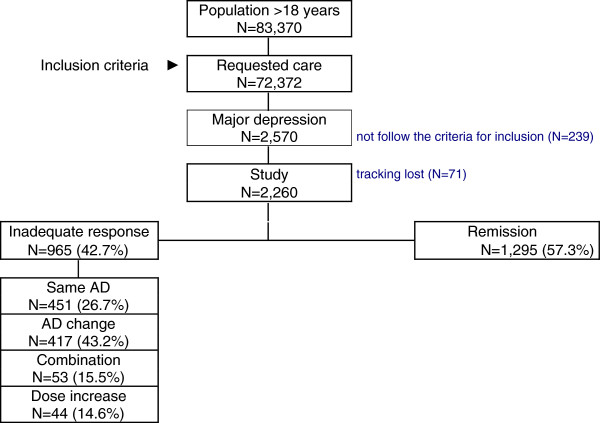
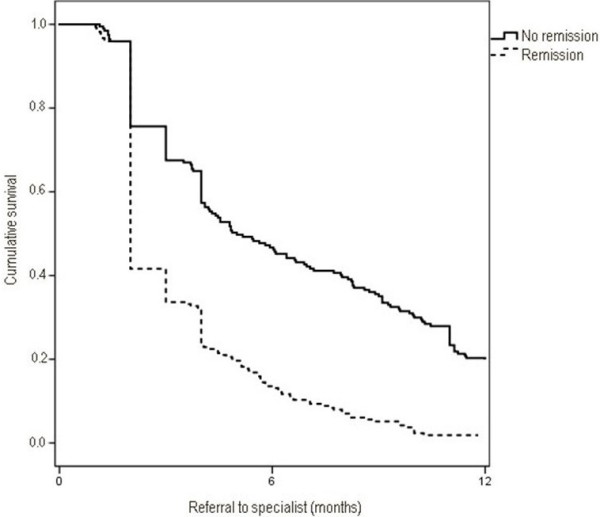
Background: The aim of the study was to determine the most common treatment strategies and their costs for patients with an inadequate response to first-line antidepressant treatment (AD) in primary care. Method: A retrospective cohort study of medical records from six primary care centers was conducted. Adults with a major depressive disorder diagnosis, at least 8 weeks of AD treatment after the first prescription, and patient monitoring for 12 months were analyzed. Healthcare (direct cost) and non-healthcare costs (indirect costs; work productivity losses) were described. Results: A total of 2,260 patients were studied. Forty-three percent of patients (N = 965) presented an inadequate response to treatment. Summarizing the different treatment approaches: 43.2% were switched to another AD, 15.5% were given an additional AD, AD dose was increased in 14.6%, and 26.7% remained with the same antidepressant agent. Healthcare/annual costs were 451.2 Euros for patients in remission vs. 826.1 Euros in those with inadequate response, and productivity losses were 991.4 versus 1,842.0 Euros, respectively (p < 0.001). Conclusion: Antidepressant switch was the most common therapeutic approach performed by general practitioners in naturalistic practice. A delay in treatment change when no remission occurs and a significant heterogeneity in management of these patients were also found.
Overview
The claims and statistics of this paper haven’t been checked yet.
Free: it reads the open-access text and checks the first 5 claims that cite a source we can check. Create a free account to check every claim.
Integrity signals
Registry
Cites
Statistics
Figures
Verification
Claims the paper makes
The claims and statistics of this paper haven’t been checked yet.
Free: it reads the open-access text and checks the first 5 claims that cite a source we can check. Create a free account to check every claim.
Claims other papers make about this one
Each is checked against this paper’s own text: does it say what the citing paper says it does?
The source backs part of the claim, not all of it — or backs it for a different population, condition or comparison.
In the citing paper
“Accordingly, the treatment of patients with TRD is associated with an increase in healthcare resource utilization (HCRU) and economic cost, due to a higher number of visits to both primary and secondary care practitioners, a higher rate of hospitalizations, and more psychiatric prescriptions including anxiolytics, hypnotics and antipsychotics 17,19,20 .”
From A retrospective chart review study to quantify the monthly medical resource use and costs of treating patients with treatment resistant depression in the United Kingdom (2021) · cites this paper as [17]
Experimental — accuracy not yet measured
Self-check
Percentages, sums and reported differences re-computed from the paper’s own numbers.
The self-check needs the paper’s full text.
Citations
Cites
Charlson, M. E., Pompei, P., Ales, K. L., & MacKenzie, C. R. (1987) · Journal of Chronic Diseases · doi:10.1016/0021-9681(87)90171-8 · Cited by 49,742
Osterberg, L., & Blaschke, T. (2005) · New England Journal of Medicine · doi:10.1056/nejmra050100 · Cited by 7,974
Rush, A. J., Trivedi, M. H., Wisniewski, S. R., Nierenberg, A. A., Stewart, J. W., Warden, D., Niederehe, G., Thase, M. E., Lavori, P. W., Lebowitz, B. D., et al. (2006) · American Journal of Psychiatry · doi:10.1176/ajp.2006.163.11.1905 · Cited by 5,643
The size and burden of mental disorders and other disorders of the brain in Europe 2010
Wittchen, H. U., Jacobi, F., Rehm, J., Gustavsson, A., Svensson, M., Jönsson, B., Olesen, J., Allgulander, C., Alonso, J., Faravelli, C., et al. (2011) · European Neuropsychopharmacology · doi:10.1016/j.euroneuro.2011.07.018 · Cited by 3,754
Frank, E. (1991) · Archives of General Psychiatry · doi:10.1001/archpsyc.1991.01810330075011 · Cited by 1,959 · cited 2×
“Patients were considered to be in remission when they had a Hamilton Depression Rating Scale total score ≤ 7 points after at least 8 weeks of AD treatment in adequate doses [24,25].”
MethodAnderson, I., Ferrier, I., Baldwin, R., Cowen, P., Howard, L., Lewis, G., Matthews, K., McAllister-Williams, R., Peveler, R., Scott, J., et al. (2008) · Journal of Psychopharmacology · doi:10.1177/0269881107088441 · Cited by 908 · cited 2×
“depressive episodes, a shorter duration between episodes, and a worse functioning [8,13-16].”
BackgroundRush, A. J. (2006) · American Journal of Psychiatry · doi:10.1176/appi.ajp.163.11.1905 · Cited by 870 · cited 2×
“The STAR-D study showed that patients with longer depressive episodes were less likely to achieve remission [46].”
BackgroundHow should cost data in pragmatic randomised trials be analysed?
Thompson, S. G. (2000) · BMJ · doi:10.1136/bmj.320.7243.1197 · Cited by 772 · cited 1×
“Cost comparison was performed in accordance to recommendations by Thompson and Barber, specifically on the comparison of average health care cost between the study groups [32].”
MethodHess, L. M., Raebel, M. A., Conner, D. A., & Malone, D. C. (2006) · Annals of Pharmacotherapy · doi:10.1345/aph.1h018 · Cited by 756 · cited 1×
“Our results are clearly higher, possibly because of the indirect measurement method used [36].”
ResultKennedy, S. H., Lam, R. W., Parikh, S. V., Patten, S. B., & Ravindran, A. V. (2009) · Journal of Affective Disorders · doi:10.1016/j.jad.2009.06.043 · Cited by 525
RANDOMISED CLINICAL TRIAL OF STRATEGIES FOR IMPROVING MEDICATION COMPLIANCE IN PRIMARY HYPERTENSION
Sackett, D., Gibson, E., Wayne Taylor, D., Brian Haynes, R., Hackett, B., Roberts, R., & Johnson, A. (1975) · The Lancet · doi:10.1016/s0140-6736(75)92192-3 · Cited by 502 · cited 1×
“Compliance was estimated as the ratio between the total number of tablets dispensed and the total number of tablets recommended or prescribed, assuming that drug dispensing (purchase of medication at the pharmacy) does not represent actual consumption or intake, but is closely associated with this [29].”
BackgroundConnolly, K. R., & Thase, M. E. (2011) · Drugs · doi:10.2165/11587620-000000000-00000 · Cited by 462
Lam, R. W., Kennedy, S. H., Grigoriadis, S., McIntyre, R. S., Milev, R., Ramasubbu, R., Parikh, S. V., Patten, S. B., & Ravindran, A. V. (2009) · Journal of Affective Disorders · doi:10.1016/j.jad.2009.06.041 · Cited by 431
How Should Remission From Depression Be Defined? The Depressed Patient’s Perspective
Zimmerman, M., McGlinchey, J. B., Posternak, M. A., Friedman, M., Attiullah, N., & Boerescu, D. (2006) · American Journal of Psychiatry · doi:10.1176/appi.ajp.163.1.148 · Cited by 431 · cited 1×
“Definition of inadequate response is still controversial, but most experts define it as failure to achieve symptomatic remission [13,21,22].”
BackgroundMotheral, B., Brooks, J., Clark, M. A., Crown, W. H., Davey, P., Hutchins, D., Martin, B. C., & Stang, P. (2003) · Value in Health · doi:10.1046/j.1524-4733.2003.00242.x · Cited by 412 · cited 1×
“The article has several limitations inherent to studies based on population databases, such as disease underreporting or potential variability of professionals in routine use of the different clinical screening scales [49,50].”
BackgroundThe Sequenced Treatment Alternatives to Relieve Depression (STAR*D) Trial: A Review
Sinyor, M., Schaffer, A., & Levitt, A. (2010) · The Canadian Journal of Psychiatry · doi:10.1177/070674371005500303 · Cited by 396 · cited 1×
“The introduction of newer-generation antidepressants has improved our ability to treat depression, although only 35-40% of patients will experience a remission of symptoms during an initial 8-week trial [17-19].”
BackgroundTreatment of Reflux Oesophagitis
(1988) · InPharma · doi:10.1007/bf03308057 · Cited by 390
Keller, M. B. (2003) · JAMA · doi:10.1001/jama.289.23.3152 · Cited by 388 · cited 2×
“Definition of inadequate response is still controversial, but most experts define it as failure to achieve symptomatic remission [13,21,22].”
BackgroundRecovery from depression, work productivity, and health care costs among primary care patients
Simon, G. E., Revicki, D., Heiligenstein, J., Grothaus, L., VonKorff, M., Katon, W. J., & Hylan, T. R. (2000) · General Hospital Psychiatry · doi:10.1016/s0163-8343(00)00072-4 · Cited by 267
Kendrick, T., Dowrick, C., McBride, A., Howe, A., Clarke, P., Maisey, S., Moore, M., & Smith, P. W. (2009) · BMJ · doi:10.1136/bmj.b750 · Cited by 231 · cited 1×
“8% rate of referrals to a psychologist or psychiatrist, as compared to the 25% and 38% rates reported by Wang and Grembowski, respectively [37-39].”
ResultUher, R., Mors, O., Rietschel, M., Rajewska-Rager, A., Petrovic, A., Zobel, A., Henigsberg, N., Mendlewicz, J., Aitchison, K. J., Farmer, A., et al. (2011) · The Journal of Clinical Psychiatry · doi:10.4088/jcp.10m06419 · Cited by 156 · cited 2×
“Patients were considered to be in remission when they had a Hamilton Depression Rating Scale total score ≤ 7 points after at least 8 weeks of AD treatment in adequate doses [24,25].”
MethodPapakostas, G. I. (2009) · The Journal of Clinical Psychiatry · doi:10.4088/jcp.8133su1c.03 · Cited by 143 · cited 2×
“Four different pharmacologic approaches are available for treating patients who have experienced inadequate response to a first-line antidepressant: increasing the dose of the antidepressant, switching to a different antidepressant, combining the initial antidepressant with a second one, and augmenting the treatment w…”
BackgroundTrivedi, M. H., Lin, E. H. B., & Katon, W. J. (2007) · PubMed · Cited by 119
Fernández, A., Pinto‐Meza, A., Bellón, J. Á., Poch, P. R., Haro, J. M., Autonell, J., Palao, D. J., Peñarrubia‐María, M. T., Fernández‐Vergel, R., Blanco, E., et al. (2010) · General Hospital Psychiatry · doi:10.1016/j.genhosppsych.2009.11.015 · Cited by 119 · cited 1×
“The article has several limitations inherent to studies based on population databases, such as disease underreporting or potential variability of professionals in routine use of the different clinical screening scales [49,50].”
BackgroundSouery, D., Serretti, A., Calati, R., Oswald, P., Massat, I., Konstantinidis, A., Linotte, S., Bollen, J., Demyttenaere, K., Kasper, S., et al. (2011) · Journal of Clinical Psychopharmacology · doi:10.1097/jcp.0b013e3182228619 · Cited by 119 · cited 1×
“However, controversy remains and there are no conclusive data as to which is the best alternative available [19,47,48].”
BackgroundThe International Classification of Primary Care in the European Community: FIG
Pringle, M. (1994) · BMJ · doi:10.1136/bmj.308.6921.144a · Cited by 114
Simon, G. E., Chisholm, D., Treglia, M., & Bushnell, D. M. (2002) · General Hospital Psychiatry · doi:10.1016/s0163-8343(02)00201-3 · Cited by 112
PRISM-E: Comparison of Integrated Care and Enhanced Specialty Referral Models in Depression Outcomes
Krahn, D. D., Bartels, S. J., Coakley, E. H., Oslin, D. W., Chen, H., McIntyre, J., Chung, H., Maxwell, J., Ware, J. S., & Levkoff, S. E. (2006) · Psychiatric Services · doi:10.1176/appi.ps.57.7.946 · Cited by 105
Grembowski, D. E., Martin, D. P., Patrick, D. L., Diehr, P. K., Katon, W. J., WILLIAMS, B. J., Engelberg, R. A., Novak, L., Dickstein, D., Deyo, R. A., et al. (2002) · Journal of General Internal Medicine · doi:10.1046/j.1525-1497.2002.10321.x · Cited by 90 · cited 1×
“8% rate of referrals to a psychologist or psychiatrist, as compared to the 25% and 38% rates reported by Wang and Grembowski, respectively [37-39].”
ResultSOBOCKI, P., EKMAN, M., ÅGREN, H., RUNESON, B., & JÖNSSON, B. (2008) · International Journal of Clinical Practice · doi:10.1111/j.1742-1241.2006.00997.x · Cited by 83
The burden of mental disorders in primary care
Grandes, G., Montoya, I., Arietaleanizbeaskoa, M. S., Arce, V., Sanchez, A., & on behalf of the MAS group (2011) · European Psychiatry · doi:10.1016/j.eurpsy.2010.11.002 · Cited by 83
Prevalence and Determinants of Depressive Disorders in Primary Care Practice in Spain
Aragonès, E., Piñol, J. L., Labad, A., Masdéu, R. M., Pino, M., & Cervera, J. (2004) · The International Journal of Psychiatry in Medicine · doi:10.2190/c25n-w4ny-bn8w-txn2 · Cited by 83
The Internatinal classification of primary care in the European community : multi-language layer
Lamberts, H., Wood, M., & Hofmans-Okkes, I. (1993) · Oxford University Press eBooks · Cited by 77
Costs of depression in Catalonia (Spain)
Salvador‐Carulla, L., Bendeck, M., Fernández, A., Albertí, C., Sabés-Figuera, R., Molina, C., & Knapp, M. R. J. (2011) · Journal of Affective Disorders · doi:10.1016/j.jad.2011.02.019 · Cited by 74 · cited 2×
“Some studies show that one third of costs are derived from healthcare and the highest are indirect costs associated to loss of work productivity [3,5,6].”
BackgroundCain, R. (2007) · Primary Care · doi:10.1016/j.pop.2007.05.006 · Cited by 61 · cited 1×
“The introduction of newer-generation antidepressants has improved our ability to treat depression, although only 35-40% of patients will experience a remission of symptoms during an initial 8-week trial [17-19].”
BackgroundVlahović–Palčevski, V. (2000) · Cited by 57
Detection and Management of Depressive Disorders in Primary Care in Spain
Aragonès, E., Piñol, J. L., Labad, A., Folch, S., & Mèlich, N. (2004) · The International Journal of Psychiatry in Medicine · doi:10.2190/n835-fdyx-2e2e-v8xm · Cited by 51
Análisis de costes y resultados en la evaluación económica de las intervenciones sanitarias
Prieto, L. M., Sacristána, J. A., Prades, J. L. P., Badia, X. C., Antoñanzas, F., & del Llano, J. (2004) · Medicina Clínica · doi:10.1016/s0025-7753(04)74260-8 · Cited by 51
Romera, I., Pérez, V., Menchón, J. M., Polavieja, P., & Gilaberte, I. (2011) · Psychiatry Research · doi:10.1016/j.psychres.2010.06.023 · Cited by 50 · cited 1×
“Definition of inadequate response is still controversial, but most experts define it as failure to achieve symptomatic remission [13,21,22].”
BackgroundShvartzman, P., Weiner, Z., Vardy, D., Friger, M., Sherf, M., & Biderman, A. (2005) · Scandinavian Journal of Primary Health Care · doi:10.1080/02813430510018383 · Cited by 46 · cited 1×
“Beyond methodological differences, the results were similar to those of other reviewed studies, although other European investigators have also confirmed their impact by measuring quality of life in these patients [3,5,42,43].”
ResultPiek, E., van der Meer, K., & Nolen, W. A. (2010) · European Journal of General Practice · doi:10.3109/13814781003692463 · Cited by 45 · cited 3×
“; licensee BioMed C Creative Commons Attribution License (http:/ distribution, and reproduction in any medium 80% of them are managed in PC only [7-10].”
BackgroundSicras‐Mainar, A., Blanca-Tamayo, M., Gutiérrez-Nicuesa, L., Salvatella-Pasant, J., & Navarro‐Artieda, R. (2009) · Gaceta Sanitaria · doi:10.1016/j.gaceta.2009.05.012 · Cited by 43
Self-citationResource use and costs associated with patients treated for depression in primary care
Sobocki, P., Ekman, M., Ågren, H., Krakau, I., Runeson, B., Mårtensson, B., & Jönsson, B. (2006) · The European Journal of Health Economics · doi:10.1007/s10198-006-0008-3 · Cited by 40 · cited 1×
“This distribution is similar to that reported in PC populations in Sweden and Spain, where indirect costs reached 65% of total costs [5,44].”
ResultChang, T. E., Jing, Y., Yeung, A., Brenneman, S. K., Kalsekar, I. D., Hebden, T., McQuade, R. D., Baer, L., Kurlander, J., Watkins, A. K., et al. (2012) · General Hospital Psychiatry · doi:10.1016/j.genhosppsych.2011.12.003 · Cited by 36 · cited 2×
“A recent publication by Chang et al. (2012) also found little active management among depressed patients treated in primary care centers in USA [45].”
BackgroundWang, J., Langille, D. B., & Patten, S. B. (2003) · Psychiatric Services · doi:10.1176/appi.ps.54.6.878 · Cited by 36 · cited 1×
“8% rate of referrals to a psychologist or psychiatrist, as compared to the 25% and 38% rates reported by Wang and Grembowski, respectively [37-39].”
ResultAntidepressant Combinations: Widely Used, but Far from Empirically Validated
Thase, M. E. (2011) · The Canadian Journal of Psychiatry · doi:10.1177/070674371105600602 · Cited by 35 · cited 1×
“However, controversy remains and there are no conclusive data as to which is the best alternative available [19,47,48].”
BackgroundAdherence to Treatment for Geriatric Depression and Anxiety
Wetherell, J. L., & Unützer, J. (2003) · CNS Spectrums · doi:10.1017/s1092852900008270 · Cited by 32 · cited 1×
“Previous studies focused on therapeutic adherence among patients with MDD showed that compliance was low, ranging from 25% to 50% [33-35].”
BackgroundPiek, E., van der Meer, K., Penninx, B. W., Verhaak, P. F., & Nolen, W. A. (2011) · BMC Family Practice · doi:10.1186/1471-2296-12-41 · Cited by 28 · cited 1×
“These differences are probably the result of the different factors involved (training of professionals, psychiatric comorbidities, organizational models, resources availability) [40,41].”
BackgroundSimon, G. E., Chisholm, D., Treglia, M., Bushnell, D. M., & The LIDO Group (2003) · Disease-a-Month · doi:10.1067/mda.2003.28 · Cited by 19 · cited 1×
“MDD is a disabling disease that impairs health-related quality of life and causes an increase in healthcare resource utilization [2-6].”
BackgroundMainar, A. S., Artieda, R. N., Gutiérrez, J. R., Tamayo, M. B., Tarrés, J. S., & López, J. R. L. (2007) · Farmacia Hospitalaria · doi:10.1016/s1130-6343(07)75720-3 · Cited by 17
The keys to improving depression outcomes
Rizvi, S. J., & Kennedy, S. H. (2011) · European Neuropsychopharmacology · doi:10.1016/j.euroneuro.2011.07.002 · Cited by 16 · cited 1×
“depressive episodes, a shorter duration between episodes, and a worse functioning [8,13-16].”
BackgroundSicras‐Mainar, A., Blanca-Tamayo, M., Gutiérrez-Nicuesa, L., Salvatella-Pasant, J., & Navarro‐Artieda, R. (2010) · Hispana · Cited by 14
Self-citationQuintana, E. V., & Martínez, L. C. (2006) · Medicina de Familia SEMERGEN · doi:10.1016/s1138-3593(06)73310-x · Cited by 11
Análisis de costes y resultados en la evaluación económica de las intervenciones sanitarias
Prieto, L. M., Sacristán, J. A., Prades, J. L. P., et al. (2004) · Medicina Clínica · doi:10.1157/13059544 · Cited by 9
Estudio descriptivo de las derivaciones urgentes a una unidad de salud mental
Sabina, L. E., & Perez, M. A. (2002) · Revista de la Asociación Española de Neuropsiquiatría · doi:10.4321/s0211-57352002000300007 · Cited by 7
Research works printed but not linked: 1
- Johns Hopkins Bloomberg School of Public Health The Johns Hopkins ACG® Case-mix System version 7.0-April, 2005 2005 Baltimore
Cited by
Saveanu, R., Etkin, A., Duchemin, A.-M., Goldstein-Piekarski, A., Gyurak, A., Debattista, C., Schatzberg, A. F., Sood, S., Day, C. V. A., Palmer, D. M., et al. (2015) · Journal of Psychiatric Research · doi:10.1016/j.jpsychires.2014.12.018 · Cited by 151
Cost of Disorders of the Brain in Spain
Parés-Badell, O., Barbaglia, G., Jerinic, P., Gustavsson, A., Salvador-Carulla, L., & Alonso, J. (2014) · PLoS ONE · doi:10.1371/journal.pone.0105471 · Cited by 100
Economic impact of treatment-resistant depression: A retrospective observational study
Pérez-Sola, V., Roca, M., Alonso, J., Gabilondo, A., Hernando, T., Sicras-Mainar, A., Sicras-Navarro, A., Herrera, B., & Vieta, E. (2021) · Journal of Affective Disorders · doi:10.1016/j.jad.2021.08.036 · Cited by 55
Self-citationYoung, A. H., Evitt, L., Brignone, M., Diamand, F., Atsou, K., Campbell, R., Cure, S., & Danchenko, N. (2017) · Journal of Affective Disorders · doi:10.1016/j.jad.2017.04.019 · Cited by 15
“Patients who have encountered multiple episodes or multiple lines of treatment are at a 13 greater risk of suicide attempts (5), hospital admissions (6), and impaired work productivity (7).”
BackgroundDenee, T., Ming, T., Waller, J., Bailey, T., Rajkovic-Hooley, O., Middleton-Dalby, C., Le, H. H., Zhang, Q., McCrone, P., & Taylor, D. (2021) · Current Medical Research and Opinion · doi:10.1080/03007995.2020.1857580 · Cited by 12
Metadata
- Authors
- Sicras-Mainar, A., Maurino, J., Cordero, L., Blanca-Tamayo, M., & Navarro-Artieda, R.
- Affiliations
- AstraZeneca (Spain) (ES)
- Badalona Serveis Assistencials (ES)
- Venue
- Annals of General Psychiatry
- Published
- 2012-08-03
- Volume
- 11
- Issue
- 1
- Pages
- 22-22
- ISSN
- 1744-859X (ISSN-L)
- PMC
- PMC3426459
- OpenAlex
- W2110135544
- Cited by
- 11
- References
- 54
- Citations by year
- 2022: 1 · 2021: 1 · 2020: 1 · 2018: 1 · 2017: 1 · 2016: 1 · 2015: 2 · 2014: 3
- FWCI
- 1.18
- Type
- journal article
- Language
- en
- Open access
- gold
- doi.org
- Licence
- cc-by
- Locations
- Annals of General Psychiatry (publishedVersion, cc-by)
- Europe PMC (PubMed Central) (publishedVersion, cc-by)
- PubMed Central (publishedVersion, cc-by)
- PubMed (publishedVersion)
- DOAJ (DOAJ: Directory of Open Access Journals) (submittedVersion, cc-by-sa)
- Topics
- Health Sciences › Medicine › Pharmacology (medical) › Treatment of Major Depression
- Health Sciences › Medicine › Psychiatry and Mental health › Mental Health Treatment and Access
- Social Sciences › Economics, Econometrics and Finance › Economics and Econometrics › Health Systems, Economic Evaluations, Quality of Life
- Keywords
- major depressive disorder, inadequate response to antidepressants, antidepressant switching, antidepressant augmentation, dose escalation, treatment costs, health care costs, indirect costs, work productivity loss, primary care, general practitioners, treatment options
About these checks
Registry, retraction, Cites and statistics results are computed, not judged, with one exception: a printed reference that no index lists is read once by a model before it counts as a citation error. Claims are extracted by a model and kept only when their quote appears verbatim in the text; each cited source is then checked, with a model’s help, for whether it says what the claim relies on. Those verdicts can be wrong — read the claim’s quote and the cited source before relying on one.
Statistics and arithmetic are recomputed, not judged.
Confidence bands are shown only for fields calibrated on our annotated test set. None is calibrated yet, so no band is shown.
What counts as a claim ›How we measure confidence ›How we check this ›
Are you an author, or do you see a problem with this page? Request a review
Data sources
Bibliographic data: Semantic Scholar, OpenAlex, Crossref.
Contains information from the Semantic Scholar Academic Graph Datasets, made available under the ODC Attribution License (ODC-BY 1.0).
Semantic Scholar’s data is described in: Kinney, R., et al. (2023). The Semantic Scholar Open Data Platform. arXiv:2301.10140.
