

The DOI matches its Crossref record; 48 of the 48 references it cites were found in a registry or an index.
A key role for an impaired detoxification mechanism in the etiology and severity of autism spectrum disorders
Open accessAbstract
BACKGROUND: Autism Spectrum Disorders (ASD) is a syndrome with a number of etiologies and different mechanisms that lead to abnormal development. The identification of autism biomarkers in patients with different degrees of clinical presentation (i.e., mild, moderate and severe) will give greater insight into the pathogenesis of this disease and will enable effective early diagnostic strategies and treatments for this disorder. METHODS: In this study, the concentration of two toxic heavy metals, lead (Pb) and mercury (Hg), were measured in red blood cells, while glutathione-s-transferase (GST) and vitamin E, as enzymatic and non-enzymatic antioxidants, respectively, were measured in the plasma of subgroups of autistic patients with different Social Responsiveness Scale (SRS) and Childhood Autism Rating Scale (CARS) scores. The results were compared to age- and gender-matched healthy controls. RESULTS: The obtained data showed that the patients with autism spectrum disorder had significantly higher Pb and Hg levels and lower GST activity and vitamin E concentrations compared with the controls. The levels of heavy metals (Hg and Pb), GST and vitamin E were correlated with the severity of the social and cognitive impairment measures (SRS and CARS). Receiver Operating Characteristics (ROC) analysis and predictiveness curves indicated that the four parameters show satisfactory sensitivity, very high specificity and excellent predictiveness. Multiple regression analyses confirmed that higher levels of Hg and Pb, together with lower levels of GST and vitamin E, can be used to predict social and cognitive impairment in patients with autism spectrum disorders. CONCLUSION: This study confirms earlier studies that implicate toxic metal accumulation as a consequence of impaired detoxification in autism and provides insight into the etiological mechanism of autism.
Overview
The claims and statistics of this paper haven’t been checked yet.
Run the check — free, no account needed. It reads the open-access text and checks the sources it cites.
Integrity signals
Registry
Cites
Statistics
Figures
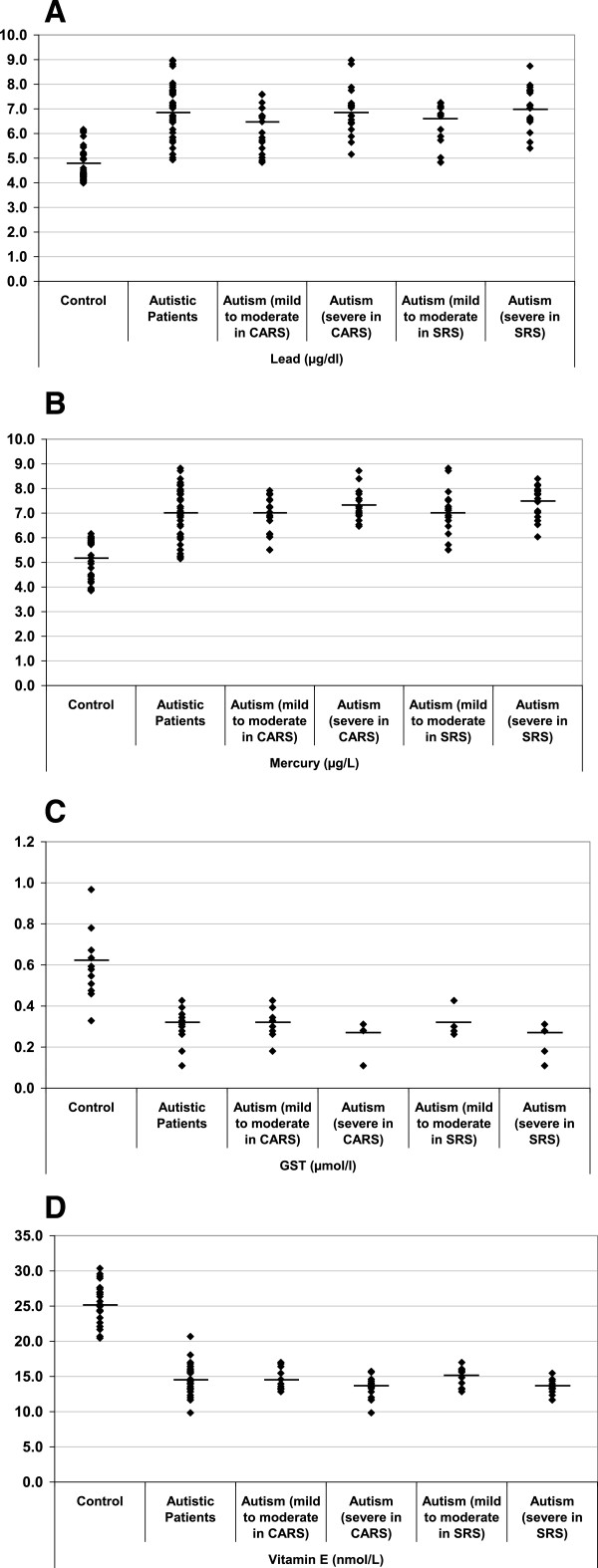
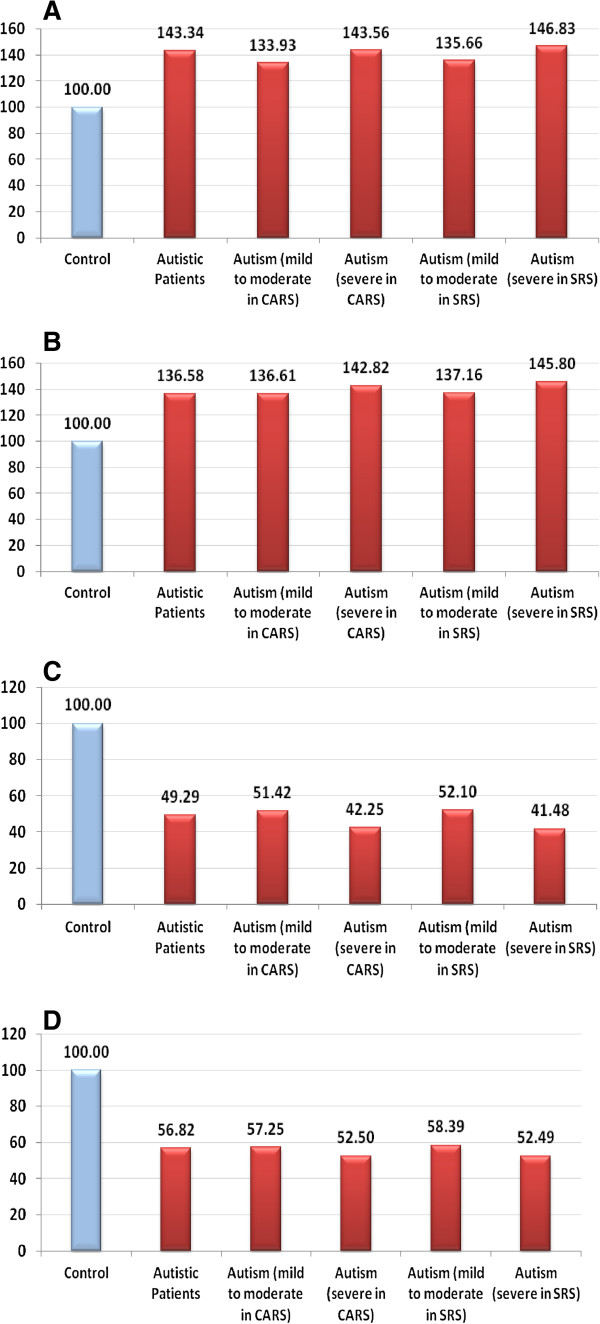
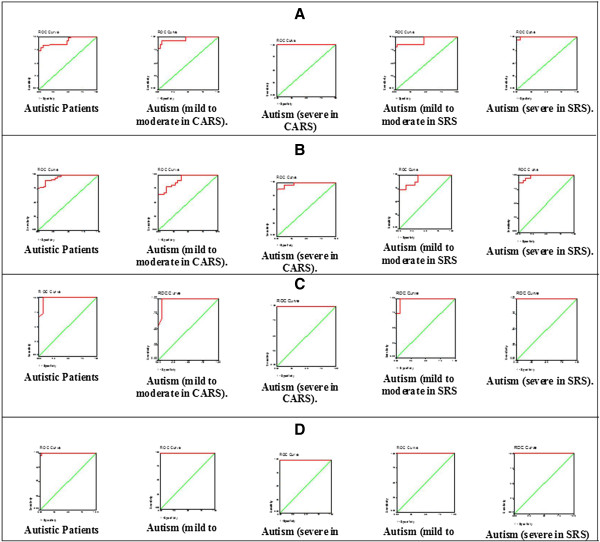
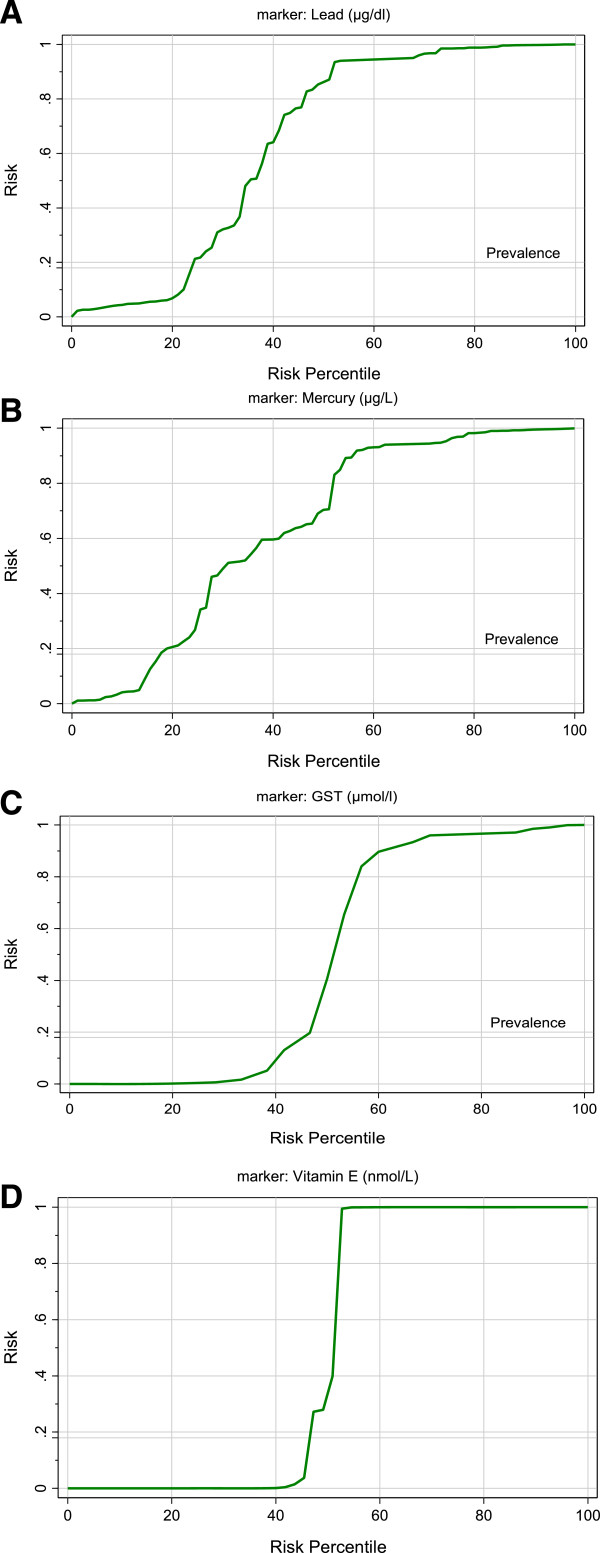
Verification
Claims the paper makes
The claims and statistics of this paper haven’t been checked yet.
Run the check — free, no account needed. It reads the open-access text and checks the sources it cites.
Claims other papers make about this one
Each is checked against this paper’s own text: does it say what the citing paper says it does?
The cited source says what the claim attributes to it.
In the citing paper
“Alabdali et al. (2014) reported autistic children having higher levels of mercury and lead than healthy controls, and lower levels of glutathione-transferase and vitamin E in plasma [157].”
From Vitamin D and Autism Spectrum Disorder: A Literature Review (2016) · cites this paper as [157]
In the citing paper
“Exposure to heavy metals and impaired detoxification system, another abnormality in a subset of individuals with ASD, have also been involved in the aeitiology of ASD [157].”
From Vitamin D and Autism Spectrum Disorder: A Literature Review (2016) · cites this paper as [157]
In the citing paper
“Alabdali et al. (2014) reported autistic children having higher levels of mercury and lead than healthy controls, and lower levels of glutathione-transferase and vitamin E in plasma [157].”
From Vitamin D and Autism Spectrum Disorder: A Literature Review (2016) · cites this paper as [157]
Self-check
Percentages, sums and reported differences re-computed from the paper’s own numbers.
The self-check needs the paper’s full text.
Citations
Cites
Diagnostic and Statistical Manual of Mental Disorders, Fourth Edition, Text Revision (DSM-IV-TR)
American Psychiatric Association (2000) · doi:10.1176/appi.books.9780890423349 · Cited by 11,069
Developmental neurotoxicity of industrial chemicals
Grandjean, P., & Landrigan, P. (2006) · The Lancet · doi:10.1016/s0140-6736(06)69665-7 · Cited by 1,984
Constantino, J. N. (2013) · Encyclopedia of Autism Spectrum Disorders · doi:10.1007/978-1-4419-1698-3_296 · Cited by 908
Schopler, E., Reichler, R. J., DeVellis, R. F., & Daly, K. (1980) · PsycTESTS Dataset · doi:10.1037/t49458-000 · Cited by 859
Prenatal stress, glucocorticoids and the programming of adult disease
Cottrell, E. C. (2009) · Frontiers in Behavioral Neuroscience · doi:10.3389/neuro.08.019.2009 · Cited by 640
Proteome-based plasma biomarkers for Alzheimer's disease
Hye, A., Lynham, S., Thambisetty, M., Čaušević, M., Campbell, J., Byers, H. L., Hooper, C., Rijsdijk, F. V., Tabrizi, S. J., Banner, S. J., et al. (2006) · Brain · doi:10.1093/brain/awl279 · Cited by 461
Decreased Brain Volume in Adults with Childhood Lead Exposure
Cecil, K. M., Brubaker, C. J., Adler, C. M., Dietrich, K. N., Altaye, M., Egelhoff, J. C., Wessel, S., Elangovan, I., Hornung, R., Jarvis, K., et al. (2008) · PLoS Medicine · doi:10.1371/journal.pmed.0050112 · Cited by 458
Adams, J. B., Audhya, T., McDonough-Means, S., Rubin, R. A., Quig, D., Geis, E., Gehn, E., Loresto, M., Mitchell, J., Atwood, S., et al. (2011) · Nutrition & Metabolism · doi:10.1186/1743-7075-8-34 · Cited by 442
Molecular mechanism of α-tocopherol action
Azzi, A. (2007) · Free Radical Biology and Medicine · doi:10.1016/j.freeradbiomed.2007.03.013 · Cited by 387
Non-Antioxidant Activities of Vitamin E
Zingg, J.-M. A., & Azzi, A. (2004) · Current Medicinal Chemistry · doi:10.2174/0929867043365332 · Cited by 377
Research works printed but not linked: 3
- Al-Gadani Y, Al-Ansary A, Al-Attas O, Al-Ayadhi L: Oxidative stress andantioxidant status in Saudi autistic children. Clin Biochem. 2009, 24: 1032-1040. · DOI
- ATSDR: Toxicological Profile for Lead (update). (Agency for Toxic Substances and Disease Registry). 1999, Atlanta, GA: U.S. Department of Health and Human Services
- Herndon AC, Diguiseppi C, Johndon SL: Dose nutritional intake differs between children with autism spectrum disorder and children with typical development?. Autism Dev Disord. 2008, 6: 341-349.
Cited by
Sorted by citations
Street, M. E., Angelini, S., Bernasconi, S., Burgio, E., Cassio, A., Catellani, C., Cirillo, F., Deodati, A., Fabbrizi, E., Fanos, V., et al. (2018) · International Journal of Molecular Sciences · doi:10.3390/ijms19061647 · Cited by 272
Glutathione redox imbalance in brain disorders
Gu, F., Chauhan, V. P. S., & Chauhan, A. (2014) · Current Opinion in Clinical Nutrition & Metabolic Care · doi:10.1097/mco.0000000000000134 · Cited by 233
Saghazadeh, A., & Rezaei, N. (2017) · Progress in Neuro-Psychopharmacology and Biological Psychiatry · doi:10.1016/j.pnpbp.2017.07.011 · Cited by 146
The relationship between mercury and autism: A comprehensive review and discussion
Kern, J. K., Geier, D. A., Sykes, L. K., Haley, B. E., & Geier, M. R. (2016) · Journal of Trace Elements in Medicine and Biology · doi:10.1016/j.jtemb.2016.06.002 · Cited by 136
Toxic metal(loid)-based pollutants and their possible role in autism spectrum disorder
Bjørklund, G., Skalny, A. V., Rahman, M. M., Dadar, M., yassa, H. A., Aaseth, J., Chirumbolo, S., Геннадиевна, С. М., & Tinkov, A. A. (2018) · Environmental Research · doi:10.1016/j.envres.2018.05.020 · Cited by 123
Metadata
- Authors
- Alabdali, A., Al-Ayadhi, L., & El-Ansary, A.
- Affiliations
- King Saud University (SA)
- Corresponding author
- El-Ansary, Afaf
- Venue
- Behavioral and Brain Functions
- Published
- 2014-04-28
- Volume
- 10
- Issue
- 1
- Pages
- 14-14
- ISSN
- 1744-9081 (ISSN-L)
- PMC
- PMC4017810
- OpenAlex
- W2167410889
- Cited by
- 101
- References
- 48
- Citations by year
- 2026: 3 · 2025: 6 · 2024: 10 · 2023: 9 · 2022: 8 · 2021: 10 · 2020: 8 · 2019: 9 · 2018: 10 · 2017: 10 · 2016: 9 · 2015: 5 · 2014: 3
- FWCI
- 5.02
- Type
- journal article
- Language
- en
- Open access
- gold
- doi.org
- Licence
- cc-by
- Locations
- Behavioral and Brain Functions (publishedVersion, cc-by)
- Europe PMC (PubMed Central) (publishedVersion, cc-by)
- PubMed Central (publishedVersion, cc-by)
- PubMed (publishedVersion)
- Funders
- King Saud University
- Topics
- Life Sciences › Neuroscience › Cognitive Neuroscience › Autism Spectrum Disorder Research
- Physical Sciences › Environmental Science › Health, Toxicology and Mutagenesis › Heavy Metal Exposure and Toxicity
- Health Sciences › Nursing › Nutrition and Dietetics › Trace Elements in Health
- Keywords
- autism spectrum disorder, autism severity, heavy metal toxicity, lead, mercury, glutathione S-transferase, vitamin E, antioxidant status, autism biomarkers, social dysfunction, cognitive impairment, plasma mercury
- MeSH terms
- Child, Child Development Disorders, Pervasive, Child, Preschool, Cross-Sectional Studies, Female, Glutathione Transferase, Humans, Lead, Male, Mercury, Severity of Illness Index, Vitamin E, Biomarkers
About these checks
Registry, retraction, Cites and statistics results are computed, not judged, with one exception: a printed reference that no index lists is read once by a model before it counts as a citation error. Claims are extracted by a model and kept only when their quote appears verbatim in the text; each cited source is then checked, with a model’s help, for whether it says what the claim relies on. Those verdicts can be wrong — read the claim’s quote and the cited source before relying on one.
Statistics and arithmetic are recomputed, not judged.
Confidence bands are shown only for fields calibrated on our annotated test set. None is calibrated yet, so no band is shown.
What counts as a claim ›How we measure confidence ›How we check this ›
Are you an author, or do you see a problem with this page? Request a review
