

Anti-inflammation effects of picroside 2 in cerebral ischemic injury rats
Open accessThe DOI matches its Crossref record; 25 of the 25 references it cites were found in a registry or an index.
Abstract
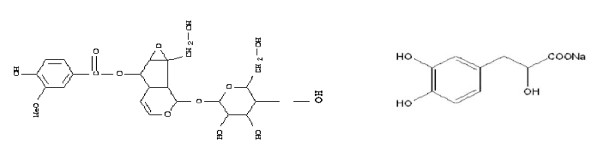
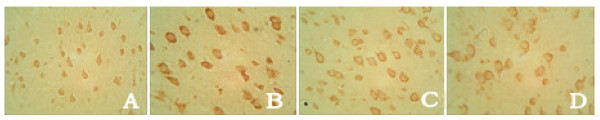
BACKGROUND: Excitatory amino acid toxicity, oxidative stress, intracellular calcium overload, as well as inflammation and apoptosis are involved in the pathological process after cerebral ischemic reperfusion injury. Picrodide 2 could inhibit neuronal apoptosis and play anti-oxidant and anti-inflammation role in cerebral ischemia/reperfusion injuries, but the exact mechanism is not very clear. This study aims to explore the anti-inflammation mechanism of picroside 2 in cerebral ischemic reperfusion injury in rats. METHODS: The middle cerebral artery occlusion reperfusion models were established with intraluminal thread methods in 90 adult healthy female Wistar rats. Picroside 2 and salvianic acid A sodium were respectively injected from tail vein at the dosage of 10 mg/kg for treatment. The neurobehavioral function was evaluated with Bederson's test and the cerebral infarction volume was observed with tetrazolium chloride (TTC) staining. The apoptotic cells were counted by in situ terminal deoxynucleotidyl transferase-mediated biotinylated deoxyuridine triphosphate nick end labeling (TUNEL) assay. The immunohistochemistry stain was used to determine the expressions of toll-like receptor 4 (TLR4), nuclear transcription factor kappaB (NFkappaB) and tumor necrosis factor alpha (TNFalpha). The concentrations of TLR4, NFkappaB and TNFalpha in brain tissue were determined by enzyme linked immunosorbent assay (ELISA). RESULTS: After cerebral ischemic reperfusion, the rats showed neurobehavioral function deficit and cerebral infarction in the ischemic hemisphere. The number of apoptotic cells, the expressions and the concentrations in brain tissue of TLR4, NFkappaB and TNFalpha in ischemia control group increased significantly than those in the sham operative group (P < 0.01). Compared with the ischemia control group, the neurobehavioral scores, the infarction volumes, the apoptotic cells, the expressions and concentrations in brain tissue of TLR4, NFkappaB and TNFalpha were obviously decreased both in the picroside 2 and salvianic acid A sodium groups (P < 0.01). There was no statistical difference between the two treatment groups in above indexes (P > 0.05). CONCLUSIONS: Picroside 2 could down-regulate the expressions of TLR4, NFkappaB and TNFalpha to inhibit apoptosis and inflammation induced by cerebral ischemic reperfusion injury and improve the neurobehavioral function of rats.
Overview
The claims and statistics of this paper haven’t been checked yet.
Free: it reads the open-access text and checks the first 5 claims that cite a source we can check. Create a free account to check every claim.
Integrity signals
Registry
Cites
Statistics
Figures




Verification
Claims the paper makes
The claims and statistics of this paper haven’t been checked yet.
Free: it reads the open-access text and checks the first 5 claims that cite a source we can check. Create a free account to check every claim.
Claims other papers make about this one
Each is checked against this paper’s own text: does it say what the citing paper says it does?
The source backs part of the claim, not all of it — or backs it for a different population, condition or comparison.
In the citing paper
“It exerts protective effects on multiple organs, including the brain, heart, and kidney, primarily through various mechanisms such as anti-inflammation, anti-oxidation, and anti-apoptosis [6,17,18,19].”
From Picroside II as a Potential Anti-Inflammatory Agent (2026) · cites this paper as [17]
Experimental — accuracy not yet measuredThe source backs part of the claim, not all of it — or backs it for a different population, condition or comparison.
In the citing paper
“Furthermore, previous studies have shown that picroside II has excellent immunomodulatory effects, which can alleviate inflammatory damage in various diseases by regulating immune cell differentiation, activating inflammatory signaling pathways, and secreting inflammatory factors [6,17,18,19].”
From Picroside II as a Potential Anti-Inflammatory Agent (2026) · cites this paper as [17]
Experimental — accuracy not yet measuredThe cited source says what the claim attributes to it.
In the citing paper
“Furthermore, PⅡ inhibited apoptosis and inflammation caused by cerebral ischemic/reperfusion (I/R) injury and improved neurobehavioral function by down-regulating the expression of toll-like receptor4 (TLR4), nuclear factor-κB (NF-κB), and TNF-α (Guo et al., 2010).”
From Picroside Ⅱ attenuates neuropathic pain by regulating inflammation and spinal excitatory synaptic transmission (2024) · cites this paper as Guo et al., 2010
The cited source says what the claim attributes to it.
In the citing paper
“in particular, its neuroprotective effects in cases of cerebral ischemia and ischemia–reperfusion (I/R) have been highlighted (Guo et al., 2010; Pei et al., 2012).”
From Picroside II Alleviates the Progression of Alzheimer’s Disease via the NLRP3/Caspase-1/GSDMD Pathway (2025) · cites this paper as Guo et al., 2010
Self-check
Percentages, sums and reported differences re-computed from the paper’s own numbers.
The self-check needs the paper’s full text.
Citations
Cites
Reversible middle cerebral artery occlusion without craniectomy in rats.
Longa, E. Z., Weinstein, P. R., Carlson, S., & Cummins, R. (1989) · Stroke · doi:10.1161/01.str.20.1.84 · Cited by 7,463 · cited 1×
“Fifteen rats were randomly selected as a sham operated group (SO), and the rest 75 rats were subjected to the experimental middle cerebral artery occlusion 2 h and reperfusion 22 h (MCAO/R) models with intraluminal monofilament suture from left external-internal carotid artery [20,21].”
MethodBederson, J. B., Pitts, L. H., Tsuji, M., Nishimura, M. C., Davis, R. L., & Bartkowski, H. (1986) · Stroke · doi:10.1161/01.str.17.3.472 · Cited by 2,681 · cited 1×
“All animal neurobehavioral tests were performed at ischemia 2 h and reperfusion 22 h by an investigator who was blinded to the experiment according to the standard of Bederson's report[24].”
MethodMechanisms of Microglia-Mediated Neurotoxicity in a New Model of the Stroke Penumbra
Kaushal, V., & Schlichter, L. C. (2008) · The Journal of Neuroscience · doi:10.1523/jneurosci.5643-07.2008 · Cited by 346
Caso, J. R., Pradillo, J. M., Hurtado, O., Leza, J. C., Moro, M. A., & Lizasoain, I. (2008) · Stroke · doi:10.1161/strokeaha.107.498212 · Cited by 193
Differential roles of TLR2 and TLR4 in acute focal cerebral ischemia/reperfusion injury in mice
Hua, F., Ma, J., Ha, T., Kelley, J. L., Kao, R. L., Schweitzer, J. B., Kalbfleisch, J. H., Williams, D. L., & Li, C. (2009) · Brain Research · doi:10.1016/j.brainres.2009.01.018 · Cited by 151
Yang, Q.-W., Li, J.-C., Lu, F.-L., Ai-qing, W., Xiang, J., Zhang, L.-L., Huang, Z.-Y., & Wang, J.-Z. (2008) · Journal of Cerebral Blood Flow & Metabolism · doi:10.1038/jcbfm.2008.50 · Cited by 114
Inflammation and NFκB activation is decreased by hypothermia following global cerebral ischemia
Webster, C. M., Kelly, S., Koike, M. A., Chock, V. Y., Giffard, R. G., & Yenari, M. A. (2009) · Neurobiology of Disease · doi:10.1016/j.nbd.2008.11.001 · Cited by 98
Oxymatrine protects rat brains against permanent focal ischemia and downregulates NF-κB expression
Liu, Y., Zhang, X., Yang, C.-H., & Fan, H. (2009) · Brain Research · doi:10.1016/j.brainres.2009.02.069 · Cited by 88
New Cucurbitacin Glycosides from Picrorhiza kurrooa
Stuppner, H., & Wagner, H. (1989) · Planta Medica · doi:10.1055/s-2006-962095 · Cited by 85
Potentiation of nerve growth factor-action by picrosides I and II, natural iridoids, in PC12D cells
Li, P., Matsunaga, K., Yamakuni, T., & Ohizumi, Y. (2000) · European Journal of Pharmacology · doi:10.1016/s0014-2999(00)00662-2 · Cited by 57
He, L. J., Liang, M., Hou, F. F., Guo, Z. J., Xie, D., & Zhang, X. (2009) · Journal of Endocrinology · doi:10.1677/joe-08-0481 · Cited by 44 · cited 1×
“Current researches on picroside 2 are focused on its neuroprotective[7], anti-apoptotic, anti-cholestatic, anti-oxidant, anti-inflammation, immunemodulating activities[8,9].”
BackgroundLi, P., Matsunaga, K., Yamakuni, T., & Ohizumi, Y. (2002) · Life Sciences · doi:10.1016/s0024-3205(02)01949-5 · Cited by 43
The Neuroprotective Effect of Picroside II from Hu-Huang-Lian against Oxidative Stress
Li, T., Liu, J.-W., Zhang, X.-D., Guo, M.-C., & Ji, G. (2007) · The American Journal of Chinese Medicine · doi:10.1142/s0192415x0700517x · Cited by 41
Zhang, H., Gu, Z., Savitz, S. I., Han, F., Fukunaga, K., & Qin, Z. (2007) · Journal of Neuroscience Research · doi:10.1002/jnr.21569 · Cited by 39
(2007) · PubMed · Cited by 38
Novel Roles for the NF-κB Signaling Pathway in Regulating Neuronal Function
Boersma, M. C. H., & Meffert, M. K. (2008) · Science Signaling · doi:10.1126/stke.16pe7 · Cited by 36
Quetiapine regulates neurogenesis in ischemic mice by inhibiting NF-κB p65/p50 expression
Bi, X., Yan, B., Fang, S., Yang, Y., He, J., Li, X., & Kong, J. (2009) · Neurological Research · doi:10.1179/174313209x393573 · Cited by 35
CHEMICAL CONSTITUENTS FROM PICRORHIZA SCROPHULARIIFLORA
Wang, D. (1993) · Acta Botanica Yunnanica · Cited by 28
Gao, H., & Zhang, M. (2008) · Behavioral and Brain Functions · doi:10.1186/1744-9081-4-57 · Cited by 14
Guo, Y. (2010) · Zhongguo yaolixue tongbao · Cited by 7
Self-citationZhen, Li, Xinying, Xu, Qin, Q., Meizeng, Zhang, Nie, W., & Shen (2010) · 中国神经再生研究:英文版 · Cited by 6
Investigation of Picroside II's Impacts on the P450 Activities Using a Cocktail Method
Xiao, Y., JIANG, Z.-Z., Jin-Cheng, Y. A. O., HUANG, X., HUANG, J.-F., Tao, W. A. N. G., & ZHANG, L.-Y. (2008) · Chinese Journal of Natural Medicines · doi:10.1016/s1875-5364(09)60024-8 · Cited by 6
Lou, H., Wei, X., Zhang, B., Sun, X., & Zhang, X.-M. (2007) · PubMed · Cited by 4
Hepatoprotective and choleretic action of Picrorhiza scrophulariaeflora Pennell
Liu, J. (2002) · Chinese New Drugs Journal · Cited by 3
Investigation of Picroside II’s Impacts on the P450 Activities Using a Cocktail Method.
Ya-Jie, X. I. A. O. (2008) · Chinese Journal of Natural Medicines · doi:10.3724/sp.j.1009.2008.00292
Research works printed but not linked: 1
- [22]Chinese Pharmcopoeia Commission Chinese Pharmacopoeia, Part 1. 2005 ed 2005 Beijing: Chemical Industry Press 212 213
Cited by
Nir, R., Sinai, A., Moont, R., Harari, E., & Yarnitsky, D. (2011) · Clinical Neurophysiology · doi:10.1016/j.clinph.2011.08.006 · Cited by 152
Long, Y., Yang, Q., Xiang, Y., Zhang, Y., Wan, J., Liu, S., Li, N., & Peng, W. (2020) · Pharmacological Research · doi:10.1016/j.phrs.2020.104795 · Cited by 151
Neuroinflammatory basis of metabolic syndrome
Purkayastha, S., & Cai, D. (2013) · Molecular Metabolism · doi:10.1016/j.molmet.2013.09.005 · Cited by 144
TLR2 and TLR4 in the Brain Injury Caused by Cerebral Ischemia and Reperfusion
Wang, Y., Ge, P., & Zhu, Y. (2013) · Mediators of Inflammation · doi:10.1155/2013/124614 · Cited by 144
Frontier studies on fatigue, autonomic nerve dysfunction, and sleep-rhythm disorder
Tanaka, M., Tajima, S., Mizuno, K., Ishii, A., Konishi, Y., Miike, T., & Watanabe, Y. (2015) · The Journal of Physiological Sciences · doi:10.1007/s12576-015-0399-y · Cited by 121
Metadata
- Authors
- Guo, Y., Xu, X., Li, Q., Li, Z., & Du, F.
- Affiliations
- Qingdao University (CN)
- Affiliated Hospital of Qingdao University (CN)
- Yuhuangding Hospital (CN)
- Corresponding author
- Guo, Yunliang
- Venue
- Behavioral and Brain Functions
- Published
- 2010
- Volume
- 6
- Issue
- 1
- Pages
- 43
- ISSN
- 1744-9081 (ISSN-L)
- PMC
- PMC2908551
- OpenAlex
- W2144732188
- Semantic Scholar
- 370e9520bfcf4e1ba93b4e40479aeae249bb1045
- Cited by
- 73
- References
- 24
- Citations by year
- 2026: 2 · 2025: 2 · 2024: 1 · 2023: 4 · 2022: 1 · 2021: 2 · 2020: 4 · 2019: 7 · 2018: 6 · 2017: 6 · 2016: 4 · 2015: 12 · 2014: 6 · 2013: 10 · 2012: 3
- FWCI
- 3.10
- Type
- journal article
- Language
- en
- Open access
- gold
- doi.org
- Licence
- cc-by
- Locations
- Behavioral and Brain Functions (publishedVersion, cc-by)
- PubMed Central (publishedVersion, cc-by)
- PubMed (publishedVersion)
- DOAJ (DOAJ: Directory of Open Access Journals) (submittedVersion)
- Funders
- National Natural Science Foundation of China (30873391)
- Topics
- Life Sciences › Neuroscience › Neurology › Neuroprotection in Cerebral Ischemia
- Life Sciences › Neuroscience › Neurology › Neuroinflammation and Neurodegeneration Mechanisms
- Health Sciences › Medicine › Clinical Neurology › Acute Ischemic Stroke Management
- Keywords
- cerebral ischemia-reperfusion injury, neuroinflammation, neuronal apoptosis, TLR4, NF-κB, TNF-α, middle cerebral artery occlusion, neuroprotection, cerebral infarction volume, anti-inflammatory mechanism, oxidative stress, excitotoxicity, calcium overload
- MeSH terms
- Animals, Anti-Inflammatory Agents, Brain, Caffeic Acids, Brain Ischemia, Cinnamates, Disease Models, Animal, Encephalitis, Female, Glucosides, Lactates, Neuropsychological Tests, Random Allocation, Tumor Necrosis Factor-alpha, Reperfusion Injury, NF-kappa B, Treatment Outcome, Rats, Wistar, Apoptosis, Infarction, Middle Cerebral Artery, Toll-Like Receptor 4, Rats, Iridoid Glucosides
About these checks
Registry, retraction, Cites and statistics results are computed, not judged, with one exception: a printed reference that no index lists is read once by a model before it counts as a citation error. Claims are extracted by a model and kept only when their quote appears verbatim in the text; each cited source is then checked, with a model’s help, for whether it says what the claim relies on. Those verdicts can be wrong — read the claim’s quote and the cited source before relying on one.
Statistics and arithmetic are recomputed, not judged.
Confidence bands are shown only for fields calibrated on our annotated test set. None is calibrated yet, so no band is shown.
What counts as a claim ›How we measure confidence ›How we check this ›
Are you an author, or do you see a problem with this page? Request a review
Data sources
Bibliographic data: Semantic Scholar, OpenAlex, Crossref.
Contains information from the Semantic Scholar Academic Graph Datasets, made available under the ODC Attribution License (ODC-BY 1.0).
Semantic Scholar’s data is described in: Kinney, R., et al. (2023). The Semantic Scholar Open Data Platform. arXiv:2301.10140.
