

The DOI matches its Crossref record; 29 of the 29 references it cites were found in a registry or an index.
The factor structure of the twelve item General Health Questionnaire (GHQ-12): the result of negative phrasing?
Open accessAbstract
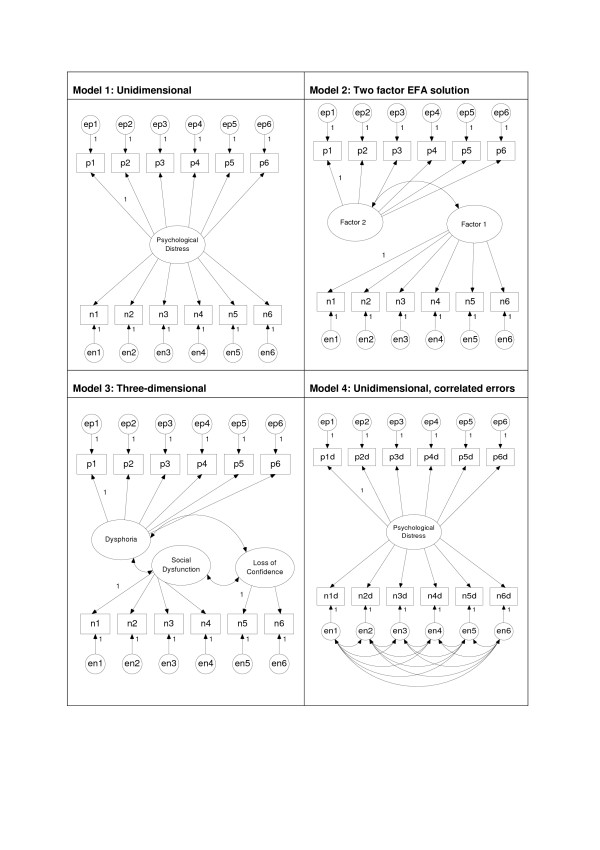
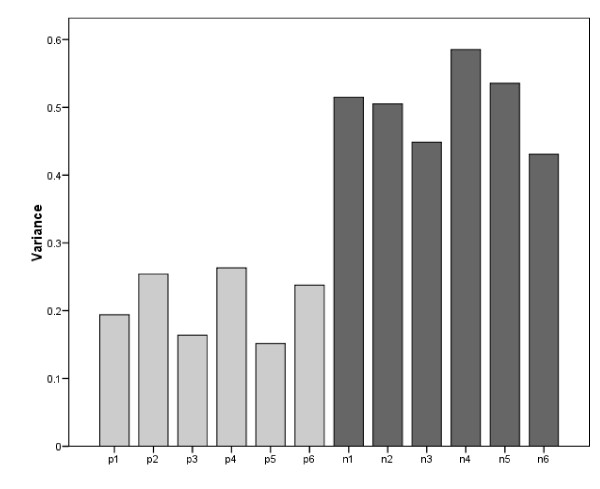
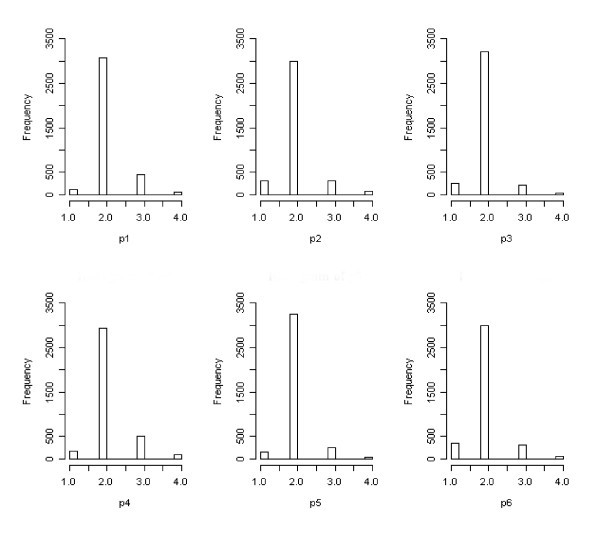
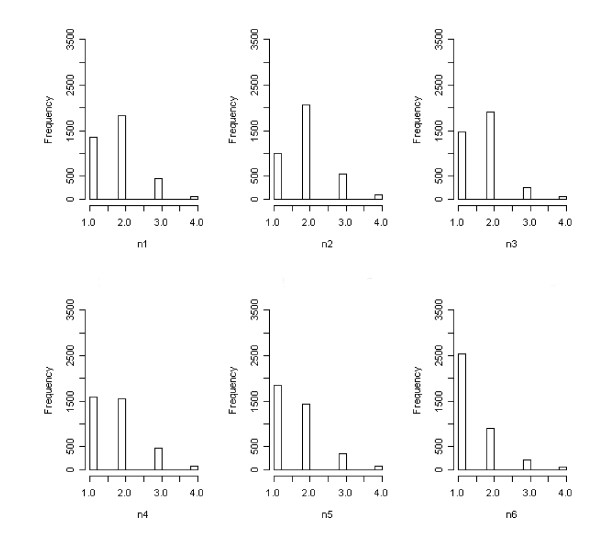
BACKGROUND: The 12-item General Health Questionnaire (GHQ-12) is used routinely as a unidimensional measure of psychological morbidity. Many factor-analytic studies have reported that the GHQ-12 has two or three dimensions, threatening its validity. It is possible that these 'dimensions' are the result of the wording of the GHQ-12, namely its division into positively phrased (PP) and negatively phrased (NP) statements about mood states. Such 'method effects' introduce response bias which should be taken into account when deriving and interpreting factors. METHODS: GHQ-12 data were obtained from the 2004 cohort of the Health Survey for England (N = 3705). Following exploratory factor analysis (EFA), the goodness of fit indices of one, two and three factor models were compared with those of a unidimensional model specifying response bias on the NP items, using structural equation modelling (SEM). The hypotheses were (1) the variance of the responses would be significantly higher for NP items than for PP items because of response bias, and (2) that the modelling of response bias would provide the best fit for the data. RESULTS: Consistent with previous reports, EFA suggested a two-factor solution dividing the items into NP and PP items. The variance of responses to the NP items was substantially and significantly higher than for the PP items. The model incorporating response bias was the best fit for the data on all indices (RMSEA = 0.068, 90%CL = 0.064, 0.073). Analysis of the frequency of responses suggests that the response bias derives from the ambiguity of the response options for the absence of negative mood states. CONCLUSION: The data are consistent with the GHQ-12 being a unidimensional scale with a substantial degree of response bias for the negatively phrased items. Studies that report the GHQ-12 as multidimensional without taking this response bias into account risk interpreting the artefactual factor structure as denoting 'real' constructs, committing the methodological error of reification. Although the GHQ-12 seems unidimensional as intended, the presence of such a large response bias should be taken into account in the analysis of GHQ-12 data.
Overview
The claims and statistics of this paper haven’t been checked yet.
Run the check — free, no account needed. It reads the open-access text and checks the sources it cites.
Integrity signals
Registry
Cites
Statistics
Figures
Verification
Claims the paper makes
The claims and statistics of this paper haven’t been checked yet.
Run the check — free, no account needed. It reads the open-access text and checks the sources it cites.
Claims other papers make about this one
Each is checked against this paper’s own text: does it say what the citing paper says it does?
The source backs part of the claim, not all of it — or backs it for a different population, condition or comparison.
In the citing paper
“The results of the exploratory factor analysis were considered to be due to artifacts caused by the characteristics of the Japanese language.”
From Validation of the Tinnitus Acceptance Questionnaire: Japanese Version (2022) · cites this paper as [29]
Experimental — accuracy not yet measured
Self-check
Percentages, sums and reported differences re-computed from the paper’s own numbers.
The self-check needs the paper’s full text.
Citations
Cites
(1988) · NFER-Nelson eBooks · Cited by 5,560
Structural Equation Modeling With AMOS: Basic Concepts, Applications, and Programming, Third Edition
Byrne, B. M. (2016) · doi:10.4324/9781315757421 · Cited by 4,653
(1996) · Choice Reviews Online · doi:10.5860/choice.34-2458 · Cited by 3,746
Bagozzi, R. P., & Heatherton, T. F. (1994) · Structural Equation Modeling A Multidisciplinary Journal · doi:10.1080/10705519409539961 · Cited by 1,477
Positive and negative global self-esteem: A substantively meaningful distinction or artifactors?
Marsh, H. W. (1996) · Journal of Personality and Social Psychology · doi:10.1037/0022-3514.70.4.810 · Cited by 811
Factors Defined by Negatively Keyed Items: The Result of Careless Respondents?
Schmitt, N., & Stuits, D. M. (1985) · Applied Psychological Measurement · doi:10.1177/014662168500900405 · Cited by 536
The stability of the factor structure of the General Health Questionnaire
Werneke, U., Goldberg, D. P., YALCIN, I., & Üstün, B. (2000) · Psychological Medicine · doi:10.1017/s0033291799002287 · Cited by 387
Marsh, H. W. (1986) · Developmental Psychology · doi:10.1037/0012-1649.22.1.37 · Cited by 322
Henkel, V., Mergl, R., Kohnen, R., Maier, W., Möller, H.-J., & Hegerl, U. (2003) · BMJ · doi:10.1136/bmj.326.7382.200 · Cited by 309
Multidimensional properties of the General Health Questionnaire
Graetz, B. (1991) · Social Psychiatry and Psychiatric Epidemiology · doi:10.1007/bf00782952 · Cited by 290
Cited by
Sorted by citations
Items 101–156 of 156
The Eden Principles in dementia respite care: carers’ experience
Downes, S. (2013) · Quality in Ageing and Older Adults · doi:10.1108/14717791311327051 · Cited by 6
Development and Validation of the Krio Version of the WHOQOL-BREF for Use in Sierra Leone
Price, B. K., Conteh, J. A., & Esliker, R. (2019) · SN Comprehensive Clinical Medicine · doi:10.1007/s42399-019-00181-3 · Cited by 7
Miyasaka, M., & Nomura, M. (2020) · Journal of American College Health · doi:10.1080/07448481.2020.1825223 · Cited by 7
Gültekin, Y. S. (2022) · Journal of Forest Research · doi:10.1080/13416979.2022.2028706 · Cited by 6
An international validation of the Bolton Unistride Scale (BUSS) of tenacity
Kannangara, C. S., Allen, R. E., Hochard, K. D., & Carson, J. F. (2022) · PLoS ONE · doi:10.1371/journal.pone.0264889 · Cited by 6
Simancas‐Pallares, M., Vergara, K. M. A., & Arévalo, L. L. (2017) · Biomédica · doi:10.7705/biomedica.v37i3.3240 · Cited by 6
Aloba, O. O., Opakunle, T., & Ogunrinu, K. (2019) · Psychiatry Investigation · doi:10.30773/pi.2019.0074 · Cited by 6
Investigating the association between diabetes and mental health: A train-and-test approach
Kang, W. (2022) · Frontiers in Psychiatry · doi:10.3389/fpsyt.2022.1044714 · Cited by 8
Arrieta-Vergara, K., Mesa, N. F., Amador, L. R. T., & Simancas‐Pallares, M. (2017) · Revista Colombiana de Psiquiatría · doi:10.1016/j.rcp.2017.05.015 · Cited by 6
Measurement Invariance of the General Health Questionnaire GHQ 12-Item Version (GHQ-12)
Ushakova, A., Mckenzie, K., Hughes, C., Stoye, J., & Murray, A. (2023) · European Journal of Psychological Assessment · doi:10.1027/1015-5759/a000785 · Cited by 4
Links between Sleep Apnoea and Insomnia in a British Cohort
Yu, Y. (2023) · Clocks & Sleep · doi:10.3390/clockssleep5030036 · Cited by 5
Antonio, D. A. D. F., Muller, A. G., & Butcher, R. D. C. G. E. S. (2019) · Revista da Escola de Enfermagem da USP · doi:10.1590/s1980-220x2018029203511 · Cited by 5
The Italian Validation of the Brief Self-Control Scale: A Preliminary Analysis
Gürdere, C., Bottesi, G., Carraro, E., & Ghisi, M. (2022) · Journal of Evidence-Based Psychotherapies · doi:10.24193/jebp.2022.2.15 · Cited by 5
Gambling, T. S., & Long, A. (2019) · Patient Related Outcome Measures · doi:10.2147/prom.s192672 · Cited by 5
Validation of the Tinnitus Acceptance Questionnaire: Japanese Version
Takabatake, S., Takahashi, M., Kabaya, K., Sekiya, Y., Sekiya, K., Harata, I., Kondo, M., & Akechi, T. (2022) · Audiology Research · doi:10.3390/audiolres12010006 · Cited by 4
Greenspace quality and proximity are stronger predictors of mental health than quantity or access
Collins, R., Brown, K. A., Ogutu, B., Smith, D. M., Eigenbrod, F., & Spake, R. (2026) · Landscape and Urban Planning · doi:10.1016/j.landurbplan.2026.105660 · Cited by 4
Positive Mental Health Questionnaire (PMHQ) for Healthcare Workers: A Psychometric Evaluation
Sienra-Monge, J. J. L., Luna, D., Figuerola-Escoto, R. P., Montufar-Burgos, I. I., Hernández-Roque, A., Soria-Magaña, A., & Toledano‐Toledano, F. (2023) · Healthcare · doi:10.3390/healthcare11233041 · Cited by 5
Development and Validation of the Job Satisfaction Brief Scale
Rosario-Hernández, E., Rovira-Millán, L. V., & Blanco-Rovira, R. A. (2022) · Revista Caribeña de Psicología · doi:10.37226/rcp.v6i1.6191 · Cited by 4
Ayar, P. V., Taillé, C., Ayar, P. V., Gay, M., Diallo, A., Dara, A. F., Peyrony, O., Chassany, O., & Casalino, E. (2022) · Journal of Asthma and Allergy · doi:10.2147/jaa.s337072 · Cited by 4
Estimating the impact of health on NEET status
Gladwell, D., Popli, G. K., & Tsuchiya, A. (2015) · White Rose Research Online (University of Leeds, The University of Sheffield, University of York) · Cited by 4
Mondal, M. A. H., Rahman, M. S., Islam, M. M., Mia, M. J., Islam, M. S., Sarker, P. C., Khatun, T., & Mia, M. (2025) · Social Sciences & Humanities Open · doi:10.1016/j.ssaho.2025.101699 · Cited by 3
Baluku, M. M., Ouma, S., Iredale, B., Nsereko, G. M., Nangendo, J., Kwikiriza, S., & Kiweewa, J. M. (2024) · PLOS mental health. · doi:10.1371/journal.pmen.0000055 · Cited by 3
Chin, E. G., Drescher, C. F., Trent, L. R., Darden, M. C., Seak, W. C., & Johnson, L. R. (2015) · International Perspectives in Psychology · doi:10.1037/ipp0000030 · Cited by 3
Global and Dimensions of Mental Health in Arthritis Patients
Kang, W. (2023) · Healthcare · doi:10.3390/healthcare11020195 · Cited by 3
Zhu, Y., Cong, X., Qiu, Z., Jeffrey, R., Li, R., Jing, L., Zhu, G., Yang, X., Li, S., Wang, J., et al. (2025) · BMC Psychology · doi:10.1186/s40359-024-02136-3 · Cited by 2
Duhigg, C. C., David, J., Arenas, R. M., Quinn, D. K., Hubbard, H. I., Smith, T. B., & Richardson, J. D. (2025) · Aphasiology · doi:10.1080/02687038.2025.2467234 · Cited by 3
Internet and mental health during the COVID-19 pandemic: evidence from the UK
Quintana‐Domeque, C., Zeng, J., & Zhang, X. (2022) · Oxford Open Economics · doi:10.1093/ooec/odac007 · Cited by 3
Using GHQ-12 to Screen Mental Health Issues in People with Emphysema
Kang, W., Whelan, E., & Hernández, S. P. (2023) · Healthcare · doi:10.3390/healthcare11142009 · Cited by 2
Netz, Y., Dunsky, A., Zach, S., Goldsmith, R., Shimony, T., Goldbourt, U., & Zeev, A. (2012) · International Psychogeriatrics · doi:10.1017/s1041610212001299 · Cited by 2
Kang, W. (2023) · Frontiers in Psychiatry · doi:10.3389/fpsyt.2023.1119562 · Cited by 2
Self-monitoring of blood glucose in insulin-treated patients with diabetes
Hortensius, J. (2013) · University of Groningen research database (University of Groningen / Centre for Information Technology) · Cited by 2
Kgosimore, D. L. (2018) · Cited by 2
Maternal cortisol and emotional complaints alter breast milk’s microbiome compositionPreprint
Deflorin, N., Ehlert, U., & Castro, R. T. A. (2022) · bioRxiv (Cold Spring Harbor Laboratory) · doi:10.1101/2022.09.28.509979 · Cited by 2
Ali, S. F., Khan, A. A., Latif, A. B. A., Pathath, A. W., Shabnam, S., Asif, M., & Rosman, A. S. (2023) · Psikohumaniora Jurnal Penelitian Psikologi · doi:10.21580/pjpp.v8i2.18077 · Cited by 1
Hussain, T. (2013) · HIV & AIDS Review · doi:10.1016/j.hivar.2013.05.003 · Cited by 1
Development of a self-report measure of social functioning for forensic inpatients
Willmot, P., & McMurran, M. (2015) · International Journal of Law and Psychiatry · doi:10.1016/j.ijlp.2015.01.023 · Cited by 1
Talwar, P., & Ar, M. F. (2014) · Cited by 1
Valentine Joseph Owan, P. D., Abang, K. B., Beshel, C. A., & Undie, R. A. (2023) · Advances in educational technologies and instructional design book series · doi:10.4018/979-8-3693-3132-3.ch015 · Cited by 1
An investigation into mindfulness, self-esteem & wellbeing in Irish adolescents
Stokes, D. (2013) · Cited by 1
Personlighetens inverkan på psykisk ohälsa vid nedläggning av arbetsplats
Alm, J. (2009) · KTH Publication Database DiVA (KTH Royal Institute of Technology)
Lazzarino, A. I. (2015) · UCL Discovery (University College London)
The harmonisation of stroke datasets: A case study of four UK datasets
Munyombwe, T. (2016) · White Rose eTheses Online (University of Leeds, The University of Sheffield, University of York)
Association between psychological distress and liver disease mortality
Russ, T., Mika Kivimaki, B., Morling, J. R., Mfph, M., FRCPEd, J. M. S. P., Stamatakis, E. A., & Batty, G. D. (2016)
Lobos-Rivera, M. E., & Gutiérrez-Quintanilla, J. R. (2022) · Entorno · doi:10.5377/entorno.v1i71.14330
Sánchez-Moreno, E., Corchado-Castillo, A. I., & Roldán, I. N. D. L. F. (2024) · Journal of Social Distress and the Homeless · doi:10.1080/10530789.2024.2379164
Kim, S., Choi, Y., & Kim, Y. S. (2024) · Mental health and physical activity · doi:10.1016/j.mhpa.2024.100662 · Cited by 1
Deflorin, N., Ehlert, U., & Castro, R. T. A. (2024) · Psychosomatic Medicine · doi:10.1097/psy.0000000000001351 · Cited by 3
Breaking the silence: patterns of women’s responses to sexual harassment
Gaikwad, H. V., Pandey, S., & Patil, K. (2025) · Cogent Social Sciences · doi:10.1080/23311886.2025.2598727
Agarwal, S., Jilani, A. Q., Singh, S., Sharma, A., Pathak, A., Singh, V., & Jaiswal, P. (2026) · Consortium Psychiatricum · doi:10.17816/cp15536
Schlechter, P., Wilkinson, P. O., Jefferies, P., & Fritz, J. (2026) · Scientific Reports · doi:10.1038/s41598-026-63690-x
Obeïd, S., Malaeb, D. N., Sakr, F., Dabbous, M., Hallit, S. R., & Fekih‐Romdhane, F. (2026) · International Journal of Adolescence and Youth · doi:10.1080/02673843.2026.2683139
Ronca, D. B., Li, J., Lima, R. M., Wen, J., de Carvalho, K. M. B., & Wang, W. (2026) · Advances in predictive, preventive and personalised medicine · doi:10.1007/978-3-032-32838-0_3
Shi, Y., & Cheng, Z. (2026) · PLOS mental health. · doi:10.1371/journal.pmen.0000653
Metadata
- Authors
- Hankins, M.
- Affiliations
- King's College London (GB)
- Corresponding author
- Hankins, Matthew
- ORCID
- Hankins, Matthew
- Venue
- Clinical Practice and Epidemiology in Mental Health
- Publisher
- Bentham Science Publishers Ltd.
- Published
- 2008
- Volume
- 4
- Issue
- 1
- Pages
- 10
- ISSN
- 1745-0179 (ISSN-L)
- PMC
- PMC2373289
- OpenAlex
- W2061941598
- Cited by
- 158
- References
- 29
- Citations by year
- 2026: 6 · 2025: 4 · 2024: 9 · 2023: 15 · 2022: 17 · 2021: 9 · 2020: 6 · 2019: 12 · 2018: 6 · 2017: 5 · 2016: 12 · 2015: 15 · 2014: 6 · 2013: 8 · 2012: 13
- FWCI
- 7.63
- Type
- journal article
- Language
- en
- Open access
- hybrid
- doi.org
- Licence
- cc-by
- Locations
- Clinical Practice and Epidemiology in Mental Health (publishedVersion, cc-by)
- PubMed Central (publishedVersion, cc-by)
- PubMed (publishedVersion)
- ePrints Soton (University of Southampton) (acceptedVersion)
- Figshare (submittedVersion, cc-by)
- Sussex Research Online (University of Sussex) (submittedVersion)
- Topics
- Social Sciences › Decision Sciences › Management Science and Operations Research › Psychometric Methodologies and Testing
- Social Sciences › Psychology › Experimental and Cognitive Psychology › Anxiety, Depression, Psychometrics, Treatment, Cognitive Processes
- Social Sciences › Psychology › Experimental and Cognitive Psychology › Mental Health Research Topics
- Keywords
- GHQ-12, factor structure, response bias, method effects, psychological morbidity, unidimensionality, reification, mood states, questionnaire wording, Health Survey for England
About these checks
Registry, retraction, Cites and statistics results are computed, not judged, with one exception: a printed reference that no index lists is read once by a model before it counts as a citation error. Claims are extracted by a model and kept only when their quote appears verbatim in the text; each cited source is then checked, with a model’s help, for whether it says what the claim relies on. Those verdicts can be wrong — read the claim’s quote and the cited source before relying on one.
Statistics and arithmetic are recomputed, not judged.
Confidence bands are shown only for fields calibrated on our annotated test set. None is calibrated yet, so no band is shown.
What counts as a claim ›How we measure confidence ›How we check this ›
Are you an author, or do you see a problem with this page? Request a review
