

Anatomic and functional leg-length inequality: A review and recommendation for clinical decision-making. Part I, anatomic leg-length inequality: prevalence, magnitude, effects and clinical significance
Open accessThe DOI matches its Crossref record; 61 of the 62 references it cites were found in a registry or an index.
Abstract
Background: Leg-length inequality is most often divided into two groups: anatomic and functional. Part I of this review analyses data collected on anatomic leg-length inequality relative to prevalence, magnitude, effects and clinical significance. Part II examines the functional "short leg" including anatomic-functional relationships, and provides an outline for clinical decision-making. Methods: Online database – Medline, CINAHL and MANTIS – and library searches for the time frame of 1970–2005 were done using the term "leg-length inequality". Results and Discussion: Using data on leg-length inequality obtained by accurate and reliable x-ray methods, the prevalence of anatomic inequality was found to be 90%, the mean magnitude of anatomic inequality was 5.2 mm (SD 4.1). The evidence suggests that, for most people, anatomic leg-length inequality does not appear to be clinically significant until the magnitude reaches ~ 20 mm (~3/4"). Conclusion: Anatomic leg-length inequality is near universal, but the average magnitude is small and not likely to be clinically significant.
Overview
The claims and statistics of this paper haven’t been checked yet.
Free: it reads the open-access text and checks the first 5 claims that cite a source we can check. Create a free account to check every claim.
Integrity signals
Registry
Cites
Statistics
Figures
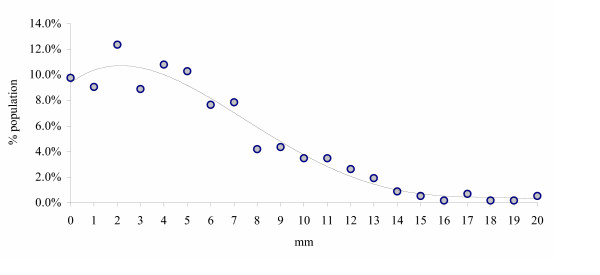
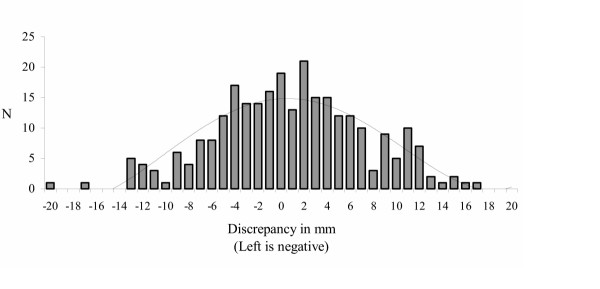
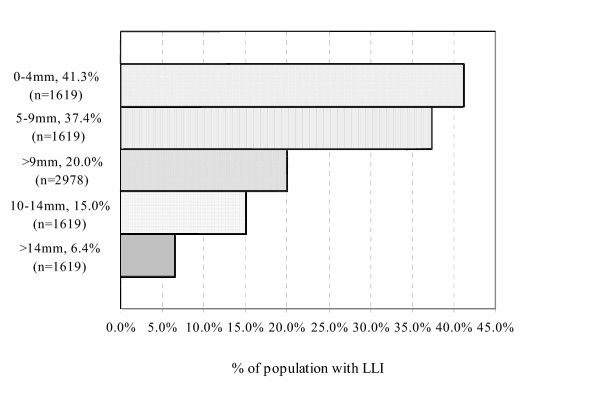
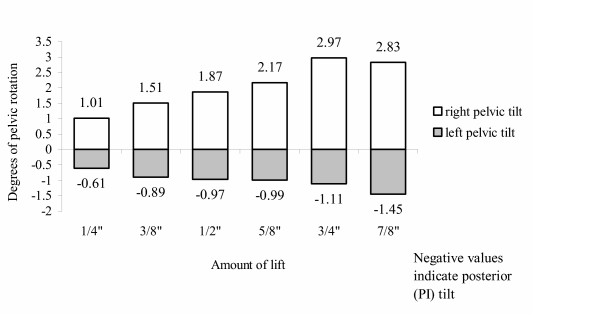
Verification
Claims the paper makes
The claims and statistics of this paper haven’t been checked yet.
Free: it reads the open-access text and checks the first 5 claims that cite a source we can check. Create a free account to check every claim.
Self-check
Percentages, sums and reported differences re-computed from the paper’s own numbers.
The self-check needs the paper’s full text.
Citations
Cites
Epidemiological features of chronic low-back pain
Andersson, G. B. (1999) · The Lancet · doi:10.1016/s0140-6736(99)01312-4 · Cited by 3,181 · cited 1×
“Chronic low back pain (CLBP) affects about 21% of the population [34,35].”
Sutton, H. (1937) · Medical Journal of Australia · doi:10.5694/j.1326-5377.1937.tb43685.x · Cited by 816
Myofascial pain and dysfunction
Travell, J. G. (1983) · Medical Entomology and Zoology · Cited by 605
Gurney, B. (2002) · Gait & Posture · doi:10.1016/s0966-6362(01)00148-5 · Cited by 439 · cited 4×
“Gurney B, Mermier C, Robergs R, Gibson A, Rivero D: Effects of Limb-Length Discrepancy on Gait Economy and LowerExtremity Muscle Activity in Older Adults.”
InfluentialClinical Symptoms and Biomechanics of Lumbar Spine and Hip Joint in Leg Length Inequality
FRIBERG, O. (1983) · Spine · doi:10.1097/00007632-198309000-00010 · Cited by 397 · cited 5×
“Recognizing that measurements to the precision of a millimeter will be prone to error, other studies – again, using precise radiographic methods – have examined LLI within a measured range [7,16,17].”
InfluentialLovell and Winter's Pediatric Orthopedics
Morrissy, R. T., & Weinstein, S. L. (1996) · Cited by 348
Risk Factors for Recurrent Stress Fractures in Athletes
Korpelainen, R., Orava, S., Karpakka, J., Siira, P., & Hulkko, A. (2001) · The American Journal of Sports Medicine · doi:10.1177/03635465010290030901 · Cited by 346
Moseley, C. F., Cassidy, N., & Bernstein, R. M. (2007) · Pediatric Orthopaedic Secrets · doi:10.1016/b978-1-4160-2957-1.10039-9 · Cited by 320
Low-Back Pain Associated With Leg Length Inequality
GILES, L. G. F., & TAYLOR, J. R. (1981) · Spine · doi:10.1097/00007632-198109000-00014 · Cited by 281 · cited 2×
“Recognizing that measurements to the precision of a millimeter will be prone to error, other studies – again, using precise radiographic methods – have examined LLI within a measured range [7,16,17].”
Arthroplasty of the hip: Leg length is not important
White, T. O., & Dougall, T. (2002) · Journal of Bone and Joint Surgery - British Volume · doi:10.1302/0301-620x.84b3.12460 · Cited by 248 · cited 1×
“Another study of 200 post total hip replacement surgeries used validated functional outcome scores (Harris hip score and the SF-36 Health Survey) to examine the relationship of imposed LLI to functional outcome [43].”
Gurney, B., Mermier, C., Robergs, R., Gibson, A., & Rivero, D. (2001) · The Journal of Bone and Joint Surgery-American Volume · doi:10.2106/00004623-200106000-00013 · Cited by 239 · cited 1×
“Another found it was necessary to impose a LLI of between 2 – 3 cm in older adults in order to cause increased oxygen consumption and perceived exertion [56].”
BackgroundGait Asymmetry in Patients with Limb-Length Inequality
Kaufman, K. R., Miller, L. S., & Sutherland, D. H. (1996) · Journal of Pediatric Orthopaedics · doi:10.1097/00004694-199603000-00002 · Cited by 227 · cited 1×
“0 cm [54].”
SURGICAL TREATMENT OF LIMB-LENGTH DISCREPANCY FOLLOWING TOTAL HIP ARTHROPLASTY
PARVIZI, J., SHARKEY, P. F., BISSETT, G. A., ROTHMAN, R. H., & HOZACK, W. J. (2003) · The Journal of Bone and Joint Surgery-American Volume · doi:10.2106/00004623-200312000-00007 · Cited by 195 · cited 1×
“10 equalize leg length [44].”
Walsh, M., Connolly, P., Jenkinson, A., & O'Brien, T. (2000) · Gait & Posture · doi:10.1016/s0966-6362(00)00067-9 · Cited by 187 · cited 2×
“With larger amounts of leglength inequality, subjects begin to develop flexion of the knee in the long leg [24].”
Clinical significance of leg-length inequality after total hip arthroplasty.
Edeen, J., Sharkey, P. F., & Alexander, A. H. (1995) · PubMed · Cited by 174
Biomechanical implications of mild leg length inequality.
McCaw, S. T., & Bates, B. T. (1991) · British Journal of Sports Medicine · doi:10.1136/bjsm.25.1.10 · Cited by 169 · cited 2×
“Several authors agree [2,25,59], most recently with Kakushima et al who stated: "Therefore, although conflicts in the literature exist, 3 cm of LLD [leg length discrepancy] can be characterized as a minimum LLD, which should be treated in the clinical practice" [60].”
Validity of Derived Measurements of Leg-Length Differences Obtained by Use of a Tape Measure
Beattie, P., Isaacson, K., Riddle, D. L., & Rothstein, J. M. (1990) · Physical Therapy · doi:10.1093/ptj/70.3.150 · Cited by 165 · cited 8×
“Four of the radiographic studies [8,10,12,15] identified measured LLI subjects by gender (n = 116).”
InfluentialGait asymmetry in patients with limb length discrepancy
Perttunen, J., Anttila, E., Södergård, J., Merikanto, J., & Komi, P. V. (2003) · Scandinavian Journal of Medicine and Science in Sports · doi:10.1111/j.1600-0838.2003.00307.x · Cited by 149 · cited 1×
“5 cm was necessary to produce an asymmetrical gait [53].”
Brønfort, G., Goldsmith, C. H., Nelson, C. F., Boline, P. D., & Anderson, A. V. (1996) · PubMed · Cited by 139
Scoliosis associated with limb-length inequality.
Papaioannou, T., Stokes, I. A. F., & KENWRIGHT, J. (1982) · Journal of Bone and Joint Surgery · doi:10.2106/00004623-198264010-00009 · Cited by 138 · cited 1×
“Lumbar scoliosis was minor in those with LLI of less than 22 mm [46].”
Limb Length Discrepancies of the Lower Extremity (The Short Leg Syndrome)
Subotnick, S. I. (1981) · Journal of Orthopaedic and Sports Physical Therapy · doi:10.2519/jospt.1981.3.1.11 · Cited by 130 · cited 1×
“In the exchange between Friberg and Soukka et al, both agree that the significance of LLI may depend more on prolonged and repetitive loading, a common sense idea previously expressed by Subotnick [40].”
BackgroundLeg length asymmetry in stress fractures. A clinical and radiological study.
Friberg, O. (1982) · PubMed · Cited by 126
Studies in osteoarthritis of the hip. II. Osteoarthritis of the hip and leg-length disparity.
Gofton, J. P., & Trueman, G. E. (1971) · PubMed · Cited by 117
The Effect of Imposed Leg Length Difference on Pelvic Bone Symmetry
Cummings, G. S., Scholz, J. P., & Barnes, K. P. (1993) · Spine · doi:10.1097/00007632-199303000-00012 · Cited by 116 · cited 4×
“This estimation of clinical significance dovetails nicely with the findings on the effects of LLI, particularly pelvic torsion [23].”
InfluentialGuichet, J.-M., Spivak, J. M., Trouilloud, P., & Grammont, P. M. (1991) · Clinical Orthopaedics and Related Research · doi:10.1097/00003086-199111000-00035 · Cited by 102
Leg-Length Inequality in People of Working Age
Soukka, A., Alaranta, H., Tallroth, K., & Heliövaara, M. (1991) · Spine · doi:10.1097/00007632-199104000-00007 · Cited by 101 · cited 4×
“The pooled data (n=164) of asymptomatic subjects in this review [8,10,12-15] finds 15.”
InfluentialAsymmetric Limb Loading with True or Simulated Leg-Length Differences
White, S. C., Gilchrist, L. A., & Wilk, B. (2004) · Clinical Orthopaedics and Related Research · doi:10.1097/01.blo.0000119460.33630.6d · Cited by 95 · cited 1×
“White et al found LLD between 1 – 3 cm, whether simulated or real, resulted in unequal loading of limbs when walking, and recommended considering shoe lifts to equalize leg lengths [55].”
Lower limb-length discrepancy.
Siffert, R. S. (1987) · Journal of Bone and Joint Surgery · doi:10.2106/00004623-198769070-00023 · Cited by 92
The Association Between Static Pelvic Asymmetry and Low Back Pain
Levangie, P. K. (1999) · Spine · doi:10.1097/00007632-199906150-00011 · Cited by 91 · cited 1×
“Along the lines of symptomatic problems associated with LLI compensations, Levangie attempted to quantify pelvic asymmetry in a loaded (standing) position without x-ray by using precise location of anatomic landmarks [31].”
BackgroundUNEQUAL LEG LENGTH: AN ACCURATE METHOD OF DETECTION AND SOME CLINICAL RESULTS
Clarke, G. (1972) · Lara D. Veeken · doi:10.1093/rheumatology/11.8.385 · Cited by 90 · cited 1×
“In the 1970's studies began to show that clinical measurements of LLI were inaccurate and the use of x-ray, controlling for magnification and distortion, was necessary [4-6].”
Persistent low back pain and leg length disparity.
Jp, G. (1985) · PubMed · Cited by 84
Lumbar Spine Structural Changes Associated With Leg Length Inequality
Giles, L. G. F., & Taylor, J. R. (1982) · Spine · doi:10.1097/00007632-198203000-00011 · Cited by 84 · cited 6×
“These results raise questions about whether the prevalence of LLI found in Giles and Taylor's normal population is representative and whether CLBP is indeed related to LLI in the 10 mm range.”
InfluentialMannello, D. M. (1993) · PubMed · Cited by 83
Effect of simulating leg length inequality on pelvic torsion and trunk mobility
Young, R. S., Andrew, P. D., & Cummings, G. S. (2000) · Gait & Posture · doi:10.1016/s0966-6362(00)00048-5 · Cited by 82 · cited 2×
“The innominate movement tends to be anterior on the side of the anatomically short leg and posterior contralaterally [23,26].”
The Effect of Leg Length Discrepancy on Spinal Motion During Gait
Kakushima, M., Miyamoto, K., & Shimizu, K. (2003) · Spine · doi:10.1097/01.brs.0000090829.82231.4a · Cited by 77
Leg length discrepancy in marathon runners
Gross, R. H. (1983) · The American Journal of Sports Medicine · doi:10.1177/036354658301100303 · Cited by 59 · cited 7×
“Four of the radiographic studies [8,10,12,15] identified measured LLI subjects by gender (n = 116).”
InfluentialKujala, U. M., Friberg, O., Aalto, T., Kvist, M. H., & Österman, K. (1987) · International Journal of Sports Medicine · doi:10.1055/s-2008-1025658 · Cited by 58 · cited 1×
“3) [38].”
Kujala, U. M., Kvist, M. H., Österman, K., Friberg, O., & Aalto, T. (1986) · Clinical Orthopaedics and Related Research · doi:10.1097/00003086-198609000-00029 · Cited by 56 · cited 1×
“003 (t-test) [39].”
Leg-length inequality has poor correlation with lumbar scoliosis
Hoikka, V., Ylikoski, M. E., & Tallroth, K. (1989) · Archives of Orthopaedic and Trauma Surgery · doi:10.1007/bf00934262 · Cited by 50
Clinical and radiological assessment of leg length.
Fisk, J., & Baigent, M. L. (1975) · PubMed · Cited by 49
Gross, M. T., Burns, C. B., Chapman, S. W., Hudson, C. J., Curtis, H. S., Lehmann, J. R., & Renner, J. B. (1998) · Journal of Orthopaedic and Sports Physical Therapy · doi:10.2519/jospt.1998.27.4.285 · Cited by 49 · cited 2×
“Recognizing that measurements to the precision of a millimeter will be prone to error, other studies – again, using precise radiographic methods – have examined LLI within a measured range [7,16,17].”
The prevalence of postural asymmetry in people with and without chronic low back pain
Fann, A. V. (2002) · Archives of Physical Medicine and Rehabilitation · doi:10.1053/apmr.2002.35653 · Cited by 45 · cited 1×
“radiography to determine pelvic obliquity, examined subjects with (n = 93) and without (n = 76) chronic low back pain (defined as low back pain of at least 3 months) [33].”
The influence on the spine of leg-length discrepancy after femoral fracture
Gibson, P., Papaioannou, T., & KENWRIGHT, J. (1983) · Journal of Bone and Joint Surgery - British Volume · doi:10.1302/0301-620x.65b5.6643562 · Cited by 44 · cited 1×
“5 cm), there was no significant discomfort, structural abnormalities or degenerative changes as a result of the leg length discrepancy [41].”
Beaudoin, L., Zabjek, K., Leroux, M. A., Coillard, C., & Rivard, C. (1999) · European Spine Journal · doi:10.1007/s005860050125 · Cited by 43 · cited 1×
“The relationship of LLI to pelvic torsion is supported by the data of others [27].”
Knutson, G. A. (2002) · Journal of Manipulative and Physiological Therapeutics · doi:10.1067/mmt.2002.121414 · Cited by 42 · cited 2×
“In another study, a pelvic level – a device with a weighted gravity line superimposed on a scale in onedegree increments clamped in place on the palpated superior aspects of the iliac crests – was used to examine a group of non-clinical subjects [32].”
Self-citationTravell, J. G., Simons, D. G., & Cummings, B. D. (1993) · Lippincott Williams & Wilkins eBooks · Cited by 42
Joint moments in minor limb length discrepancy: a pilot study.
Goel, A., Loudon, J. K., Nazare, A., Rondinelli, R., & Hassanein, K. M. (1997) · PubMed · Cited by 41
Effects of Leg Length Discrepancies on the Forces at the Hip Joint
Brand, R. A., & Yack, H. J. (1996) · Clinical Orthopaedics and Related Research · doi:10.1097/00003086-199612000-00017 · Cited by 41 · cited 1×
“3 cm lift produced no changes in gait or hip forces and moments [52].”
Determination of Leg Length Discrepancy
Cleveland, R., Kushner, D. C., OGDEN, M. C., Herman, T. E., KERMOND, W., & Correia, J. A. (1988) · Investigative Radiology · doi:10.1097/00004424-198804000-00010 · Cited by 40
Leg-length discrepancy: effect on the amplitude of postural sway.
Murrell, P., Cornwall, M. W., & Doucet, S. K. (1991) · PubMed · Cited by 39
Prevalence of frontal plane pelvic postural asymmetry--part 1.
Juhl, J. H., Cremin, T. M. I., & Russell, G. V. (2004) · PubMed · Cited by 33
Anatomical leg length inequality, scoliosis and lordotic curve in unselected clinic patients.
Dl, S., & Kf, D. B. (1991) · PubMed · Cited by 31
Rhodes, D. W., Mansfield, E. R., Bishop, P. A., & Smith, J. (1995) · PubMed · Cited by 28
LUMBOSACRAL FACETAL ‘JOINT ANGLES’ ASSOCIATED WITH LEG ENGTH INEQUALITY
Giles, L. G. F. (1981) · Lara D. Veeken · doi:10.1093/rheumatology/20.4.233 · Cited by 25 · cited 1×
“Other effects of LLI and pelvic torsion have been demonstrated by Giles et al [29,30].”
Leg-Length Inequality and Low-Back Pain after Perthesʼ Disease
Yrjönen, T., Hoikka, V., Poussa, M. S., & Österman, K. (1992) · Journal of Spinal Disorders · doi:10.1097/00002517-199212000-00009 · Cited by 18 · cited 2×
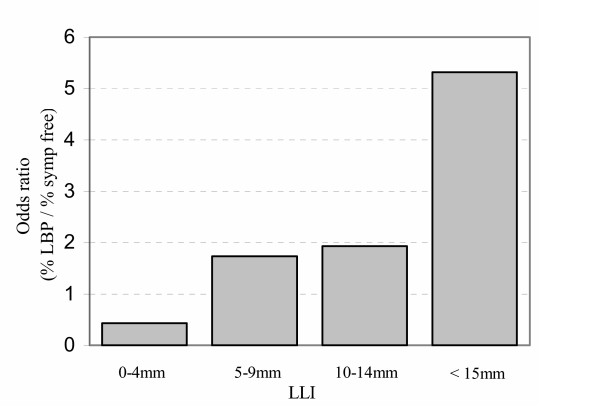
“5-9mm 10-14mm 15mm0-4mm 0 1 2 3 4 5 6 LLI O d d s ra ti o (% L B P / % s y m p f re e ) Page 7 of 10 (page number not for citation purposes) In examining the effects of LLI from childhood, Yrjönen et al [45] did a follow-up study of 81 patients with Perthes' disease and a mean LLI of 12 mm.”
Effect of Leg Length Discrepancy on Trunk Muscle Fatigue and Unintended Trunk Movement.
Mincer, A. B., Cummings, G. S., Andrew, P. D., & Rau, J. L. (1997) · Journal of Physical Therapy Science · doi:10.1589/jpts.9.1 · Cited by 11 · cited 7×
“Four of the radiographic studies [8,10,12,15] identified measured LLI subjects by gender (n = 116).”
InfluentialLateralization of weight in the presence of structural short leg: a preliminary report.
Lawrence, D. J. (1984) · PubMed · Cited by 10
Objective electromyographic evidence for use and effects of lift therapy.
Jj, T. (1983) · PubMed · Cited by 8
Friberg, O. (1992) · Spine · doi:10.1097/00007632-199204000-00019 · Cited by 8
Results of radiologic measurements of leg-length inequality (LLI)
Friberg, O. (1992) · PubMed · Cited by 5
Yen, S. T., Andrew, P. D., & Cummings, G. S. (1998) · PubMed · Cited by 4
Research works printed but not linked: 5
- Cooperstein R, Lisi A: Pelvic torsion: anatomic considerations, construct validity, and chiropractic examination procedures. Top Clin Chiro 2000, 7(3):38-49.
- Venn EK, Wakefield KA, Thompson PR: A comparative study of leg-length checks. Eur J Chiropractic 1983, 31:68-80.
- Reid DC, Smith B: Leg length inequalty: A review of etiology and management. Physiotherapy Canada 1984, 36(4):177-182.
- Friberg O: Leg length asymmetry in stress fractures. J Sports Med 1982, 22:485-488.
- Korpelainen R, Orava S, Karpakka J, Siira P, Hulkko A: Risk factors for recurrent stress fractures in athletes. Am J Sports Med 2001, 29(3):304-10. · DOI · Paper page
Cited by
A preliminary study into rider asymmetry within equitation
Symes, D., & Ellis, R. J. (2009) · The Veterinary Journal · doi:10.1016/j.tvjl.2009.03.016 · Cited by 117
Leg Length Discrepancy: The Natural History (And What Do We Really Know)
Gordon, J. E., & Davis, L. E. (2019) · Journal of Pediatric Orthopaedics · doi:10.1097/bpo.0000000000001396 · Cited by 114
Lederman, E. (2011) · Journal of Bodywork and Movement Therapies · doi:10.1016/j.jbmt.2011.01.011 · Cited by 110
“The evidence suggests that for most people anatomic leglength inequality is not clinically significant (Papaioannou et al., 1982; Grundy & Roberts, 1984; Dieck, 1985; Fann, 2002; Knutson, 2005, review), until the magnitude reaches approximately 20 mm (Gurney, 2002, review; Knutson, 2005, review).”
BackgroundThe role of biomechanical analysis of horse and rider in equitation science
Clayton, H. M., & Hobbs, S. J. (2017) · Applied Animal Behaviour Science · doi:10.1016/j.applanim.2017.02.011 · Cited by 106
“Leg length inequality is a common anatomical finding in people with the right leg more often being shorter (Knutson, 2005) but its relationship to postural asymmetries in the rider is controversial.”
BackgroundAn Automatic Gait Feature Extraction Method for Identifying Gait Asymmetry Using Wearable Sensors
Anwary, A. R., Yu, H., & Vassallo, M. (2018) · Sensors · doi:10.3390/s18020676 · Cited by 116
“2 mm and limb inequality of 20 mm must be present before considering clinically significant [78].”
Background
Metadata
- Authors
- Knutson, G. A.
- Corresponding author
- Knutson, Gary A
- Venue
- Chiropractic & Osteopathy
- Published
- 2005-07-20
- Volume
- 13
- Issue
- 1
- Pages
- 11-11
- ISSN
- 1746-1340 (ISSN-L)
- PMC
- PMC1232860
- OpenAlex
- W1937327178
- Cited by
- 242
- References
- 62
- Citations by year
- 2026: 13 · 2025: 14 · 2024: 23 · 2023: 21 · 2022: 19 · 2021: 24 · 2020: 19 · 2019: 14 · 2018: 12 · 2017: 21 · 2016: 8 · 2015: 6 · 2014: 8 · 2013: 7 · 2012: 9
- FWCI
- 1.48
- Type
- journal article
- Language
- en
- Open access
- hybrid
- doi.org
- Licence
- cc-by
- Locations
- Chiropractic & Manual Therapies (publishedVersion, cc-by)
- PubMed Central (publishedVersion, cc-by)
- PubMed (publishedVersion)
- DOAJ (DOAJ: Directory of Open Access Journals) (submittedVersion)
- Topics
- Physical Sciences › Engineering › Biomedical Engineering › Lower Extremity Biomechanics and Pathologies
- Health Sciences › Medicine › Orthopedics and Sports Medicine › Foot and Ankle Surgery
- Health Sciences › Health Professions › Physical Therapy, Sports Therapy and Rehabilitation › Musculoskeletal pain and rehabilitation
- Keywords
- short leg, prevalence, clinical significance, clinical decision-making
About these checks
Registry, retraction, Cites and statistics results are computed, not judged, with one exception: a printed reference that no index lists is read once by a model before it counts as a citation error. Claims are extracted by a model and kept only when their quote appears verbatim in the text; each cited source is then checked, with a model’s help, for whether it says what the claim relies on. Those verdicts can be wrong — read the claim’s quote and the cited source before relying on one.
Statistics and arithmetic are recomputed, not judged.
Confidence bands are shown only for fields calibrated on our annotated test set. None is calibrated yet, so no band is shown.
What counts as a claim ›How we measure confidence ›How we check this ›
Are you an author, or do you see a problem with this page? Request a review
Data sources
Bibliographic data: Semantic Scholar, OpenAlex, Crossref.
Contains information from the Semantic Scholar Academic Graph Datasets, made available under the ODC Attribution License (ODC-BY 1.0).
Semantic Scholar’s data is described in: Kinney, R., et al. (2023). The Semantic Scholar Open Data Platform. arXiv:2301.10140.
