

Normalization using ploidy and genomic DNA copy number allows absolute quantification of transcripts, proteins and metabolites in cells
Open accessThe DOI matches its Crossref record; 16 of the 16 references it cites were found in a registry or an index.
Abstract
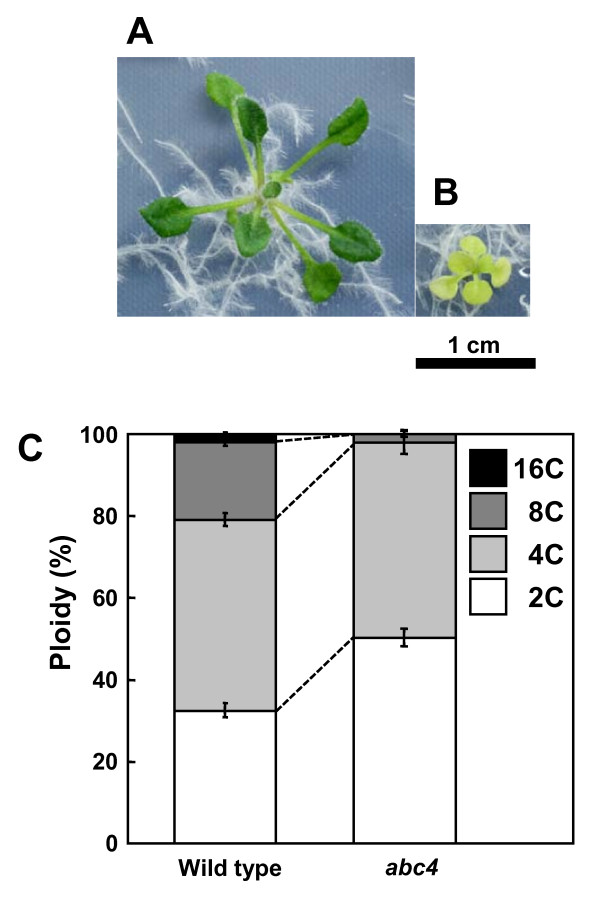
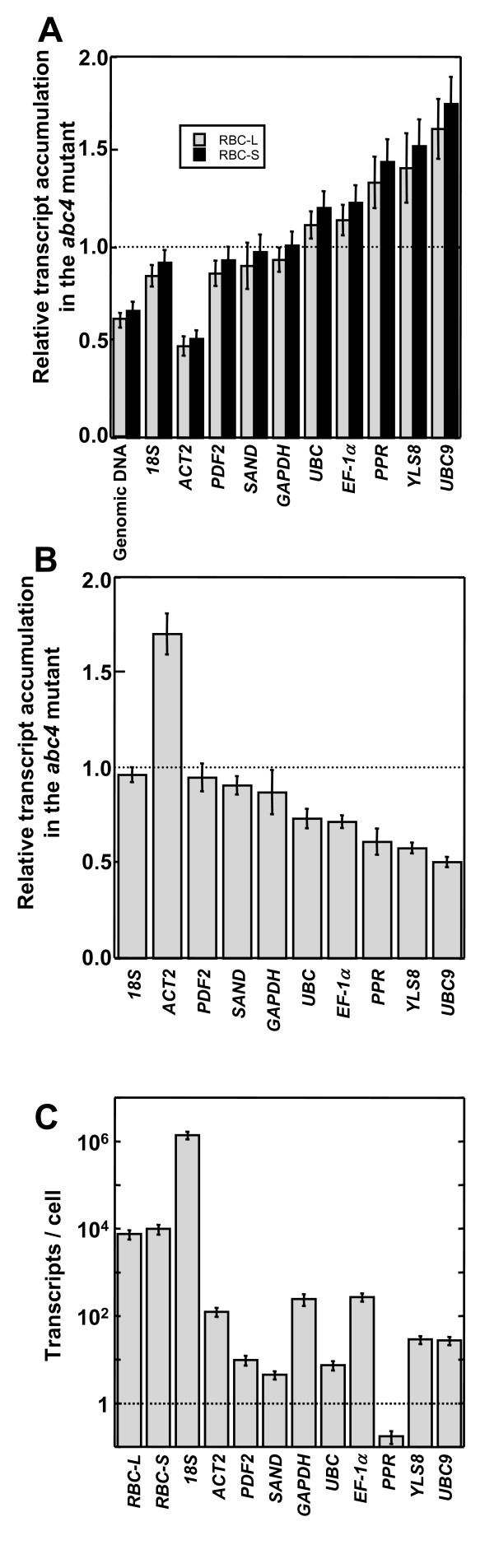
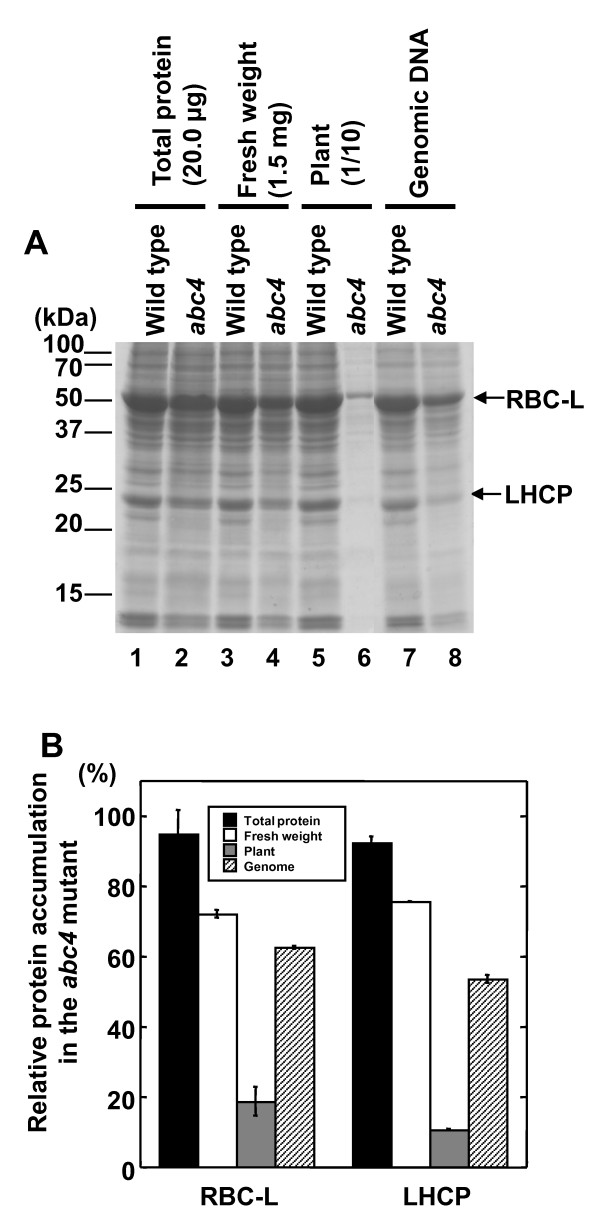
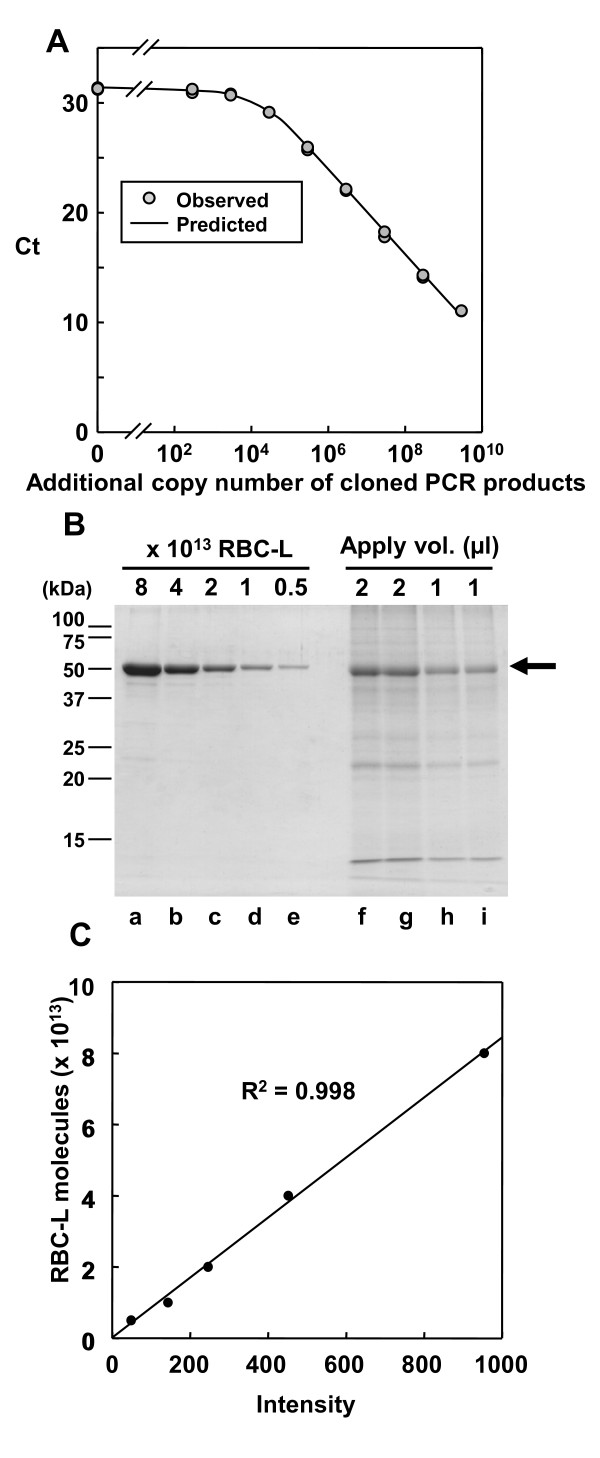
BACKGROUND: Quantification of transcripts, proteins, or metabolites is straightforward when the factor used to normalize these values remains constant between samples. However, normalization factors often vary among samples and thus must be developed for each new analytical method. RESULTS: We demonstrate quantification of transcript and protein levels in Arabidopsis based on genomic DNA copy number. We extracted total nucleic acid from 3-week-old rosette leaves of wild-type Arabidopsis and the pale-green/dwarf mutant, abc4, and quantified the number of transcripts by quantitative reverse-transcription PCR using genomic DNA copy number and ploidy (as determined by cytometry) for normalization. Our data indicated that normalization using genes commonly employed as references resulted in inaccuracies in transcript levels of the genes RBC-L and RBC-S (encoding the large and small subunits, respectively, of ribulose 1,5-bisphosphate carboxylase/oxygenase) in wild type and mutant. Normalization using genomic DNA copy number and ploidy, however, appropriately showed that the RBC-L and RBC-S transcript levels per cell in the mutant were significantly lower than that in wild type. Furthermore, quantification revealed that a cell of a 3-week-old wild-type Arabidopsis rosette leaf had an average of 7.5 × 10³ transcripts of RBC-L, 9.9 × 10³ transcripts of RBC-S, and 1.4 × 10⁶ 18S rRNA. We similarly analyzed the accumulation of RBC-L and LHCP (light-harvesting chlorophyll a/b protein) in wild type and mutant based on ploidy and genomic DNA copy number that was determined by direct quantitative PCR analysis of extracts using a DNA polymerase tolerant to a wide range of common PCR inhibitors. Furthermore, we estimated the number of RBC-L molecules (2.63 × 10⁸) and chlorophyll molecules (1.85 × 10⁹) in each cell in 3-week-old wild-type rosette leaves; these values had relatively low coefficients of variation, underscoring the reliability of our method. CONCLUSION: Genomic DNA copy number and ploidy are useful as general normalization factors, providing an easy method for determining the number of transcripts, proteins, and metabolites in a cell.
Overview
The claims and statistics of this paper haven’t been checked yet.
Free: it reads the open-access text and checks the first 5 claims that cite a source we can check. Create a free account to check every claim.
Integrity signals
Registry
Cites
Statistics
Figures
Verification
Claims the paper makes
The claims and statistics of this paper haven’t been checked yet.
Free: it reads the open-access text and checks the first 5 claims that cite a source we can check. Create a free account to check every claim.
Claims other papers make about this one
Each is checked against this paper’s own text: does it say what the citing paper says it does?
The source backs part of the claim, not all of it — or backs it for a different population, condition or comparison.
In the citing paper
“DNA concentration was shown to be proportional to the cell count and was successfully used to normalize enzyme activities, transcript and protein amounts, and metabolome data (23–25).”
From A “Proteomic Ruler” for Protein Copy Number and Concentration Estimation without Spike-in Standards (2014) · cites this paper as [24]
Experimental — accuracy not yet measuredThe cited source says what the claim attributes to it.
In the citing paper
“which in turn depends on the number of cells.”
From A “Proteomic Ruler” for Protein Copy Number and Concentration Estimation without Spike-in Standards (2014) · cites this paper as [24]
Self-check
Percentages, sums and reported differences re-computed from the paper’s own numbers.
The self-check needs the paper’s full text.
Citations
Cites
Analysis of Relative Gene Expression Data Using Real-Time Quantitative PCR and the 2−ΔΔCT Method
Livak, K. J., & Schmittgen, T. D. (2001) · Methods · doi:10.1006/meth.2001.1262 · Cited by 180,860
COPPER ENZYMES IN ISOLATED CHLOROPLASTS. POLYPHENOLOXIDASE IN BETA VULGARIS
Arnon, D. I. (1949) · Plant Physiology · doi:10.1104/pp.24.1.1 · Cited by 22,451
Vandesompele, J., De Preter, K., Pattyn, F., Poppe, B., Van Roy, N., De Paepe, A., & Speleman, F. (2002) · Genome Biology · doi:10.1186/gb-2002-3-7-research0034 · Cited by 20,038
Pfaffl, M. W., Tichopad, A., Prgomet, C., & Neuvians, T. P. (2004) · Biotechnology Letters · doi:10.1023/b:bile.0000019559.84305.47 · Cited by 5,065
Czechowski, T., Stitt, M., Altmann, T., Udvardi, M. K., & Scheible, W.-R. (2005) · Plant Physiology · doi:10.1104/pp.105.063743 · Cited by 3,203
Cell Cycle Regulation in Plant Development
Inzé, D., & De Veylder, L. (2006) · Annual Review of Genetics · doi:10.1146/annurev.genet.40.110405.090431 · Cited by 883
R UBISCO : Structure, Regulatory Interactions, and Possibilities for a Better Enzyme
Spreitzer, R. J., & Salvucci, M. E. (2002) · Annual Review of Plant Biology · doi:10.1146/annurev.arplant.53.100301.135233 · Cited by 876
Guenin, S., Mauriat, M., Pelloux, J., Van Wuytswinkel, O., Bellini, C., & Gutierrez, L. (2009) · Journal of Experimental Botany · doi:10.1093/jxb/ern305 · Cited by 596
Normalizing DNA Microarray Data
Bilban, M., Buehler, L. K., Head, S. R., Desoyé, G., & Quaranta, V. (2002) · Current Issues in Molecular Biology · doi:10.21775/cimb.004.057 · Cited by 147
Solanas, M., Moral, R., & Escrich, E. (2001) · Analytical Biochemistry · doi:10.1006/abio.2000.4889 · Cited by 141
Cited by
A “Proteomic Ruler” for Protein Copy Number and Concentration Estimation without Spike-in Standards
Wiśniewski, J. R., Hein, M. Y., Cox, J., & Mann, M. (2014) · Molecular & Cellular Proteomics · doi:10.1074/mcp.m113.037309 · Cited by 690
Single‐Cell Mass Spectrometry Approaches to Explore Cellular Heterogeneity
Zhang, L., & Vertes, A. (2018) · Angewandte Chemie International Edition · doi:10.1002/anie.201709719 · Cited by 276
Data normalization strategies in metabolomics: Current challenges, approaches, and tools
Misra, B. B. (2020) · European Journal of Mass Spectrometry · doi:10.1177/1469066720918446 · Cited by 141
Transgenerational Inheritance of Diet-Induced Genome Rearrangements in Drosophila
Aldrich, J. C., & Maggert, K. A. (2015) · PLOS Genetics · doi:10.1371/journal.pgen.1005148 · Cited by 67
What is Normalization? The Strategies Employed in Top-Down and Bottom-Up Proteome Analysis Workflows
O’Rourke, M. B., Town, S. E. L., Dalla, P. V., Bicknell, F., Belic, N. K., Violi, J. P., Steele, J. R., & Padula, M. P. (2019) · Proteomes · doi:10.3390/proteomes7030029 · Cited by 52
Metadata
- Authors
- Shimada, H., Obayashi, T., Takahashi, N., Matsui, M., & Sakamoto, A.
- Affiliations
- Hiroshima University (JP)
- Tohoku University (JP)
- RIKEN (JP)
- Corresponding author
- Shimada, Hiroshi
- Venue
- Plant Methods
- Published
- 2010
- Volume
- 6
- Issue
- 1
- Pages
- 29
- ISSN
- 1746-4811 (ISSN-L)
- PMC
- PMC3023742
- OpenAlex
- W2152514113
- Cited by
- 10
- References
- 16
- Citations by year
- 2020: 2 · 2019: 1 · 2017: 2 · 2016: 1 · 2015: 2 · 2014: 2
- FWCI
- 0.00
- Type
- journal article
- Language
- en
- Open access
- gold
- doi.org
- Licence
- cc-by
- Locations
- Plant Methods (publishedVersion, cc-by)
- Europe PMC (PubMed Central) (publishedVersion, cc-by)
- PubMed Central (publishedVersion, cc-by)
- PubMed (publishedVersion)
- DOAJ (DOAJ: Directory of Open Access Journals) (submittedVersion)
- Funders
- Japan Society for the Promotion of Science (20570032)
- Topics
- Life Sciences › Biochemistry, Genetics and Molecular Biology › Molecular Biology › Molecular Biology Techniques and Applications
- Life Sciences › Biochemistry, Genetics and Molecular Biology › Molecular Biology › Photosynthetic Processes and Mechanisms
- Life Sciences › Biochemistry, Genetics and Molecular Biology › Molecular Biology › Genomics and Phylogenetic Studies
- Keywords
- normalization, ploidy, absolute quantification, Arabidopsis thaliana, Rubisco, chlorophyll, 18S rRNA, PCR inhibitors
About these checks
Registry, retraction, Cites and statistics results are computed, not judged, with one exception: a printed reference that no index lists is read once by a model before it counts as a citation error. Claims are extracted by a model and kept only when their quote appears verbatim in the text; each cited source is then checked, with a model’s help, for whether it says what the claim relies on. Those verdicts can be wrong — read the claim’s quote and the cited source before relying on one.
Statistics and arithmetic are recomputed, not judged.
Confidence bands are shown only for fields calibrated on our annotated test set. None is calibrated yet, so no band is shown.
What counts as a claim ›How we measure confidence ›How we check this ›
Are you an author, or do you see a problem with this page? Request a review
How to cite
Cite CoChat for the checks on this page, and the paper for its own findings.
- This page
- CoChat. (2026). Citation check: Normalization using ploidy and genomic DNA copy number allows absolute quantification of transcripts, proteins and metabolites in cells. https://app.cochat.ai/papers/10.1186/1746-4811-6-29
- The paper
- Shimada, H., Obayashi, T., Takahashi, N., Matsui, M., & Sakamoto, A. (2010). Normalization using ploidy and genomic DNA copy number allows absolute quantification of transcripts, proteins and metabolites in cells. Plant Methods. https://doi.org/10.1186/1746-4811-6-29
Data sources
Bibliographic data: Semantic Scholar, OpenAlex, Crossref.
Contains information from the Semantic Scholar Academic Graph Datasets, made available under the ODC Attribution License (ODC-BY 1.0).
Semantic Scholar’s data is described in: Kinney, R., et al. (2023). The Semantic Scholar Open Data Platform. arXiv:2301.10140.
