

The behaviour change wheel: A new method for characterising and designing behaviour change interventions
Open accessThe DOI matches its Crossref record; 43 of the 44 references it cites were found in a registry or an index; 12 of the 35 sources its claims cite were checked for support.
Abstract
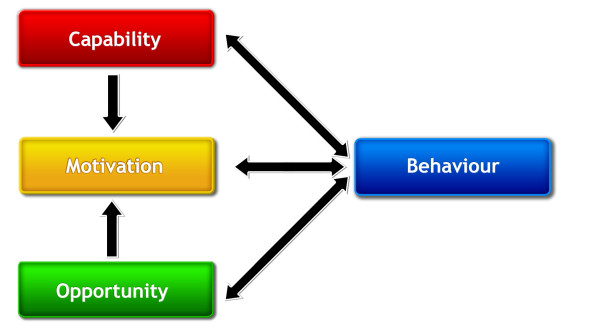
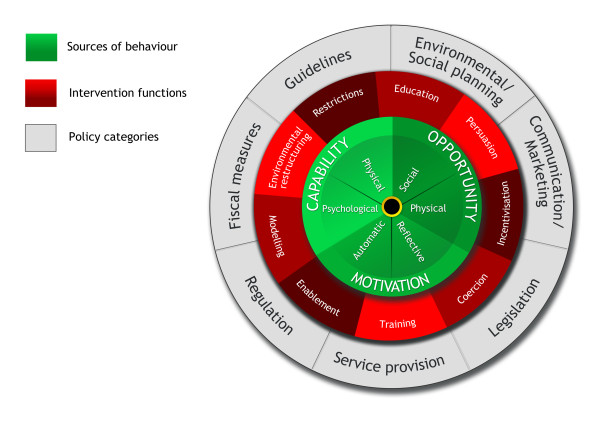
BACKGROUND: Improving the design and implementation of evidence-based practice depends on successful behaviour change interventions. This requires an appropriate method for characterising interventions and linking them to an analysis of the targeted behaviour. There exists a plethora of frameworks of behaviour change interventions, but it is not clear how well they serve this purpose. This paper evaluates these frameworks, and develops and evaluates a new framework aimed at overcoming their limitations. METHODS: A systematic search of electronic databases and consultation with behaviour change experts were used to identify frameworks of behaviour change interventions. These were evaluated according to three criteria: comprehensiveness, coherence, and a clear link to an overarching model of behaviour. A new framework was developed to meet these criteria. The reliability with which it could be applied was examined in two domains of behaviour change: tobacco control and obesity. RESULTS: Nineteen frameworks were identified covering nine intervention functions and seven policy categories that could enable those interventions. None of the frameworks reviewed covered the full range of intervention functions or policies, and only a minority met the criteria of coherence or linkage to a model of behaviour. At the centre of a proposed new framework is a 'behaviour system' involving three essential conditions: capability, opportunity, and motivation (what we term the 'COM-B system'). This forms the hub of a 'behaviour change wheel' (BCW) around which are positioned the nine intervention functions aimed at addressing deficits in one or more of these conditions; around this are placed seven categories of policy that could enable those interventions to occur. The BCW was used reliably to characterise interventions within the English Department of Health's 2010 tobacco control strategy and the National Institute of Health and Clinical Excellence's guidance on reducing obesity. CONCLUSIONS: Interventions and policies to change behaviour can be usefully characterised by means of a BCW comprising: a 'behaviour system' at the hub, encircled by intervention functions and then by policy categories. Research is needed to establish how far the BCW can lead to more efficient design of effective interventions.
Overview
CoChat Summary
TL;DR
The paper reviews 19 existing frameworks for behaviour change interventions, finds none comprehensive, coherent, and linked to an overarching behaviour model, and proposes the Behaviour Change Wheel (BCW). The BCW places a COM-B behaviour system at its hub, surrounded by nine intervention functions and seven policy categories, and was applied reliably to English tobacco control and NICE obesity guidance.
Key findings
- Of 19 identified frameworks, none covered the full range of nine intervention functions and seven policy categories; only three met the criterion of coherence, and seven were explicitly linked to an overarching model of behaviour.
- The proposed BCW comprises a COM-B behaviour system (capability, opportunity, motivation) at the hub, nine intervention functions, and seven policy categories.
- Inter-rater agreement for coding the frameworks by intervention functions and policy categories was 88%.
- Reliability testing of the BCW gave 88% agreement for the 2010 English Tobacco Control Strategy and 79% for the NICE Obesity Guidance; agreement with the gold standard was 85% for the Department of Health implementation lead and 75% for the tobacco researcher.
Methods
- Systematic searches of Web of Science, Pubmed, and PsycInfo plus consultation with eight international behaviour change experts identified 1,267 articles; 8 met inclusion criteria, expert consultation added 11 more, yielding 19 frameworks.
- Frameworks were evaluated against three criteria: comprehensiveness, coherence, and links to an overarching model of behaviour; the new BCW was developed by tabulating intervention categories and linking them to COM-B components.
- Reliability was tested by independent classification of 24 components of the 2010 English tobacco control strategy and 21 components of the 2006 NICE obesity guidance by RW and SM, then by two policy experts against a gold standard.
Limitations
- The paper states that the systematic review may have missed important frameworks and/or intervention functions; judgement was inevitably involved in conceptualising intervention functions and policy categories, with no guarantee the resulting framework is optimal; and the framework may prove difficult to use.
- Evident from the text: reliability was not perfect, with 79% agreement for the NICE obesity guidance and 75% agreement for the tobacco researcher against the gold standard.
- The paper states that research is needed to establish how far the BCW can lead to more efficient design of effective interventions; effectiveness prediction was not tested.
Model-written summary. Check it against the paper before relying on it.
Integrity signals
Registry
Cites
Statistics
Figures
Verification
Claims the paper makes
9 Valid · 1 Not valid · 17 Not checked · 84 Own results and interpretations
The cited sources support only part of this claim — read each source’s verdict below.
In the paper
“In addition, often no analysis is undertaken to guide the choice of theories [8].”
§ The behaviour change wheel: A new method for characterising and designing behaviour change interventions > Background
What the sources say
- Partly supportedcites [8] Davies P Walker AE Grimshaw JM A systematic review of the use of theory in the design of guideline dissemination and implementation strategies and interpretation of the results of rigorous evaluations Implement Sci 2010 5 14 10.1186/1748-5908-5-14 20181130 PMC2832624 sourceExperimental — accuracy not yet measured
The Discussion (page not available in our copy) reports poor documentation of why specific theories and constructs were chosen. That supports a concern about the rationale for theory choice, but it does not establish that researchers often undertook no analysis to guide that choice. (LLM, conf=0.84)
plain- Asserted: passes — The authors put it forward as true.
- Checkable: passes — It can be checked against evidence.
- Load-bearing: passes — The paper’s conclusions depend on it.
- Based: passes — The paper gives a reason why it holds.
- Partly supported
Every source the paper cites for this claim was checked and supports it.
In the paper
“It should also be noted that even when interventions are said to be guided by theory, in practice they are often not or are only minimally [10].”
§ The behaviour change wheel: A new method for characterising and designing behaviour change interventions > Background
What the sources say
- Supportedcites [10] Michie S Prestwich A Are interventions theory-based? Development of a theory coding scheme Health Psychol 2010 29 1 1 8 20063930 source
The Introduction says theory is too often used as a 'loose framework' rather than integrated into intervention design, and that interventions stating a theoretical base seldom explain how theory informed their design. The Results also describe interventions whose techniques are not linked to the theory they claim as a basis. (LLM, conf=0.90)
plain- Asserted: passes — The authors put it forward as true.
- Checkable: passes — It can be checked against evidence.
- Load-bearing: passes — The paper’s conclusions depend on it.
- Based: passes — The paper gives a reason why it holds.
- Supported
The cited sources support only part of this claim — read each source’s verdict below.
In the paper
“In general, insufficient attention appears to be given to analysing the nature of behaviour as the starting point of behaviour change interventions [15], a notable exception being intervention mapping [16].”
§ The behaviour change wheel: A new method for characterising and designing behaviour change interventions > Background
What the sources say
- Supportedcites [15] Johnston M Dixon D Current issues and new directions in psychology and health: What happened to behaviour in the decade of behaviour? Psychology and Health 2008 23 5 509 13 10.1080/08870440701816728 25160717 source
In “Do (health) psychologists recognise the importance of behaviour?”, the authors say that insufficient work has been done to characterise behaviour in ways that guide theory selection. “Classifying behaviour” likewise says remarkably little has been done to categorise behaviours for that purpose. Together with the paper’s discussion of the need for a theoretical basis for interventions, this supports the citing sentence’s broad paraphrase; the citation does not cover its separate intervention-mapping exception. (LLM, conf=0.86)
- Not matchedcites [16] Bartholomew L Parcel G Kok G Gottlieb N Planning Health Promotion Programs: Intervention Mapping 2011 San Francisco Jossey-Bass
We searched by its title and found no matching paper.
hedged- Asserted: passes — The authors put it forward as true.
- Checkable: passes — It can be checked against evidence.
- Load-bearing: passes — The paper’s conclusions depend on it.
- Based: passes — The paper gives a reason why it holds.
- Supported
Every source the paper cites for this claim was checked and supports it.
In the paper
“Interventions are commonly designed without evidence of having gone through this kind of process, with no formal analysis of either the target behaviour or the theoretically predicted mechanisms of action. They are based on implicit commonsense models of behaviour [6].”
§ The behaviour change wheel: A new method for characterising and designing behaviour change interventions > Background
What the sources say
- Supportedcites [6] Michie S Fixsen D Grimshaw JM Eccles MP Specifying and reporting complex behaviour change interventions: the need for a scientific method Implement Sci 2009 4 40 10.1186/1748-5908-4-40 19607700 PMC2717906 source
In “What is the problem? > Interventions aren't described” (page not specified), the paper says intervention development often relies on simple, mostly unstated models of behaviour, or uses theory through intuitive rather than systematic methods. Its discussion of the role of theory also calls for explicit links between intervention techniques and mechanisms of change. Together, these support the citing sentence's paraphrase. (LLM, conf=0.88)
plain- Asserted: passes — The authors put it forward as true.
- Checkable: passes — It can be checked against evidence.
- Load-bearing: passes — The paper’s conclusions depend on it.
- Based: passes — The paper gives a reason why it holds.
- Supported
The sources with a verdict support this claim; the rest weren’t checked yet, have no full text we could read, or their verdicts aren’t rated yet.
In the paper
“there is already evidence that characterising interventions by behaviour change techniques (BCTs) can be helpful in understanding which interventions are more or less effective [6,17]”
§ The behaviour change wheel: A new method for characterising and designing behaviour change interventions > Background
What the sources say
- Supportedcites [6] Michie S Fixsen D Grimshaw JM Eccles MP Specifying and reporting complex behaviour change interventions: the need for a scientific method Implement Sci 2009 4 40 10.1186/1748-5908-4-40 19607700 PMC2717906 source
In “Future developments > An overall framework for describing important elements of an intervention,” the paper reports that coding interventions by behaviour change technique, combined with meta-regression, identified a combination that was significantly more effective than other interventions. It says this difference would have been missed by traditional meta-analyses, directly supporting the claim that such characterisation can help explain relative effectiveness. (LLM, conf=0.94)
- Not checked — no full text of the sourcecites [17] West R Walia A Hyder N Shahab L Michie S Behavior change techniques used by the English Stop Smoking Services and their associations with short-term quit outcomes Nicotine Tob Res 2010 12 7 742 7 10.1093/ntr/ntq074 20478957 source
plainstates an association- Asserted: passes — The authors put it forward as true.
- Checkable: passes — It can be checked against evidence.
- Load-bearing: passes — The paper’s conclusions depend on it.
- Based: passes — The paper gives a reason why it holds.
- Supported
41 more claims · 1 with their cited sources checked
Create a free account to see all 111 claims and to verify the 1 reference still open.
- Probably not a substantial claim. 45
- It may state two separate claims as one. 31
- The quote only partly states this claim. 1
Claims other papers make about this one
Each is checked against this paper’s own text: does it say what the citing paper says it does?
The source backs part of the claim, not all of it — or backs it for a different population, condition or comparison.
In the citing paper
“These divergent findings may reflect the impact of pre-existing severe medical conditions on motivation and ability to exercise 139 140 , alongside potential participation bias for physically healthier populations 141 .”
From Effect of exercise on depression and anxiety symptoms: systematic umbrella review with meta-meta-analysis (2026) · cites this paper as [141]
Experimental — accuracy not yet measuredThe source backs part of the claim, not all of it — or backs it for a different population, condition or comparison.
In the citing paper
“Interventions are often designed without sufficient knowledge about the target group and without a theoretical framework [46].”
From A Mobile Health Intervention for Self-Management and Lifestyle Change for Persons With Type 2 Diabetes, Part 2: One-Year Results From the Norwegian Randomized Controlled Trial RENEWING HEALTH (2014) · cites this paper as [46]
Experimental — accuracy not yet measuredThe source backs part of the claim, not all of it — or backs it for a different population, condition or comparison.
In the citing paper
“we propose that the concept of the individual might incorporate: capability, capacity, motivation (including recognising a need for change), resilience, acceptability, feelings, knowledge and beliefs (including self efficacy) about the intervention/evidence, position and fit within the organization/social system, and approach to decision-making (e.g., experimentation, use of information).”
From The role of evidence, context, and facilitation in an implementation trial: implications for the development of the PARIHS framework (2013) · cites this paper as [7]
Experimental — accuracy not yet measuredThe source backs part of the claim, not all of it — or backs it for a different population, condition or comparison.
In the citing paper
“However, targeting ability of individuals to engage in a behavior is central to achieving long-term behavioral change [30].”
From Just a Fad? Gamification in Health and Fitness Apps (2014) · cites this paper as [30]
Experimental — accuracy not yet measuredThe source backs part of the claim, not all of it — or backs it for a different population, condition or comparison.
In the citing paper
“Although several models have been discussed in dentistry [38–40], limited correlation with periodontal health (PI, bleeding and probing depth) has been provided to date.”
From Concordance and Clinical Outcomes Improvement Following Oral Hygiene Motivation: A Systematic Review and Report of the Workshop of the Italian Societies of Dental Hygiene (2024) · cites this paper as [40]
Experimental — accuracy not yet measured
38 more claims about this paper
Create a free account to see every claim other papers make about this one.
Citations
Cites
Nudge: improving decisions about health, wealth, and happiness
(2008) · Choice Reviews Online · doi:10.5860/choice.46-0977 · Cited by 11,572
Pharmacological interventions for somatoform disorders in adults
Kleinstäuber, M., Witthöft, M., Steffanowski, A., van Marwijk, H., Hiller, W., & Lambert, M. J. (2014) · Cochrane Database of Systematic Reviews · doi:10.1002/14651858.cd010628.pub2 · Cited by 11,335
Bulletin of the World Health Organization
van der Sande, M. A. B., Walraven, G. E. L., Milligan, P. J., BANYA, W. A. S., CEESAY, S. M., Nyan, O. A., & McAdam, K. P. W. J. (2001) · Bulletin of the World Health Organization · Cited by 7,097
Nudge: Improving Decisions About Health, Wealth and Happiness
Adkisson, R. V. (2008) · The Social Science Journal · doi:10.1016/j.soscij.2008.09.003 · Cited by 5,543
Reflective and Impulsive Determinants of Social Behavior
Strack, F., & Deutsch, R. (2004) · Personality and Social Psychology Review · doi:10.1207/s15327957pspr0803_1 · Cited by 3,984 · cited 1×
“With regard to motivation, we distinguished between reflective processes (involving evaluations and plans) and automatic processes (involving emotions and impulses that arise from associative learning and/or innate dispositions) [7,18,20].”
Making psychological theory useful for implementing evidence based practice: a consensus approach
Michie, S. (2005) · Quality and Safety in Health Care · doi:10.1136/qshc.2004.011155 · Cited by 3,440 · cited 3×
“Whilst this framework of 12 theoretical domains has proved useful in assessing and intervening with implementation problems [9], the domain of behaviour has remained under-theorised and therefore underused in its application.”
InfluentialSelf-citationInterventions for preventing obesity in children
Brown, T., Moore, T. H., Hooper, L., Gao, Y., Zayegh, A., Ijaz, S., Elwenspoek, M., Foxen, S. C., Magee, L., O'Malley, C., et al. (2019) · Cochrane Database of Systematic Reviews · doi:10.1002/14651858.cd001871.pub4 · Cited by 2,982
Bulletin of the World Health Organization
Frick, K. D., Lynch, M. C., West, S. K., Muñoz, B., & Mkocha, H. A. (2003) · Bulletin of the World Health Organization · Cited by 2,660
Planning health promotion programs an intervention mapping approach
Bartholomew, L. K., Parcel, G. S., Kok, G., & Gottlieb, N. (2006) · Research Publications (Maastricht University) · Cited by 2,321
Effective techniques in healthy eating and physical activity interventions: A meta-regression.
Michie, S., Abraham, C., Whittington, C., McAteer, J., & Gupta, S. (2009) · Health Psychology · doi:10.1037/a0016136 · Cited by 2,229 · cited 1×
“An examination of BCTs used in selfmanagement approaches to increasing physical activity and healthy eating [46], and in behavioural support for smoking cessation [47,48], shows that these BCTs serve five of the intervention functions: education, persuasion, incentivisation, training, and enablement.”
Self-citation
Research works printed but not linked: 16
- Institute for Government MINDSPACE; Influencing behaviour through public policy 2010 Institute for Government, the Cabinet Office
- Cochrane Effective Practice and Organisation of Care Group EPOC resources for review authors 2010 http://epoc.cochrane.org/epoc-resources-review-authors
- National Institute for Health and Clinical Excellence Behaviour change at population, community and individual levels (Public Health Guidance 6) 2007 London NICE
- Information Centre Statistics on NHS Stop-Smoking Services 2009/10 2010 London: Department of Health
- Bartholomew L Parcel G Kok G Gottlieb N Planning Health Promotion Programs: Intervention Mapping 2011 San Francisco Jossey-Bass
- Anon Prisma: Transparent Reporting of Systematic Reviews and Meta-Analyses 2009 http://www.prisma-statement.org/index.htm
- Department of Health A Smoke-free Future: A comprehensive Tobacco Control Strategy for England 2010 London
- National Institute for Health and Clinical Excellence Obesity: the prevention, identification, assessment and management of overweight and obesity in adults and children National Institute for Health and Clinical Excellence 2006 22497033
- DEFRA A Framework for Pro-Environmental Behaviours: Report 2008 London: Defra
- Knott D Muers S Aldridge S Achieving Culture Change: A Policy Framework Strategy Unit 2008
- Nuffield Council on Bioethics Public Health: ethical issues; a guide to the report 2007 Nuffield Council on Bioethics
- Population Services International PSI Behaviour Change Framework "Bubbles" 2004 Washington DC http://www.psilearning.com
- Walter I Nutley S Davies H Developing a taxonomy of interventions used to increase the impact of research 2003 St Andrews University of St Andrews
- White P PETeR: a universal model for health interventions 2010
- West R Michie S Behaviour change: the importance of seeing the whole picture and a critique of 'Nudge': Submission to the House of Lords Science and Technology Select Committee Call for Evidence: Behaviour Change 2010 London House of Lords
- Featherstone H Reed H Jarvis M Michie S Gilmour A West R APPG Enquiry into the effectiveness and Cost Effectiveness of Tobacco Control: Submission to the Spending Review and Public Health White Paper Consultation Process 2010 London: Action on Smpoking and Health
Cited by
Items 10,201–10,300 of 13,595
Conclusion: Ageing and Development from a Positive Psychology Perspective
Crăciun, I. C. (2023) · Springer eBooks · doi:10.1007/978-3-031-24449-0_21
Grant, A. (2022) · Policy Press eBooks · doi:10.51952/9781447363941.bm003
Brevidelli, M. M., Bergerot, C. D., & Domenico, E. B. L. D. (2023) · Escola Anna Nery · doi:10.1590/2177-9465-ean-2022-0291pt · Cited by 9
Xie, X., Nan, Y., Lin, B., et al. (2023) · Research Square · doi:10.21203/rs.3.rs-2614231/v1
Batcup, C., Bonner, C., & Ayre, J. (2023) · Health Promotion Journal of Australia · doi:10.1002/hpja.713 · Cited by 1
Desse, T. A., Namara, K. M., Yifter, H., et al. (2023) · Diabetes Research and Clinical Practice · doi:10.1016/j.diabres.2023.110481
Low-Carbon Behaviour in Older Chinese Migrants: Theoretical Models
Ni, Q., Kaniadakis, A., & Dong, H. (2023) · Springer eBooks · doi:10.1007/978-3-031-28528-8_3
Interventions for improving walking after stroke: an overview of Cochrane Reviews
Corbetta, D., Campbell, P., van Wijck, F., Filippi, M., Kwakkel, G., Lynch, E. A., Mehrholz, J., & Todhunter‐Brown, A. (2023) · Cochrane Database of Systematic Reviews · doi:10.1002/14651858.cd015044 · Cited by 2
Psychologische Grundlagen und Erkenntnisse aus der Wirkungsforschung
Schäfer, A., Schaffner, D., Berge, K. V. D., Studer, N., van der Heiden, N., & Zimmermann, A. (2023) · Springer eBooks · doi:10.1007/978-3-662-65920-5_2
Designing Products and Services
Cantamessa, M., & Montagna, F. (2023) · Springer eBooks · doi:10.1007/978-1-4471-7531-5_15
Mott, A., McDaid, C., Hewitt, C., et al. (2023) · NIHR Open Research · doi:10.3310/nihropenres.14405.r29021
Querejeta, M., Olivieri, C., Tomio, A., Castañeda, J. L., & Boudet, A. M. M. (2023) · World Bank policy research working paper · doi:10.1596/1813-9450-10340
Lea, N., Lloyd, M., & Bennett, N. (2023) · International Journal of Pharmacy Practice · doi:10.1093/ijpp/riad021.008
Hayes, C., & Rajappa, H. (2023) · Springer eBooks · doi:10.1007/978-3-031-17650-0_36 · Cited by 1
Oomen, J. M. H., Schers, H., Das, E. H. H. J., Koëter, S., van den Ende, C. H. M., & Assendelft, W. J. (2023) · Research Square · doi:10.21203/rs.3.rs-2790579/v1
Culturas energéticas: proyecto de concienciación sobre el uso eficiente de la energía en los hogares
Corbella, M. A., & Mantilla, A. B. (2021) · QRU Quaderns de Recerca en Urbanisme · doi:10.5821/qru.10983
Tailoring Persuasive Health Messages to the Predominant Ego State of Patients
Zhao, X., Tao, M., Chen, Y., Yin, B., & Markopoulos, P. (2023) · Lecture notes in computer science · doi:10.1007/978-3-031-30933-5_15
Patel, K., Rotaru, K., Schmidtke, K. A., Judah, G., Melkonyan, T., & Vlaev, I. (2023) · Research Square · doi:10.21203/rs.3.rs-2820787/v1
Children’s Work in African Agriculture: An Introduction
Sabates‐Wheeler, R., & Sumberg, J. (2023) · Bristol University Press eBooks · doi:10.2307/jj.2775909.8 · Cited by 1
Gericke, C., Rippy, S., & D’Lima, D. (2023) · doi:10.31219/osf.io/jq3tx
Payne, R., Blair, P. S., Caddick, B., et al. (2023) · NIHR Open Research · doi:10.3310/nihropenres.14406.r29177
van Dongen, B. M. (2023) · doi:10.5463/thesis.148 · Cited by 3
An ecological momentary intervention to support dynamic goal pursuit: pilot study.Preprint
O’Driscoll, C., Singh, A., Chichua, I., Clodic, J., Desai, A. V., Nikolova, D., Yap, A. A. M., Zhou, I., & Pilling, S. (2023) · OSF Preprints (OSF Preprints) · doi:10.31219/osf.io/6b4w2
Shi, Y., Stanmore, E., McGarrigle, L., & Todd, C. J. (2023) · medRxiv · doi:10.1101/2023.05.18.23290177
Ennis, S., Heine, P., Sandhu, H., et al. (2023) · NIHR Open Research · doi:10.3310/nihropenres.14502.r29247
White, A., Carding, P. N., Booth, V., et al. (2023) · Research Square · doi:10.21203/rs.3.rs-2565248/v1
Polson, B., Crozier, A., Dollman, J., & Gunn, K. M. (2023) · Health Promotion Journal of Australia · doi:10.1002/hpja.752 · Cited by 2
Gallopel-Morvan, K., Nguyen-Thanh, V., Arwidson, P., et al. (2023) · Presses de l’EHESP eBooks · doi:10.3917/ehesp.gallo.2023.01.0195
Ruth, E. (2023) · Elsevier eBooks · doi:10.1016/b978-0-323-88492-1.00003-8
Kihara, W. M., dos SANTOS, A., & Zandomeneghi, A. L. A. D. O. (2023) · Contribuciones a las Ciencias Sociales · doi:10.55905/revconv.16n.5-059
Ennis, S., Heine, P., Sandhu, H., et al. (2023) · NIHR Open Research · doi:10.3310/nihropenres.14502.r29251
Eaton, C. K., McWilliams, E., Yablon, D., Kesim, I., Ge, R., MIRUS, K. A., Sconiers, T., Donkoh, A., Lawrence, M., George, C., et al. (2023) · doi:10.2196/preprints.49024
Anderson, N., Blythe, J. M., Lefevre, C. E., & Michie, S. (2023) · Qeios · doi:10.32388/kir04h
Self-citationHerding in policy responses to coronavirus disease 2019
Guo, J., Zhang, X., Гу, Ф., Zhu, J., Deng, C. R., Zhao, X., & Yang, X. (2023) · Science and Public Policy · doi:10.1093/scipol/scad033 · Cited by 2
Murunga, V. I., Abdullahi, L. H., Mukiira, C., et al. (2023) · Research Square · doi:10.21203/rs.3.rs-2775558/v1
Antropausia y comportamiento humano: aportes desde una neurociencia educacional situada
Bacigalupe, M. D. L. Á. (2022) · Pensando Psicología · doi:10.16925/2382-3984.2022.01.01
Stip op de horizon : paard, mens en natuur in verbinding
Wolframm, I. (2023) · Van Hall Larenstein eBooks · doi:10.31715/2023.9
Walters, K. R., Armstrong, M., Gardner, B., Ambler, G., Hunter, R. M., Maydon, B., Davies, N., Atkinson, C., Brown, R. G., Rookes, T., et al. (2023) · Research Square · doi:10.21203/rs.3.rs-3067426/v1
Francis‐Coad, J., Farlie, M. K., Haines, T. P., et al. (2023) · medRxiv · doi:10.1101/2023.06.23.23291842
van Etten, S., Jansen, L., Bal, M., Dermody, B. J., Müller, E., de Wit, J. B. F., & Stok, F. M. (2023) · Research Square · doi:10.21203/rs.3.rs-3092234/v1
Park, S., Do, Y.-K., & Chung, Y. (2023) · Quality Improvement in Health Care · doi:10.14371/qih.2023.29.1.85
Asthma patients' perspectives on telehealth in disease management: A focus group study
Chae, Y. S. S., Tregobov, N., McMillan, A., Bergeron, C., & Poureslami, I. M. (2023) · Health Care Transitions · doi:10.1016/j.hctj.2023.100008
Xu, X., Li, P., & Ampon-Wireko, S. (2023) · Research Square · doi:10.21203/rs.3.rs-3129731/v1
Vaccine-preventable disease in IBD
Zhou, F. Y., Kilby, K., & Jones, J. (2023) · Canadian IBD Today · doi:10.58931/cibdt.2023.1215
POSSIBILIDADES E DESAFIOS DA TRANSLAÇÃO DO CONHECIMENTO PARA A SOCIEDADE
Scavuzzi, Â. M. A., Ramos, M. S., dos Reis, V. G., Hodel, K. V. S., Winkler, I., & Pereira-Guizzo, C. D. S. (2023) · Revista Contemporânea · doi:10.56083/rcv3n7-025
Payne, R., Blair, P. S., Caddick, B., et al. (2023) · NIHR Open Research · doi:10.3310/nihropenres.14406.r29542
Kuo, P.-Y. P., & Horn, M. (2023) · ACM Transactions on Computer-Human Interaction · doi:10.1145/3609325 · Cited by 2
A Preliminary Framework and Empirical Studies on Leveraging the Use of Persuasion in Product Design
Das, B., & Singh, V. (2023) · Smart innovation, systems and technologies · doi:10.1007/978-981-99-0428-0_40
Gangrade, S., & Khadilkar, P. R. (2023) · Smart innovation, systems and technologies · doi:10.1007/978-981-99-0293-4_17
Sánchez, T. E., Matvienko‐Sikar, K., Greene, R. A., Byrne, M., & O’Donoghue, K. (2023) · HRB Open Research · doi:10.12688/hrbopenres.13751.1
Ennis, S., Heine, P., Sandhu, H., et al. (2023) · NIHR Open Research · doi:10.3310/nihropenres.14584.r29898
Ennis, S., Heine, P., Sandhu, H., et al. (2023) · NIHR Open Research · doi:10.3310/nihropenres.14584.r29899
Krosta, K. M. E., Tomsic, I., Stolz, M., Krauth, C., Chaberny, I. F., & von Lengerke, T. (2023) · Research Square · doi:10.21203/rs.3.rs-3199535/v1
Teran‐Escobar, C., Bécu, N., Champollion, N., et al. (2023) · doi:10.31234/osf.io/rj4xf
Duncan, L., Murchie, P., Khor, W. L., Fielding, S., Evans, J., & Adam, R. (2023) · BMJ Open · doi:10.1136/bmjopen-2023-073392
Ennis, S., Sandhu, H. K., Bruce, J., Seers, K., Pincus, T., Underwood, M. R., & McGregor, G. (2023) · Research Square · doi:10.21203/rs.3.rs-56683/v3
Harju‐Luukkainen, H. (2023) · Critical cultural studies of childhood · doi:10.1007/978-3-031-34023-9_4
The PEACE Model Canvas (PMC): Helping People Prepare for Change
Menda, D. M. (2023) · Journal of Integrated Health · doi:10.51219/jih/dhally-m-menda/7
Sieczkowska, S. M. (2023) · Digital Library of Theses and Dissertations (Universidade de São Paulo) · doi:10.11606/t.5.2023.tde-08082023-163811
Strategic Communication in Health: Traditional Review
Sancar, A. A., & Uydacı, M. (2023) · Journal of Literature Pharmacy Sciences · doi:10.5336/pharmsci.2023-96290 · Cited by 1
Georgalakis, J., & Siregar, F. (2023) · OpenDocs (Institute of Development Studies) · doi:10.19088/ids.2023.042
Georgalakis, J., & Siregar, F. (2023) · OpenDocs (Institute of Development Studies) · doi:10.19088/ids.2023.041
Currie, S., Eadie, A., & O’Carroll, R. E. (2023) · BMC Pregnancy and Childbirth · doi:10.1186/s12884-023-05918-6
Riedel, N., Brunswieck, R., Hartig, C., et al. (2023) · Raumforschung und Raumordnung / Spatial Research and Planning · doi:10.14512/rur.173
Understanding the Barriers to and Facilitators of Anxiety Management in Residents of Long-Term Care
Atchison, K., Toohey, A. M., Ismail, Z., & Goodarzi, Z. (2023) · Canadian Journal on Aging / La Revue canadienne du vieillissement · doi:10.1017/s0714980823000417
How pharmacy teams can provide health education
Rajiah, K., Coleman, H. M., Elnaem, M. H., Abuelhana, A., & Luo, R. (2023) · Pharmaceutical journal/The pharmaceutical journal · doi:10.1211/pj.2023.1.195448 · Cited by 2
Selecting De‐Implementation Strategies and Designing Interventions
Presseau, J., McCleary, N., Patey, A. M., McHugh, S., & Lorencatto, F. (2023) · Wiley eBooks · doi:10.1002/9781119862758.ch9
Nalugwa, T., Annerstedt, K. S., Nabwire, S., et al. (2023) · Research Square · doi:10.21203/rs.3.rs-3249361/v1
Lau, S., & Elbeddini, A. (2023) · Elsevier eBooks · doi:10.1016/b978-0-323-99138-4.00002-3
Snoeck-Krygsman, S. P., Donker‐Cools, B. H. P. M., Jansen, L. P., Hoving, J. L., & Schaafsma, F. G. (2023) · Frontiers in Public Health · doi:10.3389/fpubh.2023.1112683 · Cited by 1
Effective Behaviour Change Strategies to Promote Meat Reduction in Brazil
Cook, B. C. (2023) · Issue Lab (Candid) · doi:10.15868/socialsector.42496
xploration of the Physical Activity Guidelines for People with Multiple Sclerosis
Humphreys, L. J. (2022) · Sheffield Hallam University · doi:10.7190/shu-thesis-00537 · Cited by 1
Orange, S. T., Roebuck, J., Marshall, P., et al. (2023) · Research Square · doi:10.21203/rs.3.rs-3335085/v1
RELATIONSHIP BETWEEN STREET CHILDREN AND CRIME: A CASE OF NAIROBI CITY COUNTY- KENYA
CHESEREK, S. K., & Kavivya, C. (2022) · Strategic Journal of Business & Change Management · doi:10.61426/sjbcm.v9i2.2348
Developing a Narrative Communication Intervention in the Context of HPV VaccinationPreprint
Fleszar‐Pavlović, S. E., & Cameron, L. D. (2023) · doi:10.31219/osf.io/jkgzu
Nobari, J. J., Davison, J., & Watson, D. (2023) · Question(s) de management · doi:10.3917/qdm.224.0167
da Saúde, O. P.-A. (2023) · doi:10.37774/9789275727881 · Cited by 3
Consumption, value and response: An interdisciplinary thesis on Australian women's wellbeing
Godwin, M. (2023) · Queensland University of Technology · doi:10.5204/thesis.eprints.243150
Green, C., Beaney, T. E., Salman, D., Robb, C. E., de Jager, C. A., Giannakopoulou, P., Udeh‐Momoh, C. T., Ahmadi‐Abhari, S., Majeed, A., Middleton, L. T., et al. (2023) · PLoS ONE · doi:10.1371/journal.pone.0290064
Requirements for Designing Kind Spaces
Alrimawi, F., & Nuseibeh, B. (2023) · IEEE International Requirements Engineering Conference Workshops (REW) · doi:10.1109/rew57809.2023.00013 · Cited by 1
Brennan, L. L., Binney, W., Parker, L., Aleti, T., & Nguyen, D. (2014) · Edward Elgar Publishing eBooks · doi:10.4337/9781782548157.00043
Kreppke, J.-N., Cody, R., Beck, J., Brand, S., Donath, L., Eckert, A., Faude, O., Hatzinger, M., Imboden, C., Lang, U. E., et al. (2023) · Research Square · doi:10.21203/rs.3.rs-3248284/v1
Sweeney‐Magee, M., Nugent, C., Pinkney, S., Charbonneau, K. D., Tang, M., & Amed, S. (2023) · Research Square · doi:10.21203/rs.3.rs-3359997/v1 · Cited by 1
Wang, D., Chen, T.-P., & Shi, Z. (2023) · Global Journal of Health Science · doi:10.5539/gjhs.v15n11p22
Breaking barriers to sustainable costume design: a community-driven approach with German theatres
Dierker, U. A. G., & Gast, A. (2023) · International Association of Societies of Design Research Congress (IASDR) · doi:10.21606/iasdr.2023.525 · Cited by 1
Rahman, N. A. A., Kamaruzzaman, S. N., Zainordin, Z. M., Alias, Z., & Ishak, N. M. (2023) · AIP conference proceedings · doi:10.1063/5.0167739
Nicotine & Tobacco Qualitative Research
Ferketich, A. K. (2023) · Nicotine & Tobacco Research · doi:10.1093/ntr/ntad200
A service provider approach to rights-based research
Polacsek, M., & Porter, T. (2023) · Routledge eBooks · doi:10.4324/9781003254829-27
Sarbazi, E., Masoudi, N., Mehri, A., Mehdizadeh, R., Azizi, H., Pouraghaei, M., & Soleimanpour, H. (2023) · Research Square · doi:10.21203/rs.3.rs-3425080/v1
Behavioral Medicine/Behavioral Science in Pharmacy
Chan, A. H. Y., Beyene, K. A., & Foot, H. (2023) · Springer eBooks · doi:10.1007/978-3-030-64477-2_110
Developing, Implementing and Evaluating Complex Services/Interventions, and Generating the Evidence
Cadogan, C. A. (2023) · Springer eBooks · doi:10.1007/978-3-030-64477-2_54
Schlussfolgerung: Altern und Entwicklung aus der Perspektive der Positiven Psychologie
Crăciun, I. C. (2023) · Springer eBooks · doi:10.1007/978-3-031-44679-5_21
Sexualität und Entwicklung: Hin zu einer erfüllenden Sexualität im mittleren und höheren Alter
Crăciun, I. C. (2023) · Springer eBooks · doi:10.1007/978-3-031-44679-5_12
Interventionen am Scheideweg: Von der Verhinderung des Rückgangs zur Förderung des Wachstums
Crăciun, I. C. (2023) · Springer eBooks · doi:10.1007/978-3-031-44679-5_4
Rodrigues, B., Khalid, I., Frileux, S., Flament, B., Yoldas, Z., Rampanana, M., Aubertin, H., Oppert, J., Poitou, C., Rotgé, J., et al. (2023) · bioRxiv (Cold Spring Harbor Laboratory) · doi:10.1101/2023.10.13.562241 · Cited by 1
Metadata
- Authors
- Michie, S., van Stralen, M. M., & West, R.
- Affiliations
- University College London (GB)
- Corresponding author
- Michie, Susan
- Venue
- Implementation Science
- Published
- 2011-04-23
- Volume
- 6
- Issue
- 1
- Pages
- 42-42
- ISSN
- 1748-5908 (ISSN-L)
- PMC
- PMC3096582
- OpenAlex
- W2136608905
- Cited by
- 13,697
- References
- 42
- Citations by year
- 2026: 2046 · 2025: 1906 · 2024: 1773 · 2023: 1521 · 2022: 1553 · 2021: 1324 · 2020: 1068 · 2019: 684 · 2018: 554 · 2017: 423 · 2016: 303 · 2015: 255 · 2014: 127 · 2013: 110 · 2012: 33
- FWCI
- 118.28
- Type
- journal article
- Language
- en
- Open access
- gold
- doi.org
- Licence
- Locations
- Implementation Science (publishedVersion, cc-by)
- PubMed Central (publishedVersion, cc-by)
- PubMed (publishedVersion)
- Research Publications (Maastricht University) (publishedVersion, cc-by)
- Amsterdam UMC (VU Amsterdam) - Institutional Repository (publishedVersion, other-oa)
- Pure Amsterdam UMC (submittedVersion, other-oa)
- Digital Academic REpository of VU University Amsterdam (Vrije Universiteit Amsterdam) (submittedVersion)
- DOAJ (DOAJ: Directory of Open Access Journals) (submittedVersion, cc-by-sa)
- UCL Discovery (University College London) (submittedVersion)
- VU Research Portal (submittedVersion, other-oa)
- Research Publications (Maastricht University) (submittedVersion, other-oa)
- Data Archiving and Networked Services (DANS) (submittedVersion, other-oa)
- Funders
- Cancer Research UK
- University College London
- University of Aberdeen
- Universiteit Maastricht
- Topics
- Social Sciences › Psychology › Applied Psychology › Behavioral Health and Interventions
- Health Sciences › Health Professions › General Health Professions › Health Policy Implementation Science
- Health Sciences › Medicine › Public Health, Environmental and Occupational Health › Smoking Behavior and Cessation
- Keywords
- Behaviour Change Wheel, COM-B model, behaviour change interventions, intervention design, intervention functions, enabling policies, capability, opportunity and motivation, tobacco control, obesity prevention
- MeSH terms
- Health Policy, Health Promotion, Health Services Research, Humans, Motivation, Practice Patterns, Physicians', Health Behavior, Public Health Practice, Evidence-Based Medicine, Risk Reduction Behavior, Quality Improvement
About these checks
Registry, retraction, Cites and statistics results are computed, not judged, with one exception: a printed reference that no index lists is read once by a model before it counts as a citation error. Claims are extracted by a model and kept only when their quote appears verbatim in the text; each cited source is then checked, with a model’s help, for whether it says what the claim relies on. Those verdicts can be wrong — read the claim’s quote and the cited source before relying on one.
The claim verdicts this report counts are experimental: their accuracy is not yet measured.
A language model drew the claims from the paper on 2026-10-10, under version 3 of the claim definition (model deepseek-v4.1-flash, prompt extract-v3).
A second model labelled each claim on 2026-10-10 (model jev-1.13-20260917, definition revision gold-guideline-v0.2).
Cited sources are checked with a language model’s help (gpt-6-sol).
Statistics and arithmetic are recomputed, not judged.
Confidence bands are shown only for fields calibrated on our annotated test set. None is calibrated yet, so no band is shown.
What counts as a claim ›How we measure confidence ›How we check this ›
Are you an author, or do you see a problem with this page? Request a review
Data sources
Bibliographic data: Semantic Scholar, OpenAlex, Crossref.
Contains information from the Semantic Scholar Academic Graph Datasets, made available under the ODC Attribution License (ODC-BY 1.0).
Semantic Scholar’s data is described in: Kinney, R., et al. (2023). The Semantic Scholar Open Data Platform. arXiv:2301.10140.
