

Systematic review of knowledge translation strategies in the allied health professions
Open accessThe DOI matches its Crossref record; 100 of the 101 references it cites were found in a registry or an index; 10 of the 187 sources its claims cite were checked for support.
Abstract
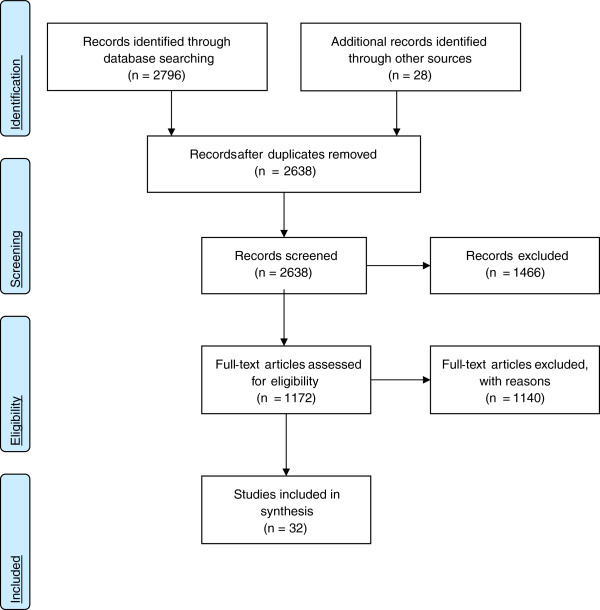
BACKGROUND: Knowledge translation (KT) aims to close the research-practice gap in order to realize and maximize the benefits of research within the practice setting. Previous studies have investigated KT strategies in nursing and medicine; however, the present study is the first systematic review of the effectiveness of a variety of KT interventions in five allied health disciplines: dietetics, occupational therapy, pharmacy, physiotherapy, and speech-language pathology. METHODS: A health research librarian developed and implemented search strategies in eight electronic databases (MEDLINE, CINAHL, ERIC, PASCAL, EMBASE, IPA, Scopus, CENTRAL) using language (English) and date restrictions (1985 to March 2010). Other relevant sources were manually searched. Two reviewers independently screened the titles and abstracts, reviewed full-text articles, performed data extraction, and performed quality assessment. Within each profession, evidence tables were created, grouping and analyzing data by research design, KT strategy, targeted behaviour, and primary outcome. The published descriptions of the KT interventions were compared to the Workgroup for Intervention Development and Evaluation Research (WIDER) Recommendations to Improve the Reporting of the Content of Behaviour Change Interventions. RESULTS: A total of 2,638 articles were located and the titles and abstracts were screened. Of those, 1,172 full-text articles were reviewed and subsequently 32 studies were included in the systematic review. A variety of single (n = 15) and multiple (n = 17) KT interventions were identified, with educational meetings being the predominant KT strategy (n = 11). The majority of primary outcomes were identified as professional/process outcomes (n = 25); however, patient outcomes (n = 4), economic outcomes (n = 2), and multiple primary outcomes (n = 1) were also represented. Generally, the studies were of low methodological quality. Outcome reporting bias was common and precluded clear determination of intervention effectiveness. In the majority of studies, the interventions demonstrated mixed effects on primary outcomes, and only four studies demonstrated statistically significant, positive effects on primary outcomes. None of the studies satisfied the four WIDER Recommendations. CONCLUSIONS: Across five allied health professions, equivocal results, low methodological quality, and outcome reporting bias limited our ability to recommend one KT strategy over another. Further research employing the WIDER Recommendations is needed to inform the development and implementation of effective KT interventions in allied health.
Overview
CoChat Summary
TL;DR
This systematic review identified 32 studies of knowledge translation strategies in five allied health professions, with educational meetings the predominant strategy and mostly mixed effects on outcomes. Equivocal results, low methodological quality, and outcome reporting bias prevented recommending one KT strategy over another.
Key findings
- From 2,638 located articles, 1,172 full texts were reviewed and 32 studies were included (29 quantitative, 3 qualitative). Fifteen studies used a single KT intervention and 17 used multiple interventions; educational meetings were the predominant single strategy (n = 11).
- Primary outcomes were professional/process (n = 25), patient (n = 4), economic (n = 2), and multiple primary outcomes (n = 1). Among quantitative studies, 16 showed mixed effects, 8 showed consistent effects, and 5 were unclear or not done; only 4 studies demonstrated statistically significant positive effects on primary outcomes.
- Methodological quality was low: of 29 quantitative studies, 6 were rated moderate and 23 weak, with none rated strong. The four studies with statistically significant positive primary outcomes all received a weak quality rating.
- None of the 32 studies satisfied all four WIDER Recommendations for intervention reporting; only 5 provided access to intervention manuals/protocols, and 4 clarified assumed change processes and design principles.
Methods
- Modified systematic review with searches in eight electronic databases (MEDLINE, CINAHL, ERIC, PASCAL, EMBASE, IPA, Scopus, CENTRAL), restricted to English-language studies from 1985 to March 2010, plus manual searches of dissertations, reference lists, key journals, and conference proceedings.
- Two reviewers independently screened titles/abstracts, reviewed full texts, extracted data, and assessed quality; inclusion was not restricted by research design, and studies were grouped by profession, design, KT strategy, targeted behaviour, and outcome using the EPOC classification scheme.
- Narrative synthesis was conducted by profession and by KT intervention type; planned meta-analysis could not be performed because of methodological and clinical heterogeneity. Published intervention descriptions were compared with the WIDER Recommendations.
Limitations
- Paper-stated: the heterogeneity of the 32 included studies precluded meta-analysis, and much of the included literature was of moderate or weak quality; the authors note that the review’s methodological inclusivity was both a strength and a weakness.
- Paper-stated: outcome reporting bias was common, intervention reporting was often insufficient for replication, and no study met all four WIDER criteria, limiting clear determination of intervention effectiveness.
- Evident from the text: the review was restricted to English-language studies from 1985 to March 2010, and no quantitative study received a strong methodological quality rating, so the findings should be interpreted cautiously.
Model-written summary. Check it against the paper before relying on it.
Integrity signals
Registry
Cites
Statistics
Figures
Verification
Claims the paper makes
6 Valid · 0 Not valid · 71 Not checked · 92 Own results and interpretations
The cited sources support only part of this claim — read each source’s verdict below.
In the paper
“Overall, the findings highlighted that there was limited evidence for the effectiveness of the KT strategies”
§ Systematic review of knowledge translation strategies in the allied health professions > Background
What the sources say
- Partly supportedcites [20] Menon A Korner-Bitensky N Kastner M McKibbon KA Straus S Strategies for rehabilitation professionals to move evidence based knowledge into practice: a systematic review J Rehabil Med 2009 41 1024 1032 10.2340/16501977-0451 19893996 sourceExperimental — accuracy not yet measured
The Results (p. 6) describe limited evidence for single KT interventions in occupational therapy and for the ineffectiveness of a single intervention in physiotherapy. But the paper’s summary (p. 1) reports that active multi-component interventions improved physiotherapists’ knowledge and practice behaviors. Calling the evidence limited across both professions and KT strategies loses that distinction. (LLM, conf=0.86)
plain- Asserted: passes — The authors put it forward as true.
- Checkable: passes — It can be checked against evidence.
- Load-bearing: passes — The paper’s conclusions depend on it.
- Based: passes — The paper gives a reason why it holds.
- Partly supported
The cited sources support only part of this claim — read each source’s verdict below.
In the paper
“including multiple interventions (n = 7; 58%) [45,49,55-58,62,65]”
§ Systematic review of knowledge translation strategies in the allied health professions > Results > KT interventions by profession
What the sources say
- Not checked yetcites [45] Airaksinen M Ahonen R Enlund H The ‘questions to ask about your medicines’ campaign: an evaluation of pharmacists and the public’s response Med Care 1998 36 422 427 10.1097/00005650-199803000-00017 9520965 source
- Not checked yetcites [49] Benrimoj SL Gilbert A Quintrell N de Almeida Neto AC: Non-prescription medicines: a process for standards development and testing in community pharmacy Pharm World Sci 2007 29 386 394 10.1007/s11096-007-9086-2 17333499 source
- Not checked yetcites [55] Egen V Hasford J Prevention of neural tube defects: effects of an intervention aimed at implementing the offician recommendations Soz.- Präventivmed 2003 48 24 32 10.1007/s000380300003 12756886 source
- Not checked yetcites [56] Fjortoft N Schwartz AH Evaluation of a pharmacy continuing education program: long-term learning outcomes and changes in practice behaviors Am J Pharm Educ 2003 67 1 11 source
- Supportedcites [57] Fjortoft N The effectiveness of commitment to change statements on improving practice behaviours following continuing pharmacy education Am J Pharm Educ 2007 71 1 7 10.5688/aj710101 19503696 PMC2690921 source
The citation is offered as one of the pharmacy studies exemplifying the category 'included multiple interventions,' and our copy of Fjortoft (2007) is such a study: its design combined a continuing pharmacy education program (the Preceptor Leadership Development Institute) with a commitment-to-change statement exercise and follow-up reminder e-mails and a mailing. The DISCUSSION states outright that 'the process of data collection, which included reminder e-mails and a mailing, could have served not only as part of the data collection process, but also as a reminder of the learning... The intersection of these 2 strategies (reminders and CTS statements) may be the catalyst for change,' i.e. more than one intervention component. The METHODS/abstract likewise describe 33 participants completing a CTC after the CPE program and returning it 6 months later (Results: 70% of 56 changes fully implemented). The aggregate figures (n = 7; 58%) are the citing authors' own tally across their pooled studies and are not, and need not be, reported by this single source. (LLM, conf=0.80)
- Not checked yetcites [58] Gross DP Lowe A Evaluation of a knowledge translation initiative for physical therapists treating patients with work disability Disabil Rehabil 2009 31 871 879 10.1080/01443610802355965 19037773 source
- Not checked yetcites [62] Hoffmann W Herzog B Muhlig S Kayser H Fabian R Thomsen M Cramer M Fiβ T Gresselmeyer D Janhsen K Pharmaceutical care for migraine and headache patients: a community-based, randomized intervention Ann Pharmacother 2008 42 1804 1813 10.1345/aph.1K635 19001531 source
- Partly supportedcites [65] Martin BA Bruskiewitz RH Chewning BA Effect of a tobacco cessation continuing professional education program on pharmacists’ confidence, skills, and practice-change behaviors J Am Pharm Assoc 2010 50 9 16 10.1331/JAPhA.2010.09034 PMC2863290 20097634 sourceExperimental — accuracy not yet measured
Our copy confirms this is a pharmacy study (25 community pharmacists) whose tobacco-cessation CE program was delivered as two components — a CD-ROM home study followed by an 8-hour live workshop incorporating several active-learning strategies (Methods, 'administered as two components'; Abstract > Intervention). That supports classifying it as a pharmacy study with a multi-component training intervention. However, the paper describes a single integrated CE program (Rx for Change adapted for pharmacists) rather than multiple distinct interventions, and it never uses or reports a 'multiple interventions' categorisation; the tally (n = 7; 58%) is the citing review's own count across its reference set and is not stated here. (LLM, conf=0.68)
plainn = 7- Asserted: passes — The authors put it forward as true.
- Checkable: passes — It can be checked against evidence.
- Load-bearing: unclear — It is unclear whether the paper’s conclusions depend on it.
- Based: passes — The paper gives a reason why it holds.
The sources with a verdict support this claim; the rest weren’t checked yet, have no full text we could read, or their verdicts aren’t rated yet.
In the paper
“two disciplines contained the four quantitative studies that consistently demonstrated consistent, statistically significant, positive effects on primary outcome measures: pharmacy (n = 2) [50,65] and physiotherapy (n = 2) [47,52].”
§ Systematic review of knowledge translation strategies in the allied health professions > Results > Intervention effects by profession
What the sources say
- Not checked yetcites [50] Bracchi RCG Houghton J Woods FJ Thomas S Smail SA Routledge PA A distance-learning programme in pharmacovigilance linked to educational credits is associated with improved reporting of suspected adverse drug reactions via the UK yellow card scheme Br J Clin Pharmacol 2005 60 221 223 10.1111/j.1365-2125.2005.02419.x 16042677 PMC1884925 source
- Supportedcites [65] Martin BA Bruskiewitz RH Chewning BA Effect of a tobacco cessation continuing professional education program on pharmacists’ confidence, skills, and practice-change behaviors J Am Pharm Assoc 2010 50 9 16 10.1331/JAPhA.2010.09034 PMC2863290 20097634 source
The Results sections on self-efficacy and current skills report statistically significant improvements after the combined training program. This paper therefore supports its identification as a pharmacy study with positive effects on its measured outcomes; the citation is not being used to establish the results of the other three studies. (LLM, conf=0.89)
- Supportedcites [47] Bekkering GE Hendriks HJM van Tulder MW Knol DL Hoeijenbos M Oostendorp RAB Bouter LM Effect on the process of care of an active strategy to implement clinical guidelines on physiotherapy for low back pain: a cluster randomized controlled trial Qual Saf Health Care 2005 14 107 112 10.1136/qshc.2003.009357 15805455 PMC1743983 source
The paper identifies itself as a physiotherapy cluster randomised trial (title and main outcome measures, p. 2). Its Effect of the intervention section (p. 4) reports improved adherence to all four guideline recommendations, with an odds ratio of 2.05 and a 95% confidence interval of 1.15–3.65. This supports citing it as one of the physiotherapy studies with a statistically significant positive primary outcome; the count of two physiotherapy studies is supported jointly by the two citations, not by this paper alone. (LLM, conf=0.91)
- Not checked yetcites [52] Brown CJ Gottschalk M Van Ness PH Fortinsky RH Tinetti ME Changes in physical therapy providers’ use of fall prevention strategies following a multicomponent behavioral change intervention Phys Ther 2005 85 5 394 403 15842188 source
boostedn = 2- Asserted: passes — The authors put it forward as true.
- Checkable: passes — It can be checked against evidence.
- Load-bearing: unclear — It is unclear whether the paper’s conclusions depend on it.
- Based: passes — The paper gives a reason why it holds.
The cited sources support only part of this claim — read each source’s verdict below.
In the paper
“23 studies received a weak rating [45-47,49-53,56-61,63-67,69-72].”
§ Systematic review of knowledge translation strategies in the allied health professions > Results > Methodological quality
What the sources say
- Not checked yetcites [45] Airaksinen M Ahonen R Enlund H The ‘questions to ask about your medicines’ campaign: an evaluation of pharmacists and the public’s response Med Care 1998 36 422 427 10.1097/00005650-199803000-00017 9520965 source
- Not checked yetcites [46] Banz MF Vineyard Most P, Banz WJ: A workshop designed to educate dietetics professionals about the cardiovascular benefits of soyfoods J Nutr Educ Behav 2004 36 103 104 10.1016/S1499-4046(06)60142-5 15068761 source
- Partly supportedcites [47] Bekkering GE Hendriks HJM van Tulder MW Knol DL Hoeijenbos M Oostendorp RAB Bouter LM Effect on the process of care of an active strategy to implement clinical guidelines on physiotherapy for low back pain: a cluster randomized controlled trial Qual Saf Health Care 2005 14 107 112 10.1136/qshc.2003.009357 15805455 PMC1743983 sourceExperimental — accuracy not yet measured
The Analysis of data (p. 3) and Effect of the intervention (p. 4) show that this is a quantitative study. The paper does not report a weak methodological quality rating or assess a group of 23 studies; those parts of the citing sentence cannot be verified from this source. (LLM, conf=0.82)
- Not checked yetcites [49] Benrimoj SL Gilbert A Quintrell N de Almeida Neto AC: Non-prescription medicines: a process for standards development and testing in community pharmacy Pharm World Sci 2007 29 386 394 10.1007/s11096-007-9086-2 17333499 source
- Not checked yetcites [50] Bracchi RCG Houghton J Woods FJ Thomas S Smail SA Routledge PA A distance-learning programme in pharmacovigilance linked to educational credits is associated with improved reporting of suspected adverse drug reactions via the UK yellow card scheme Br J Clin Pharmacol 2005 60 221 223 10.1111/j.1365-2125.2005.02419.x 16042677 PMC1884925 source
- Not checked yetcites [51] Brooks VG Penick Brock T, Ahn J: Do training programs work? an assessment of pharmacists activities in the field of chemical dependency J Drug Educ 2001 31 153 169 10.2190/FMDX-Y55C-12NR-QE5W 11487992 source
- Not checked yetcites [52] Brown CJ Gottschalk M Van Ness PH Fortinsky RH Tinetti ME Changes in physical therapy providers’ use of fall prevention strategies following a multicomponent behavioral change intervention Phys Ther 2005 85 5 394 403 15842188 source
- Not checked yetcites [53] Brug J Spikmans F Aartsen C Breedveld B Bes R Fereira I Training dietitians in basic motivational interviewing skills results in changes in their counseling style and lower saturated fat intakes in their patients J Nutr Educ Behav 2007 39 8 12 10.1016/j.jneb.2006.08.010 17276321 source
- Not checked yetcites [56] Fjortoft N Schwartz AH Evaluation of a pharmacy continuing education program: long-term learning outcomes and changes in practice behaviors Am J Pharm Educ 2003 67 1 11 source
- Supportedcites [57] Fjortoft N The effectiveness of commitment to change statements on improving practice behaviours following continuing pharmacy education Am J Pharm Educ 2007 71 1 7 10.5688/aj710101 19503696 PMC2690921 source
The Methods section says the study used descriptive statistics (frequencies), confirming that this citation identifies a quantitative study. The count of 23 and the weak methodological quality rating are the citing authors’ assessment of the group of studies, not findings attributed to Fjortoft’s paper. (LLM, conf=0.84)
plain- Asserted: passes — The authors put it forward as true.
- Checkable: passes — It can be checked against evidence.
- Load-bearing: unclear — It is unclear whether the paper’s conclusions depend on it.
- Based: passes — The paper gives a reason why it holds.
In the paper
“Thirty-two studies met our inclusion criteria (Figure 1) [45-76].”
§ Systematic review of knowledge translation strategies in the allied health professions > Results
What the sources say
- Not checked yetcites [45-76]
plain- Asserted: passes — The authors put it forward as true.
- Checkable: passes — It can be checked against evidence.
- Load-bearing: unclear — It is unclear whether the paper’s conclusions depend on it.
- Based: passes — The paper gives a reason why it holds.
109 more claims
Create a free account to see all 169 claims and to verify the 177 references still open.
- Probably not a substantial claim. 28
- It may state two separate claims as one. 32
- The quote only partly states this claim. 2
Claims other papers make about this one
Each is checked against this paper’s own text: does it say what the citing paper says it does?
The source backs part of the claim, not all of it — or backs it for a different population, condition or comparison.
In the citing paper
“A number of literature reviews of implementation frameworks have also been conducted, concentrating on particular implementation concepts, such as a particular stage, or specifically on either the factors, strategies or evaluations, rather than addressing all the concepts that could affect an innovation’s implementation [13,17,19-26].”
From A systematic review of implementation frameworks of innovations in healthcare and resulting generic implementation framework (2015) · cites this paper as [21]
Experimental — accuracy not yet measured
Self-check
Percentages, sums and reported differences re-computed from the paper’s own numbers.
Each contradiction between two passages listed here was confirmed by an independent check.
Rated major: it would touch a result — a value a result rests on, reported and recomputed p-values on opposite sides of the significance level, two passages that conflict with no sign which is right, or a cited work retracted before this paper was published.
In the paper
§ Systematic review of knowledge translation strategies in the allied health professions > Results > Intervention effects of randomized controlled trials
“Of the four studies demonstrating consistent effects on the primary outcomes, three studies demonstrated non-significant effects [47,71,72] and the remaining study demonstrated statistically significant, positive effects on the primary outcome [48].”
§ Systematic review of knowledge translation strategies in the allied health professions > Results > Studies with consistent effects
“Eight studies demonstrated a consistent effects on primary outcomes; however, four studies demonstrated effects that were not statistically significant [48,64,71,72]. The remaining four studies demonstrated a statistically significant, positive effects on primary outcomes [47,50,52,65].”
Rated minor: it would not touch a result — a value no result rests on, a p-value that stays on the same side of the significance level, or a conflict that is clerical, resolved elsewhere in the paper, or outside its own findings.
In the paper
§ Systematic review of knowledge translation strategies in the allied health professions > Methods > Intervention reporting
“Developed in 2008, the WIDER Recommendations comprise four categories”
§ Systematic review of knowledge translation strategies in the allied health professions > Results > Published intervention reporting
“the WIDER Recommendations to Improve Reporting of the Content of Behaviour Change Interventions[39], which were developed in 2009.”
Rated minor: it would not touch a result — a value no result rests on, a p-value that stays on the same side of the significance level, or a conflict that is clerical, resolved elsewhere in the paper, or outside its own findings.
In the paper
§ Systematic review of knowledge translation strategies in the allied health professions > Results > Outcomes by profession
“professional/process (n = 8) e.g., 48,52,58,64,70,73-76]”
§ Systematic review of knowledge translation strategies in the allied health professions > Results > Interventions
“Bekkering, GE, van Tulder MW, et al. [48] (2005) The Netherlands | Randomized controlled trial (113 Physiotherapists) | Multiple | Professional- educational materials | General management of a problem (clinical guidelines for low back pain) | Patient | C (non-significant) |”
Rated minor: it would not touch a result — a value no result rests on, a p-value that stays on the same side of the significance level, or a conflict that is clerical, resolved elsewhere in the paper, or outside its own findings.
In the paper
§ Systematic review of knowledge translation strategies in the allied health professions > Results > Outcomes by profession
“patient (n = 2) [47,72]”
§ Systematic review of knowledge translation strategies in the allied health professions > Results > Interventions
“Bekkering, GE, Hendricks, HJM, et al. [47] (2005) The Netherlands | Randomized controlled trial (113 Physiotherapists) | Multiple | Professional- educational materials | General management of a problem (clinical guidelines for low back pain) | Professional/process | C (significant positive effect) |”
Rated minor: it would not touch a result — a value no result rests on, a p-value that stays on the same side of the significance level, or a conflict that is clerical, resolved elsewhere in the paper, or outside its own findings.
In the paper
§ Systematic review of knowledge translation strategies in the allied health professions > Results > KT interventions by profession
“Pharmacy studies employed the widest range of interventions, including multiple interventions (n = 7; 58%) [45,49,55-58,62,65]”
§ Systematic review of knowledge translation strategies in the allied health professions > Results > Interventions
“Gross, DP, et al. [58] (2009) Canada | Cross-sectional study (241 Physiotherapists) | Multiple |”
3 more findings
Create a free account to see every finding of this check.
Citations
Cites
Preferred Reporting Items for Systematic Reviews and Meta-Analyses: the PRISMA statement
Moher, D., Liberati, A., Tetzlaff, J., Altman, D. G., & for the PRISMA Group (2009) · BMJ · doi:10.1136/bmj.b2535 · Cited by 83,823
Preferred Reporting Items for Systematic Reviews and Meta-Analyses: The PRISMA Statement
Moher, D., Liberati, A., Tetzlaff, J., Altman, D. G., & The PRISMA Group (2009) · PLoS Medicine · doi:10.1371/journal.pmed.1000097 · Cited by 64,042
Preferred reporting items for systematic reviews and meta-analyses: The PRISMA statement
Moher, D., Liberati, A., Tetzlaff, J., Altman, D. G., & the PRISMA Group* (2009) · Annals of Internal Medicine · doi:10.7326/0003-4819-151-4-200908180-00135 · Cited by 37,554
Wang, G., Ma, R., Qiao, G., Wada, K., Aizawa, Y., & Satoh, T. (2015) · Integrative Medicine International · doi:10.1159/000368408 · Cited by 18,657
Michie, S., van Stralen, M. M., & West, R. (2011) · Implementation Science · doi:10.1186/1748-5908-6-42 · Cited by 13,697 · cited 1×
“Theory-driven interventions use established theory to select and develop the KT interventions through articulating the desired behaviour change, as well as the factors and mechanisms that may shape this change, such as autonomy and scope of practice (which may vary widely across health disciplines, and potentially acr…”
Practical Statistics for Medical Research.
Walter, S. D., & Altman, D. G. (1992) · Biometrics · doi:10.2307/2532320 · Cited by 11,668 · cited 1×
“526 [43], which indicates moderate inter-rater agreement [44].”
Practical Statistics for Medical Research
Altman, D. G. (1990) · doi:10.1201/9780429258589 · Cited by 10,668
The cochrane database of systematic reviews
Geddes, J. (1996) · Journal of Psychosomatic Research · doi:10.1016/s0022-3999(96)90063-x · Cited by 5,989
Audit and feedback: effects on professional practice and healthcare outcomes
Ivers, N., Jamtvedt, G., Flottorp, S., Young, J. M., Odgaard-Jensen, J., French, S. D., O'Brien, M. A., Johansen, M., Grimshaw, J., & Oxman, A. D. (2012) · Cochrane Database of Systematic Reviews · doi:10.1002/14651858.cd000259.pub3 · Cited by 5,485
Practical Statistics for Medical Research.
Bartko, J. J., & Altman, D. G. (1992) · Journal of the American Statistical Association · doi:10.2307/2290246 · Cited by 4,797
Research works printed but not linked: 10
- Dault M Lomas J Barer M Listening for directions II: National consultation on health services and policy issues for 2004–2007 2004 CIHR: CHSRFand Institute of Health Services and Policy Research
- World Health Organization Bridging the ‘know-do’ gap 2006 Geneva: Meeting on knowledge translation in global health
- Canadian Institutes of Health Research (CIHR) Innovation in action 2004 Ottawa: The CIHR Knowledge Translation Strategy 2004–2009
- Barrett J Curran VR Glynn L Godwin M CHSRF synthesis 2007 Ottawa: Interprofessional collaboration and quality primary healthcare
- Health Professions Regulatory Advisory Council An interim report to the Minister of Health and Long-Term Care on mechanisms to facilitate and support interprofessional collaboration among health colleagues and regulated health professionals 2008 Ottawa
- Davies P Walker A Grimshaw J Theories of behavior change in studies of guideline implementation Proc British Psychological Society 2003 11 120
- Eccles M Grimshaw J Walker A Johnston M Pitts N Changing the behavior of healthcare professionals: the use of theory in promoting the uptake of research findings J Clin Epi 2005 58 2 107 112 10.1016/j.jclinepi.2004.09.002 15680740 · DOI · Paper page
- Morrison A Moulton K Clark M Polisena J Fiander M Mierzwinski-Urban M Mensinkai S Clifford T Hutton B English-language restriction when conducting systematic review-based meta-analyses 2009 Canadian Agency for Drugs and Technologies in Health Ottawa: Systematic review of published studies
- Cochrane Effective Practice and Organisation of Care Review Group Data collection checklist [ http://epoc.cochrane.org/sites/epoc.cochrane.org/files/uploads/datacollectionchecklist.pdf]
- Hutchinson AM Mallidou AA Toth F Cummings GG Schalm C Estabrooks CA Review and synthesis of literature examining characteristics of organizational context that influence knowledge translation in healthcare: Technical Report 2010 Edmonton: University of Alberta, Faculty of Nursing
Cited by
Items 201–300 of 332
Chen, Y., Fan, J., Guo, S., Hwang, S., & Yang, T. (2017) · International Journal of COPD · doi:10.2147/copd.s142124 · Cited by 6
“29 Currently, PR is not incorporated as a major subject in school curricula for RTs in Taiwan.”
The Professional Culture of Community Pharmacy and the Provision of MTM Services
Rosenthal, M., & Holmes, E. R. (2018) · Pharmacy · doi:10.3390/pharmacy6020025 · Cited by 8
French, H., Grimaldi, A. M., Woodley, S., O’Connor, L., & Fearon, A. (2019) · Musculoskeletal Science and Practice · doi:10.1016/j.msksp.2019.06.002 · Cited by 6
Knowledge translation and occupational therapy: A survey of Canadian university programs
Cramm, H. A., Short, B., & Donnelly, C. A. (2016) · The Open Journal of Occupational Therapy · doi:10.15453/2168-6408.1196 · Cited by 6
“In addition, the respondents iterated the importance of educational materials and meetings, which is consistent with systematic reviews on KT strategies from allied health and rehabilitation research domains (Jones et al., 2014; Scott et al., 2012).”
BackgroundResultInfluentialSauro, K. M., Brundin‐Mather, R., Leigh, J. P., Niven, D. J., Kushner, B., Soo, A., Cook, D. J., Straus, S. E., Doig, C. J., Bagshaw, S. M., et al. (2018) · Journal of Critical Care · doi:10.1016/j.jcrc.2018.11.023 · Cited by 6
Caractéristiques des revues systématiques présentant les interventions de pharmaciens
Tanguay, C., Guérin, A., & Bussières, J. (2014) · Annales Pharmaceutiques Françaises · doi:10.1016/j.pharma.2014.05.001 · Cited by 6
Access to health knowledge for health equality: a multi-phase review focused on disability-health
Hayvon, J. C. (2024) · International Journal for Equity in Health · doi:10.1186/s12939-023-02080-5 · Cited by 6
“Scott et al. considered disability-KT, but also included non-disability KT in their study as the authors combined KT in occupational therapy, physiotherapy, speech-language pathology, but also in dietetics and pharmacy in the same systematic review [29].”
BackgroundHinrichs‐Kinney, L., Beisheim, E. H., Butera, K. A., Braaten, M., Holtrop, J. S., & Stevens‐Lapsley, J. E. (2025) · PM&R · doi:10.1002/pmrj.13389 · Cited by 8
Improving the Quality of Family Planning Services: The Role of New Federal Recommendations
Gavin, L. E., & Moskosky, S. B. (2014) · Journal of Women s Health · doi:10.1089/jwh.2014.4865 · Cited by 5
“29 Further, efforts to support adoption of clinical guidelines by providers should be an iterative and phased process that actively engages a variety of stakeholders over time.”
Chepeha, J. C., Silveira, A., Sheps, D. M., & Beaupré, L. A. (2019) · Physical Therapy · doi:10.1093/ptj/pzz161 · Cited by 5
A strategic initiative to facilitate knowledge translation research in rehabilitation
Montpetit-Tourangeau, K., Kairy, D., Ahmed, S., Anaby, D., Bussières, A., Lamontagne, M., Rochette, A., Shikako‐Thomas, K., & Thomas, A. (2020) · BMC Health Services Research · doi:10.1186/s12913-020-05772-8 · Cited by 6
Stander, J., Grimmer, K. A., & Brink, Y. (2020) · Physiotherapy Research International · doi:10.1002/pri.1883 · Cited by 9
Miles, A., Wong, C., & Jackson, B. N. (2021) · Journal of Intellectual & Developmental Disability · doi:10.3109/13668250.2021.1877645 · Cited by 5
Lemire, A. M., Miles, A., & McCann, C. (2016) · Speech Language and Hearing · doi:10.1080/2050571x.2015.1101893 · Cited by 5
Haynes, E., Hohnen, H., Katzenellenbogen, J. M., Scalley, B., & Thompson, S. (2016) · SAGE Open Medicine · doi:10.1177/2050312116661114 · Cited by 6
Shun, P. L. W., & Bottari, C. L. (2018) · Journal of Continuing Education in the Health Professions · doi:10.1097/ceh.0000000000000194 · Cited by 8
Wielaert, S., Berns, P. E. G., van de Sandt-Koenderman, M. W. M. E., Dammers, N., & Sage, K. (2016) · International Journal of Language & Communication Disorders · doi:10.1111/1460-6984.12248 · Cited by 4
Stroke rehabilitation research translation in Australia: a survey of clinical trialists
Jolliffe, L. J., Hoffmann, T., Laver, K., McCluskey, A., & Lannin, N. A. (2020) · Disability and Rehabilitation · doi:10.1080/09638288.2020.1807619 · Cited by 5
Ahmadi, A., Yazdizadeh, B., Doshmangir, L., Majdzadeh, R., & Asghari, S. (2022) · Campbell Systematic Reviews · doi:10.1002/cl2.1236 · Cited by 4
Assessing the knowledge to practice gap: The asthma practices of community pharmacists
Guirguis, L. M. (2017) · Canadian Pharmacists Journal / Revue des Pharmaciens du Canada · doi:10.1177/1715163517742162 · Cited by 4
Determinants of COVID-19 Vaccine Uptake Among Health Workers and General Public in Tanzania
Mashoto, K. O., Ministry of Health, D., Nyamhagatta, M. A., Chacha, M. M., Kinyunyi, P., Kasanzu, M. R., Habib, I., & Tinuga, F. (2024) · East African Health Research Journal · doi:10.24248/eahrj.v8i1.760 · Cited by 7
Colquhoun, H. L., Lowe, D. B., Helis, E., Belanger, D., Ens, B., Hill, S., Mayhew, A., Taylor, M. J., & Grimshaw, J. (2016) · Health Research Policy and Systems · doi:10.1186/s12961-016-0140-1 · Cited by 3
Robitaille, E., MacRae, M., Rowe, P., & Aiken, A. B. (2021) · Journal of Military Veteran and Family Health · doi:10.3138/jmvfh-2020-0029 · Cited by 3
Knowledge translation in Anglo-American paramedicine: a scoping review
Hanson, A., & Burton, C. R. (2025) · BMJ Open · doi:10.1136/bmjopen-2024-087836 · Cited by 3
“24 As no MeSH heading currently exists for paramedic , the sensitive search string for paramedic developed by Olaussen et al 38 Reference lists of all included sources were also scanned for additional articles.”
Abery, P., Kuys, S. S., Lynch, M., & Choy, N. L. (2018) · Journal of Evaluation in Clinical Practice · doi:10.1111/jep.12951 · Cited by 3
Knowledge Mobilization in the Canadian Naturopathic Community
Aucoin, M., Newton, G. S., & Cooley, K. (2022) · CAND Journal · doi:10.54434/candj.103 · Cited by 4
Evaluation as a Mechanism for Integrated Knowledge Translation
Donnelly, C. A. (2013) · QSpace (Queen's University Library) · Cited by 6
Brown, T., & Robinson, L. (2019) · Australian Occupational Therapy Journal · doi:10.1111/1440-1630.12576 · Cited by 3
Closing the Gap: From Research to Practice in Mental Health Interventions
Lipskaya‐Velikovsky, L., & Krupa, T. M. (2023) · International Journal of Environmental Research and Public Health · doi:10.3390/ijerph20032141 · Cited by 4
Hämäläinen, R.-M. (2017) · Global Journal of Health Science · doi:10.5539/gjhs.v9n9p126 · Cited by 2
Chao, C., Cannizzaro, N. T., Hahn, E. E., Tewari, D. S., Ngo‐Metzger, Q., Hsu, C., Shen, E., Wride, P., Hodeib, M., Gould, M. K., et al. (2022) · Contemporary Clinical Trials · doi:10.1016/j.cct.2022.106994 · Cited by 2
Johnston, T., Beaumont-Boileau, R., Acker, J. J., & Batt, A. M. (2023) · Paramedicine · doi:10.1177/27536386231174097 · Cited by 3
“Education and training are primary mechanisms to facilitate knowledge translation for allied health professionals and a proven strategy to introduce new initiatives.(12,15,35) The PCPs also rated the education they received highly.”
BackgroundChicoine, G., Côté, J., Pépin, J., Pluye, P., & Jutras‐Aswad, D. (2023) · International Journal of Nursing Studies Advances · doi:10.1016/j.ijnsa.2023.100153 · Cited by 3
“Continuing professional education is consistently described as a significant implementation strategy for healthcare professionals to transfer guidelines successfully into clinical practice (Babenko et al., 2017; Scott et al., 2012; Wuchner, 2014).”
BackgroundHemmeda, L., Anwer, L., Abbas, M., Elfaki, L. A., Omer, M., Khalid, M., Hassan, M., Mostafa, M., Hamza, L., Mahmoud, M., et al. (2024) · BMC Women s Health · doi:10.1186/s12905-023-02843-w · Cited by 2
“Some studies emphasize the male role in decision-making [22], suggesting internalized oppression as the concept behind this unbroken chain of women abusing women.”
BackgroundImplementation of activities of daily living retraining for individuals in post-traumatic amnesia
Trevena-Peters, J., Ponsford, J. L., & McKay, A. (2024) · Brain Impairment · doi:10.1071/ib23093 · Cited by 3
Tierney‐Hendricks, C., Schliep, M. E., Sun, M., Gochyyev, P., & Carter, C. (2024) · PM&R · doi:10.1002/pmrj.13250 · Cited by 3
LaBerge, L., Sangster, B., & Brown, C. A. (2015) · The Open Journal of Occupational Therapy · doi:10.15453/2168-6408.1161 · Cited by 2
“Little evidence exists regarding the use, feasibility, and effectiveness of KT strategies for occupational therapists (Scott et al., 2012).”
Bernhardsson, S. (2015) · Linköping University medical dissertations · doi:10.3384/diss.diva-122558 · Cited by 2
Evidence Translation in a Youth Mental Health Service: Clinician Perspectives
Bailey, A. P., Simmons, M. B., Silva, S. D., Hetrick, S. E., & Parker, A. G. (2016) · SAGE Open · doi:10.1177/2158244016631388 · Cited by 4
“Although there is the expectation that the provision of new information increases knowledge and promotes behavior change, simple passive education may have limited effects on behavior (Grol & Grimshaw, 2003; Scott et al., 2012).”
InfluentialMącznik, A. K., Schneiders, A. G., Athens, J., & Sullivan, S. J. (2017) · Physical Therapy in Sport · doi:10.1016/j.ptsp.2017.10.005 · Cited by 4
Juckett, L., DeMott, L., & Oliver, H. V. (2021) · Journal of Hand Therapy · doi:10.1016/j.jht.2021.04.004 · Cited by 2
Yost, J., Ganann, R., Thompson, D., Aloweni, F. B. A. B., Newman, K., Hazzan, A. A., McKibbon, A., Dobbins, M., & Ciliska, D. K. (2021) · doi:10.32920/14636286 · Cited by 2
Self-citationOccupational intervention in mental health hospitals: Study of contextual impact
Volovic-Shushan, S., Krupa, T. M., Bloch, Y., & Lipskaya‐Velikovsky, L. (2022) · Scandinavian Journal of Occupational Therapy · doi:10.1080/11038128.2022.2076734 · Cited by 4
“Moreover, understanding of the contextual impact has a potential to contribute to closure of the research-practice gap and maximise research benefits for practice, while supporting clinical decision making [10 – 12].”
Lo, L., Hébert, D., & Colquhoun, H. L. (2019) · Disability and Rehabilitation Assistive Technology · doi:10.1080/17483107.2019.1672814 · Cited by 4
Déry, J., Ruiz, A. B., Routhier, F., Gagnon, M., Côté, A., Aït-Kadi, D., Bélanger, V., & Lamontagne, M. (2021) · International Journal of Evidence-Based Healthcare · doi:10.1097/xeb.0000000000000281 · Cited by 4
A Hermeneutic Enquiry into how MSK Podiatrists Interpret and Use Evidence in Practice
Bridgen, A. D. (2017) · University of Huddersfield Repository (University of Huddersfield) · Cited by 2
Déry, J., Ruiz, A. B., Routhier, F., Bélanger, V., Côté, A., Aït-Kadi, D., Gagnon, M., & Lamontagne, M. (2020) · Research Square · doi:10.21203/rs.3.rs-32705/v1 · Cited by 2
Lewis, J., Stewart, K., Paget, S., Wimalasundera, N., Wynter, M., Zadro, J. R., Bonner, C., & McKay, M. J. (2025) · Disability and Rehabilitation · doi:10.1080/09638288.2025.2463637 · Cited by 2
“Knowledge translation resources are most effective when co-designed, address the specific topic area and context, are tailored to the needs of the end-user, and are accessible and user-friendly [19,20].”
Hill, C. L., Namara, K. M., Alston, L. V., Miles, A., Choi, J., & Shee, A. W. (2025) · International Journal of Speech-Language Pathology · doi:10.1080/17549507.2025.2546001 · Cited by 1
“This suggests that education and training alone may not be sufficient to drive behaviour change among allied health professionals (Scott et al., 2012).”
Description du rôle et des retombées du pharmacien : analyse comparative interprofessionnelle
Guérin, A., Tanguay, C., Lebel, D., & Bussières, J. (2014) · Le Pharmacien Hospitalier et Clinicien · doi:10.1016/j.phclin.2014.06.003 · Cited by 1
Lo, M. F., & Ng, P. M. L. (2017) · Advances in medical diagnosis, treatment, and care (AMDTC) book series · doi:10.4018/978-1-5225-2633-9.ch009 · Cited by 1
Current and Future Challenges in Physiotherapy Education
Tomé, A. M. C., Santos, C. D., & Sequeira, M. (2022) · Advances in medical education, research, and ethics (AMERE) book series · doi:10.4018/978-1-7998-9578-7.ch014 · Cited by 1
Christensen, C., & Bellows, D. M. (2023) · Pediatric Physical Therapy · doi:10.1097/pep.0000000000001044 · Cited by 1
How Could Implementation Science Shape the Future of SLPs’ Professional Practice?
Roddam, H., & Skeat, J. (2021) · Journal of Clinical Practice in Speech-Language Pathology · doi:10.1080/22087168.2021.12370315 · Cited by 1
Chao, C., Cannizzaro, N. T., Hahn, E. E., Shen, E., Hsu, C., Ngo‐Metzger, Q., Gould, M. K., Munoz‐Plaza, C. E., Kanter, M. H., Wride, P., et al. (2025) · Implementation Science · doi:10.1186/s13012-025-01432-9 · Cited by 3
“To date, insufficient guidance exists regarding how to design and deploy practice sub-stitution strategy bundles to successfully de-implement older practices and replace them with newer practices [26, 27].”
Hartington, D., & Nørgaard, B. (2020) · Physiotherapy Theory and Practice · doi:10.1080/09593985.2020.1729908 · Cited by 1
Lo, M. F., & Ng, P. M. L. (2018) · IGI Global eBooks · doi:10.4018/978-1-5225-7122-3.ch015 · Cited by 2
Knowles, S. (2013) · Research Bank (Australian Catholic University) · doi:10.4226/66/5a97804e3babe · Cited by 1
Kyololo, O. M. (2016) · TSpace (University of Toronto) · Cited by 2
Commentary on “Left-Behind Women in the Context of International Migration: A Scoping Review”
Sánchez, H. F., Salami, B. O., & Salma, J. (2020) · Journal of Transcultural Nursing · doi:10.1177/1043659620967970 · Cited by 1
Dawood, A. (2020) · ResearchSpace (University of KwaZulu-Natal) · doi:10.29086/10413/22657 · Cited by 1
Les professionnels de la physiothérapie sur Facebook, j’aime?
Larrivée, A. C., Charbonneau, M., & Samson, É. (2014) · Papyrus : Institutional Repository (Université de Montréal) · Cited by 1
Söderback, I., & Magill, K. L. (2014) · Springer eBooks · doi:10.1007/978-3-319-08141-0_3
Laird, E., COATES, V. E., Ryan, A. A., McCarron, M. O., Lyttle, D., & Chaney, D. (2013) · Nursing Research and Practice · doi:10.1155/2013/715802
Rehabilitation Research for Older Adults
Suleman, S., Cleary, S., Brémault‐Phillips, S., Hopper, T. L., Jones, C. A., Paslawski, T., & Brown, C. A. (2014) · SAGE Open · doi:10.1177/2158244014560550
Self-citationHylmar, S. (2014) · TSpace (University of Toronto)
Groenewald, C. B., Beals‐Erickson, S. E., Ralston-Wilson, J., Rabbitts, J. A., & Palermo, T. M. (2016) · Journal of Pain · doi:10.1016/j.jpain.2016.01.465
Dilley, L. B. (2016) · Summit (Simon Fraser University)
Knowledge Transfer and Exchange in Work and Health Research
Eerd, D. V. (2016) · UWSpace (University of Waterloo)
PHYSICAL ACTIVITY PROMOTION IN MEXICAN HEALTHCARE SETTINGS: FROM KNOWLEDGE TO ACTION
Arredondo, G., & Galaviz, K. I. (2014) · Cited by 1
Génétique, acides gras oméga-3 et facteurs de risque des maladies cardiovasculaires
Bouchard‐Mercier, A. (2015) · Corpus Université Laval (Université Laval)
Merlo, G. (2017) · Queensland University of Technology · doi:10.5204/thesis.eprints.103657
Interventions visant l’application des connaissances en pratique pharmaceutique
Adé, A., Lebel, D., & Bussières, J. (2018) · The Canadian Journal of Hospital Pharmacy · doi:10.4212/cjhp.v71i3.2585
Meloncelli, N. J. L. (2020) · Queensland University of Technology · doi:10.5204/thesis.eprints.201744
Park, E., Jones, C. A., & Forhan, M. A. (2020) · Journal of Medical Internet Research · doi:10.2196/21129
Self-citationHow to contextualize training on guideline‐uptake for your setting
Stander, J., Grimmer, K. A., & Brink, Y. (2020) · Journal of Evaluation in Clinical Practice · doi:10.1111/jep.13476
Zaidi, U. (2021) · International Journal of Life Science and Pharma Research · doi:10.22376/ijpbs/lpr.2021.11.1.l9-15
Sorenson, J. (2021) · The Atrium (University of Guelph)
Enseñanza online en Fisioterapia ¿Es posible? Reflexiones en torno a la situación actual.
Touche, R. L. (2021) · NeuroRehabNews · doi:10.37382/nrn.octubre.2020.493
Rules for tools: Knowledge translation tools in health care: a case of consilience
Dreesens, D. H. H. (2020) · Research Publications (Maastricht University) · doi:10.26481/dis.20201104dd · Cited by 2
Yost, J., Ganann, R., Thompson, D., Aloweni, F. B. A. B., Newman, K., Hazzan, A. A., McKibbon, A., Dobbins, M., & Ciliska, D. K. (2021) · doi:10.32920/14636286.v1
Self-citationGlegg, S., Costello, C., Barnaby, S., Cassidy, C. E., Sibley, K. M., Russell, K. F., Kingsnorth, S., Pritchard, L., de Camargo, O. K., Andersen, J. C., et al. (2022) · Implementation Science Communications · doi:10.1186/s43058-022-00372-5 · Cited by 2
Chicoine, G., Côté, J., Pépin, J., Pluye, P., & Jutras‐Aswad, D. (2023) · Research Square · doi:10.21203/rs.3.rs-2504874/v1
O'BRIEN, A. (2023) · Cronfa (Swansea University) · doi:10.23889/suthesis.63004
Progress of Development in Generations of the National Hospital Accreditation Program in Iran
Aryankhesal, A., Sadeghi, N. S., Mazhari, S., Bagherzadeh, R., & Kalantari, H. (2023) · Iranian Red Crescent Medical Journal · doi:10.32592/ircmj.2023.25.1.1994
“Therefore, according to studies in other countries, it is crucial for stakeholders to participate in other international health system reforms (26-29).”
BackgroundBsoul, N., Liang, L., Cai, L., Mazmanyan, D., & Porter, D. E. (2024) · Research Square · doi:10.21203/rs.3.rs-4089075/v1
Spelman, A. H., Mantell, N., Song, S., Friary, P., & Jackson, B. N. (2021) · Journal of Clinical Practice in Speech-Language Pathology · doi:10.1080/22087168.2021.12370336 · Cited by 1
Determinants of knowledge transfer activities among university researchers: a systematic review
Houari, F. E., & Fakhreddine, M. O. I. (2024) · Journal of Science and Technology Policy Management · doi:10.1108/jstpm-03-2024-0092 · Cited by 4
Knowing the Context like the Back of Your Hand
Jeffery, H. (2024) · doi:10.1002/9781394322930.ch6
Implementation of a post-stroke upper limb outcome measure: A qualitative multiple case study
Choo, S., Yong, J., Rafi, S. A. B. M., Lum, E., & Thumboo, J. (2025) · Proceedings of Singapore Healthcare · doi:10.1177/20101058251318755
“34 The impact of multifaceted implementation strategies lies not in the aggregated or cumulative effect over single-component strategies.”
LAHDAB, L., & Rahmouni, A. F.-A. (2025) · International journal of medical and health research. · doi:10.61424/ijmhr.v3i2.281
Breault, C., Béliveau, M., Dionne, M., Bergeron, S., & Trudeau, N. (2025) · Developmental Neurorehabilitation · doi:10.1080/17518423.2025.2540789
“84,86 For example, in Chicago, USA, the implementation of a knowledge translation process for the Battery of Rehabilitation Assessments and Intervention was proved effective in a large rehabilitation organization to promote and increase the adoption of evidence-based practices.”
Giusti, M., Quirini, S., Peghetti, A., & Durante, S. (2025) · Frontiers in Public Health · doi:10.3389/fpubh.2025.1599845 · Cited by 1
Montpetit-Tourangeau, K., Kairy, D., Ahmed, S., Anaby, D., Bussières, A., Lamontagne, M., Rochette, A., Shikako‐Thomas, K., & Thomas, A. (2020) · Figshare · doi:10.6084/m9.figshare.13141556
Additional file 1 of Six practical recommendations for improved implementation outcomes reporting
Lengnick‐Hall, R., Gerke, D. R., Proctor, E. K., Bunger, A. C., Phillips, R. J., Martin, J. K., & Swanson, J. C. (2022) · Figshare · doi:10.6084/m9.figshare.19144714
Kafri, M., Levron, Y., & Atun‐Einy, O. (2023) · Figshare · doi:10.6084/m9.figshare.23118991
Lewis, C. C., Boyd, M. R., Walsh‐Bailey, C., Lyon, A. R., Beidas, R., Mittman, B., Aarons, G. A., Weiner, B. J., & Chambers, D. (2020) · Figshare · doi:10.6084/m9.figshare.12144159
Lewis, C. C., Boyd, M. R., Walsh‐Bailey, C., Lyon, A. R., Beidas, R., Mittman, B., Aarons, G. A., Weiner, B. J., & Chambers, D. (2020) · Figshare · doi:10.6084/m9.figshare.12144168
Metadata
- Authors
- Scott, S. D., Albrecht, L., O’Leary, K., Ball, G. D., Hartling, L., Hofmeyer, A., Jones, C. A., Klassen, T. P., Burns, K. K., Newton, A. S., Thompson, D., & Dryden, D. M.
- Affiliations
- University of Alberta (CA)
- University of South Australia (AU)
- Winnipeg Regional Health Authority (CA)
- NOSM University (CA)
- Corresponding author
- Scott, Shannon D
- ORCID
- Venue
- Implementation Science
- Published
- 2012-07-25
- Volume
- 7
- Issue
- 1
- Pages
- 70-70
- ISSN
- 1748-5908 (ISSN-L)
- PMC
- PMC3780719
- OpenAlex
- W2154204806
- Cited by
- 331
- References
- 101
- Citations by year
- 2026: 12 · 2025: 13 · 2024: 21 · 2023: 16 · 2022: 16 · 2021: 35 · 2020: 40 · 2019: 28 · 2018: 27 · 2017: 29 · 2016: 31 · 2015: 21 · 2014: 28 · 2013: 14
- FWCI
- 3.02
- Type
- journal article
- Language
- en
- Open access
- gold
- doi.org
- Licence
- Locations
- Implementation Science (publishedVersion, cc-by)
- Europe PMC (PubMed Central) (publishedVersion, cc-by)
- PubMed Central (publishedVersion, cc-by)
- PubMed (publishedVersion)
- UniSA Research Outputs Repository (University of South Australia) (submittedVersion, other-oa)
- Adelaide Research & Scholarship (AR&S) (University of Adelaide) (submittedVersion, cc-by)
- DOAJ (DOAJ: Directory of Open Access Journals) (submittedVersion)
- Mspace (University of Manitoba) (submittedVersion)
- Funders
- Children's Health Research Institute
- Child and Family Research Institute
- Women and Children's Health Research Institute
- Canadian Child Health Clinician Scientist Program
- University of Alberta
- Royal Society
- University of Westminster
- University of South Australia
- Fondation pour la Recherche Médicale
- University of Toronto
- Hospital for Sick Children
- Alberta Innovates
- Canadian Institutes of Health Research (102071_1)
- Topics
- Health Sciences › Health Professions › General Health Professions › Health Policy Implementation Science
- Health Sciences › Health Professions › General Health Professions › Health Sciences Research and Education
- Health Sciences › Medicine › Public Health, Environmental and Occupational Health › Clinical practice guidelines implementation
- Keywords
- knowledge translation, allied health professions, research-practice gap, behaviour change interventions, educational meetings, intervention effectiveness, selective reporting, dietetics, occupational therapy, pharmacy, physiotherapy, speech-language pathology
- MeSH terms
- Allied Health Personnel, Behavior, Humans, Pharmacists, Research Design, Outcome Assessment, Health Care, Translational Research, Biomedical
About these checks
Registry, retraction, Cites and statistics results are computed, not judged, with one exception: a printed reference that no index lists is read once by a model before it counts as a citation error. Claims are extracted by a model and kept only when their quote appears verbatim in the text; each cited source is then checked, with a model’s help, for whether it says what the claim relies on. Those verdicts can be wrong — read the claim’s quote and the cited source before relying on one.
The claim verdicts this report counts are experimental: their accuracy is not yet measured.
A language model drew the claims from the paper on 2026-10-04, under version 3 of the claim definition (model deepseek-v4.1-flash, prompt extract-v3).
A second model labelled each claim on 2026-10-04 (model jev-1.13-20260917, definition revision gold-guideline-v0.2).
Cited sources are checked with a language model’s help (gpt-6-sol and qwen3.8-omni-flash).
Statistics and arithmetic are recomputed, not judged.
Confidence bands are shown only for fields calibrated on our annotated test set. None is calibrated yet, so no band is shown.
What counts as a claim ›How we measure confidence ›How we check this ›
Are you an author, or do you see a problem with this page? Request a review
Data sources
Bibliographic data: Semantic Scholar, OpenAlex, Crossref.
Contains information from the Semantic Scholar Academic Graph Datasets, made available under the ODC Attribution License (ODC-BY 1.0).
Semantic Scholar’s data is described in: Kinney, R., et al. (2023). The Semantic Scholar Open Data Platform. arXiv:2301.10140.
