

Evaluation of a web-based intervention to reduce antibiotic prescribing for LRTI in six European countries: quantitative process analysis of the GRACE/INTRO randomised controlled trial
Open accessThe DOI matches its Crossref record; 46 of the 46 references it cites were found in a registry or an index.
Abstract
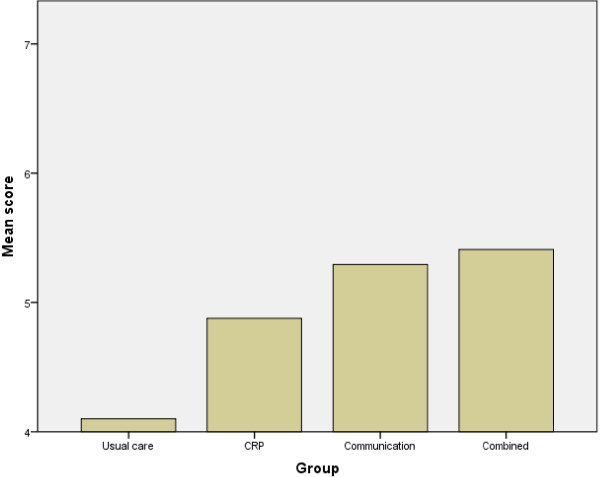
BACKGROUND: To reduce the spread of antibiotic resistance, there is a pressing need for worldwide implementation of effective interventions to promote more prudent prescribing of antibiotics for acute LRTI. This study is a process analysis of the GRACE/INTRO trial of a multifactorial intervention that reduced antibiotic prescribing for acute LRTI in six European countries. The aim was to understand how the interventions were implemented and to examine effects of the interventions on general practitioners' (GPs') and patients' attitudes. METHODS: GPs were cluster randomised to one of three intervention groups or a control group. The intervention groups received web-based training in either use of the C-reactive protein (CRP) test, communication skills and use of a patient booklet, or training in both. GP attitudes were measured before and after the intervention using constructs from the Theory of Planned Behaviour and a Website Satisfaction Questionnaire. Effects of the interventions on patients were assessed by a post-intervention questionnaire assessing patient enablement, satisfaction with the consultation, and beliefs about the risks and need for antibiotics. RESULTS: GPs in all countries and intervention groups had very positive perceptions of the intervention and the web-based training, and felt that taking part had helped them to reduce prescribing. All GPs perceived reducing prescribing as more important and less risky following the intervention, and GPs in the communication groups reported increased confidence to reduce prescribing. Patients in the communication groups who received the booklet reported the highest levels of enablement and satisfaction and had greater awareness that antibiotics could be unnecessary and harmful. CONCLUSIONS: Our findings suggest that the interventions should be broadly acceptable to both GPs and patients, as well as feasible to roll out more widely across Europe. There are also some indications that they could help to engender changes in GP and patient attitudes that will be helpful in the longer-term, such as increased awareness of the potential disadvantages of antibiotics and increased confidence to manage LRTI without them. Given the positive effects of the booklet on patient beliefs and attitudes, it seems logical to extend the use of the patient booklet to all patients.
Overview
The claims and statistics of this paper haven’t been checked yet.
Free: it reads the open-access text and checks the first 5 claims that cite a source we can check. Create a free account to check every claim.
Integrity signals
Registry
Cites
Statistics
Figures
Verification
Claims the paper makes
The claims and statistics of this paper haven’t been checked yet.
Free: it reads the open-access text and checks the first 5 claims that cite a source we can check. Create a free account to check every claim.
Claims other papers make about this one
Each is checked against this paper’s own text: does it say what the citing paper says it does?
The source backs part of the claim, not all of it — or backs it for a different population, condition or comparison.
In the citing paper
“interventions that have proven effective in trials involving tens of thousands of users.”
From The Person-Based Approach to Intervention Development: Application to Digital Health-Related Behavior Change Interventions (2015) · cites this paper as [20]
Experimental — accuracy not yet measured
Self-check
Percentages, sums and reported differences re-computed from the paper’s own numbers.
The self-check needs the paper’s full text.
Citations
Cites
The theory of planned behavior
Ajzen, I. (1991) · Organizational Behavior and Human Decision Processes · doi:10.1016/0749-5978(91)90020-t · Cited by 134,657
Efficacy of the Theory of Planned Behaviour: A meta‐analytic review
Armitage, C. J., & Conner, M. (2001) · British Journal of Social Psychology · doi:10.1348/014466601164939 · Cited by 9,970 · cited 1×
“Research using the Theory of Planned Behaviour indicates that intentions and behaviour are influenced principally by the perceived positive and negative consequences of the behaviour and confidence in the ability to carry out the behaviour [23,24].”
MethodOutpatient antibiotic use in Europe and association with resistance: a cross-national database study
Goossens, H., Ferech, M., Vander Stichele, R., & Elseviers, M. (2005) · The Lancet · doi:10.1016/s0140-6736(05)17907-0 · Cited by 3,359 · cited 2×
“There is good evidence that antibiotic resistance is higher in patients prescribed antibiotics [1], that in EC countries where fewer antibiotics are prescribed there are lower levels of antibiotic resistance [2], and that reducing prescribing rates can reduce antibiotic resistance levels [3].”
BackgroundThe Theory of Planned Behavior: A Review of its Applications to Health-Related Behaviors
Godin, G., & Kok, G. (1996) · American Journal of Health Promotion · doi:10.4278/0890-1171-11.2.87 · Cited by 3,185 · cited 1×
“Research using the Theory of Planned Behaviour indicates that intentions and behaviour are influenced principally by the perceived positive and negative consequences of the behaviour and confidence in the ability to carry out the behaviour [23,24].”
MethodCostelloe, C., Metcalfe, C., Lovering, A., Mant, D., & Hay, A. D. (2010) · BMJ · doi:10.1136/bmj.c2096 · Cited by 1,981 · cited 1×
“There is good evidence that antibiotic resistance is higher in patients prescribed antibiotics [1], that in EC countries where fewer antibiotics are prescribed there are lower levels of antibiotic resistance [2], and that reducing prescribing rates can reduce antibiotic resistance levels [3].”
BackgroundThe self-regulation of health and illness behaviour
Weinman, J. A., Heijmans, M., & Figueiras, M. J. (2003) · Routledge eBooks · Cited by 1,035
The common-sense model of self-regulation of health and illness.
Leventhal, H., & Brissette, I. F. (2012) · doi:10.4324/9780203553220-10 · Cited by 867
The Self-Regulation of Health and Illness Behaviour
(2012) · Routledge eBooks · doi:10.4324/9780203553220 · Cited by 775
Butler, C. C., Rollnick, S., Pill, R., Maggs-Rapport, F., & Stott, N. (1998) · BMJ · doi:10.1136/bmj.317.7159.637 · Cited by 752 · cited 4×
“Another common reason for prescribing is that the GP believes that the patient wants or expects antibiotics; this creates concern that failure to prescribe might leave the patient dissatisfied and damage the doctor-patient relationship, and that trying to persuade the patient that a prescription is not needed could ta…”
BackgroundInfluentialSelf-citationInterventions to improve antibiotic prescribing practices in ambulatory care
Arnold, S. R., & Straus, S. E. (2005) · Cochrane Database of Systematic Reviews · doi:10.1002/14651858.cd003539.pub2 · Cited by 713 · cited 2×
“There is a potential for experience of positive outcomes without antibiotics to reassure both doctors and patients that antibiotics are often unnecessary, which could reduce prescribing by doctors and also future consultation by patients [16,18,41].”
Background
Cited by
Yardley, L., Morrison, L., Bradbury, K., & Muller, I. (2015) · Journal of Medical Internet Research · doi:10.2196/jmir.4055 · Cited by 1,442
“Trials of these interventions in tens of thousands of users have demonstrated that what we have learned has proved effective in practice [17-22].”
BackgroundSelf-citationAabenhus, R., Jensen, J.-U. S., Jørgensen, K. J., Hróbjartsson, A., & Bjerrum, L. (2014) · Cochrane Database of Systematic Reviews · doi:10.1002/14651858.cd010130.pub2 · Cited by 228
Tonkin-Crine, S. K., Tan, P. S., van Hecke, O., Wang, K., Roberts, N. W., McCullough, A., Hansen, M. P., Butler, C. C., & Del Mar, C. B. (2017) · Cochrane Database of Systematic Reviews · doi:10.1002/14651858.cd012252.pub2 · Cited by 213
Self-citationCabral, C., Lucas, P. J., Ingram, J., Hay, A. D., & Horwood, J. (2015) · Social Science & Medicine · doi:10.1016/j.socscimed.2015.05.027 · Cited by 164
Tonkin-Crine, S. K., Anthierens, S., Hood, K., Yardley, L., Cals, J., Francis, N. A., Coenen, S., van der Velden, A. W., Godycki-Ćwirko, M., Llor, C., et al. (2015) · Implementation Science · doi:10.1186/s13012-016-0436-0 · Cited by 220
Self-citationHow can we improve antibiotic prescribing in primary care?
Dyar, O. J., Beović, B., Vlahović-Palčevski, V., Verheij, T., & Pulcini, C. (2016) · Expert Review of Anti-infective Therapy · doi:10.1586/14787210.2016.1151353 · Cited by 144
“Several recent major studies have shown positive outcomes on antibiotic prescribing in response to educational interventions, although the sizes of the effects have generally been quite modest [22 – 26].”
Self-citationAdvances in optimizing the prescription of antibiotics in outpatient settings
King, L., Fleming-Dutra, K. E., & Hicks, L. A. (2018) · BMJ · doi:10.1136/bmj.k3047 · Cited by 145
on behalf of the GRACE/CHAMP INTRO team, Anthierens, S., Tonkin-Crine, S. K., Cals, J., Coenen, S., Yardley, L., Brookes‐Howell, L., Fernandez-Vandellos, P., Krawczyk, J., Godycki-Ćwirko, M., et al. (2014) · Journal of General Internal Medicine · doi:10.1007/s11606-014-3076-6 · Cited by 129
Self-citationZucco, R., Lavano, F., Anfosso, R., Bianco, A., Pileggi, C., & Pavía, M. (2017) · International Journal of Medical Informatics · doi:10.1016/j.ijmedinf.2017.12.005 · Cited by 123
Martínez-González, N. A., Keizer, E., Plate, A., Coenen, S., Valeri, F., Verbakel, J. Y. J., Rosemann, T. J., Neuner‐Jehle, S., & Senn, O. (2020) · Antibiotics · doi:10.3390/antibiotics9090610 · Cited by 122
Lundborg, C. S., & Tamhankar, A. J. (2014) · Upsala Journal of Medical Sciences · doi:10.3109/03009734.2014.905664 · Cited by 105
“research and not implemented in wider programmes (8,39).”
BackgroundSikkens, J. J., van Agtmael, M. A., Peters, E. J. G., Lettinga, K. D., van der Kuip, M., Vandenbroucke‐Grauls, C. M. J. E., Wagner, C., & Kramer, M. H. H. (2017) · JAMA Internal Medicine · doi:10.1001/jamainternmed.2017.0946 · Cited by 99
Liu, C., Liu, C., Wang, D., Deng, Z., Tang, Y., & Zhang, X. (2019) · Antimicrobial Resistance and Infection Control · doi:10.1186/s13756-019-0478-6 · Cited by 101
Little, P. S., Stuart, B. L., Francis, N. A., Douglas, E., Tonkin-Crine, S. K., Anthierens, S., Cals, J., Melbye, H., Santer, M., Moore, M. V., et al. (2019) · The Annals of Family Medicine · doi:10.1370/afm.2356 · Cited by 91
“22,30,31 The Stemming the Tide of Antibiotic Resistance (STAR) trial achieved a 4% reduction in overall antibiotic prescribing but was more intensive (5 online phases vs 1 in this study, plus expert-led out-reach seminars).”
BackgroundSelf-citationGeorge, P. P., Zhabenko, O., Kyaw, B. M., Antoniou, P. E., Posadzki, P., Saxena, N., Semwal, M., Car, L. T., Zary, N., Lockwood, C. S., et al. (2019) · Journal of Medical Internet Research · doi:10.2196/13269 · Cited by 81
“There is a significant methodological, educational, and clinical heterogeneity amongst the studies [15-37], which highlighted the need for a review on ODE that focused specifically on the education of medical doctors with more homogenous learning technologies.”
BackgroundTonkin-Crine, S., Anthierens, S., Francis, N. A., Brugman, C., Fernandez-Vandellos, P., Krawczyk, J., Llor, C., Yardley, L., Coenen, S., Godycki-Cwirko, M., et al. (2014) · npj Primary Care Respiratory Medicine · doi:10.1038/npjpcrm.2014.26 · Cited by 59
Self-citationContribution of behavioural science to antibiotic stewardship
Tonkin-Crine, S. K., Walker, A. S., & Butler, C. (2015) · BMJ · doi:10.1136/bmj.h3413 · Cited by 69
Self-citationMcIntyre, S. A., Francis, J., Gould, N. J., & Lorencatto, F. (2018) · Translational Behavioral Medicine · doi:10.1093/tbm/iby110 · Cited by 63
“About half of theories were used to develop process evaluation study materials, including interview or focus group topic guides [35,47,52,55–57], questionnaire items [32,43,45,46,52,57,59], or theory of planned behavior-based questionnaires (using standard methods [62]) [33,37,42,44].”
BackgroundMethodDekker, A. R. J., Verheij, T. J., Broekhuizen, B. D., Butler, C., Cals, J., Francis, N. A., Little, P. S., Sanders, E. A. M., Yardley, L., Zuithoff, N. P. A., et al. (2018) · Journal of Antimicrobial Chemotherapy · doi:10.1093/jac/dkx542 · Cited by 51
Self-citationSantillo, M., Sivyer, K., Krusche, A., Mowbray, F., Jones, N., Peto, T., Walker, A. S., Llewelyn, M., Yardley, L., Lee, A., et al. (2019) · Journal of Antimicrobial Chemotherapy · doi:10.1093/jac/dkz333 · Cited by 49
Self-citationHays, J. P., Mitsakakis, K., Luz, S. F., van Belkum, A., Becker, K., van den Bruel, A., Harbarth, S., Rex, J. H., Simonsen, G. S., Werner, G., et al. (2019) · European Journal of Clinical Microbiology & Infectious Diseases · doi:10.1007/s10096-019-03492-4 · Cited by 48
Haldrup, S., Thomsen, R. W., Bro, F., Skov, R. L., Bjerrum, L., & Søgaard, M. (2017) · BMC Family Practice · doi:10.1186/s12875-016-0576-y · Cited by 47
“They also expressed concern that POCT could lead to more consultations in future [44, 45].”
BackgroundMagin, P. J., Tapley, A., Morgan, S., Davis, J. S., McElduff, P., Yardley, L., Henderson, K. M., Dallas, A., McArthur, L., Mulquiney, K. J., et al. (2017) · Family Practice · doi:10.1093/fampra/cmx070 · Cited by 42
“These entailed a behaviour change intervention (based on Social Cognitive Theory and developed using extensive qualitative work with GPs within the Person-Based Approach (20)) aimed at changing the outcome expectancies and self-efficacy of clinicians to manage RTIs without prescribing antibiotics (19).”
BackgroundMethodSelf-citationStein, M., Lipman‐Arens, S., Oved, K., Cohen, A., Bamberger, E., Navon, R., Boico, O., Friedman, T., Etshtein, L., Paz, M., et al. (2017) · Diagnostic Microbiology and Infectious Disease · doi:10.1016/j.diagmicrobio.2017.11.011 · Cited by 47
Ambulatory Antibiotic Stewardship through a Human Factors Engineering Approach: A Systematic Review
Keller, S. C., Tamma, P. D., Cosgrove, S. E., Miller, M. A., Sateia, H. F., Szymczak, J. E., Gürses, A. P., & Linder, J. A. (2018) · The Journal of the American Board of Family Medicine · doi:10.3122/jabfm.2018.03.170225 · Cited by 41
The problem and the productivity of ignorance: Public health campaigns on antibiotic stewardship
Will, C. M. (2019) · The Sociological Review · doi:10.1177/0038026119887330 · Cited by 50
“A similar approach was subsequently adapted in a leaflet for adults on ‘Caring for Coughs’ (Yardley et al., 2013).”
MethodBorek, A., Santillo, M., Wanat, M., Butler, C., & Tonkin-Crine, S. K. (2022) · JAC-Antimicrobial Resistance · doi:10.1093/jacamr/dlac007 · Cited by 48
Self-citationNovel approaches to decrease inappropriate ambulatory antibiotic use
Rowe, T. A., & Linder, J. A. (2019) · Expert Review of Anti-infective Therapy · doi:10.1080/14787210.2019.1635455 · Cited by 38
“Overall, studies show that clinicians have positive perceptions of communication skills training and feel it provides antibiotic awareness and additional confidence to not prescribe antibiotics when not clinically indicated[55].”
BackgroundSantiago, V. H., Marwick, C., Patton, A., Davey, P. G., Donnan, P. T., & Guthrie, B. (2015) · Journal of Antimicrobial Chemotherapy · doi:10.1093/jac/dkv095 · Cited by 37
Oppong, R., Smith, R., Little, P. S., Verheij, T. J., Butler, C., Goossens, H., Coenen, S., Jowett, S. M., Roberts, T. E., Achana, F. A., et al. (2018) · Journal of Antimicrobial Chemotherapy · doi:10.1093/jac/dky309 · Cited by 34
Self-citationKyaw, B. M., Car, L. T., van Galen, L. S., van Agtmael, M. A., Costelloe, C., Ajuebor, O., Campbell, J., & Car, J. (2019) · Journal of Medical Internet Research · doi:10.2196/14984 · Cited by 36
Digital Learning to Improve Safe and Effective Prescribing: A Systematic Review
Bakkum, M. J., Tichelaar, J., Wellink, A., Richir, M. C., & van Agtmael, M. A. (2019) · Clinical Pharmacology & Therapeutics · doi:10.1002/cpt.1549 · Cited by 32
“Thirteen studies found an increase in self-reported confidence and knowledge on different domains of safe prescribing.(12,15,23,26,31,40,48,53,55,57,59,60,67)”
BackgroundChallenges to Tackling Antimicrobial Resistance: Economic and Policy Responses
North, J. (2020) · Cambridge University Press eBooks · doi:10.1017/9781108864121 · Cited by 48
Combined assessment of clinical and patient factors on doctors’ decisions to prescribe antibiotics
Strumiło, J., Chlabicz, S., Pytel‐Krolczuk, B., Marcinowicz, L., Rogowska-Szadkowska, D., & Milewska, A. J. (2016) · BMC Family Practice · doi:10.1186/s12875-016-0463-6 · Cited by 34
Santé digitale : promesses, défis et craintes. Une revue de la littérature
Carral, M. D. R., Roux, P., Bruchez, C., & Santiago-Delefosse, M. J. (2016) · Pratiques Psychologiques · doi:10.1016/j.prps.2016.06.004 · Cited by 34
Alradini, F. A., Bepari, A., Alnasser, B. H., AlGheshem, E. F., & Alghamdi, W. (2021) · Saudi Pharmaceutical Journal · doi:10.1016/j.jsps.2021.10.011 · Cited by 23
“Several studies applied the TPB to model the antibiotic prescribing decisions made by physicians (Légaré et al., 2013; Saliba-Gustafsson, Borg, Rosales-Klintz, Nyberg, & StålsbyLundborg, 2017; Yardley et al., 2013).”
Branche, A. R., Walsh, E. E., Jadhav, N., Karmally, R., Baran, A. M., Peterson, D. R., & Falsey, A. R. (2016) · PLoS ONE · doi:10.1371/journal.pone.0152986 · Cited by 23
Deckx, L., Anthierens, S., Magin, P. J., Morgan, S., McArthur, L., Yardley, L., Dallas, A., Little, P. S., & van Driel, M. (2017) · Family Practice · doi:10.1093/fampra/cmx074 · Cited by 24
“The content of the INTRO booklet was based on previously validated content and the Common Sense Model, which describes the dimensions of symptoms important to patients as well as the relevant dimensions of medication (14).”
MethodInfluentialSelf-citationRisks of use and non-use of antibiotics in primary care: qualitative study of prescribers’ views
Boiko, O. V., Burgess, C. C., Fox, R. A., Ashworth, M. J., & Gulliford, M. C. (2020) · BMJ Open · doi:10.1136/bmjopen-2020-038851 · Cited by 26
Bustinduy, A. L., Ster, I. C., Shaw, R., Irwin, A., Jaiganesh, T., Beynon, R., Ladhani, S. N., & Sharland, M. (2016) · Archives of Disease in Childhood · doi:10.1136/archdischild-2016-310494 · Cited by 23
Magin, P. J., Morgan, S., Tapley, A., Davis, J. S., McArthur, L., Henderson, K. M., Mulquiney, K. J., Dallas, A., Davey, A., Scott, J. A. G., et al. (2015) · Education for Primary Care · doi:10.1080/14739879.2015.1106085 · Cited by 22
McDermott, L., Leydon, G., Halls, A., Kelly, J., Nagle, A., White, J., & Little, P. S. (2017) · BMJ Open · doi:10.1136/bmjopen-2017-016903 · Cited by 19
Self-citationKing, S., Exley, J., Taylor, J., Kruithof, K., Larkin, J., & Pardal, M. (2015) · Rand health quarterly · doi:10.7249/rhq-05-03-02 · Cited by 22
Safety of reducing antibiotic prescribing in primary care: a mixed-methods study
Gulliford, M. C., Charlton, J., Boiko, O. V., Winter, J. R., Rezel‐Potts, E., Sun, X., Burgess, C. C., McDermott, L., Bunce, C., Shearer, J., et al. (2021) · Health Services and Delivery Research · doi:10.3310/hsdr09090 · Cited by 16
Self-citationBorek, A., Campbell, A., Dent, E., Moore, M. V., Butler, C., Holmes, A. H., Walker, A. S., McLeod, M. C., Tonkin-Crine, S. K., on behalf of the STEP-UP study team, et al. (2021) · Implementation Science Communications · doi:10.1186/s43058-021-00209-7 · Cited by 17
Self-citationChicoulaa, B., Haas, H., Viala, J., Salvetat, M., & Olives, J. P. (2017) · International Journal of General Medicine · doi:10.2147/ijgm.s125806 · Cited by 13
Let’s Talk About Antibiotics: a randomised trial of two interventions to reduce antibiotic misuse
Goggin, K., Hurley, E. A., Lee, B. R., Bradley‐Ewing, A., Bickford, C., Piña, K., Miranda, E. D. D., Yu, D. T. W., Weltmer, K., Linnemayr, S., et al. (2022) · BMJ Open · doi:10.1136/bmjopen-2021-049258 · Cited by 13
Self-citationSaliba‐Gustafsson, E. A., Borg, M., Rosales-Klintz, S., Nyberg, A., & Lundborg, C. S. (2017) · BMJ Open · doi:10.1136/bmjopen-2017-017992 · Cited by 12
The health and economic burden of antimicrobial resistance
Ouakrim, D. A., Cassini, A., Cecchini, M., & Plauchoras, D. (2020) · European Journal of Public Health · doi:10.1093/eurpub/ckaa165.1201 · Cited by 13
Douma, K. F. L., Aalfs, C. M., Dekker, E., Tanis, P. J., & Smets, E. M. A. (2017) · JMIR Medical Education · doi:10.2196/mededu.7173 · Cited by 14
“Studies aimed at health professionals investigating the effect of e-learning modules on attitude and knowledge showed similar effects [14,22-26] in, for example, end-of-life care, reducing antibiotic prescribing, error reporting, behavior change psychology, and addressing unhealthy alcohol use.”
La e-santé et le patient 2.0 : la colonisation démocratique !
Sebai, J. (2020) · Marché et organisations · doi:10.3917/maorg.038.0123 · Cited by 16
Domen, J., Aabenhus, R. M., Bălan, A., Bongard, E., Böhmer, F., Lang, V. B., Bruno, P., Chlabicz, S., Colliers, A., García-Sangenís, A., et al. (2025) · BJGP Open · doi:10.3399/bjgpo.2024.0166 · Cited by 12
“21,22 Implications for research and practice The study identified pronounced between-country differences in a perceived request for antibiotics and the effect of this perception on antibiotic prescribing.”
Self-citationMowbray, F., Sivyer, K., Santillo, M., Jones, N., Peto, T., Walker, A. S., Llewelyn, M., & Yardley, L. (2020) · Pilot and Feasibility Studies · doi:10.1186/s40814-020-00590-5 · Cited by 8
Self-citationChristensen, L. D., Vestergaard, C. H., Keizer, E., Bech, B. H., Bro, F., Christensen, M. B., & Huibers, L. (2024) · BMC Family Practice · doi:10.1186/s12875-024-02264-0 · Cited by 8
“On the other hand, GPs could also experience barriers concerning use of POC testing, ranging from high workload, clinical utility, maintaining patient satisfaction, reimbursement, legislation, technical performance, connectivity, and training and maintenance [40, 41].”
BackgroundColliers, A., Philips, H., Bombeke, K., Remmen, R., Coenen, S., & Anthierens, S. (2022) · European Journal of General Practice · doi:10.1080/13814788.2022.2064448 · Cited by 8
Self-citationD’Hulster, L., Abrams, S., Bruyndonckx, R., Anthierens, S., Adriaenssens, N., Butler, C., Verheij, T. J., Goossens, H., Little, P. S., & Coenen, S. (2022) · JAC-Antimicrobial Resistance · doi:10.1093/jacamr/dlac070 · Cited by 8
Self-citationClarke, R., Brown, E. L., Hay, A. D., Mitchell, P. M., Ridd, M. J., Zhu, L., & Yardley, L. (2024) · British Journal of General Practice · doi:10.3399/bjgp.2024.0413 · Cited by 11
“30,33 It is worth noting, however, that some evidence suggests that communication skills training is more efficacious in the long term in reducing antibiotic prescribing than CRP POCTs.”
Self-citationAyorinde, A., Ghosh, I., Shaikh, J. R., Adetunji, V. O., Brown, A., Jordan, M., Gilham, E., Todkill, D., & Ashiru-Oredope, D. A. I. (2024) · Frontiers in Public Health · doi:10.3389/fpubh.2024.1359790 · Cited by 8
Jiang, T., Yang, Y., Cao, N., Yin, Y.-P., & Chen, X. (2020) · BMJ Open · doi:10.1136/bmjopen-2020-037549 · Cited by 4
“20 21 22–24 However, there has been no studies to shine a light on whether such training programme is beneficial to improve antibiotic prescribing behaviours among physicians who provide treatment to patients with STDs.”
Yardley, L., Morton, K., Greenwell, K., Stuart, B. L., Rice, C., Bradbury, K. J., Ainsworth, B., Band, R. J., Murray, E., Mair, F. S., et al. (2022) · Programme Grants for Applied Research · doi:10.3310/bwfi7321 · Cited by 9
Self-citationTackling antimicrobial resistance in the food and livestock sector
Dewulf, J., Lewerin, S. S., & Ryan, M. P. (2020) · Cambridge University Press eBooks · doi:10.1017/9781108864121.006 · Cited by 6
The role of vaccines in combating antimicrobial resistance
Jit, M., & Cooper, B. S. (2020) · European Journal of Public Health · doi:10.1093/eurpub/ckaa165.1204 · Cited by 4
Wang, S., Han, L., Ni, Y., Zhang, Y., Wang, Q., Shi, D., Li, W., Wang, Y., & Mi, C. (2018) · Brazilian Journal of Microbiology · doi:10.1016/j.bjm.2017.12.004 · Cited by 3
Turner, A., van Driel, M., Mitchell, B. L., Davis, J. S., Tapley, A., Holliday, E. G., Dizon, J., Glasziou, P., Bakhit, M., Mulquiney, K. J., et al. (2025) · Family Practice · doi:10.1093/fampra/cmaf005 · Cited by 3
“Changing registrars’ antibiotic prescribing The main components of the intervention were an online learning module [11, 26], an interactive webinar led by an expert panel and informed by the literature [4, 17, 27–33], and a shared registrar/supervisor activity (See Supplementary Table 1).”
de Sévaux, J. L. H., Damoiseaux, R. A. M. J., Hullegie, S., Sanders, E. A. M., de Wit, G. A., Zuithoff, N. P. A., Yardley, L., Anthierens, S., Little, P. S., Hay, A. D., et al. (2023) · BMJ Open · doi:10.1136/bmjopen-2022-062071 · Cited by 3
“The process evaluation consists of a survey with brief statements measuring attitudes of all parents based on the extended Common Sense Model 17 and a three-item Consultation Satisfaction Questionnaire, 18 and a qualitative part (semistructured interviews capturing parents and GPs’ views and experiences, respectively).”
Self-citationTackling antimicrobial resistance in the community
Tonkie-Crine, S., Abel, L., van Hecke, O., Wang, K., & Butler, C. (2020) · European Journal of Public Health · doi:10.1093/eurpub/ckaa165.1202 · Cited by 5
Self-citationPowell, P. A., Roberts, J., Gabbay, M., & Consedine, N. S. (2020) · Annals of Behavioral Medicine · doi:10.1093/abm/kaaa058 · Cited by 3
Performance evaluation of the LumiraDx quantitative microfluidic point-of-care CRP test
Ellis, J. E., Harnett, J., Cameron, G., Moss, P., & Gray, A. J. (2023) · Practical Laboratory Medicine · doi:10.1016/j.plabm.2023.e00349 · Cited by 7
Linder, J. A. (2015) · Journal of General Internal Medicine · doi:10.1007/s11606-015-3181-1 · Cited by 2
Tackling antimicrobial resistance in the hospital sector
Leistner, R., & Gyssens, I. C. (2020) · Cambridge University Press eBooks · doi:10.1017/9781108864121.005 · Cited by 1
Fostering R&D of novel antibiotics and other technologies to prevent and treat infection
Renwick, M. J., & Mossialos, E. A. (2020) · European Journal of Public Health · doi:10.1093/eurpub/ckaa165.1203 · Cited by 2
Whyte, J. J., Winiecki, S. K., Hoffman, C., & Patel, K. B. (2020) · Pharmacy Practice · doi:10.18549/pharmpract.2020.2.1773 · Cited by 4
Perception of antimicrobial stewardship interventions in Swiss primary care: a mixed-methods survey
Schaad, S., Dunaiceva, J., Peytremann, A., Gendolla, S., Clack, L., Plüss-Suard, C., Niquille, A., Nicolet, A., Marti, J., Boillat‐Blanco, N., et al. (2024) · BJGP Open · doi:10.3399/bjgpo.2024.0110 · Cited by 1
“22 For example, the GRACE/INTRO study, 23 which aimed to develop and assess two AMS interventions (communications skills training and point- of-care C-reactive protein [POC-CRP]), showed a reduction of antibiotic prescription in the study context, but its real-word impact was unsuccessful in a…”
Little, P. S. (2025) · Journal of Antimicrobial Chemotherapy · doi:10.1093/jac/dkaf053 · Cited by 1
Self-citationThe role of civil society in tackling antimicrobial resistance
So, A. D., & Ramachandran, R. (2020) · Cambridge University Press eBooks · doi:10.1017/9781108864121.010 · Cited by 1
Kızılırmak, D., Karadoğan, D., Yıldırım, H., Akyıl, F. T., Eyüboğlu, T. Ş., Emiralioğlu, N., Sertçelik, Ü. Ö., Günaydın, F. E., Ataoğlu, Ö., Oguz, M. S., et al. (2022) · Turkish Thoracic Journal · doi:10.5152/turkthoracj.2022.21081 · Cited by 1
The diagnosis of serious bacterial infections in the children’s emergency department
Irwin, A. (2016) · University of Liverpool · doi:10.17638/02005599
Ensuring innovation for diagnostics for bacterial infection to combat antimicrobial resistance
Peeling, R. W. W., Boeras, D. I., & Nkengasong, J. N. (2020) · Cambridge University Press eBooks · doi:10.1017/9781108864121.008 · Cited by 3
Yin, Y., & Yu, Y. (2021) · Proceedings of the Design Society · doi:10.1017/pds.2021.539 · Cited by 1
Using Self-report to Study How Application affect Motivation of Behavior Change (Preprint)Preprint
Yin, Y., & Yu, Y. (2020) · doi:10.2196/preprints.21992
Evaluation of the performance of a quantitative point-of-care CRP testPreprint
Ellis, J., MacLuskie, S., Craig, D. W., Lehane, L., McInnes, G. K., Harnett, J., Cameron, G., Moss, P., & Gray, A. J. (2022) · medRxiv · doi:10.1101/2022.05.20.22275259
“The resulting increase in antimicrobial resistance has been identified as a major health concern by the European Commission and the World Health Organization [7].”
BackgroundBorek, A. J., Campbell, A., Dent, E., Moore, M. V., Butler, C. C., Holmes, A. H., Walker, A. S., McLeod, M. C., & Tonkin-Crine, S. K. (2021) · Figshare · doi:10.6084/m9.figshare.16625473
Self-citationChristensen, L. D., Vestergaard, C. H., Keizer, E., Bech, B. H., Bro, F., Christensen, M. B., & Huibers, L. (2024) · Figshare · doi:10.6084/m9.figshare.26671560
Christensen, L. D., Vestergaard, C. H., Keizer, E., Bech, B. H., Bro, F., Christensen, M. B., & Huibers, L. (2024) · Figshare · doi:10.6084/m9.figshare.26671557
Christensen, L. D., Vestergaard, C. H., Keizer, E., Bech, B. H., Bro, F., Christensen, M. B., & Huibers, L. (2024) · Figshare · doi:10.6084/m9.figshare.25052500
Christensen, L. D., Vestergaard, C. H., Keizer, E., Bech, B. H., Bro, F., Christensen, M. B., & Huibers, L. (2024) · Figshare · doi:10.6084/m9.figshare.25052207
Christensen, L. D., Vestergaard, C. H., Keizer, E., Bech, B. H., Bro, F., Christensen, M. B., & Huibers, L. (2024) · Figshare · doi:10.6084/m9.figshare.26671563
Metadata
- Authors
- Yardley, L., Douglas, E., Anthierens, S., Tonkin-Crine, S., O’Reilly, G., Stuart, B., Geraghty, A. W. A., Arden-Close, E., van der Velden, A. W., Goosens, H., Verheij, T. J. M., Butler, C. C., Francis, N. A., & Little, P.
- Affiliations
- University of Southampton (GB)
- University College London (GB)
- University of Antwerp (BE)
- University Medical Center Utrecht (NL)
- Cardiff University (GB)
- Corresponding author
- Yardley, Lucy
- ORCID
- Venue
- Implementation Science
- Published
- 2013-11-15
- Volume
- 8
- Issue
- 1
- Pages
- 134-134
- ISSN
- 1748-5908 (ISSN-L)
- PMC
- PMC3922910
- OpenAlex
- W2100751230
- Cited by
- 87
- References
- 46
- Citations by year
- 2025: 3 · 2024: 9 · 2023: 2 · 2022: 7 · 2021: 5 · 2020: 17 · 2019: 9 · 2018: 5 · 2017: 12 · 2016: 6 · 2015: 8 · 2014: 4
- FWCI
- 5.31
- Type
- journal article
- Language
- en
- Open access
- gold
- doi.org
- Licence
- Locations
- Implementation Science (publishedVersion, cc-by)
- Europe PMC (PubMed Central) (publishedVersion, cc-by)
- PubMed Central (publishedVersion, cc-by)
- PubMed (publishedVersion)
- Bournemouth University Research Online (Bournemouth University) (acceptedVersion)
- ePrints Soton (University of Southampton) (acceptedVersion)
- Utrecht University Repository (Utrecht University) (submittedVersion, other-oa)
- Stirling Online Research Repository (University of Stirling) (submittedVersion, cc-by)
- ORCA Online Research @Cardiff (Cardiff University) (submittedVersion)
- Funders
- National Institute for Health and Care Research
- Economic and Social Research Council (ES/F029624/1)
- Topics
- Health Sciences › Medicine › Infectious Diseases › Antibiotic Use and Resistance
- Health Sciences › Health Professions › General Health Professions › Health Policy Implementation Science
- Health Sciences › Health Professions › General Health Professions › Healthcare cost, quality, practices
- Keywords
- antibiotic prescribing, lower respiratory tract infection, online intervention, general practitioners, C-reactive protein testing, communication skills training, patient booklet, antibiotic resistance, theory of planned behavior, patient enablement, patient satisfaction
- MeSH terms
- Acute Disease, Adult, Anti-Bacterial Agents, Drug Resistance, Microbial, Europe, Female, Humans, Male, Middle Aged, Surveys and Questionnaires, Respiratory Tract Infections, Cluster Analysis, Internet, Inappropriate Prescribing, General Practitioners
About these checks
Registry, retraction, Cites and statistics results are computed, not judged, with one exception: a printed reference that no index lists is read once by a model before it counts as a citation error. Claims are extracted by a model and kept only when their quote appears verbatim in the text; each cited source is then checked, with a model’s help, for whether it says what the claim relies on. Those verdicts can be wrong — read the claim’s quote and the cited source before relying on one.
Statistics and arithmetic are recomputed, not judged.
Confidence bands are shown only for fields calibrated on our annotated test set. None is calibrated yet, so no band is shown.
What counts as a claim ›How we measure confidence ›How we check this ›
Are you an author, or do you see a problem with this page? Request a review
Data sources
Bibliographic data: Semantic Scholar, OpenAlex, Crossref.
Contains information from the Semantic Scholar Academic Graph Datasets, made available under the ODC Attribution License (ODC-BY 1.0).
Semantic Scholar’s data is described in: Kinney, R., et al. (2023). The Semantic Scholar Open Data Platform. arXiv:2301.10140.
