

The Greig cephalopolysyndactyly syndrome
Open accessThe DOI matches its Crossref record; 31 of the 31 references it cites were found in a registry or an index.
Abstract
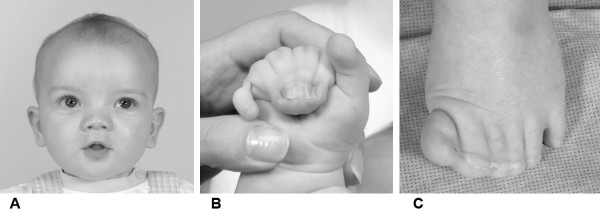
The Greig cephalopolysyndactyly syndrome (GCPS) is a pleiotropic, multiple congenital anomaly syndrome. It is rare, but precise estimates of incidence are difficult to determine, as ascertainment is erratic (estimated range 1–9/1,000,000). The primary findings include hypertelorism, macrocephaly with frontal bossing, and polysyndactyly. The polydactyly is most commonly preaxial of the feet and postaxial in the hands, with variable cutaneous syndactyly, but the limb findings vary significantly. Other low frequency findings include central nervous system (CNS) anomalies, hernias, and cognitive impairment. GCPS is caused by loss of function mutations in the GLI3 transcription factor gene and is inherited in an autosomal dominant pattern. The disorder is allelic to the Pallister-Hall syndrome and one form of the acrocallosal syndrome. Clinical diagnosis is challenging because the findings of GCPS are relatively non-specific, and no specific and sensitive clinical have been delineated. For this reason, we have proposed a combined clinical-molecular definition for the syndrome. A presumptive diagnosis of GCPS can be made if the patient has the classic triad of preaxial polydactyly with cutaneous syndactyly of at least one limb, hypertelorism, and macrocephaly. Patients with a phenotype consistent with GCPS (but which may not manifest all three attributes listed above) and a GLI3 mutation may be diagnosed definitively with GCPS. In addition, persons with a GCPS-consistent phenotype who are related to a definitively diagnosed family member in a pattern consistent with autosomal dominant inheritance may be diagnosed definitively as well. Antenatal molecular diagnosis is technically straightforward to perform. Differential diagnoses include preaxial polydactyly type 4, the GCPS contiguous gene syndrome, acrocallosal syndrome, Gorlin syndrome, Carpenter syndrome, and Teebi syndrome. Treatment of the disorder is symptomatic, with plastic or orthopedic surgery indicated for significant limb malformations. The prognosis for typically affected patients is excellent. There may be a slight increase in the incidence of developmental delay or cognitive impairment. Patients with large deletions that include GLI3 may have a worse prognosis. The Article is a work of the United States Government. Title 17 U.S.C 5 105 provides that copyright protection is not available for any work of the United States Government in the United States. The United States hereby grants to anyone a paid-up, nonexclusive, irrevocable worldwide license to reproduce, prepare derivative works, distribute copies to the public and perform publicly and display publicly the work, and also retains the nonexclusive right to do all of the above for or on behalf of the United States.
Overview
The claims and statistics of this paper haven’t been checked yet.
Free: it reads the open-access text and checks the first 5 claims that cite a source we can check. Create a free account to check every claim.
Integrity signals
Registry
Cites
Statistics
Figures
Verification
Claims the paper makes
The claims and statistics of this paper haven’t been checked yet.
Free: it reads the open-access text and checks the first 5 claims that cite a source we can check. Create a free account to check every claim.
Claims other papers make about this one
Each is checked against this paper’s own text: does it say what the citing paper says it does?
The cited source says what the claim attributes to it.
In the citing paper
“Both genes are known regulators of mouse cortical development33–35 and are associated with developmental disorders in humans14,36.”
From Inferring and perturbing cell fate regulomes in human brain organoids (2023) · cites this paper as [14]
In the citing paper
“In humans, mutations in GLI3 are associated with Greig cephalopolysyndactyly syndrome and Pallister Hall syndrome, in which patients have variable presentations of brain malformations depending on the particular mutations14.”
From Inferring and perturbing cell fate regulomes in human brain organoids (2023) · cites this paper as [14]
Self-check
Percentages, sums and reported differences re-computed from the paper’s own numbers.
The self-check needs the paper’s full text.
Citations
Cites
Nevoid Basal-Cell Carcinoma Syndrome
GORLIN, R. J. (1987) · Medicine · doi:10.1097/00005792-198703000-00002 · Cited by 883
Syndromes of the Head and Neck
Gorlin, R. J., Cohen, M. M., & Hennekam, R. C. M. (2001) · doi:10.1093/oso/9780195118612.001.0001 · Cited by 839
GLI3 zinc-finger gene interrupted by translocations in Greig syndrome families
Vortkamp, A., Gessler, M., & Grzeschik, K.-H. (1991) · Nature · doi:10.1038/352539a0 · Cited by 545
The Sonic Hedgehog–Patched–Gli Pathway in Human Development and Disease
Villavicencio, E. H., Walterhouse, D. O., & Iannaccone, P. M. (2000) · The American Journal of Human Genetics · doi:10.1016/s0002-9297(07)62934-6 · Cited by 435
Johnston, J. J., Olivos-Glander, I., Killoran, C., Elson, E., Turner, J. T., Peters, K. F., Abbott, M. H., Aughton, D. J., Aylsworth, A. S., Bamshad, M. J., et al. (2005) · The American Journal of Human Genetics · doi:10.1086/429346 · Cited by 280
Self-citationJenkins, D., Seelow, D., Jehee, F. S., Perlyn, C. A., Alonso, L. G., Bueno, D. F., Donnai, D., Josifiova, D., Mathijssen, I. M. J., Morton, J. E. V., et al. (2007) · The American Journal of Human Genetics · doi:10.1086/518047 · Cited by 276
Human Malformations and Related Anomalies
Stevenson, R. E. (2005) · Human Malformations and Related Anomalies Second Edition · doi:10.1093/oso/9780195165685.003.0001 · Cited by 271
Elements of morphology: Standard terminology for the head and face
Allanson, J. E., Cunniff, C., Hoyme, H. E., McGaughran, J., Muenke, M., & Neri, G. (2009) · American Journal of Medical Genetics Part A · doi:10.1002/ajmg.a.32612 · Cited by 191
Radhakrishna, U., Bornholdt, D., Scott, H. S., Patel, U. C., Rossier, C., Engel, H., Bottani, A., Chandal, D., Blouin, J.-L., Solanki, J. V., et al. (1999) · The American Journal of Human Genetics · doi:10.1086/302557 · Cited by 183
Point Mutations in Human GLI3 Cause Greig Syndrome
Wild, A., Kalff-Suske, M., Vortkamp, A., Bornholdt, D., Konig, R., & Grzeschik, K.-H. (1997) · Human Molecular Genetics · doi:10.1093/hmg/6.11.1979 · Cited by 170
Research works printed but not linked: 2
- Kalff-Suske M Gene symbol: GLI3. Disease: Greig cephalopolysyndactyly syndrome Hum Genet 2000 107 203 12575660
- Gorlin RJ Cohen MM Jr Hennekam RCM Gorlin RJ, Cohen MM, Jr, Hennekam RCM Acrocallosal syndrome Syndromes of the Head and Neck 2001 Oxford: Oxford University Press 996 998 · DOI · Paper page
Cited by
Infantile hydrocephalus: A review of epidemiology, classification and causes
Tully, H. M., & Dobyns, W. B. (2014) · European Journal of Medical Genetics · doi:10.1016/j.ejmg.2014.06.002 · Cited by 402
Inferring and perturbing cell fate regulomes in human brain organoids
Fleck, J. S., Jansen, S. M. J., Wollny, D., Zenk, F., Seimiya, M., Jain, A., Okamoto, R., Santel, M., He, Z., Camp, J. G., et al. (2023) · Nature · doi:10.1038/s41586-022-05279-8 · Cited by 315
Johnston, J. J., Olivos-Glander, I., Killoran, C., Elson, E., Turner, J. T., Peters, K. F., Abbott, M. H., Aughton, D. J., Aylsworth, A. S., Bamshad, M. J., et al. (2005) · The American Journal of Human Genetics · doi:10.1086/429346 · Cited by 280
Self-citationGLI3: a mediator of genetic diseases, development and cancer
Matissek, S. J., & Elsawa, S. F. (2020) · Cell Communication and Signaling · doi:10.1186/s12964-020-00540-x · Cited by 149
Molecular analysis expands the spectrum of phenotypes associated with GLI3 mutations
Johnston, J. J., Sapp, J. C., Turner, J. T., Amor, D. J., Aftimos, S. F., Aleck, K. A., Bocian, M. E., Bodurtha, J. N., Cox, G. F., Curry, C. J., et al. (2010) · Human Mutation · doi:10.1002/humu.21328 · Cited by 137
Self-citationNew insights into genotype–phenotype correlation for GLI3 mutations
Démurger, F., Ichkou, A., Mougou-Zerelli, S., Merrer, M. F. L., Goudefroye, G., Delezoide, A., Quēlin, C., Manouvrier‐Hanu, S., Baujat, G., Fradin, M., et al. (2014) · European Journal of Human Genetics · doi:10.1038/ejhg.2014.62 · Cited by 133
Cilia, ciliopathies and hedgehog-related forebrain developmental disorders
Andreu-Cervera, A., Catala, M., & Schneider-Maunoury, S. (2021) · Neurobiology of Disease · doi:10.1016/j.nbd.2020.105236 · Cited by 114
Human limb abnormalities caused by disruption of hedgehog signaling
Anderson, E., Peluso, S., Lettice, L. A., & Hill, R. E. (2012) · Trends in Genetics · doi:10.1016/j.tig.2012.03.012 · Cited by 112
Meyer, N. P., & Roelink, H. (2003) · Developmental Biology · doi:10.1016/s0012-1606(03)00065-4 · Cited by 105
Generation of mice with functional inactivation oftalpid3, a gene first identified in chicken
Bangs, F. K., Antonio, N., Thongnuek, P., Welten, M. C. M., Davey, M. G., Briscoe, J., & Tickle, C. A. (2011) · Development · doi:10.1242/dev.063602 · Cited by 91
Neurogenesis, neuronal migration, and axon guidance
Accogli, A., Addour-Boudrahem, N., & Srour, M. (2020) · Handbook of clinical neurology · doi:10.1016/b978-0-444-64150-2.00004-6 · Cited by 90
Role of GLI Transcription Factors in Pathogenesis and Their Potential as New Therapeutic Targets
Sabol, M., Trnski, D., Musani, V., Ozretić, P., & Levanat, S. (2018) · International Journal of Molecular Sciences · doi:10.3390/ijms19092562 · Cited by 89
A clinical review on megalencephaly: A large brain as a possible sign of cerebral impairment
Pavone, P., Praticò, A. D., Rizzo, R., Corsello, G., Ruggieri, M., Parano, E., & Falsaperla, R. (2017) · Medicine · doi:10.1097/md.0000000000006814 · Cited by 81
Phenotype of five patients with Greig syndrome and microdeletion of 7p13
Kroisel, P. M., Petek, E., & Wagner, K. (2001) · American Journal of Medical Genetics · doi:10.1002/ajmg.1443 · Cited by 73
Pavone, P., Briuglia, S., Falsaperla, R., Warm, A., Pavone, V., Bernardini, L., Novelli, A., Praticò, A. D., Salpietro, V., & Ruggieri, M. (2014) · American Journal of Medical Genetics Part A · doi:10.1002/ajmg.a.36391 · Cited by 58
Cilia in hereditary cerebral anomalies
Thomas, S., Boutaud, L., Reilly, M. L., & Benmerah, A. (2019) · Biology of the Cell · doi:10.1111/boc.201900012 · Cited by 48
Jaillard, S., Drunat, S., Bendavid, C., Aboura, A., Etcheverry, A., Journel, H., Delahaye‐Duriez, A., Pasquier, L., Bonneau, D., Toutain, A., et al. (2009) · European Journal of Medical Genetics · doi:10.1016/j.ejmg.2009.10.002 · Cited by 45
Expanded mutational spectrum of the GLI3 gene substantiates genotype–phenotype correlations
Jamsheer, A., Sowińska, A., Trzeciak, T., Jamsheer-Bratkowska, M., Geppert, A., & Latos-Bieleńska, A. (2012) · Journal of Applied Genetics · doi:10.1007/s13353-012-0109-x · Cited by 39
Zung, A., Petek, E., Ben‐Zeev, B., Schwarzbraun, T., & Josefsberg, S. B. Y. (2011) · American Journal of Medical Genetics Part A · doi:10.1002/ajmg.a.33829 · Cited by 39
Walsh, D. M., Shalev, S. A., Simpson, M. A., Morgan, N. V., Gelman-Kohan, Z., Chemke, J., Trembath, R. C., & Maher, E. R. (2012) · European Journal of Medical Genetics · doi:10.1016/j.ejmg.2012.10.004 · Cited by 35
Birth defects caused by mutations in human GLI3 and mouse Gli3 genes
Naruse, I., Ueta, E., Sumino, Y., Ogawa, M., & Ishikiriyama, S. (2010) · Congenital Anomalies · doi:10.1111/j.1741-4520.2009.00266.x · Cited by 34
Review of Literature: Genes Related to Postaxial Polydactyly
Verma, P. K., & El-Harouni, A. A. (2015) · Frontiers in Pediatrics · doi:10.3389/fped.2015.00008 · Cited by 32
RDmap: a map for exploring rare diseases
Yang, J., Dong, C., Duan, H., Shu, Q., & Li, H. (2021) · Orphanet Journal of Rare Diseases · doi:10.1186/s13023-021-01741-4 · Cited by 31
Burger, E. B., Baas, M., Hovius, S. E. R., Hoogeboom, A. J. M., & van Nieuwenhoven, C. A. (2017) · Acta Orthopaedica · doi:10.1080/17453674.2017.1383097 · Cited by 30
molecular pathology of syndromic craniosynostosis
Reardon, W., & Winter, R. M. (1995) · Molecular Medicine Today · doi:10.1016/s1357-4310(95)90837-4 · Cited by 29
An alignment-free method to find and visualise rearrangements between pairs of DNA sequences
Pratas, D., Silva, R. M., Pinho, A. J., & Ferreira, P. J. S. G. (2015) · Scientific Reports · doi:10.1038/srep10203 · Cited by 27
Volodarsky, M., Langer, Y., & Birk, O. S. (2014) · BMC Medical Genetics · doi:10.1186/s12881-014-0110-9 · Cited by 24
Famiglietti, M. L., Estreicher, A., Breuza, L., Poux, S., Redaschi, N., Xénarios, I., & Bridge, A. J. (2019) · Database · doi:10.1093/database/baz040 · Cited by 20
Ito, S., Kitazawa, R., Haraguchi, R., Kondo, T., Ouchi, A., Ueda, Y., & Kitazawa, S. (2018) · Diagnostic Pathology · doi:10.1186/s13000-017-0682-8 · Cited by 19
Niida, Y., Togi, S., & Ura, H. (2021) · International Journal of Molecular Sciences · doi:10.3390/ijms222313060 · Cited by 18
GLI 3 mutations in syndromic and non‐syndromic polydactyly in two I ndian families
Patel, R., Singh, C. B., Bhattacharya, V., Singh, S. K., & Ali, A. (2016) · Congenital Anomalies · doi:10.1111/cga.12139 · Cited by 17
Niida, Y., Inoue, M., Ozaki, M., & Takase, E. (2017) · Cytogenetic and Genome Research · doi:10.1159/000485227 · Cited by 13
Differential diagnosis of syndromic craniosynostosis: a case series
Casteleyn, T., Horn, D., Henrich, W., & Verlohren, S. (2021) · Archives of Gynecology and Obstetrics · doi:10.1007/s00404-021-06263-9 · Cited by 12
Rac, M. W. F., McKinney, J., & Gandhi, M. (2019) · American Journal of Obstetrics and Gynecology · doi:10.1016/j.ajog.2019.09.023 · Cited by 12
Khan, H., Ahmed, S., Nawaz, S., Ahmad, W., Rafiq, M., & Abdullah (2020) · Klinische Pädiatrie · doi:10.1055/a-1223-2489 · Cited by 11
MYCN in human development and diseases
Nishio, Y., Kato, K., Oishi, H., Takahashi, Y., & Saitoh, S. (2024) · Frontiers in Oncology · doi:10.3389/fonc.2024.1417607 · Cited by 11
Barratt, K. S., Drover, K. A., Thomas, Z. M., & Arkell, R. M. (2022) · WIREs Mechanisms of Disease · doi:10.1002/wsbm.1552 · Cited by 11
Mirzaa, G., Ashwal, S., & Dobyns, W. B. (2012) · Elsevier eBooks · doi:10.1016/b978-1-4377-0435-8.00025-1 · Cited by 10
Genes Downregulated in Endometriosis Are Located Near the Known Imprinting Genes
Kobayashi, H., Higashiura, Y., Koike, N., Akasaka, J., Uekuri, C., Iwai, K., Niiro, E., Morioka, S., & Yamada, Y. (2014) · Reproductive Sciences · doi:10.1177/1933719114526473 · Cited by 10
Timor‐Tritsch, I. E., Kapp, S., Berg, R., Bejjani, B. A., Adams, S. A., Monteagudo, A., Divon, M. Y., & Pappas, J. (2009) · Journal of Ultrasound in Medicine · doi:10.7863/jum.2009.28.12.1735 · Cited by 10
Guo, C., Zhang, T., Ma, Y., Song, Y., & Sun, L. (2024) · BMC Pregnancy and Childbirth · doi:10.1186/s12884-024-06619-4 · Cited by 9
Cheng, F., Ke, X., Lv, M., Zhang, F., Li, C., Zhang, X., Zhang, Y., Zhao, X., Wang, X., Лю, Б., et al. (2011) · Clinica Chimica Acta · doi:10.1016/j.cca.2011.02.007 · Cited by 9
Shen, X., Zhang, S., Zhang, X., Zhou, T., & Rui, Y. (2022) · Molecular Genetics & Genomic Medicine · doi:10.1002/mgg3.1895 · Cited by 9
Autistic symptoms in Greig cephalopolysyndactyly syndrome: a family case report
Siracusano, M., Riccioni, A., Baratta, A., Baldi, M., Curatolo, P., & Mazzone, L. (2019) · Journal of Medical Case Reports · doi:10.1186/s13256-019-2043-6 · Cited by 9
Patel, R., Tripathi, F. M., Singh, S. K., Rani, A., Bhattacharya, V., & Ali, A. (2014) · Meta Gene · doi:10.1016/j.mgene.2014.11.002 · Cited by 8
Patel, R., Singh, S. K., Bhattacharya, V., & Ali, A. (2020) · American Journal of Medical Genetics Part A · doi:10.1002/ajmg.a.61919 · Cited by 7
Greig Cephalopolysyndactyly Contiguous Gene Syndrome: Case Report and Literature Review
Kozma, K., Bembea, M., Jurca, C. M., Ioana, M. I., Streață, I., Sosoi, S. S., Pîrvu, A., Petcheși, C. D., Ariana, S., Sava, C. N., et al. (2021) · Genes · doi:10.3390/genes12111674 · Cited by 7
Barboza‐Cerda, M. C., Campos-Acevedo, L. D., Rangel, R., Villarreal, L., & Déctor, M. A. (2013) · American Journal of Medical Genetics Part A · doi:10.1002/ajmg.a.35743 · Cited by 7
Polyhydramnios associated with rare genetic syndromes: two case reports
Lim, C. W. C., Ereno, I. L., Poon, W., & Tan, W. C. (2024) · Journal of Medical Case Reports · doi:10.1186/s13256-024-04435-0 · Cited by 6
Mirzaa, G., & Dobyns, W. B. (2017) · Elsevier eBooks · doi:10.1016/b978-0-323-37101-8.00028-x · Cited by 6
Two Indian families with Greig cephalopolysyndactyly with non-syndromic phenotype
Sethi, S. K., Goyal, D. K., Khalil, S., & Yadav, D. K. (2013) · European Journal of Pediatrics · doi:10.1007/s00431-013-1938-2 · Cited by 6
Prenatal diagnosis of Greig cephalopolysyndactyly syndrome: a case report
Raposo, L., Fachada, H., Paulo, A. S., Cerveira, I., Castedo, S. M. M. J., & Pereira, S. (2014) · Prenatal Diagnosis · doi:10.1002/pd.4506 · Cited by 5
Two Cases of Preaxial Polydactyly of the Foot: Important Implications for Plastic Surgeons
Silverstein, M., Burke, L. W., & Laub, D. R. (2021) · Plastic & Reconstructive Surgery Global Open · doi:10.1097/gox.0000000000003358 · Cited by 5
Witchel, S. F., & Lee, P. A. (2021) · Elsevier eBooks · doi:10.1016/b978-0-323-62520-3.00006-3 · Cited by 4
Siavrienė, E., Mikštienė, V., Radzevičius, D., Maldžienė, Ž., Rančelis, T., Petraitytė, G., Tamulytė, G., Kavaliauskienė, I., Šarkinas, L., Utkus, A., et al. (2019) · Molecular Genetics & Genomic Medicine · doi:10.1002/mgg3.878 · Cited by 4
Genetics of Hydrocephalus: Causal and Contributory Factors
Tully, H. M., Laquerrière, A., Doherty, D., & Dobyns, W. B. (2018) · Springer eBooks · doi:10.1007/978-3-319-97928-1_6 · Cited by 4
Fine-needle cytology of inflammatory myofibroblastic tumor of the lung. Report of a case.
Fulciniti, F., Vetrani, A., Cozzolino, I., Marino, M., Maietta, P., & Cecere, C. (2004) · PubMed · Cited by 4
Manocchio, N., Gaudenzi, M., Tofani, M., Ljoka, C., Imeshtari, A., Giordani, L., Bella, G. D., & Foti, C. (2024) · Applied Sciences · doi:10.3390/app14167259 · Cited by 4
A Rare Prenatal Case: Greig Cephalopolysyndactyly Syndrome
Hakçıl, T., Kayhan, G., Nas, T., Celtemen, P. T., & Karaoğuz, M. Y. (2024) · Gazi Medical Journal · doi:10.12996/gmj.2023.4053 · Cited by 4
Prenatal diagnosis of Greig Cephalopolysyndactyly Syndrome. When to suspect it.
Rodriguez, R. G., Rodriguez-Rodriguez, R., Delgado, R. G., Requejo, A. R., Medina-Castellano, M., Garcia-Cruz, L. M., Santana, A., & García-Hernández, J. Á. (2020) · The Journal of Maternal-Fetal & Neonatal Medicine · doi:10.1080/14767058.2020.1774541 · Cited by 4
Identification of truncated variants in GLI family zinc finger 3 (GLI3) associated with polydactyly
Wang, R.-Y., Xiong, Q., Chang, S., Jin, J., Xiang, R., Zeng, L., & Yu, F. (2024) · Journal of Orthopaedic Surgery and Research · doi:10.1186/s13018-024-04928-0 · Cited by 4
Niida, Y., Ozaki, M., & Takase, E. (2015) · Hereditary Genetics · doi:10.4172/2161-1041.s7-004 · Cited by 4
The Pleiotropic Intricacies of Hedgehog Signaling: From Craniofacial Patterning to Carcinogenesis
Pakvasa, M., Tucker, A. B., Shen, T., He, T., & Reid, R. R. (2021) · FACE · doi:10.1177/27325016211024326 · Cited by 3
Greig Cephalopolysyndactyly Syndrome
Chen, H. (2016) · Springer eBooks · doi:10.1007/978-1-4614-6430-3_111-2 · Cited by 3
Crossed polydactyly and Greig cephalopolysyndactyly syndrome
Uppuluri, R., Gowrishankar, K., & Janakiraman, L. (2013) · Indian Pediatrics · doi:10.1007/s13312-013-0240-8 · Cited by 3
Malformations of Cortical Development
Geraldo, A. F., Rossi, A., & Severino, M. (2021) · Springer eBooks · doi:10.1007/978-3-662-46258-4_6-1 · Cited by 2
Homozygous GLI3 variants observed in three unrelated patients presenting with syndromic polydactyly
Mouatani, A. E., Winckel, G. V., Zaafrane‐Khachnaoui, K., Whalen, S., Achaiaa, A., Kaltenbach, S., Superti‐Furga, A., Vekemans, M. J. J., Fodstad, H., Giuliano, F., et al. (2021) · American Journal of Medical Genetics Part A · doi:10.1002/ajmg.a.62426 · Cited by 2
Microdeleción 7p14.1 y cefalopolisindactilia de Greig
Cremades, D. M., Trives, I. M., López, V. B., Mas, L., Martínez, M. R. G., & Sánchez, F. G. (2011) · Anales de Pediatría · doi:10.1016/j.anpedi.2010.11.017 · Cited by 2
Inferring and perturbing cell fate regulomes in human cerebral organoids
Fleck, J. S., Jansen, S. M. J., Wollny, D., Seimiya, M., Zenk, F. L., Santel, M., He, Z., Camp, J. G., & Treutlein, B. (2021) · Zenodo (CERN European Organization for Nuclear Research) · doi:10.5281/zenodo.5242912 · Cited by 2
Ulnar polydactyly of the hand: a classification system and clinical series
Chen, D., Zhong, W., Sun, L., Zhao, Z., & Tian, W. (2025) · BMC Musculoskeletal Disorders · doi:10.1186/s12891-025-08719-4 · Cited by 2
Orodental manifestations in cases with partial agenesis of corpus callosum-rare phenomena
Bhambal, A. M., Bhambal, A., Nair, P., & Bhambal, S. S. (2015) · Journal of Oral Biology and Craniofacial Research · doi:10.1016/j.jobcr.2015.04.003 · Cited by 2
Curran, T., & Cronin, K. (2015) · Irish Journal of Medical Science (1971 -) · doi:10.1007/s11845-015-1279-4 · Cited by 2
Pallister‐Hall Syndrome and Greig Cephalopolysyndactyly Syndrome
Biesecker, L. G. (2010) · Wiley eBooks · doi:10.1002/9780470893159.ch41 · Cited by 2
Self-citationCongenital tibial dysplasia with lateral bowing and duplication of hallux: case presentations
Beck, J. J., & Altıok, H. (2012) · Journal of Pediatric Orthopaedics B · doi:10.1097/bpb.0b013e328352ad09 · Cited by 2
Radial Polydactyly: Double or nothing?
Dijkman, R. R. (2016) · EUR Research Repository (Erasmus University Rotterdam) · Cited by 2
Two Nonsense GLI3 Variants Are Identified in Two Chinese Families With Polydactyly
Qi, Y., Liu, K., Wei, Y., Liu, X., Jiang, L., Teng, J., Chong, B., Zheng, S., Zhao, X., & Li, L. (2025) · Molecular Genetics & Genomic Medicine · doi:10.1002/mgg3.70088 · Cited by 1
Genetic and Functional Studies of Hirschsprung Disease
Chauhan, R. K. (2016) · RePub (Erasmus University Rotterdam) · Cited by 1
Orthognathic treatment in Greig cephalopolysyndactyly syndrome: A case report
Cıvak, T., Trakyalı, G., & Varol, A. (2019) · Journal of Oral and Maxillofacial Surgery Medicine and Pathology · doi:10.1016/j.ajoms.2019.04.005 · Cited by 1
Megalencephaly: Classification, Genetic Causes, and Related Syndromes
Leonardi, R., Licciardello, L., Zanghì, A., Cognata, D. L., Maniaci, A., Vecchio, M. M., Polizzi, A., Falsaperla, R., & Praticò, A. D. (2024) · Journal of Pediatric Neurology · doi:10.1055/s-0044-1786787 · Cited by 1
Makay, P. B., Fasquelle, C., Mubungu, G. L., Ekolo, E. M., Mupuala, A. M., Fuanani, P., Sonet, I., Charloteaux, B., Palmeira, L., Gatot, J., et al. (2024) · Clinical Dysmorphology · doi:10.1097/mcd.0000000000000510 · Cited by 1
REGULATION OF HEDGEHOG SIGNALLING DURING DEVELOPMENT AND CARCINOGENESIS
Fiaschi, M. (2009) · Figshare
Alomrani, B., Javed, M., Ali, H. S. H. M., Abo‐Aba, S. E. M., AlBakheet, A., AlQudairy, H., & Kaya, N. (2022) · Journal of Contemporary Medical Sciences · doi:10.22317/jcms.v8i1.1167
Molecular Genetics and Prenatal Diagnosis
Phillips, J. A. (2009) · Wiley eBooks · doi:10.1002/9781444314342.ch11
Active Hedgehog Signaling Regulates Renal Capsule Morphogenesis
Martirosyan, H. (2013) · TSpace (University of Toronto)
Human Correlates of GLI3 Function
Biesecker, L. G. (2007) · Springer eBooks · doi:10.1007/0-387-33777-6_10
Self-citationA novel GLI3 frameshift mutation in a Chinese pedigree with polydactyly: A case report
Zhao, C., Gao, C., Zhu, Y., Zhang, Q., & Lin, P. (2024) · Heliyon · doi:10.1016/j.heliyon.2024.e28638
URAŞ, S. G. (2009) · Ankara Üniversitesi Tıp Fakültesi Mecmuası · doi:10.1501/tipfak_0000000737
Greig Cephalopolysyndactyly Syndrome with Oral Manifestations: A Rare Case Report.
Unni, J. V., Daryani, D., Sreejan, K. C., & Uthkal, P. M. (2020) · PubMed Central · doi:10.4103/ijabmr.ijabmr_391_18
Metopic Craniosynostosis Syndrome Due to Mutations in GLI3
McDonald‐McGinn, D. M., Feret, H. A., Nah, H.-D., & Zackai, E. H. (2011) · Monographs in human genetics · doi:10.1159/000321705
Infant with a big head and ‘crossed’ polysyndactyly
Tamaro, G., Baldo, F., Spedicati, B., Taddio, A., Faletra, F., & Barbi, E. (2022) · Journal of Paediatrics and Child Health · doi:10.1111/jpc.1_16063
Hand Defects: An Isolated Anomaly Or a Syndromic Disease?
Selicorni, A., Cianci, P., Tajè, S., & Agosti, M. A. (2023) · Springer eBooks · doi:10.1007/978-3-031-30984-7_3
Mapeo genético de un nuevo síndrome ligado al cromosoma X en una familia mexicana.
Cerda, B., & del Carmen, M. (2012) · El Repositorio Academico Digital de la UANL (Universidad Autónoma de Nuevo León)
Trias van macrocefalie, hypertelorisme en polysyndactylie: het Greig-cefalopolysyndactyliesyndroom
Amlal, S., Kriek, M., Nederhof, H. J. M., & Wieringa, J. W. (2014) · Tijdschrift voor kindergeneeskunde · doi:10.1007/s12456-014-0045-2
Greig Syndrome: A Rare Disease - Case Report
Mithwani, A. A. (2019) · Progressing Aspects in Pediatrics and Neonatology · doi:10.32474/papn.2019.02.000129
Greig Cephalopolysyndactyly Syndrome
(2012) · Springer eBooks · doi:10.1007/978-1-4614-1037-9_111
Greig Cephalopolysyndactyly Syndrome
Chen, H. (2017) · Springer eBooks · doi:10.1007/978-1-4939-2401-1_111
Greig cephalopolysyndactyly syndrome
Radswiki, T., Knipe, H. C., & Skalina, T. (2011) · Radiopaedia.org · doi:10.53347/rid-15078
Greig Cephalopolysyndactyly Syndrome (GCPS)
Jindal, H., & Khan, E. (2024) · Springer eBooks · doi:10.1007/978-3-319-66816-1_1505-1
Singh, C. B., Jain, P., Singh, S. K., Kumar, A. J., Pathak, V. K., & Ali, A. (2024) · Research Square · doi:10.21203/rs.3.rs-5102222/v1
Wang, R.-Y., Xiong, Q., Chang, S.-H., Jin, J.-Y., Xiang, R., Zeng, L., & Yu, F. (2024) · Figshare · doi:10.6084/m9.figshare.26409825
Metadata
- Authors
- Biesecker, L. G.
- Affiliations
- National Institutes of Health (US)
- Corresponding author
- Biesecker, Leslie G
- ORCID
- Biesecker, Leslie G
- Venue
- Orphanet Journal of Rare Diseases
- Published
- 2008-04-24
- Volume
- 3
- Issue
- 1
- Pages
- 10-10
- ISSN
- 1750-1172 (ISSN-L)
- PMC
- PMC2397380
- OpenAlex
- W2096997450
- Cited by
- 98
- References
- 31
- Citations by year
- 2026: 1 · 2025: 3 · 2024: 11 · 2023: 1 · 2022: 4 · 2021: 12 · 2020: 8 · 2019: 6 · 2018: 3 · 2017: 5 · 2016: 1 · 2015: 6 · 2014: 8 · 2013: 3 · 2012: 6
- FWCI
- 3.48
- Type
- journal article
- Language
- en
- Open access
- gold
- doi.org
- Licence
- cc-by
- Locations
- Orphanet Journal of Rare Diseases (publishedVersion, cc-by)
- PubMed Central (publishedVersion, cc-by)
- PubMed (publishedVersion)
- DOAJ (DOAJ: Directory of Open Access Journals) (submittedVersion)
- Topics
- Life Sciences › Biochemistry, Genetics and Molecular Biology › Developmental Biology › Congenital limb and hand anomalies
- Life Sciences › Biochemistry, Genetics and Molecular Biology › Genetics › Genomics and Rare Diseases
- Health Sciences › Medicine › Surgery › Craniofacial Disorders and Treatments
- Keywords
- Greig cephalopolysyndactyly syndrome, polydactyly, syndactyly, hypertelorism, macrocephaly, autosomal dominant inheritance, Pallister-Hall syndrome, acrocallosal syndrome, Gorlin syndrome, Carpenter syndrome, differential diagnosis
- MeSH terms
- Abnormalities, Multiple, Zinc Finger Protein Gli3, Brain, Diagnosis, Differential, Humans, Hypertelorism, Nerve Tissue Proteins, Prenatal Diagnosis, Prognosis, Recurrence, Risk Factors, Syndactyly, Syndrome, Rare Diseases, Kruppel-Like Transcription Factors
About these checks
Registry, retraction, Cites and statistics results are computed, not judged, with one exception: a printed reference that no index lists is read once by a model before it counts as a citation error. Claims are extracted by a model and kept only when their quote appears verbatim in the text; each cited source is then checked, with a model’s help, for whether it says what the claim relies on. Those verdicts can be wrong — read the claim’s quote and the cited source before relying on one.
Statistics and arithmetic are recomputed, not judged.
Confidence bands are shown only for fields calibrated on our annotated test set. None is calibrated yet, so no band is shown.
What counts as a claim ›How we measure confidence ›How we check this ›
Are you an author, or do you see a problem with this page? Request a review
Data sources
Bibliographic data: Semantic Scholar, OpenAlex, Crossref.
Contains information from the Semantic Scholar Academic Graph Datasets, made available under the ODC Attribution License (ODC-BY 1.0).
Semantic Scholar’s data is described in: Kinney, R., et al. (2023). The Semantic Scholar Open Data Platform. arXiv:2301.10140.
