

Recommendations for the management of tyrosinaemia type 1
Open accessThe DOI matches its Crossref record; 47 of the 49 references it cites were found in a registry or an index; 2 of the 53 sources its claims cite were checked for support.
Abstract
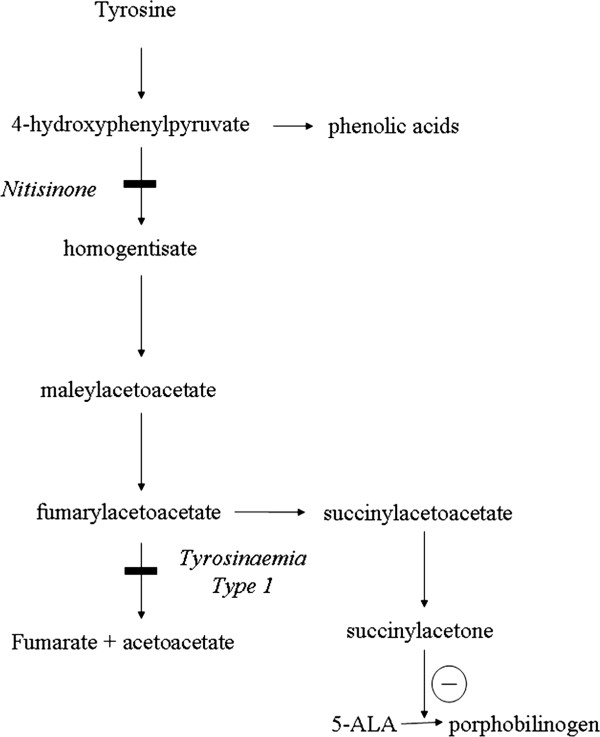
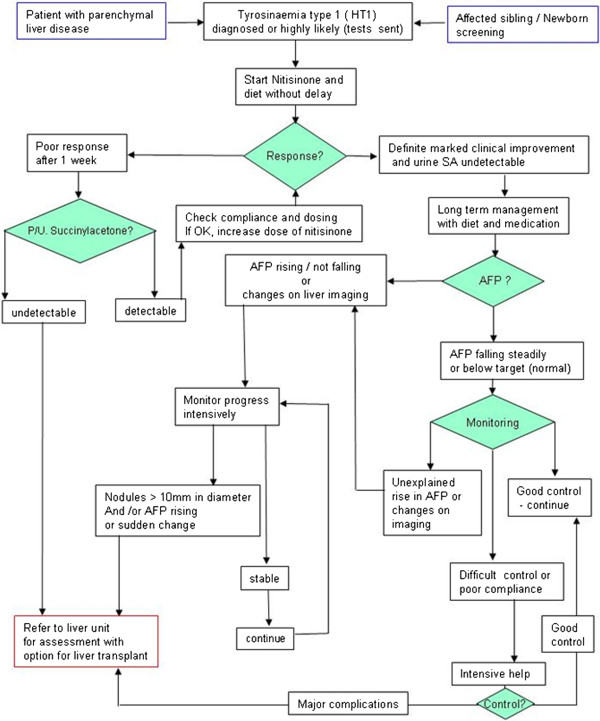
The management of tyrosinaemia type 1 (HT1, fumarylacetoacetase deficiency) has been revolutionised by the introduction of nitisinone but dietary treatment remains essential and the management is not easy. In this review detailed recommendations for the management are made based on expert opinion, published case reports and investigational studies as the evidence base is limited and there are no prospective controlled studies. The added value of this paper is that it summarises in detail current clinical knowledge about HT1 and makes recommendations for the management.
Overview
CoChat Summary
## TL;DR
This paper provides expert-opinion recommendations for managing tyrosinaemia type 1, emphasizing rapid nitisinone initiation plus lifelong dietary treatment and close monitoring. It is not based on prospective controlled studies, and the authors explicitly frame the advice as recommendations rather than formal guidelines.
## Key findings
- Nitisinone has “revolutionised” management, and the recommended immediate dose is 1 mg/kg/day once daily; for acute severe liver failure, 2 mg/kg/day for 48 hours is recommended.
- Response is usually rapid: coagulation improves within 48 hours, all patients should respond within a week, and succinylacetone in blood and urine should no longer be detectable after the first 24 hours.
- Long-term risk remains important even on treatment, especially hepatocellular carcinoma (HCC); the paper recommends hepatic imaging at least every 6 months, with MRI/CT every year if the liver is uniform, or every 3–6 months if nodules are present.
- Dietary management targets plasma tyrosine at 200–400 μmol/l up to about age 12, with some centres allowing up to 500 μmol/l; the paper notes that the safety of allowing higher levels later is not known.
## Methods
- The paper is an expert consensus review developed by an ad hoc working group of clinicians from Europe and Canada with extensive HT1 experience.
- The authors state that the literature was reviewed, but evidence was insufficient for formal guidelines; the recommendations were drafted, revised in a workshop, circulated, and iterated until agreement.
- The recommendations are grounded in published case reports, investigational studies, expert opinion, and unpublished data, with the authors explicitly noting that there were no prospective controlled studies.
## Limitations
- Stated in the paper: the evidence base is limited, there are no prospective controlled studies, and the output is therefore recommendations rather than formal guidelines.
- Stated in the paper: several management targets are uncertain, including the optimal plasma nitisinone concentration, the target plasma tyrosine/phenylalanine levels, and the safety of higher tyrosine levels after age 12.
- Evident from the text: this is an expert consensus/review, so its recommendations depend heavily on specialist opinion and indirect evidence rather than comparative trials.
Model-written summary. Check it against the paper before relying on it.
Integrity signals
Registry
Cites
Statistics
Figures
Verification
Claims the paper makes
2 Valid · 25 Not valid · 36 Not checked · 21 Own results and interpretations
The cited sources support only part of this claim — read each source’s verdict below.
In the paper
“Patients may present in infancy, childhood or as adults [1,8].”
§ Recommendations for the management of tyrosinaemia type 1 > Clinical presentation and diagnosis > Timing of presentation
What the sources say
- Not checked — no full text of the sourcecites [1] Chakrapani A Gissen P McKiernan P Saudubray J-M, Berghe G, Walter JH Disorders of Tyrosine Metabolism Inborn Metabolic Diseases 2012 5 Heidelberg: Springer 275 276 Chapter 18 source
- Partly supportedcites [8] van Spronsen FJ Thomasse Y Smit GP Leonard JV Clayton PT Fidler V Berger R Heymans HS Hereditary tyrosinemia type I: a new clinical classification with difference in prognosis on dietary treatment Hepatology 1994 20 1187 1191 10.1002/hep.1840200513 7927251 sourceExperimental — accuracy not yet measured
The Abstract (p.1) of our copy supports presentation in infancy and childhood: the acute form 'manifests severe liver disease before 6 mo of age', the subacute form begins 'in the second half of the first year', and the chronic form manifests 'after 1 yr of age'; the Results and Discussion likewise stratify onset as <2 mo, 2-6 mo and >6 mo, with HCC occurring at 'almost 2 to 12 yr of age'. However, nothing in our copy states that patients may present as adults — the only mention of adults is in the title of a cited reference (Kvittingen et al., renal failure in adult patients, ref. 20), not a finding the paper reports or relies on. The 'or as adults' part of the triad is therefore not supported by this source. (LLM, conf=0.72)
hedged- Asserted: passes — The authors put it forward as true.
- Checkable: passes — It can be checked against evidence.
- Load-bearing: unclear — It is unclear whether the paper’s conclusions depend on it.
- Based: passes — The paper gives a reason why it holds.
The sources with a verdict support this claim; the rest weren’t checked yet, have no full text we could read, or their verdicts aren’t rated yet.
In the paper
“start nitisinone (NTBC, Orfadin®,) in a dose of 1 mg/kg/d once a day as the half life is 54 hrs [19,20].”
§ Recommendations for the management of tyrosinaemia type 1 > Immediate management
What the sources say
- Supportedcites [19] Hall MG Wilks MF Provan WM Eksborg S Lumholtz B Pharmacokinetics and pharmacodynamics of NTBC (2-(2-nitro-4-fluoromethylbenzoyl)-1,3-cyclohexanedione) and mesotrione, inhibitors of 4-hydroxyphenyl pyruvate dioxygenase (HPPD) following a single dose to healthy male volunteers Br J Clin Pharmacol 2001 52 169 177 10.1046/j.0306-5251.2001.01421.x 11488774 PMC2014534 source
The Discussion states that NTBC (nitisinone) has a plasma half-life of approximately 54 hours. The study measured this after a single dose in healthy male volunteers; it does not establish the once-daily dosing recommendation, which is outside the claim being judged. (LLM, conf=0.95)
- Not checked — no full text of the sourcecites [20] Schlune A Thimm E Herebian D Spiekerkoetter U Single dose NTBC treatment of hereditary tyrosinaemia type 1 J Inherited Metab Dis 2012 35 831 836 10.1007/s10545-012-9450-9 22307209 source
plain- Asserted: passes — The authors put it forward as true.
- Checkable: passes — It can be checked against evidence.
- Load-bearing: passes — The paper’s conclusions depend on it.
- Based: passes — The paper gives a reason why it holds.
- Supported
In the paper
“These patients are particularly susceptible to infections [9].”
§ Recommendations for the management of tyrosinaemia type 1 > Clinical presentation and diagnosis > Timing of presentation
What the sources say
- Not checked — no full text of the sourcecites [9] Epov L Srugo I Kassis I Bar-Joseph G Mandel H Kugelman A 'Sick', irritable infant with fever, vomiting, bloody stool and abdominal distention (Case Presentation). Diagnosis: Hereditary tyrosinaemia type I presenting as E.coli septicaemia. Acta Paediatr 2010 99 1437 1438 10.1111/j.1651-2227.2010.01901.x 20937068 source
plainstates an association- Asserted: passes — The authors put it forward as true.
- Checkable: passes — It can be checked against evidence.
- Load-bearing: unclear — It is unclear whether the paper’s conclusions depend on it.
- Based: passes — The paper gives a reason why it holds.
In the paper
“Although biochemical abnormalities may be identified shortly after birth [14], babies with HT1 are rarely symptomatic in the first days of life.”
§ Recommendations for the management of tyrosinaemia type 1 > Clinical presentation and diagnosis > Timing of presentation
What the sources say
- Not checked — no full text of the sourcecites [14] Schlump JU Mayatepek E Spiekerkoetter U Significant increase of succinylacetone within the first 12 h of life in hereditary tyrosinemia type 1 Eur J Pediatr 2010 169 569 572 10.1007/s00431-009-1074-1 19813022 source
plain- Asserted: passes — The authors put it forward as true.
- Checkable: passes — It can be checked against evidence.
- Load-bearing: unclear — It is unclear whether the paper’s conclusions depend on it.
- Based: passes — The paper gives a reason why it holds.
A result the paper states — it cites no source for it, so there is none to check. The quote shows it is in the paper.
In the paper
“The presentation can be variable, even within one family.”
§ Recommendations for the management of tyrosinaemia type 1 > Clinical presentation and diagnosis > Timing of presentation
plain- Asserted: passes — The authors put it forward as true.
- Checkable: passes — It can be checked against evidence.
- Load-bearing: unclear — It is unclear whether the paper’s conclusions depend on it.
- Based: passes — The paper gives a reason why it holds.
27 more claims
Create a free account to see all 84 claims and to verify the 5 references still open.
- It may state two separate claims as one. 35
- Probably not a substantial claim. 33
- The quote only partly states this claim. 1
Claims other papers make about this one
Each is checked against this paper’s own text: does it say what the citing paper says it does?
The cited source says what the claim attributes to it.
In the citing paper
“Occasionally, nodules are present before initiation of NTBC-treatment but regress on repeated imaging following treatment [18].”
From Cross-sectional study of 168 patients with hepatorenal tyrosinaemia and implications for clinical practice (2014) · cites this paper as [18]
Citations
Cites
Treatment of hereditary tyrosinaemia type I by inhibition of 4-hydroxyphenylpyruvate dioxygenase
LINDSTEDT, S. (1992) · The Lancet · doi:10.1016/0140-6736(92)92685-9 · Cited by 631 · cited 1×
“; licensee BioMed Centra Commons Attribution License (http://creativec reproduction in any medium, provided the or Nitisinone is a compound that has revolutionised the management of tyrosinaemia type 1 [3,4].”
BackgroundParikh, T., Drew, S. J., Lee, V. S., Wong, S., Hecht, E. M., Babb, J. S., & Taouli, B. (2008) · Radiology · doi:10.1148/radiol.2463070432 · Cited by 560 · cited 1×
“Diffusion-weighted imaging may help to distinguish well-differentiated hepatocellular carcinomas from benign nodules [17,18], C Dionisi Vici and L Monti unpublished.”
BackgroundInborn Metabolic Diseases: Diagnosis and Treatment
(2012) · doi:10.1007/978-3-642-15720-2 · Cited by 377
Inborn Metabolic Diseases: Diagnosis and Treatment
(2006) · Springer eBooks · doi:10.1007/978-3-540-28785-8 · Cited by 361
Tyrosinaemia type I and NTBC (2‐(2‐nitro‐4‐trifluoromethylbenzoyl)‐1,3‐cyclohexanedione)
Holme, E., & Lindstedt, S. (1998) · Journal of Inherited Metabolic Disease · doi:10.1023/a:1005410820201 · Cited by 264
NTBC treatment in tyrosinaemia type I: Long‐term outcome in French patients
Masurel‐Paulet, A., Poggi‐Bach, J., Rolland, M. ‐., Bernard, O., Guffon, N., Dobbelaere, D., Sarles, J., de Baulny, H. O., & Touati, G. (2008) · Journal of Inherited Metabolic Disease · doi:10.1007/s10545-008-0793-1 · Cited by 212 · cited 1×
“Many patients on nitisinone have learning difficulties [35] and it is widely thought that this is associated with the increased tyrosine concentrations.”
BackgroundVan Spronsen, F. J., Thomasse, Y., Smit, P. G. A., Leonard, J. V., Clayton, P. T., Fidler, V., Berger, R., & Heymans, H. S. A. (1994) · Hepatology · doi:10.1002/hep.1840200513 · Cited by 193
Self-citationGenetic epidemiology of hereditary tyrosinemia in Quebec and in Saguenay-Lac-St-Jean.
(1990) · Europe PMC (PubMed Central) · Cited by 163
Coenegrachts, K., Delanote, J., Ter Beek, L., Haspeslagh, M., Bipat, S., Stoker, J., Van Kerkhove, F., Steyaert, L., Rigauts, H., & W Casselman, J. (2007) · The British Journal of Radiology · doi:10.1259/bjr/33156643 · Cited by 149
Effect of nitisinone (NTBC) treatment on the clinical course of hepatorenal tyrosinemia in Québec
Larochelle, J., Alvarez, F., Bussières, J.-F., Chevalier, I., Dallaire, L., Dubois, J., Faucher, F., Fenyves, D., Goodyer, P., Grenier, A., et al. (2012) · Molecular Genetics and Metabolism · doi:10.1016/j.ymgme.2012.05.022 · Cited by 137
Self-citationGrompe, M., St.-Louis, M., Demers, S. I., Al-Dhalimy, M., Leclerc, B., & Tanguay, R. M. (1994) · New England Journal of Medicine · doi:10.1056/nejm199408113310603 · Cited by 135
Hall, M. G., Wilks, M. F., Provan, W. M., Eksborg, S., & Lumholtz, B. (2001) · British Journal of Clinical Pharmacology · doi:10.1046/j.0306-5251.2001.01421.x · Cited by 110
Physician’s Guide to the Treatment and Follow-Up of Metabolic Diseases
Blau, N., Leonard, J. V., Hoffmann, G. F., & Clarke, J. T. R. (2006) · Springer eBooks · doi:10.1007/3-540-28962-3 · Cited by 91
Self-citationNeurocognitive outcome in patients with hypertyrosinemia type I after long‐term treatment with NTBC
Thimm, E., Richter‐Werkle, R., Kamp, G., Molke, B., Herebian, D., Klee, D., Mayatepek, E., & Spiekerkoetter, U. (2012) · Journal of Inherited Metabolic Disease · doi:10.1007/s10545-011-9394-5 · Cited by 79 · cited 1×
“However a stricter diet is not easy and the evidence that stricter control of plasma tyrosine concentrations improves the outcome is not conclusive [36,37].”
BackgroundSelf-citationExperience of nitisinone for the pharmacological treatment of hereditary tyrosinaemia type 1
Santra, S., & Baumann, U. (2008) · Expert Opinion on Pharmacotherapy · doi:10.1517/14656566.9.7.1229 · Cited by 68 · cited 1×
“; licensee BioMed Centra Commons Attribution License (http://creativec reproduction in any medium, provided the or Nitisinone is a compound that has revolutionised the management of tyrosinaemia type 1 [3,4].”
BackgroundTyrosinemia type I treated by NTBC: How does AFP predict liver cancer?
Koelink, C., van Hasselt, P. M., van der Ploeg, A., van den Heuvel‐Eibrink, M. M., Wijburg, F. A., Bijleveld, C. M. A., & van Spronsen, F. J. (2006) · Molecular Genetics and Metabolism · doi:10.1016/j.ymgme.2006.07.009 · Cited by 65 · cited 1×
“A slow decrease, failure to normalise or a slight rise should be regarded with suspicion [30] and prompt a careful review of the imaging.”
BackgroundIncrease of CSF tyrosine and impaired serotonin turnover in tyrosinemia type I
Thimm, E., Herebian, D., Assmann, B., Klee, D., Mayatepek, E., & Spiekerkoetter, U. (2011) · Molecular Genetics and Metabolism · doi:10.1016/j.ymgme.2010.11.003 · Cited by 55 · cited 2×
“The relevance of the concentrations of other large neutral aminoacids, notably tryptophan, is uncertain [32].”
BackgroundSelf-citationHyperinsulinism in tyrosinaemia type I
Baumann, U., Preece, M. A., Green, A., Kelly, D. A., & McKiernan, P. J. (2005) · Journal of Inherited Metabolic Disease · doi:10.1007/s10545-005-5517-1 · Cited by 54 · cited 1×
“Hypoglycaemia may by caused by liver failure and hyperinsulinism [7].”
BackgroundSelf-citationDisorders of Tyrosine Metabolism
Chakrapani, A., & Holme, E. (2006) · Inborn Metabolic Diseases · doi:10.1007/978-3-540-28785-8_18 · Cited by 52
Ophthalmic follow‐up of patients with tyrosinaemia type I on NTBC
Gissen, P., Preece, M. A., Willshaw, H. A., & McKiernan, P. J. (2003) · Journal of Inherited Metabolic Disease · doi:10.1023/a:1024011110116 · Cited by 49 · cited 2×
“Eye complications do not appear to be common [16,39] but periodic eye examination with a slit lamp may be indicated (for example annually).”
BackgroundSelf-citationNeuropsychological outcome of NTBC-treated patients with tyrosinaemia type 1: Clinical Letter
De Laet, C., Terrones Munoz, V., Jaeken, J., François, B., Carton, D., Sokal, E. M., Dan, B., & Goyens, P. J. (2011) · Developmental Medicine & Child Neurology · doi:10.1111/j.1469-8749.2011.04048.x · Cited by 49 · cited 1×
“However a stricter diet is not easy and the evidence that stricter control of plasma tyrosine concentrations improves the outcome is not conclusive [36,37].”
BackgroundCardiomyopathy in tyrosinaemia type I is common but usually benign
Arora, N., Stumper, O., Wright, J., Kelly, D. A., & McKiernan, P. J. (2006) · Journal of Inherited Metabolic Disease · doi:10.1007/s10545-006-0203-5 · Cited by 48 · cited 1×
“The illness may be complicated by cardiomyopathy [10] and neurological problems such as porphyria-like episodes.”
BackgroundSelf-citationTyrosinemia type 1 in Spain: Mutational analysis, treatment and long‐term outcome
Couce, M. L., Dalmau, J., del Toro, M., Pintos‐Morell, G., Aldámiz‐Echevarría, L., & Spanish Working Group on Tyrosinemia type1 (2011) · Pediatrics International · doi:10.1111/j.1442-200x.2011.03427.x · Cited by 46
Self-citationClinical practice: NTBC therapy for tyrosinemia type 1: how much is enough?
El-Karaksy, H., Rashed, M., El-Sayed, R., El-Raziky, M., El-Koofy, N., El-Hawary, M., & Al-Dirbashi, O. (2010) · European Journal of Pediatrics · doi:10.1007/s00431-009-1090-1 · Cited by 45
Evidence for Liver Disease Preceding Amino Acid Abnormalities in Hereditary Tyrosinemia
Hostetter, M. K., Levy, H. L., Winter, H. S., Knight, G. J., & Haddow, J. E. (1983) · New England Journal of Medicine · doi:10.1056/nejm198305263082105 · Cited by 44 · cited 2×
“In affected babies SA is detectable in amniotic fluid in pregnancy and both SA and AFP are raised in cord blood [15].”
Backgroundla Marca, G., Malvagia, S., Materazzi, S., Della Bona, M. L., Boenzi, S., Martinelli, D., & Dionisi-Vici, C. (2012) · Analytical Chemistry · doi:10.1021/ac202695h · Cited by 39 · cited 2×
“The effects on the tryptophan-derived neurotransmitters [29] is unknown.”
BackgroundMethodSelf-citationLock, E. A., Gaskin, P., Ellis, M., Provan, W. M., & Smith, L. L. (2006) · Toxicology and Applied Pharmacology · doi:10.1016/j.taap.2006.01.015 · Cited by 35 · cited 1×
“There does not appear to be a clear cut-off of plasma tyrosine concentrations either in man or experimental animals [39,40].”
BackgroundCrone, J., Möslinger, D., Bodamer, O., Schima, W., Huber, W., Holme, E., & Ipsiroglu, S. S. (2003) · Acta Paediatrica · doi:10.1111/j.1651-2227.2003.tb02518.x · Cited by 34
Single dose NTBC‐treatment of hereditary tyrosinemia type I
Schlune, A., Thimm, E., Herebian, D., & Spiekerkoetter, U. (2012) · Journal of Inherited Metabolic Disease · doi:10.1007/s10545-012-9450-9 · Cited by 33
Self-citationHerebıan, D., Spiekerkoetter, U., Lamshöft, M., Thimm, E., Laryea, M. D., & Mayatepek, E. (2009) · Journal of Chromatography B · doi:10.1016/j.jchromb.2009.03.014 · Cited by 31
Self-citationPhenylalanine supplementation improves the phenylalanine profile in tyrosinaemia
Wilson, C. J., Van Wyk, K. G., Leonard, J. V., & Clayton, P. T. (2000) · Journal of Inherited Metabolic Disease · doi:10.1023/a:1005666426079 · Cited by 29
Self-citationSchiff, M., Broue, P., Chabrol, B., De Laet, C., Habes, D., Mention, K., Sarles, J., Spraul, A., Valayannopoulos, V., Ogier de Baulny, H., et al. (2012) · Journal of Inherited Metabolic Disease · doi:10.1007/s10545-011-9429-y · Cited by 28
Diurnal variation of phenylalanine concentrations in tyrosinaemia type 1: should we be concerned?
Daly, A., Gökmen-Özel, H., MacDonald, A., Preece, M. A., Davies, P. H. O., Chakrapani, A., & McKiernan, P. J. (2011) · Journal of Human Nutrition and Dietetics · doi:10.1111/j.1365-277x.2011.01215.x · Cited by 27 · cited 1×
“If the plasma phenylalanine concentrations are persistently very low, some clinicians prescribe phenylalanine supplements but plasma phenylalanine concentrations show a marked diurnal variation [33,34] and the precise timing of any supplements is unclear.”
BackgroundSelf-citationLectin‐reactive α‐Fetoprotein in Patients with Tyrosinemia Type I and Hepatocellular Carcinoma
Baumann, U., Duhme, V., Auth, M. K. H., McKiernan, P. J., & Holme, E. (2006) · Journal of Pediatric Gastroenterology and Nutrition · doi:10.1097/01.mpg.0000228112.29359.f8 · Cited by 25
Self-citationSchlump, J. ‐., Perot, C., Ketteler, K., Schiff, M., Mayatepek, E., Wendel, U., & Spiekerkoetter, U. (2008) · Journal of Inherited Metabolic Disease · doi:10.1007/s10545-008-0807-z · Cited by 24 · cited 1×
“Failure to do so may precipitate serious complications including acute liver failure, a neurological crisis [21] or even hepatic malignant change.”
BackgroundSelf-citationNewborn screening for Tyr-I: Two years' experience of the New York State program
Morrissey, M. A., Sunny, S., Fahim, A., Lubowski, C., & Caggana, M. (2011) · Molecular Genetics and Metabolism · doi:10.1016/j.ymgme.2011.02.017 · Cited by 22 · cited 1×
“However together with early treatment with nitisinone and diet, it is the medical management of choice [11,12].”
BackgroundPregnancy During Nitisinone Treatment for Tyrosinaemia Type I: First Human Experience
Vanclooster, A., Devlieger, R., Meersseman, W., Spraul, A., Kerckhove, K. V., Vermeersch, P., Meulemans, A., Allegaert, K., & Cassiman, D. (2011) · JIMD Reports · doi:10.1007/8904_2011_88 · Cited by 20
Maternal and fetal tyrosinemia type I
Garcia Segarra, N., Roche, S., Imbard, A., Benoist, J. F., Grenèche, M. O., Davit‐Spraul, A., & Ogier de Baulny, H. (2010) · Journal of Inherited Metabolic Disease · doi:10.1007/s10545-012-9569-8 · Cited by 17
Self-citationDisorders of Tyrosine Metabolism
Chakrapani, A., Gissen, P., & McKiernan, P. (2012) · Inborn Metabolic Diseases · doi:10.1007/978-3-642-15720-2_18 · Cited by 17
Self-citationRecomendaciones y manejo de la tirosinemia hereditaria Tipo I o Tirosinemia hepatorrenal
Couce, M. L., Aldámiz-Echevarría, L., Baldellou, A., Blasco, J., Bueno, M. A., Dalmau, J., De La Vega, A., Del Toro, M., Díaz, C., Lama, R., et al. (2010) · Anales de Pediatría · doi:10.1016/j.anpedi.2010.03.005 · Cited by 15
Schlump, J.-U., Mayatepek, E., & Spiekerkoetter, U. (2010) · European Journal of Pediatrics · doi:10.1007/s00431-009-1074-1 · Cited by 13 · cited 1×
“Although biochemical abnormalities may be identified shortly after birth [14], babies with HT1 are rarely symptomatic in the first days of life.”
BackgroundSelf-citationTyrosinemia type I: long-term outcome in a patient treated with doses of NTBC lower than recommended
D’Eufemia, P., Celli, M., Tetti, M., & Finocchiaro, R. (2011) · European Journal of Pediatrics · doi:10.1007/s00431-011-1419-4 · Cited by 9
Disorders of Tyrosine Degradation
Holme, E. (2006) · Physician’s Guide to the Treatment and Follow-Up of Metabolic Diseases · doi:10.1007/3-540-28962-3_6 · Cited by 5
Epov, L., Srugo, I., Kassis, I., Bar‐Joseph, G., Mandel, H., & Kugelman, A. (2010) · Acta Paediatrica · doi:10.1111/j.1651-2227.2010.01901.x · Cited by 4
Epov, L., Srugo, I., Kassis, I., Bar‐Joseph, G., Mandel, H., & Kugelman, A. (2010) · Acta Paediatrica · doi:10.1111/j.1651-2227.2010.01900.x · Cited by 3
la Marca, G., Malvagia, S., Materazzi, S., et al. (2014) · Analytical Chemistry · doi:10.1021/ac5034787 · Cited by 3
Self-citation'Identical' twins with discordant karyotypes
(1999) · Pure Amsterdam UMC · doi:10.1002/(sici)1097-0223(199901)19:1 · Cited by 1
Research works printed but not linked: 1
- Larochelle J Alvarez F Bussières JF Chevalier I Dallaire L Dubois J Faucher F Fenyves D Goodyer P Grenier A Holme E Laframboise R Lambert M Lindstedt S Maranda B Melançon S Merouani A Mitchell J Parizeault G Pelletier L Phan V Rinaldo P Scott CR Scriver C Mitchell GA Effect of nitisinone (NTBC) treatment on the clinical course of hepatorenal tyrosinemia in Québec Mol Genet Metab 2012 107 49 54 10.1016/j.ymgme.2012.05.022 22885033 · DOI · Paper page
Cited by
Squires, R. H., Ng, V., Romero, R., Ekong, U., Hardikar, W., Emre, S., & Mazariegos, G. V. (2014) · Hepatology · doi:10.1002/hep.27191 · Cited by 254
“42 years between 1999-2008.(285) Failure to respond to NTBC within a week may be due to noncompliance or subtherapeutic NTBC, manifested by persistence of succinylacetone in the urine, or a fulminant course despite therapy.”
BackgroundChinsky, J. M., Singh, R., Ficicioglu, C., van Karnebeek, C. D. M., Grompe, M., Mitchell, G., Waisbren, S. E., Gucsavas-Calikoglu, M., Wasserstein, M. P., Coakley, K., et al. (2017) · Genetics in Medicine · doi:10.1038/gim.2017.101 · Cited by 247
Self-citationConjunctivitis: A Systematic Review
A. Azari, A., & Arabi, A. (2020) · Journal of Ophthalmic and Vision Research · doi:10.18502/jovr.v15i3.7456 · Cited by 179
“, Reiter’s, Stevens-Johnson syndrome (SJS), and keratoconjunctivitis sicca in rheumatoid arthritis], nutritional deprivation (vitamin A deficiency), and congenital metabolic syndromes (RichnerHanhart syndrome and porphyria)[4, 5] (Table 1).”
BackgroundMayorandan, S., Meyer, U., Gokcay, G., Segarra, N. G., de Baulny, H. O., van Spronsen, F., Zeman, J., de Laet, C., Spiekerkoetter, U., Thimm, E., et al. (2014) · Orphanet Journal of Rare Diseases · doi:10.1186/s13023-014-0107-7 · Cited by 131
“Occasionally, nodules are present before initiation of NTBC-treatment but regress on repeated imaging following treatment [18].”
Self-citationSquires, J. E., McKiernan, P. J., & Squires, R. H. (2018) · Clinics in Liver Disease · doi:10.1016/j.cld.2018.06.009 · Cited by 139
Self-citation
Metadata
- Authors
- de Laet, C., Dionisi-Vici, C., Leonard, J. V., McKiernan, P., Mitchell, G., Monti, L., de Baulny, H. O., Pintos-Morell, G., & Spiekerkötter, U.
- Affiliations
- University College London (GB)
- Birmingham Children's Hospital (GB)
- Centre Hospitalier Universitaire Sainte-Justine (CA)
- Bambino Gesù Children's Hospital (IT)
- Corresponding author
- Leonard, James V
- Venue
- Orphanet Journal of Rare Diseases
- Published
- 2013-01-11
- Volume
- 8
- Issue
- 1
- Pages
- 8-8
- ISSN
- 1750-1172 (ISSN-L)
- PMC
- PMC3558375
- OpenAlex
- W2097721154
- Semantic Scholar
- 5d5e15a07fbab403a889841bf40c6bc0f93682bd
- Cited by
- 227
- References
- 49
- Citations by year
- 2026: 3 · 2025: 14 · 2024: 18 · 2023: 12 · 2022: 14 · 2021: 25 · 2020: 17 · 2019: 22 · 2018: 17 · 2017: 33 · 2016: 15 · 2015: 18 · 2014: 15 · 2013: 3
- FWCI
- 1.69
- Type
- journal article
- Language
- en
- Open access
- gold
- doi.org
- Licence
- cc-by
- Locations
- Orphanet Journal of Rare Diseases (publishedVersion, cc-by)
- Europe PMC (PubMed Central) (publishedVersion, cc-by)
- PubMed Central (publishedVersion, cc-by)
- PubMed (publishedVersion)
- Dépôt institutionnel de l'Université libre de Bruxelles (Université Libre de Bruxelles) (submittedVersion, other-oa)
- DOAJ (DOAJ: Directory of Open Access Journals) (submittedVersion)
- UCL Discovery (University College London) (submittedVersion)
- Funders
- Swedish Orphan Biovitrum
- Topics
- Life Sciences › Biochemistry, Genetics and Molecular Biology › Clinical Biochemistry › Metabolism and Genetic Disorders
- Life Sciences › Biochemistry, Genetics and Molecular Biology › Biochemistry › Amino Acid Enzymes and Metabolism
- Health Sciences › Medicine › Genetics (clinical) › Lysosomal Storage Disorders Research
- Keywords
- nitisinone, dietary therapy, inborn errors of metabolism, management recommendations, hyperphenylalaninemia
- MeSH terms
- Cyclohexanones, Female, Humans, Infant, Newborn, Nitrobenzoates, Pregnancy, Psychometrics, Bone Density, Neonatal Screening, Liver Transplantation, Tyrosinemias
About these checks
Registry, retraction, Cites and statistics results are computed, not judged, with one exception: a printed reference that no index lists is read once by a model before it counts as a citation error. Claims are extracted by a model and kept only when their quote appears verbatim in the text; each cited source is then checked, with a model’s help, for whether it says what the claim relies on. Those verdicts can be wrong — read the claim’s quote and the cited source before relying on one.
The claim verdicts this report counts are experimental: their accuracy is not yet measured.
A language model drew the claims from the paper on 2026-10-10, under version 3 of the claim definition (model deepseek-v4.1-flash, prompt extract-v3).
A second model labelled each claim on 2026-10-10 (model jev-1.13-20260917, definition revision gold-guideline-v0.2).
Cited sources are checked with a language model’s help (qwen3.8-omni-flash and gpt-6-sol).
Statistics and arithmetic are recomputed, not judged.
Confidence bands are shown only for fields calibrated on our annotated test set. None is calibrated yet, so no band is shown.
What counts as a claim ›How we measure confidence ›How we check this ›
Are you an author, or do you see a problem with this page? Request a review
Data sources
Bibliographic data: Semantic Scholar, OpenAlex, Crossref.
Contains information from the Semantic Scholar Academic Graph Datasets, made available under the ODC Attribution License (ODC-BY 1.0).
Semantic Scholar’s data is described in: Kinney, R., et al. (2023). The Semantic Scholar Open Data Platform. arXiv:2301.10140.
