

The DOI matches its Crossref record; 216 of the 217 references it cites were found in a registry or an index.
BACE1 is at the crossroad of a toxic vicious cycle involving cellular stress and β-amyloid production in Alzheimer’s disease
Open accessAbstract
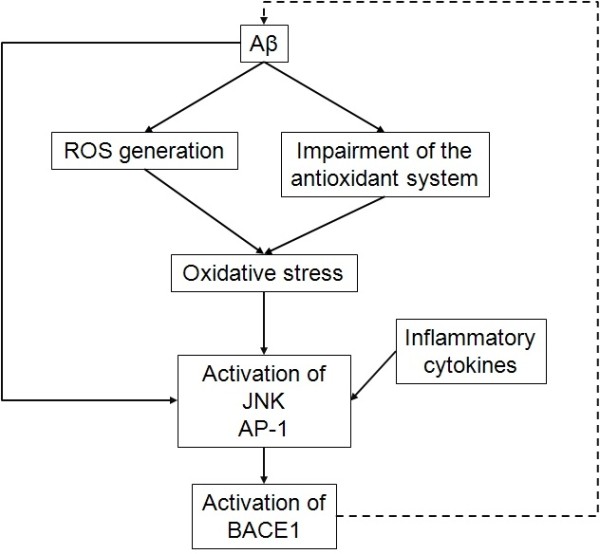
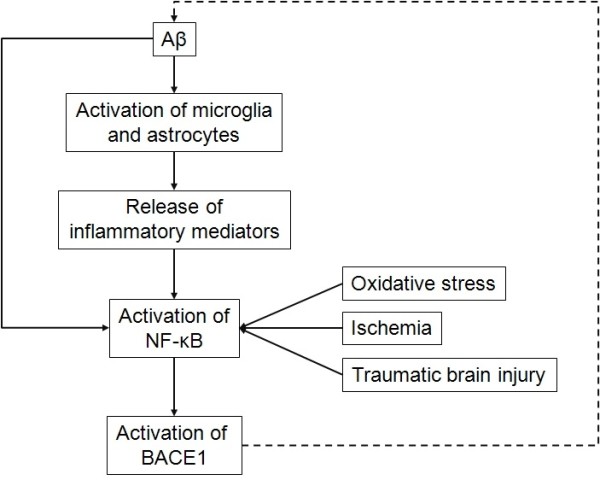
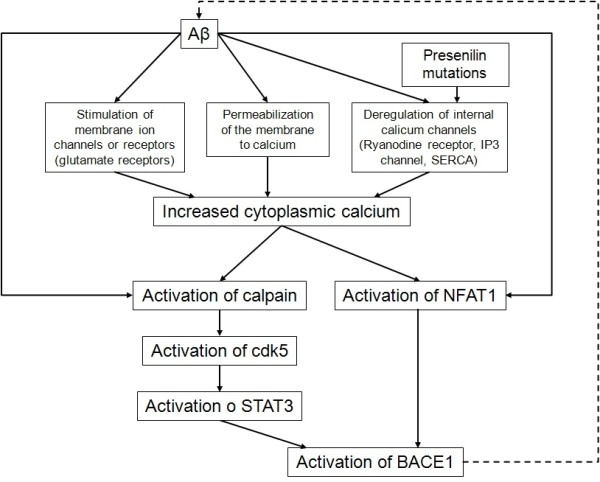
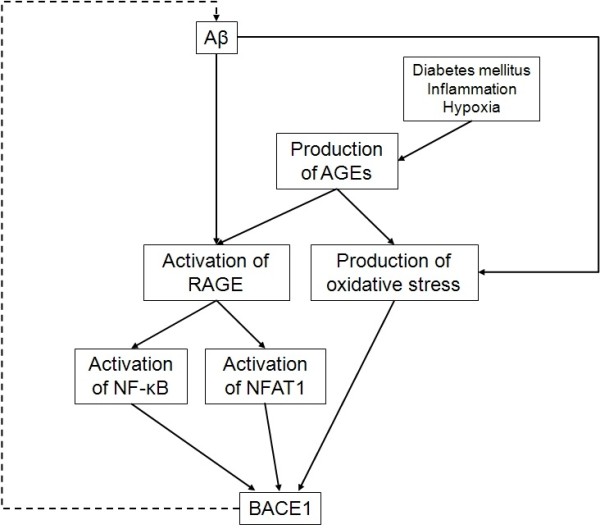
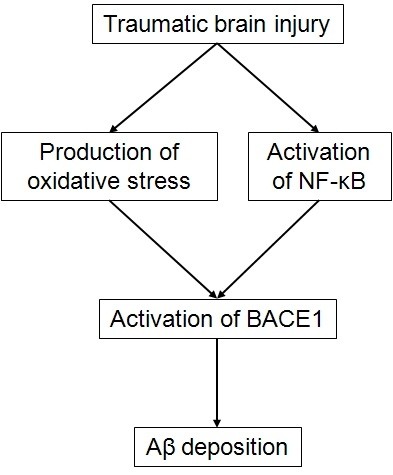
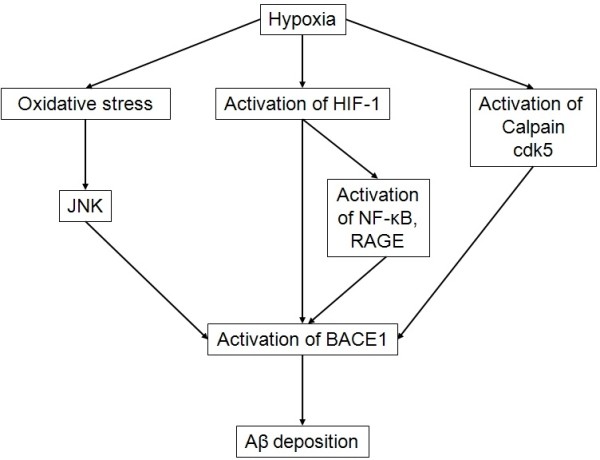
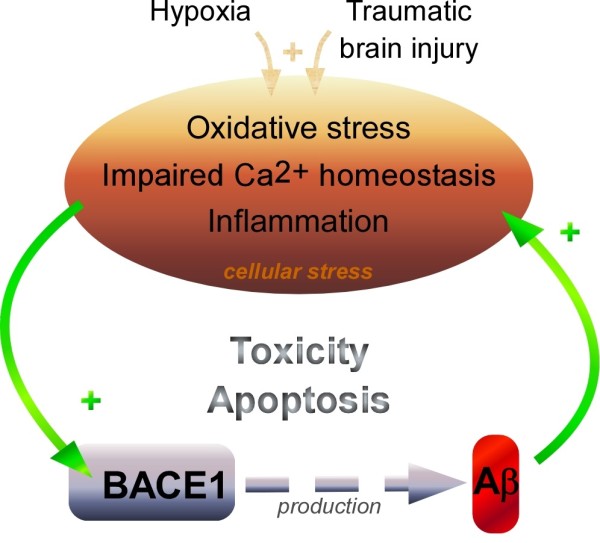
Alzheimer's disease (AD) is a complex age-related pathology, the etiology of which has not been firmly delineated. Among various histological stigmata, AD-affected brains display several cellular dysfunctions reflecting enhanced oxidative stress, inflammation process and calcium homeostasis disturbance. Most of these alterations are directly or indirectly linked to amyloid β-peptides (Aβ), the production, molecular nature and biophysical properties of which likely conditions the degenerative process. It is particularly noticeable that, in a reverse control process, the above-described cellular dysfunctions alter Aβ peptides levels. β-secretase βAPP-cleaving enzyme 1 (BACE1) is a key molecular contributor of this cross-talk. This enzyme is responsible for the primary cleavage generating the N-terminus of "full length" Aβ peptides and is also transcriptionally induced by several cellular stresses. This review summarizes data linking brain insults to AD-like pathology and documents the key role of BACE1 at the cross-road of a vicious cycle contributing to Aβ production.
Overview
The claims and statistics of this paper haven’t been checked yet.
Run the check — free, no account needed. It reads the open-access text and checks the sources it cites.
Integrity signals
Registry
Cites
Statistics
Figures
Verification
Claims the paper makes
The claims and statistics of this paper haven’t been checked yet.
Run the check — free, no account needed. It reads the open-access text and checks the sources it cites.
Claims other papers make about this one
Each is checked against this paper’s own text: does it say what the citing paper says it does?
The cited source says what the claim attributes to it.
In the citing paper
“Interestingly, several studies have suggested that both oxidative stress and inflammation increase BACE1 expression (Chami & Checler 2012, Rossner et al. 2006, Tamagno et al. 2012).”
From miR‐186 is decreased in aged brain and suppresses BACE 1 expression (2016) · cites this paper as Chami & Checler 2012
The cited source says what the claim attributes to it.
In the citing paper
“Although BACE1 expression has been known to be up-regulated by oxidative stress and inflammation (Chami & Checler 2012, Rossner et al. 2006, Tamagno et al. 2012), our data suggest that miR-186 does not mediate the BACE1 induction by those aging-associated stresses.”
From miR‐186 is decreased in aged brain and suppresses BACE 1 expression (2016) · cites this paper as Chami & Checler 2012
Self-check
Percentages, sums and reported differences re-computed from the paper’s own numbers.
The self-check needs the paper’s full text.
Citations
Cites
Free radicals and antioxidants in normal physiological functions and human disease
Valko, M., Leibfritz, D., Moncol, J., Cronin, M. T. D., Mazur, M., & Telser, J. (2007) · The International Journal of Biochemistry & Cell Biology · doi:10.1016/j.biocel.2006.07.001 · Cited by 14,269
The Nuclear Factor NF- B Pathway in InflammationPreprint
Lawrence, T. (2009) · Cold Spring Harbor Perspectives in Biology · doi:10.1101/cshperspect.a001651 · Cited by 5,126
Inflammation and Alzheimer’s disease
Akiyama, H. (2000) · Neurobiology of Aging · doi:10.1016/s0197-4580(00)00124-x · Cited by 4,514
Walsh, D. M., Klyubin, I., Fadeeva, J. V., Cullen, W. K., Anwyl, R., Wolfe, M. S., Rowan, M. J., & Selkoe, D. J. (2002) · Nature · doi:10.1038/416535a · Cited by 4,291
Vassar, R., Bennett, B. D., Babu-Khan, S., Kahn, S., Mendiaz, E. A., Denis, P., Teplow, D. B., Ross, S., Amarante, P., Loeloff, R., et al. (1999) · Science · doi:10.1126/science.286.5440.735 · Cited by 3,876 · cited 1×
“The β-secretase βAPP-cleaving enzyme 1 BACE1 (Asp2, memapsin 2), a single transmembrane aspartyl-protease, was identified in 1999 as the major β-secretase-like protein [20-24].”
BackgroundSchreck, R., RIEBER, P., & Baeuerle, P. A. (1991) · The EMBO Journal · doi:10.1002/j.1460-2075.1991.tb07761.x · Cited by 3,793
Calcium - a life and death signal
Berridge, M. J., Bootman, M. D., & Lipp, P. (1998) · Nature · doi:10.1038/27094 · Cited by 2,081
RAGE and amyloid-β peptide neurotoxicity in Alzheimer's disease
Yan, S. D., Chen, X., Fu, J., Chen, M., Zhu, H., Roher, A., Slattery, T., Zhao, L., Nagashima, M., Morser, J., et al. (1996) · Nature · doi:10.1038/382685a0 · Cited by 2,012
Oxidative Damage Is the Earliest Event in Alzheimer Disease
Nunomura, A., Perry, G., Aliev, G., Hirai, K., Takeda, A., Balraj, E. K., Jones, P. K., Ghanbari, H., Wataya, T., Shimohama, S., et al. (2001) · Journal of Neuropathology & Experimental Neurology · doi:10.1093/jnen/60.8.759 · Cited by 1,885
A mutation in APP protects against Alzheimer’s disease and age-related cognitive decline
Jonsson, T., Atwal, J. K., Steinberg, S., Snaedal, J., Jonsson, P. V., Bjornsson, S., Stefansson, H., Sulem, P., Gudbjartsson, D., Maloney, J., et al. (2012) · Nature · doi:10.1038/nature11283 · Cited by 1,738
Research works printed but not linked: 5
- Querfurth HW LaFerla FM Alzheimer's disease N Engl J Med 2010 362 329 344 20107219
- Chen CH Zhou W Liu S Deng Y Cai F Tone M Tone Y Tong Y Song W Increased NF-kappaB signalling up-regulates BACE1 expression and its therapeutic potential in Alzheimer's disease Int J Neuropsychopharmacol 2011 1 14 21329555
- Buggia-Prevot V Sevalle J Rossner S Checler F NFkappaB-dependent control of BACE1 promoter transactivation by Abeta42 J Biol Chem 2008 283 10037 10047 18263584
- Guglielmotto M Monteleone D Giliberto L Fornaro M Borghi R Tamagno E Tabaton M Amyloid-beta activates the expression of BACE1 through the JNK pathway J Alzheimers Dis 2011 27 871 883 21897006
- Guglielmotto M Aragno M Tamagno E Vercellinatto I Visentin S Medana C Catalano MG Smith MA Perry G Danni O AGEs/RAGE complex upregulates BACE1 via NF-kappaB pathway activation Neurobiol Aging 2012 33 196.e13 27 20638753
Cited by
Sorted by citations
BACE1 inhibitor drugs in clinical trials for Alzheimer’s disease
Vassar, R. J. (2014) · Alzheimer s Research & Therapy · doi:10.1186/s13195-014-0089-7 · Cited by 421
Vassar, R., Kuhn, P., Haass, C., Kennedy, M. E., Rajendran, L., Wong, P. C., & Lichtenthaler, S. F. (2014) · Journal of Neurochemistry · doi:10.1111/jnc.12715 · Cited by 311
Ganguly, G., Chakrabarti, S., Chatterjee, U., & Saso, L. (2017) · Drug Design Development and Therapy · doi:10.2147/dddt.s130514 · Cited by 305
Harris, S. A., & Harris, E. A. (2015) · Journal of Alzheimer's Disease · doi:10.3233/jad-142853 · Cited by 279
Liu, C.-C., Tsai, C.-W., Deak, F., Rogers, J., Penuliar, M., Sung, Y. M., Maher, J. N., Fu, Y., Li, X., Xu, H., et al. (2014) · Neuron · doi:10.1016/j.neuron.2014.08.048 · Cited by 222
Metadata
- Authors
- Chami, L., & Checler, F.
- Affiliations
- Centre National de la Recherche Scientifique (FR)
- Corresponding author
- Checler, Frédéric
- ORCID
- Checler, Frédéric
- Venue
- Molecular Neurodegeneration
- Published
- 2012
- Volume
- 7
- Issue
- 1
- Pages
- 52
- ISSN
- 1750-1326 (ISSN-L)
- PMC
- PMC3507664
- OpenAlex
- W2111994753
- Cited by
- 168
- References
- 217
- Citations by year
- 2026: 11 · 2025: 8 · 2024: 12 · 2023: 12 · 2022: 8 · 2021: 8 · 2020: 8 · 2019: 16 · 2018: 15 · 2017: 13 · 2016: 14 · 2015: 15 · 2014: 22 · 2013: 5
- FWCI
- 1.46
- Type
- journal article
- Language
- en
- Open access
- gold
- doi.org
- Licence
- cc-by
- Locations
- Molecular Neurodegeneration (publishedVersion, cc-by)
- PubMed Central (publishedVersion, cc-by)
- PubMed (publishedVersion)
- DOAJ (DOAJ: Directory of Open Access Journals) (submittedVersion, cc-by-sa)
- Funders
- Development of Innovative Strategies for a Transdisciplinary approach to ALZheimer's disease
- Fondation pour la Recherche Médicale
- Ministère de l'Enseignement Supérieur et de la Recherche
- Topics
- Life Sciences › Neuroscience › Cellular and Molecular Neuroscience › Alzheimer's disease research and treatments
- Health Sciences › Medicine › Psychiatry and Mental health › Dementia and Cognitive Impairment Research
- Life Sciences › Neuroscience › Neurology › Neuroinflammation and Neurodegeneration Mechanisms
- Keywords
- Alzheimer's disease, BACE1, beta-secretase, amyloid-beta, oxidative stress, cellular stress, vicious circle, inflammation, calcium homeostasis, APP cleavage, neurodegeneration
- MeSH terms
- Alzheimer Disease, Animals, Humans, Stress, Physiological, Amyloid beta-Peptides, Aspartic Acid Endopeptidases, Amyloid Precursor Protein Secretases
About these checks
Registry, retraction, Cites and statistics results are computed, not judged, with one exception: a printed reference that no index lists is read once by a model before it counts as a citation error. Claims are extracted by a model and kept only when their quote appears verbatim in the text; each cited source is then checked, with a model’s help, for whether it says what the claim relies on. Those verdicts can be wrong — read the claim’s quote and the cited source before relying on one.
Statistics and arithmetic are recomputed, not judged.
Confidence bands are shown only for fields calibrated on our annotated test set. None is calibrated yet, so no band is shown.
What counts as a claim ›How we measure confidence ›How we check this ›
Are you an author, or do you see a problem with this page? Request a review
