

The DOI matches its Crossref record; 184 of the 188 references it cites were found in a registry or an index; none of the 145 sources its claims cite is checked for support yet.
The empathic brain and its dysfunction in psychiatric populations: implications for intervention across different clinical conditions
Open accessAbstract
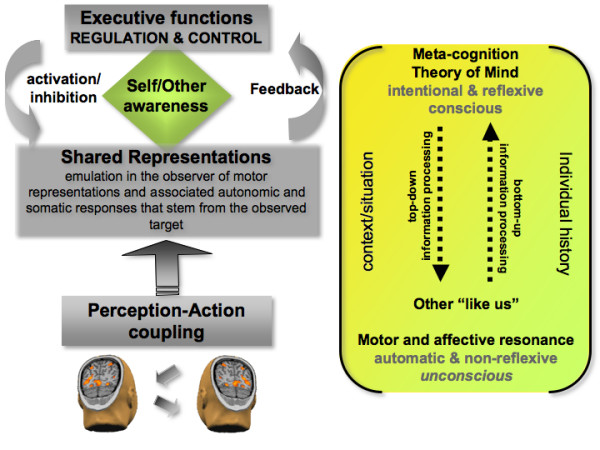
Empathy is a concept central to psychiatry, psychotherapy and clinical psychology. The construct of empathy involves not only the affective experience of the other person's actual or inferred emotional state but also some minimal recognition and understanding of another's emotional state. It is proposed, in the light of multiple levels of analysis including social psychology, cognitive neuroscience and clinical neuropsychology, a model of empathy that involves both bottom-up and top-down information processing underpinned by parallel and distributed computational mechanisms. The predictive validity of this model is explored with reference to clinical conditions. As many psychiatric conditions are associated with deficits or even lack of empathy, we discuss a limited number of these disorders including psychopathy/antisocial personality disorders, borderline and narcissistic personality disorders, autistic spectrum disorders, and alexithymia. We argue that future clinical investigations of empathy disorders can only be informative if behavioral, dispositional and biological factors are combined.
Overview
AI snapshot
Written from the paper’s full text.
TL;DR
The paper proposes a multidimensional model of empathy involving bottom-up affective sharing and top-down self-awareness, mental flexibility, and emotion regulation, and applies it to psychiatric conditions with empathy deficits. It argues that empathy disorders reflect selective disruption of these dissociable components and that future clinical work must combine behavioral, dispositional, and biological levels.
Key findings
- Empathy is framed as four interacting macro-components: affective sharing, self/other awareness, mental flexibility/perspective taking, and emotion regulation; these rely on parallel and distributed neural systems including the anterior insula, anterior cingulate cortex, prefrontal cortex, inferior parietal cortex, and temporo-parietal junction.
- The model predicts different empathy dysfunctions: psychopathy/antisocial personality disorder is linked more to disrupted affective processing and amygdala dysfunction with intact theory of mind; borderline personality disorder to limbic hyperreactivity and prefrontal hypofunction; autistic spectrum disorders to possible deficits in both motor/affective resonance and meta-cognitive self-regulation; and alexithymia to deficits in perspective taking and regulatory processes.
- Cited meta-analytic evidence includes Decety and Lamm’s quantitative meta-analysis of 70 functional neuroimaging studies, which found substantial overlap in brain activation between low-level processes such as reorienting attention or sense of agency and higher-level social-cognitive abilities such as empathy or theory of mind.
- A cited meta-analysis of 39 studies yielding 4,589 participants found a robust and statistically significant relation between executive functions and antisocial behavior.
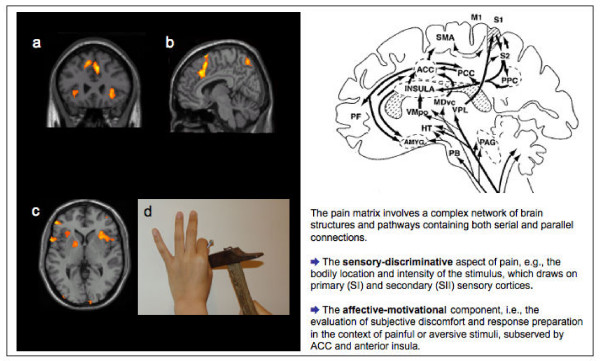
- Neuroimaging of pain empathy shows shared activation in the anterior cingulate cortex and anterior insula for self and other pain, but also non-overlapping regions for self versus other, supporting both shared representations and self-other distinction.
Methods
- Narrative/theoretical review integrating social psychology, cognitive neuroscience, and clinical neuropsychology; no new primary data are reported.
- Proposes a model of empathy with bottom-up and top-down processing and reviews selected psychiatric conditions: psychopathy/antisocial personality disorder, borderline and narcissistic personality disorders, autistic spectrum disorders, and alexithymia.
- Synthesizes cited neuroimaging, lesion, TMS, electrophysiological, behavioral, and comparative studies, including two cited meta-analyses: 70 functional neuroimaging studies and 39 studies with 4,589 participants.
Limitations
- The paper states that future clinical investigations of empathy disorders can only be informative if behavioral, dispositional, and biological factors are combined, and that self-report measures alone are not valid.
- The paper states that social neuroscience experiments often require intra-individual comparisons, repeated-measures designs, and small samples, limiting opportunities to study potentially important situational variables.
- Evident from the text: this is a narrative review with a limited selection of disorders, and the authors note scarce neuroscientific evidence in narcissistic personality disorder and that the dysfunctional aspect of empathy in autistic spectrum disorders is not clear and needs clarification/replication.
Model-written summary. Check it against the paper before relying on it.
Integrity signals
Registry
Cites
Statistics
Figures
Verification
Claims the paper makes
124 Not checked yet · 91 Own interpretation · 8 No basis given
A conclusion the paper draws from its own results — it cites no other source for it, so there is none to check. The quote shows it is in the paper.
In the paper
“It is proposed, in the light of multiple levels of analysis including social psychology, cognitive neuroscience and clinical neuropsychology, a model of empathy that involves both bottom-up and top-down information processing underpinned by parallel and distributed computational mechanisms.”
- Also stated in: § Introduction · plain
“After clearing up definitional issues, we present our framework, which considers that empathy relies on both bottom-up and top-down information processing and involves parallel and distributed processing in a number of dissociable computational mechanisms.”
§ The empathic brain and its dysfunction in psychiatric populations: implications for intervention across different clinical conditions > Abstract
plain- Asserted: passes — The authors put it forward as true.
- Checkable: passes — It can be checked against evidence.
- Load-bearing: passes — The paper’s conclusions depend on it.
- Based: unclear — It is unclear why the paper says it holds.
- Also stated in: § Introduction · plain
The paper states this without a source or data behind it here, so there is nothing to check it against. The quote shows it is in the paper.
In the paper
“As many psychiatric conditions are associated with deficits or even lack of empathy, we discuss a limited number of these disorders including psychopathy/antisocial personality disorders, borderline and narcissistic personality disorders, autistic spectrum disorders, and alexithymia.”
- Also stated in: § Introduction · plain
“Second, many psychiatric disorders are associated with empathy-related deficits.”
§ The empathic brain and its dysfunction in psychiatric populations: implications for intervention across different clinical conditions > Abstract
plaincorrelational- Asserted: passes — The authors put it forward as true.
- Checkable: passes — It can be checked against evidence.
- Load-bearing: passes — The paper’s conclusions depend on it.
- Based: passes — The paper gives a reason why it holds.
- Rests on an assumption: Empathic deficits constitute a primary source of the autistic syndrome.
- Rests on an assumption: Antisocial individuals lack concern for others.
- Also stated in: § Introduction · plain
A conclusion the paper draws from its own results — it cites no other source for it, so there is none to check. The quote shows it is in the paper.
In the paper
“Consequently, empathy-related disorders may occur from dysfunction or disruption on each of these components.”
§ The empathic brain and its dysfunction in psychiatric populations: implications for intervention across different clinical conditions > Introduction
hedgedconditional- Asserted: passes — The authors put it forward as true.
- Checkable: passes — It can be checked against evidence.
- Load-bearing: passes — The paper’s conclusions depend on it.
- Based: passes — The paper gives a reason why it holds.
A conclusion the paper draws from its own results — it cites no other source for it, so there is none to check. The quote shows it is in the paper.
In the paper
“In this view, none of these components can account solely for the potential of human empathy.”
§ The empathic brain and its dysfunction in psychiatric populations: implications for intervention across different clinical conditions > The components of empathy
plain- Asserted: passes — The authors put it forward as true.
- Checkable: passes — It can be checked against evidence.
- Load-bearing: passes — The paper’s conclusions depend on it.
- Based: passes — The paper gives a reason why it holds.
In the paper
“A study of brain-damaged individuals found that recognizing emotions from prosody draws on the right fronto-parietal cortex [49].”
§ The empathic brain and its dysfunction in psychiatric populations: implications for intervention across different clinical conditions > Affective sharing between self and other
What the sources say
- Not checked yetcites [49]
plaincorrelational- Asserted: passes — The authors put it forward as true.
- Checkable: passes — It can be checked against evidence.
- Load-bearing: passes — The paper’s conclusions depend on it.
- Based: passes — The paper gives a reason why it holds.
In the paper
“A lesion study carried out with a large number of neurological patients by Adolphs and colleagues [48] found that damage within the right somatosensory related cortices (including primary and secondary somatosensory cortices, insula and anterior supramarginal gyrus) impaired patients' ability to judge other people's emotional states from viewing their face.”
§ The empathic brain and its dysfunction in psychiatric populations: implications for intervention across different clinical conditions > Affective sharing between self and other
What the sources say
- Not checked yetcites [48]
plaindirect- Asserted: passes — The authors put it forward as true.
- Checkable: passes — It can be checked against evidence.
- Load-bearing: passes — The paper’s conclusions depend on it.
- Based: passes — The paper gives a reason why it holds.
None of the sources cited for this claim have been checked yet.
In the paper
“For instance, viewing facial expressions triggers expressions on one's own face, even in the absence of conscious recognition of the stimulus [44,45].”
§ The empathic brain and its dysfunction in psychiatric populations: implications for intervention across different clinical conditions > Affective sharing between self and other
What the sources say
- Not checked yetcites [44]
- Not checked yetcites [45]
plaindirect- Asserted: passes — The authors put it forward as true.
- Checkable: passes — It can be checked against evidence.
- Load-bearing: passes — The paper’s conclusions depend on it.
- Based: passes — The paper gives a reason why it holds.
A conclusion the paper draws from its own results — it cites no other source for it, so there is none to check. The quote shows it is in the paper.
In the paper
“The four components are intertwined and interact with one another to produce the subjective experience of human empathy.”
§ The empathic brain and its dysfunction in psychiatric populations: implications for intervention across different clinical conditions > The components of empathy
plaindirect- Asserted: passes — The authors put it forward as true.
- Checkable: passes — It can be checked against evidence.
- Load-bearing: passes — The paper’s conclusions depend on it.
- Based: passes — The paper gives a reason why it holds.
In the paper
“This finding is consistent with the hypothesis that the recognition of emotion in others requires the perceiver to reconstruct images of somatic and motoric components that would normally be associated with producing and experiencing the emotion signaled in the stimulus [49].”
§ The empathic brain and its dysfunction in psychiatric populations: implications for intervention across different clinical conditions > Affective sharing between self and other
What the sources say
- Not checked yetcites [49]
plaindirect- Asserted: passes — The authors put it forward as true.
- Checkable: passes — It can be checked against evidence.
- Load-bearing: passes — The paper’s conclusions depend on it.
- Based: passes — The paper gives a reason why it holds.
The paper states this without a source or data behind it here, so there is nothing to check it against. The quote shows it is in the paper.
In the paper
“This model posits that perception of emotion activates in the observer the neural mechanisms that are responsible for the generation of similar emotion.”
§ The empathic brain and its dysfunction in psychiatric populations: implications for intervention across different clinical conditions > Affective sharing between self and other
plaindirect- Asserted: passes — The authors put it forward as true.
- Checkable: passes — It can be checked against evidence.
- Load-bearing: passes — The paper’s conclusions depend on it.
- Based: passes — The paper gives a reason why it holds.
In the paper
“The perception-action mechanism accounts (at least partly) for emotion sharing, which constitutes the core mechanism for empathy [28].”
§ The empathic brain and its dysfunction in psychiatric populations: implications for intervention across different clinical conditions > Affective sharing between self and other
What the sources say
- Not checked yetcites [28]
hedgedconditional- Asserted: passes — The authors put it forward as true.
- Checkable: passes — It can be checked against evidence.
- Load-bearing: passes — The paper’s conclusions depend on it.
- Based: passes — The paper gives a reason why it holds.
In the paper
“Social psychological research shows that humans mimic unintentionally and unconsciously a wide range of behaviors, such as accents, tone of voice, rate of speech, posture and mannerisms, as well as moods (e.g., [32]).”
§ The empathic brain and its dysfunction in psychiatric populations: implications for intervention across different clinical conditions > Affective sharing between self and other
What the sources say
- Not checked yetcites [32]
plain- Asserted: passes — The authors put it forward as true.
- Checkable: passes — It can be checked against evidence.
- Load-bearing: passes — The paper’s conclusions depend on it.
- Based: passes — The paper gives a reason why it holds.
In the paper
“In neurophysiology, direct evidence for the perception/action coupling ranges from electrophysiological recordings in monkeys in which mirror neurons in the ventral premotor and posterior parietal cortices fire during both goal-directed actions and observation of the same actions performed by another individual [40]”
§ The empathic brain and its dysfunction in psychiatric populations: implications for intervention across different clinical conditions > Affective sharing between self and other
What the sources say
- Not checked yetcites [40]
plaincorrelational- Asserted: passes — The authors put it forward as true.
- Checkable: passes — It can be checked against evidence.
- Load-bearing: passes — The paper’s conclusions depend on it.
- Based: passes — The paper gives a reason why it holds.
A conclusion the paper draws from its own results — it cites no other source for it, so there is none to check. The quote shows it is in the paper.
In the paper
“Moreover, there are several dramatic case studies that support the idea that the same neural systems are involved both in the recognition and in the expression of specific emotion.”
§ The empathic brain and its dysfunction in psychiatric populations: implications for intervention across different clinical conditions > Affective sharing between self and other
hedgedcorrelational- Asserted: passes — The authors put it forward as true.
- Checkable: passes — It can be checked against evidence.
- Load-bearing: passes — The paper’s conclusions depend on it.
- Based: passes — The paper gives a reason why it holds.
In the paper
“It was found that observing such facial expressions and feelings of disgust activated the same sites in the anterior insula and anterior cingulate cortex [53].”
§ The empathic brain and its dysfunction in psychiatric populations: implications for intervention across different clinical conditions > Affective sharing between self and other
What the sources say
- Not checked yetcites [53]
plaincorrelational- Asserted: passes — The authors put it forward as true.
- Checkable: passes — It can be checked against evidence.
- Load-bearing: passes — The paper’s conclusions depend on it.
- Based: passes — The paper gives a reason why it holds.
In the paper
“This theory also states that perception of an action activates action representations to the degree that the perceived and the represented action are similar [37].”
§ The empathic brain and its dysfunction in psychiatric populations: implications for intervention across different clinical conditions > Affective sharing between self and other
What the sources say
- Not checked yetcites [37]
plaindirect- Asserted: passes — The authors put it forward as true.
- Checkable: passes — It can be checked against evidence.
- Load-bearing: passes — The paper’s conclusions depend on it.
- Based: passes — The paper gives a reason why it holds.
None of the sources cited for this claim have been checked yet.
In the paper
“In addition, a number of neuroimaging studies have shown that similar brain areas are reliably activated while imagining one's own action, imagining another's action, and imitating actions performed by a model [42,43].”
§ The empathic brain and its dysfunction in psychiatric populations: implications for intervention across different clinical conditions > Affective sharing between self and other
What the sources say
- Not checked yetcites [42]
- Not checked yetcites [43]
boostedcorrelational- Asserted: passes — The authors put it forward as true.
- Checkable: passes — It can be checked against evidence.
- Load-bearing: passes — The paper’s conclusions depend on it.
- Based: passes — The paper gives a reason why it holds.
In the paper
“to functional neuroimaging experiments in humans that demonstrate that the neural circuit involved in action execution overlaps with that activated when actions are observed [41].”
§ The empathic brain and its dysfunction in psychiatric populations: implications for intervention across different clinical conditions > Affective sharing between self and other
What the sources say
- Not checked yetcites [41]
boostedcorrelational- Asserted: passes — The authors put it forward as true.
- Checkable: passes — It can be checked against evidence.
- Load-bearing: passes — The paper’s conclusions depend on it.
- Based: passes — The paper gives a reason why it holds.
A conclusion the paper draws from its own results — it cites no other source for it, so there is none to check. The quote shows it is in the paper.
In the paper
“Such a core deficit in involuntary motor resonance may be the seed for their profound impairment in basic emotional connectedness.”
§ The empathic brain and its dysfunction in psychiatric populations: implications for intervention across different clinical conditions > Affective sharing between self and other
hedgedconditional- Asserted: passes — The authors put it forward as true.
- Checkable: passes — It can be checked against evidence.
- Load-bearing: passes — The paper’s conclusions depend on it.
- Based: passes — The paper gives a reason why it holds.
A conclusion the paper draws from its own results — it cites no other source for it, so there is none to check. The quote shows it is in the paper.
In the paper
“This sharing explains how we come to understand each other; that is, the isomorphism between action representations allows the individual to implicitly know the goal of others through the use of her or his own action representation system.”
§ The empathic brain and its dysfunction in psychiatric populations: implications for intervention across different clinical conditions > Affective sharing between self and other
plaindirect- Asserted: passes — The authors put it forward as true.
- Checkable: passes — It can be checked against evidence.
- Load-bearing: passes — The paper’s conclusions depend on it.
- Based: passes — The paper gives a reason why it holds.
The paper states this without a source or data behind it here, so there is nothing to check it against. The quote shows it is in the paper.
In the paper
“Executive functions, implemented in the prefrontal cortex, serve to regulate both cognition and emotion, notably through selective attention and self-regulation.”
§ The empathic brain and its dysfunction in psychiatric populations: implications for intervention across different clinical conditions > The components of empathy
plaindirect- Asserted: passes — The authors put it forward as true.
- Checkable: passes — It can be checked against evidence.
- Load-bearing: passes — The paper’s conclusions depend on it.
- Based: passes — The paper gives a reason why it holds.
None of the sources cited for this claim have been checked yet.
In the paper
“In support of this view, convergent functional imaging findings reveal that the anterior insula and the anterior cingulate cortices are conjointly activated during all human emotions.”
§ The empathic brain and its dysfunction in psychiatric populations: implications for intervention across different clinical conditions > The evolution of empathy
plaincorrelational- Asserted: passes — The authors put it forward as true.
- Checkable: passes — It can be checked against evidence.
- Load-bearing: unclear — It is unclear whether the paper’s conclusions depend on it.
- Based: passes — The paper gives a reason why it holds.
A conclusion the paper draws from its own results — it cites no other source for it, so there is none to check. The quote shows it is in the paper.
In the paper
“The meta-cognitive feedback plays a crucial role in taking into account one's own mental competence in order to react (or not) to the affective states of others.”
§ The empathic brain and its dysfunction in psychiatric populations: implications for intervention across different clinical conditions > The components of empathy
plaindirect- Asserted: passes — The authors put it forward as true.
- Checkable: passes — It can be checked against evidence.
- Load-bearing: unclear — It is unclear whether the paper’s conclusions depend on it.
- Based: passes — The paper gives a reason why it holds.
In the paper
“Its core assumption is that actions are coded in terms of the perceivable effects (i.e., the distal perceptual events) they should generate.”
§ The empathic brain and its dysfunction in psychiatric populations: implications for intervention across different clinical conditions > Affective sharing between self and other
What the sources say
- Not checked yetcites [36]
plain- Asserted: passes — The authors put it forward as true.
- Checkable: passes — It can be checked against evidence.
- Load-bearing: passes — The paper’s conclusions depend on it.
- Based: passes — The paper gives a reason why it holds.
A conclusion the paper draws from its own results — it cites no other source for it, so there is none to check. The quote shows it is in the paper.
In the paper
“The finding of paired deficits between emotion production and emotion recognition also provides strong arguments in favor of this model.”
§ The empathic brain and its dysfunction in psychiatric populations: implications for intervention across different clinical conditions > Affective sharing between self and other
boosteddirect- Asserted: passes — The authors put it forward as true.
- Checkable: passes — It can be checked against evidence.
- Load-bearing: passes — The paper’s conclusions depend on it.
- Based: passes — The paper gives a reason why it holds.
In the paper
“This automatic mapping between self and other is supported by considerable empirical literature in the domain of perception and action, which has been marshaled under the common-coding theory [36].”
§ The empathic brain and its dysfunction in psychiatric populations: implications for intervention across different clinical conditions > Affective sharing between self and other
What the sources say
- Not checked yetcites [36]
boostedcorrelational- Asserted: passes — The authors put it forward as true.
- Checkable: passes — It can be checked against evidence.
- Load-bearing: passes — The paper’s conclusions depend on it.
- Based: passes — The paper gives a reason why it holds.
None of the sources cited for this claim have been checked yet.
In the paper
“Moreover, there are several dramatic case studies that support the idea that the same neural systems are involved both in the recognition and in the expression of specific emotion.”
§ The empathic brain and its dysfunction in psychiatric populations: implications for intervention across different clinical conditions > Affective sharing between self and other
plaincorrelational- Asserted: passes — The authors put it forward as true.
- Checkable: passes — It can be checked against evidence.
- Load-bearing: passes — The paper’s conclusions depend on it.
- Based: passes — The paper gives a reason why it holds.
In the paper
“Recently an fMRI experiment confirmed and extended these findings by showing that when participants are required to observe or to imitate facial expressions of various emotions, increased neurodynamic activity is detected in the superior temporal sulcus, the anterior insula and the amygdala, as well as in areas of the premotor cortex corresponding to the facial representation [47].”
§ The empathic brain and its dysfunction in psychiatric populations: implications for intervention across different clinical conditions > Affective sharing between self and other
What the sources say
- Not checked yetcites [47]
boosteddirect- Asserted: passes — The authors put it forward as true.
- Checkable: passes — It can be checked against evidence.
- Load-bearing: passes — The paper’s conclusions depend on it.
- Based: passes — The paper gives a reason why it holds.
A conclusion the paper draws from its own results — it cites no other source for it, so there is none to check. The quote shows it is in the paper.
In the paper
“However, subcortical systems do not lose their basic function, they may give up some of their autonomy in terms of the degree to which higher cortical systems can modulate their functions or regulate the emotional experience”
§ The empathic brain and its dysfunction in psychiatric populations: implications for intervention across different clinical conditions > The components of empathy
hedgedconditional- Asserted: passes — The authors put it forward as true.
- Checkable: passes — It can be checked against evidence.
- Load-bearing: unclear — It is unclear whether the paper’s conclusions depend on it.
- Based: passes — The paper gives a reason why it holds.
In the paper
“Both conditions resulted in common neuro-hemodynamic increased activity in the right dorsal ACC.”
§ The empathic brain and its dysfunction in psychiatric populations: implications for intervention across different clinical conditions > Affective sharing between self and other
What the sources say
- Not checked yetcites [56]
plaindirect- Asserted: passes — The authors put it forward as true.
- Checkable: passes — It can be checked against evidence.
- Load-bearing: passes — The paper’s conclusions depend on it.
- Based: passes — The paper gives a reason why it holds.
In the paper
“A single-neuron recording study in neurological patients has documented pain-related neurons in the anterior cingulate cortex (ACC) that respond both to actual stimulation (thermal stimuli) and also to the observation of the same stimuli delivered to another individual [54].”
§ The empathic brain and its dysfunction in psychiatric populations: implications for intervention across different clinical conditions > Affective sharing between self and other
What the sources say
- Not checked yetcites [54]
plaincorrelational- Asserted: passes — The authors put it forward as true.
- Checkable: passes — It can be checked against evidence.
- Load-bearing: passes — The paper’s conclusions depend on it.
- Based: passes — The paper gives a reason why it holds.
In the paper
“Moreover, the level of activity within the dorsal ACC was strongly correlated with participants' mean ratings of pain attributed to the different situations.”
§ The empathic brain and its dysfunction in psychiatric populations: implications for intervention across different clinical conditions > Affective sharing between self and other
What the sources say
- Not checked yetcites [57]
boostedcorrelational- Asserted: passes — The authors put it forward as true.
- Checkable: passes — It can be checked against evidence.
- Load-bearing: passes — The paper’s conclusions depend on it.
- Based: passes — The paper gives a reason why it holds.
In the paper
“However, only the actual experience of pain resulted in activation in the somatosensory cortices and in dorsal ACC [55].”
§ The empathic brain and its dysfunction in psychiatric populations: implications for intervention across different clinical conditions > Affective sharing between self and other
What the sources say
- Not checked yetcites [55]
plain- Asserted: passes — The authors put it forward as true.
- Checkable: passes — It can be checked against evidence.
- Load-bearing: passes — The paper’s conclusions depend on it.
- Based: passes — The paper gives a reason why it holds.
In the paper
“Results indicated that both the self and the other perspectives are associated with activation in the neural network involved in the processing of the affective aspect of pain, including the dorsal ACC and the anterior insula.”
§ The empathic brain and its dysfunction in psychiatric populations: implications for intervention across different clinical conditions > Affective sharing between self and other
What the sources say
- Not checked yetcites [58]
hedgedcorrelational- Asserted: passes — The authors put it forward as true.
- Checkable: passes — It can be checked against evidence.
- Load-bearing: passes — The paper’s conclusions depend on it.
- Based: passes — The paper gives a reason why it holds.
A conclusion the paper draws from its own results — it cites no other source for it, so there is none to check. The quote shows it is in the paper.
In the paper
“The different response patterns in the two areas are consistent with the ACC's role in coding the motivational-affective dimension of pain, which is associated with the preparation of behavioral responses to aversive events.”
§ The empathic brain and its dysfunction in psychiatric populations: implications for intervention across different clinical conditions > Affective sharing between self and other
plaincorrelational- Asserted: passes — The authors put it forward as true.
- Checkable: passes — It can be checked against evidence.
- Load-bearing: passes — The paper’s conclusions depend on it.
- Based: passes — The paper gives a reason why it holds.
- Rests on an assumption: Pain processing has a sensory-discriminative aspect and an affective-subjective aspect that are underpinned by discrete yet interacting neural networks.
In the paper
“A first fMRI study demonstrated that the ACC, the anterior insula, cerebellum, and brainstem were activated when healthy participants experienced a painful stimulus, as well as when they observed a signal indicating that another person was receiving a similar stimulus.”
§ The empathic brain and its dysfunction in psychiatric populations: implications for intervention across different clinical conditions > Affective sharing between self and other
What the sources say
- Not checked yetcites [55]
boosteddirect- Asserted: passes — The authors put it forward as true.
- Checkable: passes — It can be checked against evidence.
- Load-bearing: passes — The paper’s conclusions depend on it.
- Based: passes — The paper gives a reason why it holds.
In the paper
“However, studies using transcranial magnetic stimulation (TMS) reported changes in corticospinal motor representations of hand muscles in individuals observing needles penetrating hands or feet of a human model (e.g., [61]).”
§ The empathic brain and its dysfunction in psychiatric populations: implications for intervention across different clinical conditions > Affective sharing between self and other
What the sources say
- Not checked yetcites [61]
plaindirect- Asserted: passes — The authors put it forward as true.
- Checkable: passes — It can be checked against evidence.
- Load-bearing: passes — The paper’s conclusions depend on it.
- Based: passes — The paper gives a reason why it holds.
In the paper
“It is also known that attending to a specific body part elicits somatosensory activity in the corresponding region.”
§ The empathic brain and its dysfunction in psychiatric populations: implications for intervention across different clinical conditions > Affective sharing between self and other
What the sources say
- Not checked yetcites [64]
boosteddirect- Asserted: passes — The authors put it forward as true.
- Checkable: passes — It can be checked against evidence.
- Load-bearing: unclear — It is unclear whether the paper’s conclusions depend on it.
- Based: passes — The paper gives a reason why it holds.
In the paper
“Actually, a recent fMRI study using the same painful picture task found activation extending to the primary somatosensory areas in healthy participants [63].”
§ The empathic brain and its dysfunction in psychiatric populations: implications for intervention across different clinical conditions > Affective sharing between self and other
What the sources say
- Not checked yetcites [63]
plain- Asserted: passes — The authors put it forward as true.
- Checkable: passes — It can be checked against evidence.
- Load-bearing: unclear — It is unclear whether the paper’s conclusions depend on it.
- Based: passes — The paper gives a reason why it holds.
A conclusion the paper draws from its own results — it cites no other source for it, so there is none to check. The quote shows it is in the paper.
In the paper
“Altogether, these findings are in agreement with the fact that indirect pain representations (as elicited by the observation of pain in others) are qualitatively different from the actual experiences of pain.”
§ The empathic brain and its dysfunction in psychiatric populations: implications for intervention across different clinical conditions > Affective sharing between self and other
plain- Asserted: passes — The authors put it forward as true.
- Checkable: passes — It can be checked against evidence.
- Load-bearing: passes — The paper’s conclusions depend on it.
- Based: passes — The paper gives a reason why it holds.
- Rests on an assumption: Pain processing has a sensory-discriminative aspect and an affective-subjective aspect that are underpinned by discrete yet interacting neural networks.
In the paper
“This has been demonstrated in a positron emission tomography study in which participants were instructed to focus their attention either on the unpleasantness or the location of the noxious stimuli delivered on the participants' hands – with the latter condition resulting in increased regional cerebral blood flow in the contralateral primary somatosensory cortex [64].”
§ The empathic brain and its dysfunction in psychiatric populations: implications for intervention across different clinical conditions > Affective sharing between self and other
What the sources say
- Not checked yetcites [64]
boosteddirect- Asserted: passes — The authors put it forward as true.
- Checkable: passes — It can be checked against evidence.
- Load-bearing: unclear — It is unclear whether the paper’s conclusions depend on it.
- Based: passes — The paper gives a reason why it holds.
A conclusion the paper draws from its own results — it cites no other source for it, so there is none to check. The quote shows it is in the paper.
In the paper
“This indicates that the observation of pain can involve sensorimotor representations.”
§ The empathic brain and its dysfunction in psychiatric populations: implications for intervention across different clinical conditions > Affective sharing between self and other
hedgedconditional- Asserted: passes — The authors put it forward as true.
- Checkable: passes — It can be checked against evidence.
- Load-bearing: passes — The paper’s conclusions depend on it.
- Based: passes — The paper gives a reason why it holds.
In the paper
“Adopting the perspective of the other was associated with increased activation in the right temporo-parietal junction.”
§ The empathic brain and its dysfunction in psychiatric populations: implications for intervention across different clinical conditions > Affective sharing between self and other
What the sources say
- Not checked yetcites [58]
plaincorrelational- Asserted: passes — The authors put it forward as true.
- Checkable: passes — It can be checked against evidence.
- Load-bearing: passes — The paper’s conclusions depend on it.
- Based: passes — The paper gives a reason why it holds.
In the paper
“For instance, painful sensations are evoked in the posterior part of the insula (and not in the anterior part) by direct electrical stimulation of the insular cortex in neurological patients [60].”
§ The empathic brain and its dysfunction in psychiatric populations: implications for intervention across different clinical conditions > Affective sharing between self and other
What the sources say
- Not checked yetcites [60]
plaindirect- Asserted: passes — The authors put it forward as true.
- Checkable: passes — It can be checked against evidence.
- Load-bearing: passes — The paper’s conclusions depend on it.
- Based: passes — The paper gives a reason why it holds.
In the paper
“In addition, distinct subregions were activated within the insular cortex for the two perspectives (anterior aspect for others and more posterior for self).”
§ The empathic brain and its dysfunction in psychiatric populations: implications for intervention across different clinical conditions > Affective sharing between self and other
What the sources say
- Not checked yetcites [58]
plaincorrelational- Asserted: passes — The authors put it forward as true.
- Checkable: passes — It can be checked against evidence.
- Load-bearing: passes — The paper’s conclusions depend on it.
- Based: passes — The paper gives a reason why it holds.
None of the sources cited for this claim have been checked yet.
In the paper
“In addition, there is hard evidence that a region around the paracingulate sulcus in the medial prefrontal cortex plays a specific role in mentalizing.”
§ The empathic brain and its dysfunction in psychiatric populations: implications for intervention across different clinical conditions > Self/other awareness
What the sources say
- Not checked yetcites [71]
- Not checked yetcites [72]
boostedcorrelational- Asserted: passes — The authors put it forward as true.
- Checkable: passes — It can be checked against evidence.
- Load-bearing: unclear — It is unclear whether the paper’s conclusions depend on it.
- Based: passes — The paper gives a reason why it holds.
In the paper
“Interestingly, the development of self and other mental state understanding is functionally linked to that of executive functions, i.e., the processes that serve to monitor and control thought and actions, including self-regulation, planning, cognitive flexibility, response inhibition, and resistance to interference [68].”
§ The empathic brain and its dysfunction in psychiatric populations: implications for intervention across different clinical conditions > Self/other awareness
What the sources say
- Not checked yetcites [68]
plaincorrelational- Asserted: passes — The authors put it forward as true.
- Checkable: passes — It can be checked against evidence.
- Load-bearing: unclear — It is unclear whether the paper’s conclusions depend on it.
- Based: passes — The paper gives a reason why it holds.
In the paper
“Individuals who are self-aware, as evidenced by being able to become the object of their own attention, experience a sense of psychological continuity over time and space [65].”
§ The empathic brain and its dysfunction in psychiatric populations: implications for intervention across different clinical conditions > Self/other awareness
What the sources say
- Not checked yetcites [65]
plaincorrelational- Asserted: passes — The authors put it forward as true.
- Checkable: passes — It can be checked against evidence.
- Load-bearing: unclear — It is unclear whether the paper’s conclusions depend on it.
- Based: passes — The paper gives a reason why it holds.
In the paper
“Furthermore, clinical examination has shown that personal confabulation (akin to the creation of fictitious stories about the self) appears to be associated with damage to the right frontal lobe [74].”
§ The empathic brain and its dysfunction in psychiatric populations: implications for intervention across different clinical conditions > Self/other awareness
What the sources say
- Not checked yetcites [74]
hedgedcorrelational- Asserted: passes — The authors put it forward as true.
- Checkable: passes — It can be checked against evidence.
- Load-bearing: unclear — It is unclear whether the paper’s conclusions depend on it.
- Based: passes — The paper gives a reason why it holds.
In the paper
“There is increasingly clear evidence of a specific developmental link between the development of mentalizing and improved self-control at around the age of 4 [69].”
§ The empathic brain and its dysfunction in psychiatric populations: implications for intervention across different clinical conditions > Self/other awareness
What the sources say
- Not checked yetcites [69]
boostedcorrelational- Asserted: passes — The authors put it forward as true.
- Checkable: passes — It can be checked against evidence.
- Load-bearing: unclear — It is unclear whether the paper’s conclusions depend on it.
- Based: passes — The paper gives a reason why it holds.
In the paper
“This region has been found to be reliably activated by mentalizing tasks of various cognitive difficulties, ranging from judging the emotion in another person's gaze, to detection of intention in simple dynamic animations, attribution of intention to cartoons characters, story comprehension, detection of social transgression, and appreciation of humor [72].”
§ The empathic brain and its dysfunction in psychiatric populations: implications for intervention across different clinical conditions > Self/other awareness
What the sources say
- Not checked yetcites [72]
plaincorrelational- Asserted: passes — The authors put it forward as true.
- Checkable: passes — It can be checked against evidence.
- Load-bearing: unclear — It is unclear whether the paper’s conclusions depend on it.
- Based: passes — The paper gives a reason why it holds.
In the paper
“The development of cognitive control is related to the maturation of the prefrontal cortex [70].”
§ The empathic brain and its dysfunction in psychiatric populations: implications for intervention across different clinical conditions > Self/other awareness
What the sources say
- Not checked yetcites [70]
plaincorrelational- Asserted: passes — The authors put it forward as true.
- Checkable: passes — It can be checked against evidence.
- Load-bearing: unclear — It is unclear whether the paper’s conclusions depend on it.
- Based: passes — The paper gives a reason why it holds.
A conclusion the paper draws from its own results — it cites no other source for it, so there is none to check. The quote shows it is in the paper.
In the paper
“Altogether, shared representations between self and other at the cortical level have been documented for action understanding, some aspects of emotion, and pain processing.”
§ The empathic brain and its dysfunction in psychiatric populations: implications for intervention across different clinical conditions > Affective sharing between self and other
plaincorrelational- Asserted: passes — The authors put it forward as true.
- Checkable: passes — It can be checked against evidence.
- Load-bearing: passes — The paper’s conclusions depend on it.
- Based: passes — The paper gives a reason why it holds.
A conclusion the paper draws from its own results — it cites no other source for it, so there is none to check. The quote shows it is in the paper.
In the paper
“Neuroscience research indicates that the right inferior parietal cortex, in conjunction with prefrontal areas and the insula, may be critical in distinguishing the self from the other and therefore in navigating shared representations.”
§ The empathic brain and its dysfunction in psychiatric populations: implications for intervention across different clinical conditions > Self/other awareness
hedgedconditional- Asserted: passes — The authors put it forward as true.
- Checkable: passes — It can be checked against evidence.
- Load-bearing: passes — The paper’s conclusions depend on it.
- Based: passes — The paper gives a reason why it holds.
None of the sources cited for this claim have been checked yet.
In the paper
“Accumulating empirical evidence indicates that the parietal cortex plays a major role in the sense of agency in distinguishing between self-produced actions and actions generated by others [78,79] (for reviews).”
§ The empathic brain and its dysfunction in psychiatric populations: implications for intervention across different clinical conditions > Self/other awareness
What the sources say
- Not checked yetcites [78]
- Not checked yetcites [79]
hedgeddirect- Asserted: passes — The authors put it forward as true.
- Checkable: passes — It can be checked against evidence.
- Load-bearing: passes — The paper’s conclusions depend on it.
- Based: passes — The paper gives a reason why it holds.
A conclusion the paper draws from its own results — it cites no other source for it, so there is none to check. The quote shows it is in the paper.
In the paper
“All the aforementioned evidence strongly suggests that the inferior parietal cortex, in conjunction with the prefrontal cortex and the anterior insula, plays a pivotal role in the sense of self by comparing the source of sensory signals (whether they originate from the self or from the environment).”
§ The empathic brain and its dysfunction in psychiatric populations: implications for intervention across different clinical conditions > Self/other awareness
boosteddirect- Asserted: passes — The authors put it forward as true.
- Checkable: passes — It can be checked against evidence.
- Load-bearing: passes — The paper’s conclusions depend on it.
- Based: passes — The paper gives a reason why it holds.
In the paper
“Self-knowledge may serve as an anchor point for understanding others [86].”
§ The empathic brain and its dysfunction in psychiatric populations: implications for intervention across different clinical conditions > Mental flexibility and perspective taking
What the sources say
- Not checked yetcites [86]
hedgedconditional- Asserted: passes — The authors put it forward as true.
- Checkable: passes — It can be checked against evidence.
- Load-bearing: unclear — It is unclear whether the paper’s conclusions depend on it.
- Based: passes — The paper gives a reason why it holds.
In the paper
“Interestingly, the right inferior parietal cortex at the right temporo-parietal junction is also involved when participants mentally simulate the actions from a third-person perspective in comparison with first-person perspective [80].”
§ The empathic brain and its dysfunction in psychiatric populations: implications for intervention across different clinical conditions > Self/other awareness
What the sources say
- Not checked yetcites [80]
plaincorrelational- Asserted: passes — The authors put it forward as true.
- Checkable: passes — It can be checked against evidence.
- Load-bearing: unclear — It is unclear whether the paper’s conclusions depend on it.
- Based: passes — The paper gives a reason why it holds.
In the paper
“Activation in the right dorsomedial prefrontal cortex was specific to the self-referential condition regardless of the valence of the words.”
§ The empathic brain and its dysfunction in psychiatric populations: implications for intervention across different clinical conditions > Mental flexibility and perspective taking
What the sources say
- Not checked yetcites [88]
plain- Asserted: passes — The authors put it forward as true.
- Checkable: passes — It can be checked against evidence.
- Load-bearing: unclear — It is unclear whether the paper’s conclusions depend on it.
- Based: passes — The paper gives a reason why it holds.
A conclusion the paper draws from its own results — it cites no other source for it, so there is none to check. The quote shows it is in the paper.
In the paper
“This neural network corresponds to the shared motor representations between the self and the other.”
§ The empathic brain and its dysfunction in psychiatric populations: implications for intervention across different clinical conditions > Mental flexibility and perspective taking
plaincorrelational- Asserted: passes — The authors put it forward as true.
- Checkable: passes — It can be checked against evidence.
- Load-bearing: passes — The paper’s conclusions depend on it.
- Based: passes — The paper gives a reason why it holds.
In the paper
“The set of activated regions recruited when the participants put themselves in the shoes of a lay-person included the medial prefrontal cortex, the frontopolar cortex and the right inferior parietal lobule.”
§ The empathic brain and its dysfunction in psychiatric populations: implications for intervention across different clinical conditions > Mental flexibility and perspective taking
What the sources say
- Not checked yetcites [81]
plaindirect- Asserted: passes — The authors put it forward as true.
- Checkable: passes — It can be checked against evidence.
- Load-bearing: unclear — It is unclear whether the paper’s conclusions depend on it.
- Based: passes — The paper gives a reason why it holds.
A conclusion the paper draws from its own results — it cites no other source for it, so there is none to check. The quote shows it is in the paper.
In the paper
“Whereas the projection of self-traits onto the other does not necessitate any significant store of knowledge about the other, empathic understanding requires the inclusion of other characteristics within the self.”
§ The empathic brain and its dysfunction in psychiatric populations: implications for intervention across different clinical conditions > Mental flexibility and perspective taking
plaindirect- Asserted: passes — The authors put it forward as true.
- Checkable: passes — It can be checked against evidence.
- Load-bearing: passes — The paper’s conclusions depend on it.
- Based: passes — The paper gives a reason why it holds.
In the paper
“Taking the perspective of the other to simulate his or her behavior resulted in selective activation of the frontopolar cortex and right inferior parietal lobule.”
§ The empathic brain and its dysfunction in psychiatric populations: implications for intervention across different clinical conditions > Mental flexibility and perspective taking
What the sources say
- Not checked yetcites [80]
plaindirect- Asserted: passes — The authors put it forward as true.
- Checkable: passes — It can be checked against evidence.
- Load-bearing: unclear — It is unclear whether the paper’s conclusions depend on it.
- Based: passes — The paper gives a reason why it holds.
A conclusion the paper draws from its own results — it cites no other source for it, so there is none to check. The quote shows it is in the paper.
In the paper
“Such calibration requires the prefrontal cortex executive resources, as demonstrated by neuroimaging studies in healthy participants as well as neuropsychological observations.”
§ The empathic brain and its dysfunction in psychiatric populations: implications for intervention across different clinical conditions > Mental flexibility and perspective taking
boosteddirect- Asserted: passes — The authors put it forward as true.
- Checkable: passes — It can be checked against evidence.
- Load-bearing: passes — The paper’s conclusions depend on it.
- Based: passes — The paper gives a reason why it holds.
In the paper
“Both conditions were associated with common activation in the supplementary motor area (SMA), premotor cortex, and the occipito-temporal region.”
§ The empathic brain and its dysfunction in psychiatric populations: implications for intervention across different clinical conditions > Mental flexibility and perspective taking
What the sources say
- Not checked yetcites [80]
plaincorrelational- Asserted: passes — The authors put it forward as true.
- Checkable: passes — It can be checked against evidence.
- Load-bearing: passes — The paper’s conclusions depend on it.
- Based: passes — The paper gives a reason why it holds.
In the paper
“Reaction times were statistically greater when the participants imagined emotional-laden situations as compared with neutral ones, both from their own perspective and from the perspective of their mothers.”
§ The empathic brain and its dysfunction in psychiatric populations: implications for intervention across different clinical conditions > Mental flexibility and perspective taking
What the sources say
- Not checked yetcites [82]
plaincorrelational- Asserted: passes — The authors put it forward as true.
- Checkable: passes — It can be checked against evidence.
- Load-bearing: unclear — It is unclear whether the paper’s conclusions depend on it.
- Based: passes — The paper gives a reason why it holds.
In the paper
“Several neuroimaging studies have consistently reported that the medial prefrontal cortex is specifically involved in tasks requiring the processing of information relevant to the self, such as traits and attitudes (e.g., [87]).”
§ The empathic brain and its dysfunction in psychiatric populations: implications for intervention across different clinical conditions > Mental flexibility and perspective taking
What the sources say
- Not checked yetcites [87]
boostedcorrelational- Asserted: passes — The authors put it forward as true.
- Checkable: passes — It can be checked against evidence.
- Load-bearing: unclear — It is unclear whether the paper’s conclusions depend on it.
- Based: passes — The paper gives a reason why it holds.
A conclusion the paper draws from its own results — it cites no other source for it, so there is none to check. The quote shows it is in the paper.
In the paper
“Self-perspective may thus be considered as the default mode of the human mind.”
§ The empathic brain and its dysfunction in psychiatric populations: implications for intervention across different clinical conditions > Mental flexibility and perspective taking
hedged- Asserted: passes — The authors put it forward as true.
- Checkable: passes — It can be checked against evidence.
- Load-bearing: unclear — It is unclear whether the paper’s conclusions depend on it.
- Based: passes — The paper gives a reason why it holds.
A conclusion the paper draws from its own results — it cites no other source for it, so there is none to check. The quote shows it is in the paper.
In the paper
“For successful social interaction, and empathic understanding in particular, an adjustment must operate on these shared representations.”
§ The empathic brain and its dysfunction in psychiatric populations: implications for intervention across different clinical conditions > Mental flexibility and perspective taking
plaindirect- Asserted: passes — The authors put it forward as true.
- Checkable: passes — It can be checked against evidence.
- Load-bearing: passes — The paper’s conclusions depend on it.
- Based: passes — The paper gives a reason why it holds.
In the paper
“The results showed that self-referential processing (i.e., judgments targeting the self vs. the other person) was associated with activation in the ventral and dorsal anterior MPFC, whereas perspective taking (i.e., adopting the other person's perspective, rather than one's own, when making judgments) resulted in activation in the posterior dorsal MPFC; the interaction between the two dimensions y”
§ The empathic brain and its dysfunction in psychiatric populations: implications for intervention across different clinical conditions > Mental flexibility and perspective taking
What the sources say
- Not checked yetcites [91]
plaincorrelational- Asserted: passes — The authors put it forward as true.
- Checkable: passes — It can be checked against evidence.
- Load-bearing: passes — The paper’s conclusions depend on it.
- Based: passes — The paper gives a reason why it holds.
In the paper
“Neurodynamic changes were detected in the frontopolar cortex, the ventromedial prefrontal cortex, the medial prefrontal cortex, and the right inferior parietal lobule when the participants adopted the perspective of their mothers, regardless of the affective content of the situations depicted.”
§ The empathic brain and its dysfunction in psychiatric populations: implications for intervention across different clinical conditions > Mental flexibility and perspective taking
What the sources say
- Not checked yetcites [82]
plaincorrelational- Asserted: passes — The authors put it forward as true.
- Checkable: passes — It can be checked against evidence.
- Load-bearing: unclear — It is unclear whether the paper’s conclusions depend on it.
- Based: passes — The paper gives a reason why it holds.
In the paper
“The results showed that self-referential processing (i.e., judgments targeting the self vs. the other person) was associated with activation in the ventral and dorsal anterior MPFC, whereas perspective taking (i.e., adopting the other person's perspective, rather than one's own, when making judgments) resulted in activation in the posterior dorsal MPFC; the interaction between the two dimensions y”
§ The empathic brain and its dysfunction in psychiatric populations: implications for intervention across different clinical conditions > Mental flexibility and perspective taking
What the sources say
- Not checked yetcites [91]
plaindirect- Asserted: passes — The authors put it forward as true.
- Checkable: passes — It can be checked against evidence.
- Load-bearing: unclear — It is unclear whether the paper’s conclusions depend on it.
- Based: passes — The paper gives a reason why it holds.
In the paper
“Anderson and colleagues [93] reported the cases of two patients with early damage to the anterior prefrontal cortex (encompassing the frontopolar cortex) who, when tested on moral dilemmas, exhibited an excessively egocentric perspective.”
§ The empathic brain and its dysfunction in psychiatric populations: implications for intervention across different clinical conditions > Mental flexibility and perspective taking
What the sources say
- Not checked yetcites [93]
plaincorrelationaln = 2- Asserted: passes — The authors put it forward as true.
- Checkable: passes — It can be checked against evidence.
- Load-bearing: unclear — It is unclear whether the paper’s conclusions depend on it.
- Based: passes — The paper gives a reason why it holds.
In the paper
“Cortical regions that are involved in emotional processing, including the amygdala and the temporal poles, were found activated in the conditions that integrated emotional-laden situations.”
§ The empathic brain and its dysfunction in psychiatric populations: implications for intervention across different clinical conditions > Mental flexibility and perspective taking
What the sources say
- Not checked yetcites [82]
plaincorrelational- Asserted: passes — The authors put it forward as true.
- Checkable: passes — It can be checked against evidence.
- Load-bearing: unclear — It is unclear whether the paper’s conclusions depend on it.
- Based: passes — The paper gives a reason why it holds.
In the paper
“The results showed that self-referential processing (i.e., judgments targeting the self vs. the other person) was associated with activation in the ventral and dorsal anterior MPFC, whereas perspective taking (i.e., adopting the other person's perspective, rather than one's own, when making judgments) resulted in activation in the posterior dorsal MPFC; the interaction between the two dimensions y”
§ The empathic brain and its dysfunction in psychiatric populations: implications for intervention across different clinical conditions > Mental flexibility and perspective taking
What the sources say
- Not checked yetcites [91]
plaincorrelational- Asserted: passes — The authors put it forward as true.
- Checkable: passes — It can be checked against evidence.
- Load-bearing: passes — The paper’s conclusions depend on it.
- Based: passes — The paper gives a reason why it holds.
In the paper
“Judgments of the other resulted in activation of the medial prefrontal cortex, the frontopolar cortex, and the posterior cingulate [90].”
§ The empathic brain and its dysfunction in psychiatric populations: implications for intervention across different clinical conditions > Mental flexibility and perspective taking
What the sources say
- Not checked yetcites [90]
plaindirect- Asserted: passes — The authors put it forward as true.
- Checkable: passes — It can be checked against evidence.
- Load-bearing: unclear — It is unclear whether the paper’s conclusions depend on it.
- Based: passes — The paper gives a reason why it holds.
In the paper
“Self-judgments were associated with increases in the medial prefrontal cortex, the anterior insula, and secondary somatosensory areas.”
§ The empathic brain and its dysfunction in psychiatric populations: implications for intervention across different clinical conditions > Mental flexibility and perspective taking
What the sources say
- Not checked yetcites [90]
plaincorrelational- Asserted: passes — The authors put it forward as true.
- Checkable: passes — It can be checked against evidence.
- Load-bearing: unclear — It is unclear whether the paper’s conclusions depend on it.
- Based: passes — The paper gives a reason why it holds.
A conclusion the paper draws from its own results — it cites no other source for it, so there is none to check. The quote shows it is in the paper.
In the paper
“One of the most striking findings of the studies that investigated self- versus other's perspective is the systematic involvement of the frontopolar cortex, medial prefrontal cortex, posterior cingulate, and right temporo-parietal junction when the participants adopt the perspective of another person (a circuit also associated with theory of mind tasks).”
§ The empathic brain and its dysfunction in psychiatric populations: implications for intervention across different clinical conditions > Mental flexibility and perspective taking
boostedcorrelational- Asserted: passes — The authors put it forward as true.
- Checkable: passes — It can be checked against evidence.
- Load-bearing: passes — The paper’s conclusions depend on it.
- Based: passes — The paper gives a reason why it holds.
In the paper
“In contrast, individuals who experience their emotions intensely, especially negative emotions, are prone to personal distress, i.e., an aversive emotional reaction such as anxiety or discomfort based on the recognition of another's emotional state or condition [100].”
§ The empathic brain and its dysfunction in psychiatric populations: implications for intervention across different clinical conditions > Emotion regulation
What the sources say
- Not checked yetcites [100]
plaincorrelational- Asserted: passes — The authors put it forward as true.
- Checkable: passes — It can be checked against evidence.
- Load-bearing: unclear — It is unclear whether the paper’s conclusions depend on it.
- Based: passes — The paper gives a reason why it holds.
In the paper
“Such a view is compatible with the role of the prefrontal cortex in top-down control of behavior [95].”
§ The empathic brain and its dysfunction in psychiatric populations: implications for intervention across different clinical conditions > Mental flexibility and perspective taking
What the sources say
- Not checked yetcites [95]
plaincorrelational- Asserted: passes — The authors put it forward as true.
- Checkable: passes — It can be checked against evidence.
- Load-bearing: unclear — It is unclear whether the paper’s conclusions depend on it.
- Based: passes — The paper gives a reason why it holds.
None of the sources cited for this claim have been checked yet.
In the paper
“Previous research indicates that emotion regulation is positively related to feelings of concern for the other person [97,99].”
§ The empathic brain and its dysfunction in psychiatric populations: implications for intervention across different clinical conditions > Emotion regulation
What the sources say
- Not checked yetcites [97]
- Not checked yetcites [99]
hedgedcorrelational- Asserted: passes — The authors put it forward as true.
- Checkable: passes — It can be checked against evidence.
- Load-bearing: unclear — It is unclear whether the paper’s conclusions depend on it.
- Based: passes — The paper gives a reason why it holds.
A conclusion the paper draws from its own results — it cites no other source for it, so there is none to check. The quote shows it is in the paper.
In the paper
“Overall, these findings support the hypothesis that an inhibitory component is required to regulate and tone down the self-perspective tendency and allow the cognitive and affective flexibility necessary to the evaluation of the other's perspective.”
§ The empathic brain and its dysfunction in psychiatric populations: implications for intervention across different clinical conditions > Mental flexibility and perspective taking
plaindirect- Asserted: passes — The authors put it forward as true.
- Checkable: passes — It can be checked against evidence.
- Load-bearing: passes — The paper’s conclusions depend on it.
- Based: passes — The paper gives a reason why it holds.
A conclusion the paper draws from its own results — it cites no other source for it, so there is none to check. The quote shows it is in the paper.
In the paper
“Adopting the subjective perspective of another individual to understand her feelings is a self-generated process that operates on internally represented information fed by the internal activation of shared representations.”
§ The empathic brain and its dysfunction in psychiatric populations: implications for intervention across different clinical conditions > Mental flexibility and perspective taking
plaindirect- Asserted: passes — The authors put it forward as true.
- Checkable: passes — It can be checked against evidence.
- Load-bearing: passes — The paper’s conclusions depend on it.
- Based: passes — The paper gives a reason why it holds.
In the paper
“A circuit that includes several interconnected regions of the prefrontal cortex, the amygdala, hippocampus, ACC, insular cortex, and ventral striatum has been acknowledged to be implicated in various aspects of emotion regulation [102].”
§ The empathic brain and its dysfunction in psychiatric populations: implications for intervention across different clinical conditions > Emotion regulation
What the sources say
- Not checked yetcites [102]
plaincorrelational- Asserted: passes — The authors put it forward as true.
- Checkable: passes — It can be checked against evidence.
- Load-bearing: unclear — It is unclear whether the paper’s conclusions depend on it.
- Based: passes — The paper gives a reason why it holds.
In the paper
“It arises from the inability to hold a mental representation of the self on-line and to use this self-related information to inhibit inappropriate responses.”
§ The empathic brain and its dysfunction in psychiatric populations: implications for intervention across different clinical conditions > Emotion regulation
What the sources say
- Not checked yetcites [103]
plaindirect- Asserted: passes — The authors put it forward as true.
- Checkable: passes — It can be checked against evidence.
- Load-bearing: unclear — It is unclear whether the paper’s conclusions depend on it.
- Based: passes — The paper gives a reason why it holds.
In the paper
“Damasio's [107] somatic markers hypothesis, which posits that memories of somatic states that are associated with particular experiences or outcomes are stored in the ventromedial prefrontal cortex, is directly relevant in the process of affective regulation.”
§ The empathic brain and its dysfunction in psychiatric populations: implications for intervention across different clinical conditions > Emotion regulation
What the sources say
- Not checked yetcites [107]
plaincorrelational- Asserted: passes — The authors put it forward as true.
- Checkable: passes — It can be checked against evidence.
- Load-bearing: passes — The paper’s conclusions depend on it.
- Based: passes — The paper gives a reason why it holds.
A conclusion the paper draws from its own results — it cites no other source for it, so there is none to check. The quote shows it is in the paper.
In the paper
“The ventromedial prefrontal cortex with its reciprocal connections with brain regions involved in emotional processing (amygdala), memory (hippocampus), and executive functions (dorsolateral prefrontal cortex) plays also a major role in emotion regulation.”
§ The empathic brain and its dysfunction in psychiatric populations: implications for intervention across different clinical conditions > Emotion regulation
plaindirect- Asserted: passes — The authors put it forward as true.
- Checkable: passes — It can be checked against evidence.
- Load-bearing: passes — The paper’s conclusions depend on it.
- Based: passes — The paper gives a reason why it holds.
In the paper
“A study conducted by Stuss and colleagues [94] extended this finding by showing that only lesions in the right orbitofrontal produce such a deficit.”
§ The empathic brain and its dysfunction in psychiatric populations: implications for intervention across different clinical conditions > Emotion regulation
What the sources say
- Not checked yetcites [94]
boosteddirect- Asserted: passes — The authors put it forward as true.
- Checkable: passes — It can be checked against evidence.
- Load-bearing: unclear — It is unclear whether the paper’s conclusions depend on it.
- Based: passes — The paper gives a reason why it holds.
A conclusion the paper draws from its own results — it cites no other source for it, so there is none to check. The quote shows it is in the paper.
In the paper
“Without self-awareness and emotion regulation processing, there may be no true empathy.”
§ The empathic brain and its dysfunction in psychiatric populations: implications for intervention across different clinical conditions > Empathy relies on intersubjective awareness
hedgedconditional- Asserted: passes — The authors put it forward as true.
- Checkable: unclear — It is unclear whether it could be checked against evidence.
- Load-bearing: passes — The paper’s conclusions depend on it.
- Based: passes — The paper gives a reason why it holds.
A conclusion the paper draws from its own results — it cites no other source for it, so there is none to check. The quote shows it is in the paper.
In the paper
“These findings support the view that the response to the pain of others can be modulated by cognitive and motivational processes.”
§ The empathic brain and its dysfunction in psychiatric populations: implications for intervention across different clinical conditions > Emotion regulation
plaindirect- Asserted: passes — The authors put it forward as true.
- Checkable: passes — It can be checked against evidence.
- Load-bearing: passes — The paper’s conclusions depend on it.
- Based: passes — The paper gives a reason why it holds.
A conclusion the paper draws from its own results — it cites no other source for it, so there is none to check. The quote shows it is in the paper.
In the paper
“Executive functions are considered necessary for socially appropriate conduct, and in our framework, they contribute to empathy through self-regulation.”
§ The empathic brain and its dysfunction in psychiatric populations: implications for intervention across different clinical conditions > Empathy disorders and psychopathology > Psychopathy and antisocial personality disorder (ASP)
plaindirect- Asserted: passes — The authors put it forward as true.
- Checkable: passes — It can be checked against evidence.
- Load-bearing: passes — The paper’s conclusions depend on it.
- Based: passes — The paper gives a reason why it holds.
A conclusion the paper draws from its own results — it cites no other source for it, so there is none to check. The quote shows it is in the paper.
In the paper
“These processes influence whether observing a conspecific in need of help will result in empathic concern, an important prerequisite for helping behavior.”
§ The empathic brain and its dysfunction in psychiatric populations: implications for intervention across different clinical conditions > Emotion regulation
plaindirect- Asserted: passes — The authors put it forward as true.
- Checkable: passes — It can be checked against evidence.
- Load-bearing: passes — The paper’s conclusions depend on it.
- Based: passes — The paper gives a reason why it holds.
A conclusion the paper draws from its own results — it cites no other source for it, so there is none to check. The quote shows it is in the paper.
In the paper
“Therefore, their lack of empathy could be related to disrupted affective processing rather than an inability, for instance, to adopt the perspective of others.”
§ The empathic brain and its dysfunction in psychiatric populations: implications for intervention across different clinical conditions > Empathy disorders and psychopathology > Psychopathy and antisocial personality disorder (ASP)
hedgedconditional- Asserted: passes — The authors put it forward as true.
- Checkable: passes — It can be checked against evidence.
- Load-bearing: passes — The paper’s conclusions depend on it.
- Based: passes — The paper gives a reason why it holds.
In the paper
“There is also evidence to suggest that psychopathic patients do well on the 'Reading the Mind in the Eyes' task by simply asking them to focus on the eyes of other target people [123].”
§ The empathic brain and its dysfunction in psychiatric populations: implications for intervention across different clinical conditions > Empathy disorders and psychopathology > Psychopathy and antisocial personality disorder (ASP)
What the sources say
- Not checked yetcites [123]
hedgeddirect- Asserted: passes — The authors put it forward as true.
- Checkable: passes — It can be checked against evidence.
- Load-bearing: passes — The paper’s conclusions depend on it.
- Based: passes — The paper gives a reason why it holds.
In the paper
“The results of this meta-analysis indicate that there is a robust and statistically significant relation between executive functions and antisocial behavior.”
§ The empathic brain and its dysfunction in psychiatric populations: implications for intervention across different clinical conditions > Empathy disorders and psychopathology > Psychopathy and antisocial personality disorder (ASP)
What the sources say
- Not checked yetcites [127]
hedgedcorrelationaln = 4,589- Asserted: passes — The authors put it forward as true.
- Checkable: passes — It can be checked against evidence.
- Load-bearing: passes — The paper’s conclusions depend on it.
- Based: passes — The paper gives a reason why it holds.
The paper states this without a source or data behind it here, so there is nothing to check it against. The quote shows it is in the paper.
In the paper
“This deficit has been ascribed to a dysfunction in the amygdala of developmental origin.”
§ The empathic brain and its dysfunction in psychiatric populations: implications for intervention across different clinical conditions > Empathy disorders and psychopathology > Psychopathy and antisocial personality disorder (ASP)
plaindirect- Asserted: passes — The authors put it forward as true.
- Checkable: passes — It can be checked against evidence.
- Load-bearing: passes — The paper’s conclusions depend on it.
- Based: passes — The paper gives a reason why it holds.
In the paper
“In accord with this notion, patients with BPD showed enhanced amygdala activation in response to standardized emotionally aversive pictures [130].”
§ The empathic brain and its dysfunction in psychiatric populations: implications for intervention across different clinical conditions > Empathy disorders and psychopathology > Borderline and narcissistic personality disorder (BPD/NPD)
What the sources say
- Not checked yetcites [130]
plaincorrelational- Asserted: passes — The authors put it forward as true.
- Checkable: passes — It can be checked against evidence.
- Load-bearing: unclear — It is unclear whether the paper’s conclusions depend on it.
- Based: passes — The paper gives a reason why it holds.
In the paper
“Moreover, and contrary to what is often claimed, children with autism can make moral/conventional distinction [144].”
§ The empathic brain and its dysfunction in psychiatric populations: implications for intervention across different clinical conditions > Empathy disorders and psychopathology > Autism and Autistic spectrum disorders (ASD)
What the sources say
- Not checked yetcites [144]
plain- Asserted: passes — The authors put it forward as true.
- Checkable: passes — It can be checked against evidence.
- Load-bearing: unclear — It is unclear whether the paper’s conclusions depend on it.
- Based: passes — The paper gives a reason why it holds.
In the paper
“While most studies report that children with autism look less frequently at the adult faces than control subjects in empathy-eliciting situations, the remaining findings are equivocal.”
§ The empathic brain and its dysfunction in psychiatric populations: implications for intervention across different clinical conditions > Empathy disorders and psychopathology > Autism and Autistic spectrum disorders (ASD)
What the sources say
- Not checked yetcites [141]
hedgedcorrelational- Asserted: passes — The authors put it forward as true.
- Checkable: passes — It can be checked against evidence.
- Load-bearing: unclear — It is unclear whether the paper’s conclusions depend on it.
- Based: passes — The paper gives a reason why it holds.
In the paper
“Donegan et al [131] reported that BPD patients showed significantly greater left amygdala activation to the facial expressions of emotion compared with healthy subjects, and in post-scan debriefing some patients had difficulty disambiguating neutral faces or found them threatening.”
§ The empathic brain and its dysfunction in psychiatric populations: implications for intervention across different clinical conditions > Empathy disorders and psychopathology > Borderline and narcissistic personality disorder (BPD/NPD)
What the sources say
- Not checked yetcites [131]
plaincorrelational- Asserted: passes — The authors put it forward as true.
- Checkable: passes — It can be checked against evidence.
- Load-bearing: unclear — It is unclear whether the paper’s conclusions depend on it.
- Based: passes — The paper gives a reason why it holds.
In the paper
“Compared to the controls, adults with ASD showed significantly less M1 activation during the observation of transitive, meaningless finger movements [150].”
§ The empathic brain and its dysfunction in psychiatric populations: implications for intervention across different clinical conditions > Empathy disorders and psychopathology > Autism and Autistic spectrum disorders (ASD)
What the sources say
- Not checked yetcites [150]
plain- Asserted: passes — The authors put it forward as true.
- Checkable: passes — It can be checked against evidence.
- Load-bearing: passes — The paper’s conclusions depend on it.
- Based: passes — The paper gives a reason why it holds.
A conclusion the paper draws from its own results — it cites no other source for it, so there is none to check. The quote shows it is in the paper.
In the paper
“Since awareness of emotional states in the self is a prerequisite to recognizing such states in others, alexithymia should involve impairment in empathy.”
§ The empathic brain and its dysfunction in psychiatric populations: implications for intervention across different clinical conditions > Empathy disorders and psychopathology > Alexithymia
plaindirect- Asserted: passes — The authors put it forward as true.
- Checkable: passes — It can be checked against evidence.
- Load-bearing: passes — The paper’s conclusions depend on it.
- Based: passes — The paper gives a reason why it holds.
A conclusion the paper draws from its own results — it cites no other source for it, so there is none to check. The quote shows it is in the paper.
In the paper
“The weaker M1 modulation in individuals with ASD suggests that the less mirror neuron activation in the motor cortex may be partly responsible for the deficits in social cognition, specifically abnormal self-other representations, diminished reciprocal social capacities, and hindered development of empathy.”
§ The empathic brain and its dysfunction in psychiatric populations: implications for intervention across different clinical conditions > Empathy disorders and psychopathology > Autism and Autistic spectrum disorders (ASD)
hedgedconditional- Asserted: passes — The authors put it forward as true.
- Checkable: passes — It can be checked against evidence.
- Load-bearing: passes — The paper’s conclusions depend on it.
- Based: passes — The paper gives a reason why it holds.
A conclusion the paper draws from its own results — it cites no other source for it, so there is none to check. The quote shows it is in the paper.
In the paper
“Such a core deficit in involuntary motor resonance may be the seed for their profound impairment in basic emotional connectedness.”
§ The empathic brain and its dysfunction in psychiatric populations: implications for intervention across different clinical conditions > Empathy disorders and psychopathology > Autism and Autistic spectrum disorders (ASD)
hedgedconditional- Asserted: passes — The authors put it forward as true.
- Checkable: passes — It can be checked against evidence.
- Load-bearing: passes — The paper’s conclusions depend on it.
- Based: passes — The paper gives a reason why it holds.
A conclusion the paper draws from its own results — it cites no other source for it, so there is none to check. The quote shows it is in the paper.
In the paper
“These recent findings, which need to be replicated, seem to suggest that dysfunction in the mirror neuron system may hamper the normal development of self-other connectedness, creating a cascade of deficient processes that lead to social deficits, including some aspects of empathy.”
§ The empathic brain and its dysfunction in psychiatric populations: implications for intervention across different clinical conditions > Empathy disorders and psychopathology > Autism and Autistic spectrum disorders (ASD)
hedgedconditional- Asserted: passes — The authors put it forward as true.
- Checkable: passes — It can be checked against evidence.
- Load-bearing: passes — The paper’s conclusions depend on it.
- Based: passes — The paper gives a reason why it holds.
In the paper
“The alexithymia group showed less cerebral activation in the left dorsolateral prefrontal cortex, the dorsal pons, the cerebellum, and the left caudal anterior cingulate cortex within the pain matrix.”
§ The empathic brain and its dysfunction in psychiatric populations: implications for intervention across different clinical conditions > Empathy disorders and psychopathology > Alexithymia
What the sources say
- Not checked yetcites [63]
plaincorrelational- Asserted: passes — The authors put it forward as true.
- Checkable: passes — It can be checked against evidence.
- Load-bearing: passes — The paper’s conclusions depend on it.
- Based: passes — The paper gives a reason why it holds.
A conclusion the paper draws from its own results — it cites no other source for it, so there is none to check. The quote shows it is in the paper.
In the paper
“In sum, alexithymia has certain deficits in empathy, particularly in the aspects of mental flexibility to adopt the subjective perspective of the other and executive and regulatory processes that modulate the subjective feelings associated with emotion.”
§ The empathic brain and its dysfunction in psychiatric populations: implications for intervention across different clinical conditions > Empathy disorders and psychopathology > Alexithymia
plaincorrelational- Asserted: passes — The authors put it forward as true.
- Checkable: passes — It can be checked against evidence.
- Load-bearing: passes — The paper’s conclusions depend on it.
- Based: passes — The paper gives a reason why it holds.
In the paper
“The alexithymia group showed rather greater activation in the areas related to affective processing such as the right anterior and posterior insula and inferior frontal gyrus.”
§ The empathic brain and its dysfunction in psychiatric populations: implications for intervention across different clinical conditions > Empathy disorders and psychopathology > Alexithymia
What the sources say
- Not checked yetcites [63]
plaincorrelational- Asserted: passes — The authors put it forward as true.
- Checkable: passes — It can be checked against evidence.
- Load-bearing: unclear — It is unclear whether the paper’s conclusions depend on it.
- Based: passes — The paper gives a reason why it holds.
In the paper
“Guttman et al. [162] also showed that alexithymia scale is correlated with empathy scale using borderline personality population.”
§ The empathic brain and its dysfunction in psychiatric populations: implications for intervention across different clinical conditions > Empathy disorders and psychopathology > Alexithymia
What the sources say
- Not checked yetcites [162]
plaincorrelational- Asserted: passes — The authors put it forward as true.
- Checkable: passes — It can be checked against evidence.
- Load-bearing: unclear — It is unclear whether the paper’s conclusions depend on it.
- Based: passes — The paper gives a reason why it holds.
A conclusion the paper draws from its own results — it cites no other source for it, so there is none to check. The quote shows it is in the paper.
In the paper
“It further reveals that there are important differences in the cognitive and neural systems involved in the cognitive and affective architecture of empathy and its social behavioral outcomes.”
§ The empathic brain and its dysfunction in psychiatric populations: implications for intervention across different clinical conditions > Empathy disorders and psychopathology > Alexithymia
plaincorrelational- Asserted: passes — The authors put it forward as true.
- Checkable: passes — It can be checked against evidence.
- Load-bearing: passes — The paper’s conclusions depend on it.
- Based: passes — The paper gives a reason why it holds.
A conclusion the paper draws from its own results — it cites no other source for it, so there is none to check. The quote shows it is in the paper.
In the paper
“Finally, one of the challenges for a social neuroscience approach to empathy and its disorders is the difficulty of taking into account situational variables.”
§ The empathic brain and its dysfunction in psychiatric populations: implications for intervention across different clinical conditions > Conclusion
plain- Asserted: passes — The authors put it forward as true.
- Checkable: passes — It can be checked against evidence.
- Load-bearing: passes — The paper’s conclusions depend on it.
- Based: passes — The paper gives a reason why it holds.
A conclusion the paper draws from its own results — it cites no other source for it, so there is none to check. The quote shows it is in the paper.
In the paper
“Moreover, because this model assumes that empathy relies on dissociable information processing components, it predicts a variety of structural or functional dysfunctions depending on which aspect is disrupted.”
§ The empathic brain and its dysfunction in psychiatric populations: implications for intervention across different clinical conditions > Conclusion
plaindirect- Asserted: passes — The authors put it forward as true.
- Checkable: passes — It can be checked against evidence.
- Load-bearing: passes — The paper’s conclusions depend on it.
- Based: passes — The paper gives a reason why it holds.
- The authors state this as an assumption: Empathy relies on dissociable information processing components.
A conclusion the paper draws from its own results — it cites no other source for it, so there is none to check. The quote shows it is in the paper.
In the paper
“Indeed, there are various forms of empathy dysfunctions in psychopathology such as antisocial personality disorders, psychopathy, narcissistic personality disorders and autism, which seem to reflect selective impairment of one or several components of the neurocognitive architecture of empathy.”
§ The empathic brain and its dysfunction in psychiatric populations: implications for intervention across different clinical conditions > Conclusion
hedgedcorrelational- Asserted: passes — The authors put it forward as true.
- Checkable: passes — It can be checked against evidence.
- Load-bearing: passes — The paper’s conclusions depend on it.
- Based: passes — The paper gives a reason why it holds.
- The authors state this as an assumption: Empathy relies on dissociable information processing components.
A conclusion the paper draws from its own results — it cites no other source for it, so there is none to check. The quote shows it is in the paper.
In the paper
“These conditions limit opportunities to study the effects of potentially important situational variables.”
§ The empathic brain and its dysfunction in psychiatric populations: implications for intervention across different clinical conditions > Conclusion
plaindirect- Asserted: passes — The authors put it forward as true.
- Checkable: passes — It can be checked against evidence.
- Load-bearing: passes — The paper’s conclusions depend on it.
- Based: passes — The paper gives a reason why it holds.
- Probably not a substantial claim. 42
- It may state two separate claims as one. 80
- The quote only partly states this claim. 1
In the paper
“The DSM-IV identifies a deficiency in empathy as one of the essential features of narcissistic personality disorder.”
§ The empathic brain and its dysfunction in psychiatric populations: implications for intervention across different clinical conditions > Introduction
What the sources say
- Not checked yetcites DSM-IV
plaincorrelational- Asserted: passes — The authors put it forward as true.
- Checkable: passes — It can be checked against evidence.
- Load-bearing: fails — The paper’s conclusions may not depend on it.
- Based: passes — The paper gives a reason why it holds.
Probably not a substantial claim. The paper’s conclusions may not depend on it.
A conclusion the paper draws from its own results — it cites no other source for it, so there is none to check. The quote shows it is in the paper.
In the paper
“Here we view empathy as a multidimensional construct to account for the sense of sharing and understanding the subjective experience of others. Thus empathy includes aspects of emotion communication, self-awareness and theory of mind.”
§ The empathic brain and its dysfunction in psychiatric populations: implications for intervention across different clinical conditions > What do we mean by empathy
plain- Asserted: passes — The authors put it forward as true.
- Checkable: fails — It may be too vague to check against evidence.
- Load-bearing: passes — The paper’s conclusions depend on it.
- Based: fails — The paper may give no reason why it holds.
Probably not a substantial claim. It may be too vague to check against evidence. The paper may give no reason why it holds.
A conclusion the paper draws from its own results — it cites no other source for it, so there is none to check. The quote shows it is in the paper.
In the paper
“Shared neural representations, self-other awareness, mental flexibility and emotion regulation constitute the basic macro-components of empathy, which are mediated by specific and interacting neural systems.”
§ The empathic brain and its dysfunction in psychiatric populations: implications for intervention across different clinical conditions > Introduction
plaindirect- Asserted: passes — The authors put it forward as true.
- Checkable: passes — It can be checked against evidence.
- Load-bearing: passes — The paper’s conclusions depend on it.
- Based: fails — The paper may give no reason why it holds.
Probably not a substantial claim. The paper may give no reason why it holds. It may state two separate claims as one.
In the paper
“They found that such a voluntary facial activity produced significant levels of subjective experience of the associated emotions as well as specific and reliable autonomic measures.”
§ The empathic brain and its dysfunction in psychiatric populations: implications for intervention across different clinical conditions > Affective sharing between self and other
What the sources say
- Not checked yetcites [46]
plaindirect- Asserted: passes — The authors put it forward as true.
- Checkable: passes — It can be checked against evidence.
- Load-bearing: unclear — It is unclear whether the paper’s conclusions depend on it.
- Based: passes — The paper gives a reason why it holds.
It may state two separate claims as one.
A conclusion the paper draws from its own results — it cites no other source for it, so there is none to check. The quote shows it is in the paper.
In the paper
“Like many emotion-related processes, some components involved in empathy occur implicitly, without awareness, in a bottom-up fashion. This is the case with the emotion-sharing and motor mimicry aspects.”
§ The empathic brain and its dysfunction in psychiatric populations: implications for intervention across different clinical conditions > The components of empathy
plain- Asserted: passes — The authors put it forward as true.
- Checkable: passes — It can be checked against evidence.
- Load-bearing: fails — The paper’s conclusions may not depend on it.
- Based: fails — The paper may give no reason why it holds.
Probably not a substantial claim. The paper’s conclusions may not depend on it. The paper may give no reason why it holds.
In the paper
“For instance, sharing emotion without self-awareness corresponds to the phenomenon of emotional contagion, which takes the form of 'total identification without discrimination between one's feelings and those of the other [11].”
§ The empathic brain and its dysfunction in psychiatric populations: implications for intervention across different clinical conditions > The components of empathy
What the sources say
- Not checked yetcites [11]
plaincorrelational- Asserted: passes — The authors put it forward as true.
- Checkable: passes — It can be checked against evidence.
- Load-bearing: fails — The paper’s conclusions may not depend on it.
- Based: passes — The paper gives a reason why it holds.
Probably not a substantial claim. The paper’s conclusions may not depend on it.
A conclusion the paper draws from its own results — it cites no other source for it, so there is none to check. The quote shows it is in the paper.
In the paper
“Other components require explicit top-down processing, such as perspective-taking, representing our own thoughts and feelings as well as those of others, and also some aspects of emotion regulation.”
§ The empathic brain and its dysfunction in psychiatric populations: implications for intervention across different clinical conditions > The components of empathy
plain- Asserted: passes — The authors put it forward as true.
- Checkable: passes — It can be checked against evidence.
- Load-bearing: fails — The paper’s conclusions may not depend on it.
- Based: fails — The paper may give no reason why it holds.
Probably not a substantial claim. The paper’s conclusions may not depend on it. The paper may give no reason why it holds. It may state two separate claims as one.
In the paper
“Interestingly, individuals with autism, who are profoundly impaired in social and emotional abilities, do not show spontaneous mimicry, but they perform voluntary mimicry well [35].”
- Also stated in: § Autism and Autistic spectrum disorders (ASD) · plain
“Another recent study found that individuals with autism do not show spontaneous mimicry, but they perform voluntary mimicry well [35].”
§ The empathic brain and its dysfunction in psychiatric populations: implications for intervention across different clinical conditions > Affective sharing between self and other
What the sources say
- Not checked yetcites [35]
plain- Asserted: passes — The authors put it forward as true.
- Checkable: passes — It can be checked against evidence.
- Load-bearing: passes — The paper’s conclusions depend on it.
- Based: passes — The paper gives a reason why it holds.
It may state two separate claims as one.
- Also stated in: § Autism and Autistic spectrum disorders (ASD) · plain
In the paper
“Calder, Keane, Manes, Antoun and Young [52] described patient N.K., with left insula and putamen damage who was selectively impaired in recognizing social signals of disgust from multiple modalities (facial expressions, non-verbal sounds, and emotional prosody), and who was less disgusted than controls by disgust-provoking scenarios.”
§ The empathic brain and its dysfunction in psychiatric populations: implications for intervention across different clinical conditions > Affective sharing between self and other
What the sources say
- Not checked yetcites [52]
plaincorrelationalSingle case- Asserted: passes — The authors put it forward as true.
- Checkable: passes — It can be checked against evidence.
- Load-bearing: passes — The paper’s conclusions depend on it.
- Based: passes — The paper gives a reason why it holds.
It may state two separate claims as one.
In the paper
“Another case, N.M, who suffered from bilateral amygdala damage and left thalamic lesion was found to be impaired in recognizing fear from facial expressions and exhibited an equivalent impairment of fear recognition from body postures and emotional sounds [51]. The patient also reported reduced anger and fear in his everyday experience of emotion.”
§ The empathic brain and its dysfunction in psychiatric populations: implications for intervention across different clinical conditions > Affective sharing between self and other
What the sources say
- Not checked yetcites [51]
plaincorrelationalSingle case- Asserted: passes — The authors put it forward as true.
- Checkable: passes — It can be checked against evidence.
- Load-bearing: passes — The paper’s conclusions depend on it.
- Based: passes — The paper gives a reason why it holds.
It may state two separate claims as one.
In the paper
“Adolphs and colleagues [50] investigated S.M., a 30-year old patient, whose amygdala was bilaterally destructed by a metabolic disorder. Consistent with the prominent role of the amygdala in mediating certain negatively valenced emotions such as fear, S.M. was found to be impaired in both the recognition of fear from facial expressions and in the phenomenological experience of fear.”
§ The empathic brain and its dysfunction in psychiatric populations: implications for intervention across different clinical conditions > Affective sharing between self and other
What the sources say
- Not checked yetcites [50]
plaindirectSingle case- Asserted: passes — The authors put it forward as true.
- Checkable: passes — It can be checked against evidence.
- Load-bearing: passes — The paper’s conclusions depend on it.
- Based: passes — The paper gives a reason why it holds.
It may state two separate claims as one.
In the paper
“This tendency to automatically mimic and synchronize one's own emotional behavior with that of others, also known as the phenomenon of emotion contagion, facilitate the smoothness of social interaction and may even foster empathy [33].”
§ The empathic brain and its dysfunction in psychiatric populations: implications for intervention across different clinical conditions > Affective sharing between self and other
What the sources say
- Not checked yetcites [33]
hedgedconditional- Asserted: passes — The authors put it forward as true.
- Checkable: passes — It can be checked against evidence.
- Load-bearing: passes — The paper’s conclusions depend on it.
- Based: passes — The paper gives a reason why it holds.
It may state two separate claims as one.
None of the sources cited for this claim have been checked yet.
In the paper
“Indeed, the meaning of a given object, action, or social situation may be common to several people and may activate corresponding distributed patterns of neural activation in their respective brains [38,39].”
§ The empathic brain and its dysfunction in psychiatric populations: implications for intervention across different clinical conditions > Affective sharing between self and other
What the sources say
- Not checked yetcites [38]
- Not checked yetcites [39]
hedgedconditional- Asserted: passes — The authors put it forward as true.
- Checkable: passes — It can be checked against evidence.
- Load-bearing: passes — The paper’s conclusions depend on it.
- Based: passes — The paper gives a reason why it holds.
It may state two separate claims as one.
In the paper
“For instance, a study demonstrated that participants who had been mimicked by the experimenter were more helpful and generous toward other people than non-mimicked participants [34]. That study also found that these beneficial consequences of mimicry were not restricted to behavior directed toward the mimicker, but included behavior directed toward people not directly involved in the mimicry situ”
§ The empathic brain and its dysfunction in psychiatric populations: implications for intervention across different clinical conditions > Affective sharing between self and other
What the sources say
- Not checked yetcites [34]
boosteddirect- Asserted: passes — The authors put it forward as true.
- Checkable: passes — It can be checked against evidence.
- Load-bearing: unclear — It is unclear whether the paper’s conclusions depend on it.
- Based: passes — The paper gives a reason why it holds.
It may state two separate claims as one.
A conclusion the paper draws from its own results — it cites no other source for it, so there is none to check. The quote shows it is in the paper.
In the paper
“Evolution has constructed layers of increasing complexity, from non-representational (e.g., emotion contagion) to representational and meta-representational mechanisms (e.g., sympathy), which need to be taken into account for a full understanding of human empathy.”
§ The empathic brain and its dysfunction in psychiatric populations: implications for intervention across different clinical conditions > The evolution of empathy
plaindirect- Asserted: passes — The authors put it forward as true.
- Checkable: passes — It can be checked against evidence.
- Load-bearing: fails — The paper’s conclusions may not depend on it.
- Based: fails — The paper may give no reason why it holds.
Probably not a substantial claim. The paper’s conclusions may not depend on it. The paper may give no reason why it holds. It may state two separate claims as one.
In the paper
“Overall, this evolutionary conceptual view is compatible with the hypothesis that advanced levels of social cognition may have arisen as an emergent property of powerful executive functioning assisted by the representational properties of language [26].”
§ The empathic brain and its dysfunction in psychiatric populations: implications for intervention across different clinical conditions > The evolution of empathy
What the sources say
- Not checked yetcites [26]
hedgedconditional- Asserted: passes — The authors put it forward as true.
- Checkable: passes — It can be checked against evidence.
- Load-bearing: fails — The paper’s conclusions may not depend on it.
- Based: passes — The paper gives a reason why it holds.
Probably not a substantial claim. The paper’s conclusions may not depend on it.
A conclusion the paper draws from its own results — it cites no other source for it, so there is none to check. The quote shows it is in the paper.
In the paper
“The lower level, which is automatically activated (unless inhibited) by perceptual input, accounts for emotion sharing which leads to the implicit recognition that others are like us.”
§ The empathic brain and its dysfunction in psychiatric populations: implications for intervention across different clinical conditions > The components of empathy
plaindirect- Asserted: passes — The authors put it forward as true.
- Checkable: passes — It can be checked against evidence.
- Load-bearing: unclear — It is unclear whether the paper’s conclusions depend on it.
- Based: unclear — It is unclear why the paper says it holds.
It may state two separate claims as one.
None of the sources cited for this claim have been checked yet.
In the paper
“Yet, regardless of the particular terminology that is used, there is broad agreement among scholars on three primary aspects: 1) an affective response to another person, which often, but not always, entails sharing that person's emotional state, 2) a cognitive capacity to take the perspective of the other person, and 3) some self-regulatory and monitoring mechanisms that modulate inner states (e.g”
§ The empathic brain and its dysfunction in psychiatric populations: implications for intervention across different clinical conditions > The components of empathy
What the sources say
- Not checked yetcites [16]
- Not checked yetcites [17]
- Not checked yetcites [27]
- Not checked yetcites [28]
plain- Asserted: passes — The authors put it forward as true.
- Checkable: passes — It can be checked against evidence.
- Load-bearing: fails — The paper’s conclusions may not depend on it.
- Based: passes — The paper gives a reason why it holds.
Probably not a substantial claim. The paper’s conclusions may not depend on it.
A conclusion the paper draws from its own results — it cites no other source for it, so there is none to check. The quote shows it is in the paper.
In the paper
“Thus, top-down regulation, through executive functions, modulates low levels and adds flexibility, making the individual less dependent on external cues.”
§ The empathic brain and its dysfunction in psychiatric populations: implications for intervention across different clinical conditions > The components of empathy
plaindirect- Asserted: passes — The authors put it forward as true.
- Checkable: passes — It can be checked against evidence.
- Load-bearing: passes — The paper’s conclusions depend on it.
- Based: passes — The paper gives a reason why it holds.
It may state two separate claims as one.
In the paper
“As such, empathy involves not only the affective experience of the other person's actual or inferred emotional state but also some minimal recognition and understanding of another's emotional state (or most likely emotional state).”
§ The empathic brain and its dysfunction in psychiatric populations: implications for intervention across different clinical conditions > The components of empathy
What the sources say
- Not checked yetcites [29]
plain- Asserted: passes — The authors put it forward as true.
- Checkable: fails — It may be too vague to check against evidence.
- Load-bearing: fails — The paper’s conclusions may not depend on it.
- Based: passes — The paper gives a reason why it holds.
Probably not a substantial claim. It may be too vague to check against evidence. The paper’s conclusions may not depend on it. It may state two separate claims as one.
The paper states this without a source or data behind it here, so there is nothing to check it against. The quote shows it is in the paper.
In the paper
“In primates, the ability to understand emotional states of others is critical for maintaining social interactions.”
§ The empathic brain and its dysfunction in psychiatric populations: implications for intervention across different clinical conditions > Affective sharing between self and other
plaindirect- Asserted: passes — The authors put it forward as true.
- Checkable: passes — It can be checked against evidence.
- Load-bearing: fails — The paper’s conclusions may not depend on it.
- Based: fails — The paper may give no reason why it holds.
Probably not a substantial claim. The paper’s conclusions may not depend on it. The paper may give no reason why it holds.
The paper states this without a source or data behind it here, so there is nothing to check it against. The quote shows it is in the paper.
In the paper
“Understanding other people's emotional signals has clear adaptive advantages and is especially important in the formation and maintenance of social relationships.”
§ The empathic brain and its dysfunction in psychiatric populations: implications for intervention across different clinical conditions > Affective sharing between self and other
boostedcorrelational- Asserted: passes — The authors put it forward as true.
- Checkable: fails — It may be too vague to check against evidence.
- Load-bearing: fails — The paper’s conclusions may not depend on it.
- Based: fails — The paper may give no reason why it holds.
Probably not a substantial claim. It may be too vague to check against evidence. The paper’s conclusions may not depend on it. The paper may give no reason why it holds. It may state two separate claims as one.
In the paper
“Emotional expression and perception are an integral part of any social interaction [31].”
§ The empathic brain and its dysfunction in psychiatric populations: implications for intervention across different clinical conditions > Affective sharing between self and other
What the sources say
- Not checked yetcites [31]
plaincorrelational- Asserted: passes — The authors put it forward as true.
- Checkable: passes — It can be checked against evidence.
- Load-bearing: fails — The paper’s conclusions may not depend on it.
- Based: passes — The paper gives a reason why it holds.
Probably not a substantial claim. The paper’s conclusions may not depend on it.
None of the sources cited for this claim have been checked yet.
In the paper
“There is evidence for such a mechanism in the recognition of emotion from facial expression.”
§ The empathic brain and its dysfunction in psychiatric populations: implications for intervention across different clinical conditions > Affective sharing between self and other
plaindirect- Asserted: passes — The authors put it forward as true.
- Checkable: passes — It can be checked against evidence.
- Load-bearing: passes — The paper’s conclusions depend on it.
- Based: passes — The paper gives a reason why it holds.
The quote only partly states this claim.
None of the sources cited for this claim have been checked yet.
In the paper
“Making a facial expression generates changes in the autonomic nervous system and is associated with feeling the corresponding emotion.”
§ The empathic brain and its dysfunction in psychiatric populations: implications for intervention across different clinical conditions > Affective sharing between self and other
plaindirect- Asserted: passes — The authors put it forward as true.
- Checkable: passes — It can be checked against evidence.
- Load-bearing: passes — The paper’s conclusions depend on it.
- Based: passes — The paper gives a reason why it holds.
It may state two separate claims as one.
In the paper
“In contrast, the primary somatosensory cortex showed significant activations in response to noxious tactile, but not visual, stimuli.”
§ The empathic brain and its dysfunction in psychiatric populations: implications for intervention across different clinical conditions > Affective sharing between self and other
What the sources say
- Not checked yetcites [56]
plain- Asserted: passes — The authors put it forward as true.
- Checkable: passes — It can be checked against evidence.
- Load-bearing: passes — The paper’s conclusions depend on it.
- Based: passes — The paper gives a reason why it holds.
It may state two separate claims as one.
In the paper
“Significant activation in regions involved in the affective aspects of pain processing, notably the dorsal ACC, the thalamus and the anterior insula was detected, but no activity in the somatosensory cortex (see Figure 2).”
§ The empathic brain and its dysfunction in psychiatric populations: implications for intervention across different clinical conditions > Affective sharing between self and other
What the sources say
- Not checked yetcites [57]
plain- Asserted: passes — The authors put it forward as true.
- Checkable: passes — It can be checked against evidence.
- Load-bearing: passes — The paper’s conclusions depend on it.
- Based: passes — The paper gives a reason why it holds.
It may state two separate claims as one.
In the paper
“A recent magnetoencephalographic study indicated that somatosensory oscillations are modulated by the perception of pain in others, and supports the idea that pain perception elicits subtle somatosensory activity [62].”
§ The empathic brain and its dysfunction in psychiatric populations: implications for intervention across different clinical conditions > Affective sharing between self and other
What the sources say
- Not checked yetcites [62]
hedgeddirect- Asserted: passes — The authors put it forward as true.
- Checkable: passes — It can be checked against evidence.
- Load-bearing: unclear — It is unclear whether the paper’s conclusions depend on it.
- Based: passes — The paper gives a reason why it holds.
It may state two separate claims as one.
In the paper
“A similar rostro-caudal organization is observed in the insula, which is consistent with its anatomical connectivity and electrophysiological properties [59].”
§ The empathic brain and its dysfunction in psychiatric populations: implications for intervention across different clinical conditions > Affective sharing between self and other
What the sources say
- Not checked yetcites [59]
plaincorrelational- Asserted: passes — The authors put it forward as true.
- Checkable: passes — It can be checked against evidence.
- Load-bearing: unclear — It is unclear whether the paper’s conclusions depend on it.
- Based: passes — The paper gives a reason why it holds.
It may state two separate claims as one.
In the paper
“However, the self-perspective yielded higher pain ratings and involved the pain matrix more extensively, including the secondary somatosensory cortex, the mid-insula, and the caudal part of the anterior cingulate cortex.”
§ The empathic brain and its dysfunction in psychiatric populations: implications for intervention across different clinical conditions > Affective sharing between self and other
What the sources say
- Not checked yetcites [58]
plaincorrelational- Asserted: passes — The authors put it forward as true.
- Checkable: passes — It can be checked against evidence.
- Load-bearing: passes — The paper’s conclusions depend on it.
- Based: passes — The paper gives a reason why it holds.
It may state two separate claims as one.
A conclusion the paper draws from its own results — it cites no other source for it, so there is none to check. The quote shows it is in the paper.
In the paper
“The experience of pain in oneself is associated with more caudal activations (within area 24), consistent with spino-thalamic nociceptive projections, whereas the perception of pain in others is represented in more rostral (and dorsal) regions (within area 32).”
§ The empathic brain and its dysfunction in psychiatric populations: implications for intervention across different clinical conditions > Affective sharing between self and other
plaincorrelational- Asserted: passes — The authors put it forward as true.
- Checkable: passes — It can be checked against evidence.
- Load-bearing: passes — The paper’s conclusions depend on it.
- Based: passes — The paper gives a reason why it holds.
It may state two separate claims as one.
- Rests on an assumption: Pain processing has a sensory-discriminative aspect and an affective-subjective aspect that are underpinned by discrete yet interacting neural networks.
In the paper
“A clear sense of self may have evolved to solve at least two kinds of adaptive problems: 1) the self is the repository of the social feedback one receives from others and, 2) it allows one to model and understand the internal, subjective worlds of others, making it easier to infer intentions and causes that lay behind observed behaviors, thus improving interaction efficacy [67].”
§ The empathic brain and its dysfunction in psychiatric populations: implications for intervention across different clinical conditions > Self/other awareness
What the sources say
- Not checked yetcites [67]
hedgedconditional- Asserted: passes — The authors put it forward as true.
- Checkable: passes — It can be checked against evidence.
- Load-bearing: unclear — It is unclear whether the paper’s conclusions depend on it.
- Based: passes — The paper gives a reason why it holds.
It may state two separate claims as one.
In the paper
“This region contains spindle cells, a class of large projection neurons found only in great apes and humans, which are thought to be involved in coordinating widely distributed neural activity involving emotion and cognition [71].”
§ The empathic brain and its dysfunction in psychiatric populations: implications for intervention across different clinical conditions > Self/other awareness
What the sources say
- Not checked yetcites [71]
hedgedcorrelational- Asserted: passes — The authors put it forward as true.
- Checkable: passes — It can be checked against evidence.
- Load-bearing: unclear — It is unclear whether the paper’s conclusions depend on it.
- Based: passes — The paper gives a reason why it holds.
It may state two separate claims as one.
A conclusion the paper draws from its own results — it cites no other source for it, so there is none to check. The quote shows it is in the paper.
In the paper
“Self-awareness does not rely on a specific brain region. Rather, it arises from the interaction between processes distributed in the brain, especially the prefrontal cortex and the inferior parietal lobule.”
§ The empathic brain and its dysfunction in psychiatric populations: implications for intervention across different clinical conditions > Self/other awareness
plaindirect- Asserted: passes — The authors put it forward as true.
- Checkable: passes — It can be checked against evidence.
- Load-bearing: unclear — It is unclear whether the paper’s conclusions depend on it.
- Based: unclear — It is unclear why the paper says it holds.
It may state two separate claims as one.
A conclusion the paper draws from its own results — it cites no other source for it, so there is none to check. The quote shows it is in the paper.
In the paper
“The awareness that others exist as separate entities is a prerequisite component of empathy.”
§ The empathic brain and its dysfunction in psychiatric populations: implications for intervention across different clinical conditions > Affective sharing between self and other
plaindirect- Asserted: passes — The authors put it forward as true.
- Checkable: passes — It can be checked against evidence.
- Load-bearing: fails — The paper’s conclusions may not depend on it.
- Based: fails — The paper may give no reason why it holds.
Probably not a substantial claim. The paper’s conclusions may not depend on it. The paper may give no reason why it holds.
A conclusion the paper draws from its own results — it cites no other source for it, so there is none to check. The quote shows it is in the paper.
In the paper
“However, such a mechanism is necessary but not sufficient for empathic understanding.”
§ The empathic brain and its dysfunction in psychiatric populations: implications for intervention across different clinical conditions > Affective sharing between self and other
plainconditional- Asserted: passes — The authors put it forward as true.
- Checkable: passes — It can be checked against evidence.
- Load-bearing: passes — The paper’s conclusions depend on it.
- Based: passes — The paper gives a reason why it holds.
It may state two separate claims as one.
A conclusion the paper draws from its own results — it cites no other source for it, so there is none to check. The quote shows it is in the paper.
In the paper
“There is no specific cortical site for shared representations: their neural underpinnings are widely distributed, and the pattern of activation (and also presumably deactivation) varies according to the processing domain, the particular emotion, and the stored information.”
§ The empathic brain and its dysfunction in psychiatric populations: implications for intervention across different clinical conditions > Affective sharing between self and other
plain- Asserted: passes — The authors put it forward as true.
- Checkable: passes — It can be checked against evidence.
- Load-bearing: unclear — It is unclear whether the paper’s conclusions depend on it.
- Based: unclear — It is unclear why the paper says it holds.
It may state two separate claims as one.
In the paper
“This mechanism offers a foundation for intersubjectivity because it provides a functional bridge between first-person information and third-person information [38], which allows an automatic and non-conscious connection between the self and the other.”
§ The empathic brain and its dysfunction in psychiatric populations: implications for intervention across different clinical conditions > Affective sharing between self and other
What the sources say
- Not checked yetcites [38]
plaindirect- Asserted: passes — The authors put it forward as true.
- Checkable: passes — It can be checked against evidence.
- Load-bearing: passes — The paper’s conclusions depend on it.
- Based: passes — The paper gives a reason why it holds.
It may state two separate claims as one.
In the paper
“The inferior parietal cortex is a heteromodal association area, which receives input from the lateral and posterior thalamus, as well as visual, auditory, somesthetic, and limbic areas. It has reciprocal connections to the prefrontal cortex and to the temporal lobes [76].”
§ The empathic brain and its dysfunction in psychiatric populations: implications for intervention across different clinical conditions > Self/other awareness
What the sources say
- Not checked yetcites [76]
plain- Asserted: passes — The authors put it forward as true.
- Checkable: passes — It can be checked against evidence.
- Load-bearing: passes — The paper’s conclusions depend on it.
- Based: passes — The paper gives a reason why it holds.
It may state two separate claims as one.
In the paper
“These multiple connections confer on this region a role in the elaboration of an image of the body in space and in time [77], on which the sense of agency depends.”
§ The empathic brain and its dysfunction in psychiatric populations: implications for intervention across different clinical conditions > Self/other awareness
What the sources say
- Not checked yetcites [77]
plaindirect- Asserted: passes — The authors put it forward as true.
- Checkable: passes — It can be checked against evidence.
- Load-bearing: unclear — It is unclear whether the paper’s conclusions depend on it.
- Based: passes — The paper gives a reason why it holds.
It may state two separate claims as one.
In the paper
“Based on these numerous studies (and many others not reviewed here), it was argued that the right hemisphere is a key player in self-awareness and mental state attribution [75].”
§ The empathic brain and its dysfunction in psychiatric populations: implications for intervention across different clinical conditions > Self/other awareness
What the sources say
- Not checked yetcites [75]
plaincorrelational- Asserted: passes — The authors put it forward as true.
- Checkable: passes — It can be checked against evidence.
- Load-bearing: passes — The paper’s conclusions depend on it.
- Based: passes — The paper gives a reason why it holds.
It may state two separate claims as one.
A conclusion the paper draws from its own results — it cites no other source for it, so there is none to check. The quote shows it is in the paper.
In the paper
“Such a function is crucial for empathy in order to maintain a minimal distinction between the self and the other and to keep track of the origin of the feelings.”
§ The empathic brain and its dysfunction in psychiatric populations: implications for intervention across different clinical conditions > Self/other awareness
plaindirect- Asserted: passes — The authors put it forward as true.
- Checkable: passes — It can be checked against evidence.
- Load-bearing: passes — The paper’s conclusions depend on it.
- Based: passes — The paper gives a reason why it holds.
It may state two separate claims as one.
A conclusion the paper draws from its own results — it cites no other source for it, so there is none to check. The quote shows it is in the paper.
In the paper
“Indeed, social cognition relies both on similarities and differences between individuals.”
§ The empathic brain and its dysfunction in psychiatric populations: implications for intervention across different clinical conditions > Self/other awareness
plaincorrelational- Asserted: passes — The authors put it forward as true.
- Checkable: passes — It can be checked against evidence.
- Load-bearing: fails — The paper’s conclusions may not depend on it.
- Based: fails — The paper may give no reason why it holds.
Probably not a substantial claim. The paper’s conclusions may not depend on it. The paper may give no reason why it holds.
None of the sources cited for this claim have been checked yet.
In the paper
“Several social psychologists have suggested and documented through empirical work that our default mode to reasoning about others is biased toward self-perspective and that this constitutes a general feature of human cognition (e.g., [84,85]).”
§ The empathic brain and its dysfunction in psychiatric populations: implications for intervention across different clinical conditions > Mental flexibility and perspective taking
What the sources say
- Not checked yetcites [84]
- Not checked yetcites [85]
boosted- Asserted: passes — The authors put it forward as true.
- Checkable: passes — It can be checked against evidence.
- Load-bearing: unclear — It is unclear whether the paper’s conclusions depend on it.
- Based: passes — The paper gives a reason why it holds.
It may state two separate claims as one.
A conclusion the paper draws from its own results — it cites no other source for it, so there is none to check. The quote shows it is in the paper.
In the paper
“These results provide strong empirical support for a domain-general mechanism implemented in the right TPJ, and show that this area is also engaged in lower-level (bottom-up) computational processes associated with the sense of agency and reorienting attention to salient stimuli.”
§ The empathic brain and its dysfunction in psychiatric populations: implications for intervention across different clinical conditions > Self/other awareness
boostedcorrelational- Asserted: passes — The authors put it forward as true.
- Checkable: passes — It can be checked against evidence.
- Load-bearing: passes — The paper’s conclusions depend on it.
- Based: passes — The paper gives a reason why it holds.
It may state two separate claims as one.
A conclusion the paper draws from its own results — it cites no other source for it, so there is none to check. The quote shows it is in the paper.
In the paper
“However, in these conditions, empathy requires one to adopt more or less consciously the subjective point of view of the other in relation to oneself.”
§ The empathic brain and its dysfunction in psychiatric populations: implications for intervention across different clinical conditions > Mental flexibility and perspective taking
plaindirect- Asserted: passes — The authors put it forward as true.
- Checkable: fails — It may be too vague to check against evidence.
- Load-bearing: passes — The paper’s conclusions depend on it.
- Based: fails — The paper may give no reason why it holds.
Probably not a substantial claim. It may be too vague to check against evidence. The paper may give no reason why it holds.
A conclusion the paper draws from its own results — it cites no other source for it, so there is none to check. The quote shows it is in the paper.
In the paper
“Self-awareness and agency are crucial for navigating the shared nature of our joint representations, and are essential properties of any autonomous agent.”
§ The empathic brain and its dysfunction in psychiatric populations: implications for intervention across different clinical conditions > Self/other awareness
plaindirect- Asserted: passes — The authors put it forward as true.
- Checkable: fails — It may be too vague to check against evidence.
- Load-bearing: fails — The paper’s conclusions may not depend on it.
- Based: fails — The paper may give no reason why it holds.
Probably not a substantial claim. It may be too vague to check against evidence. The paper’s conclusions may not depend on it. The paper may give no reason why it holds. It may state two separate claims as one.
None of the sources cited for this claim have been checked yet.
In the paper
“One sees others through one's own embodied cognition and uses one's own knowledge (including beliefs, opinions, attitudes, and feelings) as the primary basis for understanding others [17,38].”
§ The empathic brain and its dysfunction in psychiatric populations: implications for intervention across different clinical conditions > Mental flexibility and perspective taking
What the sources say
- Not checked yetcites [17]
- Not checked yetcites [38]
plaindirect- Asserted: passes — The authors put it forward as true.
- Checkable: passes — It can be checked against evidence.
- Load-bearing: passes — The paper’s conclusions depend on it.
- Based: passes — The paper gives a reason why it holds.
It may state two separate claims as one.
None of the sources cited for this claim have been checked yet.
In the paper
“Stated in other words, people are fundamentally egocentric and have difficulty getting beyond their own perspective when anticipating what others are thinking or feeling, especially when trying to understand the states of mind of people who are perceived as being similar to themselves.”
§ The empathic brain and its dysfunction in psychiatric populations: implications for intervention across different clinical conditions > Mental flexibility and perspective taking
What the sources say
- Not checked yetcites [84]
- Not checked yetcites [85]
plain- Asserted: passes — The authors put it forward as true.
- Checkable: passes — It can be checked against evidence.
- Load-bearing: unclear — It is unclear whether the paper’s conclusions depend on it.
- Based: passes — The paper gives a reason why it holds.
It may state two separate claims as one.
A conclusion the paper draws from its own results — it cites no other source for it, so there is none to check. The quote shows it is in the paper.
In the paper
“However, the medial prefrontal cortex is not only involved when one reflects on oneself, but also when individuals intentionally adopt the subjective perspective of others.”
§ The empathic brain and its dysfunction in psychiatric populations: implications for intervention across different clinical conditions > Mental flexibility and perspective taking
plaincorrelational- Asserted: passes — The authors put it forward as true.
- Checkable: passes — It can be checked against evidence.
- Load-bearing: passes — The paper’s conclusions depend on it.
- Based: passes — The paper gives a reason why it holds.
It may state two separate claims as one.
In the paper
“Results showed that the self-referential condition induced bilateral activation in the dorsomedial prefrontal cortex, whereas the other referential condition induced activation in lateral prefrontal areas.”
§ The empathic brain and its dysfunction in psychiatric populations: implications for intervention across different clinical conditions > Mental flexibility and perspective taking
What the sources say
- Not checked yetcites [88]
plaindirect- Asserted: passes — The authors put it forward as true.
- Checkable: passes — It can be checked against evidence.
- Load-bearing: unclear — It is unclear whether the paper’s conclusions depend on it.
- Based: passes — The paper gives a reason why it holds.
It may state two separate claims as one.
A conclusion the paper draws from its own results — it cites no other source for it, so there is none to check. The quote shows it is in the paper.
In the paper
“Hence, mental flexibility and self-regulation are important components of empathy.”
§ The empathic brain and its dysfunction in psychiatric populations: implications for intervention across different clinical conditions > Mental flexibility and perspective taking
plaincorrelational- Asserted: passes — The authors put it forward as true.
- Checkable: passes — It can be checked against evidence.
- Load-bearing: passes — The paper’s conclusions depend on it.
- Based: passes — The paper gives a reason why it holds.
It may state two separate claims as one.
A conclusion the paper draws from its own results — it cites no other source for it, so there is none to check. The quote shows it is in the paper.
In the paper
“An essential aspect of empathy is to recognize the other person as like the self, while maintaining a clear separation between self and other.”
§ The empathic brain and its dysfunction in psychiatric populations: implications for intervention across different clinical conditions > Mental flexibility and perspective taking
plain- Asserted: passes — The authors put it forward as true.
- Checkable: fails — It may be too vague to check against evidence.
- Load-bearing: passes — The paper’s conclusions depend on it.
- Based: fails — The paper may give no reason why it holds.
Probably not a substantial claim. It may be too vague to check against evidence. The paper may give no reason why it holds. It may state two separate claims as one.
In the paper
“Frontal damage may result in impaired perspective-taking ability and a lack of cognitive flexibility [92].”
§ The empathic brain and its dysfunction in psychiatric populations: implications for intervention across different clinical conditions > Mental flexibility and perspective taking
What the sources say
- Not checked yetcites [92]
hedgedconditional- Asserted: passes — The authors put it forward as true.
- Checkable: passes — It can be checked against evidence.
- Load-bearing: passes — The paper’s conclusions depend on it.
- Based: passes — The paper gives a reason why it holds.
It may state two separate claims as one.
A conclusion the paper draws from its own results — it cites no other source for it, so there is none to check. The quote shows it is in the paper.
In the paper
“Findings from this study indicate that self-referential processing and perspective-taking recruit distinct regions of the MPFC and suggest that the left dorsal MPFC may be involved in decoupling one's own from other people's perspectives on the self.”
§ The empathic brain and its dysfunction in psychiatric populations: implications for intervention across different clinical conditions > Mental flexibility and perspective taking
hedgedcorrelational- Asserted: passes — The authors put it forward as true.
- Checkable: passes — It can be checked against evidence.
- Load-bearing: passes — The paper’s conclusions depend on it.
- Based: passes — The paper gives a reason why it holds.
It may state two separate claims as one.
In the paper
“Right frontal lobe lesions were associated with impaired visual perspective taking, whereas medial frontal lesions, particularly right ventral, were associated with impaired detection of deception.”
§ The empathic brain and its dysfunction in psychiatric populations: implications for intervention across different clinical conditions > Mental flexibility and perspective taking
What the sources say
- Not checked yetcites [94]
plaincorrelational- Asserted: passes — The authors put it forward as true.
- Checkable: passes — It can be checked against evidence.
- Load-bearing: passes — The paper’s conclusions depend on it.
- Based: passes — The paper gives a reason why it holds.
It may state two separate claims as one.
In the paper
“There is evidence that the frontopolar cortex is involved in the process of evaluating self-generated responses, and is recruited when the task requires monitoring and manipulation of information that has been internally represented [96].”
§ The empathic brain and its dysfunction in psychiatric populations: implications for intervention across different clinical conditions > Mental flexibility and perspective taking
What the sources say
- Not checked yetcites [96]
hedgedcorrelational- Asserted: passes — The authors put it forward as true.
- Checkable: passes — It can be checked against evidence.
- Load-bearing: passes — The paper’s conclusions depend on it.
- Based: passes — The paper gives a reason why it holds.
It may state two separate claims as one.
In the paper
“Chronic incapacity to suppress negative emotion may be a key factor in anxiety, and aggressive and violent behavior [101].”
§ The empathic brain and its dysfunction in psychiatric populations: implications for intervention across different clinical conditions > Emotion regulation
What the sources say
- Not checked yetcites [101]
hedgedconditional- Asserted: passes — The authors put it forward as true.
- Checkable: passes — It can be checked against evidence.
- Load-bearing: unclear — It is unclear whether the paper’s conclusions depend on it.
- Based: passes — The paper gives a reason why it holds.
It may state two separate claims as one.
In the paper
“It has been demonstrated that individuals who can regulate their emotions are more likely to experience empathy, and also to act in morally desirable ways with others [97].”
§ The empathic brain and its dysfunction in psychiatric populations: implications for intervention across different clinical conditions > Emotion regulation
What the sources say
- Not checked yetcites [97]
boostedcorrelational- Asserted: passes — The authors put it forward as true.
- Checkable: passes — It can be checked against evidence.
- Load-bearing: unclear — It is unclear whether the paper’s conclusions depend on it.
- Based: passes — The paper gives a reason why it holds.
It may state two separate claims as one.
None of the sources cited for this claim have been checked yet.
In the paper
“In addition, a number of clinical studies reported a relationship between the deficit in empathy and poor performance of cognitive flexibility tasks among patients with lesions in the dorsolateral regions, whereas those with orbitofrontal cortex lesions were more impaired in empathy but not in cognitive flexibility [105,106].”
§ The empathic brain and its dysfunction in psychiatric populations: implications for intervention across different clinical conditions > Emotion regulation
What the sources say
- Not checked yetcites [105]
- Not checked yetcites [106]
plaincorrelational- Asserted: passes — The authors put it forward as true.
- Checkable: passes — It can be checked against evidence.
- Load-bearing: unclear — It is unclear whether the paper’s conclusions depend on it.
- Based: passes — The paper gives a reason why it holds.
It may state two separate claims as one.
A conclusion the paper draws from its own results — it cites no other source for it, so there is none to check. The quote shows it is in the paper.
In the paper
“The automatic activation of shared representations would instead be associated with anxiety and discomfort and would lead to responses oriented to the self (e.g., emotional distress).”
§ The empathic brain and its dysfunction in psychiatric populations: implications for intervention across different clinical conditions > Empathy relies on intersubjective awareness
hedgeddirect- Asserted: passes — The authors put it forward as true.
- Checkable: passes — It can be checked against evidence.
- Load-bearing: passes — The paper’s conclusions depend on it.
- Based: passes — The paper gives a reason why it holds.
It may state two separate claims as one.
A conclusion the paper draws from its own results — it cites no other source for it, so there is none to check. The quote shows it is in the paper.
In the paper
“This makes empathy, as described here, an intentional capacity.”
§ The empathic brain and its dysfunction in psychiatric populations: implications for intervention across different clinical conditions > Empathy relies on intersubjective awareness
plain- Asserted: passes — The authors put it forward as true.
- Checkable: fails — It may be too vague to check against evidence.
- Load-bearing: passes — The paper’s conclusions depend on it.
- Based: passes — The paper gives a reason why it holds.
Probably not a substantial claim. It may be too vague to check against evidence.
In the paper
“They found that patients with ventromedial lesions were most impaired in the faux pas task but presented normal performance in the second-order belief tasks.”
§ The empathic brain and its dysfunction in psychiatric populations: implications for intervention across different clinical conditions > Emotion regulation
What the sources say
- Not checked yetcites [108]
plain- Asserted: passes — The authors put it forward as true.
- Checkable: passes — It can be checked against evidence.
- Load-bearing: passes — The paper’s conclusions depend on it.
- Based: passes — The paper gives a reason why it holds.
It may state two separate claims as one.
A conclusion the paper draws from its own results — it cites no other source for it, so there is none to check. The quote shows it is in the paper.
In the paper
“Thus human empathy cannot be described only as a simple resonance of affect between the self and other. Indeed, empathy is both about sharing and understanding the emotional state of others in relation to oneself.”
§ The empathic brain and its dysfunction in psychiatric populations: implications for intervention across different clinical conditions > Empathy relies on intersubjective awareness
plain- Asserted: passes — The authors put it forward as true.
- Checkable: fails — It may be too vague to check against evidence.
- Load-bearing: passes — The paper’s conclusions depend on it.
- Based: passes — The paper gives a reason why it holds.
Probably not a substantial claim. It may be too vague to check against evidence. It may state two separate claims as one.
None of the sources cited for this claim have been checked yet.
In the paper
“Indeed, all these studies have shown that part of the neural network (including the anterior cingulate cortex and the anterior insula) mediating self-experienced pain is shared when empathizing or observing the pain in others, and also that non-overlapping aspects within these regions are specifically activated for the self or the other.”
§ The empathic brain and its dysfunction in psychiatric populations: implications for intervention across different clinical conditions > Empathy relies on intersubjective awareness
What the sources say
- Not checked yetcites [55]
- Not checked yetcites [57]
- Not checked yetcites [58]
- Not checked yetcites [112]
boostedcorrelational- Asserted: passes — The authors put it forward as true.
- Checkable: passes — It can be checked against evidence.
- Load-bearing: passes — The paper’s conclusions depend on it.
- Based: passes — The paper gives a reason why it holds.
It may state two separate claims as one.
A conclusion the paper draws from its own results — it cites no other source for it, so there is none to check. The quote shows it is in the paper.
In the paper
“Finally, empathy also necessitates emotion regulation in which the ventral prefrontal cortex, with its strong connections with the limbic system, dorsolateral, and medial prefrontal areas, plays an important role.”
§ The empathic brain and its dysfunction in psychiatric populations: implications for intervention across different clinical conditions > Empathy relies on intersubjective awareness
plaindirect- Asserted: passes — The authors put it forward as true.
- Checkable: passes — It can be checked against evidence.
- Load-bearing: passes — The paper’s conclusions depend on it.
- Based: unclear — It is unclear why the paper says it holds.
It may state two separate claims as one.
A conclusion the paper draws from its own results — it cites no other source for it, so there is none to check. The quote shows it is in the paper.
In the paper
“It involves an explicit representation of the subjectivity of the other and a minimal self-other distinction.”
§ The empathic brain and its dysfunction in psychiatric populations: implications for intervention across different clinical conditions > Empathy relies on intersubjective awareness
plain- Asserted: passes — The authors put it forward as true.
- Checkable: unclear — It is unclear whether it could be checked against evidence.
- Load-bearing: passes — The paper’s conclusions depend on it.
- Based: passes — The paper gives a reason why it holds.
It may state two separate claims as one.
A conclusion the paper draws from its own results — it cites no other source for it, so there is none to check. The quote shows it is in the paper.
In the paper
“The capacity for two people to resonate with each other emotionally, prior to any cognitive understanding, is the basis for developing shared emotional meanings, but is not sufficient for empathy.”
§ The empathic brain and its dysfunction in psychiatric populations: implications for intervention across different clinical conditions > Empathy relies on intersubjective awareness
plaindirect- Asserted: passes — The authors put it forward as true.
- Checkable: passes — It can be checked against evidence.
- Load-bearing: passes — The paper’s conclusions depend on it.
- Based: passes — The paper gives a reason why it holds.
It may state two separate claims as one.
In the paper
“The psychopath cannot simulate emotions he cannot experience, and must rely exclusively on cognitive inputs to his theory of mind mechanism.”
§ The empathic brain and its dysfunction in psychiatric populations: implications for intervention across different clinical conditions > Empathy disorders and psychopathology > Psychopathy and antisocial personality disorder (ASP)
What the sources say
- Not checked yetcites [124]
plaindirect- Asserted: passes — The authors put it forward as true.
- Checkable: passes — It can be checked against evidence.
- Load-bearing: passes — The paper’s conclusions depend on it.
- Based: passes — The paper gives a reason why it holds.
It may state two separate claims as one.
In the paper
“This supports the idea that personal and vicarious experiences at some level differ physiologically [120] and result in qualitatively distinct responses.”
§ The empathic brain and its dysfunction in psychiatric populations: implications for intervention across different clinical conditions > Empathy relies on intersubjective awareness
What the sources say
- Not checked yetcites [120]
plaindirect- Asserted: passes — The authors put it forward as true.
- Checkable: passes — It can be checked against evidence.
- Load-bearing: passes — The paper’s conclusions depend on it.
- Based: passes — The paper gives a reason why it holds.
It may state two separate claims as one.
A conclusion the paper draws from its own results — it cites no other source for it, so there is none to check. The quote shows it is in the paper.
In the paper
“Our model of empathy predicts that the former type of personality would lack executive control (particularly self-control) and emotion regulation, whereas the latter personality would have some dysfunctions in sharing feelings with others.”
§ The empathic brain and its dysfunction in psychiatric populations: implications for intervention across different clinical conditions > Empathy disorders and psychopathology > Psychopathy and antisocial personality disorder (ASP)
plaindirect- Asserted: passes — The authors put it forward as true.
- Checkable: passes — It can be checked against evidence.
- Load-bearing: passes — The paper’s conclusions depend on it.
- Based: passes — The paper gives a reason why it holds.
It may state two separate claims as one.
A conclusion the paper draws from its own results — it cites no other source for it, so there is none to check. The quote shows it is in the paper.
In the paper
“Overall, the capacity to regulate emotions is an important aspect of our ability to interact appropriately with other people.”
§ The empathic brain and its dysfunction in psychiatric populations: implications for intervention across different clinical conditions > Emotion regulation
plaincorrelational- Asserted: passes — The authors put it forward as true.
- Checkable: passes — It can be checked against evidence.
- Load-bearing: fails — The paper’s conclusions may not depend on it.
- Based: fails — The paper may give no reason why it holds.
Probably not a substantial claim. The paper’s conclusions may not depend on it. The paper may give no reason why it holds.
A conclusion the paper draws from its own results — it cites no other source for it, so there is none to check. The quote shows it is in the paper.
In the paper
“However qualitative differences exist in the nature of underlying deficits, and this supports our assertion that empathy entails a number of distinct components mediated by isolable neural systems.”
§ The empathic brain and its dysfunction in psychiatric populations: implications for intervention across different clinical conditions > Empathy disorders and psychopathology
plaindirect- Asserted: passes — The authors put it forward as true.
- Checkable: passes — It can be checked against evidence.
- Load-bearing: passes — The paper’s conclusions depend on it.
- Based: unclear — It is unclear why the paper says it holds.
It may state two separate claims as one.
In the paper
“This view is compatible with the fact that individuals with this disorder have generally intact executive functions and can successfully complete Theory of Mind tasks [121].”
§ The empathic brain and its dysfunction in psychiatric populations: implications for intervention across different clinical conditions > Empathy disorders and psychopathology > Psychopathy and antisocial personality disorder (ASP)
What the sources say
- Not checked yetcites [121]
plain- Asserted: passes — The authors put it forward as true.
- Checkable: passes — It can be checked against evidence.
- Load-bearing: passes — The paper’s conclusions depend on it.
- Based: passes — The paper gives a reason why it holds.
It may state two separate claims as one.
A conclusion the paper draws from its own results — it cites no other source for it, so there is none to check. The quote shows it is in the paper.
In the paper
“In fact, people with antisocial personality disorders are probably good at perceiving others' intentions, while disregarding the emotional content, however, and thus may take advantage of it.”
§ The empathic brain and its dysfunction in psychiatric populations: implications for intervention across different clinical conditions > Empathy disorders and psychopathology > Psychopathy and antisocial personality disorder (ASP)
hedgedconditional- Asserted: passes — The authors put it forward as true.
- Checkable: passes — It can be checked against evidence.
- Load-bearing: passes — The paper’s conclusions depend on it.
- Based: passes — The paper gives a reason why it holds.
It may state two separate claims as one.
In the paper
“Interestingly, measurements of glucose metabolism in two groups of affective and predatory murderers have shown that the first group has lower prefrontal activity, and the second group has similar prefrontal activity as compared to controls, but lower activity at the subcortical level including the amygdala [129].”
§ The empathic brain and its dysfunction in psychiatric populations: implications for intervention across different clinical conditions > Empathy disorders and psychopathology > Psychopathy and antisocial personality disorder (ASP)
What the sources say
- Not checked yetcites [129]
plaincorrelational- Asserted: passes — The authors put it forward as true.
- Checkable: passes — It can be checked against evidence.
- Load-bearing: passes — The paper’s conclusions depend on it.
- Based: passes — The paper gives a reason why it holds.
It may state two separate claims as one.
A conclusion the paper draws from its own results — it cites no other source for it, so there is none to check. The quote shows it is in the paper.
In the paper
“The empirical evidence reviewed here illuminates the neurobiological underpinnings of the different components of empathy and strongly suggests the view that lesion to different cortical and sub-cortical structures or circuits can lead to an alteration of empathy or even a lack of empathic ability.”
§ The empathic brain and its dysfunction in psychiatric populations: implications for intervention across different clinical conditions > Empathy disorders and psychopathology
boosteddirect- Asserted: passes — The authors put it forward as true.
- Checkable: passes — It can be checked against evidence.
- Load-bearing: passes — The paper’s conclusions depend on it.
- Based: unclear — It is unclear why the paper says it holds.
It may state two separate claims as one.
In the paper
“Empathy deficit in antisocial personality disorder has been suggested to come from a reduced ability to feel other people's emotional state, and more so for sadness and fear [122].”
§ The empathic brain and its dysfunction in psychiatric populations: implications for intervention across different clinical conditions > Empathy disorders and psychopathology > Psychopathy and antisocial personality disorder (ASP)
What the sources say
- Not checked yetcites [122]
hedgedconditional- Asserted: passes — The authors put it forward as true.
- Checkable: passes — It can be checked against evidence.
- Load-bearing: passes — The paper’s conclusions depend on it.
- Based: passes — The paper gives a reason why it holds.
It may state two separate claims as one.
A conclusion the paper draws from its own results — it cites no other source for it, so there is none to check. The quote shows it is in the paper.
In the paper
“Indeed, it remains possible that empathy deficits in autism are related to disruption of either emotion sharing or mental flexibility/self regulation components, or even both.”
§ The empathic brain and its dysfunction in psychiatric populations: implications for intervention across different clinical conditions > Empathy disorders and psychopathology > Autism and Autistic spectrum disorders (ASD)
hedgedconditional- Asserted: passes — The authors put it forward as true.
- Checkable: passes — It can be checked against evidence.
- Load-bearing: fails — The paper’s conclusions may not depend on it.
- Based: passes — The paper gives a reason why it holds.
Probably not a substantial claim. The paper’s conclusions may not depend on it. It may state two separate claims as one.
A conclusion the paper draws from its own results — it cites no other source for it, so there is none to check. The quote shows it is in the paper.
In the paper
“In the context of empathy, both emotional and cognitive function and interaction between two components may be altered in patients with BPD.”
§ The empathic brain and its dysfunction in psychiatric populations: implications for intervention across different clinical conditions > Empathy disorders and psychopathology > Borderline and narcissistic personality disorder (BPD/NPD)
hedgedconditional- Asserted: passes — The authors put it forward as true.
- Checkable: passes — It can be checked against evidence.
- Load-bearing: passes — The paper’s conclusions depend on it.
- Based: passes — The paper gives a reason why it holds.
It may state two separate claims as one.
A conclusion the paper draws from its own results — it cites no other source for it, so there is none to check. The quote shows it is in the paper.
In the paper
“All these studies described above suggest that BPD includes 'hyper-sensitivity' in the limbic system primarily including the amygdala and a hypofunction of the prefrontal cortices.”
§ The empathic brain and its dysfunction in psychiatric populations: implications for intervention across different clinical conditions > Empathy disorders and psychopathology > Borderline and narcissistic personality disorder (BPD/NPD)
hedgedcorrelational- Asserted: passes — The authors put it forward as true.
- Checkable: passes — It can be checked against evidence.
- Load-bearing: passes — The paper’s conclusions depend on it.
- Based: passes — The paper gives a reason why it holds.
It may state two separate claims as one.
- The authors state this as an assumption: Abnormalities of brain function in areas associated with cognition, affect, emotion regulation, and impulsivity, particularly in the prefrontal cortex and the temporal lobe including the amygdala and/or hippocampus, are present in borderline personality disorder.
In the paper
“Other authors believe that children with autism have a hard time feeling and expressing emotion, and that this basic deficit prevents them from engaging in social interactions [137].”
§ The empathic brain and its dysfunction in psychiatric populations: implications for intervention across different clinical conditions > Empathy disorders and psychopathology > Autism and Autistic spectrum disorders (ASD)
What the sources say
- Not checked yetcites [137]
plaindirect- Asserted: fails — The authors may not put it forward as true.
- Checkable: passes — It can be checked against evidence.
- Load-bearing: fails — The paper’s conclusions may not depend on it.
- Based: passes — The paper gives a reason why it holds.
Probably not a substantial claim. The authors may not put it forward as true. The paper’s conclusions may not depend on it. It may state two separate claims as one.
In the paper
“Although there is scarcely neuroscientific evidence in NPD (c.f., [134]), underpinnings of the lack of empathy in NPD seem common with that in BPD, although it is supposed that BPD contains dysregulation in more affective aspects than NPD from empirical clinical observation.”
§ The empathic brain and its dysfunction in psychiatric populations: implications for intervention across different clinical conditions > Empathy disorders and psychopathology > Borderline and narcissistic personality disorder (BPD/NPD)
What the sources say
- Not checked yetcites [134]
hedgedcorrelational- Asserted: passes — The authors put it forward as true.
- Checkable: passes — It can be checked against evidence.
- Load-bearing: unclear — It is unclear whether the paper’s conclusions depend on it.
- Based: passes — The paper gives a reason why it holds.
It may state two separate claims as one.
- The authors state this as an assumption: Patients with narcissistic personality disorder might have a reduced affective neural component of empathy.
- Rests on an assumption: People with narcissistic personality disorder have difficulty recognizing the needs and feelings of others.
A conclusion the paper draws from its own results — it cites no other source for it, so there is none to check. The quote shows it is in the paper.
In the paper
“These different views (imitation/emotions sharing vs. executive functions) may not be as incompatible as it seems.”
§ The empathic brain and its dysfunction in psychiatric populations: implications for intervention across different clinical conditions > Empathy disorders and psychopathology > Autism and Autistic spectrum disorders (ASD)
hedged- Asserted: passes — The authors put it forward as true.
- Checkable: fails — It may be too vague to check against evidence.
- Load-bearing: fails — The paper’s conclusions may not depend on it.
- Based: passes — The paper gives a reason why it holds.
Probably not a substantial claim. It may be too vague to check against evidence. The paper’s conclusions may not depend on it.
In the paper
“Others still, like Russell [68], argue that deficits in executive functions are the major cause for the social/communicative disorders observed in autism.”
§ The empathic brain and its dysfunction in psychiatric populations: implications for intervention across different clinical conditions > Empathy disorders and psychopathology > Autism and Autistic spectrum disorders (ASD)
What the sources say
- Not checked yetcites [68]
plaindirect- Asserted: fails — The authors may not put it forward as true.
- Checkable: passes — It can be checked against evidence.
- Load-bearing: fails — The paper’s conclusions may not depend on it.
- Based: passes — The paper gives a reason why it holds.
Probably not a substantial claim. The authors may not put it forward as true. The paper’s conclusions may not depend on it.
In the paper
“For instance, Baron-Cohen and colleagues [136] put forward the hypothesis that the social impairment in autism arises from a failure of a mentalizing mechanism (a theory-of-mind module).”
§ The empathic brain and its dysfunction in psychiatric populations: implications for intervention across different clinical conditions > Empathy disorders and psychopathology > Autism and Autistic spectrum disorders (ASD)
What the sources say
- Not checked yetcites [136]
hedgeddirect- Asserted: fails — The authors may not put it forward as true.
- Checkable: passes — It can be checked against evidence.
- Load-bearing: fails — The paper’s conclusions may not depend on it.
- Based: passes — The paper gives a reason why it holds.
Probably not a substantial claim. The authors may not put it forward as true. The paper’s conclusions may not depend on it.
In the paper
“Finally, Dawson [139] proposed that autism involves impairment in attentional functioning for social stimuli (e.g., facial expressions, speech, gestures).”
§ The empathic brain and its dysfunction in psychiatric populations: implications for intervention across different clinical conditions > Empathy disorders and psychopathology > Autism and Autistic spectrum disorders (ASD)
What the sources say
- Not checked yetcites [139]
plaindirect- Asserted: fails — The authors may not put it forward as true.
- Checkable: passes — It can be checked against evidence.
- Load-bearing: fails — The paper’s conclusions may not depend on it.
- Based: passes — The paper gives a reason why it holds.
Probably not a substantial claim. The authors may not put it forward as true. The paper’s conclusions may not depend on it.
A conclusion the paper draws from its own results — it cites no other source for it, so there is none to check. The quote shows it is in the paper.
In the paper
“However, as noted above, there are growing evidences suggesting that disruption of both the motor/affective and meta-cognitive self-regulational aspects of empathy.”
§ The empathic brain and its dysfunction in psychiatric populations: implications for intervention across different clinical conditions > Empathy disorders and psychopathology > Autism and Autistic spectrum disorders (ASD)
hedgedcorrelational- Asserted: passes — The authors put it forward as true.
- Checkable: passes — It can be checked against evidence.
- Load-bearing: fails — The paper’s conclusions may not depend on it.
- Based: fails — The paper may give no reason why it holds.
Probably not a substantial claim. The paper’s conclusions may not depend on it. The paper may give no reason why it holds.
A conclusion the paper draws from its own results — it cites no other source for it, so there is none to check. The quote shows it is in the paper.
In the paper
“It is likely that these children present a difficulty in taking the perspective of others, which requires executive resources, but they seem to have the physiological substrate to display affective sharing abilities.”
§ The empathic brain and its dysfunction in psychiatric populations: implications for intervention across different clinical conditions > Empathy disorders and psychopathology > Autism and Autistic spectrum disorders (ASD)
hedgeddirect- Asserted: passes — The authors put it forward as true.
- Checkable: passes — It can be checked against evidence.
- Load-bearing: passes — The paper’s conclusions depend on it.
- Based: passes — The paper gives a reason why it holds.
It may state two separate claims as one.
A conclusion the paper draws from its own results — it cites no other source for it, so there is none to check. The quote shows it is in the paper.
In the paper
“It should be noted that, to date, it is not clear what aspect of empathy is dysfunctional in ASD, and there is not enough empirical research that has addressed this question.”
§ The empathic brain and its dysfunction in psychiatric populations: implications for intervention across different clinical conditions > Empathy disorders and psychopathology > Autism and Autistic spectrum disorders (ASD)
plain- Asserted: passes — The authors put it forward as true.
- Checkable: passes — It can be checked against evidence.
- Load-bearing: fails — The paper’s conclusions may not depend on it.
- Based: fails — The paper may give no reason why it holds.
Probably not a substantial claim. The paper’s conclusions may not depend on it. The paper may give no reason why it holds. It may state two separate claims as one.
None of the sources cited for this claim have been checked yet.
In the paper
“Although alexithymia is not a diagnostic disorder, it is a personal trait that is prevalent in broad psychiatric and psychosomatic spectrums, which are characterized by deficits in empathy, such as autistic spectrum disorder [153-155], schizophrenia [156-161], borderline [162], narcissistic [163] and psychopathic personality disorders [164].”
§ The empathic brain and its dysfunction in psychiatric populations: implications for intervention across different clinical conditions > Empathy disorders and psychopathology > Alexithymia
What the sources say
- Not checked yetcites [153]
- Not checked yetcites [154]
- Not checked yetcites [155]
- Not checked yetcites [156]
- Not checked yetcites [157]
- Not checked yetcites [158]
- Not checked yetcites [159]
- Not checked yetcites [160]
- Not checked yetcites [161]
- Not checked yetcites [162]
plaincorrelational- Asserted: passes — The authors put it forward as true.
- Checkable: passes — It can be checked against evidence.
- Load-bearing: passes — The paper’s conclusions depend on it.
- Based: passes — The paper gives a reason why it holds.
It may state two separate claims as one.
A conclusion the paper draws from its own results — it cites no other source for it, so there is none to check. The quote shows it is in the paper.
In the paper
“Altogether, both impairment in executive functions and emotion sharing may account for the empathy deficit in autism.”
§ The empathic brain and its dysfunction in psychiatric populations: implications for intervention across different clinical conditions > Empathy disorders and psychopathology > Autism and Autistic spectrum disorders (ASD)
hedgedconditional- Asserted: passes — The authors put it forward as true.
- Checkable: passes — It can be checked against evidence.
- Load-bearing: passes — The paper’s conclusions depend on it.
- Based: passes — The paper gives a reason why it holds.
It may state two separate claims as one.
A conclusion the paper draws from its own results — it cites no other source for it, so there is none to check. The quote shows it is in the paper.
In the paper
“Individuals with autism appear to have deficiencies over broader aspects of empathy, although this notion needs to be clarified in the future.”
§ The empathic brain and its dysfunction in psychiatric populations: implications for intervention across different clinical conditions > Empathy disorders and psychopathology > Autism and Autistic spectrum disorders (ASD)
hedgedcorrelational- Asserted: passes — The authors put it forward as true.
- Checkable: passes — It can be checked against evidence.
- Load-bearing: fails — The paper’s conclusions may not depend on it.
- Based: fails — The paper may give no reason why it holds.
Probably not a substantial claim. The paper’s conclusions may not depend on it. The paper may give no reason why it holds. It may state two separate claims as one.
A conclusion the paper draws from its own results — it cites no other source for it, so there is none to check. The quote shows it is in the paper.
In the paper
“Like many complex experiences, empathy emerges from the flow and integration of information between specific brain circuits.”
§ The empathic brain and its dysfunction in psychiatric populations: implications for intervention across different clinical conditions > Conclusion
plaindirect- Asserted: passes — The authors put it forward as true.
- Checkable: passes — It can be checked against evidence.
- Load-bearing: passes — The paper’s conclusions depend on it.
- Based: fails — The paper may give no reason why it holds.
Probably not a substantial claim. The paper may give no reason why it holds.
A conclusion the paper draws from its own results — it cites no other source for it, so there is none to check. The quote shows it is in the paper.
In the paper
“These facts also support the importance of self-awareness in empathy, and these cognitive impairments underlie and constitute core psychopathology related to the social and interpersonal difficulties in various psychiatric disorders listed above.”
§ The empathic brain and its dysfunction in psychiatric populations: implications for intervention across different clinical conditions > Empathy disorders and psychopathology > Alexithymia
plaindirect- Asserted: passes — The authors put it forward as true.
- Checkable: passes — It can be checked against evidence.
- Load-bearing: passes — The paper’s conclusions depend on it.
- Based: passes — The paper gives a reason why it holds.
It may state two separate claims as one.
A conclusion the paper draws from its own results — it cites no other source for it, so there is none to check. The quote shows it is in the paper.
In the paper
“This response is contingent on cognitive, as well as emotional, factors and involves parallel and distributed processing in a number of dissociable computational mechanisms.”
§ The empathic brain and its dysfunction in psychiatric populations: implications for intervention across different clinical conditions > Conclusion
plainconditional- Asserted: passes — The authors put it forward as true.
- Checkable: passes — It can be checked against evidence.
- Load-bearing: passes — The paper’s conclusions depend on it.
- Based: fails — The paper may give no reason why it holds.
Probably not a substantial claim. The paper may give no reason why it holds. It may state two separate claims as one.
In the paper
“Moriguchi and colleagues [165] showed that alexithymic people showed low theory of mind ability when they mentalize the moving triangle animation and, using fMRI, low neural activity in medial prefrontal cortex, which is mostly associated with perspective taking scale.”
§ The empathic brain and its dysfunction in psychiatric populations: implications for intervention across different clinical conditions > Empathy disorders and psychopathology > Alexithymia
What the sources say
- Not checked yetcites [165]
plaincorrelational- Asserted: passes — The authors put it forward as true.
- Checkable: passes — It can be checked against evidence.
- Load-bearing: passes — The paper’s conclusions depend on it.
- Based: passes — The paper gives a reason why it holds.
It may state two separate claims as one.
In the paper
“Another fMRI study [166] also showed that a population with alexithymia had lower neural activity in medial prefrontal cortex in response to affective pictures, but there is no difference of activation in the brain areas associated with bottom up information processing such as limbic structures (i.e., the amygdala, the hippocampal formation, and the hypothalamus), which play a central role in”
§ The empathic brain and its dysfunction in psychiatric populations: implications for intervention across different clinical conditions > Empathy disorders and psychopathology > Alexithymia
What the sources say
- Not checked yetcites [166]
plain- Asserted: passes — The authors put it forward as true.
- Checkable: passes — It can be checked against evidence.
- Load-bearing: passes — The paper’s conclusions depend on it.
- Based: passes — The paper gives a reason why it holds.
It may state two separate claims as one.
A conclusion the paper draws from its own results — it cites no other source for it, so there is none to check. The quote shows it is in the paper.
In the paper
“Empathy is a fundamental ability for social interaction and moral reasoning.”
§ The empathic brain and its dysfunction in psychiatric populations: implications for intervention across different clinical conditions > Conclusion
plain- Asserted: passes — The authors put it forward as true.
- Checkable: fails — It may be too vague to check against evidence.
- Load-bearing: passes — The paper’s conclusions depend on it.
- Based: fails — The paper may give no reason why it holds.
Probably not a substantial claim. It may be too vague to check against evidence. The paper may give no reason why it holds. It may state two separate claims as one.
In the paper
“Furthermore, alexithymic participants scored lower on the pain ratings and on the scores related to cognitive mature empathy.”
§ The empathic brain and its dysfunction in psychiatric populations: implications for intervention across different clinical conditions > Empathy disorders and psychopathology > Alexithymia
What the sources say
- Not checked yetcites [63]
plaincorrelational- Asserted: passes — The authors put it forward as true.
- Checkable: passes — It can be checked against evidence.
- Load-bearing: passes — The paper’s conclusions depend on it.
- Based: passes — The paper gives a reason why it holds.
It may state two separate claims as one.
A conclusion the paper draws from its own results — it cites no other source for it, so there is none to check. The quote shows it is in the paper.
In the paper
“Taken together, the available empirical evidence from the various forms of empathy disorders in psychiatry population fits neatly with a multiple-component model.”
§ The empathic brain and its dysfunction in psychiatric populations: implications for intervention across different clinical conditions > Empathy disorders and psychopathology > Alexithymia
boostedcorrelational- Asserted: passes — The authors put it forward as true.
- Checkable: passes — It can be checked against evidence.
- Load-bearing: passes — The paper’s conclusions depend on it.
- Based: fails — The paper may give no reason why it holds.
Probably not a substantial claim. The paper may give no reason why it holds.
A conclusion the paper draws from its own results — it cites no other source for it, so there is none to check. The quote shows it is in the paper.
In the paper
“Further, empathy may be a prerequisite for altruism, but the relation between empathy and prosocial motivation is far from being simple and direct.”
§ The empathic brain and its dysfunction in psychiatric populations: implications for intervention across different clinical conditions > Conclusion
plaincorrelational- Asserted: passes — The authors put it forward as true.
- Checkable: passes — It can be checked against evidence.
- Load-bearing: fails — The paper’s conclusions may not depend on it.
- Based: fails — The paper may give no reason why it holds.
Probably not a substantial claim. The paper’s conclusions may not depend on it. The paper may give no reason why it holds.
The paper states this without a source or data behind it here, so there is nothing to check it against. The quote shows it is in the paper.
In the paper
“To provide interpretable data, neuroscience experiments require intra-individual comparisons and repeated-measures designs.”
§ The empathic brain and its dysfunction in psychiatric populations: implications for intervention across different clinical conditions > Conclusion
plaindirect- Asserted: passes — The authors put it forward as true.
- Checkable: fails — It may be too vague to check against evidence.
- Load-bearing: passes — The paper’s conclusions depend on it.
- Based: fails — The paper may give no reason why it holds.
Probably not a substantial claim. It may be too vague to check against evidence. The paper may give no reason why it holds.
A conclusion the paper draws from its own results — it cites no other source for it, so there is none to check. The quote shows it is in the paper.
In the paper
“Further, empathy may be a prerequisite for altruism, but the relation between empathy and prosocial motivation is far from being simple and direct.”
§ The empathic brain and its dysfunction in psychiatric populations: implications for intervention across different clinical conditions > Conclusion
hedgedconditional- Asserted: passes — The authors put it forward as true.
- Checkable: passes — It can be checked against evidence.
- Load-bearing: fails — The paper’s conclusions may not depend on it.
- Based: fails — The paper may give no reason why it holds.
Probably not a substantial claim. The paper’s conclusions may not depend on it. The paper may give no reason why it holds.
A conclusion the paper draws from its own results — it cites no other source for it, so there is none to check. The quote shows it is in the paper.
In the paper
“Both biology and experience contribute to empathy and sympathy in complex interactive, bidirectional ways.”
§ The empathic brain and its dysfunction in psychiatric populations: implications for intervention across different clinical conditions > Conclusion
plaincorrelational- Asserted: passes — The authors put it forward as true.
- Checkable: passes — It can be checked against evidence.
- Load-bearing: passes — The paper’s conclusions depend on it.
- Based: fails — The paper may give no reason why it holds.
Probably not a substantial claim. The paper may give no reason why it holds.
In the paper
“This is but one example of the perennial challenge objective science faces in the attempt to understand human subjectivity in all its richness and complexity [167].”
§ The empathic brain and its dysfunction in psychiatric populations: implications for intervention across different clinical conditions > Conclusion
What the sources say
- Not checked yetcites [167]
plain- Asserted: passes — The authors put it forward as true.
- Checkable: fails — It may be too vague to check against evidence.
- Load-bearing: fails — The paper’s conclusions may not depend on it.
- Based: passes — The paper gives a reason why it holds.
Probably not a substantial claim. It may be too vague to check against evidence. The paper’s conclusions may not depend on it.
A conclusion the paper draws from its own results — it cites no other source for it, so there is none to check. The quote shows it is in the paper.
In the paper
“Current trends in empathy theory suggest that it involves partly dissociable components, including shared neural affective representations, self-awareness, mental flexibility, and emotion regulation.”
§ The empathic brain and its dysfunction in psychiatric populations: implications for intervention across different clinical conditions > Conclusion
hedged- Asserted: passes — The authors put it forward as true.
- Checkable: passes — It can be checked against evidence.
- Load-bearing: passes — The paper’s conclusions depend on it.
- Based: fails — The paper may give no reason why it holds.
Probably not a substantial claim. The paper may give no reason why it holds.
A conclusion the paper draws from its own results — it cites no other source for it, so there is none to check. The quote shows it is in the paper.
In the paper
“These basic macro-components of empathy are mediated by specific and interacting neural systems.”
§ The empathic brain and its dysfunction in psychiatric populations: implications for intervention across different clinical conditions > Conclusion
plaindirect- Asserted: passes — The authors put it forward as true.
- Checkable: passes — It can be checked against evidence.
- Load-bearing: passes — The paper’s conclusions depend on it.
- Based: fails — The paper may give no reason why it holds.
Probably not a substantial claim. The paper may give no reason why it holds.
The paper states this without a source or data behind it here, so there is nothing to check it against. The quote shows it is in the paper.
In the paper
“To be financially feasible, they require small samples.”
§ The empathic brain and its dysfunction in psychiatric populations: implications for intervention across different clinical conditions > Conclusion
plaindirect- Asserted: passes — The authors put it forward as true.
- Checkable: passes — It can be checked against evidence.
- Load-bearing: passes — The paper’s conclusions depend on it.
- Based: fails — The paper may give no reason why it holds.
Probably not a substantial claim. The paper may give no reason why it holds.
The paper relies on this without support.
Empathic deficits constitute a primary source of the autistic syndrome.
“Empathic deficits constitute a primary source of the autistic syndrome.”
The paper relies on this without support.
Antisocial individuals lack concern for others.
“For instance it is well documented that antisocial individuals lack concern for others.”
The paper relies on this without support.
The limbic system is primarily responsible for emotion processing.
“The limbic system, which includes the hypothalamus, the parahippocampal cortex, the amygdala, and several interconnected areas (septum, basal ganglia, nucleus accumbens, insula, retrospenial cingulate cortex and prefrontal cortex) is primarily responsible for emotion processing.”
The paper relies on this without support.
In humans and other mammals, an impulse to care for offspring is almost certainly genetically hard-wired.
“In humans and other mammals, an impulse to care for offspring is almost certainly genetically hard-wired.”
The paper relies on this without support.
The anterior insula and anterior cingulate cortex are involved in affective processing in general and empathy in particular.
“Interestingly two key regions, the anterior insula and anterior cingulate cortex (ACC), involved in affective processing in general and empathy in particular have singularly evolved in apes and humans.”
The paper relies on this without support.
The expression of pain provides a crucial signal that can motivate caring behaviors in others.
“The expression of pain provides a crucial signal, which can motivate caring behaviors in others.”
The paper relies on this without support.
Pain processing has a sensory-discriminative aspect and an affective-subjective aspect that are underpinned by discrete yet interacting neural networks.
“Neurophysiological research on pain points out a distinction between the sensory-discriminative aspect of pain processing and the affective-subjective one. These two aspects are underpinned by discrete yet interacting neural networks.”
The paper relies on this without support.
The capacity to regulate one's own emotions has a clear adaptive function for social interaction, both for the individual and the species.
“The capacity to regulate one's own emotions has a clear adaptive function for social interaction, both for the individual and the species.”
The paper relies on this without support.
Without regulation, the mere activation of the perception-action mechanism, including associated autonomic and somatic responses, could lead to emotional contagion or emotional distress.
“Indeed, without such control, the mere activation of the perception-action mechanism, including the associated autonomic and somatic responses, could lead to emotional contagion or emotional distress.”
The paper relies on this without support.
Such regulation is important in modulating one's own vicarious emotion so that it is not experienced as aversive.
“Such regulation is also important in modulating one's own vicarious emotion so that it is not experienced as aversive.”
The authors state this as an assumption.
Abnormalities of brain function in areas associated with cognition, affect, emotion regulation, and impulsivity, particularly in the prefrontal cortex and the temporal lobe including the amygdala and/or hippocampus, are present in borderline personality disorder.
“Abnormalities of brain function have been assumed in the areas associated with cognition, affect, emotion regulation, and impulsivity, particularly in the prefrontal cortex and the temporal lobe, including the amygdala and/or hippocampus.”
The authors state this as an assumption.
Patients with narcissistic personality disorder might have a reduced affective neural component of empathy.
“It is assumed that patients with NPD might have reduced affective neural component of empathy.”
The paper relies on this without support.
People with narcissistic personality disorder have difficulty recognizing the needs and feelings of others.
“People with narcissistic personality disorder (NPD) also have difficulty recognizing the needs and feelings of others, and are dismissive, contemptuous and impatient when others share or discuss their concerns or problems.”
The paper relies on this without support.
Children with autistic spectrum disorders display a broad range of social communication deficits, and a lack of empathy prominently figures amongst them.
“Children with ASD display a broad range of social communication deficits, and most scholars agree that a lack of empathy (taken in a very broad sense) prominently figures amongst them.”
The paper relies on this without support.
Many psychiatric disorders are associated with deficits or even lack of empathy.
“Many psychiatric disorders are associated with deficits or even lack of empathy.”
The authors state this as an assumption.
Empathy relies on dissociable information processing components.
“because this model assumes that empathy relies on dissociable information processing components”
The paper relies on this without support.
Lack of empathy leads to profound disturbance and dysfunction in social interaction.
“The lack of empathy leads to profound disturbance and dysfunction in social interaction, and hence is important to study in the domain of psychopathology.”
The paper relies on this without support.
Self-report measures alone are not valid for assessing empathy in healthy and psychiatric populations.
“Too often, the assessment of empathy in both healthy and psychiatric populations relies on self-report measures that alone are not valid.”
Claims other papers make about this one
Each is checked against this paper’s own text: does it say what the citing paper says it does?
The source backs part of the claim, not all of it — or backs it for a different population, condition or comparison.
In the citing paper
“Abnormalities in emotion recognition are central to several psychiatric conditions including ASD47,48, in which OTR polymorphisms49,50 and insular cortex hypofunction8,9 are correlates of symptom severity.”
From Insular cortex mediates approach and avoidance responses to social affective stimuli (2018) · cites this paper as [47]
Experimental — accuracy not yet measuredThe cited source says what the claim attributes to it.
In the citing paper
“The “perception-action” model (15) explains it with a possible activation of similar brain zones [Anterior cingulate cortex (ACC) and anterior insula (AI)] in both observers and observed when the watcher examines or picture the feelings of someone they are evaluating.”
From The dark side of empathy in narcissistic personality disorder (2023) · cites this paper as [15]
Self-check
Percentages, sums and reported differences re-computed from the paper’s own numbers.
Each contradiction between two passages listed here was confirmed by an independent check.
Rated minor: it would not touch a result — a value no result rests on, a p-value that stays on the same side of the significance level, or a conflict that is clerical, resolved elsewhere in the paper, or outside its own findings.
In the paper
§ The empathic brain and its dysfunction in psychiatric populations: implications for intervention across different clinical conditions > Empathy disorders and psychopathology > Psychopathy and antisocial personality disorder (ASP)
“individuals with this disorder have generally intact executive functions”
§ The empathic brain and its dysfunction in psychiatric populations: implications for intervention across different clinical conditions > Empathy disorders and psychopathology > Psychopathy and antisocial personality disorder (ASP)
“Antisocial personalities are often reported to perform poorly on neuropsychological tests of executive functioning”
Citations
Cites
An Integrative Theory of Prefrontal Cortex Function
Miller, E. K., & Cohen, J. D. (2001) · Annual Review of Neuroscience · doi:10.1146/annurev.neuro.24.1.167 · Cited by 12,803
Journal of personality and social psychology
Armstrong, J. (1988) · International Journal of Forecasting · doi:10.1016/0169-2070(88)90126-4 · Cited by 10,544
(1994) · DigitalGeorgetown (Georgetown University Library) · Cited by 10,542
The emerging field of emotion regulation: an integrative review
Gross, J. J. (1998) · Review of General Psychology · doi:10.1037/1089-2680.2.3.271 · Cited by 9,916
Does the autistic child have a “theory of mind” ?
Baron-Cohen, S., Leslie, A. M., & Frith, U. (1985) · Cognition · doi:10.1016/0010-0277(85)90022-8 · Cited by 8,599 · cited 1×
“For instance, Baron-Cohen and colleagues [136] put forward the hypothesis that the social impairment in autism arises from a failure of a mentalizing mechanism (a theory-ofmind module).”
BackgroundRizzolatti, G., & Craighero, L. (2004) · Annual Review of Neuroscience · doi:10.1146/annurev.neuro.27.070203.144230 · Cited by 7,433
Cognitive and emotional influences in anterior cingulate cortex
Bush, G., Luu, P., & Posner, M. I. (2000) · Trends in Cognitive Sciences · doi:10.1016/s1364-6613(00)01483-2 · Cited by 6,259
How do you feel? Interoception: The sense of the physiological condition of the body
Craig, A. D. (2002) · Nature Reviews Neuroscience · doi:10.1038/nrn894 · Cited by 6,006
Empathy: its ultimate and proximate bases
Preston, S. D., & de Waal, F. B. M. (2002) · Behavioral and Brain Sciences · doi:10.1017/s0140525x02000018 · Cited by 4,126
Empathy for Pain Involves the Affective but not Sensory Components of Pain
Singer, T., Seymour, B., O'Doherty, J., Kaube, H., Dolan, R. J., & Frith, C. D. (2004) · Science · doi:10.1126/science.1093535 · Cited by 3,929
Research works printed but not linked: 5
- Ickes W Empathic Accuracy 1997 New York: The Guilford Press
- Schulkin J Bodily Sensibility 2004 New York: Oxford University Press
- Hatfield E Cacioppo J Rapson R Emotional Contagion 1994 New York: Cambridge University Press
- Russell J Agency and its Role in Mental Development 1996 Hove: Psychology Press
- Decety J Human empathy The Japanese Journal of Neuropsychology 2006 22 11 33
Cited by
Sorted by citations
Empathy: A Review of the Concept
Cuff, B. M. P., Brown, S., Taylor, L. M., & Howat, D. (2014) · Emotion Review · doi:10.1177/1754073914558466 · Cited by 1,708
Empathy: Gender effects in brain and behavior
Christov-Moore, L., Simpson, E. A., Coudé, G., Grigaityte, K., Iacoboni, M., & Ferrari, P. F. (2014) · Neuroscience & Biobehavioral Reviews · doi:10.1016/j.neubiorev.2014.09.001 · Cited by 1,137
Physicians down-regulate their pain empathy response: An event-related brain potential study
Jean Decety, A., Yang, C.-Y., & Cheng, Y. (2010) · NeuroImage · doi:10.1016/j.neuroimage.2010.01.025 · Cited by 532
Dissecting the neural mechanisms mediating empathy
Decety, J. (2011) · Emotion Review · doi:10.1177/1754073910374662 · Cited by 521
From emotion resonance to empathic understanding: A social developmental neuroscience account
Decety, J., & Meyer, M. (2008) · Development and Psychopathology · doi:10.1017/s0954579408000503 · Cited by 597
Metadata
- Authors
- Decety, J., & Moriguchi, Y.
- Affiliations
- National Center of Neurology and Psychiatry (JP)
- ORCID
- Moriguchi, Yoshiya
- Venue
- BioPsychoSocial Medicine
- Published
- 2007
- Volume
- 1
- Issue
- 1
- Pages
- 22
- ISSN
- 1751-0759 (ISSN-L)
- PMC
- PMC2206036
- OpenAlex
- W2148026136
- Semantic Scholar
- 06a8838729b317a150932b5d67c9c70cf84d7fae
- Cited by
- 497
- References
- 188
- Citations by year
- 2026: 14 · 2025: 19 · 2024: 25 · 2023: 29 · 2022: 39 · 2021: 34 · 2020: 80 · 2019: 22 · 2018: 27 · 2017: 28 · 2016: 21 · 2015: 29 · 2014: 32 · 2013: 22 · 2012: 22
- FWCI
- 14.24
- Type
- journal article
- Language
- en
- Open access
- gold
- doi.org
- Licence
- cc-by
- Locations
- BioPsychoSocial Medicine (publishedVersion, cc-by)
- Europe PMC (PubMed Central) (publishedVersion, cc-by)
- PubMed Central (publishedVersion, cc-by)
- PubMed (publishedVersion)
- DOAJ (DOAJ: Directory of Open Access Journals) (submittedVersion)
- Funders
- National Science Foundation (0718480)
- Topics
- Social Sciences › Psychology › Social Psychology › Action Observation and Synchronization
- Health Sciences › Medicine › Psychiatry and Mental health › Empathy and Medical Education
- Social Sciences › Psychology › Clinical Psychology › Psychopathy, Forensic Psychiatry, Sexual Offending
- Keywords
- empathy, empathy deficits, top-down and bottom-up processing, psychopathy, antisocial personality disorder, borderline personality disorder, narcissistic personality disorder, autism spectrum disorder, alexithymia, mental illness
About these checks
Registry, retraction, Cites and statistics results are computed, not judged, with one exception: a printed reference that no index lists is read once by a model before it counts as a citation error. Claims are extracted by a model and kept only when their quote appears verbatim in the text; each cited source is then checked, with a model’s help, for whether it says what the claim relies on. Those verdicts can be wrong — read the claim’s quote and the cited source before relying on one.
A language model drew the claims from the paper on 2026-10-09, under version 3 of the claim definition (model deepseek-v4.1-flash, prompt extract-v3).
A second model labelled each claim on 2026-10-09 (model jev-1.13-20260917, definition revision gold-guideline-v0.2).
Statistics and arithmetic are recomputed, not judged.
Confidence bands are shown only for fields calibrated on our annotated test set. None is calibrated yet, so no band is shown.
What counts as a claim ›How we measure confidence ›How we check this ›
Are you an author, or do you see a problem with this page? Request a review
