

A formal model for analyzing drug combination effects and its application in TNF-α-induced NFκB pathway
Open accessThe DOI matches its Crossref record; 46 of the 46 references it cites were found in a registry or an index.
Abstract
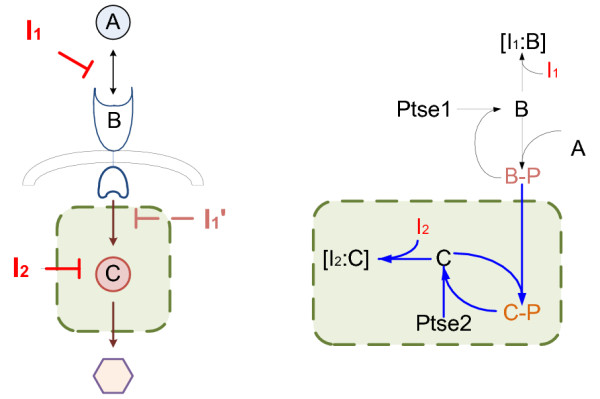
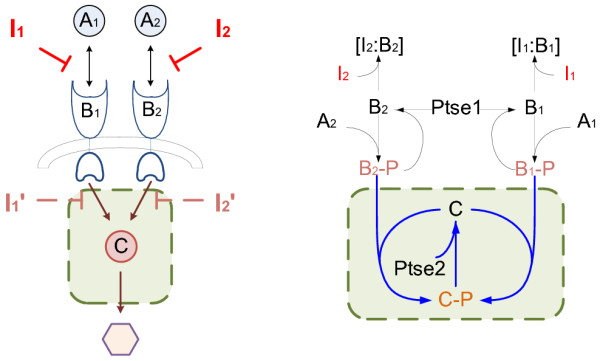
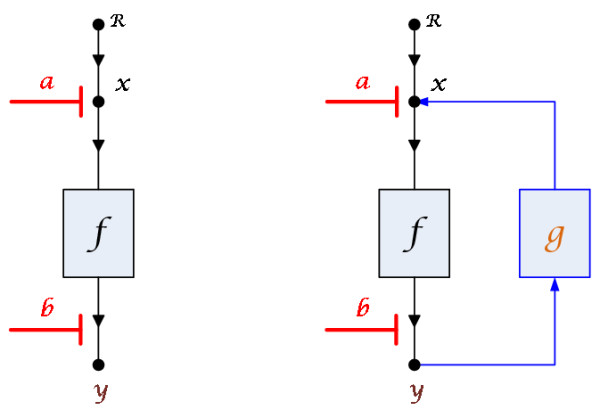
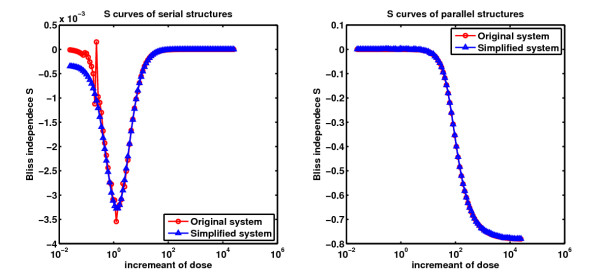
Background: Drug combination therapy is commonly used in clinical practice. Many methods including Bliss independence method have been proposed for drug combination design based on simulations models or experiments. Although Bliss independence method can help to solve the drug combination design problem when there are only a small number of combinations, as the number of combinations increases, it may not be scalable. Exploration of system structure becomes important to reduce the complexity of the design problem. Results: In this paper, we deduced a mathematical model which can simplify the serial structure and parallel structure of biological pathway for synergy evaluation of drug combinations. We demonstrated in steady state the sign of the synergism assessment factor derivative of the original system can be predicted by the sign of its simplified system. In addition, we analyzed the influence of feedback structure on survival ratio of the serial structure. We provided a sufficient condition under which the combination effect could be maintained. Furthermore, we applied our method to find three synergistic drug combinations on tumor necrosis factor α-induced NFκB pathway and subsequently verified by the cell experiment. Conclusions: We identified several structural properties underlying the Bliss independence criterion, and developed a systematic simplification framework for drug combiation desgin by combining simulation and system reaction network topology analysis. We hope that this work can provide insights to tackle the challenging problem of assessment of combinational drug therapy effect in a large scale signaling pathway. And hopefully in the future our method could be expanded to more general criteria.
Overview
The claims and statistics of this paper haven’t been checked yet.
Free: it reads the open-access text and checks the first 5 claims that cite a source we can check. Create a free account to check every claim.
Integrity signals
Registry
Cites
Statistics
Figures
Verification
Claims the paper makes
The claims and statistics of this paper haven’t been checked yet.
Free: it reads the open-access text and checks the first 5 claims that cite a source we can check. Create a free account to check every claim.
Claims other papers make about this one
Each is checked against this paper’s own text: does it say what the citing paper says it does?
The source backs part of the claim, not all of it — or backs it for a different population, condition or comparison.
In the citing paper
“If both compounds have similar mechanisms of action or affect the same cellular pathway, the model may not detect true synergy, although a reduction in cell viability is observed [38].”
From Synergistic Potential of Argentatins A and B to Improve 5‐Fluorouracil Cytotoxicity in Colorectal Cancer Cell Models (2024) · cites this paper as [38]
Experimental — accuracy not yet measuredThe cited source says what the claim attributes to it.
In the citing paper
“The Bliss Independence model predicts the combination of effects based on the probability that both compounds act separately and that their effects are independent.”
From Synergistic Potential of Argentatins A and B to Improve 5‐Fluorouracil Cytotoxicity in Colorectal Cancer Cell Models (2024) · cites this paper as [38]
The check wasn’t confident either way, so it gives no verdict — never disputed.
In the citing paper
“As a result, it could be responding more sensitively to the cumulative damage caused by 5‐fluorouracil, especially [38, 39].”
From Synergistic Potential of Argentatins A and B to Improve 5‐Fluorouracil Cytotoxicity in Colorectal Cancer Cell Models (2024) · cites this paper as [38]
Experimental — accuracy not yet measuredThe check wasn’t confident either way, so it gives no verdict — never disputed.
In the citing paper
“In a clinical context, this increase could lead to an inflammatory response and additional tissue damage, which contrasts with the less inflammatory (and more controlled) apoptosis [38, 39, 40].”
From Synergistic Potential of Argentatins A and B to Improve 5‐Fluorouracil Cytotoxicity in Colorectal Cancer Cell Models (2024) · cites this paper as [38]
Experimental — accuracy not yet measured
Self-check
Percentages, sums and reported differences re-computed from the paper’s own numbers.
The self-check needs the paper’s full text.
Citations
Cites
Chou, T.-C., & Talalay, P. (1984) · Advances in Enzyme Regulation · doi:10.1016/0065-2571(84)90007-4 · Cited by 7,178 · cited 1×
“Inspired by the Combination Index theorem offered by Chou-Talalay [10,11], here we introduce an operational concept, "Synergism Assessment Factor", for addressing the interaction of drug combination.”
MethodJaffe, E. A., Nachman, R. L., Becker, C. G., & Minick, C. R. (1973) · Journal of Clinical Investigation · doi:10.1172/jci107470 · Cited by 6,856
Drug combination studies and their synergy quantification using the Chou-Talalay method
Chou, T.-C. (2010) · Cancer Research · doi:10.1158/0008-5472.can-09-1947 · Cited by 5,739 · cited 2×
“Since Bliss model is relatively simple and still widely used by some researchers recently [16-18], we start our studies from this simple model and operationally provide a combination effect assessment index inspired by the Combination Index theorem [10-12].”
MethodChou, T.-C. (2006) · Pharmacological Reviews · doi:10.1124/pr.58.3.10 · Cited by 5,163 · cited 2×
“If the actual combined effect is higher than F UA , it is called synergism which leads many possible favorable outcomes like increasing or maintaining drug efficacy as decreasing dosage and provides fundations to the combination therapy [20].”
BackgroundTHE TOXICITY OF POISONS APPLIED JOINTLY1
BLISS, C. I. (1939) · Annals of Applied Biology · doi:10.1111/j.1744-7348.1939.tb06990.x · Cited by 2,419 · cited 2×
“Bliss independence [8] or fractional product method [19] is the index for calculating the expected dose-response relationship for drug combination therapy as compared to mono-therapy.”
MethodThe IκB-NF-κB Signaling Module: Temporal Control and Selective Gene Activation
Hoffmann, A., Levchenko, A., Scott, M. L., & Baltimore, D. (2002) · Science · doi:10.1126/science.1071914 · Cited by 1,858
Enzyme and metabolic inhibitors
Webb, J. L. (1963) · Academic Press eBooks · doi:10.5962/bhl.title.7320 · Cited by 1,514
The IKK NF-κB system: a treasure trove for drug development
Karin, M., Yamamoto, Y., & Wang, Q. M. (2004) · Nature Reviews Drug Discovery · doi:10.1038/nrd1279 · Cited by 1,364
NF-κB Controls Cell Growth and Differentiation through Transcriptional Regulation of Cyclin D1
Guttridge, D. C., Albanese, C., Reuther, J. Y., Pestell, R. G., & Baldwin, A. S. (1999) · Molecular and Cellular Biology · doi:10.1128/mcb.19.8.5785 · Cited by 1,312
(1953) · PubMed · Cited by 942
Cited by
Traditional Chinese medicine network pharmacology: theory, methodology and application
LI, S., & ZHANG, B. (2013) · Chinese Journal of Natural Medicines · doi:10.1016/s1875-5364(13)60037-0 · Cited by 1,329
Self-citationCombinatorial drug therapy for cancer in the post-genomic era
Al-Lazikani, B., Banerji, U., & Workman, P. (2012) · Nature Biotechnology · doi:10.1038/nbt.2284 · Cited by 1,070
Li, S., Zhang, B., & Zhang, N. (2011) · BMC Systems Biology · doi:10.1186/1752-0509-5-s1-s10 · Cited by 380
Self-citationCombined Use of Biocontrol Agents to Manage Plant Diseases in Theory and Practice
Xu, X.-M., Jeffries, P., Pautasso, M., & Jeger, M. J. (2011) · Phytopathology® · doi:10.1094/phyto-08-10-0216 · Cited by 266
Tang, J., & Aittokallio, T. (2014) · Current Pharmaceutical Design · doi:10.2174/13816128113199990470 · Cited by 175
Zhang, B., Wang, X., & Li, S. (2013) · Evidence-based Complementary and Alternative Medicine · doi:10.1155/2013/456747 · Cited by 171
Self-citationGeary, N. (2013) · American Journal of Physiology-Endocrinology and Metabolism · doi:10.1152/ajpendo.00308.2012 · Cited by 165
Network-based drug discovery by integrating systems biology and computational technologies
Leung, E. L., Cao, Z., Jiang, Z., Zhou, H., & Liu, L. (2012) · Briefings in Bioinformatics · doi:10.1093/bib/bbs043 · Cited by 153
Synergistic and Antagonistic Drug Combinations Depend on Network Topology
Yin, N., Ma, W., Pei, J., Ouyang, Q., Tang, C., & Lai, L. (2014) · PLoS ONE · doi:10.1371/journal.pone.0093960 · Cited by 139
“[14] introduced a simplifying strategy for efficient calculation of scores representing synergistic interactions.”
BackgroundSynergy of Silver Nanoparticles and Aztreonam against Pseudomonas aeruginosa PAO1 Biofilms
Habash, M. B., Park, A. J., Vis, E. C., Harris, R. J., & Khursigara, C. M. (2014) · Antimicrobial Agents and Chemotherapy · doi:10.1128/aac.03170-14 · Cited by 134
Goodall, M. L., Wang, T., Martin, K. R., Kortus, M. G., Kauffman, A. L., Trent, J. M., Gately, S., & MacKeigan, J. P. (2014) · Autophagy · doi:10.4161/auto.28594 · Cited by 108
Network Pharmacology: Exploring the Resources and Methodologies
Junaid, M., Khan, A., Ali, A., Fang, L., Yanjing, W., Xu, Q., & Wei, D. (2018) · Current Topics in Medicinal Chemistry · doi:10.2174/1568026618666180330141351 · Cited by 106
Exploring traditional chinese medicine by a novel therapeutic concept of network target
Li, S. (2016) · Chinese Journal of Integrative Medicine · doi:10.1007/s11655-016-2499-9 · Cited by 106
Self-citationUnderstanding the Genetic Mechanisms of Cancer Drug Resistance Using Genomic Approaches
Hu, X., & Zhang, Z. (2015) · Trends in Genetics · doi:10.1016/j.tig.2015.11.003 · Cited by 99
Systematic synergy modeling: understanding drug synergy from a systems biology perspective
Chen, D., Liu, X., Yang, Y., Yang, H., & Lu, P. (2015) · BMC Systems Biology · doi:10.1186/s12918-015-0202-y · Cited by 99
Eke, I., Schneider, L., Förster, C., Zips, D., Kunz‐Schughart, L. A., & Cordes, N. (2013) · Cancer Research · doi:10.1158/0008-5472.can-12-2021 · Cited by 96
Network Pharmacology-based Approaches Capture Essence of Chinese Herbal Medicines
Zhang, Y., Mao, X., Guo, Q., Lin, N., & Li, S. (2016) · Chinese Herbal Medicines · doi:10.1016/s1674-6384(16)60018-7 · Cited by 93
Self-citationTargeting of β1 integrins impairs DNA repair for radiosensitization of head and neck cancer cells
Dickreuter, E., Eke, I., Krause, M., Borgmann, K., van Vugt, M. A. T. M., & Cordes, N. (2015) · Oncogene · doi:10.1038/onc.2015.212 · Cited by 88
Huang, L., Jiang, Y., & Chen, Y. (2017) · Scientific Reports · doi:10.1038/srep40752 · Cited by 84
Advances in Synergistic Combinations of Chinese Herbal Medicine for the Treatment of Cancer
Hu, X., Sun, Y., Lau, E., Zhao, M., & Su, S.-B. (2016) · Current Cancer Drug Targets · doi:10.2174/1568009616666151207105851 · Cited by 77
Predict effective drug combination by deep belief network and ontology fingerprints
Chen, G., Tsoi, A., Xu, H., & Zheng, W. J. (2018) · Journal of Biomedical Informatics · doi:10.1016/j.jbi.2018.07.024 · Cited by 74
Wangorsch, G., Butt, E., Mark, R., Hubertus, K., Geiger, J., Dandekar, T., & Dittrich, M. T. (2011) · BMC Systems Biology · doi:10.1186/1752-0509-5-178 · Cited by 64
Drosophila Cancer Models Identify Functional Differences between Ret Fusions
Levinson, S., & Cagan, R. L. (2016) · Cell Reports · doi:10.1016/j.celrep.2016.08.019 · Cited by 59
Gambogic acid inhibits Hsp90 and deregulates TNF-α/NF-κB in HeLa cells
Zhang, L., Yi, Y., Chen, J., Sun, Y., Guo, Q., Zheng, Z., & Song, S. (2010) · Biochemical and Biophysical Research Communications · doi:10.1016/j.bbrc.2010.11.018 · Cited by 59
Advances in computational approaches in identifying synergistic drug combinations
Sheng, Z., Sun, Y., Yin, Z., Tang, K., & Cao, Z. (2017) · Briefings in Bioinformatics · doi:10.1093/bib/bbx047 · Cited by 49
Modeling the TNFα-Induced Apoptosis Pathway in Hepatocytes
Schlatter, R., Schmich, K., Lutz, A., Trefzger, J., Sawodny, O., Ederer, M., & Merfort, I. (2011) · PLoS ONE · doi:10.1371/journal.pone.0018646 · Cited by 44
Neighbor communities in drug combination networks characterize synergistic effect
Zou, J., Ji, P., Zhao, Y., Li, L., Wei, Y.-Q., Chen, Y., & Yang, S. (2012) · Molecular BioSystems · doi:10.1039/c2mb25267h · Cited by 42
Analysis of cancer signaling networks by systems biology to develop therapies
Prasasya, R. D., Tian, D., & Kreeger, P. K. (2011) · Seminars in Cancer Biology · doi:10.1016/j.semcancer.2011.04.001 · Cited by 38
Chen, Y., Gu, J., Li, D., & Li, S. (2011) · Bioinformatics · doi:10.1093/bioinformatics/btr619 · Cited by 37
Self-citationTargeted Cytolysins Synergistically Potentiate Cytoplasmic Delivery of Gelonin Immunotoxin
Pirie, C. M., Liu, D. V., & Wittrup, K. D. (2013) · Molecular Cancer Therapeutics · doi:10.1158/1535-7163.mct-12-1023 · Cited by 35
Yu, H., Zhang, L., Ding, X., Zheng, Y., Ho, C., Tsim, K. W. K., & Lee, Y.-K. (2013) · Evidence-based Complementary and Alternative Medicine · doi:10.1155/2013/541436 · Cited by 31
Synergy of Anaerobic Soil Disinfestation and Trichoderma spp. in Rhizoctonia Root Rot Suppression
Khadka, R. B., & Miller, S. A. (2021) · Frontiers in Sustainable Food Systems · doi:10.3389/fsufs.2021.645736 · Cited by 30
The effect of network biology on drug toxicology
Gautier, L., Taboureau, O., & Audouze, K. (2013) · Expert Opinion on Drug Metabolism & Toxicology · doi:10.1517/17425255.2013.820704 · Cited by 28
Antileukemic efficacy of a potent artemisinin combined with sorafenib and venetoclax
Moses, B. S., McCullough, S., Fox, J. M., Mott, B. T., Bentzen, S. M., Kim, M.-J., Tyner, J. W., Lapidus, R. G., Emadi, A., Rudek, M. A., et al. (2021) · Blood Advances · doi:10.1182/bloodadvances.2020003429 · Cited by 27
Yang, Y., Huang, C., Su, X., Zhu, J., Chen, X., Fu, Y., Wang, Z., Zhou, J., Xiao, W., Zheng, C., et al. (2018) · Journal of Functional Foods · doi:10.1016/j.jff.2018.02.030 · Cited by 25
Computational Analyses of Synergism in Small Molecular Network Motifs
Zhang, Y., Smolen, P. D., Baxter, D. A., & Byrne, J. H. (2014) · PLoS Computational Biology · doi:10.1371/journal.pcbi.1003524 · Cited by 22
Gu, J., Chen, L., Yuan, G., & Xu, X. (2013) · Evidence-based Complementary and Alternative Medicine · doi:10.1155/2013/203614 · Cited by 22
Li, C., Nagasaki, M., Koh, C. H., & Miyano, S. (2011) · Molecular BioSystems · doi:10.1039/c0mb00253d · Cited by 19
Pedreiro, S., Ressurreição, S., Lopes, M., Cruz, M. T., Batista, M. T., Figueirinha, A., & Ramos, F. (2020) · International Journal of Environmental Research and Public Health · doi:10.3390/ijerph18010151 · Cited by 19
Preclinical Activity of PI3K Inhibitor Copanlisib in Gastrointestinal Stromal Tumor
García‐Valverde, A., Rosell, J., Serna, G., Valverde, C. M., Carles, J., Nuciforo, P. G., Fletcher, J. A., Arribas, J., Politz, O., & Serrano, C. (2020) · Molecular Cancer Therapeutics · doi:10.1158/1535-7163.mct-19-1069 · Cited by 16
Krais, J. J., Virani, N. A., McKernan, P., Nguyen, Q. D., Fung, K., Sikavitsas, V. I., Kurkjian, C. D., & Harrison, R. G. (2017) · Molecular Cancer Therapeutics · doi:10.1158/1535-7163.mct-16-0263 · Cited by 15
Experimental designs for drug combination studies
Almohaimeed, B., & Donev, A. N. (2013) · Computational Statistics & Data Analysis · doi:10.1016/j.csda.2013.01.007 · Cited by 15
Controlling Nuclear NF-κB Dynamics by β-TrCP—Insights from a Computational Model
Benary, U., & Wolf, J. (2019) · Biomedicines · doi:10.3390/biomedicines7020040 · Cited by 14
Development and Application of Network Toxicology in Safety Research of Chinese Materia Medica
Zhang, X., Fan, H., Li, Y.-Z., Xiao, X., Liu, R., Jingwen, Q., Wang, J., Zhang, Z., Liu, C., & Xiu-ping, S. (2015) · Chinese Herbal Medicines · doi:10.1016/s1674-6384(15)60016-8 · Cited by 13
In silico identification of potential therapeutic targets in the TGF-β signal transduction pathway
Nicklas, D., & Saiz, L. (2013) · Molecular BioSystems · doi:10.1039/c3mb70259f · Cited by 9
Functionally-instructed modifiers of response to ATR inhibition in experimental glioma
Walter, B., Hirsch, S., Kuhlburger, L., Stahl, A., Schnabel, L., Wisser, S., Haeusser, L. A., Tsiami, F., Plöger, S., Aghaallaei, N., et al. (2024) · Journal of Experimental & Clinical Cancer Research · doi:10.1186/s13046-024-02995-z · Cited by 8
Haeusser, L. A., Becker, H., Kuhlburger, L., Zago, M., Walter, B., Tsiami, F., Erdmann, S., Trampert, J., Surender, S., Stahl, A., et al. (2025) · Neuro-Oncology · doi:10.1093/neuonc/noae278 · Cited by 8
Wang, P., Li, B., Liu, J., Zhang, Y., Yu, Y., Zhang, X., Yuan, Y., Guo, Z., Wu, H., Li, H., et al. (2015) · Acta Pharmacologica Sinica · doi:10.1038/aps.2014.168 · Cited by 7
Heidari-Kalvani, N., Alizadeh‐Fanalou, S., Yarahmadi, S., Fallah, S., Alipourfard, I., Farahmandian, N., Barjesteh, F., & Bahreini, E. (2023) · Naunyn-Schmiedeberg s Archives of Pharmacology · doi:10.1007/s00210-023-02767-0 · Cited by 7
Regulation of signal transduction by spatial parameters: a case in NF– κ B oscillation
Ichikawa, K., Ohshima, D., & Sagara, H. (2015) · IET Systems Biology · doi:10.1049/iet-syb.2013.0020 · Cited by 6
Sánchez‐Olivares, P., Silva‐Nolasco, A. M., de la Cruz‐Morcillo, M. A., García‐Martínez, M. M., Pinedo‐Serrano, A., Carmona, M., & Galán‐Moya, E. M. (2024) · Journal of Cellular and Molecular Medicine · doi:10.1111/jcmm.70294 · Cited by 5
Modelling approaches in tumor microenvironment.
Crespo, I., Coukos, G., Doucey, M., & Xénarios, I. (2018) · doi:10.35841/cancer-immunology.1.1.26-40 · Cited by 5
Rondina, D. B. L., de Lima, L. V. A., da Silva, M. F., Zanetti, T. A., Felicidade, I., Marques, L. A., Coatti, G. C., & Mantovani, M. S. (2022) · Toxicology in Vitro · doi:10.1016/j.tiv.2022.105474 · Cited by 5
Moritz, S., Krause, M., Schlatter, J. N., Cordes, N., & Vehlow, A. (2021) · Cancers · doi:10.3390/cancers13215337 · Cited by 5
Chinese Herbal Medicine: Perspectives
Cheng, J. (2016) · Methods in pharmacology and toxicology · doi:10.1007/978-1-4939-4002-8_14 · Cited by 4
In-vivo evaluation of human recombinant Co-arginase against A375 melanoma xenografts
Agrawal, V., Woo, J. H., Mauldin, J., Stone, E. M., Meininger, C. J., Jo, C., Kleypas, K., Frenkel, E. P., & Frankel, A. E. (2014) · Melanoma Research · doi:10.1097/cmr.0000000000000119 · Cited by 3
Parameter Estimation of Biological Pathways Using Data Assimilation and Model Checking
Li, C., Kuroyanagi, K., Nagasaki, M., & Miyano, S. (2011) · Cited by 2
A Network Target-based Approach for Evaluating Multicomponent Synergy
Li, S., Ningbo, Z., & Zhang, B. (2010) · Cited by 1
Self-citationKang, J., Kim, D.-K., Seo, Y., Yu, J., Lee, H. H., Park, J., Park, J. J., Cheon, J. H., Park, S. J., & Kim, T. I. (2025) · Gut and Liver · doi:10.5009/gnl250294 · Cited by 1
Krais, J. J., Virani, N. A., McKernan, P., Nguyen, Q., Fung, K.-M. A., Sikavitsas, V. I., Kurkjian, C. D., & Harrison, R. G. (2023) · doi:10.1158/1535-7163.22507750.v1
Walter, B., Hirsch, S., Kuhlburger, L., Stahl, A., Schnabel, L., Wisser, S., Haeusser, L. A., Tsiami, F., Plöger, S., Aghaallaei, N., et al. (2024) · Figshare · doi:10.6084/m9.figshare.26692219
Walter, B., Hirsch, S., Kuhlburger, L., Stahl, A., Schnabel, L., Wisser, S., Haeusser, L. A., Tsiami, F., Plöger, S., Aghaallaei, N., et al. (2024) · Figshare · doi:10.6084/m9.figshare.26692186
Walter, B., Hirsch, S., Kuhlburger, L., Stahl, A., Schnabel, L., Wisser, S., Haeusser, L. A., Tsiami, F., Plöger, S., Aghaallaei, N., et al. (2024) · Figshare · doi:10.6084/m9.figshare.26692195
Walter, B., Hirsch, S., Kuhlburger, L., Stahl, A., Schnabel, L., Wisser, S., Haeusser, L. A., Tsiami, F., Plöger, S., Aghaallaei, N., et al. (2024) · Figshare · doi:10.6084/m9.figshare.26692189
Walter, B., Hirsch, S., Kuhlburger, L., Stahl, A., Schnabel, L., Wisser, S., Haeusser, L. A., Tsiami, F., Plöger, S., Aghaallaei, N., et al. (2024) · Figshare · doi:10.6084/m9.figshare.26692216
Walter, B., Hirsch, S., Kuhlburger, L., Stahl, A., Schnabel, L., Wisser, S., Haeusser, L. A., Tsiami, F., Plöger, S., Aghaallaei, N., et al. (2024) · Figshare · doi:10.6084/m9.figshare.26692204
Walter, B., Hirsch, S., Kuhlburger, L., Stahl, A., Schnabel, L., Wisser, S., Haeusser, L. A., Tsiami, F., Plöger, S., Aghaallaei, N., et al. (2024) · Figshare · doi:10.6084/m9.figshare.25397550
Walter, B., Hirsch, S., Kuhlburger, L., Stahl, A., Schnabel, L., Wisser, S., Haeusser, L. A., Tsiami, F., Plöger, S., Aghaallaei, N., et al. (2024) · Figshare · doi:10.6084/m9.figshare.26692201
Walter, B., Hirsch, S., Kuhlburger, L., Stahl, A., Schnabel, L., Wisser, S., Haeusser, L. A., Tsiami, F., Plöger, S., Aghaallaei, N., et al. (2024) · Figshare · doi:10.6084/m9.figshare.26692207
Walter, B., Hirsch, S., Kuhlburger, L., Stahl, A., Schnabel, L., Wisser, S., Haeusser, L. A., Tsiami, F., Plöger, S., Aghaallaei, N., et al. (2024) · Figshare · doi:10.6084/m9.figshare.26692213
Walter, B., Hirsch, S., Kuhlburger, L., Stahl, A., Schnabel, L., Wisser, S., Haeusser, L. A., Tsiami, F., Plöger, S., Aghaallaei, N., et al. (2024) · Figshare · doi:10.6084/m9.figshare.26692210
Walter, B., Hirsch, S., Kuhlburger, L., Stahl, A., Schnabel, L., Wisser, S., Haeusser, L. A., Tsiami, F., Plöger, S., Aghaallaei, N., et al. (2024) · Figshare · doi:10.6084/m9.figshare.26692192
Walter, B., Hirsch, S., Kuhlburger, L., Stahl, A., Schnabel, L., Wisser, S., Haeusser, L. A., Tsiami, F., Plöger, S., Aghaallaei, N., et al. (2024) · Figshare · doi:10.6084/m9.figshare.25397682
Walter, B., Hirsch, S., Kuhlburger, L., Stahl, A., Schnabel, L., Wisser, S., Haeusser, L. A., Tsiami, F., Plöger, S., Aghaallaei, N., et al. (2024) · Figshare · doi:10.6084/m9.figshare.26692198
Synergy in Whole Plant Medicine: Crataegus spp .: An Example
Tassell, M. C., Keaveney, A., Kingston, R., Gilroy, D., Lehane, M., Lucey, B., & Furey, A. (2020) · Wiley eBooks · doi:10.1002/9781119036685.ch9
Evaluation of synergistic effects between phenolic compounds of Cymbopogon citratus.
Pedreiro, S. R. J. (2018) · Portuguese National Funding Agency for Science, Research and Technology (RCAAP Project by FCT)
Discoidin Domain Receptor 1 critically regulates GBM cell survival and invasion
Klapproth, E. (2018) · Qucosa (Saxon State and University Library Dresden)
Molecular targeting combined with photon and proton irradiation in human pancreatic cancer cells
Görte, J. (2021) · Qucosa (Saxon State and University Library Dresden)
Eke, I., Schneider, L., Förster, C., Zips, D., Kunz‐Schughart, L. A., & Cordes, N. (2023) · doi:10.1158/0008-5472.22397508
Metadata
- Authors
- Yan, H., Zhang, B., Li, S., & Zhao, Q.
- Affiliations
- Tsinghua University (CN)
- Corresponding author
- Li, Shao
- Zhao, Qianchuan
- Venue
- BMC Systems Biology
- Published
- 2010-04-25
- Volume
- 4
- Issue
- 1
- Pages
- 50-50
- ISSN
- 1752-0509 (ISSN-L)
- PMC
- PMC2873319
- OpenAlex
- W2165982972
- Cited by
- 73
- References
- 46
- Citations by year
- 2025: 1 · 2024: 16 · 2023: 1 · 2022: 1 · 2021: 3 · 2020: 3 · 2019: 1 · 2018: 3 · 2017: 3 · 2016: 6 · 2015: 5 · 2014: 7 · 2013: 8 · 2012: 5
- FWCI
- 2.99
- Type
- journal article
- Language
- en
- Open access
- gold
- doi.org
- Licence
- cc-by
- Locations
- BMC Systems Biology (publishedVersion, cc-by)
- PubMed Central (publishedVersion, cc-by)
- PubMed (publishedVersion)
- Funders
- National Natural Science Foundation of China (60934004, 60721003, 60736027)
- Project 211
- Topics
- Life Sciences › Biochemistry, Genetics and Molecular Biology › Molecular Biology › Gene Regulatory Network Analysis
- Life Sciences › Pharmacology, Toxicology and Pharmaceutics › Drug Discovery › Computational Drug Discovery Methods
- Life Sciences › Biochemistry, Genetics and Molecular Biology › Molecular Biology › Bioinformatics and Genomic Networks
- Keywords
- drug synergy, NF-κB signaling, TNF-α, feedback loops, drug combination design
- MeSH terms
- Algorithms, Cells, Cultured, Chemistry, Pharmaceutical, Drug Combinations, Drug Evaluation, Preclinical, Drug Therapy, Endothelium, Vascular, Humans, Models, Biological, Models, Theoretical, Tumor Necrosis Factor-alpha, Models, Statistical, NF-kappa B, Treatment Outcome, Systems Biology
About these checks
Registry, retraction, Cites and statistics results are computed, not judged, with one exception: a printed reference that no index lists is read once by a model before it counts as a citation error. Claims are extracted by a model and kept only when their quote appears verbatim in the text; each cited source is then checked, with a model’s help, for whether it says what the claim relies on. Those verdicts can be wrong — read the claim’s quote and the cited source before relying on one.
Statistics and arithmetic are recomputed, not judged.
Confidence bands are shown only for fields calibrated on our annotated test set. None is calibrated yet, so no band is shown.
What counts as a claim ›How we measure confidence ›How we check this ›
Are you an author, or do you see a problem with this page? Request a review
Data sources
Bibliographic data: Semantic Scholar, OpenAlex, Crossref.
Contains information from the Semantic Scholar Academic Graph Datasets, made available under the ODC Attribution License (ODC-BY 1.0).
Semantic Scholar’s data is described in: Kinney, R., et al. (2023). The Semantic Scholar Open Data Platform. arXiv:2301.10140.
