

Insecticide susceptibility of Aedes aegypti and Aedes albopictus in Central Africa
Open accessThe DOI matches its Crossref record; 49 of the 51 references it cites were found in a registry or an index.
Abstract
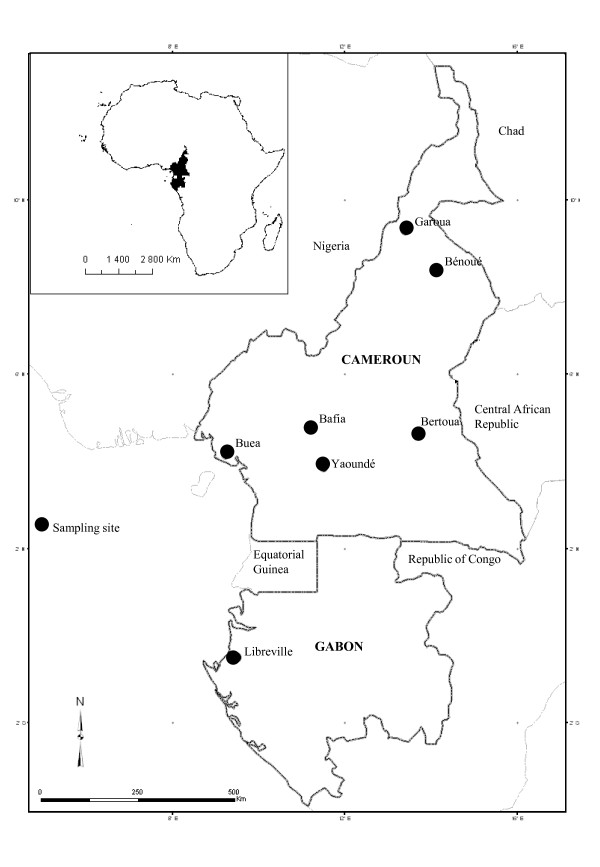
Background: Aedes aegypti(Linnaeus, 1762) and Aedes albopictus(Skuse, 1894) are the main vectors of dengue (DENV) and chikungunya (CHIKV) viruses worldwide. As there is still no vaccine or specific treatment for DENV and CHIKV, vector control remains the cornerstone of prevention and outbreak control. Unfortunately, vector control programs are facing operational challenges with mosquitoes becoming resistant to commonly used insecticides in several areas through the world. Throughout Central Africa no recent data are available susceptible/resistant status of either vector species since the introduction/arrival of Ae. albopictus in this area. We therefore studied the level of resistance of these two major vectors to insecticides commonly used in Africa for mosquito control. Results: Aedes aegypti and Ae. albopictus were sampled in six urban localities of Cameroon (Garoua, Bertoua, Yaoundé, Bafia, Buea) and Gabon (Libreville). Larval bioassays, carried out to determine the lethal concentrations (LC 50 and LC 95) and resistance ratios (RR 50 and RR 95) suggested that both vector species were susceptible to Bti(Bacillus thuringiensis var israeliensis) and temephos. Bioassays were also performed on adults using WHO diagnostic test kits to assess phenotypic resistance to deltamethrin, DDT, fenitrothion and propoxur. These experiments showed that one population of Ae. aegypti(Libreville) and two populations of Ae. albopictus(Buea and Yaoundé) were resistant to DDT (mortality 36% to 71%). Resistance to deltamethrin was also suspected in Ae. albopictus from Yaoundé (83% mortality). All other field mosquito populations were susceptible to deltamethrin, DDT, fenitrothion and propoxur. No increase in the knockdown times (Kdt 50 and Kdt 95) was noted in the Yaoundé resistant population compared to other Ae. albopictus populations, suggesting the possible involvement of metabolic resistance to deltamethrin and DDT. Conclusion: In view of the recent increase in dengue and chikungunya outbreaks in Central Africa, these unique comparative data on the insecticide susceptibility of Ae. aegypti and Ae. albopictus could help public health services to design more effective vector control measures.
Overview
The claims and statistics of this paper haven’t been checked yet.
Free: it reads the open-access text and checks the first 5 claims that cite a source we can check. Create a free account to check every claim.
Integrity signals
Registry
Cites
Statistics
Figures
Verification
Claims the paper makes
The claims and statistics of this paper haven’t been checked yet.
Free: it reads the open-access text and checks the first 5 claims that cite a source we can check. Create a free account to check every claim.
Claims other papers make about this one
Each is checked against this paper’s own text: does it say what the citing paper says it does?
The cited source says what the claim attributes to it.
In the citing paper
“Resistance to DDT, pyrethroids and other insecticides has been documented widely in dengue vectors, and continues to emerge, potentially impacting on intervention effectiveness [40, 117–119].”
From Is Dengue Vector Control Deficient in Effectiveness or Evidence?: Systematic Review and Meta-analysis (2016) · cites this paper as [117]
Self-check
Percentages, sums and reported differences re-computed from the paper’s own numbers.
The self-check needs the paper’s full text.
Citations
Cites
Insecticide Resistance in Insect Vectors of Human Disease
Hemingway, J., & Ranson, H. (2000) · Annual Review of Entomology · doi:10.1146/annurev.ento.45.1.371 · Cited by 1,558
Gubler, D. J. (2002) · Trends in Microbiology · doi:10.1016/s0966-842x(01)02288-0 · Cited by 1,523 · cited 1×
“With about 50-100 million reported cases annually, including 500 000 severe cases of dengue haemorrhagic fever (DHF) or dengue shock syndrome (DSS), DENV is the most prevalent mosquito-borne human virus worldwide [1].”
BackgroundThe molecular basis of insecticide resistance in mosquitoes
Hemingway, J., Hawkes, N. J., McCarroll, L., & Ranson, H. (2004) · Insect Biochemistry and Molecular Biology · doi:10.1016/j.ibmb.2004.03.018 · Cited by 1,109 · cited 1×
“albopictus [15,22], although a significant decrease in susceptibility to permethrin, malathion and temephos has been observed in Thailand [14].”
BackgroundAedes albopictus, an arbovirus vector: From the darkness to the light
Paupy, C., Delatte, H., Bagny, L., Corbel, V., & Fontenille, D. (2009) · Microbes and Infection · doi:10.1016/j.micinf.2009.05.005 · Cited by 1,024 · cited 2×
“Both species occur in sub-Saharan Africa: Ae. aegypti is native to Africa and Ae. albopictus has recently invaded several Central African countries [ 8 ].”
BackgroundSelf-citationDengue haemorrhagic fever: diagnosis, treatment, prevention and control
Crane, G. (1999) · Pathology · doi:10.1016/s0031-3025(16)34854-1 · Cited by 744
Dengue haemorrhagic fever: Diagnosis, treatment, prevention and control
Gould, E. A. (1998) · Transactions of the Royal Society of Tropical Medicine and Hygiene · doi:10.1016/s0035-9203(98)91100-2 · Cited by 717
Diabate, A., Baldet, T., Chandre, F., Akoobeto, M., Guiguemde, T. R., Darriet, F., Brengues, C., Guillet, P., Hemingway, J., Small, G. J., et al. (2002) · The American journal of tropical medicine and hygiene · doi:10.4269/ajtmh.2002.67.617 · Cited by 459 · cited 1×
“Contamination of larval breeding places by insecticides used in agriculture (cotton, vegetables) has also been shown to select for DDT and pyrethroid resistance in malaria vectors [48-52].”
BackgroundSelf-citationBrengues, C., Hawkes, N. J., Chandre, F., Mccarroll, L., Duchon, S., Guillet, P., Manguin, S., Morgan, J. C., & Hemingway, J. (2003) · Medical and Veterinary Entomology · doi:10.1046/j.1365-2915.2003.00412.x · Cited by 432 · cited 3×
“The Kdr mutation has been found in Ae. aegypti [ 39 ,16] but has never been reported in Ae. albopictus.”
BackgroundInfluentialSelf-citationVectors of Chikungunya virus in Senegal: current data and transmission cycles.
Diallo, M., Thonnon, J., Traore-Lamizana, M., & Fontenille, D. (1999) · The American journal of tropical medicine and hygiene · doi:10.4269/ajtmh.1999.60.281 · Cited by 423
Corbel, V., N’Guessan, R., Brengues, C., Chandre, F., Djogbenou, L., Martin, T., Akogbéto, M., Hougard, J. M., & Rowland, M. (2007) · Acta Tropica · doi:10.1016/j.actatropica.2007.01.005 · Cited by 382 · cited 2×
“Contamination of larval breeding places by insecticides used in agriculture (cotton, vegetables) has also been shown to select for DDT and pyrethroid resistance in malaria vectors [48-52].”
BackgroundSelf-citation
Research works printed but not linked: 7
- 11. WHO Report of the Scientific Working Group on dengue 2006 Document WHO/TDR/SWG/08, Geneva, Switzerland, World Health Organization
- 23. Mouchet J Cordellier V Germain M Carnevale P Barathe J Sannier C Résistance aux insecticides d'Aedes aegypti et Culex pipiens fatigans en Afrique centrale 1972 WHO/VBC/72/381, 12P, Geneva, Switzerland, World Health Organization
- 24. WHO Guidelines for laboratory and field testing of mosquito larvicides 2005 Document WHO/CDS/WHOPES/GCDPP/13, Geneva, Switzerland, World Health Organization
- 25. WHO Guidelines for testing mosquito adulticides for indoor residual spraying and treatment of mosquito nets 2006 Document WHO/CDS/NTD/WHOPES/GCDPP/3, Geneva, Switzerland, World Health Organization
- 26. Giner M Vassal C Kouaik Z Chiroleu F Vassal JM Win DL version 2.0 1999 Paris: CIRAD-CA, U.R.B.I/M.A.B.I.S
- 27. WHO Test Procedures for insecticide resistance monitoring in malaria vectors, bio-efficacy and persistence of insecticide on treated surfaces 1998 Document WHO/CDS/CPC/MAL/98.12, Geneva, Switzerland, World Health Organization
- 30. Lee HL Lime W A reevaluation of the susceptibility of field collected Aedes (Stegomyia) aegypti (Linnaeus) larvae to temephos in Malaysia Mosquito-Borne Dis Bull 1989 6 91 95
Cited by
Items 101–177 of 177
Triana, D., Siregar, F. N., Utami, E. P. W. T., Suteky, T., & Wicaksono, S. (2021) · Malaysian Journal of Public Health Medicine · doi:10.37268/mjphm/vol.21/no.1/art.467 · Cited by 17
“Mosquitoes breed in various habitats such as ponds, marshes, ditches, pools, drains, water containers, tree holes, etc.(8,9) The cycle of Aedes mosquitoes is strongly influenced by availability of water sources and climate changes.”
BackgroundThammasittirong, A., Prigyai, K., & Thammasittirong, S. N.-R. (2017) · Acta Tropica · doi:10.1016/j.actatropica.2017.07.020 · Cited by 13
“Currently, no resistance to Bti has been reported in field populations of the Aedes mosquito, even after decades of Bti treatment (Kamgang et al. 2011; Tetreau et al. 2013).”
BackgroundInsecticide Resistance Status of Aedes aegypti Adults and Larvae in Nouakchott, Mauritania
Massa, M. H., Lemrabott, M. A. O., Gomez, N., Boukhary, A. O. M. S., & Briolant, S. (2025) · Insects · doi:10.3390/insects16030288 · Cited by 12
“…information can be downloaded at: https: //www.mdpi.com/article/10.3390/insects16030288/s1, Supplementary File S1: Geographic coordinates of ovitraps in the five districts of Nouakchott; Supplementary File S2: Mortality rate of Aedes aegypti larvae from Nouakchott exposed to temephos (mg/L).”
InfluentialJangir, P. K., & Prasad, A. (2023) · Experimental Parasitology · doi:10.1016/j.exppara.2023.108619 · Cited by 11
Marcombe, S., Doeurk, B., Thammavong, P., Veseli, T., Heafield, C., Mills, M.-A., Kako, S., Prado, M. F., Thomson, S., Millett, S., et al. (2024) · Insects · doi:10.3390/insects15050358 · Cited by 12
Self-citationDiversity and distribution of sodium channel mutations in Aedes albopictus (Diptera: Culicidae)
Endersby‐Harshman, N. M., Schmidt, T. L., & Hoffmann, A. A. (2024) · Journal of Medical Entomology · doi:10.1093/jme/tjae005 · Cited by 10
Vu, T. X., Andrianov, B. V., Vu, D. C., & Goryacheva, I. I. (2020) · Russian Journal of Genetics · doi:10.1134/s1022795420040158 · Cited by 9
“Pyrethroid insecticides are currently the main tool for this purpose, since use of DDT was prohibited in Vietnam in 1995 [3, 4].”
BackgroundNawaz, S., Tahir, H. M., Mahmood, M. A., Summer, M., Ali, S., Ali, A., & Gormani, A. H. (2021) · Journal of Medical Entomology · doi:10.1093/jme/tjab137 · Cited by 9
Janich, A. J., Saavedra-Rodríguez, K., Vera-Maloof, F. Z., Kading, R. C., Rodríguez, A. D., Penilla-Navarro, R. P., López-Solís, A. D., Solís-Santoyo, F., Perera, R. M., & Black, W. C. (2020) · Journal of Medical Entomology · doi:10.1093/jme/tjaa197 · Cited by 9
Aboulfadl, S., Mellouki, F., Aouinty, B., & Faraj, C. (2020) · International Journal of Pest Management · doi:10.1080/09670874.2020.1818869 · Cited by 8
“We considered a mosquito population susceptible when RR90 was less than 2, potentially resistant when RR90 was between 2 and 5, and resistant when RR90 was over 5 (Kamgang et al. 2011).”
BackgroundSayono, S., Nurullita, U., Handoyo, W., Tyasningrum, W. S., Chakim, I., & Budiharjo, A. (2023) · Biodiversitas Journal of Biological Diversity · doi:10.13057/biodiv/d240136 · Cited by 13
Arboviruses: Transmission and Host Resistance
Anwar, S., Ahmed, B., & Qadir, M. I. (2023) · Critical Reviews in Eukaryotic Gene Expression · doi:10.1615/critreveukaryotgeneexpr.2023049820 · Cited by 7
Resistance Status of Aedes albopictus (Skuse) on Malathion in Bengkulu City
Triana, D., Umniyati, S. R., & Mulyaningsih, B. (2018) · Unnes Journal of Public Health · doi:10.15294/ujph.v7i2.20153 · Cited by 7
Pemba, D. F., Chiumia, M., & Mhango, C. (2014) · doi:10.13140/2.1.2784.4804 · Cited by 6
Silva‐Filha, M. H. N. L. (2017) · Springer eBooks · doi:10.1007/978-3-319-56678-8_15 · Cited by 6
Gonçalves, J. S. S., Martins, A. J., Corbel, V., Harburguer, L., González, C. R., Rodovalho, C. D. M., & Lima, J. B. P. (2026) · Insects · doi:10.3390/insects17030264 · Cited by 5
Self-citationKeumeni, C. R., Yougang, A. P., Njiokou, F., Clarke, S. E., Lines, J., Wondji, C. S., & Kamgang, B. (2025) · Parasites & Vectors · doi:10.1186/s13071-025-06943-4 · Cited by 6
“These observations are consistent with the previous studies carried out in Cameroon [29–33, 51] , elsewhere in Africa [ 51– 56] and A partial or full recovery of susceptibility observed in the different populations of A. aegypti to perme-thrin, deltamethrin, alphacypermethrin and bendiocarb after…”
Self-citationNamountougou, M., Soma, D. D., Kaboré, D. P. A., N’Do, S., Kientega, M., Sawadogo, J. M., Kagone, T., Kania, D., Sanou, R., Sangaré, I., et al. (2020) · African Entomology · doi:10.4001/003.028.0142 · Cited by 5
“Several studies in Africa have demonstrated the widespread resistance mechanisms within the Ae. aegypti population (Brengues et al. 2003; Kamgang et al. 2011; Ngoagouni et al. 2016) and confirmed what was reported in Ouagadougou, a city in Burkina Faso (Sombié et al. 2019).”
BackgroundHassandoust, S., Moosa‐Kazemi, S. H., Vatandoost, H., Sedaghat, M. M., & Akbarzadeh, K. (2020) · Journal of arthropod-borne diseases · doi:10.18502/jad.v14i2.3748 · Cited by 4
“DDT resistance in the adult of Aedes aegypti, Ae. albopictus and susceptibility to Temephos, Bacillus thuringiensis and metabolic resistance of the current species to deltamethrin and DDT have been reported in Africa (17).”
BackgroundPrasad, P., Lata, S., Kumar, D., Gupta, S. K., Saxena, R., Arya, D. K., & Singh, H. (2023) · Journal of Vector Borne Diseases · doi:10.4103/0972-9062.374044 · Cited by 4
Single jar for collecting and rearing mosquito life stages: An innovative prototype
Kachhwaha, N. (2024) · Journal of Vector Borne Diseases · doi:10.4103/jvbd.jvbd_57_24 · Cited by 4
Insecticide Susceptibility Status of Aedes albopictus in Dengue Hotspot Areas in Malaysia
Zuharah, W. F., Zuharah, W. F., Mohiddin, A., Lasim, A. M., Jaal, Z., & Jaal, Z. (2021) · ASM Science Journal · doi:10.32802/asmscj.2020.558 · Cited by 4
“…is still no promising vaccine for DENV, CHIKV and ZIKV, a control program for both vector species is essential to prevent an outbreak (Chuaycharoensuk et. al., 2011; Polsomboon et. al., 2008; Kamgang et al., 2011) with attention to eliminate breeding sites and larval habitats via source reduction.”
BackgroundInfluentialCorbel, V., Fonseca, D. M., Weetman, D., Pinto, J., Achee, N. L., Chandre, F., Coulibaly, M. B., Dusfour, I., Grieco, J. P., Juntarajumnong, W., et al. (2017) · Parasites & Vectors · doi:10.1186/s13071-017-2327-x · Cited by 5
Self-citationAbdullahi, Y. M., Fana, S. A., Bandiya, H. M., Batagarawa, U. S., Zulkarnain, M., & Uthman, H. L. (2022) · International Journal of Mosquito Research · doi:10.22271/23487941.2022.v9.i2a.598 · Cited by 3
Yu, H., Li, Y., Wang, H., Zhang, L., Suo, P., Su, T., & Han, Q. (2024) · Pest Management Science · doi:10.1002/ps.8094 · Cited by 3
“1 However, Ae. aegypti has developed resistance to traditional chemical insecticides, such as propoxur, deltamethrin, dichlorodiphenyl-trichloroethane (DDT), 2 and even the newly developed product that is based on the juvenile hormone mimic pyriproxyfen.”
Chen, M., Yan, R., Xu, Z., Zhou, Q., & Wu, Y. (2025) · International Journal of Tropical Insect Science · doi:10.1007/s42690-025-01437-3 · Cited by 3
“The values of dosage in fumigation bioassay were ng/L. Knock - down was recorded at 5 min intervals such as permethrin and deltamethrin (Kamgang et al. 2011; Xue 2008).”
Issouf, T., Coulibaly, I. Z., Konan, L. Y., Allali, K. B., Ahoua, Y., & Dosso, M. B. (2022) · European Scientific Journal ESJ · doi:10.19044/esj.2022.v18n27p31 · Cited by 2
DENGUE VECTOR CONTROL APPROACHES: EXISTING OPTIONS AND THE WAY FORWARD
Universiti Teknologi, M. A. R. A., SALLEH, S. N. M., Dom, N. C., Universiti Teknologi, M. A. R. A., Rahim, S. A., Universiti Teknologi, M. A. R. A., MOHAMED, E., Universiti Teknologi, M. A. R. A., HARON, N., Universiti Teknologi, M. A. R. A., et al. (2022) · Journal of Sustainability Science and Management · doi:10.46754/jssm.2022.12.018 · Cited by 2
Triana, D., Hardiansyah, H., & Taurina, H. (2020) · Dharma Raflesia Jurnal Ilmiah Pengembangan dan Penerapan IPTEKS · doi:10.33369/dr.v18i1.10913 · Cited by 2
The dynamics of delayed models for interactive wild and sterile mosquito populations
Wang, J., Yue, P., & Cai, L. (2022) · International Journal of Biomathematics · doi:10.1142/s179352452250108x · Cited by 2
TURAN, M. (2023) · Sakarya University Journal of Science · doi:10.16984/saufenbilder.1338063 · Cited by 2
Teles, F. (2011) · Cited by 2
Provision of Epidemiological Surveillance and Prophylaxis of Zika Fever in the Russian Federation
Welfare, F. S. F. S. I. T. S. O. C. R. P. A. H., Popova, A. Y., Ezhlova, E. B., Welfare, F. S. F. S. I. T. S. O. C. R. P. A. H., Demina, Y. V., Welfare, F. S. F. S. I. T. S. O. C. R. P. A. H., Куличенко, А. Н., Dubyansky, V. M., Maletskaya, O. V., Шапошникова, Л. И., et al. (2016) · Problems of Particularly Dangerous Infections · doi:10.21055/0370-1069-2016-2-5-10 · Cited by 2
Invasion of the Dengue Vector Aedes albopictus in the Port City of Takoradi, Southwestern GhanaPreprint
Owusu, F. A., Owusu-Asenso, C. M., Abdulai, A., Sraku, I. K., Forson, A. O., Anim‐Baidoo, I., & Afrane, Y. A. (2025) · Research Square · doi:10.21203/rs.3.rs-7407322/v1 · Cited by 2
“Moreover, studies in West and Central Africa, including Côte d'Ivoire, Benin, Cameroon and the Central African Republic have reported insecticide resistance in Ae. albopictus populations 2, 3, 18, 19 , signaling the potential for similar challenges in Ghana.”
Jangir, P. K., & Prasad, A. (2025) · Proceedings of the Zoological Society · doi:10.1007/s12595-025-00578-0 · Cited by 1
“A. albopictus from Malaysia (Ishak et al. 2015), regions of Central Africa (Kamgang et al. 2011), and China (Cui et al. 2006) reported resistance with low mortality.”
Obame‐Nkoghe, J., Kondji, F. M., Diouf, E. H., Thiaw, O. T., Niangui, B. G., Ondo‐Oyono, A., Nguema, Y. O., Longo-Pendy, N. M., Mounioko, F., Makanga, B. K., et al. (2025) · Parasite · doi:10.1051/parasite/2025036 · Cited by 1
“In Gabon speci fi cally, resistance assessments in Aedes mosquitoes have been restricted to temephos for larval stages, and to DDT, deltamethrin, pro-poxur, and fenitrothion for adults, with con fi rmed resistance in adult Ae. aegypti to DDT [19].”
Self-citationQadir, M. S., Hafeez, F., Hussain, D., Akram, W., Iftikhar, A., Saleem, M. J., & Saleem, U. (2025) · The Journal of Animal and Plant Sciences · doi:10.36899/japs.2025.5.0113 · Cited by 1
Maiga, A.-A., Sombié, A., Zanré, N., Maiga, R., Laminou, I. M., Doumma, A., Sanon, A., & Badolo, A. (2025) · Insects · doi:10.3390/insects16090870 · Cited by 1
“In Central Africa, countries such as Cameroon [26,27], Gabon [26], Central African Republic [28], and the Republic of Congo [29] also reported higher susceptibility levels according to RR 50 values.”
Triana, D., Gunasari, L. F. V., Martini, M., Suwondo, A., & Sofro, M. A. U. (2025) · Dharma Raflesia Jurnal Ilmiah Pengembangan dan Penerapan IPTEKS · doi:10.33369/dr.v23i1.39717 · Cited by 1
“…penemuan kasus dan pengobatan serta penguatan tata laksana penanganan penyakit dan cedera; (4) pemberdayaan masyarakat dalam pengendalian penyakit dan penguatan sanitasi total berbasis masyarakat (Kamgang et al ., 2011; Lima et al ., 2011; Arslan et al ., 2016; Kementerian Kesehatan RI, 2021).”
Maiga, A.-A., Medjigbodo, A. A., Toé, K. H., Sombié, A., Fotso-Toguem, Y. G., Djogbénou, L., Weetman, D., & Badolo, A. (2026) · Medical and Veterinary Entomology · doi:10.1111/mve.70113 · Cited by 1
Обеспечение эпидемиологического надзора и профилактики лихорадки Зика в Российской Федерации
Попова, А., Ezhlova, E. B., Демина, Ю. В., Куличенко, А. Н., Дубянский, В. М., Малецкая, О. В., Шапошникова, Л. И., Тохов, Ю. М., Toporkov, A. V., Viktorov, D. V., et al. (2016) · CyberLeninK (CyberLeninka) · doi:10.21055/0370-1069-2016-2-88-90 · Cited by 1
Dengue Fever in Adults, a Retrospective Study
Debes, M. S. (2016) · American Journal of Internal Medicine · doi:10.11648/j.ajim.20160406.11 · Cited by 1
“Transmission via bite of the mosquito Aedes Aegypti which is the main vector [36] and affects millions of people annually [8] so it is considered the most prevalent mosquito born infection worldwide [20].”
BackgroundObenauer, J. (2017) · Digital Commons - East Tennessee State University (East Tennessee State University) · Cited by 3
Larvicidal Susceptibility Studies of a few Strains of Aedes Vectors of Bengaluru, Karnataka, India
Shetty, N. J. (2019) · JOURNAL OF COMMUNICABLE DISEASES · doi:10.24321/0019.5138.201905 · Cited by 1
Kim, D., & Kim, D. (2020) · Entomological Research · doi:10.1111/1748-5967.12430 · Cited by 1
“…population due to ease of use and quick responses; however, the overuse of synthetic chemical insecticides such as organophosphate has allowed mosquitoes to develop insecticide resistance by modifying the target site of the insecticide (Kamgang et al. 2011; Khan et al. 2011; Ranson et al. 2010).”
BackgroundAstuti, R. D. I., Ismawati, I., & Siswanti, L. H. (2019) · Global Medical & Health Communication (GMHC) · doi:10.29313/gmhc.v7i3.3662 · Cited by 2
Triyana, R., Putri, T. A., Primawati, I., Susanti, M., Adelin, P., & Salmi, S. (2022) · Malahayati Nursing Journal · doi:10.33024/mnj.v4i11.8018 · Cited by 1
Tietcheu, B. R. G., Ayangma, E. N., Wouatedem, S., & Nguele, H. C. M. (2021) · medRxiv · doi:10.1101/2021.09.03.21263073 · Cited by 1
Mehlhorn, H. (2016) · Springer eBooks · doi:10.1007/978-3-662-43978-4_73 · Cited by 1
Tetreau, G. (2012) · theses.fr (ABES) · doi:10.70675/784618cbza19dz401ezb056zcbbdab028b33 · Cited by 3
Faucon, F. (2015) · theses.fr (ABES) · doi:10.70675/f56d97a3zd9abz427azbf1dze8e43d27be94 · Cited by 2
The effectiveness of mosquito control strategies for chikungunya: a systematic review protocol
Chen, Z. (2014) · The JBI Database of Systematic Reviews and Implementation Reports · doi:10.11124/jbisrir-2014-1659
Khan, G. Z. (2014) · HEC National Digital Library
Perfil de suscetibilidade da população de Aedes aegypti (Diptera: Culicidae) da ilha de
da Rocha, D. R. (2014)
Chen, Z. (2014) · Adelaide Research & Scholarship (AR&S) (University of Adelaide)
Tambo, E., Khayeka‐Wandabwa, C., abwa, Olalubi, O. A., Ngogang, J. Y., & Khater, E. I. M. (2017)
Abdullahi, I. N., Babayo, A., Shehu, M. S., & Musa, P. O. (2017) · Microbiologia medica · doi:10.4081/mm.2017.6704
Tabbabi, A., Daaboub, J., Laamari, A., Cheikh, R. B., Feriani, M., Boubaker, C., Jha, I. B., & Cheikh, H. B. (2019) · Entomological News · doi:10.3157/021.128.0511
Gualberto, D. A., & Demayo, C. G. (2022) · International Journal of Mosquito Research · doi:10.22271/23487941.2022.v9.i2a.602
Mehlhorn, H. (2015) · Springer eBooks · doi:10.1007/978-3-642-27769-6_73-2
Susceptibility of the Dengue Vector Aedes aegypti to Various Insecticides in Lahore, Pakistan
Nargus, S. (2022) · International Journal of Pathogen Research · doi:10.9734/ijpr/2022/v10i430259
“Our study emphasized the susceptibility of Ae. aegypti to commonly used (DDVP and Deltametnrin) insecticides and newly introduced fipronil and imidacloprid in Lahore city.”
ResultInfluentialAriani, N. F., Budiharjo, A., & Sayono (2023) · PROSIDING SEMINAR KESEHATAN MASYARAKAT · doi:10.26714/pskm.v1ioktober.242
“Hasil penelitian ini dapat melengkapi informasi sebelumnya yang menyatakan bahwa Ae. albopictus telah resisten terhadap insektisida golongan piretroid di Afrika, dan Thailand [18, 19], dan juga di Pakistan [20], meskipun penelitian sebelumnya menggunakan bahan aktif yang berbeda, yaitu permetrin.”
BackgroundAboulfadl, S., Mellouki, F., Ameur, B., & Faraj, C. (2023) · Archives of Clinical and Biomedical Research · doi:10.26502/acbr.50170351
Optimizing Soluble Recombinant Expression of the Aedes Aegypti Early Trypsin Protease
Millan, N. (2023) · San José State University ScholarWorks (San Jose State University) · doi:10.31979/etd.cxwf-6t43
Prakash, J. M. (2024) · African Journal of Biomedical Research · doi:10.53555/ajbr.v27i4s.6074
Adjobi, C. N., Adja, M. A., Sombié, A., Diakaridia, F., Fodjo, B. K., Yaro, M., Zanré, N., Koudou, B. G., Müller, P., Weetman, D., et al. (2026) · Research Square · doi:10.21203/rs.3.rs-9025253/v1
Marcombe, S. (2011) · theses.fr (ABES) · doi:10.70675/0c12cce8z9eb0z4b6czaf8az0568d9a2a449 · Cited by 1
Self-citationRaquin, V. (2012) · theses.fr (ABES) · doi:10.70675/3232b48az19b2z43dczadcezfac06f19141f · Cited by 5
Résistances aux insecticides chez les Culicidae vecteurs en territoires insulaires
Pocquet, N. (2014) · theses.fr (ABES) · doi:10.70675/e6ba6a1ez65d1z4682z8e10z76702b3315ce
Saucereau, Y. (2016) · theses.fr (ABES) · doi:10.70675/d414e885z2868z47abzab7dzefcf1a90e7de · Cited by 1
Etude de la résistance cuticulaire chez Anopheles gambiae
Yahouédo, G. A. (2017) · theses.fr (ABES) · doi:10.70675/e0e731a9z0253z41d9z9c5bzee1d0b4ba178
Xiong, J., Ma, R., Wu, Y., Wang, G., & Ai, H. (2026) · Genes · doi:10.3390/genes17060707
“Thus, alternative vector control strategies such as insect growth regulators (IGRs), microbial pesticides, plant essential oils, and a large number of highly efficient, low-toxicity biological mosquito repellents are urgently needed and have become important choices [8,9].”
Longo-Pendy, N. M., Ondo‐Oyono, A., Makanga, B. K., Andrianandrasana, M. F., Oboulou, R., Assengone, E. E., Mounioko, F., Nkoghe‐Nkoghe, L. C., Akone‐Ella, O., Ngangué, M. F., et al. (2026) · Parasites & Vectors · doi:10.1186/s13071-026-07551-6
“The detection of Aedes species, particularly Ae. albopictus , is of epidemiological significance given its efficiency in transmitting arboviruses and its rapid expansion across Central Africa [60–63].”
Metadata
- Authors
- Kamgang, B., Marcombe, S., Chandre, F., Nchoutpouen, E., Nwane, P., Etang, J., Corbel, V., & Paupy, C.
- Affiliations
- Maladies Infectieuses et Vecteurs: Écologie, Génétique, Évolution et Contrôle (FR)
- Organisation de Coordination pour la lutte contre les Endémies en Afrique Centrale (CM)
- Corresponding author
- Paupy, Christophe
- ORCID
- Venue
- Parasites & Vectors
- Published
- 2011-05-15
- Volume
- 4
- Issue
- 1
- Pages
- 79-79
- ISSN
- 1756-3305 (ISSN-L)
- PMC
- PMC3121691
- OpenAlex
- W2105312231
- Cited by
- 167
- References
- 51
- Citations by year
- 2026: 5 · 2025: 9 · 2024: 7 · 2023: 11 · 2022: 10 · 2021: 12 · 2020: 15 · 2019: 10 · 2018: 8 · 2017: 15 · 2016: 11 · 2015: 15 · 2014: 14 · 2013: 9 · 2012: 11
- FWCI
- 12.27
- Type
- journal article
- Language
- en
- Open access
- gold
- doi.org
- Licence
- cc-by
- Locations
- Parasites & Vectors (publishedVersion, cc-by)
- PubMed Central (publishedVersion, cc-by)
- PubMed (publishedVersion)
- HAL (submittedVersion, cc-by)
- DOAJ (DOAJ: Directory of Open Access Journals) (submittedVersion, cc-by-sa)
- Funders
- Agence Nationale de la Recherche
- Topics
- Health Sciences › Medicine › Public Health, Environmental and Occupational Health › Mosquito-borne diseases and control
- Health Sciences › Medicine › Public Health, Environmental and Occupational Health › Dengue and Mosquito Control Research
- Life Sciences › Biochemistry, Genetics and Molecular Biology › Molecular Biology › Insect Resistance and Genetics
- Keywords
- Aedes aegypti, Aedes albopictus, insecticide resistance, mosquito vector control, dengue vector, chikungunya vector, deltamethrin resistance, DDT resistance, fenitrothion, propoxur, temephos, knockdown time, metabolic resistance, Central Africa
- MeSH terms
- Aedes, Animals, Cameroon, Cities, Drug Resistance, Gabon, Insecticides, Larva, Survival Analysis
About these checks
Registry, retraction, Cites and statistics results are computed, not judged, with one exception: a printed reference that no index lists is read once by a model before it counts as a citation error. Claims are extracted by a model and kept only when their quote appears verbatim in the text; each cited source is then checked, with a model’s help, for whether it says what the claim relies on. Those verdicts can be wrong — read the claim’s quote and the cited source before relying on one.
Statistics and arithmetic are recomputed, not judged.
Confidence bands are shown only for fields calibrated on our annotated test set. None is calibrated yet, so no band is shown.
What counts as a claim ›How we measure confidence ›How we check this ›
Are you an author, or do you see a problem with this page? Request a review
Data sources
Bibliographic data: Semantic Scholar, OpenAlex, Crossref.
Contains information from the Semantic Scholar Academic Graph Datasets, made available under the ODC Attribution License (ODC-BY 1.0).
Semantic Scholar’s data is described in: Kinney, R., et al. (2023). The Semantic Scholar Open Data Platform. arXiv:2301.10140.
