

The DOI matches its Crossref record; 32 of the 34 references it cites were found in a registry or an index.
An online tool for mapping insecticide resistance in major Anopheles vectors of human malaria parasites and review of resistance status for the Afrotropical region
Open accessAbstract
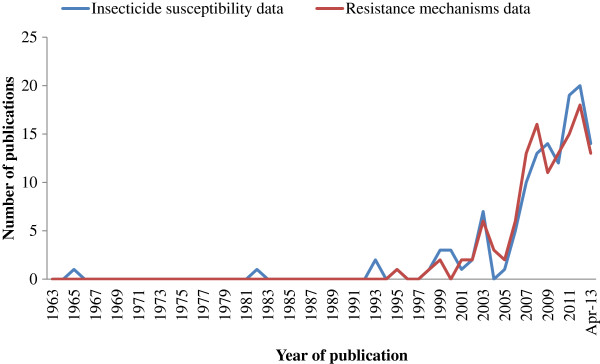
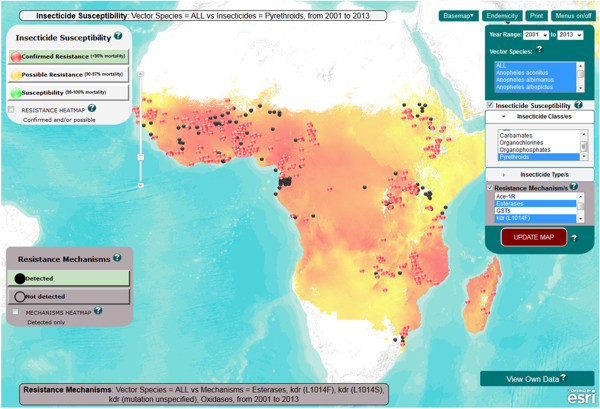
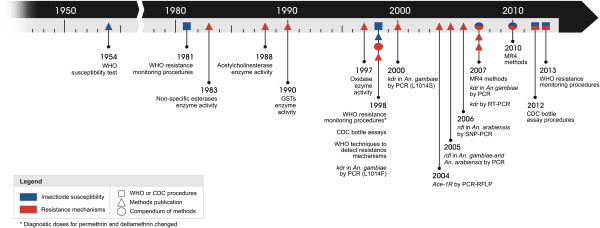
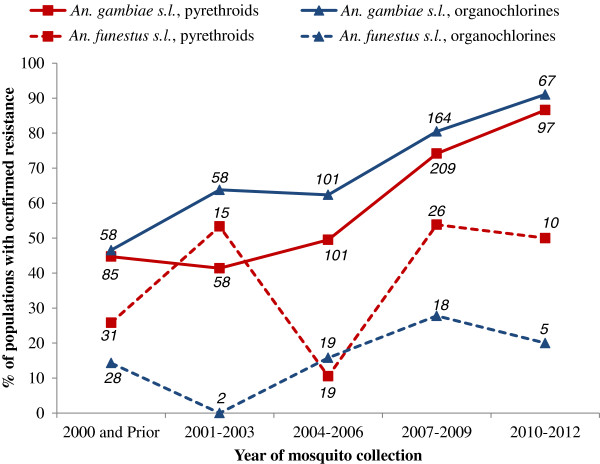
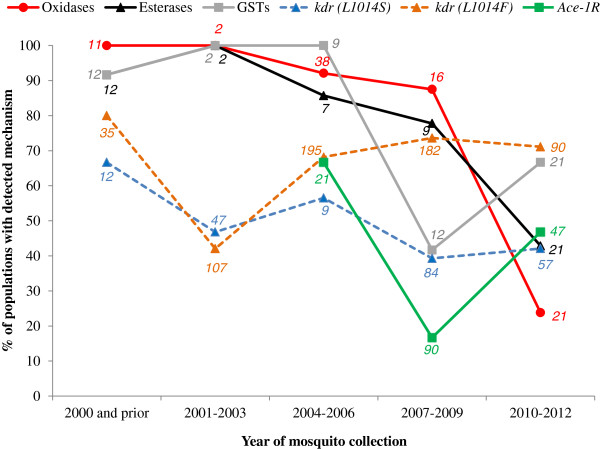
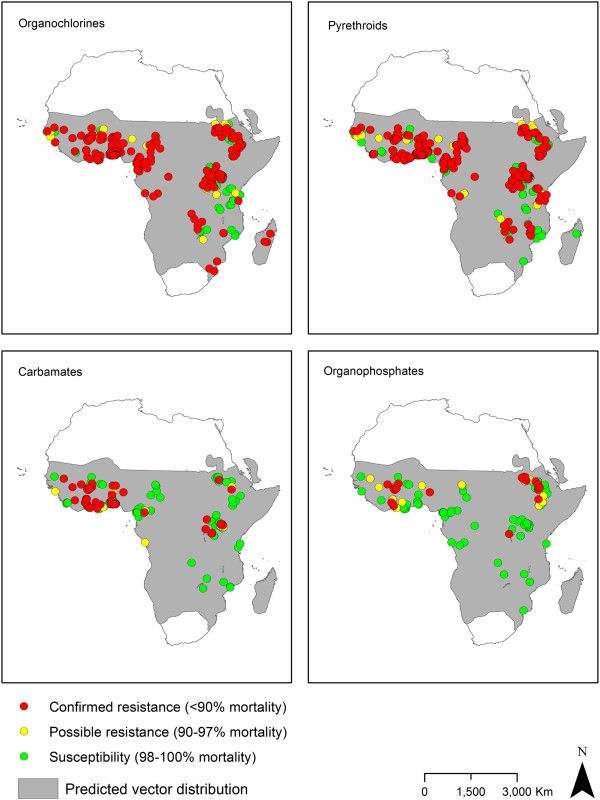
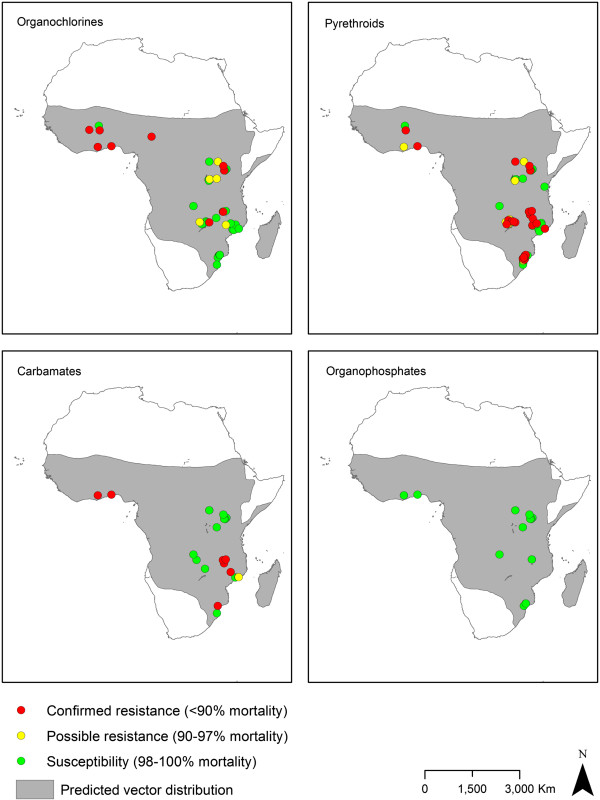
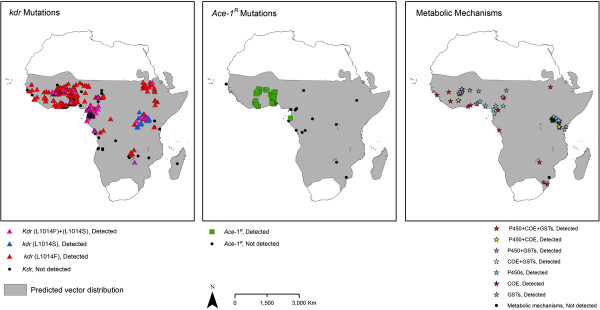
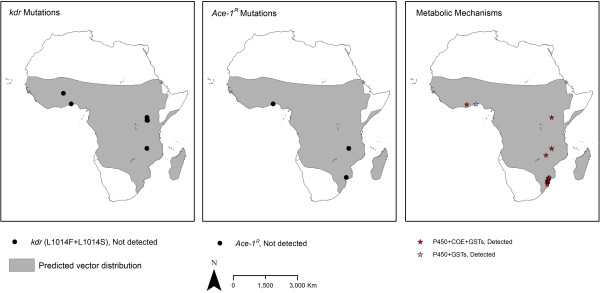
Background: Malaria control programmes across Africa and beyond are facing increasing insecticide resistance in the major anopheline vectors. In order to preserve or prolong the effectiveness of the main malaria vector interventions, up-to-date and easily accessible insecticide resistance data that are interpretable at operationally-relevant scales are critical. Herein we introduce and demonstrate the usefulness of an online mapping tool, IR Mapper. Methods: A systematic search of published, peer-reviewed literature was performed and Anopheles insecticide susceptibility and resistance mechanisms data were extracted and added to a database after a two-level verification process. IR Mapper ( http://www.irmapper.com ) was developed using the ArcGIS for JavaScript Application Programming Interface and ArcGIS Online platform for exploration and projection of these data. Results: Literature searches yielded a total of 4,084 susceptibility data points for 1,505 populations, and 2,097 resistance mechanisms data points for 1,000 populations of Anopheles spp. tested via recommended WHO methods from 54 countries between 1954 and 2012. For the Afrotropical region, data were most abundant for populations of An. gambiae , and pyrethroids and DDT were more often used in susceptibility assays (51.1 and 26.8% of all reports, respectively) than carbamates and organophosphates. Between 2001 and 2012, there was a clear increase in prevalence and distribution of confirmed resistance of An. gambiae s.l. to pyrethroids (from 41 to 87% of the mosquito populations tested) and DDT (from 64 to 91%) throughout the Afrotropical region. Metabolic resistance mechanisms were detected in western and eastern African populations and the two kdr mutations (L1014S and L1014F) were widespread. For An. funestus s.l., relatively few populations were tested, although in 2010–2012 resistance was reported in 50% of 10 populations tested. Maps are provided to illustrate the use of IR Mapper and the distribution of insecticide resistance in malaria vectors in Africa. Conclusions: The increasing pyrethroid and DDT resistance in Anopheles in the Afrotropical region is alarming. Urgent attention should be afforded to testing An. funestus populations especially for metabolic resistance mechanisms. IR Mapper is a useful tool for investigating temporal and spatial trends in Anopheles resistance to support the pragmatic use of insecticidal interventions.
Overview
The claims and statistics of this paper haven’t been checked yet.
Run the check — free, no account needed. It reads the open-access text and checks the sources it cites.
Integrity signals
Registry
Cites
Statistics
Figures
Verification
Claims the paper makes
The claims and statistics of this paper haven’t been checked yet.
Run the check — free, no account needed. It reads the open-access text and checks the sources it cites.
Claims other papers make about this one
Each is checked against this paper’s own text: does it say what the citing paper says it does?
The cited source says what the claim attributes to it.
In the citing paper
“Resistance to these compounds has been largely described in human disease vectors, especially in the African malaria vectors [7–9].”
From Mapping insecticide resistance in Anopheles gambiae (s.l.) from Côte d'Ivoire (2018) · cites this paper as [7]
Self-check
Percentages, sums and reported differences re-computed from the paper’s own numbers.
The self-check needs the paper’s full text.
Citations
Cites
A new world malaria map: Plasmodium falciparum endemicity in 2010
Gething, P. W., Patil, A. P., Smith, D. L., Guerra, C. A., Elyazar, I., Johnston, G. L., Tatem, A. J., & Hay, S. I. (2011) · Malaria Journal · doi:10.1186/1475-2875-10-378 · Cited by 1,169
Ranson, H., N’Guessan, R., Lines, J., Moiroux, N., Nkuni, Z., & Corbel, V. (2011) · Trends in Parasitology · doi:10.1016/j.pt.2010.08.004 · Cited by 1,142
Self-citationA supplement to the Anophelinae of Africa south of the Sahara (Afrotropical Region).
Gillies, M. T., & Coetzee, M. (1987) · IHI Repository · Cited by 812
Self-citationA global map of dominant malaria vectors
Sinka, M. E., Bangs, M. J., Manguin, S., Rubio-Palis, Y., Chareonviriyaphap, T., Coetzee, M., Mbogo, C. M., Hemingway, J., Patil, A. P., Temperley, W. H., et al. (2012) · Parasites & Vectors · doi:10.1186/1756-3305-5-69 · Cited by 792
Self-citationSinka, M. E., Bangs, M. J., Manguin, S., Coetzee, M., Mbogo, C. M., Hemingway, J., Patil, A. P., Temperley, W. H., Gething, P. W., Kabaria, C. W., et al. (2010) · Parasites & Vectors · doi:10.1186/1756-3305-3-117 · Cited by 761
Self-citationAnopheles coluzzii and Anopheles amharicus, new members of the Anopheles gambiae complex
Coetzee, M., Hunt, R. H., Wilkerson, R. C., della Torre, A., Coulibaly, M. B., & Besansky, N. J. (2013) · Zootaxa · doi:10.11646/zootaxa.3619.3.2 · Cited by 562
Self-citationA Long Neglected World Malaria Map: Plasmodium vivax Endemicity in 2010
Gething, P. W., Elyazar, I., Moyes, C. L., Smith, D. L., Battle, K. E., Guerra, C. A., Patil, A. P., Tatem, A. J., Howes, R. E., Myers, M. F., et al. (2012) · PLoS neglected tropical diseases · doi:10.1371/journal.pntd.0001814 · Cited by 560
Andrews, K. G., Fergus, C. A., Aregawi, M. W., Cibulskis, R. E., & Zamani, G. (2014) · Cited by 552
Distribution of African Malaria Mosquitoes Belonging to the Anopheles gambiae Complex
Coetzee, M., Craig, M., & le Sueur, D. (2000) · Parasitology Today · doi:10.1016/s0169-4758(99)01563-x · Cited by 487
Self-citation(U.S.), N. L. O. M. (2008) · Journal of Pain & Palliative Care Pharmacotherapy · doi:10.1080/15360280801989377 · Cited by 474
Satellite imagery in the study and forecast of malaria
Rogers, D. J., Randolph, S., Snow, R. W., & Hay, S. I. (2002) · Nature · doi:10.1038/415710a · Cited by 445
On the distribution and genetic differentiation of Anopheles gambiae s.s. molecular forms
della Torre, A., Tu, Z., & Petrarca, V. (2005) · Insect Biochemistry and Molecular Biology · doi:10.1016/j.ibmb.2005.02.006 · Cited by 244
Lindsay, S. W., Parson, L., & Thomas, C. J. (1998) · Proceedings of the Royal Society B Biological Sciences · doi:10.1098/rspb.1998.0369 · Cited by 236
Cohuet, A., Simard, F., Toto, J.-C., Kengne, P., Coetzee, M., & Fontenille, D. (2003) · American Journal of Tropical Medicine and Hygiene · doi:10.4269/ajtmh.2003.69.200 · Cited by 191
Self-citationCoetzee, M., & Koekemoer, L. L. (2013) · Annual Review of Entomology · doi:10.1146/annurev-ento-120811-153628 · Cited by 180
Self-citationMalaria in Africa: Vector Species' Niche Models and Relative Risk Maps
Moffett, A. S., Shackelford, N., & Sarkar, S. (2007) · PLoS ONE · doi:10.1371/journal.pone.0000824 · Cited by 173
Risk factors for persisting neurological and cognitive impairments following cerebral malaria
Idro, R. (2005) · Archives of Disease in Childhood · doi:10.1136/adc.2005.077784 · Cited by 149
Anopheles arabiensis and An. quadriannulatus resistance to DDT in South Africa
Hargreaves, K., Hunt, R. H., Brooke, B. D., Mthembu, J., Weeto, M. M., Awolola, T. S., & Coetzee, M. (2003) · Medical and Veterinary Entomology · doi:10.1111/j.1365-2915.2003.00460.x · Cited by 145
Self-citationHabitat suitability and ecological niche profile of major malaria vectors in Cameroon
Ayala, D., Costantini, C., Osé, K., Kamdem, G. C., Antonio‐Nkondjio, C., Agbor, J., Awono‐Ambene, P., Fontenille, D., & Simard, F. (2009) · Malaria Journal · doi:10.1186/1475-2875-8-307 · Cited by 124
LEVINE, R. S., PETERSON, A. T., & BENEDICT, M. Q. (2004) · The American Journal of Tropical Medicine and Hygiene · doi:10.4269/ajtmh.2004.70.105 · Cited by 117
de Souza, D. K., Kelly‐Hope, L. A., Lawson, B. W., Wilson, M. D., & Boakye, D. A. (2010) · PLoS ONE · doi:10.1371/journal.pone.0009927 · Cited by 112
President's Malaria Initiative
Stoops, C. A. (2008) · Cited by 98
Kulkarni, M. A., Desrochers, R. E., & Kerr, J. T. (2010) · PLoS ONE · doi:10.1371/journal.pone.0009396 · Cited by 85
Coleman, M. M., SHARP, B. L., Seocharan, I., & Hemingway, J. (2006) · Journal of Medical Entomology · doi:10.1603/0022-2585(2006)43[663:daedss]2.0.co;2 · Cited by 68
Tsy, J.-M. L. P., Duchemin, J., Marrama, L., Rabarison, P., Goff, G. L., Rajaonarivelo, V., & Robert, V. (2003) · Malaria Journal · doi:10.1186/1475-2875-2-33 · Cited by 61
Sogoba, N., Vounatsou, P., Bagayoko, M. M., Doumbia, S., Dolo, G., Gosoniu, L., Traore, S. F., Touré, Y. T., & Smith, T. A. (2007) · Geospatial health · doi:10.4081/gh.2007.269 · Cited by 49
VULULE, J. M., Beach, R., Atieli, F., Mount, D. L., Roberts, J. M., & Mwangi, R. W. (1996) · Medical and Veterinary Entomology · doi:10.1111/j.1365-2915.1996.tb00084.x · Cited by 48
Dialynas, E., Topalis, P., VONTAS, J. G., & Louis, C. (2009) · PLoS neglected tropical diseases · doi:10.1371/journal.pntd.0000465 · Cited by 37
Post‐Malaria Neurological Syndrome: A Case Report and Review of the Literature: Table 1
Markley, J. D., & Edmond, M. B. (2009) · Journal of Travel Medicine · doi:10.1111/j.1708-8305.2009.00349.x · Cited by 37
Economic Burden of Malaria in six Countries of Africa
Okorosobo, T., Okorosobo, F., Mwabu, G., Orem, J. N., & Kirigia, J. M. (2011) · European Journal of Business and Management · Cited by 36
Coetzee, M., Hunt, R. H., Braack, L., & Davidson, G. (1993) · South African Journal of Science · Cited by 30
Self-citationRogers, W. M., Robbins, R. G., & Cope, S. E. (2009) · PubMed · Cited by 1
Research works printed but not linked: 9
- Coetzee M, Horne DWK, Brooke BD, Hunt RH: DDT, dieldrin and pyrethroid insecticide resistance in African malaria vector mosquitoes: an historical review and implications for future malaria control in southern Africa. Sth Afr J Sci. 1999, 95: 215-218.
- WHO: Global Plan for Insecticide Resistance Management in malaria vectors. 2012, Geneva: World Health Organization
- WHO: Test procedures for insecticide resistance monitoring in malaria vector mosquitoes. 2013, Geneva: World Health Organization
- National library of medicine. (US) [http://www.ncbi.nlm.nih.gov/pmc/],
- Google scholar. [http://scholar.google.com/],
- WHO: Instructions for Determining the Susceptibility or Resistance of Adult Mosquitos to Organochlorine, Organophosphate and Carbamate Insecticides – Diagnostic Test. WHO/VBC/81.806. 1981, Geneva: World Health Organization
- WHO: Report of WHO informal consultations. Test Procedures for Insecticide Resistance Monitoring in Malaria Vectors, bio-Efficacy and Persistence of Insecticides on Treated Surfaces. 1998, Geneva: World Health Organization
- WHO/AFRO: Malaria Vector Control (Grant ID# 45785) – “Filling the gap Between Product Development and Effective Delivery”: Atlas of Insecticide Resistance in Malaria Vectors of the WHO African Region. 2012, Brazzaville: WHO Regional Office for Africa
- CDC: Guideline for Evaluation Insecticide Resistance in Vectors Using the CDC Bottle Bioassay. 2012, Atlanta: Centres for Disease Control and Prevention
Cited by
Sorted by citations
Ranson, H., & Lissenden, N. (2016) · Trends in Parasitology · doi:10.1016/j.pt.2015.11.010 · Cited by 989
Moyes, C. L., VONTAS, J. G., Martins, A. J., Ng, L. C., Koou, S. Y., Dusfour, I., Raghavendra, K., Pinto, J., Corbel, V., David, J., et al. (2017) · PLoS neglected tropical diseases · doi:10.1371/journal.pntd.0005625 · Cited by 931
Insecticide Resistance and Management Strategies in Urban Ecosystems
Zhu, F., Lavine, L. C., O'Neal, S. D., Lavine, M., Foss, C. R., & Walsh, D. B. (2016) · Insects · doi:10.3390/insects7010002 · Cited by 230
Mnzava, A. P., Knox, T. B., Temu, E. A., Trett, A., Fornadel, C. M., Hemingway, J., & Renshaw, M. (2015) · Malaria Journal · doi:10.1186/s12936-015-0693-4 · Cited by 215
Self-citationExposing Anopheles mosquitoes to antimalarials blocks Plasmodium parasite transmission
Paton, D. G., Childs, L. M., Itoe, M. A., Holmdahl, I. E., Buckee, C. O., & Catteruccia, F. (2019) · Nature · doi:10.1038/s41586-019-0973-1 · Cited by 148
Metadata
- Authors
- Knox, T. B., Juma, E. O., Ochomo, E. O., Pates Jamet, H., Ndungo, L., Chege, P., Bayoh, N. M., N’Guessan, R., Christian, R. N., Hunt, R. H., & Coetzee, M.
- Affiliations
- Vestergaard (Switzerland) (CH)
- Maseno University (KE)
- Kenya Medical Research Institute (KE)
- National Health Laboratory Service (ZA)
- University of the Witwatersrand (ZA)
- Corresponding author
- Coetzee, Maureen
- ORCID
- Venue
- Parasites & Vectors
- Published
- 2014-02-21
- Volume
- 7
- Issue
- 1
- Pages
- 76-76
- ISSN
- 1756-3305 (ISSN-L)
- PMC
- PMC3942210
- OpenAlex
- W2099799315
- Cited by
- 146
- References
- 34
- Citations by year
- 2026: 4 · 2025: 8 · 2024: 15 · 2023: 4 · 2022: 13 · 2021: 13 · 2020: 10 · 2019: 10 · 2018: 16 · 2017: 19 · 2016: 20 · 2015: 9 · 2014: 5
- FWCI
- 17.58
- Type
- journal article
- Language
- en
- Open access
- gold
- doi.org
- Licence
- cc-by
- Locations
- Parasites & Vectors (publishedVersion, cc-by)
- Europe PMC (PubMed Central) (publishedVersion, cc-by)
- PubMed Central (publishedVersion, cc-by)
- PubMed (publishedVersion)
- ResearchOnline at James Cook University (James Cook University) (acceptedVersion)
- DOAJ (DOAJ: Directory of Open Access Journals) (acceptedVersion)
- Greater South Information System
- Funders
- Department of Science and Technology, Ministry of Science and Technology, India
- President's Malaria Initiative
- Topics
- Health Sciences › Medicine › Public Health, Environmental and Occupational Health › Malaria Research and Control
- Life Sciences › Biochemistry, Genetics and Molecular Biology › Molecular Biology › Insect Resistance and Genetics
- Life Sciences › Immunology and Microbiology › Parasitology › Vector-borne infectious diseases
- Keywords
- malaria vectors, Anopheles gambiae, Anopheles funestus, pyrethroid resistance, DDT resistance, metabolic resistance, kdr mutation, online mapping tools, Afrotropical region, spatial distribution of resistance, malaria vector control, carbamates, organophosphates
- MeSH terms
- Africa, Animals, Anopheles, DDT, Humans, Insect Vectors, Insecticide Resistance, Insecticides, Malaria, Mutation, Pyrethrins, Insect Proteins, Permethrin, Spatio-Temporal Analysis
About these checks
Registry, retraction, Cites and statistics results are computed, not judged, with one exception: a printed reference that no index lists is read once by a model before it counts as a citation error. Claims are extracted by a model and kept only when their quote appears verbatim in the text; each cited source is then checked, with a model’s help, for whether it says what the claim relies on. Those verdicts can be wrong — read the claim’s quote and the cited source before relying on one.
Statistics and arithmetic are recomputed, not judged.
Confidence bands are shown only for fields calibrated on our annotated test set. None is calibrated yet, so no band is shown.
What counts as a claim ›How we measure confidence ›How we check this ›
Are you an author, or do you see a problem with this page? Request a review
