

The DOI matches its Crossref record; 1 of the 1 references it cites were found in a registry or an index.
Pharmacology of Antihistamines
Overview
The claims and statistics of this paper haven’t been checked yet.
Run the check — free, no account needed. It reads the open-access text and checks the sources it cites.
Integrity signals
Registry
Cites
Statistics
Figures
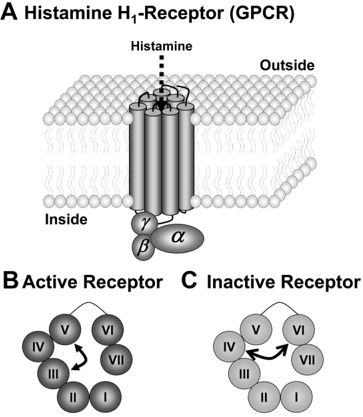
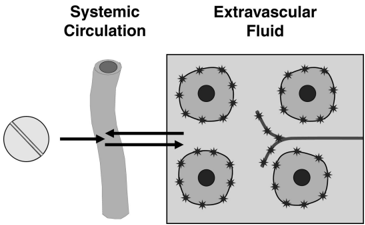
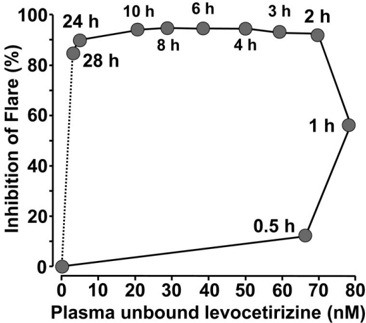
Verification
Claims the paper makes
The claims and statistics of this paper haven’t been checked yet.
Run the check — free, no account needed. It reads the open-access text and checks the sources it cites.
Claims other papers make about this one
Each is checked against this paper’s own text: does it say what the citing paper says it does?
In the citing paper
“Unlike traditional antagonists, which simply block a receptor from being activated by an agonist, an inverse agonist actively reduces the receptor's intrinsic activity even in the absence of a natural ligand (like histamine) [248].”
From Pollen–Food Allergy Syndrome: Allergens, Clinical Insights, Diagnostic and Therapeutic Challenges (2024) · cites this paper as [248]
In the citing paper
“Antihistamines primarily act as H1 receptor inverse agonists to block the effects of histamine at H1 receptors.”
From Pollen–Food Allergy Syndrome: Allergens, Clinical Insights, Diagnostic and Therapeutic Challenges (2024) · cites this paper as [248]
Self-check
Percentages, sums and reported differences re-computed from the paper’s own numbers.
The self-check needs the paper’s full text.
Citations
Cites
Bachert, C., Bousquet, J., Canonica, G. W., Durham, S. R., Klimek, L., Mullol, J., Van Cauwenberge, P. B., & Van Hammée, G. (2004) · Journal of Allergy and Clinical Immunology · doi:10.1016/j.jaci.2004.05.070 · Cited by 215
Research works printed but not linked: 68
- Windaus, 1907, Synthese des imidazolylathylamins, Ber Dtsch Chem Ges, 3, 3691, 10.1002/cber.190704003164 · DOI
- Staub, 1937, Action de la thymoxyethyldiethylamine (929F) et des ethers phenoliques sur le choc anaphylactique, Compt Rend Soc Biol, 125, 818
- Halpern, 1942, Les antihistaminiques desynthese. Essais de chemotherapie des etats allergiques, Arch Int Pharmacodyn Ther, 681, 339
- Loew, 1946, The antihistamine properties of benadryl, B dimethylaminoethyl benzhydryl ether hydrochloride, J Pharmacol Exp Ther, 86, 229, 10.1016/S0022-3565(25)07849-8 · DOI
- Emanuel, 1999, Histamine and the antiallergic antihistamines: a history of their discoveries, Clin Exp Allergy, 29, 1, 10.1046/j.1365-2222.1999.00004.x-i1 · DOI
- Leurs, 2001, Histamine receptors are finally 'coming out.', Trends Pharmacol Sci, 22, 337, 10.1016/S0165-6147(00)01691-6 · DOI
- Hill, 2006, G-protein-coupled receptors: past, present and future, Br J Pharmacol, 147, S27, 10.1038/sj.bjp.0706455 · DOI
- Fukui, 1994, Molecular cloning of the human histamine H1 receptor gene, Biochem Biophys Res Commun, 201, 894, 10.1006/bbrc.1994.1786 · DOI
- De Backer, 1998, Structure of the human histamine H1 receptor gene, Biochem J, 335, 663, 10.1042/bj3350663 · DOI
- McCudden, 2005, G-protein signaling: back to the future, Cell Mol Life Sci, 62, 551, 10.1007/s00018-004-4462-3 · DOI
- Wieland, 1999, Mutational analysis of the antagonist-binding site of the histamine H-1 receptor, J Biol Chem, 274, 29994, 10.1074/jbc.274.42.29994 · DOI
- Gillard, 2002, Binding characteristics of cetirizine and levocetirizine to human H(1) histamine receptors: contribution of Lys(191) and Thr(194), Mol Pharmacol, 61, 391, 10.1124/mol.61.2.391 · DOI
- Leurs, 2002, H1-antihistamines: inverse agonism, anti-inflammatory actions and cardiac effects, Clin Exp Allergy, 32, 489, 10.1046/j.0954-7894.2002.01314.x · DOI
- Haas, 2003, The role of histamine and the tuberomamillary nucleus in the nervous system, Nat Rev Neurosci, 4, 121, 10.1038/nrn1034 · DOI · Paper page
- Brown, 2001, The physiology of brain histamine, Prog Neurobiol, 63, 637, 10.1016/S0301-0082(00)00039-3 · DOI
- Simons, 2004, Advances in H1-antihistamines, N Engl J Med, 351, 2203, 10.1056/NEJMra033121 · DOI
- Juniper, 2005, Clinical outcomes and adverse effect monitoring in allergic rhinitis, J Allergy Clin Immunol, 115, S390, 10.1016/j.jaci.2004.12.014 · DOI
- Adam, 1986, The hypnotic effects of an antihistamine: promethazine, Br J Clin Pharmacol, 22, 715, 10.1111/j.1365-2125.1986.tb02962.x · DOI
- Boyle, 2006, Allergy medication in Japanese volunteers: treatment effect of single doses on nocturnal sleep architecture and next day residual effects, Curr Med Res Opin, 22, 1343, 10.1185/030079906X112660 · DOI
- Rojas-Zamorano, 2009, The H1 histamine receptor blocker, chlorpheniramine, completely prevents the increase in REM sleep induced by immobilization stress in rats, Pharmacol Biochem Behav, 91, 291, 10.1016/j.pbb.2008.07.011 · DOI
- Kay, 1997, Initial and steady-state effects of diphenhydramine and loratadine on sedation, cognition, mood, and psychomotor performance, Arch Intern Med, 157, 2350, 10.1001/archinte.1997.00440410082009 · DOI
- Church, 2010, Should first-generation H1-antihistamines still be available as over-the-counter medications? A GA[2]LEN task force report, Allergy, 65, 459, 10.1111/j.1398-9995.2009.02325.x · DOI · Paper page
- Starke, 2005, Boxed warning added to promethazine labeling for pediatric use, N Engl J Med, 352, 2653, 10.1056/NEJM200506233522522 · DOI
- Holgate, 2003, Consensus Group on New-Generation Antihistamines (CONGA): present status and recommendations, Clin Exp Allergy, 33, 1305, 10.1046/j.1365-2222.2003.01769.x · DOI
- Hunt, 2000, Endogenous airway acidification. Implications for asthma pathophysiology, Am J Respir Crit Care Med, 161, 694, 10.1164/ajrccm.161.3.9911005 · DOI
- Gillard, 2006, Changes in pH differently affect the binding properties of histamine H1 receptor antagonists, Eur J Pharmacol, 530, 205, 10.1016/j.ejphar.2005.11.051 · DOI
- Russell, 1998, Pharmacokinetics, pharmacodynamics, and tolerance of single-and multiple-dose fexofenadine hydrochloride in healthy male volunteers, Clin Pharmacol Ther, 64, 612, 10.1016/S0009-9236(98)90052-2 · DOI
- Tannergren, 2003, Multiple transport mechanisms involved in the intestinal absorption and first-pass extraction of fexofenadine, Clin Pharmacol Ther, 74, 423, 10.1016/S0009-9236(03)00238-8 · DOI
- Gillard, 2005, Histamine H1 receptor occupancy and pharmacodynamics of second generation H1-antihistamines, Inflamm Res, 54, 367, 10.1007/s00011-005-1368-3 · DOI
- Molimard, 2004, Comparison of pharmacokinetics and metabolism of desloratadine, fexofenadine, levocetirizine and mizolastine in humans, Fundam Clin Pharmacol, 18, 399, 10.1111/j.1472-8206.2004.00254.x · DOI
- Popov, 2006, A comparison of levocetirizine and desloratadine in the histamine-induced wheal and flare response in human skin in vivo, Inflamm Res, 55, 241, 10.1007/s00011-006-0075-z · DOI
- Gillman, 2009, The concept of receptor occupancy to predict clinical efficacy: a comparison of second generation H1 antihistamines, Allergy Asthma Proc, 30, 366, 10.2500/aap.2009.30.3226 · DOI
- Berger, 2006, Efficacy of desloratadine, 5 mg, compared with fexofenadine, 180 mg, in patients with symptomatic seasonal allergic rhinitis, Allergy Asthma Proc, 27, 214, 10.2500/aap.2006.27.2851 · DOI
- Bachert, 2009, A review of the efficacy of desloratadine, fexofenadine, and levocetirizine in the treatment of nasal congestion in patients with allergic rhinitis, Clin Ther, 31, 921, 10.1016/j.clinthera.2009.05.017 · DOI
- Potter, 2009, Comparison of the efficacy of levocetirizine 5 mg and desloratadine 5 mg in chronic idiopathic urticaria patients, Allergy, 64, 596, 10.1111/j.1398-9995.2008.01893.x · DOI
- Staevska, 2010, The effectiveness of levocetirizine and desloratadine in up to 4 times conventional doses in difficult-to-treat urticaria, J Allergy Clin Immunol, 125, 676, 10.1016/j.jaci.2009.11.047 · DOI
- Simons, 2007, Relevance of H1-receptor occupancy to H1-antihistamine dosing in children, J Allergy Clin Immunol, 119, 1551, 10.1016/j.jaci.2007.02.048 · DOI
- Grant, 2002, A double-blind, randomized, single-dose, crossover comparison of levocetirizine with ebastine, fexofenadine, loratadine, mizolastine, and placebo: suppression of histamine-induced wheal-and-flare response during 24 hours in healthy male subjects, Ann Allergy Asthma Immunol, 88, 190, 10.1016/S1081-1206(10)61995-3 · DOI
- Purohit, 2003, Twenty-four-hour activity and consistency of activity of levocetirizine and desloratadine in the skin, Br J Clin Pharmacol, 56, 388, 10.1046/j.1365-2125.2003.01897.x · DOI
- Purohit, 2004, Comparative activity of cetirizine and desloratadine on histamine-induced wheal-and-flare responses during 24 hours, Ann Allergy Asthma Immunol, 92, 635, 10.1016/S1081-1206(10)61429-9 · DOI
- Purohit, 2001, Twenty-four hours of activity of cetirizine and fexofenadine in the skin, Ann Allergy Asthma Immunol, 86, 387, 10.1016/S1081-1206(10)62483-0 · DOI
- Miura, 2010, Clinical pharmacokinetics of fexofenadine enantiomers, Expert Opin Drug Metab Toxicol, 6, 69, 10.1517/17425250903382615 · DOI
- Bakker, 2001, Histamine H(1)-receptor activation of nuclear factor-kappa B: roles for G beta gamma- and G alpha(q/11)-subunits in constitutive and agonist-mediated signaling, Mol Pharmacol, 60, 1133, 10.1124/mol.60.5.1133 · DOI
- Cheng J, Yang XN, Liu X, Zhang SP: Capsaicin for allergic rhinitis in adults. Cochrane Database Syst Rev. 2006, CD004460-2 · DOI
- Canonica, 2008, Levocetirizine in persistent allergic rhinitis: continuous or on-demand use? A pilot study, Curr Med Res Opin, 24, 2829, 10.1185/03007990802395927 · DOI
- Devillier, 2008, Clinical pharmacokinetics and pharmacodynamics of desloratadine, fexofenadine and levocetirizine: a comparative review, Clin Pharmacokinet, 47, 217, 10.2165/00003088-200847040-00001 · DOI
- Schinkel, 1999, P-Glycoprotein, a gatekeeper in the blood-brain barrier, Adv Drug Deliv Rev, 36, 179, 10.1016/S0169-409X(98)00085-4 · DOI
- Chen, 2003, P-glycoprotein limits the brain penetration of nonsedating but not sedating H1-antagonists, Drug Metab Dispos, 31, 312, 10.1124/dmd.31.3.312 · DOI
- Cvetkovic, 1999, OATP and P-glycoprotein transporters mediate the cellular uptake and excretion of fexofenadine, Drug Metab Dispos, 27, 866
- Tashiro, 2004, Central effects of fexofenadine and cetirizine: measurement of psychomotor performance, subjective sleepiness, and brain histamine H1-receptor occupancy using 11C-doxepin positron emission tomography, J Clin Pharmacol, 44, 890, 10.1177/0091270004267590 · DOI
- Hindmarch, 2002, An evaluation of the effects of high-dose fexofenadine on the central nervous system: a double-blind, placebo-controlled study in healthy volunteers, Clin Exp Allergy, 32, 133, 10.1046/j.0022-0477.2001.01245.x · DOI
- Tashiro, 2009, Dose dependency of brain histamine H1 receptor occupancy following oral administration of cetirizine hydrochloride measured using PET with [(11)C]doxepin, Hum Psychopharmacol, 24, 540, 10.1002/hup.1051 · DOI
- Meltzer, 1996, Comparative outdoor study of the efficacy, onset and duration of action, and safety of cetirizine, loratadine, and placebo for seasonal allergic rhinitis, J Allergy Clin Immunol, 97, 617, 10.1016/S0091-6749(96)70307-X · DOI
- Howarth, 1999, Double-blind, placebo-controlled study comparing the efficacy and safety of fexofenadine hydrochloride (120 and 180 mg once daily) and cetirizine in seasonal allergic rhinitis, J Allergy Clin Immunol, 104, 927, 10.1016/S0091-6749(99)70070-9 · DOI
- Salmun, 2000, Loratadine versus cetirizine: assessment of somnolence and motivation during the workday, Clin Ther, 22, 573, 10.1016/S0149-2918(00)80045-4 · DOI
- Mann, 2000, Sedation with "non-sedating" antihistamines: four prescription-event monitoring studies in general practice, BMJ, 320, 1184, 10.1136/bmj.320.7243.1184 · DOI · Paper page
- De Vos, 2008, Non-interventional study comparing treatment satisfaction in patients treated with antihistamines, Clin Drug Investig, 28, 221, 10.2165/00044011-200828040-00003 · DOI
- Day, 2004, Comparative clinical efficacy, onset and duration of action of levocetirizine and desloratadine for symptoms of seasonal allergic rhinitis in subjects evaluated in the Environmental Exposure Unit (EEU), Int J Clin Pract, 58, 109, 10.1111/j.1368-5031.2004.0117.x · DOI · Paper page
- Woosley, 1996, Cardiac actions of antihistamines, Annu Rev Pharmacol Toxicol, 36, 233, 10.1146/annurev.pa.36.040196.001313 · DOI
- Jo, 2009, H(1) antihistamine drug promethazine directly blocks hERG K(+) channel, Pharmacol Res, 60, 429, 10.1016/j.phrs.2009.05.008 · DOI
- Park, 2008, Blockade of HERG K+ channel by an antihistamine drug brompheniramine requires the channel binding within the S6 residue Y652 and F656, J Appl Toxicol, 28, 104, 10.1002/jat.1252 · DOI
- Zareba, 1997, Electrocardiographic findings in patients with diphenhydramine overdose, Am J Cardiol, 80, 1168, 10.1016/S0002-9149(97)00634-6 · DOI
- Ten Eick, 2001, Safety of antihistamines in children, Drug Saf, 24, 119, 10.2165/00002018-200124020-00003 · DOI
- DuBuske, 1999, Second-generation antihistamines: the risk of ventricular arrhythmias, Clin Ther, 21, 281, 10.1016/S0149-2918(00)88286-7 · DOI
- Simons, 2003, Efficacy and safety of desloratadine in the treatment of perennial allergic rhinitis, J Allergy Clin Immunol, 111, 617, 10.1067/mai.2003.168 · DOI
- Hulhoven, 2007, Levocetirizine does not prolong the QT/QTc interval in healthy subjects: results from a thorough QT study, Eur J Clin Pharmacol, 63, 1011, 10.1007/s00228-007-0366-5 · DOI
- Simons, 2002, Comparative pharmacology of H1 antihistamines: clinical relevance, Am J Med, 113, 38S, 10.1016/S0002-9343(02)01436-5 · DOI
- Simons, 2002, Clinical pharmacology of H1-antihistamines in the skin, J Allergy Clin Immunol, 110, 777, 10.1067/mai.2002.129123 · DOI
Cited by
Sorted by citations
Pollen–Food Allergy Syndrome: Allergens, Clinical Insights, Diagnostic and Therapeutic Challenges
Haidar, L., Bănărescu, C. F., Uța, C., Moldovan, S. I., Zimbru, E.-L., Zimbru, R.-I., Ciurariu, E., Georgescu, M., & Panaitescu, C. (2024) · Applied Sciences · doi:10.3390/app15010066 · Cited by 21
Metadata
- Authors
- Church, D. S., & Church, M. K.
- Venue
- World Allergy Organization Journal
- Publisher
- Elsevier BV
- Published
- 2011
- Volume
- 4
- Pages
- S22-S27
- ISSN
- 1939-4551
- Cited by
- 57
- References
- 1
- Language
- en
About these checks
Registry, retraction, Cites and statistics results are computed, not judged, with one exception: a printed reference that no index lists is read once by a model before it counts as a citation error. Claims are extracted by a model and kept only when their quote appears verbatim in the text; each cited source is then checked, with a model’s help, for whether it says what the claim relies on. Those verdicts can be wrong — read the claim’s quote and the cited source before relying on one.
Statistics and arithmetic are recomputed, not judged.
Confidence bands are shown only for fields calibrated on our annotated test set. None is calibrated yet, so no band is shown.
What counts as a claim ›How we measure confidence ›How we check this ›
Are you an author, or do you see a problem with this page? Request a review
