

The DOI matches its Crossref record; 32 of the 32 references it cites were found in a registry or an index.
Overexpression of aldo-keto-reductase in azole-resistant clinical isolates of Candida glabrata determined by cDNA-AFLP
Open accessAbstract
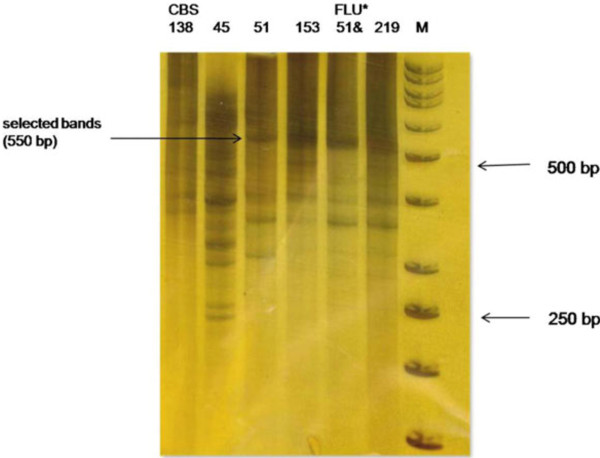
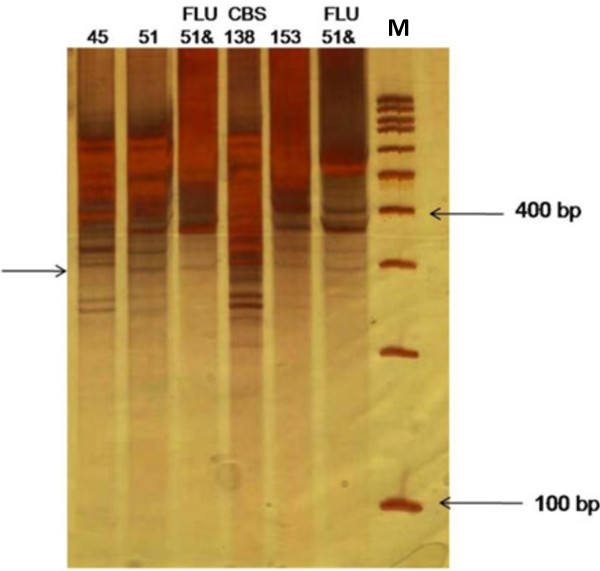
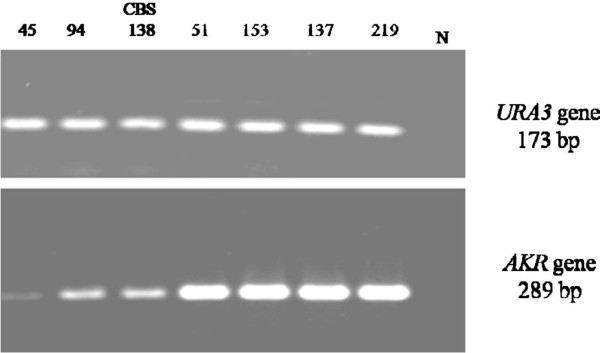
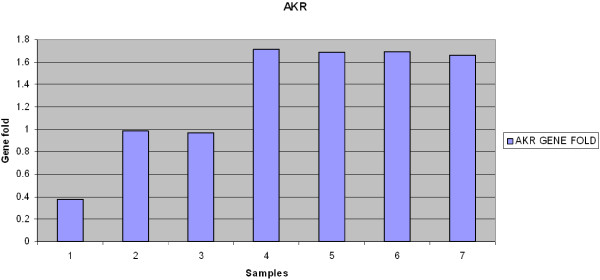
BACKGROUND: Candida glabrata causes significant medical problems in immunocompromised patients. Many strains of this yeast are intrinsically resistant to azole antifungal agents, and treatment is problematic, leading to high morbidity and mortality rates in immunosuppressed individuals. The primary goal of this study was to investigate the genes involved in the drug resistance of clinical isolates of C. glabrata. METHODS: The clinical isolates of C. glabrata were collected in an epidemiological survey of candidal infection in immunocompromised patients and consisted of four fluconazole and itraconazole resistant isolates, two fluconazole and itraconazole sensitive isolates, and C. glabrata CBS 138 as reference strain. Antifungal susceptibility patterns of the organisms were determined beforehand by the Clinical and Laboratory Standards Institute (CLSI). The potential gene(s) implicated in antifungal resistance were investigated using complementary DNA- Amplified Fragment Length Polymorphism (cDNA-AFLP). Semi-quantitative RT-PCR was carried out to evaluate the expression of gene(s) in resistant isolates as compared to sensitive and reference strains. RESULTS AND CONCLUSIONS: The aldo-keto-reductase superfamily (AKR gene) was upregulated in the resistant clinical isolates as assessed by cDNA-AFLP. Semi-quantitative RT-PCR revealed AKR mRNA expression approximately twice that seen in the sensitive isolates. Overexpression of the AKR gene was associated with increased fluconazole and itraconazole resistance in C. glabrata. The data suggest that upregulation of the AKR gene might give a new insight into the mechanism of azole resistance.
Overview
The claims and statistics of this paper haven’t been checked yet.
Run the check — free, no account needed. It reads the open-access text and checks the sources it cites.
Integrity signals
Registry
Cites
Statistics
Figures
Verification
Claims the paper makes
The claims and statistics of this paper haven’t been checked yet.
Run the check — free, no account needed. It reads the open-access text and checks the sources it cites.
Claims other papers make about this one
Each is checked against this paper’s own text: does it say what the citing paper says it does?
In the citing paper
“Candida glabrata clinical isolates are known to have the aldo-keto-reductase superfamily upregulated in the resistant isolates.”
From Candida glabrata Biofilms: How Far Have We Come? (2017) · cites this paper as [109]
Self-check
Percentages, sums and reported differences re-computed from the paper’s own numbers.
The self-check needs the paper’s full text.
Citations
Cites
Epidemiology of Invasive Candidiasis: a Persistent Public Health Problem
Pfaller, M. A., & Diekema, D. J. (2007) · Clinical Microbiology Reviews · doi:10.1128/cmr.00029-06 · Cited by 4,174 · cited 1×
“Opportunistic fungal infections occur in immunocompromised hosts [1], particularly among patients infected with human immunodeficiency virus (HIV), individuals receiving immunosuppressive therapy for organ or stem cell transplantation, and cancer patients [2].”
BackgroundFidel, P. L., Vazquez, J. A., & Sobel, J. D. (1999) · Clinical Microbiology Reviews · doi:10.1128/cmr.12.1.80 · Cited by 953
The Aldo-Keto Reductase Superfamily and its Role in Drug Metabolism and Detoxification
Barski, O. A., Tipparaju, S. M., & Bhatnagar, A. (2008) · Drug Metabolism Reviews · doi:10.1080/03602530802431439 · Cited by 560
Changing epidemiology of systemic fungal infections
Richardson, M., & Lass-Flörl, C. (2008) · Clinical Microbiology and Infection · doi:10.1111/j.1469-0691.2008.01978.x · Cited by 524
Sanguinetti, M., Posteraro, B., Fiori, B., Ranno, S., Torelli, R., & Fadda, G. (2005) · Antimicrobial Agents and Chemotherapy · doi:10.1128/aac.49.2.668-679.2005 · Cited by 319
Ferrari, S., Ischer, F., Calabrese, D., Posteraro, B., Sanguinetti, M., Fadda, G., Rohde, B., Bauser, C., Bader, O., & Sanglard, D. (2009) · PLoS Pathogens · doi:10.1371/journal.ppat.1000268 · Cited by 295
Antifungal Resistance in Pathogenic Fungi
Perea, S. H., & Patterson, T. F. (2002) · Clinical Infectious Diseases · doi:10.1086/344058 · Cited by 292
An update on antifungal targets and mechanisms of resistance in Candidaalbicans
Akins, R. A. (2005) · Medical Mycology · doi:10.1080/13693780500138971 · Cited by 291
Sanglard, D., Ischer, F., & Bille, J. (2001) · Antimicrobial Agents and Chemotherapy · doi:10.1128/aac.45.4.1174-1183.2001 · Cited by 247
Vermitsky, J., Earhart, K. D., Smith, W. L., Homayouni, R., Edlind, T. D., & Rogers, P. D. (2006) · Molecular Microbiology · doi:10.1111/j.1365-2958.2006.05235.x · Cited by 233
Research works printed but not linked: 1
- National Committe for Clinical Laboratory Standards: NCCLS document M27-A2 National Committee for Clinical Laboratory Standards 2002. Reference method for broth dilution antifungal susceptibility testing of yeasts. 2002, Wayne, Pa: NCCLS
Cited by
Sorted by citations
Ding, B. (2018) · Process Safety and Environmental Protection · doi:10.1016/j.psep.2018.06.031 · Cited by 370
Review of Natural Compounds for Potential Skin Cancer Treatment
Chinembiri, T. N., Plessis, D., Gerber, M., Hamman, J. H., & du Plessis, J. (2014) · Molecules · doi:10.3390/molecules190811679 · Cited by 276
Candida glabrata: A review of its features and resistance
Rodrigues, C. F., Silva, S., & Henriques, M. (2014) · European Journal of Clinical Microbiology & Infectious Diseases · doi:10.1007/s10096-013-2009-3 · Cited by 268
Zargoosh, Z., Ghavam, M., Bacchetta, G., & Tavili, A. (2019) · Scientific Reports · doi:10.1038/s41598-019-52605-8 · Cited by 223
An Overview on Starch-Based Sustainable Hydrogels: Potential Applications and Aspects
Qamruzzaman, M., Ahmed, F., & Mondal, M. I. H. (2021) · Journal of Polymers and the Environment · doi:10.1007/s10924-021-02180-9 · Cited by 218
Metadata
- Authors
- Farahyar, S., Zaini, F., Kordbacheh, P., Rezaie, S., Safara, M., Raoofian, R., & Heidari, M.
- Affiliations
- Tehran University of Medical Sciences (IR)
- Mashhad University of Medical Sciences (IR)
- Corresponding author
- Zaini, Farideh
- Venue
- DARU Journal of Pharmaceutical Sciences
- Published
- 2013-01-02
- Volume
- 21
- Issue
- 1
- Pages
- 1-1
- ISSN
- 1560-8115 (ISSN-L)
- 2008-2231
- PMC
- PMC3556022
- OpenAlex
- W2140631543
- Cited by
- 125
- References
- 32
- Citations by year
- 2026: 1 · 2023: 1 · 2022: 1 · 2021: 17 · 2020: 15 · 2019: 23 · 2018: 10 · 2017: 24 · 2016: 14 · 2015: 5 · 2014: 9 · 2013: 5
- FWCI
- 8.02
- Type
- journal article
- Language
- en
- Open access
- hybrid
- doi.org
- Licence
- Locations
- DARU Journal of Pharmaceutical Sciences (publishedVersion, cc-by)
- Europe PMC (PubMed Central) (publishedVersion, cc-by)
- PubMed Central (publishedVersion, cc-by)
- PubMed (publishedVersion)
- Funders
- Tehran University of Medical Sciences and Health Services
- Topics
- Health Sciences › Medicine › Infectious Diseases › Antifungal resistance and susceptibility
- Life Sciences › Biochemistry, Genetics and Molecular Biology › Molecular Biology › Fungal and yeast genetics research
- Life Sciences › Agricultural and Biological Sciences › Plant Science › Fungal Plant Pathogen Control
- Keywords
- Candida glabrata, azole resistance, aldo-keto reductase, fluconazole resistance, itraconazole resistance, antifungal resistance, gene overexpression, immunocompromised patients, candidiasis, clinical isolates
About these checks
Registry, retraction, Cites and statistics results are computed, not judged, with one exception: a printed reference that no index lists is read once by a model before it counts as a citation error. Claims are extracted by a model and kept only when their quote appears verbatim in the text; each cited source is then checked, with a model’s help, for whether it says what the claim relies on. Those verdicts can be wrong — read the claim’s quote and the cited source before relying on one.
Statistics and arithmetic are recomputed, not judged.
Confidence bands are shown only for fields calibrated on our annotated test set. None is calibrated yet, so no band is shown.
What counts as a claim ›How we measure confidence ›How we check this ›
Are you an author, or do you see a problem with this page? Request a review
