

Evaluation of antitumor activity of a TGF-beta receptor I inhibitor (SD-208) on human colon adenocarcinoma
Open accessThe DOI matches its Crossref record; 26 of the 26 references it cites were found in a registry or an index.
Abstract
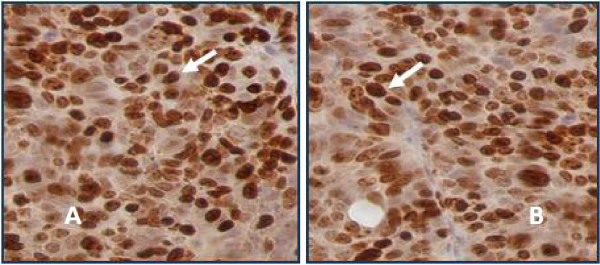
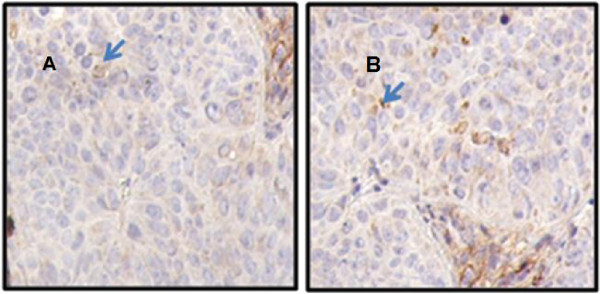
Background: Transforming growth factor-β (TGF-β) pathway is involved in primary tumor progression and in promoting metastasis in a considerable proportion of human cancers such as colorectal cancer (CRC). Therefore, blockage of TGF-β pathway signaling via an inhibitor could be a valuable tool in CRC treatment. Methods: To evaluate the efficacy of systemic targeting of the TGF-β pathway for therapeutic effects on CRC, we investigated the effects of a TGβRI (TGF-β receptor 1) or TβRI kinase inhibitor, SD-208, on SW-48, colon adenocarcinoma cells. In this work, in vitro cell proliferation was studied by methyl thiazolyl tetrazolium (MTT) and bromo-2′-deoxyuridine (BrdU) assays. Also, the histopathological and immunohistochemical evaluations were conducted by hematoxylin and eosin, and Ki-67 and CD34 markers were stained, respectively. Results: Our results showed no significant reduction in cell proliferation and vessel formation (170 ± 70 and 165 ± 70, P > 0.05) in treated SW-48 cells with SD-208 compared to controls. Conclusion: Our data suggested that SD-208 could not significantly reduce tumor growth and angiogenesis in human colorectal cancer model at least using SW-48 cells.
Overview
The claims and statistics of this paper haven’t been checked yet.
Free: it reads the open-access text and checks the first 5 claims that cite a source we can check. Create a free account to check every claim.
Integrity signals
Registry
Cites
Statistics
Figures
Verification
Claims the paper makes
The claims and statistics of this paper haven’t been checked yet.
Free: it reads the open-access text and checks the first 5 claims that cite a source we can check. Create a free account to check every claim.
Claims other papers make about this one
Each is checked against this paper’s own text: does it say what the citing paper says it does?
The cited source says what the claim attributes to it.
In the citing paper
“This suggests that TGF-β-mediated angiogenesis may be related to the corresponding tumor microenvironment.”
From Drug Resistance in Colorectal Cancer: From Mechanism to Clinic (2022) · cites this paper as [221]
In the citing paper
“However, SD-208 did not cause significant vascular inhibition in the CRC model, at least in the SW-48 cell line [221].”
From Drug Resistance in Colorectal Cancer: From Mechanism to Clinic (2022) · cites this paper as [221]
Self-check
Percentages, sums and reported differences re-computed from the paper’s own numbers.
The self-check needs the paper’s full text.
Citations
Cites
Jemal, A., Siegel, R., Ward, E., Hao, Y., Xu, J., Murray, T., & Thun, M. J. (2008) · CA: A Cancer Journal for Clinicians · doi:10.3322/ca.2007.0010 · Cited by 10,188
Inman, G. J., Nicolás, F. J., Callahan, J. F., Harling, J. D., Gaster, L. M., Reith, A. D., Laping, N. J., & Hill, C. S. (2002) · Molecular Pharmacology · doi:10.1124/mol.62.1.65 · Cited by 1,634 · cited 1×
“SD-208 is a small-molecule kinase inhibitor that bind to the ATPbinding site of the TGβRI kinase and maintains the enzyme in its inactive configuration [11-13].”
BackgroundCytostatic and apoptotic actions of TGF-β in homeostasis and cancer
Siegel, P. M., & Massagué, J. (2003) · Nature Reviews Cancer · doi:10.1038/nrc1208 · Cited by 1,604 · cited 2×
“Studies showed that TGF-β acts as a double-edged sword in the biological processes [3-6].”
BackgroundTGFβ: the molecular Jekyll and Hyde of cancer
Bierie, B., & Moses, H. L. (2006) · Nature Reviews Cancer · doi:10.1038/nrc1926 · Cited by 1,267 · cited 3×
“it promotes tumor development, progression and metastasis in human cancers including CRC, glioma, osteosarcoma, breast, lung and pancreatic cancers [14-16].”
BackgroundThe Genetic Basis of Human Cancer
Vogelstein, B., & Kinzler, K. W. (1997) · Cited by 1,120
Moustakas, A., & Heldin, C.-H. (2005) · Journal of Cell Science · doi:10.1242/jcs.02554 · Cited by 958 · cited 2×
“In addition, it plays important roles in primary tumor progression and in promoting metastasis and has become an attractive target for therapy [5-7].”
BackgroundThe Genetic Basis of Human Cancer
Michels, V. V. (1999) · Mayo Clinic Proceedings · doi:10.4065/74.1.107-a · Cited by 726
High-Throughput Mapping of a Dynamic Signaling Network in Mammalian Cells
Barrios-Rodiles, M., Brown, K. R., Ozdamar, B., Bose, R., Liu, Z., Donovan, R. S., Shinjo, F., Liu, Y., Dembowy, J., Taylor, I. W., et al. (2005) · Science · doi:10.1126/science.1105776 · Cited by 725 · cited 3×
“In addition, it plays important roles in primary tumor progression and in promoting metastasis and has become an attractive target for therapy [5-7].”
BackgroundDevelopment of TGF-β signalling inhibitors for cancer therapy
Yingling, J. M., Blanchard, K. L., & Sawyer, J. S. (2004) · Nature Reviews Drug Discovery · doi:10.1038/nrd1580 · Cited by 549
Alterations in components of the TGF-β superfamily signaling pathways in human cancer
LEVY, L., & HILL, C. (2006) · Cytokine & Growth Factor Reviews · doi:10.1016/j.cytogfr.2005.09.009 · Cited by 539 · cited 2×
“Based on the literature, targeting of TGF-β signaling could be a valuable tool to treatment of human cancers such as CRC, glioblastoma and breast cancer [6-10].”
Background
Cited by
TGF-β-Mediated Epithelial-Mesenchymal Transition and Cancer Metastasis
Hao, Y., Baker, D., & ten Dijke, P. (2019) · International Journal of Molecular Sciences · doi:10.3390/ijms20112767 · Cited by 1,142
“However, another study showed that SD-208 could not significantly reduce tumor growth and angiogenesis in SW-48 cells, a human colorectal cancer model, and thus, its efficiency still needs to be assessed [259].”
Targeting the TGFβ pathway for cancer therapy
Neuzillet, C., Tijeras-Raballand, A., Cohen, R., Cros, J., Faivre, S., Raymond, E., & de Gramont, A. (2015) · Pharmacology & Therapeutics · doi:10.1016/j.pharmthera.2014.11.001 · Cited by 611
“Similarly, reduced vessel density after treatment with TGFβ pathway inhibitor was reported in colorectal cancer with SD-208 (Akbari et al., 2014), and in glioblastoma models using LY2109761 (Zhang et al.”
T cell‐targeting nanoparticles focus delivery of immunotherapy to improve antitumor immunity
Schmid, D., Park, C. G., Hartl, C. A., Subedi, N., Cartwright, A. N., Puerto, R. B., Zheng, Y., Maiarana, J., Freeman, G. J., Wucherpfennig, K. W., et al. (2017) · Nature Communications · doi:10.1038/s41467-017-01830-8 · Cited by 449
“SD-208 has similarly been administered at doses more than an order of magnitude greater than what was used in these studies in order to achieve therapeutic bene fi t, even necessitating daily 28 or twice daily 29 oral gavage at such doses (at least 50 mg kg − 1 per day).”
Drug Resistance in Colorectal Cancer: From Mechanism to Clinic
Wang, Q., Shen, X., Chen, G., & Du, J. (2022) · Cancers · doi:10.3390/cancers14122928 · Cited by 160
Colon cancer therapy by focusing on colon cancer stem cells and their tumor microenvironment
Jahanafrooz, Z., Mosafer, J., Akbari, M., Hashemzaei, M., Mokhtarzadeh, A., & Baradaran, B. (2020) · Journal of Cellular Physiology · doi:10.1002/jcp.29337 · Cited by 148
Zhai, H., Fesler, A., Ba, Y., Wu, S., & Ju, J. (2015) · Oncotarget · doi:10.18632/oncotarget.3771 · Cited by 139
“It has been shown that inhibitors that decrease levels of Smad2 and Smad3 through interruption of TGF-β signaling could be valuable tools for treatment of human cancers such as CRC, glioblastoma and breast cancer [15–19].”
MethodRoles of TGF-β signaling pathway in tumor microenvirionment and cancer therapy
Zhao, H., Wei, J., & Sun, J. M. (2020) · International Immunopharmacology · doi:10.1016/j.intimp.2020.107101 · Cited by 134
Therapy for Cancer: Strategy of Combining Anti-Angiogenic and Target Therapies
Comunanza, V., & Bussolino, F. (2017) · Frontiers in Cell and Developmental Biology · doi:10.3389/fcell.2017.00101 · Cited by 111
Drozdov, A. S., Nikitin, P. I., & Rozenberg, J. M. (2021) · International Journal of Molecular Sciences · doi:10.3390/ijms222313011 · Cited by 67
“The authors explained the rationale behind this experimental design: “MC38 was favored over B16 for in vivo studies because the latter are not greatly affected by anti-PD-1 monotherapy” [187].”
BackgroundEslamizadeh, S., Heidari, M., Agah, S., Faghihloo, E., Ghazi, H., Mirzaei, A., & Akbari, A. (2018) · Europe PMC (PubMed Central) · doi:10.22074/cellj.2018.5366 · Cited by 54
“Among Asian populations, both the incidence and mortality rates of CRC are increasing rapidly (2, 3).”
BackgroundSelf-citationDanielpour, D. (2024) · Pharmaceuticals · doi:10.3390/ph17040533 · Cited by 65
Ellakwa, D. E., Mushtaq, N., Khan, S., Jabbar, A., Abdelmalek, M. A., Wadan, A. S., Ellakwa, T. E., & Raza, A. (2024) · Naunyn-Schmiedeberg s Archives of Pharmacology · doi:10.1007/s00210-024-03076-w · Cited by 56
“MicroRNAs (miRNAs), recognized as well-known non-coding RNAs, have been demonstrated to aid in the development and progression of cancer (Akbari et al. 2016; Akbari et al. 2014) (Fig.”
Role of the transforming growth factor‐β signaling pathway in the pathogenesis of colorectal cancer
Soleimani, A., Pashirzad, M., Avan, A., Ferns, G. A., Khazaei, M., & Hassanian, S. M. (2018) · Journal of Cellular Biochemistry · doi:10.1002/jcb.28331 · Cited by 50
TGF-β Activation and Signaling in Angiogenesis
Guerrero, P. A., & McCarty, J. H. (2017) · InTech eBooks · doi:10.5772/66405 · Cited by 63
Liu, L., Shi, R., & Chen, Z. (2020) · International Journal of Molecular Medicine · doi:10.3892/ijmm.2020.4629 · Cited by 32
“despite progress in systemic anti-cancer therapy, the effective treatment of cRc remains a major clinical challenge due to its high mortality and metastasis potential (25).”
BackgroundMicroRNA Expression Levels and Histopathological Features of Colorectal Cancer
Emami, S. S., Akbari, A., Zare, A. A., Agah, S., Masoodi, M., Talebi, A., Minaeian, S., Fattahi, A., & Moghadamnia, F. (2018) · Journal of Gastrointestinal Cancer · doi:10.1007/s12029-018-0055-x · Cited by 28
“was conducted as described previously [15].”
Self-citationSimorgh, S., Alizadeh, R., Shabani, R., Karimzadeh, F., Seidkhani, E., Majidpoor, J., Moradi, F., & Kasbiyan, H. (2021) · Neurotoxicity Research · doi:10.1007/s12640-020-00290-1 · Cited by 29
Akbari, A., Ghahremani, M. H., Mobini, G. R., Abastabar, M., Akhtari, J., Bolhassani, M., & Heidari, M. (2015) · PubMed Central · Cited by 35
Self-citationApoptosis Induced by Ziziphora tenuior Essential Oil in Human Colorectal Cancer Cells
Azimi, M., Mehrzad, J., Ahmadi, A., Ahmadi, E., & Ranjbary, A. G. (2021) · BioMed Research International · doi:10.1155/2021/5522964 · Cited by 31
“treatment by reducing side effects [6, 7].”
Quantification of Plasma Cell-Free Circulating DNA at Different Stages of Colorectal Cancer
Agah, S., Akbari, A., Talebi, A., Masoodi, M., Sarveazad, A., Mirzaei, A., & Nazmi, F. (2017) · Cancer Investigation · doi:10.1080/07357907.2017.1408814 · Cited by 23
Self-citationAkbari, A., Farahnejad, Z., Akhtari, J., Abastabar, M., Mobini, G. R., & Mehbod, A. S. A. (2016) · Jundishapur Journal of Microbiology · doi:10.5812/jjm.27297 · Cited by 23
“Dysregulation of this pathway results in various cancers, including glioblastoma (4), colon, breast and prostate cancer (5, 6).”
BackgroundSelf-citationThe Role of TGF-β Signaling Regulatory MicroRNAs in the Pathogenesis of Colorectal Cancer
Moradi‐Marjaneh, R., Khazaei, M., Ferns, G. A., & Aghaee‐Bakhtiari, S. H. (2019) · Current Pharmaceutical Design · doi:10.2174/1381612825666190110150705 · Cited by 22
Mobini, G. R., Ghahremani, M. H., Amanpour, S., Dehpour, A. R., Akbari, A., Hoseiniharouni, S. M., Muhammadnejad, S., Sheikhzade, M., Abedkhojasteh, H., Mohebi, M., et al. (2016) · PubMed · Cited by 21
Self-citationMutation analysis of connexin 50 gene among Iranian families with autosomal dominant cataracts.
Mohebi, M., Chenari, S., Akbari, A., Ghassemi, F., Zarei-Ghanavati, M., Fakhraie, G., Babaie, N., & Heidari, M. (2017) · PubMed Central · doi:10.22038/ijbms.2017.8358 · Cited by 16
Self-citationStudying molecular signaling in major angiogenic diseases
Nathan, J. R., Shameera, R., & Gajalakshmi, P. (2022) · Molecular and Cellular Biochemistry · doi:10.1007/s11010-022-04452-x · Cited by 15
“Similar results were found in a study on LY2109761 in glioblastoma models [31, 32] and SD-208 in colorectal cancer [33].”
ResultEvaluation of SD-208, a TGF-β-RI Kinase Inhibitor, as an Anticancer Agent in Retinoblastoma.
Fadakar, P., Akbari, A., Ghassemi, F., Mobini, G. R., Mohebi, M., Bolhassani, M., Khojasteh, H. A., & Heidari, M. (2016) · PubMed · Cited by 11
Self-citationEslamizadeh, S., Zare, A. A., Talebi, A., Tabaeian, S. P., Eshkiki, Z. S., Heydari‐Zarnagh, H., & Akbari, A. (2020) · MicroRNA · doi:10.2174/2211536609666201221123604 · Cited by 9
Self-citationAkbari, A., Agah, S., Heidari, M., Mobini, G. R., Faghihloo, E., Sarveazad, A., & Mirzaei, A. (2017) · PubMed Central · doi:10.22034/apjcp.2017.18.8.2101 · Cited by 8
“Pathogenesis of CRC is a complex and multistep process involving dysregulation of diverse genes expression and cell signaling pathways (Akbari et al, 2016; Akbari et al, 2014).”
BackgroundSelf-citationMobini, G. R., Ghafari, A., Amanpour, S., Fateh, R., Ghahremani, M. H., Muhammadnejad, S., Dehpour, A. R., Akbari, A., Hoseiniharouni, S. M., Kazemirad, E., et al. (2018) · Arab Journal of Gastroenterology · doi:10.1016/j.ajg.2018.05.001 · Cited by 4
Self-citationImmune Response Role of Angiogenesis Inhibitors
Nemunaitis, J. J., Devanaboyina, M., Ngo, N. T., Albalawy, R., Filipiak, L., Staats, H., Stanbery, L., Hamouda, D., & Nemunaitis, J. J. (2021) · Clinical Oncology and Research · doi:10.31487/j.cor.2021.02.01 · Cited by 2
“Transforming Growth Factor (TGF) Induce anchorage‐independent growth of target cells otherwise incapable of such growth [26] TGF-β inhibition in hepatocellular carcinoma, colorectal cancer, and glioblastoma multiforme xenograft [27-29] Galunisertib, (small molecule inhibitor of TGF-βRI) + orafenib, ramucirumab in hepa…”
BackgroundZhang, Y., Xie, J., Liu, D., Zhu, S., & Zhang, S. (2021) · Genetics and Molecular Biology · doi:10.1590/1678-4685-gmb-2021-0138 · Cited by 2
“TGF-β pathway was previously evidenced to be involved in primary tumor progression and in promoting metastasis in many human cancers including colorectal cancer (Akbari et al., 2014; Akhurst, 2017; Korkut et al., 2018).”
Hassabou, N. F., Elseweidy, M. M., & Farag, A. (2026) · BMC Oral Health · doi:10.1186/s12903-026-07830-9 · Cited by 1
“Sections from a lymph node with follicular lymphoid hyperplasia known to be immunoreactive for Ki-67 were used as a positive control (as recommended by the manufacturer) [17, 18].”
Zhang, Y., Xie, J.-L., Liu, D., Zhu, S., & Zhang, S. (2022) · LA Referencia (Red Federada de Repositorios Institucionales de Publicaciones Científicas) · Cited by 1
Metadata
- Authors
- Akbari, A., Amanpour, S., Muhammadnejad, S., Ghahremani, M. H., Ghaffari, S. H., Dehpour, A. R., Mobini, G. R., Shidfar, F., Abastabar, M., Khoshzaban, A., Faghihloo, E., Karimi, A., & Heidari, M.
- Affiliations
- Tehran University of Medical Sciences (IR)
- Shariati Hospital (IR)
- Mazandaran University of Medical Sciences (IR)
- Farabi Hospital (IR)
- Iran University of Medical Sciences (IR)
- Corresponding author
- Heidari, Mansour
- ORCID
- Venue
- DARU Journal of Pharmaceutical Sciences
- Published
- 2014-06-05
- Volume
- 22
- Issue
- 1
- Pages
- 47-47
- ISSN
- 1560-8115 (ISSN-L)
- 2008-2231
- PMC
- PMC4077684
- OpenAlex
- W2163340072
- Cited by
- 33
- References
- 26
- Citations by year
- 2026: 1 · 2024: 2 · 2022: 3 · 2021: 5 · 2020: 3 · 2019: 3 · 2018: 4 · 2017: 6 · 2016: 3 · 2015: 2 · 2014: 1
- FWCI
- 1.64
- Type
- journal article
- Language
- en
- Open access
- hybrid
- doi.org
- Licence
- cc-by
- creativecommons.org/licenses/by/2.0 (tdm)
- Locations
- DARU Journal of Pharmaceutical Sciences (publishedVersion, cc-by)
- PubMed Central (publishedVersion, cc-by)
- PubMed (publishedVersion)
- Funders
- Tehran University of Medical Sciences and Health Services
- Topics
- Life Sciences › Biochemistry, Genetics and Molecular Biology › Molecular Biology › TGF-β signaling in diseases
- Life Sciences › Biochemistry, Genetics and Molecular Biology › Molecular Biology › Mechanisms of cancer metastasis
- Health Sciences › Medicine › Oncology › Cancer Cells and Metastasis
- Keywords
- SD-208, TGF-beta signaling, colon adenocarcinoma, colorectal cancer, tumor cell proliferation, angiogenesis, anticancer activity
- MeSH terms
- Adenocarcinoma, Animals, Antineoplastic Agents, Colonic Neoplasms, Female, Humans, Mice, Inbred C57BL, Neovascularization, Pathologic, Pteridines, Transforming Growth Factor beta, Xenograft Model Antitumor Assays, Cell Line, Tumor, Cell Proliferation, Mice
About these checks
Registry, retraction, Cites and statistics results are computed, not judged, with one exception: a printed reference that no index lists is read once by a model before it counts as a citation error. Claims are extracted by a model and kept only when their quote appears verbatim in the text; each cited source is then checked, with a model’s help, for whether it says what the claim relies on. Those verdicts can be wrong — read the claim’s quote and the cited source before relying on one.
Statistics and arithmetic are recomputed, not judged.
Confidence bands are shown only for fields calibrated on our annotated test set. None is calibrated yet, so no band is shown.
What counts as a claim ›How we measure confidence ›How we check this ›
Are you an author, or do you see a problem with this page? Request a review
Data sources
Bibliographic data: Semantic Scholar, OpenAlex, Crossref.
Contains information from the Semantic Scholar Academic Graph Datasets, made available under the ODC Attribution License (ODC-BY 1.0).
Semantic Scholar’s data is described in: Kinney, R., et al. (2023). The Semantic Scholar Open Data Platform. arXiv:2301.10140.
