

The DOI matches its Crossref record; 162 of the 163 references it cites were found in a registry or an index.
Placental contribution to the origins of sexual dimorphism in health and diseases: sex chromosomes and epigenetics
Open accessAbstract
Sex differences occur in most non-communicable diseases, including metabolic diseases, hypertension, cardiovascular disease, psychiatric and neurological disorders and cancer. In many cases, the susceptibility to these diseases begins early in development. The observed differences between the sexes may result from genetic and hormonal differences and from differences in responses to and interactions with environmental factors, including infection, diet, drugs and stress. The placenta plays a key role in fetal growth and development and, as such, affects the fetal programming underlying subsequent adult health and accounts, in part for the developmental origin of health and disease (DOHaD). There is accumulating evidence to demonstrate the sex-specific relationships between diverse environmental influences on placental functions and the risk of disease later in life. As one of the few tissues easily collectable in humans, this organ may therefore be seen as an ideal system for studying how male and female placenta sense nutritional and other stresses, such as endocrine disruptors. Sex-specific regulatory pathways controlling sexually dimorphic characteristics in the various organs and the consequences of lifelong differences in sex hormone expression largely account for such responses. However, sex-specific changes in epigenetic marks are generated early after fertilization, thus before adrenal and gonad differentiation in the absence of sex hormones and in response to environmental conditions. Given the abundance of X-linked genes involved in placentogenesis, and the early unequal gene expression by the sex chromosomes between males and females, the role of X- and Y-chromosome-linked genes, and especially those involved in the peculiar placenta-specific epigenetics processes, giving rise to the unusual placenta epigenetic landscapes deserve particular attention. However, even with recent developments in this field, we still know little about the mechanisms underlying the early sex-specific epigenetic marks resulting in sex-biased gene expression of pathways and networks. As a critical messenger between the maternal environment and the fetus, the placenta may play a key role not only in buffering environmental effects transmitted by the mother but also in expressing and modulating effects due to preconceptional exposure of both the mother and the father to stressful conditions.
Overview
The claims and statistics of this paper haven’t been checked yet.
Run the check — free, no account needed. It reads the open-access text and checks the sources it cites.
Integrity signals
Registry
Cites
Statistics
Figures
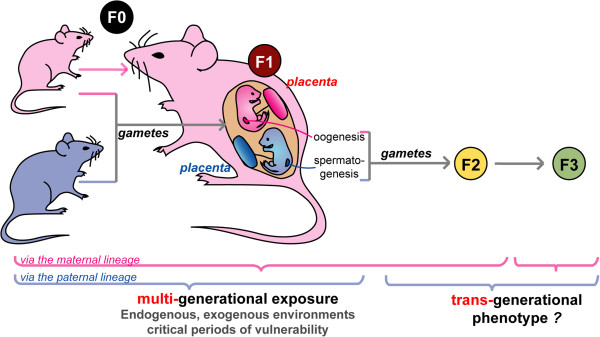
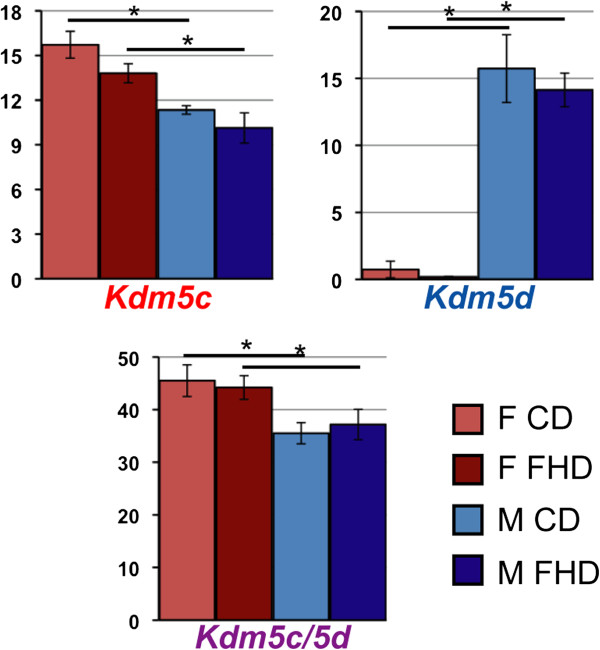
Verification
Claims the paper makes
The claims and statistics of this paper haven’t been checked yet.
Run the check — free, no account needed. It reads the open-access text and checks the sources it cites.
Claims other papers make about this one
Each is checked against this paper’s own text: does it say what the citing paper says it does?
In the citing paper
“Epigenetics is a rapidly expanding field, and there are now many reports of changes in placental DNA methylation and histone proteins in response to environmental cues that have been associated with developmental programming of the offspring (203, 417, 522).”
From Placental Origins of Chronic Disease (2016) · cites this paper as [203]
Self-check
Percentages, sums and reported differences re-computed from the paper’s own numbers.
The self-check needs the paper’s full text.
Citations
Cites
Eckel, R. H., Alberti, K., Grundy, S. M., & Zimmet, P. (2010) · The Lancet · doi:10.1016/s0140-6736(09)61794-3 · Cited by 6,317
The male-specific region of the human Y chromosome is a mosaic of discrete sequence classes
Skaletsky, H., Kuroda-Kawaguchi, T., Minx, P. J., Cordum, H. S., Hillier, L., Brown, L. G., Repping, S., Pyntikova, T., Ali, J., Bieri, T. A., et al. (2003) · Nature · doi:10.1038/nature01722 · Cited by 2,148
X-inactivation profile reveals extensive variability in X-linked gene expression in females
Carrel, L., & Willard, H. F. (2005) · Nature · doi:10.1038/nature03479 · Cited by 2,097
Spatio-temporal transcriptome of the human brain
Kang, H. J., Kawasawa, Y. I., Cheng, F., Zhu, Y., Xu, X., Li, M., Sousa, A. M. M., Pletikos, M., Meyer, K. A., Sedmak, G., et al. (2011) · Nature · doi:10.1038/nature10523 · Cited by 2,084
INTRAUTERINE GROWTH AS ESTIMATED FROM LIVEBORN BIRTH-WEIGHT DATA AT 24 TO 42 WEEKS OF GESTATION
Lubchenco, L. O., Hansman, C., Dressler, M., & Boyd, E. (1963) · PEDIATRICS · doi:10.1542/peds.32.5.793 · Cited by 1,865
Personal genomes: The case of the missing heritability
Maher, B. (2008) · Nature · doi:10.1038/456018a · Cited by 1,737
Chronic high-fat diet in fathers programs β-cell dysfunction in female rat offspring
Ng, S.-F., Lin, R. C. Y., Laybutt, D. R., Barres, R., Owens, J. A., & Morris, M. J. (2010) · Nature · doi:10.1038/nature09491 · Cited by 1,327
Dabelea, D., Hanson, R. L., Lindsay, R. S., Pettitt, D. J., Imperatore, G., Gabir, M. M., Roumain, J., Bennett, P. H., & Knowler, W. C. (2000) · Diabetes · doi:10.2337/diabetes.49.12.2208 · Cited by 1,277 · cited 1×
“Many of these factors have been shown to have the same range of defects and lead to the development of the metabolic syndrome [52-56], or mental health disorders in the offspring [57,58] with striking sexspecificity [15,59-63].”
Carone, B. R., Fauquier, L., Habib, N., Shea, J. M., Hart, C. E., Li, R., Bock, C., Li, C., Gu, H., Zamore, P. D., et al. (2010) · Cell · doi:10.1016/j.cell.2010.12.008 · Cited by 1,191
The Dutch Famine and Its Long-Term Consequences for Adult Health
Roseboom, T., de Rooij, S., & Painter, R. (2006) · Early Human Development · doi:10.1016/j.earlhumdev.2006.07.001 · Cited by 1,137
Self-citation
Research works printed but not linked: 1
- Eriksson JG, Kajantie E, Osmond C, Thornburg K, Barker DJ: Boys live dangerously in the womb. Am J Hum Biol 2009, 22: 330–335. · DOI · Paper page
Cited by
Sorted by citations
Items 301–345 of 345
Proceedings of the second meeting of the French-speaking society SF-DOHaD
Dou, S., Gadonna‐Widehem, P., Hamoudi, D., Bahi-Jaber, N., Rhazi, L., Lakhal, L., Dauplay, M., Pinon-Quintana, A., Guyonvarch, A., Huërou‐Luron, I. L., et al. (2015) · Journal of Developmental Origins of Health and Disease · doi:10.1017/s2040174415000197
Jasani, S., Tartaglia, G., Yeung, P. L., & Lu, C. W. (2018) · Journal of Stem Cell Research & Therapy · doi:10.4172/2157-7633.1000413
Fetale Programmierung – von der Epidemiologie zur Epigenetik
Reichetzeder, C. (2018) · Journal für Gynäkologische Endokrinologie/Österreich · doi:10.1007/s41974-018-0037-9
Kalisch-Smith, J. I. (2017) · The University of Queensland · doi:10.14264/uql.2017.1051
Fetal Growth Restriction and Later Disease in the Mother and the Offspring
Arabin, B., & Arck, P. (2018) · Cambridge University Press eBooks · doi:10.1017/9781316181898.029
Comparação de redes de regulação gênica da placenta em resposta à exposição ao estresse entre sexos
Barbosa, A. D. L. (2020) · Digital Library of Theses and Dissertations (Universidade de São Paulo) · doi:10.11606/t.95.2020.tde-09122020-200928
Sex Differences in the Developing Lung: Implications for Disease
Zein, J., & Gaston, B. M. (2021) · Physiology in health and disease · doi:10.1007/978-3-030-63549-7_4
Euclydes, V. L. V. (2020) · Digital Library of Theses and Dissertations (Universidade de São Paulo) · doi:10.11606/t.5.2020.tde-11062021-101503
Idade gestacional, crescimento intrauterino e composição corporal aos 11 anos de idade
Bortolotto, C. C., Santos, I. S., Vaz, J. D. S., & Matijasevich, A. (2022) · Revista de Saúde Pública · doi:10.11606/s1518-8787.2022056004022
Gabory, A., & Junien, C. (2023) · Elsevier eBooks · doi:10.1016/b978-0-12-823937-7.00012-2
Self-citationPisani, L. P., & Ozanne, S. E. (2023) · Elsevier eBooks · doi:10.1016/b978-0-12-823937-7.00005-5
Alabi, A. S., Abioye, O. D., Salako, A. O., Adumo, G. O., Babatunde, E. O., Amasiatu, V. C., Aigbogun, E., & Usman, I. M. (2023) · KIU Journal of Health Sciences · doi:10.59568/kjhs-2023-3-1-10
O’Callaghan, J. L. (2023) · Queensland University of Technology · doi:10.5204/thesis.eprints.244719
A Review of Causes, Physiology, Immunity and Proposed Drug Strategies of Autism Spectrum Disorders
Al-Rawi, A. M., Ibrahem, S., Rasheed, Y. S., & Suleima, A. (2023) · Ain Shams Medical Journal · doi:10.21608/asmj.2023.230746.1157
Emerging talents in toxicology
(2024) · Frontiers research topics · doi:10.3389/978-2-8325-4463-1
Nutrition and Pregnancy Outcomes
Bellissimo, C. J., Vickers, M. H., & Sloboda, D. M. (2024) · Elsevier eBooks · doi:10.1016/b978-0-443-21477-6.00199-1
Maternal and Fetal Conditions With Consequences for the Fetal Brain
du Plessis, A. J., & Volpe, J. J. (2024) · Elsevier eBooks · doi:10.1016/b978-0-443-10513-5.00011-5
Sex Difference of Fetal-Originated Disease
Guo, Y., & Yu, P. (2024) · Springer eBooks · doi:10.1007/978-981-97-5730-5_7
Maternal Long-Chain Polyunsaturated Fatty Acids and Pregnancy Outcome
Khaire, A. A., & Joshi, S. (2025) · Springer eBooks · doi:10.1007/978-3-031-84200-9_12
Fairbairn, F. M., Carver, A. J., Taylor, R. J., & Stevens, H. E. (2025) · bioRxiv (Cold Spring Harbor Laboratory) · doi:10.1101/2025.05.23.655797
Yamaguchi, R., Matsudaira, I. Y., & Taki, Y. (2025) · bioRxiv (Cold Spring Harbor Laboratory) · doi:10.1101/2025.08.25.671904
Perspectivas atuais sobre a O-GlcNAc Transferase (OGT) na resposta ao estresse gestacional
Sousa, A. B. D. S., Gouveia, G. R., & Camilo, C. (2025) · Revista de Medicina · doi:10.11606/issn.1679-9836.v104i6e-234285
Sex-influenced DNA methylation differs by placental cell type
Han, J., Inkster, A. M., Yuan, V., Peñaherrera, M. S., & Robinson, W. P. (2026) · Biology of Sex Differences · doi:10.1186/s13293-026-00869-x
Lei, J., Zhao, M., Yao, S., Lu, M., Deng, F., Xu, T., Zhang, M., Sun, M., & Gao, Q. (2025) · Arteriosclerosis Thrombosis and Vascular Biology · doi:10.1161/atvbaha.125.323061
Bortolotto, C. C., Santos, I. S., dos Santos Vaz, J., Matijasevich, A., Barros, A. J. D., Barros, F. C., Santos, L. P., & Munhoz, T. N. (2021) · Figshare · doi:10.6084/m9.figshare.13843915
Bortolotto, C. C., Santos, I. S., dos Santos Vaz, J., Matijasevich, A., Barros, A. J. D., Barros, F. C., Santos, L. P., & Munhoz, T. N. (2021) · Figshare · doi:10.6084/m9.figshare.13843918
Bortolotto, C. C., Santos, I. S., dos Santos Vaz, J., Matijasevich, A., Barros, A. J. D., Barros, F. C., Santos, L. P., & Munhoz, T. N. (2021) · Figshare · doi:10.6084/m9.figshare.13843921
Baker, B., Lui, S., Lorne, I., Heazell, A. E. P., Forbes, K. A., & Jones, R. L. (2021) · Figshare · doi:10.6084/m9.figshare.17037198
Ebbing, C., Halmoy, A., Jauniaux, E. R. M., Einum, A., Rasmussen, S., & Moster, D. (2026) · Ultrasound in Obstetrics and Gynecology · doi:10.1002/uog.70164
Maternal exposure to sucrose and maltodextrin alters metabolism and genotoxicity in mice offspring
Magenis, M. L., Alecrim, W. A., Possamai, O. L., Monteiro, I. D. O., Silva, N. D. S., Alano, C. G., Damiani, A. P., Vicente, H. B., Machado, I. L., Almeida, R. C. S. D., et al. (2026) · Mutation research. Fundamental and molecular mechanisms of mutagenesis · doi:10.1016/j.mrfmmm.2026.111933
Panchenko, P. E. (2015) · theses.fr (ABES) · doi:10.70675/1c8455acza5c1z427fzb7c6z5b17ad36641e
Embodiment of early social adversity : the role of allostatic load in a life course perspective
Barboza‐Solís, C. (2016) · theses.fr (ABES) · doi:10.70675/61b51420zdae4z476ez988ezd9c631eb3a96
Neurodevelopmental impact of perinatal inflammation : targets for neuroprotection?
Bokobza, C. (2019) · theses.fr (ABES) · doi:10.70675/e3ce131fz2ee5z49fez9927z0f46d77c22c8
Nemoto, T., Yoshizaki, H., & Kakinuma, Y. (2026) · Journal of Developmental Origins of Health and Disease · doi:10.1017/s2040174426100531
Eitmann, S., Mátrai, P., ter Hegyi, P., Balaskó, M., & Pétervári, E. (2026) · Obesity Reviews · doi:10.1111/obr.70149
Wang, H., Bundo, M., Nakachi, Y., Kanai, A., Yamamoto, Y., Miyazaki, H., Toyoshima, F., Shima, Y., Sakai, M., Yu, Z., et al. (2026) · Molecular Psychiatry · doi:10.1038/s41380-026-03629-w · Cited by 1
Zazula, M. F., Carvalhal, S. R. S., Maciel, D. T., Moritz, D., Beirauti, H. Y. I., Amorim, L., Rocha, M. T., Maciel, M., Sales, O., Dobgenski, P., et al. (2026) · International Journal of Molecular Sciences · doi:10.3390/ijms27136049
Fetal programming under hyperglycemic stress: the vascular system at risk
Xavier, F. E. (2026) · American Journal of Physiology-Heart and Circulatory Physiology · doi:10.1152/ajpheart.00390.2026
Wang, X., Tang, J., Yang, L., Zhang, F., Shen, Z., Duan, Y., Li, Y., Ge, Y., Li, J., Zhang, Y., et al. (2026) · Chemico-Biological Interactions · doi:10.1016/j.cbi.2026.112275
Wang, C.-Y., Li, Z.-H., Weng, H.-Y., Zhao, X.-Y., Pu, S.-L., Zhu, M.-N., He, R., Lu, X.-J., Kan, Y.-L., Huang, K., et al. (2026) · Environmental Pollution · doi:10.1016/j.envpol.2026.129003
Fetal sex influences molecular regulation of human placental vascular development across gestationPreprint
Corado, M., Afonso, L. F., Agostinho, S. P., Moreira, I. S., Rosário‐Ferreira, N., & Coelho‐Santos, V. (2026) · bioRxiv (Cold Spring Harbor Laboratory) · doi:10.64898/2026.09.13.750572
Maxwell, A., Nguyen, A. T., Maxwell, D., Schick, S., Rao, A., Singh, A., Findeis, E., Ding, J., & Mor, G. (2026) · Frontiers in Immunology · doi:10.3389/fimmu.2026.1952071
Epigenetic factors in eating disorders: Clinical correlates and diagnostic specificity
Booij, L., Breton, É., Thaler, L., & Steiger, H. (2026) · Handbook of clinical neurology · doi:10.1016/b978-0-443-19043-8.00011-6
Preconception paternal PFAS exposure in mice reprograms the placental epigenome
Maxwell, D. L., Maxwell, A. J., Nowak, K., Gurdziel, K., Ding, J., Mor, G., Petriello, M. C., & Pilsner, J. R. (2026) · Molecular Human Reproduction · doi:10.1093/molehr/gaag056
Metadata
- Authors
- Gabory, A., Roseboom, T. J., Moore, T., Moore, L. G., & Junien, C.
- Affiliations
- Biologie de la Reproduction, Environnement, Epigénétique et Développement (FR)
- Amsterdam UMC Location University of Amsterdam (NL)
- University College Cork (IE)
- University of Colorado Denver (US)
- Université de Versailles Saint-Quentin-en-Yvelines (FR)
- Corresponding author
- Junien, Claudine
- Venue
- Biology of Sex Differences
- Published
- 2013-03-21
- Volume
- 4
- Issue
- 1
- Pages
- 5-5
- ISSN
- 2042-6410 (ISSN-L)
- PMC
- PMC3618244
- OpenAlex
- W2150272037
- Cited by
- 344
- References
- 163
- Citations by year
- 2026: 17 · 2025: 24 · 2024: 26 · 2023: 19 · 2022: 26 · 2021: 37 · 2020: 31 · 2019: 23 · 2018: 32 · 2017: 24 · 2016: 23 · 2015: 32 · 2014: 21 · 2013: 9
- FWCI
- 26.45
- Type
- journal article
- Language
- en
- Open access
- gold
- doi.org
- Licence
- cc-by
- Locations
- Biology of Sex Differences (publishedVersion, cc-by)
- Europe PMC (PubMed Central) (publishedVersion, cc-by)
- PubMed Central (publishedVersion, cc-by)
- PubMed (publishedVersion)
- Pure Amsterdam UMC (publishedVersion)
- Arrow@dit (Dublin Institute of Technology) (acceptedVersion)
- Data Archiving and Networked Services (DANS) (submittedVersion)
- HAL (submittedVersion, other-oa)
- Cork Open Research Archive (University College Cork, Ireland) (submittedVersion, cc-by)
- Lenus, The Irish Health Repository (Dr Steevens Hospital Library) (submittedVersion)
- Funders
- Science Foundation Ireland
- Agence Nationale de la Recherche
- National Institutes of Health (079647)
- Topics
- Health Sciences › Medicine › Pediatrics, Perinatology and Child Health › Birth, Development, and Health
- Life Sciences › Biochemistry, Genetics and Molecular Biology › Genetics › Genetic and Clinical Aspects of Sex Determination and Chromosomal Abnormalities
- Life Sciences › Biochemistry, Genetics and Molecular Biology › Genetics › Genetic Syndromes and Imprinting
- Keywords
- placenta, sexual dimorphism, sex differences in disease, sex chromosomes, X-linked genes, Y chromosome, epigenetics, developmental origins of health and disease, fetal programming, sex-specific gene expression, endocrine disruptors, sex hormones, non-communicable diseases, maternal environment
About these checks
Registry, retraction, Cites and statistics results are computed, not judged, with one exception: a printed reference that no index lists is read once by a model before it counts as a citation error. Claims are extracted by a model and kept only when their quote appears verbatim in the text; each cited source is then checked, with a model’s help, for whether it says what the claim relies on. Those verdicts can be wrong — read the claim’s quote and the cited source before relying on one.
Statistics and arithmetic are recomputed, not judged.
Confidence bands are shown only for fields calibrated on our annotated test set. None is calibrated yet, so no band is shown.
What counts as a claim ›How we measure confidence ›How we check this ›
Are you an author, or do you see a problem with this page? Request a review
