

The DOI matches its Crossref record; 60 of the 61 references it cites were found in a registry or an index, and 1 are not checked yet.
Duration of antibiotic therapy for bacteremia: a systematic review and meta-analysis
Open accessAbstract
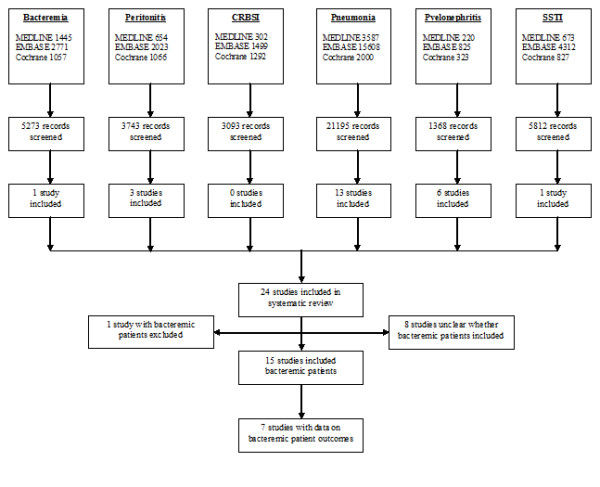
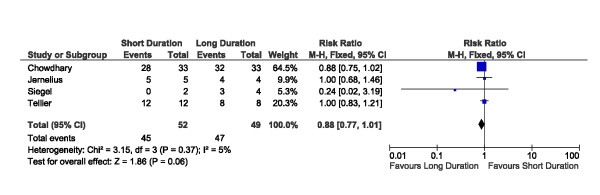
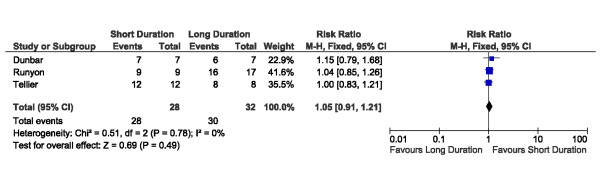
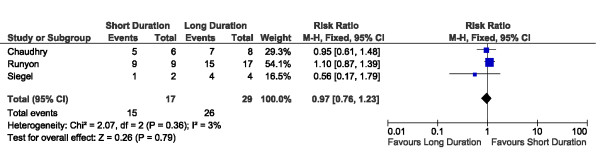
Introduction: The optimal duration of antibiotic therapy for bloodstream infections is unknown. Shorter durations of therapy have been demonstrated to be as effective as longer durations for many common infections; similar findings in bacteremia could enable hospitals to reduce antibiotic utilization, adverse events, resistance and costs. Methods: A search of the MEDLINE, EMBASE and COCHRANE databases was conducted for the years 1947-2010. Controlled trials were identified that randomized patients to shorter versus longer durations of treatment for bacteremia, or the infectious foci most commonly causing bacteremia in critically ill patients (catheter-related bloodstream infections (CRBSI), intra-abdominal infections, pneumonia, pyelonephritis and skin and soft-tissue infections (SSTI)). Results: Twenty-four eligible trials were identified, including one trial focusing exclusively on bacteremia, zero in catheter related bloodstream infection, three in intra-abdominal infection, six in pyelonephritis, thirteen in pneumonia and one in skin and soft tissue infection. Thirteen studies reported on 227 patients with bacteremia allocated to 'shorter' or 'longer' durations of treatment. Outcome data were available for 155 bacteremic patients: neonatal bacteremia ( n = 66); intra-abdominal infection (40); pyelonephritis (9); and pneumonia (40). Among bacteremic patients receiving shorter (5-7 days) versus longer (7-21 days) antibiotic therapy, no significant difference was detected with respect to rates of clinical cure (45/52 versus 47/49, risk ratio 0.88, 95% confidence interval [CI] 0.77-1.01), microbiologic cure (28/28 versus 30/32, risk ratio 1.05, 95% CI 0.91-1.21), and survival (15/17 versus 26/29, risk ratio 0.97, 95% CI 0.76-1.23). Conclusions: No significant differences in clinical cure, microbiologic cure and survival were detected among bacteremic patients receiving shorter versus longer duration antibiotic therapy. An adequately powered randomized trial of bacteremic patients is needed to confirm these findings.
Overview
The claims and statistics of this paper haven’t been checked yet.
Run the check — free, no account needed. It reads the open-access text and checks the sources it cites.
Integrity signals
Registry
Cites
Statistics
Figures
Verification
Claims the paper makes
The claims and statistics of this paper haven’t been checked yet.
Run the check — free, no account needed. It reads the open-access text and checks the sources it cites.
Claims other papers make about this one
Each is checked against this paper’s own text: does it say what the citing paper says it does?
The check wasn’t confident either way, so it gives no verdict — never disputed.
In the citing paper
“Two meta-analyses reported similar results supporting reduced short-term mortality (RR, 0.70; 95% CI, 0.57-0.87)with prolonged infusion of beta-lactams (232,233).”
From Surviving Sepsis Campaign: International Guidelines for Management of Sepsis and Septic Shock 2021. (2021) · cites this paper as [233]
Experimental — accuracy not yet measured
Self-check
Percentages, sums and reported differences re-computed from the paper’s own numbers.
The self-check needs the paper’s full text.
Citations
Cites
Measuring inconsistency in meta-analyses
Higgins, J. P. T., Thompson, S. G., Deeks, J. J., & Altman, D. G. (2003) · BMJ · doi:10.1136/bmj.327.7414.557 · Cited by 63,139
Mandell, L. A., Wunderink, R. G., Anzueto, A., Bartlett, J. G., Campbell, G. D., Dean, N. C., Dowell, S. F., File, T. M., Musher, D. M., Niederman, M. S., et al. (2007) · Clinical Infectious Diseases · doi:10.1086/511159 · Cited by 6,182
Kumar, A., Roberts, D., Wood, K. E., Light, B., Parrillo, J. E., Sharma, S., Suppes, R., Feinstein, D., Zanotti, S., Taiberg, L., et al. (2006) · Critical Care Medicine · doi:10.1097/01.ccm.0000217961.75225.e9 · Cited by 6,109
(2005) · American Journal of Respiratory and Critical Care Medicine · doi:10.1164/rccm.200405-644st · Cited by 5,932
Liu, C., Bayer, A. S., Cosgrove, S. E., Daum, R. S., Fridkin, S. K., Gorwitz, R. J., Kaplan, S. L., Karchmer, A. W., Levine, D. P., Murray, B. E., et al. (2011) · Clinical Infectious Diseases · doi:10.1093/cid/ciq146 · Cited by 4,260
International Study of the Prevalence and Outcomes of Infection in Intensive Care Units
Vincent, J. (2009) · JAMA · doi:10.1001/jama.2009.1754 · Cited by 3,639
Mermel, L. A., Allon, M., Bouza, E., Craven, D. E., Flynn, P., O'Grady, N. P., Raad, I. I., Rijnders, B. J. A., Sherertz, R. J., & Warren, D. K. (2009) · Clinical Infectious Diseases · doi:10.1086/599376 · Cited by 3,638
Gupta, K., Hooton, T. M., Naber, K. G., Wullt, B., Colgan, R., Miller, L. G., Moran, G. J., Nicolle, L. E., Raz, R., Schaeffer, A. J., et al. (2011) · Clinical Infectious Diseases · doi:10.1093/cid/ciq257 · Cited by 3,038
Ibrahim, E. H., Sherman, G., Ward, S., Fraser, V. J., & Kollef, M. H. (2000) · Chest · doi:10.1378/chest.118.1.146 · Cited by 1,779
Practice Guidelines for the Diagnosis and Management of Skin and Soft-Tissue Infections
Stevens, D. L., Bisno, A. L., Chambers, H. F. “., Everett, E. D., Dellinger, P. E., Goldstein, E. J. C., Gorbach, S. L., Hirschmann, J. V., Kaplan, E. L., Montoya, J. G., et al. (2005) · Clinical Infectious Diseases · doi:10.1086/497143 · Cited by 1,613
Cited by
Sorted by citations
Surviving sepsis campaign: international guidelines for management of sepsis and septic shock 2021
Evans, L., Rhodes, A., Alhazzani, W., Antonelli, M., Coopersmith, C. M., French, C., Machado, F. R., Mcintyre, L., Ostermann, M., Prescott, H. C., et al. (2021) · Intensive Care Medicine · doi:10.1007/s00134-021-06506-y · Cited by 5,082
Surviving Sepsis Campaign: International Guidelines for Management of Sepsis and Septic Shock 2021.
Evans, L., Rhodes, A., Alhazzani, W., Antonelli, M., Coopersmith, C. M., French, C., Machado, F. R., Mcintyre, L., Ostermann, M., Prescott, H. C., et al. (2021) · Critical Care Medicine · doi:10.1097/ccm.0000000000005337 · Cited by 2,935
Weiss, S. L., Peters, M. J., Alhazzani, W. A., Agus, M. S. D., Flori, H. R., Inwald, D. P., Nadel, S., Schlapbach, L. J., Tasker, R. C., Argent, A. C., et al. (2020) · Pediatric Critical Care Medicine · doi:10.1097/pcc.0000000000002198 · Cited by 1,304
Weiss, S. L., Peters, M. J., Alhazzani, W. A., Agus, M. S. D., Flori, H. R., Inwald, D. P., Nadel, S., Schlapbach, L. J., Tasker, R. C., Argent, A. C., et al. (2020) · Intensive Care Medicine · doi:10.1007/s00134-019-05878-6 · Cited by 663
The Surgical Infection Society Revised Guidelines on the Management of Intra-Abdominal Infection
Mazuski, J. E., Tessier, J. M., May, A. K., Sawyer, R. G., Nadler, E. P., Rosengart, M. R., Chang, P. K., O’Neill, P. J., Mollen, K. P., Huston, J. M., et al. (2017) · Surgical Infections · doi:10.1089/sur.2016.261 · Cited by 604
Bloodstream infections in critically ill patients: an expert statement
Timsit, J., Ruppé, É., Barbier, F., Tabah, A., & Bassetti, M. (2020) · Intensive Care Medicine · doi:10.1007/s00134-020-05950-6 · Cited by 487
Yahav, D., Franceschini, E., Koppel, F., Turjeman, A., Babich, T., Bitterman, R., Neuberger, A., Ghanem-Zoubi, N., Santoro, A., Eliakim-Raz, N., et al. (2019) · Clinical Infectious Diseases · doi:10.1093/cid/ciy1054 · Cited by 433
Antibiotic stewardship in the intensive care unit
Luyt, C. E., Bréchot, N., Trouillet, J., & Chastre, J. E. (2014) · Critical Care · doi:10.1186/s13054-014-0480-6 · Cited by 409
The dormant blood microbiome in chronic, inflammatory diseases
Potgieter, M., Bester, J., Kell, D. B., & Pretorius, E. (2015) · FEMS Microbiology Reviews · doi:10.1093/femsre/fuv013 · Cited by 384
2023 Update on Sepsis and Septic Shock in Adult Patients: Management in the Emergency Department
Guarino, M., Perna, B., Cesaro, A. E., Maritati, M., Spampinato, M. D., Contini, C., & GIORGIO, R. D. (2023) · Journal of Clinical Medicine · doi:10.3390/jcm12093188 · Cited by 342
Clinical Utility and Measurement of Procalcitonin.
Samsudin, I. N., & Vasikaran, S. D. (2017) · Europe PMC (PubMed Central) · Cited by 217
de With, K., Allerberger, F. J., Amann, S., Apfalter, P., Brodt, H.-R., Eckmanns, T., Fellhauer, M., Geiss, H. K., Janata, O., Krause, R. G. E., et al. (2016) · Infection · doi:10.1007/s15010-016-0885-z · Cited by 217
Management of KPC-producing Klebsiella pneumoniae infections
Bassetti, M., Giacobbe, D. R., Giamarellou, H., Viscoli, C., Daikos, G. L., Dimopoulos, G., Rosa, F. G. D., Giamarellos‐Bourboulis, E. J., Rossolini, G. M., Righi, E., et al. (2017) · Clinical Microbiology and Infection · doi:10.1016/j.cmi.2017.08.030 · Cited by 175
Chotiprasitsakul, D., Han, J., Cosgrove, S. E., Harris, A. D., Lautenbach, E., Conley, A. T., Tolomeo, P., Wise, J. A., Tamma, P. D., & Antibacterial Resistance Leadership Group (2017) · Clinical Infectious Diseases · doi:10.1093/cid/cix767 · Cited by 173
Antibiotic Use in the Intensive Care Unit: Optimization and De-Escalation
Campion, M. G., & Scully, G. (2018) · Journal of Intensive Care Medicine · doi:10.1177/0885066618762747 · Cited by 179
Antibiotic treatment for 7 versus 14 days in patients with bloodstream infections
The BALANCE Investigators (2025) · New England Journal of Medicine · doi:10.1056/nejmoa2404991 · Cited by 158
Molina, J., Montero-Mateos, E., Praena-Segovia, J., León-Jiménez, E., Natera, C., López-Cortés, L. E., Valiente, L., Rosso-Fernández, C. M., Herrero, M., Aller-García, A. I., et al. (2022) · Clinical Microbiology and Infection · doi:10.1016/j.cmi.2021.09.001 · Cited by 147
Next generation sequencing for diagnosis of severe pneumonia: China, 2010–2018
Xie, Y., Du, J., Jin, W., Teng, X., Cheng, R., Huang, P., Xie, H., Zhou, Z., Tian, R., Wang, R., et al. (2018) · Journal of Infection · doi:10.1016/j.jinf.2018.09.004 · Cited by 138
Estimating daily antibiotic harms: an umbrella review with individual study meta-analysis
Curran, J., Lo, J., Leung, V., Brown, K. A., Schwartz, K. L., Daneman, N., Garber, G. E., Wu, J. H., & Langford, B. J. (2021) · Clinical Microbiology and Infection · doi:10.1016/j.cmi.2021.10.022 · Cited by 138
Self-citationAdvances in antibiotic therapy in the critically ill
Vincent, J., Bassetti, M., François, B., Karam, G. H., Chastre, J. E., Torres, A., Roberts, J. A., Taccone, F. S., Rello, J., Calandra, T., et al. (2016) · Critical Care · doi:10.1186/s13054-016-1285-6 · Cited by 136
Kell, D. B., & Pretorius, E. (2018) · Biological reviews/Biological reviews of the Cambridge Philosophical Society · doi:10.1111/brv.12407 · Cited by 117
Bloodstream infections in the Intensive Care Unit
Bassetti, M., Righi, E., & Carnelutti, A. (2016) · Virulence · doi:10.1080/21505594.2015.1134072 · Cited by 112
Albrich, W. C., & Harbarth, S. (2015) · Intensive Care Medicine · doi:10.1007/s00134-015-3978-8 · Cited by 96
Royer, S., DeMerle, K. M., Dickson, R. P., & Prescott, H. C. (2018) · Journal of Hospital Medicine · doi:10.12788/jhm.2905 · Cited by 94
Behandlung von erwachsenen Patienten mit ambulant erworbener Pneumonie – Update 2021
Ewig, S., Kolditz, M., Pletz, M. W., Altiner, A., Albrich, W. C., Drömann, D., Flick, H., Gatermann, S. G., Krüger, S., Nehls, W., et al. (2021) · Pneumologie · doi:10.1055/a-1497-0693 · Cited by 98
Treatment of bloodstream infections in ICUs
Timsit, J., Soubirou, J.-F., Voiriot, G., Chemam, S., Neuville, M., Mourvillier, B., Sonneville, R., Mariotte, É., Bouadma, L., & Wolff, M. (2014) · BMC Infectious Diseases · doi:10.1186/1471-2334-14-489 · Cited by 90
Management and Prevention of Central Venous Catheter-Related Infections in the ICU
Buetti, N., & Timsit, J. (2019) · Seminars in Respiratory and Critical Care Medicine · doi:10.1055/s-0039-1693705 · Cited by 85
Optimizing Antimicrobial Drug Dosing in Critically Ill Patients
Póvoa, P. M. S. R., Moniz, P., Gonçalves-Pereira, J., & Coelho, L. (2021) · Microorganisms · doi:10.3390/microorganisms9071401 · Cited by 87
Proposal for shorter antibiotic therapies
Wintenberger, C., Guery, B. P., Bonnet, É., Castan, B., Cohen, R., Diamantis, S., Lesprit, P., Maulin, L., Pean, Y., Péju, E., et al. (2017) · Médecine et Maladies Infectieuses · doi:10.1016/j.medmal.2017.01.007 · Cited by 79
Antimicrobial stewardship in the intensive care unit
Türe, Z., Güner, R., & Alp, E. (2022) · Journal of Intensive Medicine · doi:10.1016/j.jointm.2022.10.001 · Cited by 75
Strategies to reduce curative antibiotic therapy in intensive care units (adult and paediatric)
Bretonnière, C., Léone, M., Milési, C., Allaouchiche, B., Armand-Lefèvre, L., Baldési, O., Bouadma, L., Decré, D., Figueiredo, S., Gauzit, R., et al. (2015) · Intensive Care Medicine · doi:10.1007/s00134-015-3853-7 · Cited by 73
Duration of antibiotic therapy in the intensive care unit
Zilahi, G., McMahon, A., Póvoa, P. M. S. R., & Martín‐Loeches, I. (2016) · Journal of Thoracic Disease · doi:10.21037/jtd.2016.12.89 · Cited by 75
Guidelines for Antibiotic Prescription in Intensive Care Unit
Guleria, R., Mohan, A., Kulkarni, A. P., Madan, K., & Hadda, V. (2019) · Indian Journal of Critical Care Medicine · doi:10.5005/jp-journals-10071-23101 · Cited by 79
Daneman, N., Campitelli, M. A., Giannakeas, V., Morris, A. M., Bell, C. M., Maxwell, C. J., Jeffs, L. P., Austin, P. C., & Bronskill, S. E. (2017) · Canadian Medical Association Journal · doi:10.1503/cmaj.161437 · Cited by 69
Self-citationMercuro, N. J., Stogsdill, P., & Wungwattana, M. (2017) · International Journal of Antimicrobial Agents · doi:10.1016/j.ijantimicag.2017.12.007 · Cited by 64
Schmidt, V. M., Pinchbeck, G. L., McIntyre, K. M., Nuttall, T. J., McEwan, N. R., Dawson, S., & Williams, N. J. (2018) · Journal of Antimicrobial Chemotherapy · doi:10.1093/jac/dky352 · Cited by 64
Zhuo, A., Labbate, M., Norris, J. M., Gilbert, G. L., Ward, M. P., Bajorek, B. V., Degeling, C., Rowbotham, S. J., Dawson, A., Nguyen, K.-A. T., et al. (2018) · BMJ Open · doi:10.1136/bmjopen-2017-020439 · Cited by 62
Optimal duration of antimicrobial therapy for uncomplicated Gram-negative bloodstream infections
Nelson, A. N., Justo, J. A., Bookstaver, P. B., Kohn, J. E., Albrecht, H., & Al‐Hasan, M. N. (2017) · Infection · doi:10.1007/s15010-017-1020-5 · Cited by 61
Variation in Current Management of Term and Late-preterm Neonates at Risk for Early-onset Sepsis
van Herk, W., el Helou, S., Janota, J., Hagmann, C. F., Klingenberg, C., Staub, E., Giannoni, É., Tissières, P., Schlapbach, L. J., van Rossum, A. M. C., et al. (2016) · The Pediatric Infectious Disease Journal · doi:10.1097/inf.0000000000001063 · Cited by 58
The Benefits and Harms of Antibiotic Prophylaxis for Urinary Tract Infection in Older Adults
Langford, B. J., Brown, K. A., Diong, C. C., Marchand‐Austin, A., Adomako, K., Saedi, A., Schwartz, K. L., Johnstone, J., MacFadden, D. R., Matukas, L. M., et al. (2021) · Clinical Infectious Diseases · doi:10.1093/cid/ciab116 · Cited by 58
Self-citationA Global Declaration on Appropriate Use of Antimicrobial Agents across the Surgical Pathway
Global Alliance for Infections in Surgery Working Group, Sartelli, M., Kluger, Y., Ansaloni, L., Carlet, J. M., Brink, A. J., Hardcastle, T. C., Khanna, A. K., Chicom-Mefire, A., Rodríguez‐Baño, J., et al. (2017) · Surgical Infections · doi:10.1089/sur.2017.219 · Cited by 57
on behalf of the Canadian Critical Care Trials Group, Daneman, N., Rishu, A. H., Pinto, R. L., Aslanian, P., Bagshaw, S. M., Carignan, A., Charbonney, E., Coburn, B. A., Cook, D. J., et al. (2018) · Trials · doi:10.1186/s13063-018-2474-1 · Cited by 58
Self-citationHost Diagnostic Biomarkers of Infection in the ICU: Where Are We and Where Are We Going?
Heffernan, A. J., & Denny, K. J. (2021) · Current Infectious Disease Reports · doi:10.1007/s11908-021-00747-0 · Cited by 56
Skoglund, E. W., Dempsey, C. J., Chen, H., & Garey, K. W. (2018) · Journal of Clinical Microbiology · doi:10.1128/jcm.01015-18 · Cited by 52
Utility of Blood Cultures in Pneumonia
Zhang, D., Yang, D., & Makam, A. N. (2019) · The American Journal of Medicine · doi:10.1016/j.amjmed.2019.03.025 · Cited by 53
Terrier, C. L., Vinetti, M., Bonjean, P., Richard, R., Jarrige, B., Pons, B., Madeux, B., Piednoir, P., Ardisson, F., Elie, E., et al. (2021) · Critical Care · doi:10.1186/s13054-021-03660-z · Cited by 47
Duration of Antimicrobial Treatment for Bacteremia in Canadian Critically Ill Patients*
Daneman, N., Rishu, A. H., Xiong, W. G., Bagshaw, S. M., Dodek, P., Hall, R., Kumar, A., Lamontagne, F., Lauzier, F., Marshall, J. C., et al. (2015) · Critical Care Medicine · doi:10.1097/ccm.0000000000001393 · Cited by 46
Self-citationIntensiva, O. B. O. N. –. N. I. D. I. E. M., Borges, I. N., Carneiro, R. M., Bergo, R., Martins, L. N. A., Colosimo, E. A., Oliveira, C., Saturnino, S. F., de Andrade, M. V. M., Ravetti, C. G., et al. (2020) · Critical Care · doi:10.1186/s13054-020-02946-y · Cited by 44
Short- versus long-course therapy in gram-negative bacilli bloodstream infections
Sousa, A., Pérez-Rodríguez, M. T., Suárez, M., Val, N., Martínez-Lamas, L., Nodar, A., Longueira, R., & Casal, M. C. (2019) · European Journal of Clinical Microbiology & Infectious Diseases · doi:10.1007/s10096-019-03467-5 · Cited by 43
Management of neonatal sepsis in term newborns
Pont‐Thibodeau, G. D., Joyal, J., & Lacroix, J. (2014) · F1000Prime Reports · doi:10.12703/p6-67 · Cited by 43
Update on bloodstream infections in ICUs
Timsit, J., & Laupland, K. B. (2012) · Current Opinion in Critical Care · doi:10.1097/mcc.0b013e328356cefe · Cited by 41
Havey, T., Fowler, R., Pinto, R. L., Elligsen, M., & Daneman, N. (2013) · Canadian Journal of Infectious Diseases and Medical Microbiology · doi:10.1155/2013/141989 · Cited by 39
Self-citationRohatgi, S., Dewan, P., Faridi, M., Kumar, A., Malhotra, R. K., & Batra, P. (2017) · Journal of Paediatrics and Child Health · doi:10.1111/jpc.13518 · Cited by 38
Role of Procalcitonin in the Management of Infected Patients in the Intensive Care Unit
Gilbert, D. N. (2017) · Infectious Disease Clinics of North America · doi:10.1016/j.idc.2017.05.003 · Cited by 38
Park, S. H., Milstone, A. M., Diener‐West, M., Nussenblatt, V. R., Cosgrove, S. E., & Tamma, P. D. (2013) · Journal of Antimicrobial Chemotherapy · doi:10.1093/jac/dkt424 · Cited by 37
Year in review 2011: Critical Care - infection
Afshari, A., Pagani, L., & Harbarth, S. (2012) · Critical Care · doi:10.1186/cc11421 · Cited by 37
Pathogenic bacteria distributions and drug resistance analysis in 96 cases of neonatal sepsis
Dong, H., Cao, H., & Zheng, H. (2017) · BMC Pediatrics · doi:10.1186/s12887-017-0789-9 · Cited by 36
Richter, D., Heininger, A., Brenner, T., Hochreiter, M., Bernhard, M., Briegel, J., Dubler, S., Grabein, B., Hecker, A., Krüger, W. A., et al. (2017) · Der Anaesthesist · doi:10.1007/s00101-017-0363-8 · Cited by 35
Onakpoya, I., Walker, A. S., Tan, P. S., Spencer, E. A., Gbinigie, O. A., Cook, J., Llewelyn, M., & Butler, C. (2018) · PLoS ONE · doi:10.1371/journal.pone.0194858 · Cited by 34
Esposito, S., Esposito, I., & Leone, S. (2012) · Journal of Antimicrobial Chemotherapy · doi:10.1093/jac/dks277 · Cited by 34
Corona, A., Santis, V. D., Agarossi, A., Prete, A., Cattaneo, D., Tomasini, G., Bonetti, G., Patroni, A., & Latronico, N. (2023) · Antibiotics · doi:10.3390/antibiotics12081262 · Cited by 33
Epidemiology, Management, and Risk-Adjusted Mortality of ICU-Acquired Enterococcal Bacteremia
Ong, D. S. Y., Bonten, M. J. M., Safdari, K., Spitoni, C., Frencken, J. F., Witteveen, E., Horn, J., Klouwenberg, P. M. C. K., & Cremer, O. L. (2015) · Clinical Infectious Diseases · doi:10.1093/cid/civ560 · Cited by 33
Duration of antibiotic therapy for common infections
Grant, J., & Saux, N. L. (2021) · Journal of the Association of Medical Microbiology and Infectious Disease Canada · doi:10.3138/jammi-2021-04-29 · Cited by 39
Sieswerda, E., Bax, H. I., Hoogerwerf, J. J., de Boer, M. G. J., Boermeester, M. A., Bonten, M. J. M., Dekker, D., van Wijk, R. G., Juffermans, N. P., Kuindersma, M., et al. (2022) · BMC Infectious Diseases · doi:10.1186/s12879-022-07653-3 · Cited by 30
Berger, M. G., Majumder, K., Hodges, J. S., Bellin, M. D., Schwarzenberg, S. J., Gupta, S., Dunn, T. B., Beilman, G. J., Pruett, T. L., Freeman, M. L., et al. (2016) · Pancreatology · doi:10.1016/j.pan.2016.03.019 · Cited by 30
on behalf of the Canadian Critical Care Trials Group, Daneman, N., Rishu, A. H., Xiong, W., Bagshaw, S. M., Cook, D. J., Dodek, P., Hall, R., Kumar, A., Lamontagne, F., et al. (2015) · Trials · doi:10.1186/s13063-015-0688-z · Cited by 29
Self-citationDaneman, N., Rishu, A. H., Pinto, R. L., Arabi, Y. M., Cook, D. J., Hall, R., McGuinness, S., Muscedere, J., Parke, R. L., Reynolds, S., et al. (2020) · BMJ Open · doi:10.1136/bmjopen-2020-038300 · Cited by 28
Self-citationFelice, V. G.-D., Ефимова, Е. А., Izmailyan, S., Napolitano, L. M., & Chopra, T. (2020) · Surgical Infections · doi:10.1089/sur.2020.241 · Cited by 28
Walsh, T., Bremmer, D. N., Moffa, M. A., Trienski, T. L., Buchanan, C., Stefano, K., Hand, C., Taylor, T., Kasarda, K., Shively, N. R., et al. (2021) · Infection · doi:10.1007/s15010-021-01581-1 · Cited by 28
Keir, I., & Dickinson, A. E. (2015) · Journal of Veterinary Emergency and Critical Care · doi:10.1111/vec.12272 · Cited by 26
Santis, V. D., Gresoiu, M., Corona, A., Wilson, A. P. R., & Singer, M. (2014) · Journal of Antimicrobial Chemotherapy · doi:10.1093/jac/dku338 · Cited by 27
Dose modulation: A new concept of antibiotic therapy in the critically ill patient?
Gonçalves-Pereira, J., & Paiva, J.-A. (2013) · Journal of Critical Care · doi:10.1016/j.jcrc.2012.11.018 · Cited by 25
Iskander, K. N., Vaickus, M. H., Duffy, E. R., & Remick, D. G. (2016) · PLoS ONE · doi:10.1371/journal.pone.0163005 · Cited by 26
Macheda, G., Dyar, O. J., Luc, A., Beovic, B., Béraud, G., Castan, B., Gauzit, R., Lesprit, P., Tattevin, P., Thilly, N., et al. (2018) · Journal of Antimicrobial Chemotherapy · doi:10.1093/jac/dkx528 · Cited by 24
Haque, M., Rahman, N. A. A., McKimm, J., Abdullah, S. L. B., Islam, M. Z., Zulkifli, Z., Saidin, N. B., Azhar, N. I. K., Lutfi, S. N. N. B., & Othman, N. S. A. B. (2019) · Expert Review of Anti-infective Therapy · doi:10.1080/14787210.2019.1581607 · Cited by 26
The Italian Society of Internal Medicine choosing wisely campaign
Montano, N., Costantino, G., Casazza, G., Sbrojavacca, R., Lenti, M. V., Falsetti, L., Guzzo, A. S., MAJO, R., Perticone, F., & Corazza, G. R. (2016) · Internal and Emergency Medicine · doi:10.1007/s11739-016-1560-1 · Cited by 22
Huerta, L. E., Nelson, G. E., Stewart, T. G., & Rice, T. W. (2018) · Critical Care · doi:10.1186/s13054-018-2206-7 · Cited by 22
Antibiotic use in critical illness
Stewart, S. D., & Allen, S. J. (2019) · Journal of Veterinary Emergency and Critical Care · doi:10.1111/vec.12842 · Cited by 22
Kuijpers, S. M. E., Buis, D. T. P., Ziesemer, K. A., van Hest, R. M., Schade, R. P., Sigaloff, K., & Prins, J. M. (2024) · The Lancet Infectious Diseases · doi:10.1016/s1473-3099(24)00456-0 · Cited by 24
Rudrabhatla, P. K., Deepanjali, S., Mandal, J., Swaminathan, R. P., & Kadhiravan, T. (2018) · PLoS ONE · doi:10.1371/journal.pone.0197302 · Cited by 21
Knowing when to stop antibiotic therapy
Gilbert, G. L. (2015) · The Medical Journal of Australia · doi:10.5694/mja14.01201 · Cited by 21
How to choose the duration of antibiotic therapy in patients with pneumonia
Aliberti, S., Giuliani, F., Ramírez, J. A., & Blasi, F. (2015) · Current Opinion in Infectious Diseases · doi:10.1097/qco.0000000000000140 · Cited by 20
Kang, A. Y., Beuttler, R., & Minejima, E. (2022) · Therapeutic Advances in Infectious Disease · doi:10.1177/20499361211073248 · Cited by 20
Arakawa, S., Kasai, M., Kawai, S., Sakata, H., & Mayumi, T. (2021) · Journal of Infection and Chemotherapy · doi:10.1016/j.jiac.2019.11.011 · Cited by 20
Brigmon, M. M., Bookstaver, P. B., Kohn, J. E., Albrecht, H., & Al‐Hasan, M. N. (2015) · Clinical Microbiology and Infection · doi:10.1016/j.cmi.2015.05.013 · Cited by 20
Significant Publications on Infectious Diseases Pharmacotherapy in 2017
Skoglund, E. W., Dotson, K. M., Dempsey, C. J., Su, C. P., Foolad, F., Janak, C. E., Sofjan, A. K., & Phe, K. (2018) · Journal of Pharmacy Practice · doi:10.1177/0897190018792797 · Cited by 19
Post-Cholecystectomy Mirizzi Syndrome: A Case Report and Review of the Literature
Borz-Baba, C., Levy, D. A., & Cohen, M. E. (2019) · American Journal of Case Reports · doi:10.12659/ajcr.916364 · Cited by 18
Takahashi, N., Imaeda, T., Nakada, T., Oami, T., Abe, T., Yamao, Y., Nakagawa, S., Ogura, H., Shime, N., Matsushima, A., et al. (2022) · Journal of Intensive Care · doi:10.1186/s40560-022-00642-3 · Cited by 17
Richter, D., Heininger, A., Brenner, T., Hochreiter, M., Bernhard, M., Briegel, J., Dubler, S., Grabein, B., Hecker, A., Krüger, W. A., et al. (2018) · Der Anaesthesist · doi:10.1007/s00101-017-0396-z · Cited by 18
Shortening the course of antibiotic treatment in the intensive care unit
Barrett, J., Edgeworth, J., & Wyncoll, D. L. A. (2015) · Expert Review of Anti-infective Therapy · doi:10.1586/14787210.2015.1008451 · Cited by 15
Liu, S., Wang, H., Yu, L., Ren, Y., Bouma, H. R., Liu, J., van der Mei, H. C., & Busscher, H. J. (2023) · Nano Letters · doi:10.1021/acs.nanolett.3c02686 · Cited by 16
Olmos, C., Vilacosta, I., López, J., Sáez, C., Anguita, M. P., García-Granja, P. E., Sarriá, C., Silva, J., Álvarez, B. Á., Martínez-Monzonis, M. A., et al. (2020) · BMC Infectious Diseases · doi:10.1186/s12879-020-05132-1 · Cited by 16
Li, X., Liu, C., Mao, Z., Li, Q., Qi, S., & Zhou, F. (2020) · Journal of Clinical Pharmacy and Therapeutics · doi:10.1111/jcpt.13277 · Cited by 16
Relevance of blood cultures in acute pyelonephritis in a single-center retrospective study
Ledochowski, S., Abraham, P.-S., Jacob, X., Dumitrescu, O., Lina, G., Lepape, A., Piriou, V., Wallet, F., & Friggeri, A. (2015) · Internal and Emergency Medicine · doi:10.1007/s11739-015-1223-7 · Cited by 15
Antibiotic treatment durations for pyogenic liver abscesses: A systematic review
Curran, J., Mulhall, C., Pinto, R. L., Bucheeri, M. A., & Daneman, N. (2023) · Journal of the Association of Medical Microbiology and Infectious Disease Canada · doi:10.3138/jammi-2023-0004 · Cited by 14
Self-citationSepsis and Total Joint Arthroplasty
Patel, K. M., Mears, S. C., Barnes, C. L., Stambough, J. B., & Stronach, B. M. (2021) · Orthopedic Clinics of North America · doi:10.1016/j.ocl.2021.08.008 · Cited by 14
Chunnilall, D., Peer, A. K. C., Naidoo, I., & Essack, S. Y. (2015) · Southern African Journal of Infectious Diseases · doi:10.1080/23120053.2015.1103956 · Cited by 14
A Practical Approach to Clinical Antibiotic Stewardship in the ICU Patient with Severe Infection
Fierens, J., Depuydt, P. O., & Waele, J. J. D. (2019) · Seminars in Respiratory and Critical Care Medicine · doi:10.1055/s-0039-1693995 · Cited by 14
Maher, J. M., Huband, M. D., Blankers, C. G., Puttagunta, S., Aronin, S. I., & Castanheira, M. (2023) · Journal of Antimicrobial Chemotherapy · doi:10.1093/jac/dkad099 · Cited by 13
Zhang, J., Liu, W., Xiao, W., Liu, Y., Hua, T., & Yang, M. (2023) · Intensive and Critical Care Nursing · doi:10.1016/j.iccn.2023.103549 · Cited by 13
Metadata
- Authors
- Havey, T. C., Fowler, R. A., & Daneman, N.
- Affiliations
- University of Toronto (CA)
- Sunnybrook Health Science Centre (CA)
- Corresponding author
- Daneman, Nick
- Venue
- Critical Care
- Published
- 2011-11-15
- Volume
- 15
- Issue
- 6
- Pages
- R267-R267
- ISSN
- 1364-8535 (ISSN-L)
- PMC
- PMC3388653
- OpenAlex
- W2146470820
- Cited by
- 187
- References
- 60
- Citations by year
- 2026: 3 · 2025: 11 · 2024: 6 · 2023: 16 · 2022: 12 · 2021: 21 · 2020: 19 · 2019: 14 · 2018: 19 · 2017: 19 · 2016: 11 · 2015: 20 · 2014: 7 · 2013: 5 · 2012: 4
- FWCI
- 0.59
- Type
- journal article
- Language
- en
- Open access
- gold
- doi.org
- Locations
- Critical Care (publishedVersion, cc-by)
- Europe PMC (PubMed Central) (publishedVersion, cc-by)
- PubMed Central (publishedVersion, cc-by)
- PubMed (publishedVersion)
- TSpace (University of Toronto) (submittedVersion)
- Funders
- Heart and Stroke Foundation of Canada
- Ontario Ministry of Health and Long-Term Care
- Canadian Institutes of Health Research
- Topics
- Health Sciences › Medicine › Infectious Diseases › Antibiotic Use and Resistance
- Health Sciences › Medicine › Pharmacology (medical) › Antibiotics Pharmacokinetics and Efficacy
- Health Sciences › Medicine › Critical Care and Intensive Care Medicine › Sepsis Diagnosis and Treatment
- Keywords
- bacteremia, antibiotic duration, short-course antibiotic therapy, bloodstream infection, clinical cure, microbiologic cure, survival, catheter-related bloodstream infection, intra-abdominal infection, pyelonephritis, pneumonia, skin and soft tissue infections, neonatal bacteremia, antibiotic use
- MeSH terms
- Anti-Bacterial Agents, Humans, Pyelonephritis, Time Factors, Bacteremia, Pneumonia, Bacterial, Soft Tissue Infections, Catheter-Related Infections, Intraabdominal Infections
About these checks
Registry, retraction, Cites and statistics results are computed, not judged, with one exception: a printed reference that no index lists is read once by a model before it counts as a citation error. Claims are extracted by a model and kept only when their quote appears verbatim in the text; each cited source is then checked, with a model’s help, for whether it says what the claim relies on. Those verdicts can be wrong — read the claim’s quote and the cited source before relying on one.
Statistics and arithmetic are recomputed, not judged.
Confidence bands are shown only for fields calibrated on our annotated test set. None is calibrated yet, so no band is shown.
What counts as a claim ›How we measure confidence ›How we check this ›
Are you an author, or do you see a problem with this page? Request a review
