

The DOI matches its Crossref record; 8 of the 9 references it cites were found in a registry or an index.
An ontology for cell types
Open accessAbstract
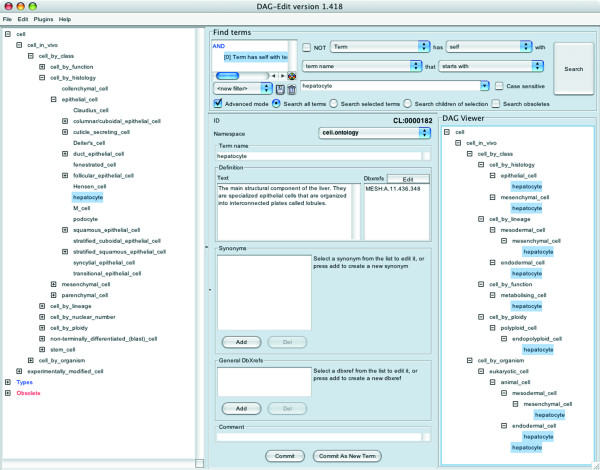
We describe an ontology for cell types that covers the prokaryotic, fungal, animal and plant worlds. It includes over 680 cell types. These cell types are classified under several generic categories and are organized as a directed acyclic graph. The ontology is available in the formats adopted by the Open Biological Ontologies umbrella and is designed to be used in the context of model organism genome and other biological databases. The ontology is freely available at http://obo.sourceforge.net/ and can be viewed using standard ontology visualization tools such as OBO-Edit and COBrA.
Overview
The claims and statistics of this paper haven’t been checked yet.
Run the check — free, no account needed. It reads the open-access text and checks the sources it cites.
Integrity signals
Registry
Cites
Statistics
Figures
Verification
Claims the paper makes
The claims and statistics of this paper haven’t been checked yet.
Run the check — free, no account needed. It reads the open-access text and checks the sources it cites.
Claims other papers make about this one
Each is checked against this paper’s own text: does it say what the citing paper says it does?
In the citing paper
“The Gene Ontology (GO) (Ashburner et al., 2000), Cell Ontology (CL) (Bard et al., 2005; Diehl et al., 2016), Human Phenotype Ontology (HPO) (Robinson et al., 2008) and related projects provide a set of widely used, manually curated ontologies that attempt to hierarchically factor entities such as biological processes, components and functions (GO), cell types (CL), and human phenotypes (HPO) into”
From Mapping the multiscale structure of biological systems (2021) · cites this paper as Bard et al., 2005
Self-check
Percentages, sums and reported differences re-computed from the paper’s own numbers.
The self-check needs the paper’s full text.
Citations
Cites
Alberts, B., Johnson, A., Lewis, J. H., Morgan, D. O., RAFF, M. C., Roberts, K. J., & Walter, P. (2017) · W.W. Norton eBooks · doi:10.1201/9781315735368 · Cited by 7,937
WARWICK, R., Williams, P. L., Dyson, M., & Bannister, L. (1985) · British Journal of Radiology · doi:10.1259/0007-1285-58-694-1029 · Cited by 4,532
The molecular biology of the cell
Arnstein, H. R. V. (1986) · FEBS Letters · doi:10.1016/0014-5793(86)80238-1 · Cited by 1,396
Creating the Gene Ontology Resource: Design and ImplementationPreprint
The Gene Ontology Consortium (2001) · Genome Research · doi:10.1101/gr.180801 · Cited by 957
MOLECULAR BIOLOGY OF THE CELL, 5TH EDITION
Fenderson, B. A. (2008) · Shock · doi:10.1097/01.shk.0000286288.33338.f6 · Cited by 829
Creating the gene ontology resource: design and implementation.
Blake, J. A., Corradi, J., Eppig, J. T., Hill, D. P., Richardson, J. E., & Ringwald, M. (2001) · The Mouseion at the JAXlibrary (Jackson Laboratory) · Cited by 826
Kiehart, D. P., Franke, J. D., Chee, M. K., Montague, R. A., Chen, T.-L., Roote, J., & Ashburner, M. (2004) · Genetics · doi:10.1534/genetics.104.026369 · Cited by 70
Self-citationDrysdale, R. (2001) · Briefings in Bioinformatics · doi:10.1093/bib/2.1.68 · Cited by 33
Research works printed but not linked: 1
- Esau K: The Anatomy of Seed Plants. 1977, New York: John Wiley, 2
Cited by
Sorted by citations
Items 201–300 of 416
Slater, L. T., Gkoutos, G. V., & Hoehndorf, R. (2020) · BMC Medical Informatics and Decision Making · doi:10.1186/s12911-020-01336-2 · Cited by 20
Systematic tissue annotations of genomics samples by modeling unstructured metadata
Hawkins, N. T., Maldaver, M., Yannakopoulos, A., Guare, L. A., & Krishnan, A. (2022) · Nature Communications · doi:10.1038/s41467-022-34435-x · Cited by 19
Ontology-Based Visualization of Hierarchical Neuroanatomical Structures
Kuß, A., Prohaska, S., Meyer, B., Rybak, J., & Hege, H. (2008) · doi:10.2312/vcbm/vcbm08/177-184 · Cited by 19
The Minimum Information about a Molecular Interaction CAusal STatement (MI2CAST)
Touré, V., Vercruysse, S., Acencio, M. L., Lovering, R. C., Orchard, S. E., Bradley, G., Casals‐Casas, C., Chaouiya, C., del‐Toro, N., Flobak, Å., et al. (2020) · Bioinformatics · doi:10.1093/bioinformatics/btaa622 · Cited by 19
A FAULT MODEL FOR ONTOLOGY MAPPING, ALIGNMENT, AND LINKING SYSTEMS
JOHNSON, H. L., Cohen, K. B., & Hunter, L. (2006) · Pacific Symposium on Biocomputing (PSB) · doi:10.1142/9789812772435_0023 · Cited by 19
Brain Data Standards - A method for building data-driven cell-type ontologies
Tan, S. Z. K., Kır, H., Aevermann, B. D., Gillespie, T., Harris, N. L., Hawrylycz, M., Jorstad, N. L., Lein, E. S., Matentzoglu, N., Miller, J. A., et al. (2023) · Scientific Data · doi:10.1038/s41597-022-01886-2 · Cited by 18
Query enhancement through the practical application of ontology: the IEDB and OBI
Vita, R., Overton, J. A., Greenbaum, J., Sette, A., & Peters, B. (2013) · Journal of Biomedical Semantics · doi:10.1186/2041-1480-4-s1-s6 · Cited by 17
An ontology for representing hematologic malignancies: the cancer cell ontology
Serra, L. M., Duncan, W. D., & Diehl, A. D. (2019) · BMC Bioinformatics · doi:10.1186/s12859-019-2722-8 · Cited by 17
An Ontology for African Traditional Medicine
Atemezing, G. A., & Pavón, J. (2008) · Advances in soft computing · doi:10.1007/978-3-540-85863-8_39 · Cited by 17
Lee, A. J., Chang, I., Burel, J. G., Arlehamn, C. S. L., Mandava, A., Weiskopf, D., Peters, B., Sette, A., Scheuermann, R. H., & Yu, Q. (2018) · Cytometry Part A · doi:10.1002/cyto.a.23371 · Cited by 17
Identification of disease treatment mechanisms through the multiscale interactomePreprint
Ruiz, C., Žitnik, M., & Leskovec, J. (2020) · bioRxiv (Cold Spring Harbor Laboratory) · doi:10.1101/2020.04.30.069690 · Cited by 17
The Porifera Ontology (PORO): enhancing sponge systematics with an anatomy ontology
THACKER, R. W., Díaz, M. C., Kerner, A., Vignes‐Lebbe, R., Segerdell, E., Haendel, M. A., & Mungall, C. (2014) · Journal of Biomedical Semantics · doi:10.1186/2041-1480-5-39 · Cited by 16
CellMeSH: probabilistic cell-type identification using indexed literature
Mao, S., Zhang, Y., Seelig, G., & Kannan, S. (2021) · Bioinformatics · doi:10.1093/bioinformatics/btab834 · Cited by 18
Hermida, L. C., Schaad, O., Demougin, P., Descombes, P., & Primig, M. (2006) · BMC Bioinformatics · doi:10.1186/1471-2105-7-190 · Cited by 16
Proteomic resources: Integrating biomedical information in humans
Suresh, S., Mohan, S. S., Mishra, G., Hanumanthu, G., Suresh, M., Reddy, R., & Pandey, A. (2005) · Gene · doi:10.1016/j.gene.2005.07.021 · Cited by 16
Controlled vocabularies for microbial virulence factors
Korves, T. M., & Colosimo, M. (2009) · Trends in Microbiology · doi:10.1016/j.tim.2009.04.002 · Cited by 16
CELDA - an ontology for the comprehensive representation of cells in complex systems
Seltmann, S., Stachelscheid, H., Damaschun, A., Jansen, L., Lekschas, F., Fontaine, J., Nguyen-Dobinsky, T. N., Leser, U., & Kurtz, A. (2013) · BMC Bioinformatics · doi:10.1186/1471-2105-14-228 · Cited by 16
Exact score distribution computation for ontological similarity searches
Schulz, M. H., Köhler, S., Bauer, S., & Robinson, P. N. (2011) · BMC Bioinformatics · doi:10.1186/1471-2105-12-441 · Cited by 16
Bard, J. (2007) · Mammalian Genome · doi:10.1007/s00335-007-9027-3 · Cited by 15
Self-citationIkeda, S., Zou, Z., Bono, H. U., Moriya, Y., Kawashima, S., Katayama, T., Oki, S., & Ohta, T. (2025) · GigaScience · doi:10.1093/gigascience/giaf070 · Cited by 15
The Blood Ontology: An ontology in the domain of hematology
Almeida, M. B., Carneiro, P. A. B. D. F., Ai, J., & Smith, B. (2011) · PhilPapers (PhilPapers Foundation) · Cited by 15
Evaluation of single-cell RNAseq labelling algorithms using cancer datasets
Christensen, E., Luo, P., Turinsky, A. L., Husić, M., Mahalanabis, A., Naidas, A., Díaz-Mejía, J. J., Brudno, M., Pugh, T. J., Ramani, A. K., et al. (2022) · Briefings in Bioinformatics · doi:10.1093/bib/bbac561 · Cited by 15
Ontology based molecular signatures for immune cell types via gene expression analysis
Meehan, T. F., Vasilevsky, N., Mungall, C., Dougall, D. S., Haendel, M. A., Blake, J. A., & Diehl, A. D. (2013) · BMC Bioinformatics · doi:10.1186/1471-2105-14-263 · Cited by 15
Bernstein, M. N., Ni, Z., Collins, M., Burkard, M. E., Kendziorski, C. M., & Stewart, R. (2021) · BMC Bioinformatics · doi:10.1186/s12859-021-04021-x · Cited by 15
Structure, function, and behaviour of computational models in systems biology
Knüpfer, C. R. N., Beckstein, C., Dittrich, P., & Novère, N. G. L. (2013) · BMC Systems Biology · doi:10.1186/1752-0509-7-43 · Cited by 15
GPDE: A biological proteomic database for biomarker discovery and evaluation
Griss, J., Haudek‐Prinz, V. J., & Gerner, C. (2011) · PROTEOMICS · doi:10.1002/pmic.201000507 · Cited by 14
Flow: Statistics, visualization and informatics for flow cytometry
Frelinger, J., Kepler, T. B., & Chan, C. C. W. (2008) · Source Code for Biology and Medicine · doi:10.1186/1751-0473-3-10 · Cited by 14
An ontology of fungal subcellular traits
Kumar, T. K. A., Crow, J., Wennblom, T. J., Abril, M., Letcher, P. M., Blackwell, M., Roberson, R. W., & McLaughlin, D. J. (2011) · American Journal of Botany · doi:10.3732/ajb.1100047 · Cited by 14
The Renal Gene Ontology Annotation Initiative
Alam-Faruque, Y., Dimmer, E. C., Huntley, R. P., O’Donovan, C., Scambler, P. J., & Apweiler, R. (2010) · Organogenesis · doi:10.4161/org.6.2.11294 · Cited by 14
Specimen, biological structure, and spatial ontologies in support of a Human Reference Atlas
Herr, B. W., Hardi, J., Quardokus, E. M., Bueckle, A., Chen, L., Wang, F., Caron, A. R., Osumi-Sutherland, D., Musen, M. A., & Börner, K. (2023) · Scientific Data · doi:10.1038/s41597-023-01993-8 · Cited by 16
Composite annotations: Requirements for mapping multiscale data and models to biomedical ontologies
Cook, D. L., Mejino, J. L. V., Neal, M. L., & Gennari, J. H. (2009) · Annual International Conference of the IEEE Engineering in Medicine and Biology Society (EMBC) · doi:10.1109/iembs.2009.5333830 · Cited by 13
Quantitative evaluation of ontology design patterns for combining pathology and anatomy ontologies
Alghamdi, S. M., Sundberg, B. A., Sundberg, J. P., Schofield, P. N., & Hoehndorf, R. (2019) · Scientific Reports · doi:10.1038/s41598-019-40368-1 · Cited by 13
Ontology-driven integrative analysis of omics data through Onassis
Galeota, E., Kishore, K., & Pelizzola, M. (2020) · Scientific Reports · doi:10.1038/s41598-020-57716-1 · Cited by 14
Anatomical structures, cell types, and biomarkers of the healthy human blood vasculature
Boppana, A., Lee, S., Malhotra, R. K., Halushka, M. K., Gustilo, K. S., Quardokus, E. M., Herr, B. W., Börner, K., & Weber, G. M. (2023) · Scientific Data · doi:10.1038/s41597-023-02018-0 · Cited by 14
Accessing Expert‐Curated Pharmacological Data in the IUPHAR/BPS Guide to PHARMACOLOGY
Sharman, J. L., Harding, S. D., Southan, C., Faccenda, E., Pawson, A. J., Davies, J. A., & NC‐IUPHAR (2018) · Current Protocols in Bioinformatics · doi:10.1002/cpbi.46 · Cited by 12
Approaching the axiomatic enrichment of the Gene Ontology from a lexical perspective
Quesada-Martínez, M., Mikroyannidi, E., Fernández‐Breis, J. T., & Stevens, R. (2014) · Artificial Intelligence in Medicine · doi:10.1016/j.artmed.2014.09.003 · Cited by 12
CRAFT Shared Tasks 2019 Overview –- Integrated Structure, Semantics, and Coreference
Baumgartner, W. A., Bada, M. A., Pyysalo, S., Ciosici, M. R., Hailu, N., Pielke-Lombardo, H., Regan, M., & Hunter, L. (2019) · Workshop on BioNLP Open Shared Tasks (BioNLP-OST) · doi:10.18653/v1/d19-5725 · Cited by 12
A Cell-Cycle Knowledge Integration Framework
Antezana, E., Tsiporkova, E., Mironov, V., & Kuiper, M. T. R. (2006) · Lecture notes in computer science · doi:10.1007/11799511_4 · Cited by 12
Where to search top-K biomedical ontologies?
Oliveira, D., Butt, A. S., Armin Haller, A., Rebholz‐Schuhmann, D., & Sahay, R. (2018) · Briefings in Bioinformatics · doi:10.1093/bib/bby015 · Cited by 11
An infrastructure for ontology-based information systems in biomedicine: RICORDO case study
Wimalaratne, S., Grenon, P., Hoehndorf, R., Gkoutos, G. V., & de Bono, B. (2011) · Bioinformatics · doi:10.1093/bioinformatics/btr662 · Cited by 11
Plant-Pathogen Interactions Ontology (PPIO)
Iglesias, A. R., Aranguren, M. E., Rodríguez‐González, A., & Wilkinson, M. D. (2013) · IWBBIO · Cited by 11
Better living through ontologies at the Immune Epitope Database
Vita, R., Overton, J. A., Sette, A., & Peters, B. (2017) · Database · doi:10.1093/database/bax014 · Cited by 11
Harris, M. A. (2008) · Methods in molecular biology · doi:10.1007/978-1-60327-159-2_5 · Cited by 11
(2016) · Methods in molecular biology · doi:10.1007/978-1-4939-6622-6 · Cited by 11
A Proposal for a Gene Functions Wiki
Hoehndorf, R., Prüfer, K., Backhaus, M., Heinrich Herre, B., Kelso, J. F., Frank Loebe, A., & Visagie, J. (2006) · Lecture notes in computer science · doi:10.1007/11915034_91 · Cited by 11
Thematic series on biomedical ontologies in JBMS: challenges and new directions
Hoehndorf, R., Haendel, M. A., Stevens, R., & Rebholz‐Schuhmann, D. (2014) · Journal of Biomedical Semantics · doi:10.1186/2041-1480-5-15 · Cited by 10
Knowledge sharing and collaboration in translational research, and the DC-THERA Directory
Splendiani, A., Gündel, M., Austyn, J. M., Cavalieri, D., Scognamiglio, C., & Brandizi, M. (2011) · Briefings in Bioinformatics · doi:10.1093/bib/bbr051 · Cited by 10
Building reference alignments for compound matching of multiple ontologies using OBO cross-products
Pesquita, C., Cheatham, M., Faria, D., Barros, J., dos Santos, E. M., & Couto, F. M. (2014) · International Conference on Ontology Matching · Cited by 10
Ontology-based cross-species integration and analysis of Saccharomyces cerevisiae phenotypes
Gkoutos, G. V., & Hoehndorf, R. (2012) · Journal of Biomedical Semantics · doi:10.1186/2041-1480-3-s2-s6 · Cited by 10
A Literature-Derived Knowledge Graph Augments the Interpretation of Single Cell RNA-seq Datasets
Doddahonnaiah, D., Lenehan, P. J., Hughes, T. K., Zemmour, D., Garcia-Rivera, E., Venkatakrishnan, A., Chilaka, R., Khare, A., Kasaraneni, A., Garg, A., et al. (2021) · Genes · doi:10.3390/genes12060898 · Cited by 11
Development of an Ontology for Periodontitis
Suzuki, A., Takai‐Igarashi, T., Nakaya, J., & Tanaka, H. (2015) · Journal of Biomedical Semantics · doi:10.1186/s13326-015-0028-y · Cited by 10
PIDO: the primary immunodeficiency disease ontology
Adams, N., Hoehndorf, R., Gkoutos, G. V., Hansen, G., & Hennig, C. (2011) · Bioinformatics · doi:10.1093/bioinformatics/btr531 · Cited by 10
OBO to UML: Support for the development of conceptual models in the biomedical domain
Waldemarin, R. C., & de Farias, C. R. G. (2018) · Journal of Biomedical Informatics · doi:10.1016/j.jbi.2018.02.015 · Cited by 10
A survey on automatically constructed universal knowledge bases
Hossain, B. A., Salam, A., & Schwitter, R. (2020) · Journal of Information Science · doi:10.1177/0165551520921342 · Cited by 10
Knowledge‐Based Bioinformatics
Neumann, E. (2010) · Wiley eBooks · doi:10.1002/9780470669716.ch1 · Cited by 10
Digital evolution: Novo Nordisk’s shift to ontology-based data management
Tan, S. Z. K., Baksi, S., Bjerregaard, T. G., Elangovan, P., Gopalakrishnan, T., Hric, D., Joumaa, J., Li, B., Rabbani, K., Venkatesan, S. K., et al. (2025) · Journal of Biomedical Semantics · doi:10.1186/s13326-025-00327-4 · Cited by 9
Shen, Q., Dong, K., Zhang, S., & Zhang, S. (2025) · Genome biology · doi:10.1186/s13059-025-03773-6 · Cited by 9
Using ontologies for life science text-based resource organization
Panzarella, G., Veltri, P., & Alcaro, S. (2023) · Artificial Intelligence in the Life Sciences · doi:10.1016/j.ailsci.2023.100059 · Cited by 9
de Bono, B., Safaei, S., Grenon, P., Nickerson, D. P., Alexander, S., Helvensteijn, M., Kok, J. N., Kokash, N., Wu, A., Yu, T., et al. (2015) · Frontiers in Physiology · doi:10.3389/fphys.2015.00024 · Cited by 9
Parikh, P., Zheng, J., Logan-Klumpler, F., Stoeckert, C. J., Louis, C., Topalis, P., Protasio, A. V., Sheth, A., Carrington, M., Berriman, M., et al. (2012) · Journal of Biomedical Semantics · doi:10.1186/2041-1480-3-5 · Cited by 9
An ontology-based method for assessing batch effect adjustment approaches in heterogeneous datasets
Schmidt, F., List, M., Cukuroglu, E., Köhler, S., Göke, J., & Schulz, M. H. (2018) · Bioinformatics · doi:10.1093/bioinformatics/bty553 · Cited by 9
Xiong, Y.-X., & Zhang, X.-F. (2024) · Briefings in Bioinformatics · doi:10.1093/bib/bbae072 · Cited by 10
Statistical Tests for Associations between Two Directed Acyclic Graphs
Hoehndorf, R., Ngomo, A.-C. N., Dannemann, M., & Kelso, J. F. (2010) · PLoS ONE · doi:10.1371/journal.pone.0010996 · Cited by 9
Guidelines for managing data and processes in bone and cartilage tissue engineering
Viti, F., Scaglione, S., Orro, A., & Milanesi, L. (2014) · BMC Bioinformatics · doi:10.1186/1471-2105-15-s1-s14 · Cited by 9
Evolutionary Cell Biology of Proteins from Protists to Humans and Plants
Plattner, H. (2017) · Journal of Eukaryotic Microbiology · doi:10.1111/jeu.12449 · Cited by 9
Parallel sequence tagging for concept recognition
Furrer, L., Cornelius, J., & Rinaldi, F. (2022) · BMC Bioinformatics · doi:10.1186/s12859-021-04511-y · Cited by 9
Developmental Anatomy Ontology of Zebrafish: an Integrative semantic framework
Belmamoune, M., & Verbeek, F. J. (2007) · Berichte aus der medizinischen Informatik und Bioinformatik/Journal of integrative bioinformatics · doi:10.1515/jib-2007-65 · Cited by 9
GoPubMed: Ontology-based literature search for the life sciences
Doms, A. (2008) · Qucosa (Saxon State and University Library Dresden) · Cited by 9
The Physiome Project, open EHR Archetypes, and the Digital Patient
Nickerson, D. P., Atalağ, K., de Bono, B., & Hunter, P. J. (2016) · Wiley eBooks · doi:10.1002/9781118952788.ch9 · Cited by 9
Aevermann, B. D., Zhang, Y., Novotny, M. A., Bakken, T. E., Miller, J. A., Hodge, R. D., Lelieveldt, B. P. F., Lein, E. S., & Scheuermann, R. H. (2020) · bioRxiv (Cold Spring Harbor Laboratory) · doi:10.1101/2020.09.23.308932 · Cited by 9
A curated collection of human vaccination response signatures
Smith, K. C., Chawla, D. G., Dhillon, B. K., Ji, Z., Vita, R., van der Leest, E. C., Weng, J. Y., Tang, E., Abid, A., Peters, B., et al. (2022) · Scientific Data · doi:10.1038/s41597-022-01558-1 · Cited by 9
On the use of QDE-SVM for gene feature selection and cell type classification from scRNA-seq data
Ng, G. Y. L., Tan, S. C., & Ong, C. S. (2023) · PLoS ONE · doi:10.1371/journal.pone.0292961 · Cited by 8
uHAF: a unified hierarchical annotation framework for cell type standardization and harmonization
Bian, H., Chen, Y., Wei, L., & Zhang, X. (2025) · Bioinformatics · doi:10.1093/bioinformatics/btaf149 · Cited by 9
Semantic integration of information about orthologs and diseases: The OGO system
Miñarro-Giménez, J. A., Aranguren, M. E., Martínez‐Béjar, R., Fernández‐Breis, J. T., & Madrid, M. (2011) · Journal of Biomedical Informatics · doi:10.1016/j.jbi.2011.08.002 · Cited by 8
The IUPHAR Guide to Immunopharmacology: connecting immunology and pharmacology
Harding, S. D., Faccenda, E., Southan, C., Pawson, A. J., Maffia, P., Alexander, S. P. H., Davenport, A. P., Fabbro, D., Levi‐Schaffer, F., Spedding, M., et al. (2020) · Immunology · doi:10.1111/imm.13175 · Cited by 8
Populous: A tool for populating ontology templates
Jupp, S., Matthew Horridge, A., Iannone, L., Klein, J., Owen, S., Schanstra, J. P., Stevens, R., & Wolstencroft, K. (2010) · Research Explorer (The University of Manchester) · doi:10.48550/arxiv.1012.1745 · Cited by 8
Matthias Samwald, A., & Adlassnig, K.-P. (2008) · Applied Ontology · doi:10.3233/ao-2008-0053 · Cited by 8
Ontological realism and classification: Structures and concepts in the G ene O ntology
Mayor, C., & Robinson, L. (2014) · Journal of the Association for Information Science and Technology · doi:10.1002/asi.23057 · Cited by 8
A scale-out RDF molecule store for improved co-identification, querying and inferencing
Newman, A. F., Li, Y.-F., & Hunter, J. (2008) · Cited by 8
Advancement in Sustainable Agriculture: Computational and Bioinformatics Tools
Parray, J. A., Mir, M. Y., & Shameem, N. (2019) · Springer eBooks · doi:10.1007/978-981-13-8840-8_10 · Cited by 8
Jupyter notebook-based tools for building structured datasets from the Sequence Read Archive
Bernstein, M. N., Gladstein, A. L., Latt, K. Z., Clough, E., Busby, B., & Dillman, A. (2020) · F1000Research · doi:10.12688/f1000research.23180.1 · Cited by 8
Porto, D. S., Dahdul, W., Lapp, H., Balhoff, J. P., Vision, T., Mabee, P., & Uyeda, J. C. (2022) · Systematic Biology · doi:10.1093/sysbio/syac022 · Cited by 8
Linking Scattered Stem Cell-Based Data to Advance Therapeutic Development
Kurtz, A., Elsallab, M., Sanzenbacher, R., & Abou‐El‐Enein, M. (2018) · Trends in Molecular Medicine · doi:10.1016/j.molmed.2018.10.008 · Cited by 8
Biomedical Ontologies: Coverage, Access and Use
Ferreira, J. D., Teixeira, D. C., & Pesquita, C. (2020) · Elsevier eBooks · doi:10.1016/b978-0-12-801238-3.11664-2 · Cited by 7
ApiNATOMY: Towards Multiscale Views of Human Anatomy
de Bono, B., Grenon, P., Helvensteijn, M., Kok, J. N., & Kokash, N. (2014) · Lecture notes in computer science · doi:10.1007/978-3-319-12571-8_7 · Cited by 7
A semantic model of events for integrating photovoltaic monitoring data
Dagnely, P., Tsiporkova, E., Tourwé, T., Ruette, T., Brabandere, K. D., & Assiandi, F. (2015) · IEEE International Conference on Industrial Informatics (INDIN) · doi:10.1109/indin.2015.7281705 · Cited by 7
New concepts for building vocabulary for cell image ontologies
Plant, A. L., Elliott, J. T., & Bhat, T. N. (2011) · BMC Bioinformatics · doi:10.1186/1471-2105-12-487 · Cited by 7
Representing Normal and Abnormal Physiology as Routes of Flow in ApiNATOMY
de Bono, B., Gillespie, T., Surles-Zeigler, M. C., Kokash, N., Grethe, J. S., & Martone, M. E. (2022) · Frontiers in Physiology · doi:10.3389/fphys.2022.795303 · Cited by 7
Ontologies for data and knowledge sharing in biology: plant ROS signaling as a case study
Стриж, И. Г. (2006) · BioEssays · doi:10.1002/bies.20368 · Cited by 7
Gold-standard ontology-based anatomical annotation in the CRAFT Corpus
Bada, M. A., Vasilevsky, N., Baumgartner, W. A., Haendel, M. A., & Hunter, L. (2017) · Database · doi:10.1093/database/bax087 · Cited by 6
Exploring Zebrafish Genomic, Functional and Phenotypic Data Using ZFIN
Ramachandran, S., Ruef, B. J., Pich, C., & Sprague, J. (2010) · Current Protocols in Bioinformatics · doi:10.1002/0471250953.bi0118s31 · Cited by 6
Data Extraction, Transformation, and Dissemination through ZFIN
Howe, D. G., Frazer, K., Fashena, D. S., Ruzicka, L., Bradford, Y. M., Ramachandran, S., Ruef, B. J., Slyke, C. E. V., Singer, A., & Westerfield, M. (2011) · Methods in cell biology · doi:10.1016/b978-0-12-374814-0.00017-3 · Cited by 6
Cytoview: Development of a cell modelling framework
Khodade, P., Malhotra, S., Kumar, N., Iyengar, M. S., Balakrishnan, N., & Chandra, N. R. (2007) · Journal of Biosciences · doi:10.1007/s12038-007-0096-y · Cited by 6
Integration of Biological Data with Semantic Networks
Hsing, M., & Cherkasov, A. R. (2006) · Current Bioinformatics · doi:10.2174/157489306777827946 · Cited by 6
Compound matching of biomedical ontologies.
Oliveira, D., & Pesquita, C. (2015) · Portuguese National Funding Agency for Science, Research and Technology (RCAAP Project by FCT) · Cited by 6
Role and application of Ontology Design Patterns in bio-ontologies
Aranguren, M. E. (2010) · OpenGrey (Institut de l'Information Scientifique et Technique) · Cited by 6
Populous: A Tool for Populating Templates for OWL Ontologies.
Jupp, S., Matthew Horridge, A., Iannone, L., Klein, J., Owen, S., Schanstra, J. P., Stevens, R., & Wolstencroft, K. (2010) · SWAT4LS · Cited by 5
The Immunopeptidomics Ontology (ImPO)
Faria, D., Eugénio, P., Silva, M. C., Balbi, L., Bedran, G., Kallor, A. A., Nunes, S., Pałkowski, A., Waleron, M. M., Alfaro, J. A., et al. (2024) · Database · doi:10.1093/database/baae014 · Cited by 5
Bluima: a UIMA-based NLP Toolkit for Neuroscience.
Richardet, R., Chappelier, J.-C., & Telefont, M. (2013) · Cited by 5
Leveraging Ontologies for Knowledge Graph Schemas
Oliveira, D., Sahay, R., & d’Aquin, M. (2019) · Cited by 5
Metadata
- Authors
- Bard, J., Rhee, S. Y., & Ashburner, M.
- Affiliations
- University of Edinburgh (GB)
- Carnegie Institution for Science (US)
- European Bioinformatics Institute (GB)
- Corresponding author
- Ashburner, Michael
- Venue
- Genome biology
- Published
- 2005-01-14
- Volume
- 6
- Issue
- 2
- Pages
- R21-R21
- ISSN
- 1465-6906 (ISSN-L)
- 1474-760X
- PMC
- PMC551541
- OpenAlex
- W1757909678
- Cited by
- 416
- References
- 9
- Citations by year
- 2026: 8 · 2025: 6 · 2024: 10 · 2023: 15 · 2022: 14 · 2021: 23 · 2020: 23 · 2019: 23 · 2018: 17 · 2017: 16 · 2016: 15 · 2015: 14 · 2014: 17 · 2013: 24 · 2012: 25
- FWCI
- 9.70
- Type
- journal article
- Language
- en
- Open access
- gold
- doi.org
- Locations
- Genome biology (publishedVersion, cc-by)
- Europe PMC (PubMed Central) (publishedVersion)
- PubMed Central (publishedVersion)
- PubMed (publishedVersion)
- Apollo (University of Cambridge) (submittedVersion, cc-by)
- Funders
- National Science Foundation (9978564, 0321666)
- National Institutes of Health
- Medical Research Council
- Biotechnology and Biological Sciences Research Council
- Topics
- Health Sciences › Medicine › Health Informatics › Biomedical Text Mining and Ontologies
- Physical Sciences › Computer Science › Artificial Intelligence › Semantic Web and Ontologies
- Life Sciences › Biochemistry, Genetics and Molecular Biology › Molecular Biology › Bioinformatics and Genomic Networks
- Keywords
- cell types, ontology (information science), cell type classification, prokaryotic cells, fungal cells, animal cells, plant cells, directed acyclic graphs, biological databases
- MeSH terms
- Animals, Computer Graphics, Eukaryotic Cells, Humans, Prokaryotic Cells, Databases, Factual, Vocabulary, Controlled, Internet, Databases, Genetic, Mice
About these checks
Registry, retraction, Cites and statistics results are computed, not judged, with one exception: a printed reference that no index lists is read once by a model before it counts as a citation error. Claims are extracted by a model and kept only when their quote appears verbatim in the text; each cited source is then checked, with a model’s help, for whether it says what the claim relies on. Those verdicts can be wrong — read the claim’s quote and the cited source before relying on one.
Statistics and arithmetic are recomputed, not judged.
Confidence bands are shown only for fields calibrated on our annotated test set. None is calibrated yet, so no band is shown.
What counts as a claim ›How we measure confidence ›How we check this ›
Are you an author, or do you see a problem with this page? Request a review
