

The DOI matches its Crossref record; 37 of the 39 references it cites were found in a registry or an index.
The miR-17-5p microRNA is a key regulator of the G1/S phase cell cycle transition
Open accessAbstract
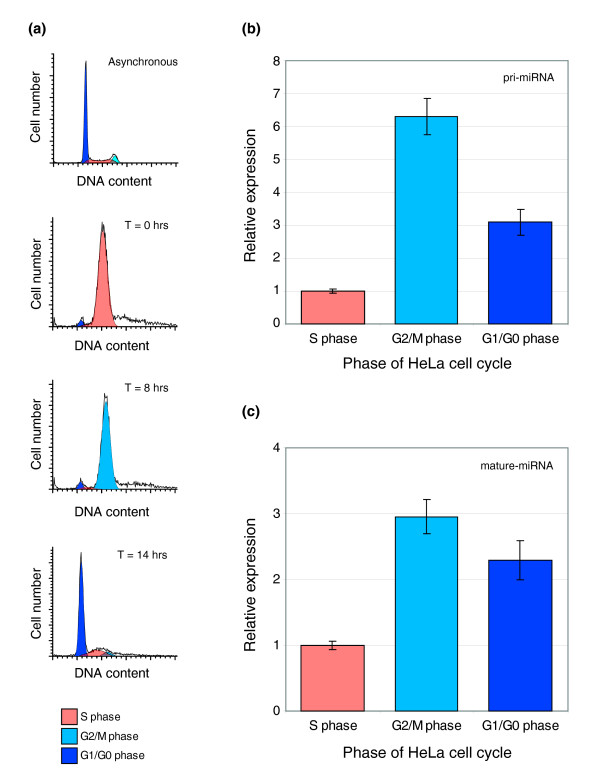
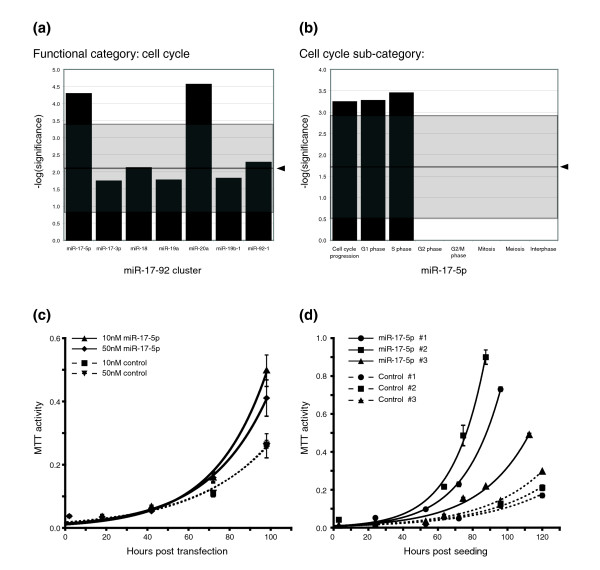
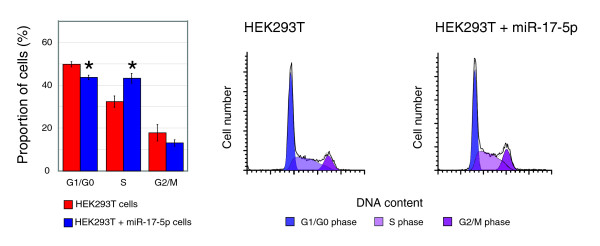
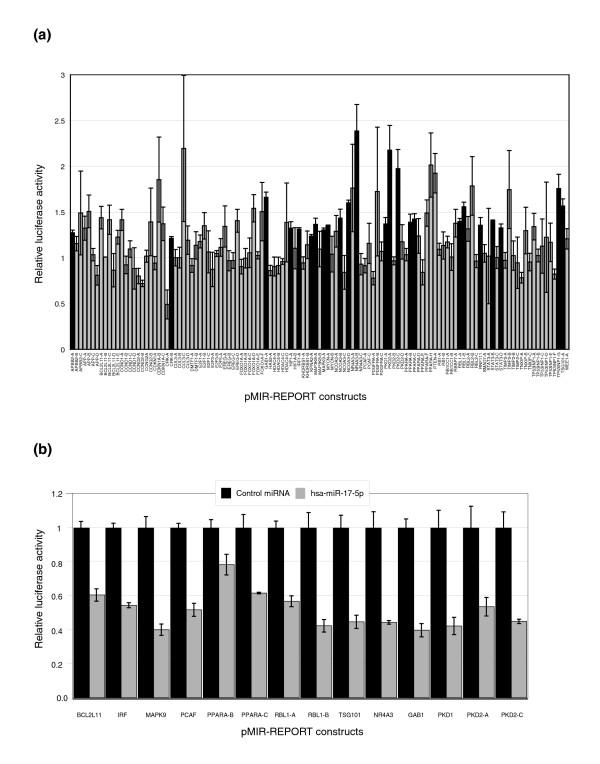
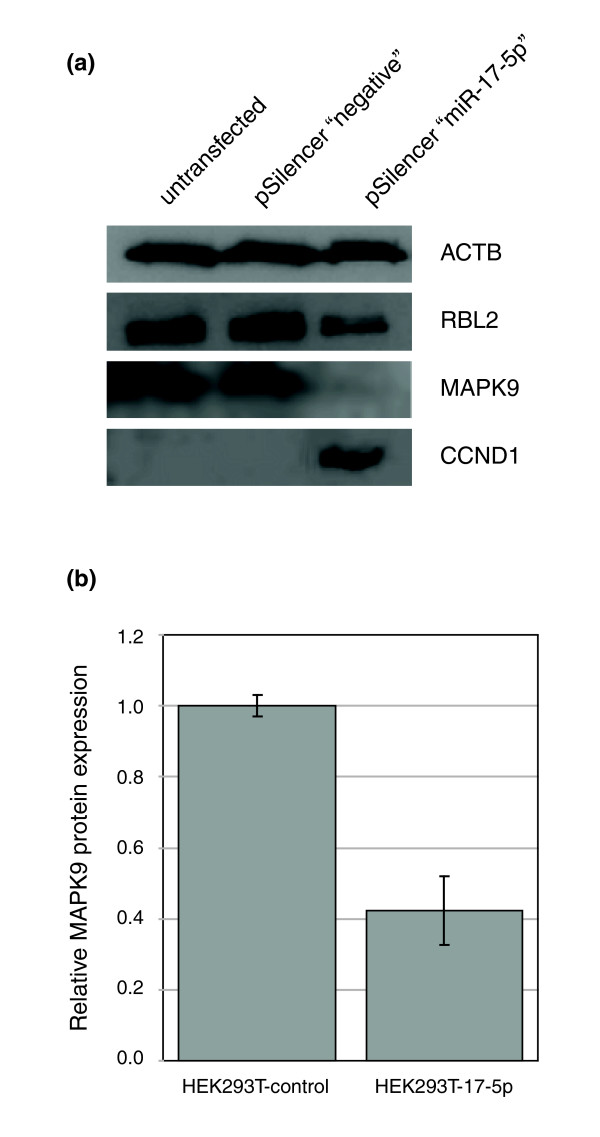
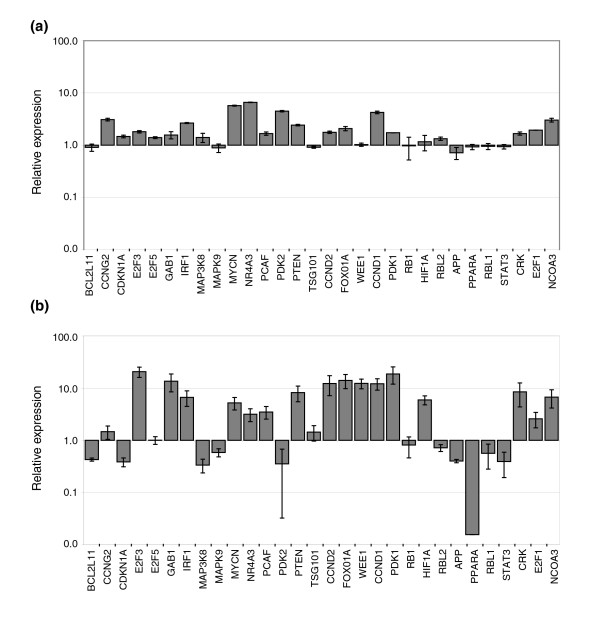
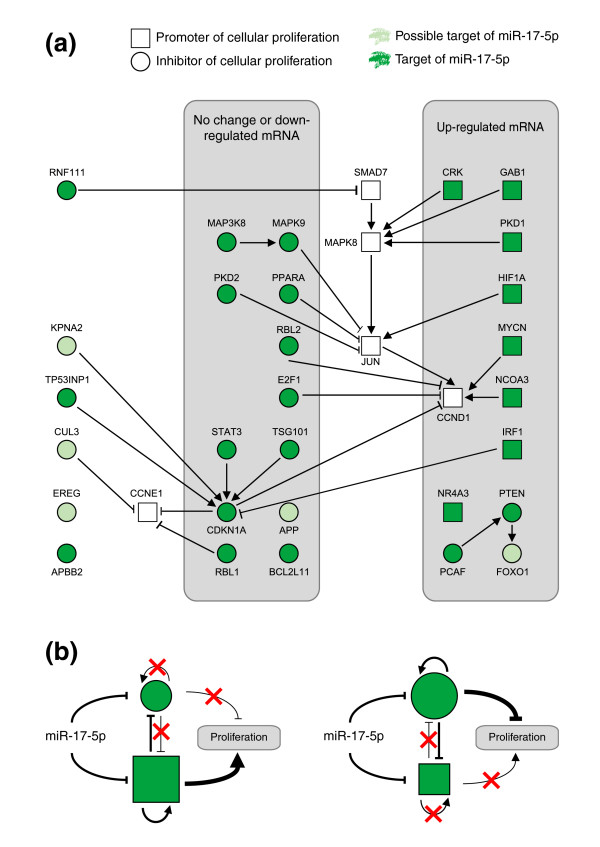
Background: MicroRNAs are modifiers of gene expression, acting to reduce translation through either translational repression or mRNA cleavage. Recently, it has been shown that some microRNAs can act to promote or suppress cell transformation, with miR-17-92 described as the first oncogenic microRNA. The association of miR-17-92 encoded microRNAs with a surprisingly broad range of cancers not only underlines the clinical significance of this locus, but also suggests that miR-17-92 may regulate fundamental biological processes, and for these reasons miR-17-92 has been considered as a therapeutic target. Results: In this study, we show that miR-17-92 is a cell cycle regulated locus, and ectopic expression of a single microRNA (miR-17-5p) is sufficient to drive a proliferative signal in HEK293T cells. For the first time, we reveal the mechanism behind this response - miR-17-5p acts specifically at the G1/S-phase cell cycle boundary, by targeting more than 20 genes involved in the transition between these phases. While both pro- and anti-proliferative genes are targeted by miR-17-5p, pro-proliferative mRNAs are specifically up-regulated by secondary and/or tertiary effects in HEK293T cells. Conclusion: The miR-17-5p microRNA is able to act as both an oncogene and a tumor suppressor in different cellular contexts; our model of competing positive and negative signals can explain both of these activities. The coordinated suppression of proliferation-inhibitors allows miR-17-5p to efficiently de-couple negative regulators of the MAPK (mitogen activated protein kinase) signaling cascade, promoting growth in HEK293T cells. Additionally, we have demonstrated the utility of a systems biology approach as a unique and rapid approach to uncover microRNA function.
Overview
The claims and statistics of this paper haven’t been checked yet.
Run the check — free, no account needed. It reads the open-access text and checks the sources it cites.
Integrity signals
Registry
Cites
Statistics
Figures
Verification
Claims the paper makes
The claims and statistics of this paper haven’t been checked yet.
Run the check — free, no account needed. It reads the open-access text and checks the sources it cites.
Claims other papers make about this one
Each is checked against this paper’s own text: does it say what the citing paper says it does?
The cited source says what the claim attributes to it.
In the citing paper
“the most abundant miRNA was miR-17-5p, which has previously been shown to regulate cell cycle progression in 293T cells (Cloonan et al., 2008), while miR-20a-5p, miR-92a-5p, miR-19b-3p, miR-18a-5p, and miR-19a-3p were second through sixth most abundant.”
From Scalable and deep profiling of mRNA targets for individual microRNAs with chimeric eCLIP (2022) · cites this paper as Cloonan et al., 2008
Self-check
Percentages, sums and reported differences re-computed from the paper’s own numbers.
The self-check needs the paper’s full text.
Citations
Cites
1 retracted
RETRACTED: Downregulation of miR‐122 in the rodent and human hepatocellular carcinomas
Kutay, H., Bai, S., Datta, J., Motiwala, T., Pogribny, I., Frankel, W., Jacob, S. T., & Ghoshal, K. (2006) · Journal of Cellular Biochemistry · doi:10.1002/jcb.20982 · Cited by 608
RetractedMolecular Cloning: A Laboratory Manual
Sambrook, J., Fritsch, E., & Maniatis, T. (1989) · UCLA - Biblioteca de Ciencias de la Salud · Cited by 133,589
Lewis, B. P., Burge, C. B., & Bartel, D. P. (2005) · Cell · doi:10.1016/j.cell.2004.12.035 · Cited by 11,855
A microRNA expression signature of human solid tumors defines cancer gene targets
Volinia, S., Calin, G. A., Liu, C.-G., Ambs, S., Cimmino, A., Petrocca, F., Visone, R., Iorio, M., Roldo, C., Ferracin, M., et al. (2006) · Proceedings of the National Academy of Sciences · doi:10.1073/pnas.0510565103 · Cited by 5,697
Prediction of Mammalian MicroRNA Targets
Lewis, B. P., Shih, I.-H., Jones-Rhoades, M. W., Bartel, D. P., & Burge, C. B. (2003) · Cell · doi:10.1016/s0092-8674(03)01018-3 · Cited by 5,199
Combinatorial microRNA target predictions
Krek, A., Grün, D., Poy, M. N., Wolf, R., Rosenberg, L., Epstein, E. J., MacMenamin, P., da Piedade, I., Gunsalus, K. C., Stoffel, M., et al. (2005) · Nature Genetics · doi:10.1038/ng1536 · Cited by 4,603
A microRNA polycistron as a potential human oncogene
He, L., Thomson, J. M., Hemann, M. T., Hernando, E., Mu, D., Goodson, S. G., Powers, S., Cordon‐Cardo, C., Lowe, S. W., Hannon, G. J., et al. (2005) · Nature · doi:10.1038/nature03552 · Cited by 3,642
c-Myc-regulated microRNAs modulate E2F1 expression
O'Donnell, K. A., Wentzel, E. A., Zeller, K. I., Dang, C. V., & Mendell, J. T. (2005) · Nature · doi:10.1038/nature03677 · Cited by 2,347
The Diverse Functions of MicroRNAs in Animal Development and Disease
Kloosterman, W. P., & Plasterk, R. H. A. (2006) · Developmental Cell · doi:10.1016/j.devcel.2006.09.009 · Cited by 2,082
The Transcriptional Program in the Response of Human Fibroblasts to Serum
Iyer, V. R., Eisen, M. B., Ross, D. T., Schuler, G. D., Moore, T. A., Lee, J. C. F., Trent, J. M., Staudt, L. M., Hudson, J., Boguski, M. S., et al. (1999) · Science · doi:10.1126/science.283.5398.83 · Cited by 1,966
Ventura, A., Young, A. G., Winslow, M. M., Lintault, L., Meissner, A., Erkeland, S. J., Newman, J. J., Bronson, R. T., Crowley, D. G., Stone, J. R., et al. (2008) · Cell · doi:10.1016/j.cell.2008.02.019 · Cited by 1,627
Hayashita, Y., Osada, H., Tatematsu, Y., Yamada, H., Yanagisawa, K., Tomida, S., Yatabe, Y., Kawahara, K., Sekido, Y., & Takahashi, T. (2005) · Cancer Research · doi:10.1158/0008-5472.can-05-2352 · Cited by 1,591
Whitfield, M. L., Sherlock, G., Saldanha, A. J., Murray, J. I., Ball, C. A., Alexander, K. E., Matese, J. C., Perou, C. M., Hurt, M. M., Brown, P. O., et al. (2002) · Molecular Biology of the Cell · doi:10.1091/mbc.02-02-0030 · Cited by 1,527
Augmentation of tumor angiogenesis by a Myc-activated microRNA cluster
Dews, M., Homayouni, A., Yu, D., Murphy, D. A., Sevignani, C., Wentzel, E. A., Furth, E. E., Lee, W. M., Enders, G. H., Mendell, J. T., et al. (2006) · Nature Genetics · doi:10.1038/ng1855 · Cited by 1,049
A custom microarray platform for analysis of microRNA gene expression
Thomson, J. M., Parker, J. S., Perou, C. M., & Hammond, S. M. (2004) · Nature Methods · doi:10.1038/nmeth704 · Cited by 742
Stem cell division is regulated by the microRNA pathway
Hatfield, S. D., Shcherbata, H. R., Fischer, K. A., Nakahara, K., Carthew, R. W., & Ruohola‐Baker, H. (2005) · Nature · doi:10.1038/nature03816 · Cited by 675
Suppression of MicroRNA-Silencing Pathway by HIV-1 During Virus Replication
Triboulet, R., Mari, B. P., Lin, Y., Chable-Bessia, C., Bennasser, Y., Lebrigand, K., Cardinaud, B., Maurin, T., Barbry, P., Baillat, V., et al. (2007) · Science · doi:10.1126/science.1136319 · Cited by 627
An E2F/miR-20a Autoregulatory Feedback Loop
Sylvestre, Y., Guire, V. D., Querido, E., Mukhopadhyay, U. K., Bourdeau, V., Major, F., Ferbeyre, G., & Chartrand, P. (2006) · Journal of Biological Chemistry · doi:10.1074/jbc.m608939200 · Cited by 610
Micro-RNA profiling in kidney and bladder cancers
Gottardo, F., Liu, C. G., Ferracin, M., Calin, G. A., Fassan, M., Bassi, P., Sevignani, C., Byrne, D., Negrini, M., Pagano, F. C., et al. (2007) · Urologic Oncology Seminars and Original Investigations · doi:10.1016/j.urolonc.2007.01.019 · Cited by 601
Mir-17-5pRegulates Breast Cancer Cell Proliferation by Inhibiting Translation ofAIB1mRNA
Hossain, A., Kuo, M. T., & Saunders, G. F. (2006) · Molecular and Cellular Biology · doi:10.1128/mcb.00242-06 · Cited by 518
MicroRNA Biogenesis Is Required for Mouse Primordial Germ Cell Development and Spermatogenesis
Hayashi, K., Lopes, S. M. C. D. S., Kaneda, M., Tang, F., Hájková, P., Lao, K., O’Carroll, D., Das, P. P., Tarakhovsky, A., Miska, E. A., et al. (2008) · PLoS ONE · doi:10.1371/journal.pone.0001738 · Cited by 502
Lu, Y., Thomson, J. M., Wong, H. Y. F., Hammond, S. M., & Hogan, B. L. M. (2007) · Developmental Biology · doi:10.1016/j.ydbio.2007.08.007 · Cited by 480
Direct Regulation of an Oncogenic Micro-RNA Cluster by E2F Transcription Factors
Woods, K., Thomson, J. M., & Hammond, S. M. (2006) · Journal of Biological Chemistry · doi:10.1074/jbc.c600252200 · Cited by 479
Systematic evaluation of microRNA processing patterns in tissues, cell lines, and tumors
Lee, E. J., Baek, M., Gusev, Y., Brackett, D. J., Nuovo, G. J., & Schmittgen, T. D. (2008) · RNA · doi:10.1261/rna.804508 · Cited by 414
Distinct Roles for JNK1 and JNK2 in Regulating JNK Activity and c-Jun-Dependent Cell Proliferation
Sabapathy, K., Hochedlinger, K., Nam, S. Y., Bauer, A., Karin, M., & Wagner, E. F. (2004) · Molecular Cell · doi:10.1016/j.molcel.2004.08.028 · Cited by 397
Fontana, L., Pelosi, E., Greco, P., Racanicchi, S., Testa, U., Liuzzi, F., Croce, C. M., Brunetti, E., Grignani, F., & Peschle, C. (2007) · Nature Cell Biology · doi:10.1038/ncb1613 · Cited by 384
Expression of the miR-17-92 polycistron in chronic myeloid leukemia (CML) CD34+ cells
Venturini, L., Battmer, K., Castoldi, M., Schultheis, B. S., Hochhaus, A., Muckenthaler, M. U., Ganser, A., Eder, M., & Scherr, M. (2007) · Blood · doi:10.1182/blood-2006-09-045104 · Cited by 357
MicroRNAs and Cell Cycle Regulation
Carleton, M. O., Cleary, M. A., & Linsley, P. S. (2007) · Cell Cycle · doi:10.4161/cc.6.17.4641 · Cited by 342
Role of STAT3 in Type I Interferon Responses
Ho, H. H., & Ivashkiv, L. B. (2006) · Journal of Biological Chemistry · doi:10.1074/jbc.m511797200 · Cited by 316
MicroRNA expression during chick embryo development
Darnell, D. K., Kaur, S. J., Stanislaw, S., Konieczka, J. H., Yatskievych, T. A., & Antin, P. B. (2006) · Developmental Dynamics · doi:10.1002/dvdy.20956 · Cited by 251
Oncogenic Potential of the miR-106-363 Cluster and Its Implication in Human T-Cell Leukemia
Landais, S., Landry, S., Legault, P., & Rassart, É. (2007) · Cancer Research · doi:10.1158/0008-5472.can-06-4478 · Cited by 243
Synergistic action of the microRNA‐17 polycistron and Myc in aggressive cancer development
Tagawa, H., Karube, K., Tsuzuki, S., Ohshima, K., & Seto, M. (2007) · Cancer Science · doi:10.1111/j.1349-7006.2007.00531.x · Cited by 145
Oswald, F., Lovec, H., Möröy, T., & Lipp, M. (1994) · PubMed · Cited by 101
ConcomitantMYCand microRNA cluster miR-17-92 (C13orf25) amplification in human mantle cell lymphoma
Rinaldi, A., Poretti, G., Kwee, I., Zucca, E., Catapano, C. V., Tibiletti, M. G., & Bertoni, F. (2007) · Leukemia & lymphoma/Leukemia and lymphoma · doi:10.1080/10428190601059738 · Cited by 97
Synchronization of human diploid fibroblasts at multiple stages of the cell cycle*1
Tobey, R. A. (1988) · Experimental Cell Research · doi:10.1016/0014-4827(88)90279-0 · Cited by 72
Cui, J.-W., Li, Y.-J., Sarkar, A. K., Brown, J., Tan, Y.-H., Premyslova, M., Michaud, C., Iscove, N. N., Wang, G.-J., & Ben‐David, Y. (2007) · Blood · doi:10.1182/blood-2006-10-053850 · Cited by 52
Fonagy, A., Swiderski, C. F., Wilson, A., Bolton, W. E., Kenyon, N. S., & Freeman, J. W. (1993) · Journal of Cellular Physiology · doi:10.1002/jcp.1041540104 · Cited by 35
Research works printed but not linked: 1
- Oswald F, Lovec H, Moroy T, Lipp M: E2f-Dependent Regulation of Human Myc - Transactivation by Cyclin-D1 and Cyclin-a Overrides Tumor-Suppressor Protein Functions. Oncogene. 1994, 9: 2029-2036.
Cited by
Sorted by citations
iDEP: an integrated web application for differential expression and pathway analysis of RNA-Seq data
Ge, X., Son, E., & Yao, R. (2018) · BMC Bioinformatics · doi:10.1186/s12859-018-2486-6 · Cited by 1,677
Proteogenomic Characterization Reveals Therapeutic Vulnerabilities in Lung Adenocarcinoma
Gillette, M. A., Satpathy, S., Cao, S., Dhanasekaran, S. M., Vasaikar, S. V., Krug, K., Petralia, F., Li, Y., Liang, W.-W., Reva, B., et al. (2020) · Cell · doi:10.1016/j.cell.2020.06.013 · Cited by 820
Lee, C., Mitsialis, S. A., Aslam, M., Vitali, S. H., Vergadi, E., Konstantinou, G., Sdrimas, K., Fernandez‐Gonzalez, A., & Kourembanas, S. (2012) · Circulation · doi:10.1161/circulationaha.112.114173 · Cited by 795
Chan, C., Rubenstein, J. L., Coupland, S. E., Davis, J. L., Harbour, J. W., Johnston, P. B., Cassoux, N., Touitou, V., Smith, J. R., Batchelor, T. T., et al. (2011) · The Oncologist · doi:10.1634/theoncologist.2011-0210 · Cited by 485
Bueno, M. J., & Malumbres, M. (2011) · Biochimica et Biophysica Acta (BBA) - Molecular Basis of Disease · doi:10.1016/j.bbadis.2011.02.002 · Cited by 419
Metadata
- Authors
- Cloonan, N., Brown, M. K., Steptoe, A. L., Wani, S., Chan, W. L., Forrest, A. R., Kolle, G., Gabrielli, B., & Grimmond, S. M.
- Affiliations
- The University of Queensland (AU)
- Princess Alexandra Hospital (AU)
- Corresponding author
- Grimmond, Sean M
- Venue
- Genome Biology
- Published
- 2008-08-14
- Volume
- 9
- Issue
- 8
- Pages
- R127-R127
- ISSN
- 1465-6906 (ISSN-L)
- 1474-760X
- PMC
- PMC2575517
- OpenAlex
- W2108836814
- Cited by
- 304
- References
- 39
- Citations by year
- 2026: 5 · 2025: 8 · 2024: 7 · 2023: 12 · 2022: 18 · 2021: 15 · 2020: 21 · 2019: 14 · 2018: 19 · 2017: 12 · 2016: 11 · 2015: 19 · 2014: 24 · 2013: 27 · 2012: 25
- FWCI
- 7.52
- Type
- journal article
- Language
- en
- Open access
- gold
- doi.org
- Locations
- Genome biology (publishedVersion, cc-by)
- PubMed Central (publishedVersion, cc-by)
- PubMed (publishedVersion)
- Minerva Access (University of Melbourne) (submittedVersion, cc-by)
- Griffith Research Online (submittedVersion, cc-by)
- Funders
- National Health and Medical Research Council (456140)
- Topics
- Life Sciences › Biochemistry, Genetics and Molecular Biology › Cancer Research › MicroRNA in disease regulation
- Health Sciences › Medicine › Oncology › Cancer-related Molecular Pathways
- Life Sciences › Biochemistry, Genetics and Molecular Biology › Cancer Research › Cancer-related molecular mechanisms research
- Keywords
- miR-17-5p, miR-17-92 cluster, microRNA, G1/S transition, cell cycle regulation, oncogenic microRNA, tumor suppressor, MAPK signaling, cell proliferation, HEK293T cells, systems biology, miRNA target genes
- MeSH terms
- Cell Line, Humans, RNA, Messenger, Protein Biosynthesis, Signal Transduction, G1 Phase, S Phase, MicroRNAs, Mitogen-Activated Protein Kinase 9, Cell Proliferation
About these checks
Registry, retraction, Cites and statistics results are computed, not judged, with one exception: a printed reference that no index lists is read once by a model before it counts as a citation error. Claims are extracted by a model and kept only when their quote appears verbatim in the text; each cited source is then checked, with a model’s help, for whether it says what the claim relies on. Those verdicts can be wrong — read the claim’s quote and the cited source before relying on one.
Statistics and arithmetic are recomputed, not judged.
Confidence bands are shown only for fields calibrated on our annotated test set. None is calibrated yet, so no band is shown.
What counts as a claim ›How we measure confidence ›How we check this ›
Are you an author, or do you see a problem with this page? Request a review
