

The DOI matches its Crossref record; 56 of the 58 references it cites were found in a registry or an index.
Genome-wide prediction of transcription factor binding sites using an integrated model
Open accessAbstract
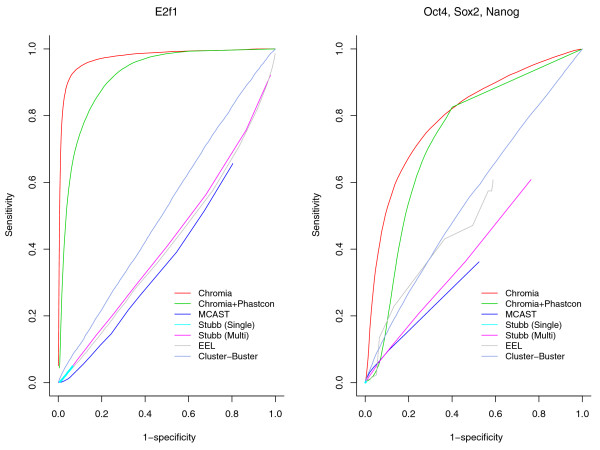
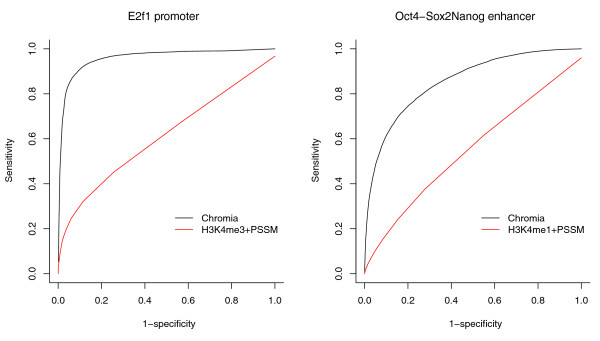
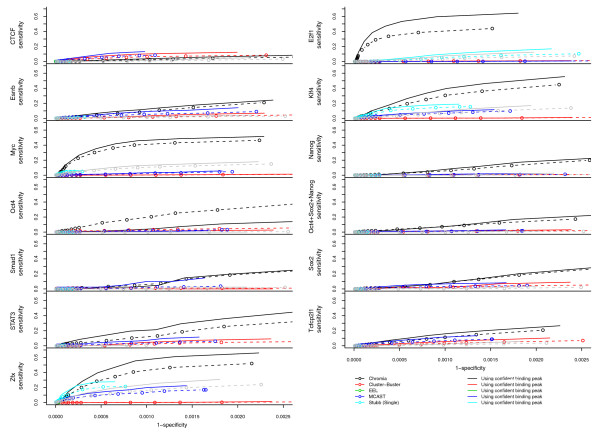
We present an integrated method called Chromia for the genome-wide identification of functional target loci of transcription factors. Designed to capture the characteristic patterns of transcription factor binding motif occurrences and the histone profiles associated with regulatory elements such as promoters and enhancers, Chromia significantly outperforms other methods in the identification of 13 transcription factor binding sites in mouse embryonic stem cells, evaluated by both binding (ChIP-seq) and functional (RNA interference knockdown) experiments.
Overview
The claims and statistics of this paper haven’t been checked yet.
Run the check — free, no account needed. It reads the open-access text and checks the sources it cites.
Integrity signals
Registry
Cites
Statistics
Figures
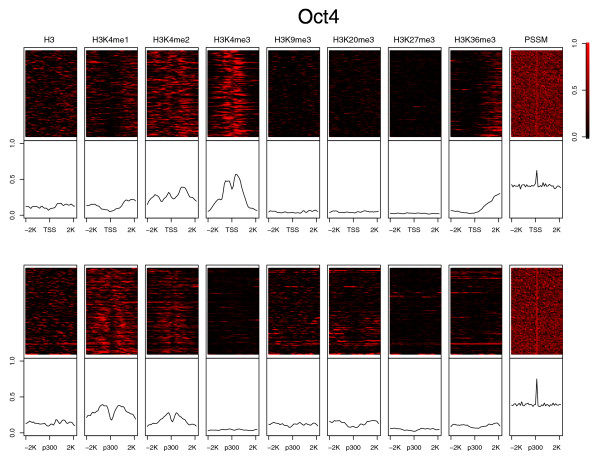
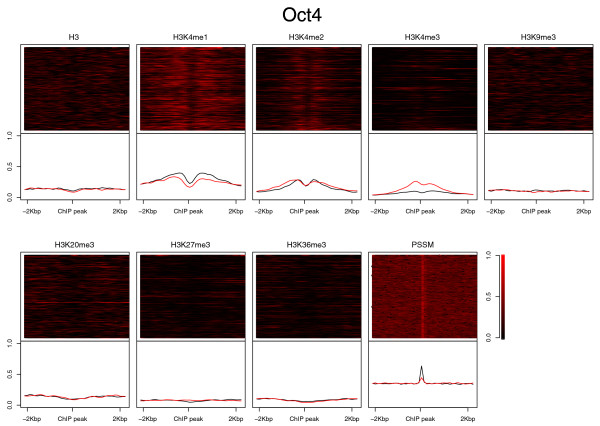
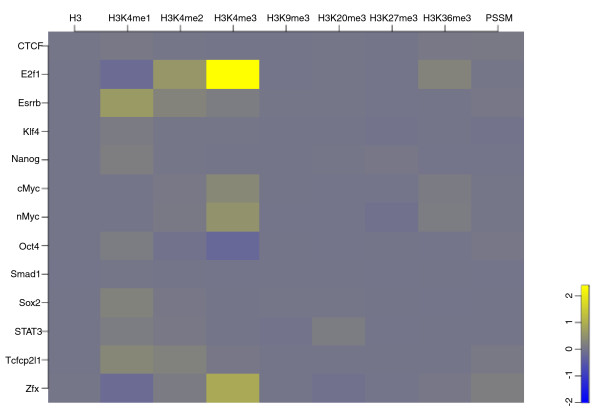
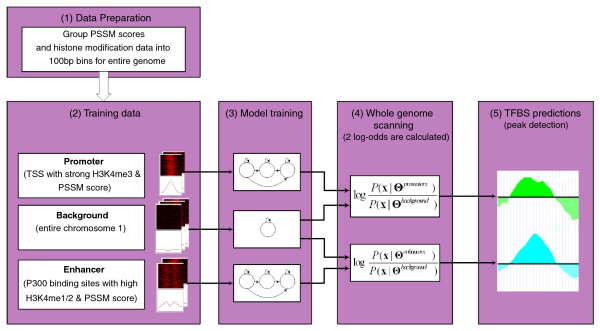
Verification
Claims the paper makes
The claims and statistics of this paper haven’t been checked yet.
Run the check — free, no account needed. It reads the open-access text and checks the sources it cites.
Claims other papers make about this one
Each is checked against this paper’s own text: does it say what the citing paper says it does?
The check wasn’t confident either way, so it gives no verdict — never disputed.
In the citing paper
“Prior work has shown that there is minimal variation in performance between chromosomes on this problem (Won et al., 2010; Alipanahi et al., 2015; Keilwagen et al., 2019), so we can approximate these training and test distributions as identical.”
From WILDS: A Benchmark of in-the-Wild Distribution Shifts (2020) · cites this paper as Won et al., 2010
Experimental — accuracy not yet measured
Self-check
Percentages, sums and reported differences re-computed from the paper’s own numbers.
The self-check needs the paper’s full text.
Citations
Cites
A tutorial on hidden Markov models and selected applications in speech recognition
Rabiner, L. R. (1989) · Proceedings of the IEEE · doi:10.1109/5.18626 · Cited by 22,743
The Human Genome Browser at UCSC
Kent, W. J., Sugnet, C. W., Furey, T. S., Roskin, K. M., Pringle, T. H., Zahler, A. M., & Haussler, A. D. (2002) · Genome Research · doi:10.1101/gr.229102 · Cited by 10,400
High-Resolution Profiling of Histone Methylations in the Human Genome
Barski, A., Cuddapah, S., Cui, K., Roh, T.-Y., Schones, D. E., Wang, Z., Wei, G., Chepelev, I., & Zhao, K. (2007) · Cell · doi:10.1016/j.cell.2007.05.009 · Cited by 6,845
Fitting a mixture model by expectation maximization to discover motifs in biopolymers.
Bailey, T. L., & Elkan, C. (1994) · PubMed · Cited by 4,982
Core Transcriptional Regulatory Circuitry in Human Embryonic Stem Cells
Boyer, L. A., Lee, T. I., Cole, M. F., Johnstone, S. E., Levine, S. S., Zucker, J. P., Guenther, M. G., Kumar, R. M., Murray, H. L., Jenner, R. G., et al. (2005) · Cell · doi:10.1016/j.cell.2005.08.020 · Cited by 4,505
Genome-wide maps of chromatin state in pluripotent and lineage-committed cells
Mikkelsen, T. S., Ku, M., Jaffe, D. B., Issac, B., Lieberman, E., Giannoukos, G., Alvarez, P., Brockman, W., Kim, T.-K., Koche, R. P., et al. (2007) · Nature · doi:10.1038/nature06008 · Cited by 4,129
Evolutionarily conserved elements in vertebrate, insect, worm, and yeast genomes
Siepel, A., Bejerano, G., Pedersen, J. S., Hinrichs, A. S., Hou, M., Rosenbloom, K., Clawson, H., Spieth, J., Hillier, L. W., Richards, S., et al. (2005) · Genome Research · doi:10.1101/gr.3715005 · Cited by 3,971 · cited 4×
“example, to calculating the conservation score in phyloHMM [38].”
BackgroundMethodInfluentialHeintzman, N. D., Stuart, R. K., Hon, G., Fu, Y., Ching, C. W., Hawkins, R. D., Barrera, L. O., Van Calcar, S., Qu, C., Ching, K. A., et al. (2007) · Nature Genetics · doi:10.1038/ng1966 · Cited by 3,398
Self-citationMEME: discovering and analyzing DNA and protein sequence motifs
Bailey, T. L., Williams, N., Misleh, C., & Li, W. W. (2006) · Nucleic Acids Research · doi:10.1093/nar/gkl198 · Cited by 2,671
Chen, X., Han, X., Yuan, P., Fang, F., Huss, M., Vega, V. B., Wong, E., Orlov, Y. L., Zhang, W., Jiang, J., et al. (2008) · Cell · doi:10.1016/j.cell.2008.04.043 · Cited by 2,547
Cited by
Sorted by citations
Items 101–115 of 115
On the use of algorithms to discover motifs in DNA sequences
Rubio-Escudero, C., Alvarez, F. M., Martínez-Ballesteros, M., & Riquelme, J. C. (2011) · International Conference on Intelligent Systems Design and Applications (ISDA) · doi:10.1109/isda.2011.6121801
New generation genomic platforms in investigation of complex diseases and BEN.
Dimova, I. I., Lalchev, S., Malinov, M., Djonov, V., & Toncheva, D. I. (2014) · PubMed
Maretty, L., Sibbesen, J. A., & Krogh, A. (2014)
Computational Study of Transcriptional Regulation- From Sequence To Expression
Zhong, S., & Rosenfeld, R. (2013)
Identifying Tissue Specific Distal Regulatory Sequences in the Mouse Genome
Chen, C. (2011) · TSpace (University of Toronto)
Computational Study of Target Gene Interactions - Enhancers and microRNAs
Talukder, A. (2021) · Journal of International Crisis and Risk Communication Research
Penalized Bayesian Model Selection and Prediction for Gene Regulation in Higher Organisms
Levinson, M. D. (2013) · eScholarship (California Digital Library)
Integrated approaches for motif discovery in genomic regions
Klepper, K. (2013) · BIBSYS Brage (BIBSYS (Norway))
Przytycka, T. M., & Zheng, J. (2011) · Encyclopedia of Life Sciences · doi:10.1002/9780470015902.a0005267.pub2
Tong, J. C., & Lim, S. J. (2011) · Wiley-VCH eBooks · doi:10.1002/3527600906.mcb.201100012
Tracking Transcription Factors on the Genome by their DNase-seq Footprints
Yardımcı, G. G. (2014) · DukeSpace (Duke University)
Additional file 1 of An intriguing characteristic of enhancer-promoter interactions
Talukder, A., Hu, H., & Li, X. (2021) · Figshare · doi:10.6084/m9.figshare.14184000
Metadata
- Authors
- Won, K.-J., Ren, B., & Wang, W.
- Affiliations
- University of California San Diego (US)
- Ludwig Cancer Research (BE)
- Corresponding author
- Wang, Wei
- Venue
- Genome Biology
- Published
- 2010-01-22
- Volume
- 11
- Issue
- 1
- Pages
- R7-R7
- ISSN
- 1465-6906 (ISSN-L)
- 1474-760X
- PMC
- PMC2847719
- OpenAlex
- W2078034709
- Cited by
- 116
- References
- 58
- Citations by year
- 2026: 2 · 2024: 1 · 2023: 4 · 2022: 2 · 2021: 6 · 2020: 4 · 2019: 4 · 2018: 4 · 2017: 3 · 2016: 5 · 2015: 13 · 2014: 10 · 2013: 19 · 2012: 12
- FWCI
- 7.56
- Type
- journal article
- Language
- en
- Open access
- gold
- doi.org
- Locations
- Genome biology (publishedVersion, cc-by)
- PubMed Central (publishedVersion, cc-by)
- PubMed (publishedVersion)
- eScholarship (California Digital Library) (submittedVersion)
- Funders
- National Institutes of Health
- National Institute of General Medical Sciences (R01GM072856)
- Topics
- Life Sciences › Biochemistry, Genetics and Molecular Biology › Molecular Biology › Genomics and Chromatin Dynamics
- Life Sciences › Biochemistry, Genetics and Molecular Biology › Molecular Biology › Genomics and Phylogenetic Studies
- Life Sciences › Biochemistry, Genetics and Molecular Biology › Molecular Biology › Chromatin Remodeling and Cancer
- Keywords
- transcription factor binding sites, chromia, regulatory elements, promoter, enhancers, mouse embryonic stem cells, ChIP-seq, RNAi knockdown, genomic prediction
- MeSH terms
- Animals, Binding Sites, Chromatin, Enhancer Elements, Genetic, Models, Genetic, Promoter Regions, Genetic, ROC Curve, Transcription Factors, Genome, Computational Biology, Amino Acid Motifs, RNA Interference, Chromatin Immunoprecipitation, Mice, Embryonic Stem Cells
About these checks
Registry, retraction, Cites and statistics results are computed, not judged, with one exception: a printed reference that no index lists is read once by a model before it counts as a citation error. Claims are extracted by a model and kept only when their quote appears verbatim in the text; each cited source is then checked, with a model’s help, for whether it says what the claim relies on. Those verdicts can be wrong — read the claim’s quote and the cited source before relying on one.
Statistics and arithmetic are recomputed, not judged.
Confidence bands are shown only for fields calibrated on our annotated test set. None is calibrated yet, so no band is shown.
What counts as a claim ›How we measure confidence ›How we check this ›
Are you an author, or do you see a problem with this page? Request a review
