

The efficacy of transcranial magnetic stimulation on migraine: a meta-analysis of randomized controlled trails
Open accessThe DOI matches its Crossref record; 49 of the 49 references it cites were found in a registry or an index.
Abstract
OBJECTIVES: As a non-invasive therapy, whether transcranial magnetic stimulation (TMS) is effective on migraine. This article was aimed to assess the efficacy of TMS on migraine based on randomized controlled trails (RCTs). METHODS: We searched PubMed, Embase and Cochrane Library electronic databases for published studies which compared TMS group with sham group, conducted a meta-analysis of all RCTs. RESULTS: Five studies, consisting of 313 migraine patients, were identified. Single-pulse transcranial magnetic stimulation is effective for the acute treatment of migraine with aura after the first attack (p = 0.02). And, the efficacy of TMS on chronic migraine was not significant (OR 2.93; 95% CI 0.71-12.15; p = 0.14). CONCLUSIONS: TMS is effective for migraine based on the studies included in the article.
Overview
The claims and statistics of this paper haven’t been checked yet.
Free: it reads the open-access text and checks the first 5 claims that cite a source we can check. Create a free account to check every claim.
Integrity signals
Registry
Cites
Statistics
Figures
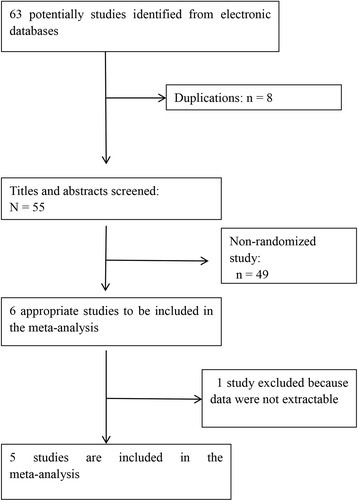
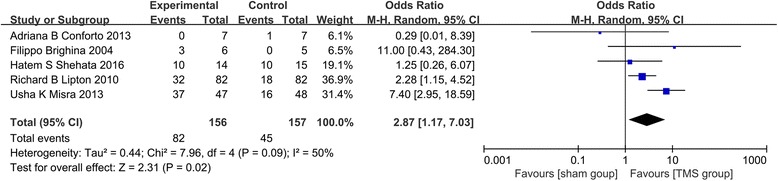
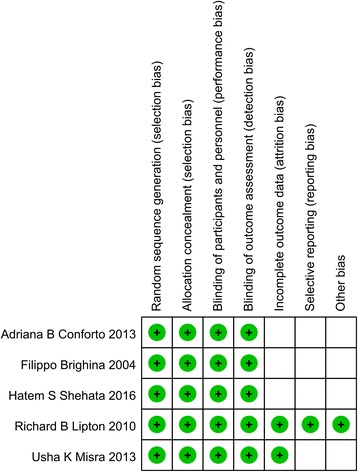
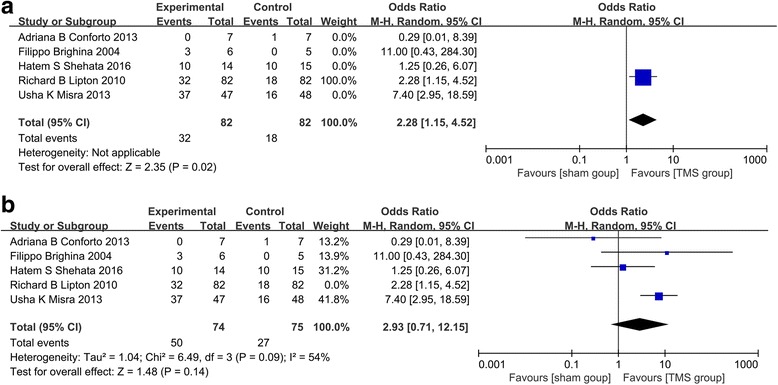
Verification
Claims the paper makes
The claims and statistics of this paper haven’t been checked yet.
Free: it reads the open-access text and checks the first 5 claims that cite a source we can check. Create a free account to check every claim.
Claims other papers make about this one
Each is checked against this paper’s own text: does it say what the citing paper says it does?
The source backs part of the claim, not all of it — or backs it for a different population, condition or comparison.
In the citing paper
“In migraines, especially with aura, single-pulse TMS studies report significant reductions in monthly headache days, sustained up to 12 months in difficult-to-treat cohorts [107,108,109,110,111,119,120,121,122], while results for chronic migraine remain inconclusive [117,122].”
From The Heart’s Electromagnetic Field in Emotions, Empathy and Human Connection: Biosensor-Derived Insights into Heart–Brain Axis Mechanisms and a Basis for Novel BioMagnetoTherapies (2026) · cites this paper as [120]
Experimental — accuracy not yet measured
Self-check
Percentages, sums and reported differences re-computed from the paper’s own numbers.
The self-check needs the paper’s full text.
Citations
Cites
Liberati, A., Altman, D. G., Tetzlaff, J., Mulrow, C., Gøtzsche, P. C., Ioannidis, J. P. A., Clarke, M., Devereaux, P. J., Kleijnen, J., & Moher, D. (2009) · PLoS Medicine · doi:10.1371/journal.pmed.1000100 · Cited by 28,164 · cited 2×
“According to the Preferred Reporting Items for Systematic Reviews [35], a protocol of study-search strategies, outcome measurements, and methods of statistical analysis was prepared in advance.”
MethodCochrane Handbook for Systematic Reviews of Interventions: Cochrane Book Series
(2008) · doi:10.1002/9780470712184 · Cited by 25,048 · cited 2×
“For the level of evidence, the Cochrane risk of bias tool was used to evaluate the quality of RCTs [37].”
MethodDermyshi, E., Wang, Y., Yan, C., Hong, W., Qiu, G., Gong, X., & Zhang, T. (2017) · Neonatology · doi:10.1159/000454668 · Cited by 24,451
Liberati, A., Altman, D. G., Tetzlaff, J., Mulrow, C., Gøtzsche, P. C., Ioannidis, J. P. A., Clarke, M., Devereaux, P. J., Kleijnen, J., & Moher, D. (2009) · Journal of Clinical Epidemiology · doi:10.1016/j.jclinepi.2009.06.006 · Cited by 10,578
Vos, T., Barber, R. M., Bell, B., Bertozzi-Villa, A., Biryukov, S., Bolliger, I., Charlson, F., Davis, A., Degenhardt, L., Dicker, D., et al. (2015) · The Lancet · doi:10.1016/s0140-6736(15)60692-4 · Cited by 6,414
SPREADING DEPRESSION OF ACTIVITY IN THE CEREBRAL CORTEX
Leao, A. A. P. (1944) · Journal of Neurophysiology · doi:10.1152/jn.1944.7.6.359 · Cited by 2,679
Olesen, J. (2004) · Cephalalgia · doi:10.1111/j.1468-2982.2003.00824.x · Cited by 2,056
Mechanisms of migraine aura revealed by functional MRI in human visual cortex
Hadjikhani, N., Sanchez del Rio, M., Wu, O., Schwartz, D., Bakker, D., Fischl, B., Kwong, K. K., Cutrer, F. M., Rosen, B. R., Tootell, R. B. H., et al. (2001) · Proceedings of the National Academy of Sciences · doi:10.1073/pnas.071582498 · Cited by 1,518
Pascual-Leone, A., Rubio, B., Pallardó, F., & Catalá, M. D. (1996) · The Lancet · doi:10.1016/s0140-6736(96)01219-6 · Cited by 1,229
Fregni, F., & Pascual-Leone, A. (2007) · Nature Clinical Practice Neurology · doi:10.1038/ncpneuro0530 · Cited by 823
Research works printed but not linked: 4
- Prasko J Záleský R Bares M Horácek J Kopecek M Novák T Pasková B The effect of repetitive transcranial magnetic stimulation (rTMS) add on serotonin reuptake inhibitors in patients with panic disorder: a randomized, double blind sham controlled study Neuro Endocrinol Lett 2007 28 1 33 38 17277734
- Pascual-Leone A Rubio B Pallardó F Catalá MD Rapid-rate transcranial magnetic stimulation of left dorsolateral prefrontal cortex in drug-resistant depression Lancet 1996 348 9022 9233 10.1016/S0140-6736(96)01219-6 8684201 · DOI · Paper page
- Holland PR Schembri CT Fredrick JP Goadsby PJ Transcranial magnetic stimulation for the treatment of migraine Aura Neurology 2009 72 Suppl 1 A250
- Higgins JP Green S (2010) Cochrane handbook for systematic reviews of interventions Naunyn-Schmiedeberg's Arch Exp Pathol Pharmakol 2011 14 S38
Cited by
Yang, S., & Chang, M. C. (2020) · Frontiers in Neurology · doi:10.3389/fneur.2020.00114 · Cited by 182
“The following inclusion criteria were applied for the selection of articles: (1) patients with pain, (2) rTMS was applied for controlling pain, and (3) follow-up evaluations were performed after rTMS stimulation to assess the degree of pain reduction.”
BackgroundMethodInfluentialMoisset, X., Pereira, B., de Andrade, D. C., Fontaine, D., Lantéri‐Minet, M., & Mawet, J. (2020) · The Journal of Headache and Pain · doi:10.1186/s10194-020-01204-4 · Cited by 133
Stilling, J., Monchi, O., Amoozegar, F., & Debert, C. T. (2019) · Headache The Journal of Head and Face Pain · doi:10.1111/head.13479 · Cited by 125
Transcranial Magnetic Stimulation as Treatment in Multiple Neurologic Conditions
Iglesias, A. H. (2020) · Current Neurology and Neuroscience Reports · doi:10.1007/s11910-020-1021-0 · Cited by 132
Management of chronic migraine
Hovaguimian, A., & Roth, J. L. (2022) · BMJ · doi:10.1136/bmj-2021-067670 · Cited by 120
Hansen, J. M., & Charles, A. C. (2019) · The Journal of Headache and Pain · doi:10.1186/s10194-019-1046-4 · Cited by 115
“A recent systematic review based on 5 studies concluded that sTMS may be effective for migraine with aura, but found no effect of sTMS in chronic migraine [83].”
BackgroundTerrier, L., Hadjikhani, N. K., & Destrieux, C. (2022) · Journal of Neurology · doi:10.1007/s00415-022-11002-4 · Cited by 112
Che, X., Cash, R. F. H., Luo, X., Hong, L., Lü, X., Xu, F., Zang, Y., Fitzgerald, P. B., & Fitzgibbon, B. M. (2021) · Brain stimulation · doi:10.1016/j.brs.2021.07.004 · Cited by 102
“There are a number of reviews on TMS analgesia, including those that assess across chronic pain conditions [31,63] and those that assess specific conditions including fibromyalgia [50], spinal cord injury pain [3,61], migraine [40], neuropathic pain [47], and complex regional pain syndrome [59].”
BackgroundHsu, J. H., Daskalakis, Z. J., & Blumberger, D. M. (2018) · Current Pain and Headache Reports · doi:10.1007/s11916-018-0703-7 · Cited by 79
Non-invasive Brain Stimulation for Chronic Pain: State of the Art and Future Directions
Xiong, H.-Y., Zheng, J., & Wang, X. (2022) · Frontiers in Molecular Neuroscience · doi:10.3389/fnmol.2022.888716 · Cited by 86
Feng, Y., Zhang, B., Zhang, J., & Yin, Y. (2019) · Headache The Journal of Head and Face Pain · doi:10.1111/head.13645 · Cited by 60
Granato, A., Fantini, J., Monti, F., Furlanis, G., Ilbeh, S. M., Semenic, M., & Manganotti, P. (2018) · Journal of Clinical Neuroscience · doi:10.1016/j.jocn.2018.09.021 · Cited by 54
Migraine Aura: Pathophysiology, Mimics, and Treatment Options
Fraser, C. L., Hepschke, J. L., Jenkins, B., & Prasad, S. (2019) · Seminars in Neurology · doi:10.1055/s-0039-1700525 · Cited by 67
Grazzi, L., Toppo, C., D’Amico, D., Leonardi, M., Martelletti, P., Raggi, A., & Guastafierro, E. (2021) · International Journal of Environmental Research and Public Health · doi:10.3390/ijerph18041503 · Cited by 51
Migraine: Advances in the Pathogenesis and Treatment
Pleș, H., Florian, I. A., Timiș, T. L., Covache-Busuioc, R.-A., Glavan, L.-A., Dumitrascu, D.-I., Popa, A. A., Bordeianu, A., & Ciurea, A. V. (2023) · Neurology International · doi:10.3390/neurolint15030067 · Cited by 68
Headache in people with epilepsy
Bauer, P. R., Tolner, E. A., Keezer, M. R., Ferrari, M. D., & Sander, J. W. A. S. (2021) · Nature Reviews Neurology · doi:10.1038/s41582-021-00516-6 · Cited by 59
Non-invasive brain stimulation in chronic orofacial pain: a systematic review
Babiloni, A. H., Guay, S., Nixdorf, D. R., Beaumont, L. D., & Lavigne, G. J. (2018) · Journal of Pain Research · doi:10.2147/jpr.s168705 · Cited by 62
Yang, F., Fang, X., Tang, W., Hui, L., Chen, Y., Zhang, C., & Tian, X. (2019) · Psychiatry Research · doi:10.1016/j.psychres.2019.01.059 · Cited by 43
Publication trends in transcranial magnetic stimulation: a 30-year panorama
McLean, A. L. (2019) · Brain stimulation · doi:10.1016/j.brs.2019.01.002 · Cited by 39
Zong, X., Gu, J., Geng, D., & Gao, D. (2022) · Neurochemistry International · doi:10.1016/j.neuint.2022.105356 · Cited by 36
Clinical guidelines "Migraine"
Azimova, Y. É., Амелин, А. В., Вадимовна, А. В., Artemenko, A. R., Ахмадеева, Л. Р., Golovacheva, V. A., Danilov, A. B., Ekusheva, E. V., Isagulyan, E. D., Koreshkina, M. I., et al. (2022) · S S Korsakov Journal of Neurology and Psychiatry · doi:10.17116/jnevro20221220134 · Cited by 42
Cheng, Y., Zeng, B., Hung, C., Su, K., Wu, Y., Tu, Y., Lin, P., Stubbs, B., Carvalho, A. F., Liang, C., et al. (2021) · The Journal of Headache and Pain · doi:10.1186/s10194-022-01401-3 · Cited by 33
Hsiao, F., Chen, W., Liu, H., Wang, Y.-F., Chen, S., Lai, K., Pan, L. H., Coppola, G., & Wang, S. (2021) · Pain · doi:10.1097/j.pain.0000000000002255 · Cited by 33
Integrating Pathophysiology in Migraine: Role of the Gut Microbiome and Melatonin
Anderson, G. (2019) · Current Pharmaceutical Design · doi:10.2174/1381612825666190920114611 · Cited by 29
Revisiting Migraine: The Evolving Pathophysiology and the Expanding Management Armamentarium
Gawde, P., Shah, H., Patel, H., Bharathi, K. S., Patel, N., Sethi, Y., & Kaka, N. (2023) · Cureus · doi:10.7759/cureus.34553 · Cited by 39
“Transcranial magnetic stimulation is proved effective as a second-line treatment [24,25].”
BackgroundÖzge, A., Baykan, B. B., Bıçakçı, Ş., Ertaş, M., Atalar, A. Ç., Gümrü, S., & Karlı, N. (2024) · Frontiers in Neurology · doi:10.3389/fneur.2024.1402569 · Cited by 34
“Other promising approaches include neuromodulation techniques, such as transcranial magnetic stimulation and vagus nerve stimulation, which have shown efficacy in reducing migraine frequency and severity (22, 23).”
BackgroundClark, O., Mahjoub, A., Osman, N., Surmava, A.-M., Jan, S., & Lagman‐Bartolome, A. M. (2021) · Neurological Sciences · doi:10.1007/s10072-021-05664-7 · Cited by 26
Efficacy of repetitive transcranial magnetic stimulation on chronic migraine: A meta-analysis
Zhong, J., Lan, W., Feng, Y., Yu, L., Xiao, R., Shen, Y., Zou, Z., & Hou, X. (2022) · Frontiers in Neurology · doi:10.3389/fneur.2022.1050090 · Cited by 30
Evaluating migraine with typical aura with neuroimaging
Karsan, N., Silva, E., & Goadsby, P. J. (2023) · Frontiers in Human Neuroscience · doi:10.3389/fnhum.2023.1112790 · Cited by 23
“, 2015), and that single pulse transcranial magnetic stimulation is more useful in treating migraine with aura compared to migraine without aura (Lipton et al., 2010; Lan et al., 2017).”
BackgroundTranscranial Magnetic Stimulation for the Treatment of Pediatric Neurological Disorders
Malone, L. A., & Sun, L. R. (2019) · Current Treatment Options in Neurology · doi:10.1007/s11940-019-0600-3 · Cited by 24
Wang, D., Hasan, N. I., Dannhauer, M., Yücel, A. C., & Gomez, L. J. (2023) · NeuroImage · doi:10.1016/j.neuroimage.2022.119850 · Cited by 23
Nikkola, J., Holm, A., Seppänen, M., Teemu, J., Rauhala, E., & Kaipia, A. J. (2020) · International Neurourology Journal · doi:10.5213/inj.1938258.129 · Cited by 23
“Repetitive TMS (rTMS) has been used in patients with neuropathic pain due to complex regional pain syndrome, spinal cord injuries, trigeminal nerve lesions, phantom pain, as well as in patients with nonneuropathic pain (migraine, lumbar pain, visceral pain, or postoperative pain) and as a treatment of depression and t…”
MethodGharooni, A.-A., Kwon, B. K., Fehlings, M. G., Boerger, T. F., Rodrigues‐Pinto, R., Koljonen, P. A., Kurpad, S. N., Harrop, J. S., Aarabi, B., Rahimi‐Movaghar, V., et al. (2022) · Global Spine Journal · doi:10.1177/21925682211052920 · Cited by 21
Shared comorbidity of depression, migraine, insomnia, and fibromyalgia in a population-based sample
Lee, W., Shin, H. J., Min, I. K., Kim, C., Kim, K. M., Heo, K., & Chu, M. K. (2024) · Journal of Affective Disorders · doi:10.1016/j.jad.2024.03.077 · Cited by 23
Eldaief, M. C., Dickerson, B. C., & Camprodon, J. A. (2022) · Seminars in Neurology · doi:10.1055/s-0041-1742265 · Cited by 24
The role of left prefrontal transcranial magnetic stimulation in episodic migraine prophylaxis
Amin, R. M., Emara, T., Ashour, S., Hemeda, M., Eldin, N. S., Hamed, S., Shouman, S., & Shouman, M. G. (2020) · The Egyptian Journal of Neurology Psychiatry and Neurosurgery · doi:10.1186/s41983-019-0140-5 · Cited by 21
Transcranial Magnetic Stimulation as a Therapy for Migraine: An Overview of Systematic Reviews
Shen, M., Li, C., Wei, X., Zhang, L., Li, Y., Wu, H., Zhang, X., Dong, Z., Gao, S., Ma, Y., et al. (2023) · Journal of Pain Research · doi:10.2147/jpr.s416993 · Cited by 17
Self-citationArca, K. N., Lambru, G., & Starling, A. J. (2024) · Handbook of clinical neurology · doi:10.1016/b978-0-12-823357-3.00003-3 · Cited by 16
Sico, J. J., Antonovich, N., Ballard‐Hernandez, J., Buelt, A., Grinberg, A. S., Macedo, F. J., Pace, I. W., Reston, J. T., Sall, J., Sandbrink, F., et al. (2024) · Annals of Internal Medicine · doi:10.7326/annals-24-00551 · Cited by 20
Noninvasive neuromodulation in migraine and cluster headache
Starling, A. J. (2018) · Current Opinion in Neurology · doi:10.1097/wco.0000000000000557 · Cited by 18
Safiai, N. I. M., Mohamad, N. A., Basri, H., Mat, L. N. I., Hoo, F. K., Rashid, A. M. A., Khan, A. H. K. Y., Loh, W. C., Baharin, J., Fernandez, A., et al. (2022) · Cephalalgia · doi:10.1177/03331024221092423 · Cited by 16
“Another meta-analysis in 2017 (40) showed that TMS was significantly effective as a treatment for acute migraines.”
BackgroundNoninvasive Neuromodulation in Headache: An Update
Lloyd, J. O., Biloshytska, M. V., Andreou, A. P., & Lambru, G. (2021) · Neurology India · doi:10.4103/0028-3886.315998 · Cited by 15
Wu, B., Rao, H., Yang, S., Cai, S.-J., Tan, L., Feng, Z., & Mei, Z. (2020) · EXPLORE · doi:10.1016/j.explore.2020.05.006 · Cited by 13
Transcranial Magnetic Stimulation as a Therapeutic Option for Neurologic and Psychiatric Illnesses
Habib, S., Hamid, U., Jamil, A., Zainab, A. Z., Yousuf, T., Habib, S., Tariq, S. M., & Ali, F. L. (2018) · Cureus · doi:10.7759/cureus.3456 · Cited by 21
Zang, Y., Zhang, Y., Lai, X., Yang, Y., Guo, J., Gu, S., & Zhu, Y. (2021) · Evidence-based Complementary and Alternative Medicine · doi:10.1155/2021/3671800 · Cited by 12
“, 2017 [38] SRM April 2017 To explore the efficacy of TMS for migraine 5 RCT: 5 313”
BackgroundInfluentialSaltychev, M., & Juhola, J. (2022) · American Journal of Physical Medicine & Rehabilitation · doi:10.1097/phm.0000000000001953 · Cited by 14
“A single meta-analysis conducted on the subject has concluded that rTMS might be efficient to treat migraine attack but inefficient to deal with chronic migraine.(18) That meta-analysis has been limited to five trials.”
BackgroundResultSveva, V., Mancuso, M., Cruciani, A., Casula, E. P., Leodori, G., Selvaggi, S. A., Bologna, M., Lazzaro, V. D., Latorre, A., & Rocchi, L. (2025) · Cells · doi:10.3390/cells14241996 · Cited by 12
“Clinical studies have explored their therapeutic potential across a wide spectrum of conditions, ranging from depression [5], Parkinson’s disease [6] and Alzheimer’s disease (AD) [7,8], to stroke [9], chronic pain [10], epilepsy [11], and migraine [12].”
Shah, J., Dhull, P., Somasekharan, M., Soni, R., & Gupta, S. K. (2022) · Neurology Asia · doi:10.54029/2022mau · Cited by 12
Safety and tolerability of repeated sessions of deep transcranial magnetic stimulation in obesity
Ferrulli, A., Massarini, S., Macrì, C., & Luzi, L. (2020) · Endocrine · doi:10.1007/s12020-020-02496-x · Cited by 11
Chen, Y., Chen, Q., Li, L., Hua, C., Zhang, X., & Zheng, H. (2023) · Acta Neurologica Belgica · doi:10.1007/s13760-023-02277-z · Cited by 9
“A meta-analysis showed that the sham rTMS had a pooled responder rate of 28%, and the rates ranged from 0 to 67% [42]; another meta-analysis showed that sham nVNS had a pooled responder rate of 9%, and the rates ranged from 6 to 19% [43].”
Self-citationGrazzi, L., Sansone, E., & Rizzoli, P. B. (2018) · Current Pain and Headache Reports · doi:10.1007/s11916-018-0654-z · Cited by 11
Safiai, N. I. M., Amir, N. A., Basri, H., Mat, L. N. I., Hoo, F. K., Khan, A. H. K. Y., Loh, W. C., Chia, P. K., Ramachandran, V., Din, H. M., et al. (2020) · Trials · doi:10.1186/s13063-020-04832-y · Cited by 9
Safiai, N. I. M., Mohamad, N. A., Basri, H., Mat, L. N. I., Hoo, F. K., Rashid, A. M. A., Khan, A. H. K. Y., Loh, W. C., Baharin, J., Fernandez, A., et al. (2021) · PLoS ONE · doi:10.1371/journal.pone.0251528 · Cited by 9
Hasan, N. I., Dannhauer, M., Wang, D., Deng, Z., & Gomez, L. J. (2025) · Imaging Neuroscience · doi:10.1162/imag_a_00412 · Cited by 12
“…obsessive-compulsive disorder, migraine, and smoking ( Carmi et al., 2019; Cohen et al., 2022; Couturier, 2005; De Ridder et al., 2007; Hoffman et al., 2005; Kaptsan et al., 2003; Lan et al., 2017; Lipton et al., 2010; Nahas et al., 2003; O’Reardon et al., 2007; Pascual-Leone et al., 1996).”
Song, P., Li, S., Shao, Y., Zhu, S., Wang, Y., Xu, P., & Lin, H. (2025) · Clinical Neurophysiology · doi:10.1016/j.clinph.2025.03.019 · Cited by 12
Mori, N., Hosomi, K., Nishi, A., Dong, D., Yanagisawa, T., Khoo, H. M., Tani, N., Oshino, S., Saitoh, Y., & Kishima, H. (2021) · Frontiers in Human Neuroscience · doi:10.3389/fnhum.2021.786225 · Cited by 7
“…shown the efficacy and stimulation parameters of high-frequency rTMS for neuropathic pain (Baptista et al., 2019; Lefaucheur et al., 2020; Leung et al., 2020), and a practical algorithm for rTMS in the treatment of chronic pain in daily clinical practice has been proposed (Lefaucheur et al., 2020).”
BackgroundMethodInfluentialDevices for Episodic Migraine: Past, Present, and Future
Moreno‐Ajona, D., Hoffmann, J., & Akerman, S. (2022) · Current Pain and Headache Reports · doi:10.1007/s11916-022-01024-y · Cited by 7
“Studies of this technique have shown that low frequency stimulation of less than 1 Hz produces an inhibitory effect, whereas high frequency, namely more than 1 Hz, activates the cortex [41].”
BackgroundNeuromodulation in primary headaches: current evidence and integration into clinical practice
Rimmele, F., & Jürgens, T. P. (2020) · Current Opinion in Neurology · doi:10.1097/wco.0000000000000820 · Cited by 7
Transcranial Magnetic Stimulation in Neuropsychiatry
Rabins, P. V. (2001) · American Journal of Psychiatry · doi:10.1176/appi.ajp.158.10.1753-a · Cited by 7
Сорокина, Н. Д., Pertsov, S. S., & Selitsky, G. V. (2018) · I P Pavlov Russian Medical Biological Herald · doi:10.23888/pavlovj2018263417-429 · Cited by 9
“However, investigations in this direction are under way [26,34].”
BackgroundResultZang, Y., Zhang, Y., Lai, X., Yang, Y., Guo, J., Gu, S., & Zhu, Y. (2022) · Frontiers in Human Neuroscience · doi:10.3389/fnhum.2021.743846 · Cited by 6
Chronic Migraine: Epidemiology, Mechanisms, and Treatment
Monteith, T. (2018) · Springer eBooks · doi:10.1007/978-3-319-91491-6_4 · Cited by 8
Wang, T., Huang, L., Xu, H., Yan, L., Wu, Q., Shen, F., Gu, P., Wan, Q., & Dong, X. (2018) · Brain stimulation · doi:10.1016/j.brs.2018.07.052 · Cited by 5
Critzer, S. S., Bosch, T. J., Fercho, K. A., Scholl, J. L., & Baugh, L. A. (2024) · Journal of Neurophysiology · doi:10.1152/jn.00143.2023 · Cited by 5
Li, W., Cao, P., Wei, R., & Wong, D. W. (2025) · Journal of Biophotonics · doi:10.1002/jbio.202400508 · Cited by 4
Clinical development and guiding theory of transcranial magnetic stimulation: a literature review
Lin, Z., Cheng, J.-L., Tan, C., Liu, Z., & Han, D. (2025) · Annals of Medicine · doi:10.1080/07853890.2025.2581921 · Cited by 6
“To date, a large number of meta-analyses have shown [29–35] the effectiveness of TMS in psychiatric or neurological disorders.”
Sico, J. J., Macedo, F. J., Lewis, J., Spevak, C., Vogsland, R., Ford, A., Skop, K. M., & Sall, J. (2022) · Military Medicine · doi:10.1093/milmed/usab490 · Cited by 5
Casari, M. E., Chartier, C., Gfrerer, L., & Austen, W. G. (2022) · Plastic & Reconstructive Surgery · doi:10.1097/prs.0000000000010044 · Cited by 5
Viganò, A., D’Elia, T. S., Sava, S. L., Colosimo, A., Piero, V. D., Magis, D., & Schoenen, J. E. (2024) · Biomedicines · doi:10.3390/biomedicines12020288 · Cited by 6
“…to guidelines [34], a different effect depending on the chosen outcome measures [35], a small to moderate beneficial effect of rTMS on motor cortex [36,37], better outcomes in chronic migraine (CM) after rTMS of the dorsolateral prefrontal cortex (DLPFC) but not in all meta-analyses [24,37,38].”
BackgroundMarkin, K. V., Trufanov, A. G., Frunza, D., Litvinenko, I., Tarumov, D. A., Victoria, P., Krasichkov, A., Medvedev, D., & Efimtsev, A. (2022) · Frontiers in Neurology · doi:10.3389/fneur.2022.915346 · Cited by 4
Сорокина, Н. Д., Pertsov, S. S., Savin, L. A., Selitsky, G. V., & Zherdeva, A. S. (2022) · Russian Journal of Pain · doi:10.17116/pain20222003162 · Cited by 3
Evidence-based symptomatic treatment of migraine
Mitsikostas, D. D., & Ward, T. N. (2024) · Handbook of clinical neurology · doi:10.1016/b978-0-12-823357-3.00004-5 · Cited by 6
Taylor, S. F., Lee, T. G., Jonides, J., Tso, I. F., & Hernández-García, L. (2020) · Journal of Psychiatry and Brain Science · doi:10.20900/jpbs.20200011 · Cited by 4
“In the United States, it has been cleared for therapeutic use in the treatment of major depressive disorder [7], obsessive-compulsive disorder [8] and migraine headache [9].”
BackgroundNeuromodulation bei primären Kopfschmerzen im Jahr 2019 – noch zeitgemäß?
Jürgens, T. P., & Rimmele, F. (2019) · Der Schmerz · doi:10.1007/s00482-019-0388-9 · Cited by 3
Stephens, E. R., Dhanasekara, C. S., Montalván, V., Zhang, B., Bassett, A., Hall, R., Rodaniche, A., Robohm-Leavitt, C., Shen, C., & Kahathuduwa, C. N. (2024) · Current Pain and Headache Reports · doi:10.1007/s11916-024-01210-0 · Cited by 2
“Several meta-analyses have shown that rTMS is beneficial in treating migraine prophylactically and therapeutically [63 • , 64, 65].”
InfluentialSpinal Magnetic Stimulation to Treat Chronic Back Pain: A Feasibility Study In Veterans
Tesfa, A., Petrosyan, H. A., Fahmy, M., Sexton, T. R., & Arvanian, V. L. (2024) · Pain Management · doi:10.2217/pmt-2023-0004 · Cited by 2
Effectiveness of Transcranial Direct Current Stimulation for Migraine Treatment
Rodríguez-Prieto, D., Remohí-Balanza, D., Ávila-López, V., Fernández, A. C. M., Vicente-De-Frutos, G., Pérez, S. E. M., Pérez, I. M. M., Pérez, J. L. A., Villafañe, J. H., & Sosa-Reina, M. D. (2025) · Topics in Geriatric Rehabilitation · doi:10.1097/tgr.0000000000000459 · Cited by 2
“40 Andreou et al 39 consider that increased nociceptive processing, particularly due to the development of peripheral sensitization that could occur if indeed the trigeminal sys-tem is sustainably activated during migraine attacks, could lead to the development of central sensitization.”
Kalita, J., Bansal, R., Mahajan, R., & Jha, V. (2025) · Molecular Neurobiology · doi:10.1007/s12035-025-05190-z · Cited by 2
“Single pulse transcranial magnetic stimulation is an effective abortive treatment [21], and high-rate repetitive transcranial magnetic stimulation (rTMS) is also effective as a prophylactic treatment [22, 23].”
Pospelova, M. L., Kasumova, A. A., Fionik, O. V., Alekseeva, T. M., Samochernykh, K. A., & Krasnikova, V. V. (2021) · Современные проблемы науки и образования · doi:10.17513/spno.30631 · Cited by 2
Palantzas, A., & Anagnostouli, M. (2026) · Sensors · doi:10.3390/s26051738 · Cited by 1
Ke, D., Chen, M., Dan, X., Lan, Y., Chen, H., Yu, X., & Zhifu, W. A. N. G. (2026) · BMC Complementary Medicine and Therapies · doi:10.1186/s12906-026-05270-0 · Cited by 1
Migraine: features of pharmacotherapeutic and drug-free preventive treatment
Демченко, А. В., & Aravitska, D. N. (2021) · INTERNATIONAL NEUROLOGICAL JOURNAL · doi:10.22141/2224-0713.17.5.2021.238523 · Cited by 1
Joongho, J. O., & Kim, H. (2023) · World Journal of Clinical Cases · doi:10.12998/wjcc.v11.i19.4707 · Cited by 1
Repetitive Transcranial Magnetic Stimulation
Brighina, F., Fierro, B., & Cosentino, G. (2019) · Headache · doi:10.1007/978-3-030-14121-9_9 · Cited by 1
Bolotova, N. V., Filina, N. Y., Курдиян, М. С., Kompaniets, O. V., Маратовна, Г. Л., & Meshcheryakova, I. Y. (2022) · Russian Open Medical Journal · doi:10.15275/rusomj.2022.0111 · Cited by 4
“This method has been used in the treatment of many neurological diseases [24-26].”
MethodTranscranial Electrical Stimulation in Migraine – How Does It Work and What Can We Learn from It?
O’Hare, L., & Griffiths, R. (2022) · OBM Neurobiology · doi:10.21926/obm.neurobiol.2204145 · Cited by 1
González-Chacón, C. M. (2022) · PsicoInnova · doi:10.54376/psicoinnova.v6i2.139 · Cited by 2
Jürgens, T. P., & Rimmele, F. (2019) · Der Schmerz
Cervical Spinal Cord Stimulation in Headache
Costanzi, M., & Lambru, G. (2019) · Headache · doi:10.1007/978-3-030-14121-9_7
Moving the Needle, the Clinical Perspective
Schim, J. D. (2020) · Headache The Journal of Head and Face Pain · doi:10.1111/head.13904
Markin, K. V., Trufanov, A. G., Frunza, D., & Tarumov, D. A. (2021) · European Neuropsychopharmacology · doi:10.1016/j.euroneuro.2021.01.093
Therapeutic Opportunities for Headaches and Migraines in Pediatric Populations: A Review
Raghuvanshi, D. S., Chaudhary, R., & Singh, N. (2021) · Journal of Pharmaceutical Research International · doi:10.9734/jpri/2021/v33i60a34479
Transcranial magnet therapy in comprehensive therapy of migraine
Bodrova, R. А., Karimova, G. M., Gumarova, L. S., Askarova, A. A., & Kuchumova, T. (2022) · Problems of Balneology Physiotherapy and Exercise Therapy · doi:10.17116/kurort20229901113
Neuromodulation for Prevention and Treatment of Headache Disorders
Shirane, R., Kim, E., Riveros, D., & Sheikh, H. U. (2022) · touchREVIEWS in Neurology · doi:10.17925/usn.2022.18.2.103
Trufanov, A. G., Markin, K. V., Frunza, D., Litvinenko, I., Tarumov, D. A., Kuznetsova, E. V., Efimtsev, A. U., & Odinak, M. M. (2023) · Russian neurological Journal · doi:10.30629/2658-7947-2022-27-6-41-49
Advances in Electroencephalography and Brain Connectome
Poon, T. L. (2023) · IntechOpen eBooks · doi:10.5772/intechopen.104301
Transcranial Magnetic Stimulation, Connectome and Its Clinical Applications
Yuen, M.-H. (2023) · IntechOpen eBooks · doi:10.5772/intechopen.109963
Transcranial Stimulation and the Pain Experience
Fitzgibbon, B. M., & Schabrun, S. M. (2023) · Oxford University Press eBooks · doi:10.1093/oxfordhb/9780198832256.013.40
Zhu, H., Ni, B., Xu, Z., Yang, N., & Wang, H. (2023) · Springer eBooks · doi:10.1007/978-981-99-4538-2_24
Design and Testing of a Compact, Portable Single-Pulse Transcranial Magnetic Stimulation Device
Lawson, W. (2024) · IEEE Magnetics Letters · doi:10.1109/lmag.2024.3371370
Metadata
- Authors
- Lan, L., Zhang, X., Li, X., Rong, X., & Peng, Y.
- Affiliations
- Sun Yat-sen University (CN)
- Corresponding author
- Peng, Ying
- Venue
- The Journal of Headache and Pain
- Published
- 2017-08-22
- Volume
- 18
- Issue
- 1
- Pages
- 86-86
- ISSN
- 1129-2369 (ISSN-L)
- 1129-2377
- PMC
- PMC5567575
- OpenAlex
- W2747981819
- Cited by
- 117
- References
- 49
- Citations by year
- 2026: 6 · 2025: 14 · 2024: 13 · 2023: 13 · 2022: 23 · 2021: 14 · 2020: 12 · 2019: 12 · 2018: 9
- FWCI
- 1.37
- Type
- journal article
- Language
- en
- Open access
- gold
- doi.org
- Locations
- The Journal of Headache and Pain (publishedVersion, cc-by)
- Europe PMC (PubMed Central) (publishedVersion, cc-by)
- PubMed Central (publishedVersion, cc-by)
- PubMed (publishedVersion)
- Funders
- National Natural Science Foundation of China (81572481, 81502167)
- International Collaboration Program of Universities in Guangdong Province (2012hjhz001)
- the Key Project of Product, Study and Research of Guangzhou city (1561000181)
- Topics
- Health Sciences › Medicine › Clinical Neurology › Migraine and Headache Studies
- Life Sciences › Neuroscience › Neurology › Transcranial Magnetic Stimulation Studies
- Health Sciences › Dentistry › Oral Surgery › Temporomandibular Joint Disorders
- Keywords
- transcranial magnetic stimulation, migraine, migraine with aura, chronic migraine, acute migraine treatment, non-invasive treatment
- MeSH terms
- Humans, Migraine Disorders, Randomized Controlled Trials as Topic, Databases, Factual, Transcranial Magnetic Stimulation, Pain Management
About these checks
Registry, retraction, Cites and statistics results are computed, not judged, with one exception: a printed reference that no index lists is read once by a model before it counts as a citation error. Claims are extracted by a model and kept only when their quote appears verbatim in the text; each cited source is then checked, with a model’s help, for whether it says what the claim relies on. Those verdicts can be wrong — read the claim’s quote and the cited source before relying on one.
Statistics and arithmetic are recomputed, not judged.
Confidence bands are shown only for fields calibrated on our annotated test set. None is calibrated yet, so no band is shown.
What counts as a claim ›How we measure confidence ›How we check this ›
Are you an author, or do you see a problem with this page? Request a review
Data sources
Bibliographic data: Semantic Scholar, OpenAlex, Crossref.
Contains information from the Semantic Scholar Academic Graph Datasets, made available under the ODC Attribution License (ODC-BY 1.0).
Semantic Scholar’s data is described in: Kinney, R., et al. (2023). The Semantic Scholar Open Data Platform. arXiv:2301.10140.
