

The efficacy of transcranial magnetic stimulation on migraine: a meta-analysis of randomized controlled trails
Open accessThe DOI matches its Crossref record; 49 of the 49 references it cites were found in a registry or an index.
Abstract
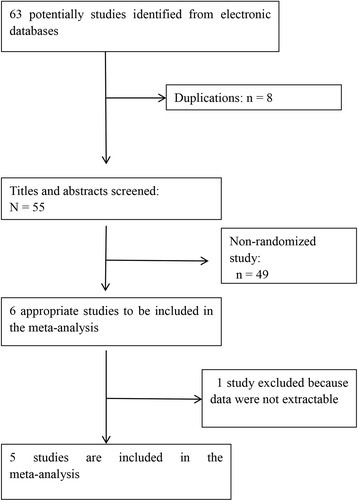
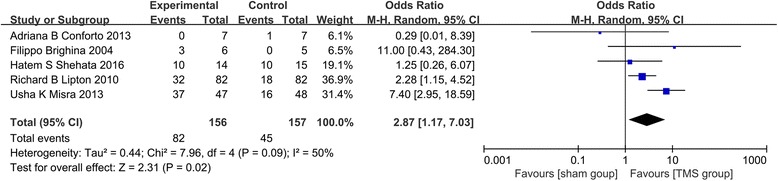
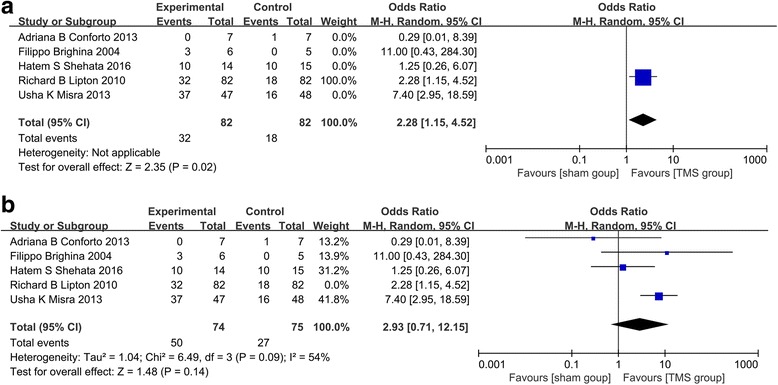
OBJECTIVES: As a non-invasive therapy, whether transcranial magnetic stimulation (TMS) is effective on migraine. This article was aimed to assess the efficacy of TMS on migraine based on randomized controlled trails (RCTs). METHODS: We searched PubMed, Embase and Cochrane Library electronic databases for published studies which compared TMS group with sham group, conducted a meta-analysis of all RCTs. RESULTS: Five studies, consisting of 313 migraine patients, were identified. Single-pulse transcranial magnetic stimulation is effective for the acute treatment of migraine with aura after the first attack (p = 0.02). And, the efficacy of TMS on chronic migraine was not significant (OR 2.93; 95% CI 0.71-12.15; p = 0.14). CONCLUSIONS: TMS is effective for migraine based on the studies included in the article.
Overview
The claims and statistics of this paper haven’t been checked yet.
Free: it reads the open-access text and checks the first 5 claims that cite a source we can check. Create a free account to check every claim.
Integrity signals
Registry
Cites
Statistics
Figures
Verification
Claims the paper makes
The claims and statistics of this paper haven’t been checked yet.
Free: it reads the open-access text and checks the first 5 claims that cite a source we can check. Create a free account to check every claim.
Claims other papers make about this one
Each is checked against this paper’s own text: does it say what the citing paper says it does?
The source backs part of the claim, not all of it — or backs it for a different population, condition or comparison.
In the citing paper
“In migraines, especially with aura, single-pulse TMS studies report significant reductions in monthly headache days, sustained up to 12 months in difficult-to-treat cohorts [107,108,109,110,111,119,120,121,122], while results for chronic migraine remain inconclusive [117,122].”
From The Heart’s Electromagnetic Field in Emotions, Empathy and Human Connection: Biosensor-Derived Insights into Heart–Brain Axis Mechanisms and a Basis for Novel BioMagnetoTherapies (2026) · cites this paper as [120]
Experimental — accuracy not yet measured
Self-check
Percentages, sums and reported differences re-computed from the paper’s own numbers.
The self-check needs the paper’s full text.
Citations
Cites
Liberati, A., Altman, D. G., Tetzlaff, J., Mulrow, C., Gøtzsche, P. C., Ioannidis, J. P. A., Clarke, M., Devereaux, P. J., Kleijnen, J., & Moher, D. (2009) · PLoS Medicine · doi:10.1371/journal.pmed.1000100 · Cited by 28,164 · cited 2×
“According to the Preferred Reporting Items for Systematic Reviews [35], a protocol of study-search strategies, outcome measurements, and methods of statistical analysis was prepared in advance.”
MethodCochrane Handbook for Systematic Reviews of Interventions: Cochrane Book Series
(2008) · doi:10.1002/9780470712184 · Cited by 25,048 · cited 2×
“For the level of evidence, the Cochrane risk of bias tool was used to evaluate the quality of RCTs [37].”
MethodDermyshi, E., Wang, Y., Yan, C., Hong, W., Qiu, G., Gong, X., & Zhang, T. (2017) · Neonatology · doi:10.1159/000454668 · Cited by 24,451
Liberati, A., Altman, D. G., Tetzlaff, J., Mulrow, C., Gøtzsche, P. C., Ioannidis, J. P. A., Clarke, M., Devereaux, P. J., Kleijnen, J., & Moher, D. (2009) · Journal of Clinical Epidemiology · doi:10.1016/j.jclinepi.2009.06.006 · Cited by 10,578
Vos, T., Barber, R. M., Bell, B., Bertozzi-Villa, A., Biryukov, S., Bolliger, I., Charlson, F., Davis, A., Degenhardt, L., Dicker, D., et al. (2015) · The Lancet · doi:10.1016/s0140-6736(15)60692-4 · Cited by 6,414
SPREADING DEPRESSION OF ACTIVITY IN THE CEREBRAL CORTEX
Leao, A. A. P. (1944) · Journal of Neurophysiology · doi:10.1152/jn.1944.7.6.359 · Cited by 2,679
Olesen, J. (2004) · Cephalalgia · doi:10.1111/j.1468-2982.2003.00824.x · Cited by 2,056
Mechanisms of migraine aura revealed by functional MRI in human visual cortex
Hadjikhani, N., Sanchez del Rio, M., Wu, O., Schwartz, D., Bakker, D., Fischl, B., Kwong, K. K., Cutrer, F. M., Rosen, B. R., Tootell, R. B. H., et al. (2001) · Proceedings of the National Academy of Sciences · doi:10.1073/pnas.071582498 · Cited by 1,518
Pascual-Leone, A., Rubio, B., Pallardó, F., & Catalá, M. D. (1996) · The Lancet · doi:10.1016/s0140-6736(96)01219-6 · Cited by 1,229
Fregni, F., & Pascual-Leone, A. (2007) · Nature Clinical Practice Neurology · doi:10.1038/ncpneuro0530 · Cited by 823
Transcranial Magnetic Stimulation in the Treatment of Depression
Gershon, A. A., Dannon, P. N., & Grunhaus, L. (2003) · American Journal of Psychiatry · doi:10.1176/appi.ajp.160.5.835 · Cited by 530
Lipton, R. B., Dodick, D. W., Silberstein, S. D., Saper, J. R., Aurora, S. K., Pearlman, S. H., Fischell, R. E., Ruppel, P. L., & Goadsby, P. J. (2010) · The Lancet Neurology · doi:10.1016/s1474-4422(10)70054-5 · Cited by 465 · cited 1×
“In four RCTs, there were active TMS group and sham TMS group [38, 39, 41, 42].”
Perfusion‐weighted imaging defects during spontaneous migrainous aura
Cutrer, F. M., Sorensen, A. G., Weisskoff, R. M., Østergaard, L., Del Rio, M. S., Lee, E. J., Rosen, B. R., & Moskowitz, M. A. (1998) · Annals of Neurology · doi:10.1002/ana.410430108 · Cited by 372
Cohen, H., Kaplan, Z., Kotler, M., Kouperman, I., Moisa, R., & Grisaru, N. (2004) · American Journal of Psychiatry · doi:10.1176/appi.ajp.161.3.515 · Cited by 334
Avery, D. H., Holtzheimer, P. E., Fawaz, W., Russo, J., Neumaier, J., Dunner, D. L., Haynor, D. R., Claypoole, K. H., Wajdik, C., & Roy-Byrne, P. (2006) · Biological Psychiatry · doi:10.1016/j.biopsych.2005.07.003 · Cited by 318
Hoffman, R. E., Gueorguieva, R., Hawkins, K. A., Varanko, M., Boutros, N. N., Wu, Y.-T., Carroll, K., & Krystal, J. H. (2005) · Biological Psychiatry · doi:10.1016/j.biopsych.2005.03.041 · Cited by 272
Camprodon, J. A., Martínez-Raga, J., Alonso-Alonso, M., Shih, M.-C., & Pascual-Leone, A. (2007) · Drug and Alcohol Dependence · doi:10.1016/j.drugalcdep.2006.06.002 · Cited by 272
rTMS of the prefrontal cortex in the treatment of chronic migraine: A pilot study
Brighina, F., Piazza, A., Vitello, G., Aloisio, A., Palermo, A., Daniele, O., & Fierro, B. (2004) · Journal of the Neurological Sciences · doi:10.1016/j.jns.2004.08.008 · Cited by 269 · cited 1×
“In four RCTs, there were active TMS group and sham TMS group [38, 39, 41, 42].”
Lefaucheur, J.-P., Drouot, X., Von Raison, F., Ménard-Lefaucheur, I., Cesaro, P., & Nguyen, J.-P. (2004) · Clinical Neurophysiology · doi:10.1016/j.clinph.2004.05.025 · Cited by 250
Nahas, Z., Kozel, F. A., Li, X., Anderson, B., & George, M. S. (2003) · Bipolar Disorders · doi:10.1034/j.1399-5618.2003.00011.x · Cited by 240
Self-citationElahi, B., Elahi, B., & Chen, R. (2009) · Movement Disorders · doi:10.1002/mds.22364 · Cited by 223
Neuromodulation of chronic headaches: position statement from the European Headache Federation
Martelletti, P., Jensen, R. H., Antal, A., Arcioni, R., Brighina, F., de Tommaso, M., Franzini, A., Fontaine, D., Heiland, M., Jürgens, T. P., et al. (2013) · The Journal of Headache and Pain · doi:10.1186/1129-2377-14-86 · Cited by 210
Couturier, J. L. (2005) · Journal of Psychiatry and Neuroscience · doi:10.1139/jpn.0514 · Cited by 207
Transcranial magnetic stimulation techniques in clinical investigation
Currà, A., Modugno, N., Inghilleri, M., Manfredi, M., Hallett, M., & Berardelli, A. (2002) · Neurology · doi:10.1212/01.wnl.0000038744.30298.d4 · Cited by 183 · cited 1×
“After 30 years later, TMS now can be applied for a diagnostic therapy in many diseases including multiple sclerosis, movement disorder, stroke, epilepsy and so on [5, 6].”
MethodTranscranial magnetic stimulation: Neurophysiological applications and safety
Anand, S., & Hotson, J. (2002) · Brain and Cognition · doi:10.1016/s0278-2626(02)00512-2 · Cited by 167
Misra, U. K., Kalita, J., & Bhoi, S. K. (2013) · Journal of Neurology · doi:10.1007/s00415-013-7072-2 · Cited by 164 · cited 2×
“In four RCTs, there were active TMS group and sham TMS group [38, 39, 41, 42].”
BackgroundThe diagnostic value of motor evoked potentials
Lazzaro, V. D., Oliviero, A., Profice, P., Ferrara, L., Saturno, E., Pilato, F., & Tonali, P. (1999) · Clinical Neurophysiology · doi:10.1016/s1388-2457(99)00060-7 · Cited by 139 · cited 1×
“After 30 years later, TMS now can be applied for a diagnostic therapy in many diseases including multiple sclerosis, movement disorder, stroke, epilepsy and so on [5, 6].”
MethodLow-frequency rTMS of the vertex in the prophylactic treatment of migraine
Teepker, M., Hötzel, J., Timmesfeld, N., Reis, J., Mylius, V, Haag, A., Oertel, W., Rosenow, F., & Schepelmann, K. (2010) · Cephalalgia · doi:10.1111/j.1468-2982.2009.01911.x · Cited by 136 · cited 1×
“reported that no statistically significant difference between low-frequency rTMS with sham stimulation was found [44].”
BackgroundTakeuchi, N., Tada, T., Toshima, M., Matsuo, Y., & Ikoma, K. (2009) · Journal of Rehabilitation Medicine · doi:10.2340/16501977-0454 · Cited by 133
Electrical stimulation of auditory and somatosensory cortices for treatment of tinnitus and pain
Ridder, D. D., Mulder, G. D., Menovsky, T., Sunaert, S. G., & Kovacs, S. (2007) · Progress in brain research · doi:10.1016/s0079-6123(07)66036-1 · Cited by 127
Conforto, A. B., Amaro, E., Gonçalves, A. L., Mercante, J. P., Guendler, V. Z., Ferreira, J. R., Kirschner, C. C., & Peres, M. F. (2014) · Cephalalgia · doi:10.1177/0333102413515340 · Cited by 125
Horvath, J. C., Perez, J. M., Forrow, L., Fregni, F., & Pascual-Leone, A. (2011) · Journal of Medical Ethics · doi:10.1136/jme.2010.039966 · Cited by 106 · cited 1×
“TMS is a noninvasive technology and the first transcranial magnetic stimulator was introduced to the world in 1984–1985 [3].”
BackgroundNeurostimulation for Treatment of Migraine and Cluster Headache
Schwedt, T. J., & Vargas, B. B. (2015) · Pain Medicine · doi:10.1111/pme.12792 · Cited by 104 · cited 1×
“Recently, there are some papers reviewed the effect of TMS for migraine [28, 29], but lack a meta-analysis.”
BackgroundPraharaj, S. K., Ram, D., & Arora, M. (2009) · Journal of Affective Disorders · doi:10.1016/j.jad.2008.12.020 · Cited by 100
Lasting effects of repeated rTMS application in focal hand dystonia
Borich, M., Arora, S., & Kimberley, T. J. (2009) · Restorative Neurology and Neuroscience · doi:10.3233/rnn-2009-0461 · Cited by 94
Santiago-Rodríguez, E., Cárdenas-Morales, L., Harmony, T., Fernandez-bouzas, A., Porras-Kattz, E., & Hernandez, A. (2008) · Seizure · doi:10.1016/j.seizure.2008.04.005 · Cited by 94
Transcranial Magnetic Stimulation for Migraine: A Safety Review
Dodick, D. W., Schembri, C. T., Helmuth, M., & Aurora, S. K. (2010) · Headache: The Journal of Head and Face Pain · doi:10.1111/j.1526-4610.2010.01697.x · Cited by 90 · cited 1×
“Furthermore, single-pulse and paired-pulse/double-coil TMS are safety for normal human subjects and patients who suffer from migraine [2, 27].”
BackgroundRight prefrontal TMS versus sham treatment of mania: a controlled study
Kaptsan, A., Yaroslavsky, Y., Applebaum, J., Belmaker, R., & Grisaru, N. (2003) · Bipolar Disorders · doi:10.1034/j.1399-5618.2003.00003.x · Cited by 87
Infection and Stroke: an Update on Recent Progress
Miller, E. C., & Elkind, M. S. V. (2015) · Current Neurology and Neuroscience Reports · doi:10.1007/s11910-015-0602-9 · Cited by 84
Shirahige, L., Melo, L., Nogueira, F., Rocha, S., & Monte‐Silva, K. (2016) · Headache: The Journal of Head and Face Pain · doi:10.1111/head.12981 · Cited by 69
Matheson, S. L., Green, M. J., Loo, C. K. A., & Carr, V. J. (2010) · Schizophrenia Research · doi:10.1016/j.schres.2010.01.002 · Cited by 57
Shehata, H., Esmail, E., Abdelalim, A., El-Jaafary, S. I., Elmazny, A. N., Sabbah, A., & Shalaby, N. (2016) · Journal of Pain Research · doi:10.2147/jpr.s116671 · Cited by 56 · cited 1×
“In one RCT, there were active TMS group and botulinum toxin-A injection group [40].”
Antibiotic and antifungal resistance in antibiotic "free" environment?
Prasko, J., Záleský, R., Bareš, M., Horáček, J., Kopeček, M., Novák, T., & Paskova, B. (2007) · PubMed · Cited by 54
Guzen, F. P., de Almeida Leme, R. J., de Andrade, M. S. R., de Luca and, B. A., & Chadi, G. (2009) · Restorative Neurology and Neuroscience · doi:10.3233/rnn-2009-0454 · Cited by 42
9. Low-frequency rTMS of the vertex in the prophylactic treatment of migraine
Teepker, M., Hötzel, J., Timmesfeld, N., Reis, J., Mylius, V., Haag, A., Oertel, W. H., Rosenow, F., & Schepelmann, K. (2009) · Clinical Neurophysiology · doi:10.1016/j.clinph.2008.07.012 · Cited by 36
14th Congress of the International Headache Society September 10 – 13, 2009 Philadelphia, PA
Curra, A., Coppola, G., Alibardi, A., Gorini, M., Gentili, G., Parisi, V, & Pierelli, F. (2009) · Cephalalgia · doi:10.1111/j.1468-2982.2009.01960.x · Cited by 34 · cited 1×
“Currently, there are evidence that single pulse-TMS can suppress CSD in animal experiment [34].”
BackgroundRapinesi, C., CASALE, A. D., Scatena, P., Kotzalidis, G. D., Pietro, S. D., Ferri, V. R., Bersani, F. S., Brugnoli, R., Raccah, R. N., Zangen, A., et al. (2016) · Neuroscience Letters · doi:10.1016/j.neulet.2016.04.058 · Cited by 30
Non-Invasive Neuromodulation for Headache Disorders
Zhu, S., & Marmura, M. J. (2016) · Current Neurology and Neuroscience Reports · doi:10.1007/s11910-015-0620-7 · Cited by 19 · cited 1×
“Recently, there are some papers reviewed the effect of TMS for migraine [28, 29], but lack a meta-analysis.”
BackgroundSantiago, R. E., Cardenas, M. L., & Harmony, T. (2006) · Clinical Neurophysiology · doi:10.1016/j.clinph.2006.06.266 · Cited by 1
Research works printed but not linked: 4
- Prasko J Záleský R Bares M Horácek J Kopecek M Novák T Pasková B The effect of repetitive transcranial magnetic stimulation (rTMS) add on serotonin reuptake inhibitors in patients with panic disorder: a randomized, double blind sham controlled study Neuro Endocrinol Lett 2007 28 1 33 38 17277734
- Pascual-Leone A Rubio B Pallardó F Catalá MD Rapid-rate transcranial magnetic stimulation of left dorsolateral prefrontal cortex in drug-resistant depression Lancet 1996 348 9022 9233 10.1016/S0140-6736(96)01219-6 8684201 · DOI · Paper page
- Holland PR Schembri CT Fredrick JP Goadsby PJ Transcranial magnetic stimulation for the treatment of migraine Aura Neurology 2009 72 Suppl 1 A250
- Higgins JP Green S (2010) Cochrane handbook for systematic reviews of interventions Naunyn-Schmiedeberg's Arch Exp Pathol Pharmakol 2011 14 S38
Cited by
Yang, S., & Chang, M. C. (2020) · Frontiers in Neurology · doi:10.3389/fneur.2020.00114 · Cited by 182
“The following inclusion criteria were applied for the selection of articles: (1) patients with pain, (2) rTMS was applied for controlling pain, and (3) follow-up evaluations were performed after rTMS stimulation to assess the degree of pain reduction.”
BackgroundMethodInfluentialMoisset, X., Pereira, B., de Andrade, D. C., Fontaine, D., Lantéri‐Minet, M., & Mawet, J. (2020) · The Journal of Headache and Pain · doi:10.1186/s10194-020-01204-4 · Cited by 133
Stilling, J., Monchi, O., Amoozegar, F., & Debert, C. T. (2019) · Headache The Journal of Head and Face Pain · doi:10.1111/head.13479 · Cited by 125
Transcranial Magnetic Stimulation as Treatment in Multiple Neurologic Conditions
Iglesias, A. H. (2020) · Current Neurology and Neuroscience Reports · doi:10.1007/s11910-020-1021-0 · Cited by 132
Management of chronic migraine
Hovaguimian, A., & Roth, J. L. (2022) · BMJ · doi:10.1136/bmj-2021-067670 · Cited by 120
Metadata
- Authors
- Lan, L., Zhang, X., Li, X., Rong, X., & Peng, Y.
- Affiliations
- Sun Yat-sen University (CN)
- Corresponding author
- Peng, Ying
- Venue
- The Journal of Headache and Pain
- Published
- 2017-08-22
- Volume
- 18
- Issue
- 1
- Pages
- 86-86
- ISSN
- 1129-2369 (ISSN-L)
- 1129-2377
- PMC
- PMC5567575
- OpenAlex
- W2747981819
- Cited by
- 117
- References
- 49
- Citations by year
- 2026: 6 · 2025: 14 · 2024: 13 · 2023: 13 · 2022: 23 · 2021: 14 · 2020: 12 · 2019: 12 · 2018: 9
- FWCI
- 1.37
- Type
- journal article
- Language
- en
- Open access
- gold
- doi.org
- Locations
- The Journal of Headache and Pain (publishedVersion, cc-by)
- Europe PMC (PubMed Central) (publishedVersion, cc-by)
- PubMed Central (publishedVersion, cc-by)
- PubMed (publishedVersion)
- Funders
- National Natural Science Foundation of China (81572481, 81502167)
- International Collaboration Program of Universities in Guangdong Province (2012hjhz001)
- the Key Project of Product, Study and Research of Guangzhou city (1561000181)
- Topics
- Health Sciences › Medicine › Clinical Neurology › Migraine and Headache Studies
- Life Sciences › Neuroscience › Neurology › Transcranial Magnetic Stimulation Studies
- Health Sciences › Dentistry › Oral Surgery › Temporomandibular Joint Disorders
- Keywords
- transcranial magnetic stimulation, migraine, migraine with aura, chronic migraine, acute migraine treatment, non-invasive treatment
- MeSH terms
- Humans, Migraine Disorders, Randomized Controlled Trials as Topic, Databases, Factual, Transcranial Magnetic Stimulation, Pain Management
About these checks
Registry, retraction, Cites and statistics results are computed, not judged, with one exception: a printed reference that no index lists is read once by a model before it counts as a citation error. Claims are extracted by a model and kept only when their quote appears verbatim in the text; each cited source is then checked, with a model’s help, for whether it says what the claim relies on. Those verdicts can be wrong — read the claim’s quote and the cited source before relying on one.
Statistics and arithmetic are recomputed, not judged.
Confidence bands are shown only for fields calibrated on our annotated test set. None is calibrated yet, so no band is shown.
What counts as a claim ›How we measure confidence ›How we check this ›
Are you an author, or do you see a problem with this page? Request a review
Data sources
Bibliographic data: Semantic Scholar, OpenAlex, Crossref.
Contains information from the Semantic Scholar Academic Graph Datasets, made available under the ODC Attribution License (ODC-BY 1.0).
Semantic Scholar’s data is described in: Kinney, R., et al. (2023). The Semantic Scholar Open Data Platform. arXiv:2301.10140.
