

Exercise or physical activity and cognitive function in adults with type 2 diabetes, insulin resistance or impaired glucose tolerance: a systematic review
Open accessThe DOI matches its Crossref record; 74 of the 77 references it cites were found in a registry or an index.
Abstract
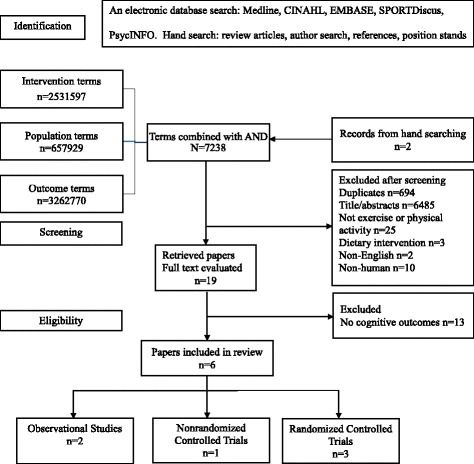
BACKGROUND: Diabetes is an important risk factor for cognitive impairment. Although some studies suggest that physical exercise can minimize age-related cognitive declines or improve brain morphology or function, benefits in diabetes or impaired glucose tolerance are unclear. Therefore, our aim was to evaluate the efficacy of exercise or physical activity on cognition in adults with type 2 diabetes, insulin resistance or impaired glucose tolerance. METHODS: An electronic search for studies published from the earliest record until February 2017 was conducted using Medline, EMBASE, SPORTDiscus, CINAHL, and PsycINFO. Any experimental or observational study designs were included, as long as they were conducted in individuals of any age with type 2 diabetes, insulin resistance or impaired glucose tolerance, and they directly examined exercise/physical activity effects on cognitive outcomes or the relationship between changes in cognition and changes in either insulin resistance and glucose homeostasis. Study quality was assessed using the PEDro scale; data on participant and intervention characteristics and outcomes were extracted. RESULTS: Six studies enrolling 2289 participants met the eligibility criteria. Quality was modest and effect sizes variable and mostly small or negligible. Overall, four of the six studies (67%) reported significant benefits of greater exercise/physical activity participation for some aspects of cognition, but only 26% of cognitive outcomes were significant across all trials. Clinical improvements in insulin resistance/glucose homeostasis were related to improvements in cognitive function in three studies. Overall results were inconsistent, with benefits varying across exercise types and cognitive domains. CONCLUSIONS: Literature does not provide evidence that physical activity or exercise interventions contribute to a better cognitive function in patients with type 2 diabetes or impaired glucose tolerance. Large-scale, long-term, robust randomized controlled trials are required to determine if exercise improves cognition in this high-risk cohort, and to investigate putative mechanistic links between cognition, body composition, metabolism, and inflammation in diabetes and related metabolic syndromes.
Overview
The claims and statistics of this paper haven’t been checked yet.
Free: it reads the open-access text and checks the first 5 claims that cite a source we can check. Create a free account to check every claim.
Integrity signals
Registry
Cites
Statistics
Figures
Verification
Claims the paper makes
The claims and statistics of this paper haven’t been checked yet.
Free: it reads the open-access text and checks the first 5 claims that cite a source we can check. Create a free account to check every claim.
Claims other papers make about this one
Each is checked against this paper’s own text: does it say what the citing paper says it does?
In the citing paper
“The effects on muscle mass are distinct from those of aerobic exercise and are essential for preventing dementia in older adults with diabetes, although more evidence is needed [396].”
From Global consensus on optimal exercise recommendations for enhancing healthy longevity in older adults (ICFSR) (2025) · cites this paper as [396]
Self-check
Percentages, sums and reported differences re-computed from the paper’s own numbers.
The self-check needs the paper’s full text.
Citations
Cites
Preferred Reporting Items for Systematic Reviews and Meta-Analyses: the PRISMA statement
Moher, D., Liberati, A., Tetzlaff, J., Altman, D. G., & for the PRISMA Group (2009) · BMJ · doi:10.1136/bmj.b2535 · Cited by 83,823
Preferred reporting items for systematic reviews and meta-analyses: the PRISMA Statement.
(2009) · PubMed Central · Cited by 44,859
Cohen, J. (1992) · Psychological Bulletin · doi:10.1037//0033-2909.112.1.155 · Cited by 8,771
Global estimates of the prevalence of diabetes for 2010 and 2030
Shaw, J. E., Sicree, R. A., & Zimmet, P. Z. (2010) · Diabetes Research and Clinical Practice · doi:10.1016/j.diabres.2009.10.007 · Cited by 7,216
Exercise and Physical Activity for Older Adults
Chodzko-Zajko, W. J., Proctor, D. N., Fiatarone Singh, M. A., Minson, C. T., Nigg, C. R., Salem, G. J., & Skinner, J. S. (2009) · Medicine & Science in Sports & Exercise · doi:10.1249/mss.0b013e3181a0c95c · Cited by 5,153
Reliability of the PEDro Scale for Rating Quality of Randomized Controlled Trials
Maher, C. G., Sherrington, C., Herbert, R. D., Moseley, A. M., & Elkins, M. (2003) · Physical Therapy · doi:10.1093/ptj/83.8.713 · Cited by 4,808 · cited 1×
“Physiotherapy Evidence Database scale (PEDro) [32].”
Fitness Effects on the Cognitive Function of Older Adults: A Meta-Analytic Study
Colcombe, S., & Kramer, A. F. (2003) · Psychological Science · doi:10.1111/1467-9280.t01-1-01430 · Cited by 3,782 · cited 1×
“Theoretically, it would seem intuitive that halting the neuropathological changes in the brain at an early stage might be most beneficial, however, literature reviews in dementia [14] actually show that the effect size of exercise on cognition is greater in those with cognitive impairment and/or dementia than it is in…”
BackgroundExercise: a behavioral intervention to enhance brain health and plasticity
Cotman, C. (2002) · Trends in Neurosciences · doi:10.1016/s0166-2236(02)02143-4 · Cited by 2,739 · cited 1×
“Memory tasks are supported by structural plasticity in the hippocampus [56] which has been observed after aerobic voluntary wheel running in rodents.”
BackgroundMorris, S. B., & DeShon, R. P. (2002) · Psychological Methods · doi:10.1037/1082-989x.7.1.105 · Cited by 2,502 · cited 1×
“Relative effect size (ES) (mean change Treatment – mean change Control) ÷ Pooled baseline SD was calculated for controlled trials where possible [33].”
MethodClassification and Diagnosis of Diabetes
Fajans, S. S. (1990) · Medical Entomology and Zoology · Cited by 2,359
Cited by
International exercise recommendations in older adults (ICFSR): Expert consensus guidelines
Izquierdo, M., Merchant, R. A., Morley, J. E., Anker, S. D., Aprahamian, I., Arai, H., Aubertin-Leheudre, M., Bernabei, R., Cadore, E. L., Cesari, M., et al. (2021) · The Journal of nutrition, health and aging · doi:10.1007/s12603-021-1665-8 · Cited by 1,247
Self-citationPhysical Activity, Cognition, and Brain Outcomes: A Review of the 2018 Physical Activity Guidelines
ERICKSON, K. I., HILLMAN, C., STILLMAN, C. M., BALLARD, R. M., BLOODGOOD, B., CONROY, D. E., MACKO, R., MARQUEZ, D. X., PETRUZZELLO, S. J., & POWELL, K. E. (2019) · Medicine & Science in Sports & Exercise · doi:10.1249/mss.0000000000001936 · Cited by 1,214
Type 2 diabetes mellitus in older adults: clinical considerations and management
Bellary, S., Kyrou, I., Brown, J. E., & Bailey, C. J. (2021) · Nature Reviews Endocrinology · doi:10.1038/s41574-021-00512-2 · Cited by 639
Izquierdo, M., de Souto Barreto, P., Arai, H., Bischoff-Ferrari, H. A., Cadore, E. L., Cesari, M., Chen, L.-K., Coen, P. M., Courneya, K. S., Duque, G., et al. (2025) · The Journal of nutrition, health and aging · doi:10.1016/j.jnha.2024.100401 · Cited by 273
Cognitive Aging and the Promise of Physical Activity
Erickson, K. I., Donofry, S. D., Sewell, K. R., Brown, B. M., & Stillman, C. M. (2022) · Annual Review of Clinical Psychology · doi:10.1146/annurev-clinpsy-072720-014213 · Cited by 178
Chen, Y., Zhang, Y., Guo, Z., Bao, D., & Zhou, J. (2021) · Journal of NeuroEngineering and Rehabilitation · doi:10.1186/s12984-021-00917-0 · Cited by 138
Caria, A. C. I., Nonaka, C. K. V., Pereira, C. S., Soares, M. B. P., Macambira, S. G., & Souza, B. S. D. F. (2018) · International Journal of Molecular Sciences · doi:10.3390/ijms19113608 · Cited by 130
“It is well known that exercise training exerts beneficial effects in healthy [231] and in individuals with SAH [232], T2D [233], obesity [234,235], cancer [236], coronary heart disease [237], and chronic heart failure [238].”
BackgroundZhang, J., Tam, W., Hounsri, K., Kusuyama, J., & Wu, X. V. (2023) · Archives of Physical Medicine and Rehabilitation · doi:10.1016/j.apmr.2023.10.005 · Cited by 93
Yamamoto, Y. L., Nagai, Y., Kawanabe, S., Hishida, Y., Hiraki, K., Sone, M., & Tanaka, Y. (2020) · Endocrine Journal · doi:10.1507/endocrj.ej20-0550 · Cited by 70
“Endocrine Journal Advance Publication Endocrine Journal Advance Publication resulted in better cognitive function in patients with dia‐ betes [31, 32].”
BackgroundCai, Y., Wang, Z., Feng, L., & Ni, G.-X. (2022) · Frontiers in Human Neuroscience · doi:10.3389/fnhum.2022.876935 · Cited by 61
Diabetes-related cognitive impairment: Mechanisms, symptoms, and treatments
Yu, X., He, H., Wen, J., Xu, X., Ruan, Z., Hu, R., Wang, F., & Ju, H. (2025) · Open Medicine · doi:10.1515/med-2024-1091 · Cited by 64
“Regular physical activity is consistently associated with improved cognitive outcomes and decreased decline risk in diabetics [100].”
Cho, J. A., Park, S. H., Cho, J., Kim, J., Yoon, J. H., & Park, E. (2020) · Nutrients · doi:10.3390/nu12051309 · Cited by 46
“Accordingly, elderly patients with Type 2 diabetes (T2DM) are given clinical advice on the beneficial effect of exercise to increase insulin sensitivity [4].”
BackgroundBai, A., Tao, L., Huang, J., Tao, J., & Liu, J. (2021) · BMC Public Health · doi:10.1186/s12889-021-10537-x · Cited by 49
Lemes, V. B., Gaya, A. C. A., Brand, C., Dias, A. F., Cristi‐Montero, C., Mota, J. A. P. S., & Gaya, A. R. (2020) · International Journal of Pediatrics and Adolescent Medicine · doi:10.1016/j.ijpam.2020.11.004 · Cited by 64
Cooke, S., Pennington, K., Jones, A. W., Bridle, C., Smith, M. F., & Curtis, F. (2020) · PLoS ONE · doi:10.1371/journal.pone.0232958 · Cited by 50
“Conversely, the two most recent reviews [39, 40] suggest that the strength of the current available evidence does not support these conclusions.”
BackgroundResultThe Effects of Type 2 Diabetes on Cognitive Performance: A Review of Reviews
Sola, T., Sola, F.-M., & Jehkonen, M. (2024) · International Journal of Behavioral Medicine · doi:10.1007/s12529-024-10274-6 · Cited by 44
“In a review, interventions based on physical activity or exercise did not seem to improve cognition in patients with T2DM, insulin resistance, or impaired glucose tolerance [55].”
Chen, W., Li, J., Liu, J., Wang, D., & Hou, L. (2019) · ACS Chemical Neuroscience · doi:10.1021/acschemneuro.9b00022 · Cited by 29
Vandersmissen, J., Dewachter, I., Cuypers, K., & Hansen, D. (2025) · Sports Medicine - Open · doi:10.1186/s40798-025-00836-7 · Cited by 33
“The addition of this second part distinguishes this review from previous similar reviews [71–73], and deepens the understanding of how exercise improves cognition, and identifies pathways that could be pharmacologically targeted to mimic the effect of exercise on cognition in individuals unable to…”
InfluentialColl‐Padrós, N., León, M., Valech, N., Ros, E., Vidal, J., Estruch, R., Fitó, M., Salas‐Salvadó, J., Corella, D., Molinuevo, J. L., et al. (2019) · European Review of Aging and Physical Activity · doi:10.1186/s11556-019-0229-y · Cited by 29
Pitrou, I., Vasiliadis, H., & Hudon, C. (2022) · European Review of Aging and Physical Activity · doi:10.1186/s11556-022-00284-2 · Cited by 29
“Evidence however is limited regarding the impact of physical activity on cognition among older adults with chronic disorders [21, 22].”
BackgroundPolito, R., Nigro, E., Elce, A., Monaco, M. L., Iacotucci, P., Carnovale, V., Comegna, M., Gelzo, M., Zarrilli, F., Corso, G., et al. (2019) · Mediators of Inflammation · doi:10.1155/2019/2153934 · Cited by 27
“The positive effects of physical exercise on body composition, insulin sensitivity, and blood glucose levels have been demonstrated in multiple morbid conditions, including different lung diseases [4, 5].”
BackgroundThe Biological and Motivational Effects of Aerobic Exercise With Virtual Reality
Ulaş, K., & Şemin, İ. (2020) · Research Quarterly for Exercise and Sport · doi:10.1080/02701367.2020.1729329 · Cited by 33
Yoo, J. E., Han, K., Kim, B., Park, S. H., Kim, S. M., Park, H. S., & Nam, G. E. (2022) · Diabetes Care · doi:10.2337/dc21-1597 · Cited by 26
Anti-Diabetic Activity of Polysaccharides from Auricularia cornea var. Li.
Fu, Y., Wang, L., Jiang, G., Ren, L., Wang, L., & Liu, X. (2022) · Foods · doi:10.3390/foods11101464 · Cited by 24
“Insulin can reduce blood sugar by promoting the uptake and utilization of glucose by body tissues and cells and inhibiting glycogen decomposition and gluconeogenesis [31].”
BackgroundJesmin, S., Shima, T., Soya, M., Takahashi, K., Koki, O., Ogura, K., Koizumi, H., & Soya, H. (2021) · American Journal of Physiology-Endocrinology and Metabolism · doi:10.1152/ajpendo.00326.2021 · Cited by 22
Sugimoto, T., Araki, A., Fujita, H., Fujita, K., Honda, K., Inagaki, N., Ishida, T., Kato, J., Kishi, M., Kishino, Y., et al. (2024) · The Journal of Prevention of Alzheimer s Disease · doi:10.14283/jpad.2024.117 · Cited by 25
Regulation of microRNAs in Alzheimer´s disease, type 2 diabetes, and aerobic exercise training
Sousa, R. A. L. D., & Caria, A. C. I. (2022) · Metabolic Brain Disease · doi:10.1007/s11011-022-00903-y · Cited by 19
Fan, L., Wang, F., Zhao, J., Zhang, J., Li, Y.-A., Tang, J. Y., Lin, T., & Wei, Q. (2025) · International Journal of Behavioral Nutrition and Physical Activity · doi:10.1186/s12966-025-01706-x · Cited by 24
Collins, A. M., Molina‐Hidalgo, C., Aghjayan, S. L., Fanning, J. T., Erlenbach, E. D., Gothe, N. P., Velázquez‐Díaz, D., & Erickson, K. I. (2023) · Experimental Gerontology · doi:10.1016/j.exger.2023.112246 · Cited by 21
“mediate the cognitive benefits of exercise (Guadagni et al., 2020; Oberlin et al., 2021; Peven et al., 2020; Zhao et al., 2018), but also exercise-induced changes in brain regions (e.”
Sotomayor, E. M., Onetti-Onetti, W., Castillo-Rodríguez, A., & González-Jurado, J. A. (2020) · Sustainability · doi:10.3390/su12125038 · Cited by 21
“In any case, robust, long-term, large-scale randomized controlled trials are required to determine whether exercise improves cognition in this group of population (elderly people with type 2 diabetes) [28,73].”
BackgroundThe Mediterranean Lifestyle to Contrast Low-Grade Inflammation Behavior in Cancer
Divella, R., Marino, G., Infusino, S., Lanotte, L., Gadaleta-Caldarola, G., & Gadaleta‐Caldarola, G. (2023) · Nutrients · doi:10.3390/nu15071667 · Cited by 22
“Muscle contraction causes the release of proteins called myokines, some of which have local and systemic endocrine effects and are involved in lipid, glucose, and bone metabolism, and hence contribute to the anti-inflammatory effects of exercise [14,15].”
BackgroundShekarchian, M., Peeri, M., & Azarbayjani, M. A. (2023) · Brain Research Bulletin · doi:10.1016/j.brainresbull.2023.110725 · Cited by 17
“However, some studies do not support physical activity or exercise interventions as treatment strategies for cognitive dysfunction in these patients [136,137].”
Zhao, R. R., Mavros, Y., Meiklejohn, J., Anderberg, K. A., Singh, N. A., Kay, S., Baker, M. K., Wang, Y., Climstein, M., O’Sullivan, A., et al. (2022) · The Journals of Gerontology Series A · doi:10.1093/gerona/glac090 · Cited by 17
“In our recent comprehensive systematic review of both observational data and experimental trials (13), we identified only 6 studies (including 3 randomized controlled trials) addressing these questions directly.”
BackgroundSelf-citationYang, M., Liu, Y., Miura, K. W., Matsumoto, M., Jiao, D., Zhu, Z., Li, X., Cui, M., Zhang, J., Qian, M., et al. (2024) · BMC Public Health · doi:10.1186/s12889-024-19697-y · Cited by 13
“This connection may be due to complications in patients with diabetes, such as peripheral neuropathy (nerve damage) and peripheral arterial disease (reduced blood flow to the extremities) [56, 57], which further impair their physical capabilities and functional status.”
BackgroundSong, J. S., Abe, T., Bell, Z. W., Wong, V. H. Y., Spitz, R. W., Yamada, Y., & Loenneke, J. P. (2020) · Journal of Clinical Densitometry · doi:10.1016/j.jocd.2020.09.002 · Cited by 13
Wang, S., Wang, X., Bai, F., Shi, X., Zhou, T., & Li, F. (2023) · Heliyon · doi:10.1016/j.heliyon.2023.e13914 · Cited by 15
RetractedSalama, I. I., Sami, S. M., Salama, S. I., Elshaarawy, G. A., Aboulghate, A., Raslan, H. M., Mohsen, A., Rasmy, H., Ibrahim, M. H., Ganem, M. M. F., et al. (2023) · Future Science OA · doi:10.2144/fsoa-2022-0060 · Cited by 19
Sugimoto, T., Araki, A., Fujita, H., Honda, K., Inagaki, N., Ishida, T., Kato, J., Kishi, M., Kobayashi, K., Kouyama, K., et al. (2021) · Frontiers in Aging Neuroscience · doi:10.3389/fnagi.2021.680341 · Cited by 11
Sun, Z., Liu, H., Yan, M., Zeng, H., Hu, Y., Tian, X., & Mao, D. (2024) · PLoS ONE · doi:10.1371/journal.pone.0304795 · Cited by 13
Vahed, A., Shamsi, M. M., Siadat, S. D., Behmanesh, M., Negaresh, R., Agh-Mohammadi, S., & Ebrahimi, M. (2025) · Diabetes Research and Clinical Practice · doi:10.1016/j.diabres.2025.112908 · Cited by 8
Ghanbari, M., & Sadeghimahalli, F. (2022) · PubMed Central · doi:10.22038/ajp.2021.18829 · Cited by 10
“So, it is etiologically involved in the pathogenesis of T2DM by impairing insulin signaling and β-cell function (Liu et al., 2016).”
BackgroundInfluentialRole of Metalloproteinases in Diabetes-associated Mild Cognitive Impairment
Pereira, V. M., Pradhanang, S., Prather, J. F., & Nair, S. (2024) · Current Neuropharmacology · doi:10.2174/1570159x22666240517090855 · Cited by 7
Gyasi, R. M., Konadu, E., Appiah, P., Agyei, D., Nyaaba, E., Ntiamoah, M. K., Asiedu, H. B., Koomson-Yalley, E. N. M., Tayviah, M. M., Opoku-Ware, J., et al. (2024) · Geriatric Nursing · doi:10.1016/j.gerinurse.2024.10.067 · Cited by 7
Leite, N. J. C., Mendes, R., Raimundo, A. M. D. M., Pinho, C., Viana, J. L., & Marmeleira, J. (2020) · Geriatric Nursing · doi:10.1016/j.gerinurse.2020.01.001 · Cited by 10
Wang, L., Fu, Y., Xu, S., Chen, E., Zhang, S., Yang, D., He, Y., Gu, Y., Mao, Y., Yuan, F., et al. (2025) · Ecotoxicology and Environmental Safety · doi:10.1016/j.ecoenv.2025.118711 · Cited by 6
Kour, H., Kothiwale, V., & Goudar, S. S. (2020) · Medical Journal of Dr D Y Patil Vidyapeeth · doi:10.4103/mjdrdypu.mjdrdypu_185_19 · Cited by 5
Ruegsegger, G. N., Ekholm, E. R., Monroe, C. E., Rappaport, C. I., Huppert, R. D., Anton, C. R., & Ferguson, M. J. (2023) · Physiology & Behavior · doi:10.1016/j.physbeh.2023.114389 · Cited by 7
Fan, Y., Wang, X., Li, Y., Li, L., & Tian, Y. (2024) · Food Bioscience · doi:10.1016/j.fbio.2024.105435 · Cited by 6
Reviewing physical exercise in non-obese diabetic Goto-Kakizaki rats
Galán, B. S. M., Serdan, T. D. A., Rodrigues, L. E., Manoel, R., Gorjão, R., Masi, L. N., Pithon‐Curi, T. C., Curi, R., & Hirabara, S. M. (2022) · Brazilian Journal of Medical and Biological Research · doi:10.1590/1414-431x2022e11795 · Cited by 5
“Studies have shown that regular physical activity reduces the prevalence and helps manage these obesity-related diseases (21,22).”
BackgroundRole of Physiotherapy in Managing Type 2 Diabetes Mellitus: A Systematic Review
Kaur, N., & Singh, S. K. (2022) · Journal of Diabetology · doi:10.4103/jod.jod_48_22 · Cited by 6
Alizade, S., Faramarzi, M., Banitalebi, E., & Saghaei, E. (2023) · PubMed Central · doi:10.22038/ijbms.2023.71230.15477 · Cited by 11
“Increased exercise also brings beneficial physiological effects in older adults with diabetes, glucose delivery, or IR (46).”
BackgroundLiu, W., Li, M., Lin, S., Shi, T., Nakamura, Y., Song, L., & Tang, Y. (2025) · Food Research International · doi:10.1016/j.foodres.2025.117026 · Cited by 4
Sugimoto, T., Crane, P. K., Choi, S., Fujita, K., Gallée, J., Kuroda, Y., Lee, M. K., Matsumoto, N., Nakamura, A., Noma, H., et al. (2025) · Journal of Aging Research and Lifestyle · doi:10.1016/j.jarlif.2025.100016 · Cited by 4
Sugimoto, T., Omura, T., Araki, A., Haneda, C., Honda, K., Kishi, M., Takahashi, T., Toyoshima, K., Tsuume, S., Uchida, K., et al. (2025) · Diabetes Obesity and Metabolism · doi:10.1111/dom.16605 · Cited by 5
Leite, N. J. C., Raimundo, A. M. D. M., Mendes, R., Ferreira, S. D. P., & Marmeleira, J. (2024) · Geriatric Nursing · doi:10.1016/j.gerinurse.2024.10.018 · Cited by 5
Daroya, R. C., MERCADO, M. A. S., Cruz, D. C. D., Sison, A. A. R. C., Centeno, C. J., & Marcelo, E. D. (2024) · International Conference on Innovative Computing, Intelligent Communication and Smart Electrical Systems (ICSES) · doi:10.1109/icses63760.2024.10910613 · Cited by 3
Sport reduziert den diabetesassoziierten Verlust kognitiver Fähigkeiten bei Typ-2-Diabetes-Patienten
Klein, C., Müssig, K., & Adamek, H. E. (2021) · Diabetologie und Stoffwechsel · doi:10.1055/a-1527-9733 · Cited by 3
“[48] Zhao RR, O’Sullivan AJ, Fiatarone Sing MA.”
BackgroundLi, X., Chen, B., Liu, X., & Ma, J. (2025) · Geriatrics and gerontology international/Geriatrics & gerontology international · doi:10.1111/ggi.15061 · Cited by 3
“11 However, the study designs of the included studies were not limited to randomized controlled trials (RCTs).”
Grout, M., Lovegrove, J. A., & Lamport, D. J. (2023) · American Journal of Clinical Nutrition · doi:10.1016/j.ajcnut.2023.02.017 · Cited by 4
“increased physical activity, which can maintain or improve glycemic control, have been associated with beneficial effects on cognitive function in patients with T2DM, although reviews indicate that the evidence is mixed and effect sizes are small [3,4].”
BackgroundBehavioral and Psychological Factors in Buffering Diabetes-related Disability Development
Tsai, Y., Chuang, L.-L., Lee, Y., & Chiu, C. (2023) · Annals of Behavioral Medicine · doi:10.1093/abm/kaad038 · Cited by 4
Ma, Y.-X., Li, J., Si, S.-C., Zhao, H., Liu, J., Lv, L., Yang, K., & Yang, W. (2025) · World Journal of Diabetes · doi:10.4239/wjd.v16.i6.105496 · Cited by 2
Guicciardi, M., Fadda, D., Fanari, R., Doneddu, A., & Crisafulli, A. (2020) · Frontiers in Psychology · doi:10.3389/fpsyg.2020.611558 · Cited by 2
Hypoglycemic effect of peony flowers polyphenols based on gut microbiota and metabolomics
Chen, L., Wang, X., Ning, E., Zhang, L., Li, F., Wang, L., Jie, Z., Zhang, H., Wang, T., Ma, Y., et al. (2025) · Frontiers in Nutrition · doi:10.3389/fnut.2025.1573865 · Cited by 2
Golchin, A., Johnson, K., Houston, D. K., Luchsinger, J. A., Beavers, K. M., Bertoni, A. G., Chen, H., Wagenknecht, L. E., & Espeland, M. A. (2025) · Journal of Diabetes and its Complications · doi:10.1016/j.jdiacomp.2025.109227 · Cited by 3
“…the impact of physical activity interventions on cognitive function have mixed findings: some report benefits,45,46 while others report none.47,48 Multidomain interventions combining physical activity with caloric restriction, such as in Look AHEAD, have failed to find benefit among…”
BULGUROĞLU, M., BULGUROĞLU, H. İ., Hepşen, S., Dincer, S., Aslan, C. G., Zorlu, S., Suicmez, S., & Adıgüzel, E. (2026) · Diabetes Metabolic Syndrome and Obesity · doi:10.2147/dmso.s565976 · Cited by 1
“29,30 Taken together, these data underscore the value of multidisciplinary strategies that target both metabolic and cognitive outcomes.”
Poshtdar, S., Ataei-Goujani, H., & Ahrabi, A. (2026) · Journal of Diabetes Research · doi:10.1155/jdr/5552311 · Cited by 1
“It seems that expanding the body of evidence in this area as well as carrying out high-quality trials focusing on the impact of resistance training on cognitive impairment in diabetes is warranted [74, 82].”
Oyeleye, S. I., Fasakin, O. W., Ojo, O. R., & Oboh, G. (2026) · Food Nutrition · doi:10.1016/j.fnutr.2026.100086 · Cited by 1
Cognitive Health and Brain Plasticity due to Physical Exercise during Ageing
Archer, T. (2018) · Clinical and Experimental Psychology · doi:10.4172/2471-2701.1000183 · Cited by 1
“Clinically-relevant improvements in insulin resistance/glucose homeostasis within different populations of ageing adults were observed to be related to the augmentation of cognitive functioning resulting from programs of exercise/activity [2].”
BackgroundSingh, M. A. F., Izquierdo, M., & Morley, J. E. (2022) · Wiley eBooks · doi:10.1002/9781119484288.ch7 · Cited by 3
Management of Older People With Diabetes - A Focus On Mental Functions
Abdelhafiz, A. H. (2020) · OBM Geriatrics · doi:10.21926/obm.geriatr.2002113
Nikookheslat, S. D., Karimi, P., & Sadri, I. (2020) · Medical Journal of Tabriz University of Medical Sciences and Health Services · doi:10.34172/mj.2020.032
Upadhyay, K., Verma, R., & Verma, T. (2021) · Medico-Legal Update · doi:10.37506/mlu.v21i2.2764
Eymundsdóttir, H., Chang, M., Geirsdóttir, Ó. G., Jónsson, P. V., Gudnason, V. G., Launer, L. J., & Ramel, A. (2021) · Acta Scientifci Nutritional Health · doi:10.31080/asnh.2020.05.0948
Parveen, S., Azharuddin, M., Sehgal, C. A., Usmani, M., & Noohu, M. M. (2023) · Journal of Diabetology · doi:10.4103/jod.jod_72_23
Ventura-Santander, Y. (2024) · Revista Española de Geriatría y Gerontología · doi:10.1016/j.regg.2024.101534 · Cited by 1
Zhang, Z., Chen, X., Gaowa, S., Liang, R., Jin, Z., Shi, Z., Han, P., Lin, C., Wen, X., Lin, P., et al. (2024) · Frontiers in Medicine · doi:10.3389/fmed.2024.1466574 · Cited by 1
Alizade, S., Gaeini, A. A., & Faramarzi, M. (2025) · Journal of Aging Research · doi:10.1155/jare/9916781
“Emerging fndings suggest that exercise may also ofer neuroprotective benefts, particularly among the elderly [3, 22].”
Meher, R., Meher, R. K., Swain, T. R., Meher, V. K., & Ranajit, S. K. (2025) · Computational Biology and Chemistry · doi:10.1016/j.compbiolchem.2025.108717 · Cited by 2
Pitrou, I., Vasiliadis, H., & Hudon, C. (2022) · Figshare · doi:10.6084/m9.figshare.18482347
Pitrou, I., Vasiliadis, H., & Hudon, C. (2022) · Figshare · doi:10.6084/m9.figshare.18482344
Feng, H., Li, Y., Xie, Z., Wang, Y., & Wang, X. (2026) · Endocrine · doi:10.1007/s12020-025-04526-y
Li, T. Y., Yu, A. P., Hui, S. S., Chan, D. K. C., Cheng, C. P., Fong, D., Irwin, M. R., & Siu, P. M. (2026) · Mental health and physical activity · doi:10.1016/j.mhpa.2026.100768 · Cited by 1
Shao, Y., & 龙行年 (2026) · Frontiers in Public Health · doi:10.3389/fpubh.2026.1794345
Jamali, A., Shahrbanian, S., Negaresh, R., Kazeminasab, F., Karimi, Z., & Bagheri, R. (2026) · Diabetes Research and Clinical Practice · doi:10.1016/j.diabres.2026.113423
Sun, Q., He, Y., Wang, H., Wang, J., Feng, Y., Tian, H., & Feng, Y. (2026) · Behavioral Sciences · doi:10.3390/bs16071218
“This is consistent with 3 recent meta-analyses in healthy individuals, which also identified aerobic exercise as an effective intervention for improving executive function (F. T. Chen et al., 2020; Xiong et al., 2021; Zhao et al., 2018).”
InfluentialImproving cognition through lifestyle-induced remission of type 2 diabetes: findings from DIABEPIC-2
Ouellet, M., Gudas-Cantin, C., Dionne, V., Gagnon, C., Gayda, M., Besnier, F., Latour, É., Badas, C., Desmarais, S., Camins-Vila, N., et al. (2026) · Acta Diabetologica · doi:10.1007/s00592-026-02755-9
“Likewise, regular physical activity has been associated with improved cognitive func - tion and decreased risk of decline in individuals with T2D [10, 11].”
Servitja, J., Novials, A., & Montané, J. (2026) · Endocrinology · doi:10.1210/endocr/bqag088
Metadata
- Authors
- Zhao, R. R., O’Sullivan, A. J., & Fiatarone Singh, M. A.
- Affiliations
- The University of Sydney (AU)
- UNSW Sydney (AU)
- Corresponding author
- Zhao, Ren Ru
- Venue
- European Review of Aging and Physical Activity
- Published
- 2018-01-22
- Volume
- 15
- Issue
- 1
- Pages
- 1-1
- ISSN
- 1813-7253 (ISSN-L)
- 1861-6909
- PMC
- PMC5776769
- OpenAlex
- W2793456924
- Cited by
- 88
- References
- 77
- Citations by year
- 2026: 10 · 2025: 14 · 2024: 12 · 2023: 11 · 2022: 13 · 2021: 9 · 2020: 13 · 2019: 4 · 2018: 2
- FWCI
- 0.92
- Type
- journal article
- Language
- en
- Open access
- gold
- doi.org
- Licence
- cc-by
- Locations
- European Review of Aging and Physical Activity (publishedVersion, cc-by)
- Europe PMC (PubMed Central) (publishedVersion, cc-by)
- PubMed Central (publishedVersion, cc-by)
- PubMed (publishedVersion)
- DOAJ (DOAJ: Directory of Open Access Journals) (submittedVersion, cc-by-sa)
- Topics
- Health Sciences › Medicine › Public Health, Environmental and Occupational Health › Physical Activity and Health
- Health Sciences › Medicine › Psychiatry and Mental health › Dementia and Cognitive Impairment Research
- Health Sciences › Medicine › Endocrinology, Diabetes and Metabolism › Diabetes Management and Research
- Keywords
- physical activity, cognitive function, type 2 diabetes, insulin resistance, impaired glucose tolerance, cognitive impairment, glucose homeostasis, brain health
About these checks
Registry, retraction, Cites and statistics results are computed, not judged, with one exception: a printed reference that no index lists is read once by a model before it counts as a citation error. Claims are extracted by a model and kept only when their quote appears verbatim in the text; each cited source is then checked, with a model’s help, for whether it says what the claim relies on. Those verdicts can be wrong — read the claim’s quote and the cited source before relying on one.
Statistics and arithmetic are recomputed, not judged.
Confidence bands are shown only for fields calibrated on our annotated test set. None is calibrated yet, so no band is shown.
What counts as a claim ›How we measure confidence ›How we check this ›
Are you an author, or do you see a problem with this page? Request a review
Data sources
Bibliographic data: Semantic Scholar, OpenAlex, Crossref.
Contains information from the Semantic Scholar Academic Graph Datasets, made available under the ODC Attribution License (ODC-BY 1.0).
Semantic Scholar’s data is described in: Kinney, R., et al. (2023). The Semantic Scholar Open Data Platform. arXiv:2301.10140.
