

Exercise or physical activity and cognitive function in adults with type 2 diabetes, insulin resistance or impaired glucose tolerance: a systematic review
Open accessThe DOI matches its Crossref record; 74 of the 77 references it cites were found in a registry or an index, and 1 are not checked yet.
Abstract
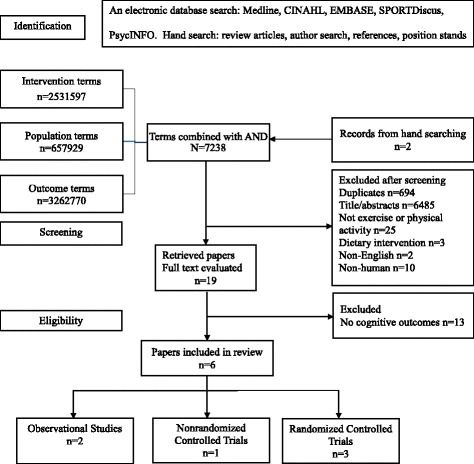
BACKGROUND: Diabetes is an important risk factor for cognitive impairment. Although some studies suggest that physical exercise can minimize age-related cognitive declines or improve brain morphology or function, benefits in diabetes or impaired glucose tolerance are unclear. Therefore, our aim was to evaluate the efficacy of exercise or physical activity on cognition in adults with type 2 diabetes, insulin resistance or impaired glucose tolerance. METHODS: An electronic search for studies published from the earliest record until February 2017 was conducted using Medline, EMBASE, SPORTDiscus, CINAHL, and PsycINFO. Any experimental or observational study designs were included, as long as they were conducted in individuals of any age with type 2 diabetes, insulin resistance or impaired glucose tolerance, and they directly examined exercise/physical activity effects on cognitive outcomes or the relationship between changes in cognition and changes in either insulin resistance and glucose homeostasis. Study quality was assessed using the PEDro scale; data on participant and intervention characteristics and outcomes were extracted. RESULTS: Six studies enrolling 2289 participants met the eligibility criteria. Quality was modest and effect sizes variable and mostly small or negligible. Overall, four of the six studies (67%) reported significant benefits of greater exercise/physical activity participation for some aspects of cognition, but only 26% of cognitive outcomes were significant across all trials. Clinical improvements in insulin resistance/glucose homeostasis were related to improvements in cognitive function in three studies. Overall results were inconsistent, with benefits varying across exercise types and cognitive domains. CONCLUSIONS: Literature does not provide evidence that physical activity or exercise interventions contribute to a better cognitive function in patients with type 2 diabetes or impaired glucose tolerance. Large-scale, long-term, robust randomized controlled trials are required to determine if exercise improves cognition in this high-risk cohort, and to investigate putative mechanistic links between cognition, body composition, metabolism, and inflammation in diabetes and related metabolic syndromes.
Overview
The claims and statistics of this paper haven’t been checked yet.
Free: it reads the open-access text and checks the first 5 claims that cite a source we can check. Create a free account to check every claim.
Integrity signals
Registry
Cites
Statistics
Figures
Verification
Claims the paper makes
The claims and statistics of this paper haven’t been checked yet.
Free: it reads the open-access text and checks the first 5 claims that cite a source we can check. Create a free account to check every claim.
Claims other papers make about this one
Each is checked against this paper’s own text: does it say what the citing paper says it does?
In the citing paper
“The effects on muscle mass are distinct from those of aerobic exercise and are essential for preventing dementia in older adults with diabetes, although more evidence is needed [396].”
From Global consensus on optimal exercise recommendations for enhancing healthy longevity in older adults (ICFSR) (2025) · cites this paper as [396]
Self-check
Percentages, sums and reported differences re-computed from the paper’s own numbers.
The self-check needs the paper’s full text.
Citations
Cites
Preferred Reporting Items for Systematic Reviews and Meta-Analyses: the PRISMA statement
Moher, D., Liberati, A., Tetzlaff, J., Altman, D. G., & for the PRISMA Group (2009) · BMJ · doi:10.1136/bmj.b2535 · Cited by 83,823
Preferred reporting items for systematic reviews and meta-analyses: the PRISMA Statement.
(2009) · PubMed Central · Cited by 44,859
Cohen, J. (1992) · Psychological Bulletin · doi:10.1037//0033-2909.112.1.155 · Cited by 8,771
Global estimates of the prevalence of diabetes for 2010 and 2030
Shaw, J. E., Sicree, R. A., & Zimmet, P. Z. (2010) · Diabetes Research and Clinical Practice · doi:10.1016/j.diabres.2009.10.007 · Cited by 7,216
Exercise and Physical Activity for Older Adults
Chodzko-Zajko, W. J., Proctor, D. N., Fiatarone Singh, M. A., Minson, C. T., Nigg, C. R., Salem, G. J., & Skinner, J. S. (2009) · Medicine & Science in Sports & Exercise · doi:10.1249/mss.0b013e3181a0c95c · Cited by 5,153
Reliability of the PEDro Scale for Rating Quality of Randomized Controlled Trials
Maher, C. G., Sherrington, C., Herbert, R. D., Moseley, A. M., & Elkins, M. (2003) · Physical Therapy · doi:10.1093/ptj/83.8.713 · Cited by 4,808 · cited 1×
“Physiotherapy Evidence Database scale (PEDro) [32].”
Fitness Effects on the Cognitive Function of Older Adults: A Meta-Analytic Study
Colcombe, S., & Kramer, A. F. (2003) · Psychological Science · doi:10.1111/1467-9280.t01-1-01430 · Cited by 3,782 · cited 1×
“Theoretically, it would seem intuitive that halting the neuropathological changes in the brain at an early stage might be most beneficial, however, literature reviews in dementia [14] actually show that the effect size of exercise on cognition is greater in those with cognitive impairment and/or dementia than it is in…”
BackgroundExercise: a behavioral intervention to enhance brain health and plasticity
Cotman, C. (2002) · Trends in Neurosciences · doi:10.1016/s0166-2236(02)02143-4 · Cited by 2,739 · cited 1×
“Memory tasks are supported by structural plasticity in the hippocampus [56] which has been observed after aerobic voluntary wheel running in rodents.”
BackgroundMorris, S. B., & DeShon, R. P. (2002) · Psychological Methods · doi:10.1037/1082-989x.7.1.105 · Cited by 2,502 · cited 1×
“Relative effect size (ES) (mean change Treatment – mean change Control) ÷ Pooled baseline SD was calculated for controlled trials where possible [33].”
MethodClassification and Diagnosis of Diabetes
Fajans, S. S. (1990) · Medical Entomology and Zoology · Cited by 2,359
Exercise builds brain health: key roles of growth factor cascades and inflammation
Cotman, C. W., Berchtold, N. C., & Christie, L.-A. (2007) · Trends in Neurosciences · doi:10.1016/j.tins.2007.06.011 · Cited by 2,268 · cited 4×
“Specifically, PRT can increase IGF-1 levels, which may lead to improved neurogenesis and vessel remodeling in the brain [70].”
BackgroundInfluentialAerobic Exercise Training Increases Brain Volume in Aging Humans
Colcombe, S. J., Erickson, K. I., Scalf, P. E., Kim, J. S., Prakash, R., McAuley, E., Elavsky, S., Marquez, D. X., Hu, L., & Kramer, A. F. (2006) · The Journals of Gerontology Series A: Biological Sciences and Medical Sciences · doi:10.1093/gerona/61.11.1166 · Cited by 2,134 · cited 1×
“There is evidence from crosssectional and prospective brain imaging studies to suggest that aerobic exercise may reduce brain atrophy in older adults, changes that are most striking for brain regions that support executive control processes and memory [17, 20].”
BackgroundGlobal Prevalence of Diabetes: Estimates for the Year 2000 and Projections for 2030
Rathmann, W., & Giani, G. (2004) · Diabetes Care · doi:10.2337/diacare.27.10.2568 · Cited by 1,994
The Diabetes Prevention Program (DPP)
The Diabetes Prevention Program (DPP) Research Group (2002) · Diabetes Care · doi:10.2337/diacare.25.12.2165 · Cited by 1,938
(2) Classification and diagnosis of diabetes
American Diabetes Association (2015) · Diabetes Care · doi:10.2337/dc15-s005 · Cited by 1,841
Smith, P. J., Blumenthal, J. A., Hoffman, B. M., Cooper, H., Strauman, T. A., Welsh-Bohmer, K., Browndyke, J. N., & Sherwood, A. (2010) · Psychosomatic Medicine · doi:10.1097/psy.0b013e3181d14633 · Cited by 1,714
Cardiovascular fitness, cortical plasticity, and aging
Colcombe, S. J., Kramer, A. F., Erickson, K. I., Scalf, P., McAuley, E., Cohen, N. J., Webb, A., Jerome, G. J., Marquez, D. X., & Elavsky, S. (2004) · Proceedings of the National Academy of Sciences · doi:10.1073/pnas.0400266101 · Cited by 1,648 · cited 1×
“There is evidence from crosssectional and prospective brain imaging studies to suggest that aerobic exercise may reduce brain atrophy in older adults, changes that are most striking for brain regions that support executive control processes and memory [17, 20].”
BackgroundLarson, E. B., Wang, L., Bowen, J. D., McCormick, W. C., Teri, L., Crane, P., & Kukull, W. (2006) · Annals of Internal Medicine · doi:10.7326/0003-4819-144-2-200601170-00004 · Cited by 1,463 · cited 1×
“Previous reviews have suggested that aerobic exercise and resistance training should form part of any lifestyle intervention aimed at improving the cognitive function and metabolic profile in healthy adults [16, 72].”
BackgroundAngevaren, M., Aufdemkampe, G., Verhaar, H., Aleman, A., & Vanhees, L. (2008) · Cochrane Database of Systematic Reviews · doi:10.1002/14651858.cd005381.pub3 · Cited by 1,130 · cited 1×
“Prior studies in cohorts without diabetes have mainly focused on aerobic exercise and linked it to improved executive function [19, 50, 51].”
BackgroundReproducibility and validity of a self-administered physical activity questionnaire
WOLF, A. M., HUNTER, D. J., COLDITZ, G. A., MANSON, J. E., STAMPFER, M. J., CORSANO, K. A., ROSNER, B., KRISKA, A., & WILLETT, W. C. (1994) · International Journal of Epidemiology · doi:10.1093/ije/23.5.991 · Cited by 1,038 · cited 2×
“prescribed and quantifiable, including selfadministered questionnaires or activity monitors [30, 31].”
BackgroundMethodPhysical activity and risk of neurodegenerative disease: a systematic review of prospective evidence
Hamer, M., & Chida, Y. (2009) · Psychological Medicine · doi:10.1017/s0033291708003681 · Cited by 988 · cited 1×
“Evidence in older people without T2D suggests a small effect in favor of high physical activity for global cognition [57].”
BackgroundPhysical Exercise as a Preventive or Disease-Modifying Treatment of Dementia and Brain Aging
Ahlskog, J. E., Geda, Y. E., Graff-Radford, N. R., & Petersen, R. C. (2011) · Mayo Clinic Proceedings · doi:10.4065/mcp.2011.0252 · Cited by 885 · cited 1×
“Epidemiological evidence consistently links physical exercise with better cognitive performance [13], lower risk for dementia, and reduced pathological changes in the central nervous system [14–16].”
BackgroundKirschbaum, C., Wolf, O. T., May, M., Wippich, W., & Hellhammer, D. H. (1996) · Life Sciences · doi:10.1016/0024-3205(96)00118-x · Cited by 815 · cited 1×
“Third, PRT results in a range of positive benefits for neurobiological outcomes in animal and human studies, such as increased insulin-like growth factor 1 (IGF-1) [18], increased brain-derived neurotrophic factor [64–66], neurogenesis [66], functional plasticity [21], decreased inflammatory cytokines [67, 68], decrea…”
BackgroundExercise, cognition, and the aging brain
Kramer, A. F., Erickson, K. I., & Colcombe, S. J. (2006) · Journal of Applied Physiology · doi:10.1152/japplphysiol.00500.2006 · Cited by 719 · cited 1×
“Prior studies in cohorts without diabetes have mainly focused on aerobic exercise and linked it to improved executive function [19, 50, 51].”
BackgroundCognition and diabetes: a lifespan perspective
Biessels, G. J., Deary, I. J., & Ryan, C. M. (2008) · The Lancet Neurology · doi:10.1016/s1474-4422(08)70021-8 · Cited by 649
The Influence of Exercise on Cognitive Abilities
Gomez‐Pinilla, F., & Hillman, C. (2013) · Comprehensive Physiology · doi:10.1002/cphy.c110063 · Cited by 599
Hippocampal insulin resistance and cognitive dysfunction
Biessels, G. J., & Reagan, L. P. (2015) · Nature Reviews Neuroscience · doi:10.1038/nrn4019 · Cited by 537 · cited 1×
“Given that the adverse effects of hyperinsulinemia on neuronal structures and function can be addressed even after a neurotoxic insult has occurred in animal models [49], there would ap-”
BackgroundMeasurement of physical activity to assess health effects in free-living populations
PAFFENBARGER, R. S., BLAIR, S. N., LEE, I.-M., & HYDE, R. T. (1993) · Medicine & Science in Sports & Exercise · doi:10.1249/00005768-199301000-00010 · Cited by 523 · cited 1×
“prescribed and quantifiable, including selfadministered questionnaires or activity monitors [30, 31].”
BackgroundDiabetes, impaired fasting glucose, and development of cognitive impairment in older women
Yaffe, K., Blackwell, T., Kanaya, A. M., Davidowitz, N., Barrett-Connor, E., & Krueger, K. (2004) · Neurology · doi:10.1212/01.wnl.0000134666.64593.ba · Cited by 520 · cited 1×
“Long term T2D often contributes to numerous harmful consequences for peripheral systems and neurophysiologic and structural changes in the brain that adversely affect cognition [44] and ultimately increase the risk of dementia [46].”
BackgroundCraft, S. (2007) · Current Alzheimer Research · doi:10.2174/156720507780362137 · Cited by 487 · cited 1×
“Resistance training may also improve hypertension, dyslipidemia, insulin and glucose regulation, which are important comorbidities of T2D associated with cognitive impairment [25, 63].”
BackgroundCukierman-Yaffe, T., Gerstein, H. C., Williamson, J. D., Lazar, R. M., Lovato, L., Miller, M. E., Coker, L. H., Murray, A., Sullivan, M. D., Marcovina, S. M., et al. (2009) · Diabetes Care · doi:10.2337/dc08-1153 · Cited by 452 · cited 1×
“Higher levels of glycosylated hemoglobin (HbA1c) have been negatively associated with cognitive performance in middle-aged and older individuals [5, 9].”
BackgroundCognitive function, dementia and type 2 diabetes mellitus in the elderly
Strachan, M. W. J., Reynolds, R. M., Marioni, R. E., & Price, J. F. (2011) · Nature Reviews Endocrinology · doi:10.1038/nrendo.2010.228 · Cited by 404
Spatial memory is improved by aerobic and resistance exercise through divergent molecular mechanisms
Cassilhas, R. C., Lee, K. S., Fernandes, J., Oliveira, M. G. M., Tufik, S., Meeusen, R., & de Mello, M. T. (2012) · Neuroscience · doi:10.1016/j.neuroscience.2011.11.029 · Cited by 394 · cited 1×
“Third, PRT results in a range of positive benefits for neurobiological outcomes in animal and human studies, such as increased insulin-like growth factor 1 (IGF-1) [18], increased brain-derived neurotrophic factor [64–66], neurogenesis [66], functional plasticity [21], decreased inflammatory cytokines [67, 68], decrea…”
BackgroundExercise Enhances and Protects Brain Function
Cotman, C. W., & Engesser-Cesar, C. (2002) · Exercise and Sport Sciences Reviews · doi:10.1097/00003677-200204000-00006 · Cited by 386 · cited 1×
“which may lead to improved neurogenesis and vessel remodeling in the brain [70].”
Background(Pre)diabetes, brain aging, and cognition
S. Roriz-Filho, J., Sá-Roriz, T. M., Rosset, I., Camozzato, A. L., Santos, A. C., Chaves, M. L. F., Moriguti, J. C., & Roriz-Cruz, M. (2009) · Biochimica et Biophysica Acta (BBA) - Molecular Basis of Disease · doi:10.1016/j.bbadis.2008.12.003 · Cited by 386
Nagamatsu, L. S. (2012) · Archives of Internal Medicine · doi:10.1001/archinternmed.2012.379 · Cited by 385 · cited 1×
“Furthermore, regular physical exercise also has potential therapeutic effects on glucose regulation and cardiovascular health, both of which may threaten cognitive integrity when compromised [22, 24, 25].”
BackgroundLiu-Ambrose, T., Nagamatsu, L. S., Voss, M. W., Khan, K. M., & Handy, T. C. (2012) · Neurobiology of Aging · doi:10.1016/j.neurobiolaging.2011.05.010 · Cited by 363 · cited 1×
“Third, PRT results in a range of positive benefits for neurobiological outcomes in animal and human studies, such as increased insulin-like growth factor 1 (IGF-1) [18], increased brain-derived neurotrophic factor [64–66], neurogenesis [66], functional plasticity [21], decreased inflammatory cytokines [67, 68], decrea…”
BackgroundWeinstein, A. M., Voss, M. W., Prakash, R. S., Chaddock, L., Szabo, A., White, S. M., Wojcicki, T. R., Mailey, E., McAuley, E., Kramer, A. F., et al. (2012) · Brain, Behavior, and Immunity · doi:10.1016/j.bbi.2011.11.008 · Cited by 335
Contribution of Vascular Risk Factors to the Progression in Alzheimer Disease
Helzner, E. P., Luchsinger, J. A., Scarmeas, N., Cosentino, S., Brickman, A. M., Glymour, M. M., & Stern, Y. (2009) · Archives of Neurology · doi:10.1001/archneur.66.3.343 · Cited by 332 · cited 2×
“Furthermore, regular physical exercise also has potential therapeutic effects on glucose regulation and cardiovascular health, both of which may threaten cognitive integrity when compromised [22, 24, 25].”
BackgroundSommerfield, A. J., Deary, I. J., & Frier, B. M. (2004) · Diabetes Care · doi:10.2337/diacare.27.10.2335 · Cited by 308 · cited 1×
“Additionally, in older patients withT2D, cognitive deficits in working memory and attention have been observed in the hyperglycemic state during a glucose clamp [10].”
BackgroundBaker, L. D., Frank, L. L., Foster-Schubert, K., Green, P. S., Wilkinson, C. W., McTiernan, A., Cholerton, B. A., Plymate, S. R., Fishel, M. A., Watson, G. S., et al. (2010) · Journal of Alzheimer's Disease · doi:10.3233/jad-2010-100768 · Cited by 293 · cited 15×
“This systematic review identified only 3 RCTs, one NRCT, one cross-sectional and one prospective cohort study of exercise or physical activity exposure in individuals with T2D or IGT or IR investigating the relationship between exercise/physical activity and cognition.”
BackgroundMethodInfluentialPotential roles of insulin and IGF-1 in Alzheimer's disease
Gasparini, L., & Xu, H. (2003) · Trends in Neurosciences · doi:10.1016/s0166-2236(03)00163-2 · Cited by 276
Physical Activity and Incident Cognitive Impairment in Elderly Persons: The INVADE Study
Etgen, T. (2010) · Archives of Internal Medicine · doi:10.1001/archinternmed.2009.498 · Cited by 252
Suzuki, T., Shimada, H., Makizako, H., Doi, T., Yoshida, D., Tsutsumimoto, K., Anan, Y., Uemura, K., Lee, S., & Park, H. (2012) · BMC Neurology · doi:10.1186/1471-2377-12-128 · Cited by 250
Yarrow, J. F., White, L. J., McCoy, S. C., & Borst, S. E. (2010) · Neuroscience Letters · doi:10.1016/j.neulet.2010.05.058 · Cited by 218 · cited 1×
“Third, PRT results in a range of positive benefits for neurobiological outcomes in animal and human studies, such as increased insulin-like growth factor 1 (IGF-1) [18], increased brain-derived neurotrophic factor [64–66], neurogenesis [66], functional plasticity [21], decreased inflammatory cytokines [67, 68], decrea…”
BackgroundMisra, A., Alappan, N. K., Vikram, N. K., Goel, K., Gupta, N., Mittal, K., Bhatt, S., & Luthra, K. (2008) · Diabetes Care · doi:10.2337/dc07-2316 · Cited by 214
Manschot, S. M., Biessels, G. J., de Valk, H., Algra, A., Rutten, G. E. H. M., van der Grond, J., Kappelle, L. J., & on behalf of the Utrecht Diabetic Encephalopathy Study Group (2007) · Diabetologia · doi:10.1007/s00125-007-0792-z · Cited by 198 · cited 1×
“Long term T2D often contributes to numerous harmful consequences for peripheral systems and neurophysiologic and structural changes in the brain that adversely affect cognition [44] and ultimately increase the risk of dementia [46].”
BackgroundParise, G., Phillips, S. M., Kaczor, J. J., & Tarnopolsky, M. A. (2005) · Free Radical Biology and Medicine · doi:10.1016/j.freeradbiomed.2005.03.024 · Cited by 174 · cited 1×
“Third, PRT results in a range of positive benefits for neurobiological outcomes in animal and human studies, such as increased insulin-like growth factor 1 (IGF-1) [18], increased brain-derived neurotrophic factor [64–66], neurogenesis [66], functional plasticity [21], decreased inflammatory cytokines [67, 68], decrea…”
BackgroundCircumscribed cognitive dysfunction in middle-aged adults with type 2 diabetes.
Ryan, C. M., & Geckle, M. O. (2000) · Diabetes Care · doi:10.2337/diacare.23.10.1486 · Cited by 172 · cited 1×
“Higher levels of glycosylated hemoglobin (HbA1c) have been negatively associated with cognitive performance in middle-aged and older individuals [5, 9].”
BackgroundAdiposity, hyperinsulinemia, diabetes and Alzheimer's disease
Luchsinger, J. A. (2008) · European Journal of Pharmacology · doi:10.1016/j.ejphar.2008.02.048 · Cited by 171 · cited 1×
“Cerebral neuropathological changes are believed to begin in the early stages of diabetes, consistent with deficits in cognitive performance for adults with prediabetes as well [47, 48].”
BackgroundFasting insulin and incident dementia in an elderly population of Japanese-American men
Peila, R., Rodriguez, B. L., White, L. R., & Launer, L. J. (2004) · Neurology · doi:10.1212/01.wnl.0000129989.28404.9b · Cited by 152
Ogawa, K., Sanada, K., Machida, S., Okutsu, M., & Suzuki, K. (2010) · Mediators of Inflammation · doi:10.1155/2010/171023 · Cited by 139 · cited 1×
“Third, PRT results in a range of positive benefits for neurobiological outcomes in animal and human studies, such as increased insulin-like growth factor 1 (IGF-1) [18], increased brain-derived neurotrophic factor [64–66], neurogenesis [66], functional plasticity [21], decreased inflammatory cytokines [67, 68], decrea…”
BackgroundIntensity, but not duration, of physical activities is related to cognitive function
Angevaren, M., Vanhees, L., Wendel-Vos, W., Verhaar, H. J. J., Aufdemkampe, G., Aleman, A., & Verschuren, W. M. M. (2007) · European Journal of Cardiovascular Prevention & Rehabilitation · doi:10.1097/hjr.0b013e3282ef995b · Cited by 131 · cited 1×
“0 MET has been linked to a lower rate of global cognitive decline, mild cognitive impairment and AD in older individuals, for example [58].”
BackgroundInsulin dysfunction and Tau pathology
El Khoury, N. B., Gratuze, M., Papon, M.-A., Bretteville, A., & Planel, E. (2014) · Frontiers in Cellular Neuroscience · doi:10.3389/fncel.2014.00022 · Cited by 130 · cited 1×
“It is known that hyperinsulinemia is neurotoxic [71], and thus it is possible that insulin sensitivity and insulin signaling pathway improvements after exercise would favor neurogenesis, and thereby improved cognitive function.”
BackgroundYau, S.-Y., Gil-Mohapel, J., Christie, B. R., & So, K.-F. (2014) · BioMed Research International · doi:10.1155/2014/403120 · Cited by 111 · cited 1×
“Indeed, there are recent reviews of the cognitive benefits of physical activity [26, 27], but there is no systematic review of the effects of exercise on cognitive function in people with T2D, insulin resistance (IR) or impaired glucose tolerance (IGT) to our knowledge.”
BackgroundMild cognitive impairment in type 2 diabetes mellitus and related risk factors: a review
Yuan, X.-Y., & Wang, X. (2017) · Reviews in the Neurosciences · doi:10.1515/revneuro-2017-0016 · Cited by 104
Type 2 diabetes, related conditions, in relation and dementia: An opportunity for prevention?
Luchsinger, J. A. (2010) · Journal of Alzheimer s Disease · doi:10.3233/jad-2010-091687 · Cited by 91
Mavros, Y., Kay, S., Simpson, K. A., Baker, M. K., Wang, Y., Zhao, R. R., Meiklejohn, J., Climstein, M., O'Sullivan, A. J., de Vos, N., et al. (2014) · Journal of Cachexia, Sarcopenia and Muscle · doi:10.1007/s13539-014-0134-1 · Cited by 91
Self-citationIglay, H. B., Thyfault, J. P., Apolzan, J. W., & Campbell, W. W. (2007) · American Journal of Clinical Nutrition · doi:10.1093/ajcn/85.4.1005 · Cited by 84 · cited 1×
“Previous reviews have suggested that aerobic exercise and resistance training should form part of any lifestyle intervention aimed at improving the cognitive function and metabolic profile in healthy adults [16, 72].”
BackgroundType 2 Diabetes and Cognitive Impairment: Contributions From Neuroimaging
Ryan, J. P., Fine, D. F., & Rosano, C. (2014) · Journal of Geriatric Psychiatry and Neurology · doi:10.1177/0891988713516543 · Cited by 80 · cited 1×
“Regular physical exercise participation may offset many of the increased risk factors for cognitive dysfunction frequently associated with diabetes, such as visceral obesity and hypertension [45].”
Resistance exercise improves hippocampus-dependent memory
Cassilhas, R. C., Lee, K. S., Venâncio, D. P., Oliveira, M. G. M., Tufik, S., & de Mello, M. T. (2012) · Brazilian Journal of Medical and Biological Research · doi:10.1590/s0100-879x2012007500138 · Cited by 76
Effects of intensified metabolic control on CNS function in type 2 diabetes
Cooray, G., Nilsson, E. D., Wåhlin, Å., Laukka, E. J., Brismar, K., & Brismar, T. (2010) · Psychoneuroendocrinology · doi:10.1016/j.psyneuen.2010.06.009 · Cited by 72
Colberg, S. R., Somma, C. T., & Sechrist, S. R. (2008) · Journal of the American Medical Directors Association · doi:10.1016/j.jamda.2008.03.014 · Cited by 72 · cited 14×
“One study used modified forms of the MMSE [37], and although MMSE scores were inclusionary criteria for the study, the actual scores (global cognitive scores) were not provided [37].”
BackgroundMethodResultInfluentialEffects of Acute Aerobic Exercise on Executive Function in Older Women.
Peiffer, R., Darby, L. A., Fullenkamp, A. M., & Morgan, A. L. (2015) · Europe PMC (PubMed Central) · Cited by 65
Gregory, S., Parker, B., & Thompson, P. (2012) · Brain Sciences · doi:10.3390/brainsci2040684 · Cited by 62 · cited 1×
“Indeed, there are recent reviews of the cognitive benefits of physical activity [26, 27], but there is no systematic review of the effects of exercise on cognitive function in people with T2D, insulin resistance (IR) or impaired glucose tolerance (IGT) to our knowledge.”
BackgroundZhao, Y. W., Ye, W., Boye, K. S., Holcombe, J. H., Hall, J. A., & Swindle, R. W. (2008) · Journal of Diabetes and its Complications · doi:10.1016/j.jdiacomp.2008.09.001 · Cited by 57 · cited 1×
“tained hyperglycemia [3], and is the leading cause of cardiovascular disease, kidney disease, vision loss, and neuropathy [4].”
BackgroundLehtisalo, J., Lindström, J., Ngandu, T., Kivipelto, M., Ahtiluoto, S., Ilanne-Parikka, P., Keinänen-Kiukaanniemi, S., Eriksson, J. G., Uusitupa, M., Tuomilehto, J., et al. (2016) · The Journal of nutrition, health and aging · doi:10.1007/s12603-015-0565-1 · Cited by 50 · cited 15×
“This systematic review identified only 3 RCTs, one NRCT, one cross-sectional and one prospective cohort study of exercise or physical activity exposure in individuals with T2D or IGT or IR investigating the relationship between exercise/physical activity and cognition.”
BackgroundInfluentialType 2 Diabetes: Endothelial dysfunction and Exercise
Hwang, M.-H., & Kim, S. (2014) · Journal of Exercise Nutrition and Biochemistry · doi:10.5717/jenb.2014.18.3.239 · Cited by 44 · cited 1×
“Increased physical activity has clear beneficial physiological effects for older adults with T2D or glucose intolerance or insulin resistance [11, 12], and more recently has been shown to benefit cognition as well [13–15].”
BackgroundPhysical Activity Levels and Cognition in Women With Type 2 Diabetes
Devore, E. E., Kang, J. H., Okereke, O., & Grodstein, F. (2009) · American Journal of Epidemiology · doi:10.1093/aje/kwp224 · Cited by 40 · cited 12×
“One study used modified forms of the MMSE [37], and although MMSE scores were inclusionary criteria for the study, the actual scores (global cognitive scores) were not provided [37].”
BackgroundMethodResultInfluentialPeake, J. M., Kukuljan, S., Nowson, C. A., Sanders, K. M., & Daly, R. M. (2011) · European Journal of Applied Physiology · doi:10.1007/s00421-011-1942-z · Cited by 36
Yanagawa, M., Umegaki, H., Uno, T., Khookhor, O., Kawano, N., Maeno, H., Yamanouchi, K., & Sato, Y. (2011) · Geriatrics and gerontology international/Geriatrics & gerontology international · doi:10.1111/j.1447-0594.2011.00691.x · Cited by 33 · cited 9×
“This included three RCTs [35, 38, 40], one NRCT [39], one prospective cohort study (which also included a cross-sectional analysis) [37] and one cross-sectional study [36].”
BackgroundMethodResultInfluentialEffects of Exercise and Nutrition on Memory in Japanese Americans With Impaired Glucose Tolerance
Watson, G. S., Reger, M. A., Baker, L. D., McNeely, M. J., Fujimoto, W. Y., Kahn, S. E., Boyko, E. J., Leonetti, D. L., & Craft, S. (2006) · Diabetes Care · doi:10.2337/diacare.29.1.135 · Cited by 31 · cited 15×
“This systematic review identified only 3 RCTs, one NRCT, one cross-sectional and one prospective cohort study of exercise or physical activity exposure in individuals with T2D or IGT or IR investigating the relationship between exercise/physical activity and cognition.”
BackgroundMethodInfluentialDaly, R. M., Miller, E. G., Dunstan, D. W., Kerr, D. A., Solah, V. A., Menzies, D., & Nowson, C. A. (2014) · Trials · doi:10.1186/1745-6215-15-431 · Cited by 25
Xie, C., Wang, X., Zhou, C., Xu, C., & Chang, Y. (2017) · PeerJ · doi:10.7717/peerj.3286 · Cited by 19
Effects of Exercise and Nutrition on Memory in Japanese Americans With Impaired Glucose Tolerance
Watson, G. S., Reger, M. A., Baker, L. D., McNeely, M. J., Fujimoto, W. Y., Kahn, S. E., Boyko, E. J., Leonetti, D. L., & Craft, S. (2006) · Diabetes Care · doi:10.2337/diacare.29.01.06.dc05-1889
Cited by
International exercise recommendations in older adults (ICFSR): Expert consensus guidelines
Izquierdo, M., Merchant, R. A., Morley, J. E., Anker, S. D., Aprahamian, I., Arai, H., Aubertin-Leheudre, M., Bernabei, R., Cadore, E. L., Cesari, M., et al. (2021) · The Journal of nutrition, health and aging · doi:10.1007/s12603-021-1665-8 · Cited by 1,247
Self-citationPhysical Activity, Cognition, and Brain Outcomes: A Review of the 2018 Physical Activity Guidelines
ERICKSON, K. I., HILLMAN, C., STILLMAN, C. M., BALLARD, R. M., BLOODGOOD, B., CONROY, D. E., MACKO, R., MARQUEZ, D. X., PETRUZZELLO, S. J., & POWELL, K. E. (2019) · Medicine & Science in Sports & Exercise · doi:10.1249/mss.0000000000001936 · Cited by 1,214
Type 2 diabetes mellitus in older adults: clinical considerations and management
Bellary, S., Kyrou, I., Brown, J. E., & Bailey, C. J. (2021) · Nature Reviews Endocrinology · doi:10.1038/s41574-021-00512-2 · Cited by 639
Izquierdo, M., de Souto Barreto, P., Arai, H., Bischoff-Ferrari, H. A., Cadore, E. L., Cesari, M., Chen, L.-K., Coen, P. M., Courneya, K. S., Duque, G., et al. (2025) · The Journal of nutrition, health and aging · doi:10.1016/j.jnha.2024.100401 · Cited by 273
Cognitive Aging and the Promise of Physical Activity
Erickson, K. I., Donofry, S. D., Sewell, K. R., Brown, B. M., & Stillman, C. M. (2022) · Annual Review of Clinical Psychology · doi:10.1146/annurev-clinpsy-072720-014213 · Cited by 178
Metadata
- Authors
- Zhao, R. R., O’Sullivan, A. J., & Fiatarone Singh, M. A.
- Affiliations
- The University of Sydney (AU)
- UNSW Sydney (AU)
- Corresponding author
- Zhao, Ren Ru
- Venue
- European Review of Aging and Physical Activity
- Published
- 2018-01-22
- Volume
- 15
- Issue
- 1
- Pages
- 1-1
- ISSN
- 1813-7253 (ISSN-L)
- 1861-6909
- PMC
- PMC5776769
- OpenAlex
- W2793456924
- Semantic Scholar
- 64704a28e4e3efd28ba2395d5ef5412d3e4d6c2f
- Cited by
- 88
- References
- 77
- Citations by year
- 2026: 10 · 2025: 14 · 2024: 12 · 2023: 11 · 2022: 13 · 2021: 9 · 2020: 13 · 2019: 4 · 2018: 2
- FWCI
- 0.92
- Type
- journal article
- Language
- en
- Open access
- gold
- doi.org
- Licence
- cc-by
- Locations
- European Review of Aging and Physical Activity (publishedVersion, cc-by)
- Europe PMC (PubMed Central) (publishedVersion, cc-by)
- PubMed Central (publishedVersion, cc-by)
- PubMed (publishedVersion)
- DOAJ (DOAJ: Directory of Open Access Journals) (submittedVersion, cc-by-sa)
- Topics
- Health Sciences › Medicine › Public Health, Environmental and Occupational Health › Physical Activity and Health
- Health Sciences › Medicine › Psychiatry and Mental health › Dementia and Cognitive Impairment Research
- Health Sciences › Medicine › Endocrinology, Diabetes and Metabolism › Diabetes Management and Research
- Keywords
- physical activity, cognitive function, type 2 diabetes, insulin resistance, impaired glucose tolerance, cognitive impairment, glucose homeostasis, brain health
About these checks
Registry, retraction, Cites and statistics results are computed, not judged, with one exception: a printed reference that no index lists is read once by a model before it counts as a citation error. Claims are extracted by a model and kept only when their quote appears verbatim in the text; each cited source is then checked, with a model’s help, for whether it says what the claim relies on. Those verdicts can be wrong — read the claim’s quote and the cited source before relying on one.
Statistics and arithmetic are recomputed, not judged.
Confidence bands are shown only for fields calibrated on our annotated test set. None is calibrated yet, so no band is shown.
What counts as a claim ›How we measure confidence ›How we check this ›
Are you an author, or do you see a problem with this page? Request a review
Data sources
Bibliographic data: Semantic Scholar, OpenAlex, Crossref.
Contains information from the Semantic Scholar Academic Graph Datasets, made available under the ODC Attribution License (ODC-BY 1.0).
Semantic Scholar’s data is described in: Kinney, R., et al. (2023). The Semantic Scholar Open Data Platform. arXiv:2301.10140.
