

Halloysite Nanotubes Supported Ag and ZnO Nanoparticles with Synergistically Enhanced Antibacterial Activity
Open accessThe DOI matches its Crossref record; 34 of the 34 references it cites were found in a registry or an index; none of the 32 sources its claims cite is checked for support yet.
Abstract
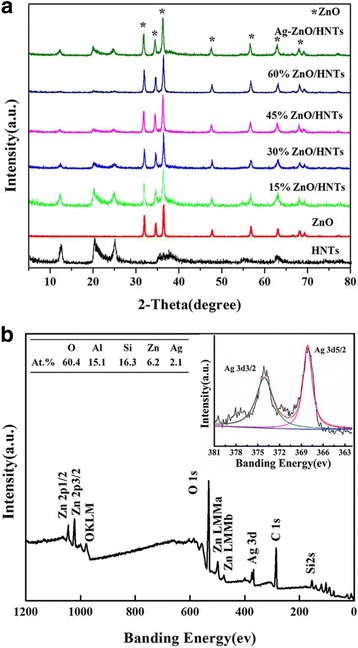
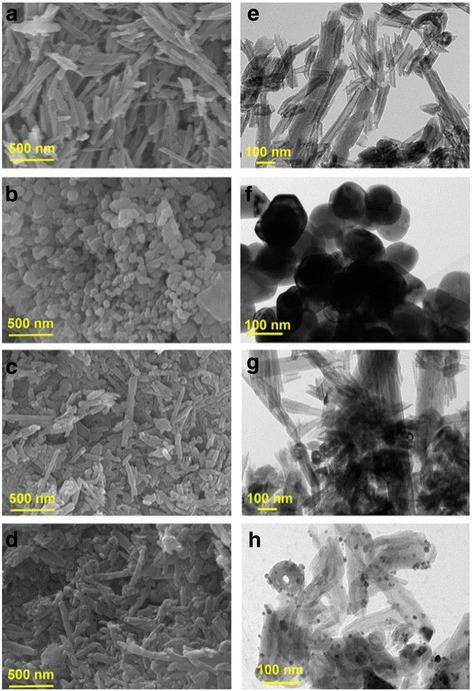
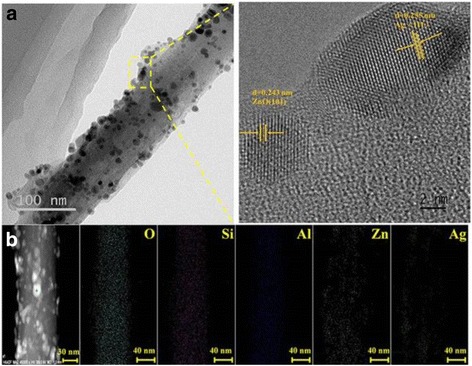
Novel antimicrobial nanocomposite incorporating halloysite nanotubes (HNTs) and silver (Ag) into zinc oxide (ZnO) nanoparticles is prepared by integrating HNTs and decorating Ag nanoparticles. ZnO nanoparticles (ZnO NPs) and Ag nanoparticles (Ag NPs) with a size of about 100 and 8 nm, respectively, are dispersively anchored onto HNTs. The synergistic effects of ZnO NPs, Ag NPs, and HNTs led to the superior antibacterial activity of the Ag-ZnO/HNTs antibacterial nanocomposites. HNTs facilitated the dispersion and stability of ZnO NPs and brought them in close contact with bacteria, while Ag NPs could promote the separation of photogenerated electron-hole pairs and enhanced the antibacterial activity of ZnO NPs. The close contact with cell membrane enabled the nanoparticles to produce the increased concentration of reactive oxygen species and the metal ions to permeate into the cytoplasm, thus induced quick death of bacteria, indicating that Ag-ZnO/HNTs antibacterial nanocomposite is a promising candidate in the antibacterial fields.
Overview
CoChat Summary
TL;DR
Ag-ZnO/HNTs antibacterial nanocomposites were prepared by anchoring Ag and ZnO nanoparticles onto halloysite nanotubes, and they showed the highest antibacterial activity and stability against *E. coli* compared with ZnO and ZnO/HNTs. The proposed synergy is that HNTs disperse/stabilize ZnO and bring it into close contact with bacteria, while Ag promotes photogenerated electron-hole separation and membrane damage.
Key findings
- ZnO nanoparticles of about 100 nm and Ag nanoparticles of about 8 nm were dispersively anchored onto HNTs; Ag loading was 1.31 wt/%. HNTs had an average length of 0.7–1.5 μm, external diameter of 50–75 nm, and internal diameter of 10–30 nm.
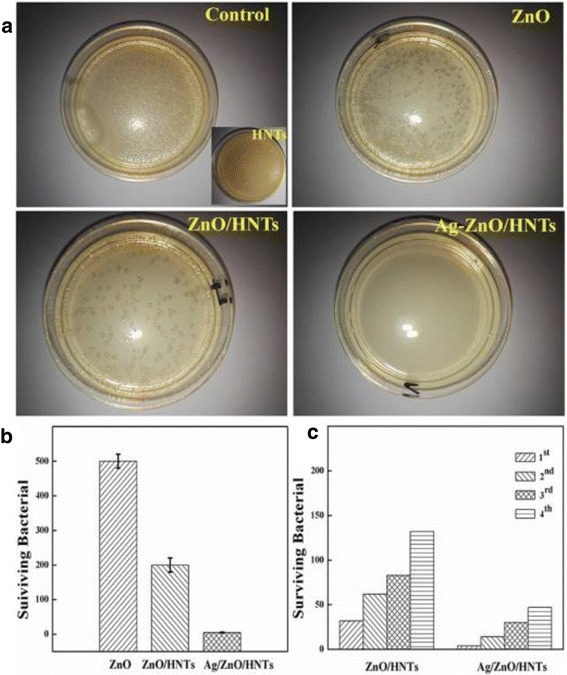
- Among ZnO/HNTs with 15, 30, 45, and 60% ZnO loading, 30% ZnO loading exhibited the best antibacterial efficacy; excessive loading (45 and 60%) caused ZnO agglomeration, while 15% provided insufficient ZnO.
- Pristine HNTs showed no antibacterial activity. ZnO/HNTs inhibited bacterial growth more obviously than equivalent doses of pure ZnO, and Ag-ZnO/HNTs exerted the highest antibacterial activity and stability.
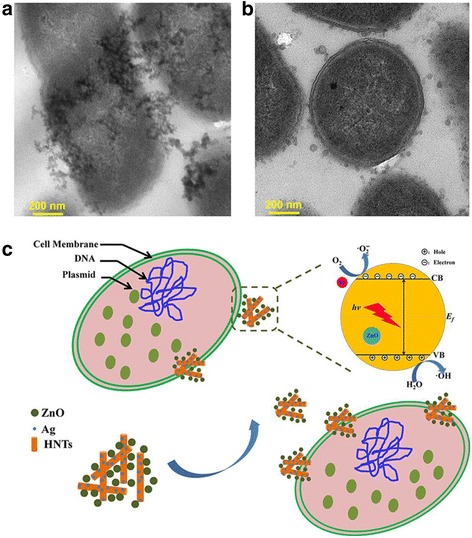
- TEM showed Ag-ZnO/HNTs adsorbed onto the bacterial surface and localized in the periplasmic compartment; the proposed mechanism involves increased ROS production, Ag-promoted separation of photogenerated electron-hole pairs, and direct damage to the bacterial cell membrane.
Methods
- Synthesis: HNTs from Chenxi, Hunan, China were purified; ZnO/HNTs were prepared using HNTs, CO(NH₂)₂, and Zn(NO₃)₂·6H₂O, then calcined at 400 °C for 4 h. Ag-ZnO/HNTs were prepared by dispersing ZnO/HNTs with AgNO₃ and PVP, adding NaBH₄ dropwise, stirring 30 min, washing, and vacuum drying.
- Characterization: XRD, SEM, TEM, HRTEM, XPS, and EDX elemental mapping were used to analyze structure, morphology, and elemental distribution.
- Antibacterial assay: Gram-negative *Escherichia coli* was cultured in LB broth at 37 °C; 10 mg nanomaterial was added to 10 mL LB plus 2 mL *E. coli* for 4 h, then 100 μL samples were plated on LB nutrient agar and colonies were quantified after 18–20 h incubation. TEM was also performed on bacteria exposed to Ag-ZnO/HNTs for 4 h.
Limitations
- The paper does not state limitations.
- Evident from the text: antibacterial testing used only one Gram-negative bacterium, *E. coli*, so activity against other bacteria or Gram-positive strains is not shown.
- Evident from the text: the ROS-mediated mechanism and metal-ion permeation are proposed from TEM and prior literature, but ROS levels and ion concentrations were not directly quantified; Ag XRD peaks were not observed because of the relatively small Ag amount.
Model-written summary. Check it against the paper before relying on it.
Integrity signals
Registry
Cites
Statistics
Figures
Verification
Claims the paper makes
0 Valid · 1 Not valid · 9 Not checked · 19 Own results and interpretations
A result the paper states — it cites no source for it, so there is none to check. The quote shows it is in the paper.
In the paper
“Most significantly, Ag-ZnO/HNTs nanocomposites exerted the highest antibacterial activity and stability than that of the equivalent doses of ZnO/HNTs and pure ZnO, which could attribute to the Ag introduced.”
- Also stated in: § Conclusions · plain
“Ag-ZnO/HNTs nanocomposites showed the highest antibacterial activity and stability.”
§ Halloysite Nanotubes Supported Ag and ZnO Nanoparticles with Synergistically Enhanced Antibacterial Activity > Results and Discussion
plainstates a cause- Asserted: passes — The authors put it forward as true.
- Checkable: passes — It can be checked against evidence.
- Load-bearing: passes — The paper’s conclusions depend on it.
- Based: passes — The paper gives a reason why it holds.
- Also stated in: § Conclusions · plain
A result the paper states — it cites no source for it, so there is none to check. The quote shows it is in the paper.
In the paper
“Thirty percent ZnO loading amount exhibited the best efficacy, which could be explained by the agglomeration of ZnO NPs with excessive ZnO loading (45 and 60%) and the insufficient amount of ZnO antibacterial agents with only 15% ZnO loading.”
§ Halloysite Nanotubes Supported Ag and ZnO Nanoparticles with Synergistically Enhanced Antibacterial Activity > Results and Discussion
plainstates an association- Asserted: passes — The authors put it forward as true.
- Checkable: passes — It can be checked against evidence.
- Load-bearing: passes — The paper’s conclusions depend on it.
- Based: passes — The paper gives a reason why it holds.
A result the paper states — it cites no source for it, so there is none to check. The quote shows it is in the paper.
In the paper
“The outstanding results demonstrated excellent antibacterial properties of Ag-ZnO/HNTs antibacterial nanocomposites.”
§ Halloysite Nanotubes Supported Ag and ZnO Nanoparticles with Synergistically Enhanced Antibacterial Activity > Conclusions
boosted- Asserted: passes — The authors put it forward as true.
- Checkable: passes — It can be checked against evidence.
- Load-bearing: passes — The paper’s conclusions depend on it.
- Based: passes — The paper gives a reason why it holds.
A result the paper states — it cites no source for it, so there is none to check. The quote shows it is in the paper.
In the paper
“The above design revealed that the Ag-ZnO/HNTs antibacterial nanocomposites exert an obvious inhibition to E. coli.”
§ Halloysite Nanotubes Supported Ag and ZnO Nanoparticles with Synergistically Enhanced Antibacterial Activity > Results and Discussion
boostedstates a cause- Asserted: passes — The authors put it forward as true.
- Checkable: passes — It can be checked against evidence.
- Load-bearing: passes — The paper’s conclusions depend on it.
- Based: passes — The paper gives a reason why it holds.
A result the paper reports from its own data — it cites no other source for it, so there is none to check. The quote shows it is in the paper.
In the paper
“The colony forming units (CFU) of both HNTs and the control sample showed normal growth on the agar plates, and the CFU cannot be counted accurately, indicating that pristine HNTs showed no antibacterial activity.”
§ Halloysite Nanotubes Supported Ag and ZnO Nanoparticles with Synergistically Enhanced Antibacterial Activity > Results and Discussion
hedged- Asserted: passes — The authors put it forward as true.
- Checkable: passes — It can be checked against evidence.
- Load-bearing: passes — The paper’s conclusions depend on it.
- Based: passes — The paper gives a reason why it holds.
9 more claims
Create a free account to see all 29 claims and to verify the 32 references still open.
- Probably not a substantial claim. 6
- It may state two separate claims as one. 9
Self-check
Percentages, sums and reported differences re-computed from the paper’s own numbers.
Each contradiction between two passages listed here was confirmed by an independent check.
Rated minor: it would not touch a result — a value no result rests on, a p-value that stays on the same side of the significance level, or a conflict that is clerical, resolved elsewhere in the paper, or outside its own findings.
In the paper
§ Halloysite Nanotubes Supported Ag and ZnO Nanoparticles with Synergistically Enhanced Antibacterial Activity > Background
“given to their natural nanostructures, unique ion exchange capacities, superior hydrophily, and excellent mechanical properties.”
§ Halloysite Nanotubes Supported Ag and ZnO Nanoparticles with Synergistically Enhanced Antibacterial Activity > Background
“Such interest can be hugely attributed to their physicochemical properties: tubular structures, high-specific surface area, length-to-diameter (L/D) ratio [31, 32], and hydrophobicity.”
Citations
Cites
Raghupathi, K. R., Koodali, R. T., & Manna, A. C. (2011) · Langmuir · doi:10.1021/la104825u · Cited by 2,037
Li, Y., Zhang, W., Niu, J., & Chen, Y. (2012) · ACS Nano · doi:10.1021/nn300934k · Cited by 1,660
Halloysite clay minerals — a review
Joussein, E., Petit, S., Churchman, J., Theng, B., Righi, D., & Delvaux, B. (2005) · Clay Minerals · doi:10.1180/0009855054040180 · Cited by 1,412
Enhanced Antibacterial Activity of Nanocrystalline ZnO Due to Increased ROS‐Mediated Cell Injury
Applerot, G., Lipovsky, A., Dror, R., Perkas, N., Nitzan, Y., Lubart, R., & Gedanken, A. (2009) · Advanced Functional Materials · doi:10.1002/adfm.200801081 · Cited by 1,031
Rizzello, L., & Pompa, P. P. (2014) · Chem. Soc. Rev. · doi:10.1039/c3cs60218d · Cited by 822
Antibacterial nano-structured titania coating incorporated with silver nanoparticles
Zhao, L., Wang, H., Huo, K., Cui, L., Zhang, W., Ni, H., Zhang, Y., Wu, Z., & Chu, P. K. (2011) · Biomaterials · doi:10.1016/j.biomaterials.2011.04.040 · Cited by 772
Self-citationZhao, Y., Tian, Y., Cui, Y., Liu, W., Ma, W., & Jiang, X. (2010) · Journal of the American Chemical Society · doi:10.1021/ja1028843 · Cited by 592
Wang, Y.-W., Cao, A., Jiang, Y., Zhang, X., Liu, J.-H., Liu, Y., & Wang, H. (2014) · ACS Applied Materials & Interfaces · doi:10.1021/am4053317 · Cited by 503
Clay: New Opportunities for Tissue Regeneration and Biomaterial Design
Dawson, J. I., & Oreffo, R. O. C. (2013) · Advanced Materials · doi:10.1002/adma.201301034 · Cited by 351
Applications and interfaces of halloysite nanocomposites
Zhang, Y., Tang, A., Yang, H., & Ouyang, J. (2016) · Applied Clay Science · doi:10.1016/j.clay.2015.06.034 · Cited by 263
Self-citation
Cited by
Surface Design for Antibacterial Materials: From Fundamentals to Advanced Strategies
Li, W., Thian, E. S., Wang, M., Wang, Z., & Ren, L. (2021) · Advanced Science · doi:10.1002/advs.202100368 · Cited by 429
Yan, Z., Fu, L., Zuo, X., & Yang, H. (2017) · Applied Catalysis B: Environmental · doi:10.1016/j.apcatb.2017.12.040 · Cited by 305
Self-citationSingh, T. A., Sharma, A., Tejwan, N., Ghosh, N., Das, J., & Sil, P. C. (2021) · Advances in Colloid and Interface Science · doi:10.1016/j.cis.2021.102495 · Cited by 283
Bimetallic Nanoparticles for Antimicrobial Applications
Arora, N., Thangavelu, K., & Karanikolos, G. N. (2020) · Frontiers in Chemistry · doi:10.3389/fchem.2020.00412 · Cited by 268
Tharmavaram, M., Pandey, G., & Rawtani, D. (2018) · Advances in Colloid and Interface Science · doi:10.1016/j.cis.2018.09.001 · Cited by 220
Emerging Nanoclay Composite for Effective Hemostasis
Long, M., Zhang, Y., Huang, P., Chang, S., Hu, Y., Yang, Q., Mao, L., & Yang, H. (2018) · Advanced Functional Materials · doi:10.1002/adfm.201704452 · Cited by 200
Self-citationShankar, S., Kasapis, S., & Rhim, J. (2018) · International Journal of Biological Macromolecules · doi:10.1016/j.ijbiomac.2018.07.026 · Cited by 139
Rao, K. M., Kumar, A., Suneetha, M., & Han, S. S. (2018) · International Journal of Biological Macromolecules · doi:10.1016/j.ijbiomac.2018.01.163 · Cited by 138
Duan, C., Meng, J., Wang, X., Meng, X., Sun, X., Xu, Y., Zhao, W., & Ni, Y. (2018) · Carbohydrate Polymers · doi:10.1016/j.carbpol.2018.03.089 · Cited by 136
Taha, Z. K., Hawar, S. N., & Sulaiman, G. M. (2019) · Biotechnology Letters · doi:10.1007/s10529-019-02699-x · Cited by 129
Saadat, S., Pandey, G., Tharmavaram, M., Braganza, V., & Rawtani, D. (2019) · Advances in Colloid and Interface Science · doi:10.1016/j.cis.2019.102063 · Cited by 128
Singh, A. N., Kajal, S., Kim, J., Jana, A., Kim, J. Y., & Kim, K. S. (2020) · Advanced Energy Materials · doi:10.1002/aenm.202000768 · Cited by 125
Lu, J., Wu, Y., Lin, X., Gao, J. C., Dong, H., Chen, L., Qin, Y., Wang, L., & Yan, Y. (2018) · Journal of Hazardous Materials · doi:10.1016/j.jhazmat.2018.04.014 · Cited by 118
Tubule Nanoclay‐Organic Heterostructures for Biomedical Applications
Liu, M., Fakhrullin, R. F., Novikov, A. A., Panchal, A., & Lvov, Y. M. (2018) · Macromolecular Bioscience · doi:10.1002/mabi.201800419 · Cited by 118
The structural appeal of metal–organic frameworks in antimicrobial applications
Nong, W., Wu, J., Ghiladi, R. A., & Guan, Y. (2021) · Coordination Chemistry Reviews · doi:10.1016/j.ccr.2021.214007 · Cited by 117
Shen, Q., Ouyang, J., Zhang, Y., & Yang, H. (2017) · Applied Clay Science · doi:10.1016/j.clay.2017.05.035 · Cited by 115
Self-citationBarot, T. D., Rawtani, D., & Kulkarni, P. (2020) · Heliyon · doi:10.1016/j.heliyon.2020.e03601 · Cited by 115
3D Printed Polyvinyl Alcohol Tablets with Multiple Release Profiles
Xu, X., Zhao, J., Wang, M., Wang, L., & Yang, J. (2019) · Scientific Reports · doi:10.1038/s41598-019-48921-8 · Cited by 111
Shuai, C., Yuan, X. F., Yang, W., Peng, S., Qian, G., & Zhao, Z. (2021) · Carbohydrate Polymers · doi:10.1016/j.carbpol.2021.117937 · Cited by 109
Antimicrobial Applications of Clay Nanotube-Based Composites
Stavitskaya, A. V., Batasheva, S., Vinokurov, V. A., Fakhrullina, G., Sangarov, V., Lvov, Y. M., & Fakhrullin, R. F. (2019) · Nanomaterials · doi:10.3390/nano9050708 · Cited by 104
Xuemei, S., Wang, H., Liang, H., Meng, N., & Zhou, N. (2024) · Food Hydrocolloids · doi:10.1016/j.foodhyd.2024.110686 · Cited by 91
Huang, X., Zhou, X., Dai, Q., & Qin, Z. (2021) · Nanomaterials · doi:10.3390/nano11123337 · Cited by 90
Yang, Y., Zhang, Z., He, Y., Wang, Z., Zhao, Y., & Sun, L. (2018) · Sensors and Actuators B Chemical · doi:10.1016/j.snb.2018.05.129 · Cited by 89
Wang, L.-F., & Rhim, J. (2017) · Applied Clay Science · doi:10.1016/j.clay.2017.09.023 · Cited by 83
Nanocomposites: suitable alternatives as antimicrobial agents
Matharu, R. K., Ciric, L., & Edirisinghe, M. J. (2018) · Nanotechnology · doi:10.1088/1361-6528/aabbff · Cited by 81
Characterization and synergetic antibacterial properties of ZnO and CeO2 supported by halloysite
Shu, Z., Zhang, Y., Ouyang, J., & Yang, H. (2017) · Applied Surface Science · doi:10.1016/j.apsusc.2017.05.219 · Cited by 78
Self-citationRecent Advances of Halloysite Nanotubes in Biomedical Applications
Jiang, Z., Sun, S., Liu, J., & Sun, X. (2023) · Small · doi:10.1002/smll.202306169 · Cited by 76
3D printed drug loaded nanomaterials for wound healing applications
Yayehrad, A. T., Siraj, E. A., Matsabisa, M. G., & Birhanu, G. (2023) · Regenerative Therapy · doi:10.1016/j.reth.2023.08.007 · Cited by 76
Mohammed, M. K. A. (2020) · Optik · doi:10.1016/j.ijleo.2020.164867 · Cited by 76
Corsaro, C., Neri, G., Santoro, A., & Fazio, E. (2021) · Materials · doi:10.3390/ma15010282 · Cited by 74
Yang, F., & Wang, A. (2022) · Applied Clay Science · doi:10.1016/j.clay.2022.106454 · Cited by 73
Comprehensive review of PEO coatings on titanium alloys for biomedical implants
Cardoso, G. C., Grandini, C. R., & Rau, J. V. (2024) · Journal of Materials Research and Technology · doi:10.1016/j.jmrt.2024.06.068 · Cited by 72
Ehsan, M., Waheed, A., Ullah, A., Kazmi, A., Ali, A., Raja, N. I., Mashwani, Z., Sultana, T., Mustafa, N., Ikram, M., et al. (2022) · BioMed Research International · doi:10.1155/2022/1215183 · Cited by 70
Yang, X., Yu, Q., Gao, W., Tang, X., Yi, H., & Tang, X. (2022) · Ceramics International · doi:10.1016/j.ceramint.2022.08.249 · Cited by 69
Bird nest-like zinc oxide nanostructures for sensitive electrochemical glucose biosensor
Shi, F., Xu, J., Hu, Z., Ren, C., Xue, Y., Zhang, Y., Li, J., Wang, C., & Yang, Z. (2021) · Chinese Chemical Letters · doi:10.1016/j.cclet.2021.03.012 · Cited by 66
Self-citationPatel, S., Konar, M., Sahoo, H., & Hota, G. (2019) · Nanotechnology · doi:10.1088/1361-6528/ab045d · Cited by 64
Fu, L., Fan, D., Zhang, J., Ouyang, P., Fan, J., & Yang, H. (2024) · Applied Clay Science · doi:10.1016/j.clay.2024.107348 · Cited by 63
Self-citationPd Nanoparticles and MOFs Synergistically Hybridized Halloysite Nanotubes for Hydrogen Storage
Jin, J., Ouyang, J., & Yang, H. (2017) · Nanoscale Research Letters · doi:10.1186/s11671-017-2000-5 · Cited by 63
Self-citationFreitas, W. A., Soares, B. E. C. F., Rodrigues, M. S., Trigueiro, P., Honório, L. M. C., Peña-Garcia, R. R., Alcântara, A. C. S., Silva-Filho, E. C., Fonseca, M. G., Furtini, M. B., et al. (2022) · Journal of Photochemistry and Photobiology A Chemistry · doi:10.1016/j.jphotochem.2022.113934 · Cited by 62
Functionally modified halloysite nanotubes for personalized bioapplications
Liao, J., Wang, H., Liu, N., & Yang, H. (2022) · Advances in Colloid and Interface Science · doi:10.1016/j.cis.2022.102812 · Cited by 62
Self-citationAdvances of Anti-Caries Nanomaterials
Chen, H., Gu, L., Liao, B., Zhou, X., Cheng, L., & Ren, B. (2020) · Molecules · doi:10.3390/molecules25215047 · Cited by 60
Lv, Y., Wu, Y., Lü, X., Yu, Y., Fu, S., Yang, L. J., Dong, Z., & Zhang, X. (2019) · Ceramics International · doi:10.1016/j.ceramint.2019.07.265 · Cited by 59
Ouyang, J., Mu, D., Zhang, Y., & Yang, H. (2018) · Minerals · doi:10.3390/min8030108 · Cited by 59
Self-citationSilver-modified ZnO highly UV-photoactive
Jaramillo-Páez, C., Navío, J. A., & Hidalgo, M. C. (2017) · Journal of Photochemistry and Photobiology A Chemistry · doi:10.1016/j.jphotochem.2017.12.044 · Cited by 57
Pugazhendhi, A., Vasantharaj, S., Sathiyavimal, S., Raja, R. K., Karuppusamy, I., Narayanan, M., Kandasamy, S., & Brindhadevi, K. (2021) · Surface and Coatings Technology · doi:10.1016/j.surfcoat.2021.127739 · Cited by 56
Cytocompatibility and cellular uptake of alkylsilane-modified hydrophobic halloysite nanotubes
Rozhina, E. V., Panchal, A., Akhatova, F. S., Lvov, Y. M., & Fakhrullin, R. F. (2019) · Applied Clay Science · doi:10.1016/j.clay.2019.105371 · Cited by 56
Fluorescence and Cytotoxicity of Cadmium Sulfide Quantum Dots Stabilized on Clay Nanotubes
Stavitskaya, A. V., Novikov, A. A., Kotelev, M. S., Kopitsyn, D. S., Rozhina, E. V., Ishmukhametov, I., Fakhrullin, R. F., Ivanov, E. V., Lvov, Y. M., & Vinokurov, V. A. (2018) · Nanomaterials · doi:10.3390/nano8060391 · Cited by 55
Zhang, X., Yang, L. J., Lü, X., Lv, Y., Jiang, D., Yu, Y., Peng, Z., & Dong, Z. (2019) · Journal of Alloys and Compounds · doi:10.1016/j.jallcom.2019.151893 · Cited by 55
Giannakas, A. E., Salmas, C. E., Moschovas, D., Baikousi, M., Kollia, E., Tsigkou, V., Karakassides, A., Leontiou, A. A., Kehayias, G., Avgeropoulos, A., et al. (2022) · Nanomaterials · doi:10.3390/nano12111843 · Cited by 55
Zhang, X., Li, C., Yu, Y., 吕学勤, Lv, Y., Jiang, D., Peng, Z., Zhou, J., Zhang, X., Sun, S., et al. (2019) · Ceramics International · doi:10.1016/j.ceramint.2019.06.228 · Cited by 54
Hao, J., Qu, X., Qiu, L., Li, G., Wei, Y. M., Xing, G., Wang, H., Yan, C., Jang, H. S., Cheng, Z., et al. (2018) · Advanced Optical Materials · doi:10.1002/adom.201801323 · Cited by 51
Lv, Y., Sun, S., Zhang, X., Lü, X., & Dong, Z. (2021) · Materials Science and Engineering C · doi:10.1016/j.msec.2021.112487 · Cited by 51
Effect of Basalt Fibers for Reinforcing Resin-Based Brake Composites
Zhao, X., Ouyang, J., Yang, H., & Tan, Q. (2020) · Minerals · doi:10.3390/min10060490 · Cited by 50
Self-citationAbhinayaa, R., Jeevitha, G., Mangalaraj, D., Ponpandian, N., Vidhya, K., & Angayarkanni, J. (2018) · Colloids and Surfaces B Biointerfaces · doi:10.1016/j.colsurfb.2018.05.040 · Cited by 47
Recent developments and application of bimetallic based materials in water purification
Allam, B. K., Musa, N., Debnath, A., Usman, U. L., & Banerjee, S. (2021) · Environmental Challenges · doi:10.1016/j.envc.2021.100405 · Cited by 46
Assembling ZnO and Fe3O4 nanostructures on halloysite nanotubes for anti-bacterial assessments
Jee, S.-C., Kim, M., Shinde, S. K., Ghodake, G. S., Sung, J., & Kadam, A. A. (2020) · Applied Surface Science · doi:10.1016/j.apsusc.2020.145358 · Cited by 45
Yu, N., Peng, H., Qiu, L., Wang, R., Jiang, C., Cai, T., Sun, Y., Li, Y., & Xiong, H. (2019) · International Journal of Biological Macromolecules · doi:10.1016/j.ijbiomac.2019.08.257 · Cited by 44
Nitric oxide releasing halloysite nanotubes for biomedical applications
Ghalei, S., Hopkins, S. P., Douglass, M. E., Garren, M. R. S., Mondal, A., & Handa, H. (2021) · Journal of Colloid and Interface Science · doi:10.1016/j.jcis.2021.01.047 · Cited by 43
Insight into the effect of crystallographic structure on thermal conductivity of kaolinite nanoclay
Li, J., Zuo, X., Zhao, X., Ouyang, J., & Yang, H. (2019) · Applied Clay Science · doi:10.1016/j.clay.2019.03.011 · Cited by 42
Self-citationSubstitutional Doping for Aluminosilicate Mineral and Superior Water Splitting Performance
Zhang, Y., Fu, L., Shu, Z., Yang, H., Tang, A., & Jiang, T. (2017) · Nanoscale Research Letters · doi:10.1186/s11671-017-2192-8 · Cited by 41
Self-citationIntercalation and Exfoliation of Kaolinite with Sodium Dodecyl Sulfate
Zuo, X., Wang, D., Zhang, S., Liu, Q., & Yang, H. (2018) · Minerals · doi:10.3390/min8030112 · Cited by 41
Self-citationGonçalves, R. A., Rossetto, A. L., Nogueira, D. J., Vicentini, D. S., & Matias, W. G. (2018) · Aquatic Toxicology · doi:10.1016/j.aquatox.2018.02.002 · Cited by 40
Lim, K. Y., Chow, W. S., & Pung, S. (2019) · Journal of Polymers and the Environment · doi:10.1007/s10924-019-01464-5 · Cited by 39
Halloysite-TiO2 Nanocomposites for Water Treatment: A Review
Abid, M., Amara, A. B. H., & Bechelany, M. (2023) · Nanomaterials · doi:10.3390/nano13091578 · Cited by 39
Mozia, S. H., Grylewicz, A., Zgrzebnicki, M., Darowna, D., & Czyżewski, A. (2019) · Polymers · doi:10.3390/polym11040671 · Cited by 39
Siafaka, P. I., Okur, M. E., Ayla, Ş., Er, S., Çağlar, E. Ş., & Okur, N. Ü. (2019) · Brazilian Journal of Pharmaceutical Sciences · doi:10.1590/s2175-97902019000118295 · Cited by 38
Wang, Y., Hou, J. S., Huang, Y., & Fu, Y. (2021) · International Journal of Biological Macromolecules · doi:10.1016/j.ijbiomac.2021.11.159 · Cited by 36
Antibacterial nanobiocomposite based on halloysite nanotubes and extracted xylan from bagasse pith
Yousefi, P., Hamedi, S., Garmaroody, E. R., & Koosha, M. (2020) · International Journal of Biological Macromolecules · doi:10.1016/j.ijbiomac.2020.05.209 · Cited by 35
Chen, H., Lu, C. F., & Yang, H. (2020) · Applied Clay Science · doi:10.1016/j.clay.2020.105875 · Cited by 35
Self-citationOuyang, J., Zhao, Z., Yang, H., Zhang, Y., & Tang, A. (2017) · Applied Clay Science · doi:10.1016/j.clay.2017.11.015 · Cited by 35
Self-citationModi, S., Yadav, V. K., Ali, D., Choudhary, N., Alarifi, S. A., Sahoo, D. K., Patel, A., & Fulekar, M. H. (2023) · Water · doi:10.3390/w15223915 · Cited by 34
Dönmez, S., & Keyvan, E. (2023) · Inorganic and Nano-Metal Chemistry · doi:10.1080/24701556.2023.2165687 · Cited by 33
Metal Oxide–Based Nanocomposites as Antimicrobial and Biomedical Agents
Owonubi, S. J., Malima, N. M., & Revaprasadu, N. (2020) · Elsevier eBooks · doi:10.1016/b978-0-12-820054-4.00016-1 · Cited by 33
Lv, Y., Cai, G., Zhang, X., Fu, S., Zhang, E., Yang, L. J., Xiao, J., & Dong, Z. (2020) · Ceramics International · doi:10.1016/j.ceramint.2020.08.089 · Cited by 33
Mokhtar, A., Ahmed, A. B., Asli, B., Boukoussa, B., Hachemaoui, M., Sassi, M., & Abboud, M. (2023) · Minerals · doi:10.3390/min13101268 · Cited by 32
Saedi, S., Shokri, M., Roy, S., & Rhim, J. (2021) · Applied Clay Science · doi:10.1016/j.clay.2021.106170 · Cited by 31
Wang, H., Ma, Y., Qiu, J. S., Wang, J., Zhang, H., Li, Y., & Wang, C. (2021) · ACS Applied Nano Materials · doi:10.1021/acsanm.1c03518 · Cited by 30
Shome, S., Talukdar, A. D., Tewari, S., Choudhury, S., Bhattacharya, M. K., & Upadhyaya, H. (2020) · Biotechnology and Applied Biochemistry · doi:10.1002/bab.1968 · Cited by 29
Kayhan, E. Y., Yildirim, A. E., Koçer, M. B., Uysal, A., & Yılmaz, M. (2023) · International Journal of Biological Macromolecules · doi:10.1016/j.ijbiomac.2023.124426 · Cited by 29
Chen, D. W., Lee, K.-Y., Tsai, M.-H., Lin, T., Chen, C., & Cheng, K. (2019) · Nanomaterials · doi:10.3390/nano9050713 · Cited by 29
Sagbas, S., Sahiner, M., Akçalı, A., & Şahiner, N. (2019) · Journal of Applied Polymer Science · doi:10.1002/app.48352 · Cited by 29
Halloysite-Doped Zinc Oxide for Enhanced Sunscreening Performance
Aguzzi, C., Donnadio, A., Quaglia, G., Latterini, L., Viseras, C., & Ambrogi, V. (2019) · ACS Applied Nano Materials · doi:10.1021/acsanm.9b01482 · Cited by 25
Awad, M. E., López-Galindo, A., Medarević, D. P., Milenković, M., Ibric, S. R., El-Rahmany, M. M., & Iborra, C. V. (2021) · International Journal of Pharmaceutics · doi:10.1016/j.ijpharm.2021.120372 · Cited by 25
Liu, Y., Meng, F., Wang, F., & Liu, L. (2023) · Composites Communications · doi:10.1016/j.coco.2023.101674 · Cited by 25
Choudhary, N., Yadav, V. K., Ali, H., Ali, D., Almutairi, B. O., Cavalu, S. D., & Patel, A. (2023) · Water · doi:10.3390/w15071427 · Cited by 24
Stavitskaya, A. V., Shakhbazova, C., Cherednichenko, Y., Nigamatzyanova, L., Fakhrullina, G., Назимович, Х. Н., Kuralbayeva, G. A., Filimonova, A. V., Vinokurov, V. A., & Fakhrullin, R. F. (2020) · Clay Minerals · doi:10.1180/clm.2020.17 · Cited by 24
Liu, S., Zhang, Q., Yang, H., Mu, D., Pan, A., & Liang, S. (2018) · Minerals · doi:10.3390/min8050180 · Cited by 23
Self-citationJäger, E., Schmidt, J., Pfuch, A., Spange, S., Beier, O., Jäger, N., Jantschner, O., Daniel, R., & Mitterer, C. (2019) · Nanomaterials · doi:10.3390/nano9020255 · Cited by 23
Removal of iodide from water using halloysite/Ag2O composites as efficient adsorbent
Yu, W., Wan, Q., Tan, D., Yang, S., Qin, Z., & Nie, X. (2021) · Applied Clay Science · doi:10.1016/j.clay.2021.106241 · Cited by 23
Metallizing the Surface of Halloysite Nanotubes—A Review
Masoud, A., Alakija, F., Bappy, M. J. P., Mills, P., & Mills, D. K. (2023) · Coatings · doi:10.3390/coatings13030542 · Cited by 22
Yang, W., Wu, K., Liu, X., Jiao, Y., & Zhou, C. (2018) · Materials Science and Engineering C · doi:10.1016/j.msec.2018.07.014 · Cited by 21
Zhou, D., Jiang, D., Jing, H., Yin, C., & Li, C. (2023) · Applied Clay Science · doi:10.1016/j.clay.2023.107240 · Cited by 20
Prokaryotic and eukaryotic toxicity of halloysite decorated with photoactive nanoparticles
Stavitskaya, A. V., Khusnetdenova, E., Vinokurov, V. A., Lvov, Y. M., & Fakhrullin, R. F. (2022) · Chemical Communications · doi:10.1039/d2cc02439j · Cited by 20
Selective Fabrication of Barium Carbonate Nanoparticles in the Lumen of Halloysite Nanotubes
Ouyang, J., Mu, D., Zhang, Y., Yang, H., & Suib, S. L. (2018) · Minerals · doi:10.3390/min8070296 · Cited by 20
Self-citationIsah, M., Asraf, M. H., Malek, N. A. N. N., Jemon, K. B., Sani, N. S., Muhammad, M. S., Abdul‐Wahab, M. F., & Saidin, M. A. R. (2019) · Journal of environmental chemical engineering · doi:10.1016/j.jece.2019.103545 · Cited by 20
Chen, H., Deng, H., Zhong, X., Zhou, H., Zhan, J., & Zhou, X. (2022) · Colloids and Surfaces B Biointerfaces · doi:10.1016/j.colsurfb.2022.112978 · Cited by 19
FDTD simulation of the optical properties for a gold nanoparticle-over-nanosheet hybrid structure
Chen, Y., Wang, J., Xu, T., Liu, M., Liu, J., Huang, H., & Ouyang, F. (2020) · Current Applied Physics · doi:10.1016/j.cap.2019.12.005 · Cited by 19
Du, P., Liu, D., Yuan, P., Deng, L., Wang, S., Zhou, J., & Zhong, X. (2018) · Applied Clay Science · doi:10.1016/j.clay.2018.01.037 · Cited by 18
Wang, D., Bai, J., Hao, M., Liang, J., Fang, B., Wang, Y., Cui, K., & Wang, F. (2022) · CrystEngComm · doi:10.1039/d2ce00830k · Cited by 17
da Silva, M. R. P., Matos, R. S., Monteiro, M. D. S., Filho, H. D. D. F., Ramos, G. Q., Santos, S. B., Andrade, G. S., Andrade, G. R. S., & Almeida, L. E. (2024) · Journal of Nanoparticle Research · doi:10.1007/s11051-024-05973-w · Cited by 16
Metadata
- Authors
- Shu, Z., Zhang, Y., Yang, Q., & Yang, H.
- Affiliations
- Central South University (CN)
- University College London (GB)
- Corresponding author
- Yang, Huaming
- Venue
- Nanoscale Research Letters
- Published
- 2017-02-20
- Volume
- 12
- Issue
- 1
- Pages
- 135-135
- ISSN
- 1556-276X (ISSN-L)
- 1931-7573
- PMC
- PMC5318317
- OpenAlex
- W2590540748
- Semantic Scholar
- 087dee7be4edf3e84021dd9c0dbc4f8bf3c1576e
- Cited by
- 156
- References
- 34
- Citations by year
- 2026: 5 · 2025: 8 · 2024: 14 · 2023: 15 · 2022: 16 · 2021: 20 · 2020: 19 · 2019: 27 · 2018: 20 · 2017: 12
- FWCI
- 6.82
- Type
- journal article
- Language
- en
- Open access
- gold
- doi.org
- Locations
- Nanoscale Research Letters (publishedVersion, cc-by)
- PubMed Central (publishedVersion, cc-by)
- PubMed (publishedVersion)
- DOAJ (DOAJ: Directory of Open Access Journals) (submittedVersion)
- Funders
- National Natural Science Foundation of China (51225403, 41572036)
- Central South University
- China Postdoctoral Science Foundation
- State Key Laboratory of Powder Metallurgy (2015-19)
- Postdoctoral Science Foundation of Central South University (155219)
- National Science Fund for Distinguished Young Scholars (51225403)
- Topics
- Physical Sciences › Materials Science › Materials Chemistry › Nanoparticles: synthesis and applications
- Physical Sciences › Earth and Planetary Sciences › Geochemistry and Petrology › Clay minerals and soil interactions
- Physical Sciences › Energy › Renewable Energy, Sustainability and the Environment › Advanced Photocatalysis Techniques
- Keywords
- halloysite nanotubes, silver nanoparticles, zinc oxide nanoparticles, antibacterial nanocomposites, synergistic antibacterial activity, photogenerated electron-hole separation, reactive oxygen species, metal ion uptake, bacterial membranes
About these checks
Registry, retraction, Cites and statistics results are computed, not judged, with one exception: a printed reference that no index lists is read once by a model before it counts as a citation error. Claims are extracted by a model and kept only when their quote appears verbatim in the text; each cited source is then checked, with a model’s help, for whether it says what the claim relies on. Those verdicts can be wrong — read the claim’s quote and the cited source before relying on one.
A language model drew the claims from the paper on 2026-11-27, under version 3 of the claim definition (model deepseek-v4.1-flash, prompt extract-v3).
A second model labelled each claim on 2026-11-27 (model jev-1.13-20260917, definition revision gold-guideline-v0.2).
Statistics and arithmetic are recomputed, not judged.
Confidence bands are shown only for fields calibrated on our annotated test set. None is calibrated yet, so no band is shown.
What counts as a claim ›How we measure confidence ›How we check this ›
Are you an author, or do you see a problem with this page? Request a review
Data sources
Bibliographic data: Semantic Scholar, OpenAlex, Crossref.
Contains information from the Semantic Scholar Academic Graph Datasets, made available under the ODC Attribution License (ODC-BY 1.0).
Semantic Scholar’s data is described in: Kinney, R., et al. (2023). The Semantic Scholar Open Data Platform. arXiv:2301.10140.
