

Rainfed winter wheat cultivation in the North German Plain will be water limited under climate change until 2070
Open accessThe DOI matches its Crossref record; 18 of the 18 references it cites were found in a registry or an index.
Abstract
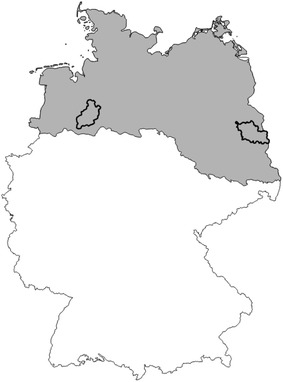
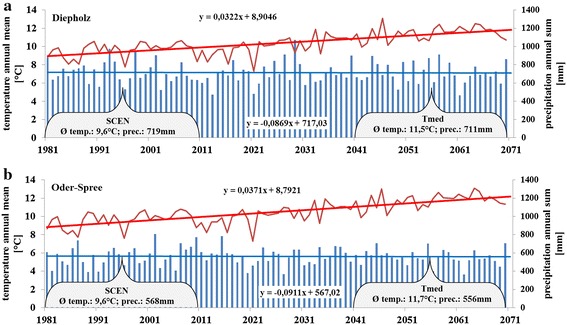
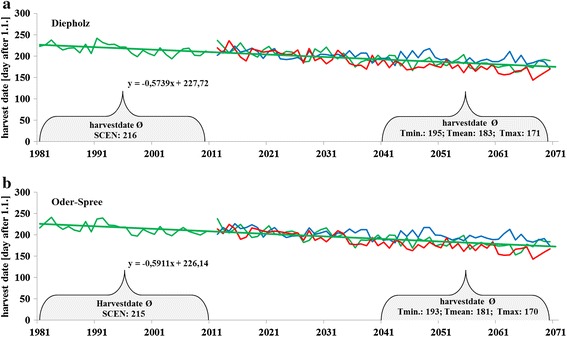
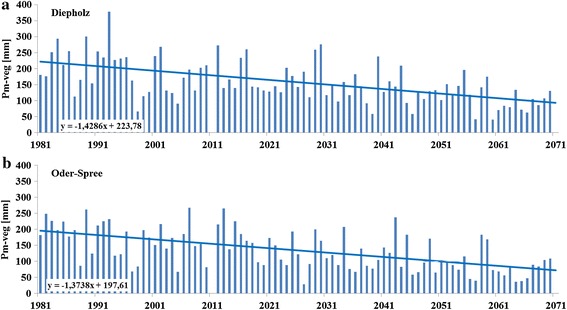
BACKGROUND: We analysed regionalised ECHAM6 climate data for the North German Plains (NGP) in two time slots from 1981 to 2010 and 2041 to 2070. RESULTS: The annual mean temperature will increase significantly (by about 2 °C) that will result in shorter growing periods since the sum of degree days until harvest will be reached earlier. Even if the amount of total precipitation does not change there appears to be a shift towards increased winter precipitation and thus noticeable reduced summer precipitation. CONCLUSIONS: Through the example of winter wheat we show a future limitation of water availability if yields are to be maintained or even increase.
Overview
The claims and statistics of this paper haven’t been checked yet.
Free: it reads the open-access text and checks the first 5 claims that cite a source we can check. Create a free account to check every claim.
Integrity signals
Registry
Cites
Statistics
Figures
Verification
Claims the paper makes
The claims and statistics of this paper haven’t been checked yet.
Free: it reads the open-access text and checks the first 5 claims that cite a source we can check. Create a free account to check every claim.
Claims other papers make about this one
Each is checked against this paper’s own text: does it say what the citing paper says it does?
The cited source says what the claim attributes to it.
In the citing paper
“The results showed that if the yield for winter wheat is to be sustained, water availability must be guaranteed [45].”
From Impact of Climate Change on Crops Adaptation and Strategies to Tackle Its Outcome: A Review (2019) · cites this paper as [45]
Self-check
Percentages, sums and reported differences re-computed from the paper’s own numbers.
The self-check needs the paper’s full text.
Citations
Cites
R: A Language and Environment for Statistical Computing
R Core Team (2025) · doi:10.32614/r.manuals · Cited by 352,181
Ecological responses to recent climate change.
Walther, G.-R., Post, E., Convey, P., Menzel, A., Parmesan, C., Beebee, T. J. C., Fromentin, J.-M., Hoegh-Guldberg, O., & Bairlein, F. (2002) · Nature · doi:10.1038/416389a · Cited by 9,975 · cited 1×
“[19] discovered a comparable trend for frost days when analysing recent data of southern Switzerland.”
BackgroundTemperatures and the growth and development of wheat: a review
Porter, J. R., & Gawith, M. (1999) · European Journal of Agronomy · doi:10.1016/s1161-0301(98)00047-1 · Cited by 1,138 · cited 4×
“Porter and Gawith [15] reported the optimal temperature for vernalisation process of winter wheat is between 3.8 and 6.0 °C, while in this study 2.5 °C [18] was taken to define cold days.”
BackgroundInfluentialResponses of spring phenology to climate change
Badeck, F., Bondeau, A., Böttcher, K., Doktor, D., Lucht, W., Schaber, J., & Sitch, S. (2004) · New Phytologist · doi:10.1111/j.1469-8137.2004.01059.x · Cited by 979 · cited 2×
“Due to temperature as the main driver for physiological processes [1], the harvest date of winter wheat is essentially determined by cumulated temperature (heat sum), expressed in degree days (DD) [8].”
BackgroundCrop and pasture response to climate change
Tubiello, F. N., Soussana, J.-F., & Howden, S. M. (2007) · Proceedings of the National Academy of Sciences · doi:10.1073/pnas.0701728104 · Cited by 814 · cited 1×
“Extreme yield drops in Europe in 2003 (loss of 13 billion Euros) were associated with an environmental temperature increase of nearly 6 °C above the long-term mean and below average precipitation of approximately 300 mm [17].”
BackgroundThe impacts of climate change on ecosystem structure and function
Grimm, N. B., Chapin, F. S., Bierwagen, B., Gonzalez, P., Groffman, P. M., Luo, Y., Melton, F., Nadelhoffer, K., Pairis, A., Raymond, P. A., et al. (2013) · Frontiers in Ecology and the Environment · doi:10.1890/120282 · Cited by 647 · cited 2×
“Shift towards winter rainfall The shift towards winter rainfall with +7 % in DH and +9 % in OS is less pronounced than reported in many studies [9, 11, 12].”
BackgroundResultModelling Potential Crop Growth Processes
Goudriaan, J., & Van Laar, H. H. (1994) · Current Issues in Production Ecology · doi:10.1007/978-94-011-0750-1 · Cited by 630
Modelling Potential Crop Growth Processes: Textbook with Exercises
Goudriaan, J., & van Laar, H. H. (1994) · Socio-Environmental Systems Modeling · Cited by 224
A resampling scheme for regional climate simulations and its performance compared to a dynamical RCM
Orlowsky, B., Gerstengarbe, F.-W., & Werner, P. C. (2008) · Theoretical and Applied Climatology · doi:10.1007/s00704-007-0352-y · Cited by 165 · cited 5×
“The regionalisation of the GCM output was realised by the STAR model.”
InfluentialBoogaard, H., Wolf, J., Supit, I., Niemeyer, S., & van Ittersum, M. (2013) · Field Crops Research · doi:10.1016/j.fcr.2012.11.005 · Cited by 164 · cited 1×
“[2], the dominant crop of Europe in terms of acreage.”
Background
Cited by
Impact of Climate Change on Crops Adaptation and Strategies to Tackle Its Outcome: A Review
Raza, A., Razzaq, A., Mehmood, S. S., Zou, X., Zhang, X., Lv, Y., & Xu, J. (2019) · Plants · doi:10.3390/plants8020034 · Cited by 1,762
“The results showed that if the yield for winter wheat is to be sustained, water availability must be guaranteed [45].”
BackgroundDalhaus, T., Mußhoff, O., & Finger, R. (2018) · Scientific Reports · doi:10.1038/s41598-017-18656-5 · Cited by 152
Dietrich, H., Wolf, T., Kawohl, T., Wehberg, J., Kändler, G., Mette, T., Röder, A., & Böhner, J. (2019) · Annals of Forest Science · doi:10.1007/s13595-018-0788-5 · Cited by 58
Rahman, M. H. U., Raza, A., Ahrends, H. E., Hüging, H., & Gaiser, T. (2021) · Precision Agriculture · doi:10.1007/s11119-021-09868-x · Cited by 48
Redox-induced mobilization of phosphorus in groundwater affected arable soil profiles
Shaheen, S. M., Wang, J., Baumann, K., Wang, S., Leinweber, P., & Rinklebe, J. (2021) · Chemosphere · doi:10.1016/j.chemosphere.2021.129928 · Cited by 32
Speciation and sorption of phosphorus in agricultural soil profiles of redoximorphic character
Baumann, K., Shaheen, S. M., Hu, Y., Gros, P., Heilmann, E., Morshedizad, M., Wang, J., Wang, S., Rinklebe, J., & Leinweber, P. (2020) · Environmental Geochemistry and Health · doi:10.1007/s10653-020-00561-y · Cited by 25
Hao, Z., Geng, X., Wang, F., & Zheng, J. (2018) · International Journal of Climatology · doi:10.1002/joc.5764 · Cited by 24
Wang, G., Mehmood, F., Zain, M., Hamani, A. K. M., Xue, J., Gao, Y., & Duan, A. (2022) · Agronomy · doi:10.3390/agronomy12123184 · Cited by 19
Strer, M., Svoboda, N., & Herrmann, A. (2018) · Environmental Sciences Europe · doi:10.1186/s12302-018-0138-0 · Cited by 18
Self-citationWarming Climate and Elevated CO2 Will Enhance Future Winter Wheat Yields in North China Region
Shoukat, M. R., Cai, D., Shafeeque, M., Rahman, M. H. U., & Yan, H. (2022) · Atmosphere · doi:10.3390/atmos13081275 · Cited by 17
“The rise in temperature and reduction in precipitation increases the evapotranspiration (ET) of the crop and lowers the moisture in the soil, which requires more irrigation water for the crop to maintain the soil moisture at an optimal level [100,101].”
BackgroundBreeding Efforts for Crop Productivity in Abiotic Stress Environment
Choudhary, J. R., Get, S., Tripathi, A., Kaldate, R. C., Rana, M., Mehta, S., Ahlawat, J., Bansal, M., Zaid, A., & Wani, S. H. (2022) · Springer eBooks · doi:10.1007/978-981-16-6361-1_5 · Cited by 16
Kumar, N., & Khurana, S. P. (2023) · Wiley eBooks · doi:10.1002/9781119858553.ch6 · Cited by 11
The link between farmers’ sowing date and herbicide management
Andert, S., Ziesemer, A., & de Mol, F. (2024) · Crop Protection · doi:10.1016/j.cropro.2023.106571 · Cited by 9
Nachhaltiges Landmanagement im Norddeutschen Tiefland
Spellmann, H., Ahrends, B., Albert, M., Andert, S., Barkmann, T., Böcher, M., Breckling, B., Christen, O., Dvorak, J., Eggers, M., et al. (2017) · Beiträge aus der Nordwestdeutschen Forstlichen Versuchsanstalt · doi:10.17875/gup2018-1073 · Cited by 10
Self-citation(2021) · Middle East Journal of Agriculture Research · doi:10.36632/mejar/2021.10.3.59 · Cited by 6
Dalhaus, T. (2018) · Repository for Publications and Research Data (ETH Zurich) · doi:10.3929/ethz-b-000297299 · Cited by 6
Nutrient Management Under Changing Climate
Anwar‐ul‐Haq, M., Mehmood, M. T., Alisha, A., Seed, S., Haider, S., Awais, M. U., Nadeem, M., Mubeen, M., & Iftikhar, I. (2023) · Springer eBooks · doi:10.1007/978-3-031-26692-8_16 · Cited by 4
Impact of microclimatic stressors on carbon dynamics in an agroecosystem in eastern Germany
Sayeed, M., Murkute, C., Ahmed, R., Scholz, S., & Trachte, K. (2025) · Theoretical and Applied Climatology · doi:10.1007/s00704-025-05728-0 · Cited by 3
“Vectors denote the contribution of a single variable to the PC increasing drought intensity during the summer months (Ihinegbu and Ogunwumi 2022 ; Svoboda et al. 2015; Raihan et al. 2022 ).”
Precipitation and yield of spring wheat in the semiarid zone of Orenburg Cis-Urals
Bakirov, F. G., Vasilyeva, T., & Vasilyev, I. (2021) · IOP Conference Series Earth and Environmental Science · doi:10.1088/1755-1315/817/1/012009 · Cited by 2
Stettmer, M., Bernhardt, H., & München, T. U. (2023)
Metadata
- Authors
- Svoboda, N., Strer, M., & Hufnagel, J.
- Affiliations
- Leibniz Centre for Agricultural Landscape Research (DE)
- Corresponding author
- Svoboda, Nikolai
- ORCID
- Svoboda, Nikolai
- Venue
- Environmental Sciences Europe
- Published
- 2015-11-10
- Volume
- 27
- Issue
- 1
- Pages
- 29-29
- ISSN
- 2190-4715 (ISSN-L)
- 2190-4707
- PMC
- PMC5044943
- OpenAlex
- W2161405796
- Cited by
- 17
- References
- 18
- Citations by year
- 2025: 1 · 2024: 1 · 2023: 2 · 2022: 3 · 2021: 4 · 2020: 1 · 2019: 2 · 2018: 3
- FWCI
- 1.11
- Type
- journal article
- Language
- en
- Open access
- gold
- doi.org
- Locations
- Environmental Sciences Europe (publishedVersion, cc-by)
- Europe PMC (PubMed Central) (publishedVersion, cc-by)
- PubMed Central (publishedVersion, cc-by)
- PubMed (publishedVersion)
- Informationszentrum Lebenswissenschaften (ZB MED) (submittedVersion, cc-by)
- Funders
- German Ministry of Research (BMBF) (033L029)
- Topics
- Life Sciences › Agricultural and Biological Sciences › Agronomy and Crop Science › Climate change impacts on agriculture
- Physical Sciences › Environmental Science › Global and Planetary Change › Climate variability and models
- Life Sciences › Agricultural and Biological Sciences › Soil Science › Irrigation Practices and Water Management
- Keywords
- climate change impacts on agriculture, water limitation, North German Plain, growing season, degree-days, precipitation change, crop yield, water availability
About these checks
Registry, retraction, Cites and statistics results are computed, not judged, with one exception: a printed reference that no index lists is read once by a model before it counts as a citation error. Claims are extracted by a model and kept only when their quote appears verbatim in the text; each cited source is then checked, with a model’s help, for whether it says what the claim relies on. Those verdicts can be wrong — read the claim’s quote and the cited source before relying on one.
Statistics and arithmetic are recomputed, not judged.
Confidence bands are shown only for fields calibrated on our annotated test set. None is calibrated yet, so no band is shown.
What counts as a claim ›How we measure confidence ›How we check this ›
Are you an author, or do you see a problem with this page? Request a review
Data sources
Bibliographic data: Semantic Scholar, OpenAlex, Crossref.
Contains information from the Semantic Scholar Academic Graph Datasets, made available under the ODC Attribution License (ODC-BY 1.0).
Semantic Scholar’s data is described in: Kinney, R., et al. (2023). The Semantic Scholar Open Data Platform. arXiv:2301.10140.
