

The DOI matches its Crossref record; 6 of the 6 references it cites were found in a registry or an index.
Mast cell activation may explain many cases of chemical intolerance
Abstract
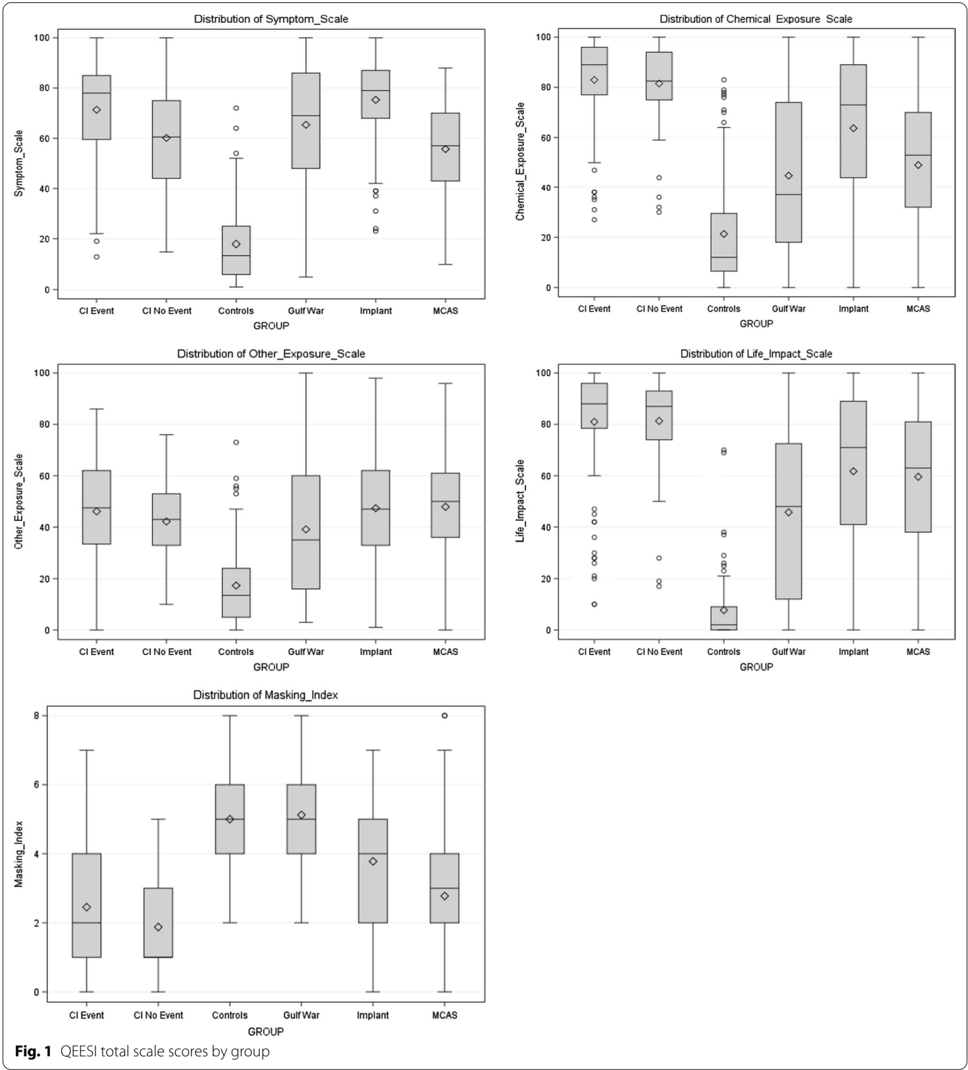
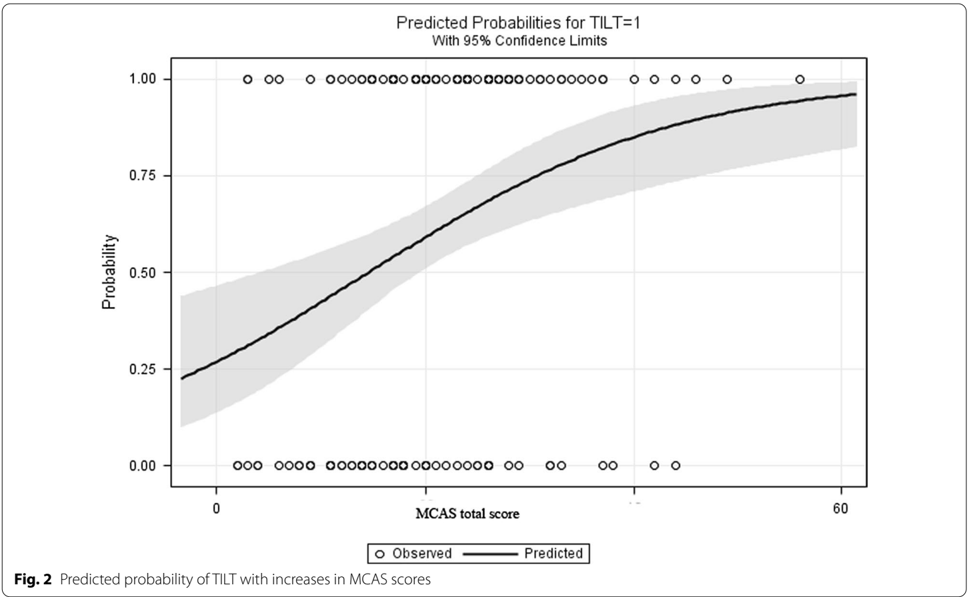
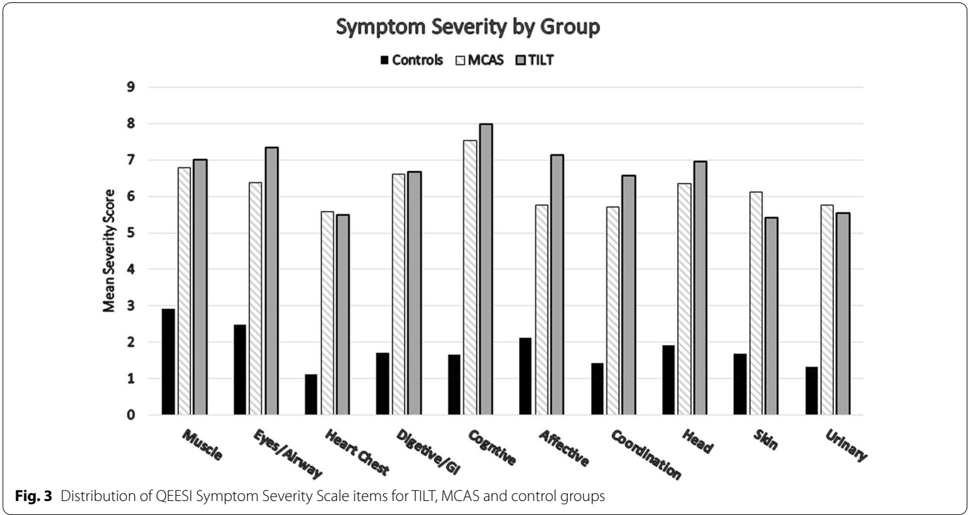
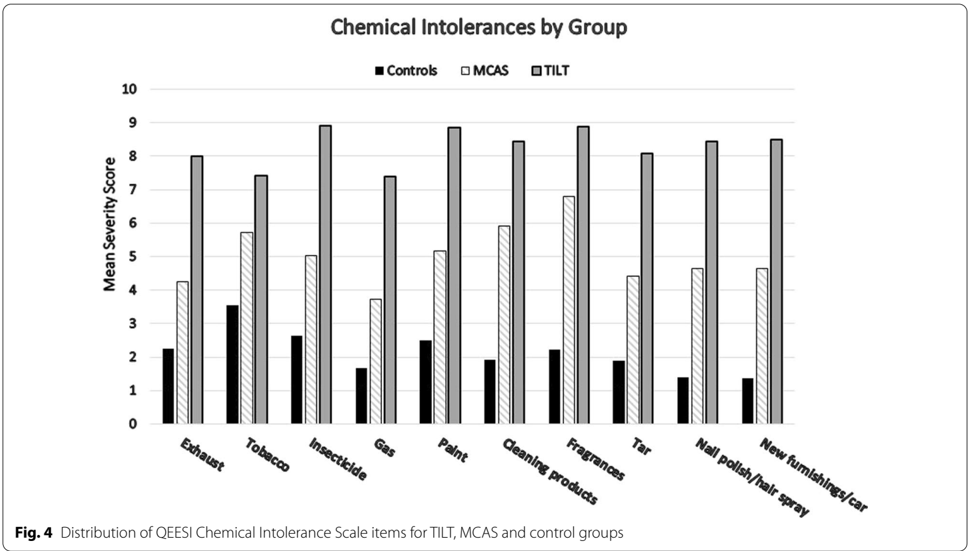
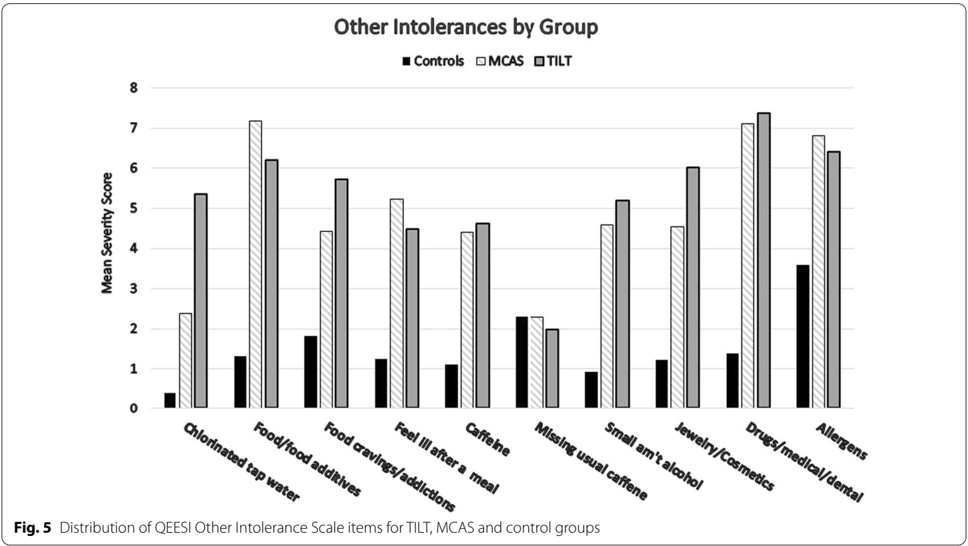
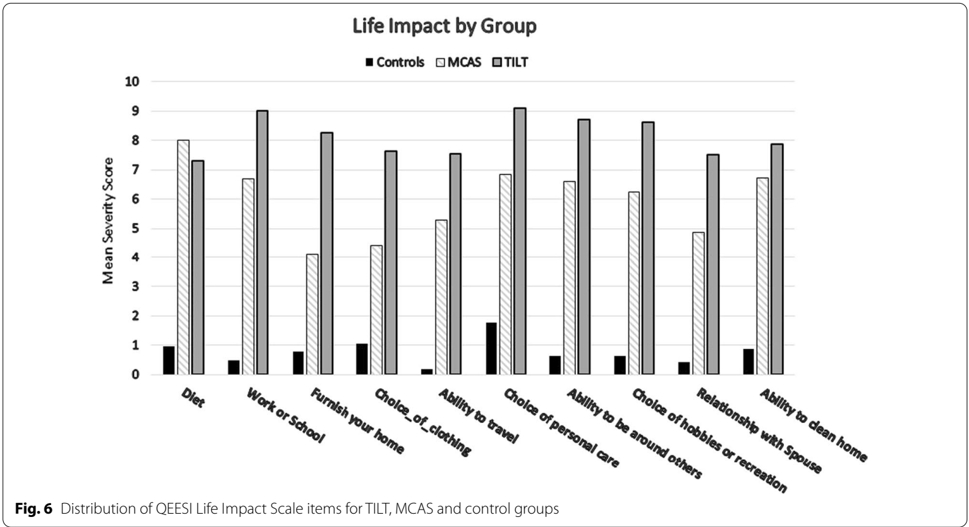
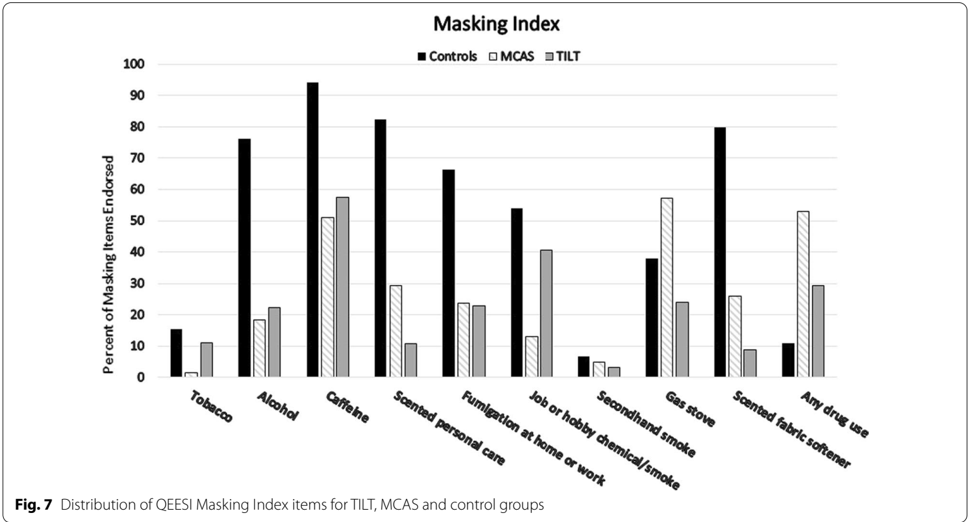
Background: This paper explores the relationship between chemical intolerance (CI) and mast cell activation syndrome (MCAS). Worldwide observations provide evidence for a two-stage disease process called toxicant-induced loss of tolerance (TILT) as a mechanism for CI. TILT is initiated by a major exposure event or a series of lower-level exposures. Subsequently, affected individuals report that common chemical inhalants, foods, and drugs (i.e., various xenobiotics) trigger multi-system symptoms. Purpose: To determine whether MCAS provides a plausible biological mechanism for CI/TILT. Methods: Using the validated Quick Environmental Exposure and Sensitivity Inventory (QEESI), we compared patients diagnosed with MCAS (n = 147) to individuals who reported chemical intolerances (CI/TILT) following various exposures (n = 345) and to healthy controls (n = 76). Using ANOVA, we compared QEESI scores across groups. Clinical scores for the MCAS patient group were used to predict CI status using logistic regression. Results: More than half (59%) of the MCAS group met criteria for CI. A logistic regression model illustrates that as the likelihood of patients having MCAS increased, their likelihood of having CI/TILT similarly increased, to a near-perfect correspondence at the high ends of the QEESI and clinical MCAS scores. Symptom and intolerance patterns were nearly identical for the CI and MCAS groups. Discussion: We present data suggesting that xenobiotic activation of mast cells may underlie CI/TILT. The strikingly similar symptom and intolerance patterns for MCAS and TILT suggest that xenobiotics disrupt mast cells, leading to either or both of these challenging conditions. Faced with patients suffering from complex illness affecting multiple organ systems and fluctuating inflammatory, allergic, and dystrophic symptoms, clinicians can now ask themselves two questions: (1) Could MCAS be at the root of these problems? (2) Could environmental exposures be driving MC activation and mediator release? Increasing our understanding of the connection between TILT and MCs has the potential to expose a new link between environmental exposures and illness, offering new opportunities for improving individual and public health. Conclusion: The close correspondence between QEESI scores and symptom patterns for MCAS and TILT patients supports xenobiotic-driven mast cell activation and mediator release (i.e., MCAS) as a plausible unifying biological mechanism for CI/TILT, with profound implications for medicine, public health, and regulatory toxicology.
Overview
The claims and statistics of this paper haven’t been checked yet.
Run the check — free, no account needed. It reads the open-access text and checks the sources it cites.
Integrity signals
Registry
Cites
Statistics
Figures
Verification
Claims the paper makes
The claims and statistics of this paper haven’t been checked yet.
Run the check — free, no account needed. It reads the open-access text and checks the sources it cites.
Claims other papers make about this one
Each is checked against this paper’s own text: does it say what the citing paper says it does?
In the citing paper
“Symptomatic MCAS episodes appear to be triggered by environmental exposures, for example to psychological stress, 165 sudden temperature changes or odors and chemicals. 166 In addition to triggering symptoms, environmental exposures may also contribute to MCAS etiology: A recent study has explored a possible link between MCAS and (acquired) chemical intolerance, and proposed that xenobiotic”
From Mast cell ontogeny: From fetal development to life‐long health and disease (2023) · cites this paper as [166]
Self-check
Percentages, sums and reported differences re-computed from the paper’s own numbers.
The self-check needs the paper’s full text.
Citations
Cites
Valent, P., Akin, C., Arock, M., Brockow, K., Butterfield, J. H., Carter, M. C., Castells, M., Escribano, L., Hartmann, K., Lieberman, P., et al. (2012) · International Archives of Allergy and Immunology · doi:10.1159/000328760 · Cited by 654
Molderings, G. J., Brettner, S., Homann, J., & Afrin, L. B. (2011) · Journal of Hematology & Oncology · doi:10.1186/1756-8722-4-10 · Cited by 149 · cited 1×
“Patients were assigned a clinical score reflecting their likelihood of having MCAS using a validated MCAS assessment instrument [36, 37].”
MethodDiagnosis of mast cell activation syndrome: a global "consensus-2"
Afrin, L. B., Ackerley, M. B., Bluestein, L. S., Brewer, J. H., Brook, J. B., Buchanan, A. D., Cuni, J. R., Davey, W. P., Dempsey, T. T., Dorff, S. R., et al. (2021) · Diagnosis · doi:10.1515/dx-2020-0005 · Cited by 115
Self-citationCharacterization of Mast Cell Activation Syndrome
Afrin, L. B., Self, S., Menk, J., & Lazarchick, J. (2017) · The American Journal of the Medical Sciences · doi:10.1016/j.amjms.2016.12.013 · Cited by 101
Self-citationMast Cell Activation Syndrome: A Primer for the Gastroenterologist
Weinstock, L. B., Pace, L. A., Rezaie, A., Afrin, L. B., & Molderings, G. J. (2021) · Digestive Diseases and Sciences · doi:10.1007/s10620-020-06264-9 · Cited by 59 · cited 1×
“…opposed to the cellular, immune sys-tem; (2) MCs’ typically tiny numbers and their sparse distribution in most tissues have contributed to their anonymity; and (3) MCs are minimally present in the blood, and even where they are present, it has been a challenge to identify and isolate them [16–20].”
BackgroundSelf-citationMolderings, G. J., Meis, K., Kolck, U. W., Homann, J., & Frieling, T. (2010) · Immunogenetics · doi:10.1007/s00251-010-0474-8 · Cited by 58
Research works printed but not linked: 74
- Steinemann A (2018) National prevalence and effects of multiple chemical sensitivities. J Occup Environ Med 60(3):e152–e156. https://doi.org/10.1097/JOM.0000000000001272 · DOI
- Hojo S, Mizukoshi A, Azuma K, Okumura J, Ishikawa S, Miyata M, Mizuki M, Ogura H, Sakabe K (2018) Survey on changes in subjective symptoms, onset/trigger factors, allergic diseases, and chemical exposures in the past decade of Japanese patients with multiple chemical sensitivity. Int J Hyg Environ Health 221(8):1085–1096. https://doi.org/10.1016/j.ijheh.2018.08.001 · DOI
- Macy E (2018) Chapter 16—Multiple drug intolerance syndrome. In: Khan DA, Banerji A (eds) Drug allergy testing. Elsevier, Amsterdam, pp 165–168, ISBN 9780323485517, · DOI
- Young E, Stoneham MD, Petruckevitch A, Barton J, Rona R (1994) A population study of food intolerance. Lancet 343(8906):1127–1130. https://doi.org/10.1016/S0140-6736(94)90234-8 · DOI
- Rona RJ, Keil T, Summers C, Gislason D, Zuidmeer L, Sodergren E, Sigurdardottir ST, Lindner T, Goldhahn K, Dahlstrom J, McBride D, Madsen C (2007) The prevalence of food allergy: a meta-analysis. J Allergy Clin Immunol 120(3):638–646. https://doi.org/10.1016/j.jaci.2007.05.026 · DOI
- Ashford N, Miller C (1998) Chemical exposures: low levels and high stakes. Van Nostrand Reinhold, New York
- Masri S, Miller CS, Palmer RF, Ashford N (2021) Toxicant-induced loss of tolerance for chemicals, foods, and drugs: assessing patterns of exposure behind a global phenomenon. Environ Sci Eur 33:65. https://doi.org/10.1186/s12302-021-00504-z · DOI
- Moon TC, Befus AD, Kulka M (2014) Mast cell mediators: their differential release and the secretory pathways involved. Front Immunol 5:569. https://doi.org/10.3389/fimmu.2014.00569 · DOI
- Miller CS (1996) Chemical sensitivity: symptom, syndrome or mechanism for disease? Toxicology 111:69–86. https://doi.org/10.1016/0300-483x(96)03393-8 · DOI
- Rossi S, Pitidis A (2018) Multiple chemical sensitivity: review of the state of the art in epidemiology, diagnosis, and future perspectives. J Occup Environ Med 60(2):138–146. https://doi.org/10.1097/JOM.0000000000001215 · DOI
- Dantoft TM, Andersson L, Nordin S, Skovbjerg S (2015) Chemical intolerance. Curr Rheumatol Rev 11(2):167–184. https://doi.org/10.2174/157339711102150702111101 · DOI
- Clauw DJ (2001) Potential mechanisms in chemical intolerance and related conditions. Ann N Y Acad Sci 933:235–253. https://doi.org/10.1111/j.1749-6632.2001.tb05828.x · DOI
- Wong GW, Zhuo L, Kimata K, Lam BK, Satoh N, Stevens RL (2014) Ancient origin of mast cells. Biochem Biophys Res Commun 451(2):314–318. https://doi.org/10.1016/j.bbrc.2014.07.124 · DOI · Paper page
- Crivellato E, Travan L, Ribatti D (2015) The phylogenetic profile of mast cells. Methods Mol Biol 1220:11–27. https://doi.org/10.1007/978-1-4939-1568-2_2 · DOI
- Crivellato E, Ribatti D (2010) The mast cell: an evolutionary perspective. Biol Rev Camb Philos Soc 85(2):347–360. https://doi.org/10.1111/j.1469-185X.2009.00105.x · DOI
- Afrin LB (2016) (2016) Mast cell activation disease and the modern epidemic of chronic inflammatory disease. Transl Res 174:33–59. https://doi.org/10.1016/j.trsl.2016.01.003 · DOI · Paper page
- Krystel-Whittemore M, Dileepan KN, Wood JG (2016) Mast cell: a multi-functional master cell. Front Immunol. https://doi.org/10.3389/fimmu.2015.00620 · DOI
- Afrin LB, Pöhlau D, Raithel M, Haenisch B, Dumoulin FL, Homann J, Mauer UM, Harzer S, Molderings GJ (2015) Mast cell activation disease: an underappreciated cause of neurologic and psychiatric symptoms and diseases. Brain Behav Immun 50:314–332. https://doi.org/10.1016/j.bbi.2015.07.002 · DOI · Paper page
- Frieri M (2018) Mast cell activation syndrome. Clin Rev Allergy Immunol 54(3):353–365. https://doi.org/10.1007/s12016-015-8487-6 · DOI
- Gilfillan AM, Austin SJ, Metcalfe DD (2011) Mast cell biology: introduction and overview. Adv Exp Med Biol 716:2–12. https://doi.org/10.1007/978-1-4419-9533-9_1 · DOI
- Elieh Ali Komi D, Wöhrl S, Bielory L (2020) Mast cell biology at molecular level: a comprehensive review. Clin Rev Allergy Immunol 58(3):342–365. https://doi.org/10.1007/s12016-019-08769-2 · DOI
- Molderings GJ (2015) The genetic basis of mast cell activation disease—looking through a glass darkly. Crit Rev Oncol Hematol 93(2):75–89. https://doi.org/10.1016/j.critrevonc.2014.09.001 · DOI · Paper page
- Velez TE, Bryce PJ, Hulse KE (2018) Mast cell interactions and crosstalk in regulating allergic inflammation. Curr Allergy Asthma Rep 18(5):1–7. https://doi.org/10.1007/s11882-018-0786-6 · DOI
- Kalesnikoff J, Galli SJ (2008) New developments in mast cell biology. Nat Immunol 9(11):1215–1223. https://doi.org/10.1038/ni.f.216 · DOI
- Fujimaki H, Imai T, Befus D (1992) Mast cell response to formaldehyde 2 Induction of stress-like proteins. Int Arch Allergy Immunol 98(4):332–338. https://doi.org/10.1159/000236207 · DOI
- Janiszewski J, Bienenstock J, Blennerhassett MG (1994) Picomolar doses of substance P trigger electrical responses in mast cells without degranulation. Am J Physiol 267:C138–C145 · DOI
- Molderings G, Haenisch B, Brettner S, Homann J, Menzen M, Dumoulin FL, Panse J, Butterfield J, Afrin LB (2016) Pharmacological treatment options for mast cell activation disease. Naunyn-Schmiedeberg’s Arch Pharmacol 389:671–694. https://doi.org/10.1007/s00210-016-1247-1 · DOI
- Wirz S, Molderings J (2017) Practical guide for treatment of pain in patients with systemic mast cell activation. Disease Pain Physician 20:E849–E861
- Caress SM, Steinemann AC (2004) Prevalence of multiple chemical sensitivities: a population-based study in the southeastern United States. Am J Public Health 94(5):746–747. https://doi.org/10.2105/ajph.94.5.746 · DOI
- Azuma K, Uchiyama I, Katoh T, Ogata H, Arashidani K, Kunugita N (2015) Prevalence and characteristics of chemical intolerance: a Japanese population-based study. Arch Environ Occup Health 70:341–353. https://doi.org/10.1080/19338244.2014.926855 · DOI
- Kreutzer R, Neutra RR, Lashuay N (1999) Prevalence of people reporting sensitivities to chemicals in a population-based survey. Am J Epidemiol 150(1):1–12. https://doi.org/10.1093/oxfordjournals.aje.a009908 · DOI
- Afrin LB, Molderings GJ (2014) A concise, practical guide to diagnostic assessment for mast cell activation disease. World J Hematol 3(1):1–17. https://doi.org/10.5315/wjh.v3.i1.1 · DOI
- Miller CS, Prihoda T (1999) The Environmental Exposure and Sensitivity Inventory (EESI): a standardized approach for measuring chemical intolerances for research and clinical applications. Toxicol Ind Health 15:370–385. https://doi.org/10.1177/074823379901500311 · DOI
- Palmer RF, Walker T, Kattari D, Rincon R, Perales RB, Jaén CR, Grimes C, Sundblad DR, Miller CS (2021) Validation of a brief screening instrument for chemical intolerance in a large U.S. National Sample. Int Environ Res Public Health 18:8714. https://doi.org/10.3390/ijerph18168714 · DOI
- Miller CS (1999) Are we on the threshold of a new theory of disease? Toxicant-induced loss of tolerance and its relationship to addiction and abdiction. Toxicol Environ Health 15(3–4):284–294. https://doi.org/10.1177/074823379901500302 · DOI
- SAS Institute Inc (2014) SAS® 9.4 statements: reference, 3rd edn. SAS Institute Inc., Cary, NC
- Bornschein S, Hausteiner C, Zilker T, Forst H (2002) Psychiatric and somatic disorders and multiple chemical sensitivity (MCS) in 264 ‘environmental patients.’ Psychol Med 32(8):1387–1394. https://doi.org/10.1017/S0033291702006554 · DOI
- Steinemann A (2019) International prevalence of chemical sensitivity, co-prevalence with asthma and autism, and effects from fragranced consumer products. Air Qual Atmos Health 12(5):519–527. https://doi.org/10.1007/s11869-019-00672-1 · DOI
- Miller CS (2000) Mechanisms of action of addictive stimuli. Addiction 96:115–139 · DOI
- Miller CS, Mitzel HC (1995) Chemical sensitivity attributed to pesticide exposure versus remodeling. Arch Environ Health 50(2):119–129. https://doi.org/10.1080/00039896.1995.9940889 · DOI
- Gibson PR, Nicole-Marie AE, Ruding LA (2003) Perceived treatment efficacy for conventional and alternative therapies reported by persons with multiple chemical sensitivity. Environ Health Perspect 111:12. https://doi.org/10.1289/ehp.5936 · DOI
- Roberts LJ (1988) Carcinoid syndrome and disorders of systemic mast-cell activation including systemic mastocytosis. Endocrinol Metab Clin North Am 17(2):415–436 · DOI
- Roberts LJ (1984) Recurrent syncope due to systemic mastocytosis. Hypertension 6(2, Pt 1):285–294 · DOI
- Li N, Zhang X, Dong H, Hu Y, Qian Y (2017) Bidirectional relationship of mast cells-neurovascular unit communication in neuroinflammation and its involvement in POCD. Behav Brain Res 322:60–69. https://doi.org/10.1016/j.bbr.2017.01.006 · DOI
- Meggs WJ (2017) The role of neurogenic inflammation in chemical sensitivity. Ecopsychology 9(2):83–89. https://doi.org/10.1089/eco.2016.0045 · DOI
- Meggs WJ (1995) Neurogenic switching: a hypothesis for a mechanism for shifting the site of inflammation in allergy and chemical sensitivity. Environ Health Perspect 103:54–56. https://doi.org/10.1289/ehp.9510354 · DOI
- Dantoft TM, Elberling J, Brix S, Szecsi PB, Vesterhauge S, Skovbjerg S (2014) An elevated pro-inflammatory cytokine profile in multiple chemical sensitivity. Psychoneuroendocrinology 40:140–150. https://doi.org/10.1016/j.psyneuen.2013.11.012 · DOI
- Silverman AJ, Sutherland AK, Wilhelm M, Silver R (2000) Mast cells migrate from blood to brain. J Neurosci 20(1):401–408. https://doi.org/10.1523/JNEUROSCI.20-01-00401.2000 · DOI · Paper page
- Song Y, Lu M, Yuan H, Chen T, Han X (2020) Mast cell-mediated neuroinflammation may have a role in attention deficit hyperactivity disorder. Exp Ther Med 20:714–726. https://doi.org/10.3892/etm.2020.8789 · DOI
- Theoharides TC, Kempuraj D, Tagen M, Conti P, Kalogeromitroset D (2007) Differential release of mast cell mediators and the pathogenesis of inflammation. Immunol Rev 217(1):65–78. https://doi.org/10.1111/j.1600-065X.2007.00519.x · DOI
- Theoharides TC (2017) Neuroendocrinology of mast cells: challenges and controversies. Exp Dermatol 26(9):751–759. https://doi.org/10.1111/exd.13288 · DOI
- Theoharides TC (2020) The impact of psychological stress on mast cells. Ann Allergy Asthma Immunol. https://doi.org/10.1016/j.anai.2020.07.007 · DOI
- Petra AI, Panagiotidou S, Hatziagelaki E, Stewart JM, Conti P, Theoharides TC (2015) Gut-microbiota-brain axis and its effect on neuropsychiatric disorders with suspected immune dysregulation. Clin Ther 37(5):984–995. https://doi.org/10.1016/j.clinthera.2015.04.002 · DOI · Paper page
- De Luca C, Scordo MG, Cesareo E, Pastore S, Mariani S, Maiani G, Stancato A, Loreti B, Valacchi G, Lubrano C, Raskovic D, De Padova L, Genovesi G, Korkina LG (2010) Biological definition of multiple chemical sensitivity from redox state and cytokine profiling and not from polymorphisms of xenobiotic-metabolizing enzymes. Toxicol Appl Pharmacol 248:285–292. https://doi.org/10.1016/j.taap.2010.04.017 · DOI
- Belpomme D, Campagnac C, Irigaray P (2015) Reliable disease biomarkers characterizing and identifying electrohypersensitivity and multiple chemical sensitivity as two etiopathogenic aspects of a unique pathological disorder. Rev Environ Health 30:251–271. https://doi.org/10.1515/reveh-2015-0027 · DOI
- Kimata H (2004) Effect of exposure to volatile organic compounds on plasma levels of neuropeptides, nerve growth factor and histamine in patients with self-reported multiple chemical sensitivity. Int J Hyg Environ Health 207:159–163. https://doi.org/10.1078/1438-4639-00262 · DOI
- Xiong S, Rodgers K (1997) Effects of malathion metabolites on degranulation of and mediator release by human and rat basophilic cells. J Toxicol Environ Health 51(2):159–175. https://doi.org/10.1080/00984109708984019 · DOI
- Forsythe P (2015) The parasympathetic nervous system as a regulator of mast cell function. In: Hughes M, McNagny K (eds) Mast cells. Methods in molecular biology (methods and protocols), vol 1220. Humana Press, New York
- Lindsberg PJ, Strbian D, Karjalainen-Lindsberg ML (2010) Mast cells as early responders in the regulation of acute blood-brain barrier changes after cerebral ischemia and hemorrhage. J Cereb Blood Flow Metab 30:689–702. https://doi.org/10.1038/jcbfm.2009.282 · DOI
- Bunegin L, Mitzel HC, Miller CS, Gelineau JF, Tolstykh GP (2001) Cognitive performance and cerebrohemodynamics associated with the Persian Gulf Syndrome. Toxicol Ind Health 17(4):128–137. https://doi.org/10.1191/0748233701th100oa · DOI
- Medeiros WLG Junior, Bandeira IP, Franzoi AEA, Brandão WN, Santos Durão ACCD, Gonçalves MVM (2019). Mast cells: A key component in the pathogenesis of Neuromyelitis Optica Spectrum Disorder? Immunobiology. 224(5):706–709. https://doi.org/10.1016/j.imbio.2019.05.010 · DOI
- Pang X, Letourneau R, Rozniecki JJ, Wang L, Theoharides TC (1996) Definitive characterization of rat hypothalamic mast cells. Neuroscience 73(3):889–902. https://doi.org/10.1016/0306-4522(95)00606-0 · DOI
- Theoharides TC, Stewart JM, Hatziagelaki E, Kolaitis G (2015) Brain “fog,” inflammation and obesity: key aspects of neuropsychiatric disorders improved by luteolin. Front Neurosci. https://doi.org/10.3389/fnins.2015.00225 · DOI
- Palmer RF, Jaén CR, Perales RB, Rincon R, Forster JN, Miller CS (2020) Three questions for identifying chemically intolerant individuals in clinical and epidemiological populations: The Brief Environmental Exposure and Sensitivity Inventory (BREESI). PLoS ONE. https://doi.org/10.1371/journal.pone.0238296 · DOI
- Hojo S, Sakabe K, Ishikawa S, Miyata M, Kumano H (2009) Evaluation of subjective symptoms of Japanese patients with multiple chemical sensitivity using QEESI©. Environ Health Prevent Med 14:267–275. https://doi.org/10.1007/s12199-009-0095-8 · DOI
- Yun MJ, Kang DM, Lee K-H, Kim YK, Kim JE (2013) Multiple chemical sensitivity caused by exposure to ignition coal fumes: a case report. Ann Occup Environ Med 25:32. https://doi.org/10.1186/2052-4374-25-32 · DOI
- Imai N, Imai Y (2011) Necessity of counseling institutions for sick building syndrome patients. In: Abdul-Wahab SA (ed) Sick building syndrome: in public buildings and workplaces, p 365. Springer, Berlin
- Shaik Y, Caraffa A, Ronconi G, Lessiani G, Conti P (2018) Impact of polyphenols on mast cells with special emphasis on the effect of quercetin and luteolin. Central-Eur J Immunol 43(4):476–481. https://doi.org/10.5114/ceji.2018.81347 · DOI
- Oksaharju A, Kankainen M, Kekkonen RA, Lindstedt KA, Kovanen PT, Korpela R, Miettinen M (2011) Probiotic Lactobacillus rhamnosus downregulates FCER1 and HRH4 expression in human mast cells. World J Gastroenterol 17(6):750–759. https://doi.org/10.3748/wjg.v17.i6.750 · DOI
- Taniguchi T, Wang JK, Spector S (1980) Properties of (3H) diazepam binding to rat peritoneal mast cells. Life Sci 27(2):171–178. https://doi.org/10.1016/0024-3205(80)90460-9 · DOI
- Haenisch B, Huber M, Wilhelm T, Steffens M, Molderings GJ (2013) Investigation into mechanisms mediating the inhibitory effect of 1,4-benzodiazepines on mast cells by gene expression profiling. Life Sci 92(6–7):345–351. https://doi.org/10.1016/j.lfs.2013.01.010 · DOI
- Heilbrun LP, Palmer RF, Jaen CR, Svoboda MD, Miller CS, Perkins J (2015) Maternal chemical and drug intolerances: potential risk factors for autism and attention deficit hyperactivity disorder (ADHD). J Am Board Fam Med 28(4):461–470. https://doi.org/10.3122/jabfm.2015.04.140192 · DOI
- Theoharides TC (2009) Autism spectrum disorders and mastocytosis. Int J Immunopathol Pharmacol 22(4):859–865. https://doi.org/10.1177/039463200902200401 · DOI
- Minton NA, Murray VSG (1988) A review of organophosphate poisoning. Med Toxicol Adverse Drug Exp 3:350–375. https://doi.org/10.1007/BF03259890 · DOI
Metadata
- Authors
- Miller, C. S., Palmer, R. F., Dempsey, T. T., Ashford, N. A., & Afrin, L. B.
- ORCID
- Palmer, Raymond F.
- Venue
- Environmental Sciences Europe
- Published
- 2021-11-17
- Volume
- 33
- Issue
- 1
- ISSN
- 2190-4707
- 2190-4715
- Cited by
- 31
- References
- 6
- Language
- en
- Funders
- Marilyn Brachman Hoffman Foundation Fort Worth TX
About these checks
Registry, retraction, Cites and statistics results are computed, not judged, with one exception: a printed reference that no index lists is read once by a model before it counts as a citation error. Claims are extracted by a model and kept only when their quote appears verbatim in the text; each cited source is then checked, with a model’s help, for whether it says what the claim relies on. Those verdicts can be wrong — read the claim’s quote and the cited source before relying on one.
Statistics and arithmetic are recomputed, not judged.
Confidence bands are shown only for fields calibrated on our annotated test set. None is calibrated yet, so no band is shown.
What counts as a claim ›How we measure confidence ›How we check this ›
Are you an author, or do you see a problem with this page? Request a review
How to cite
Cite CoChat for the checks on this page, and the paper for its own findings.
- This page
- CoChat. (2026). Citation check: Mast cell activation may explain many cases of chemical intolerance. https://app.cochat.ai/papers/10.1186/s12302-021-00570-3
- The paper
- Miller, C. S., Palmer, R. F., Dempsey, T. T., Ashford, N. A., & Afrin, L. B. (2021). Mast cell activation may explain many cases of chemical intolerance. Environmental Sciences Europe. https://doi.org/10.1186/s12302-021-00570-3
