

The DOI matches its Crossref record; 43 of the 43 references it cites were found in a registry or an index; 1 of the 3 sources its claims cite were checked for support.
Vision-based vehicle detection and counting system using deep learning in highway scenes
Open accessAbstract
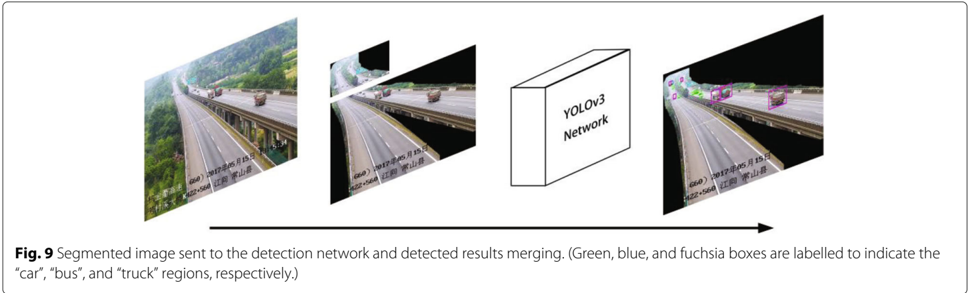
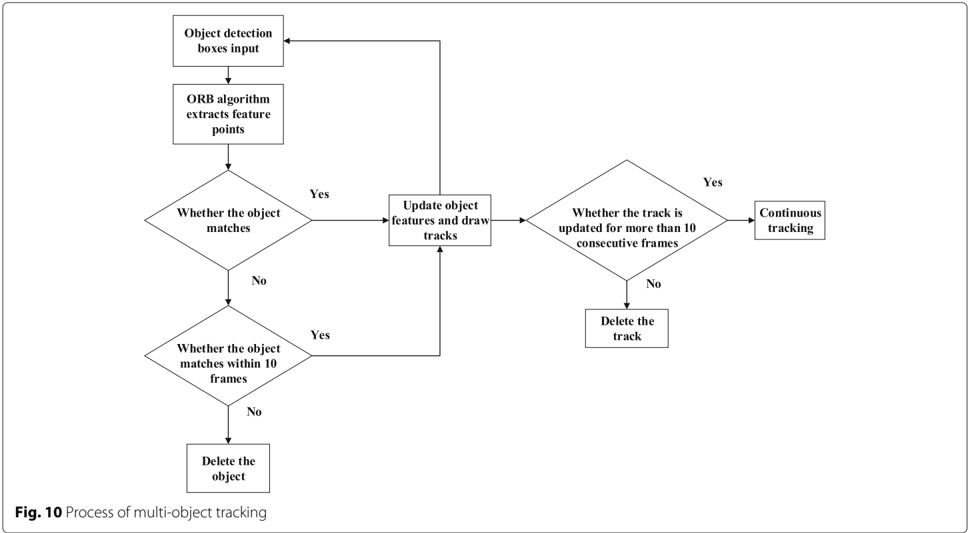
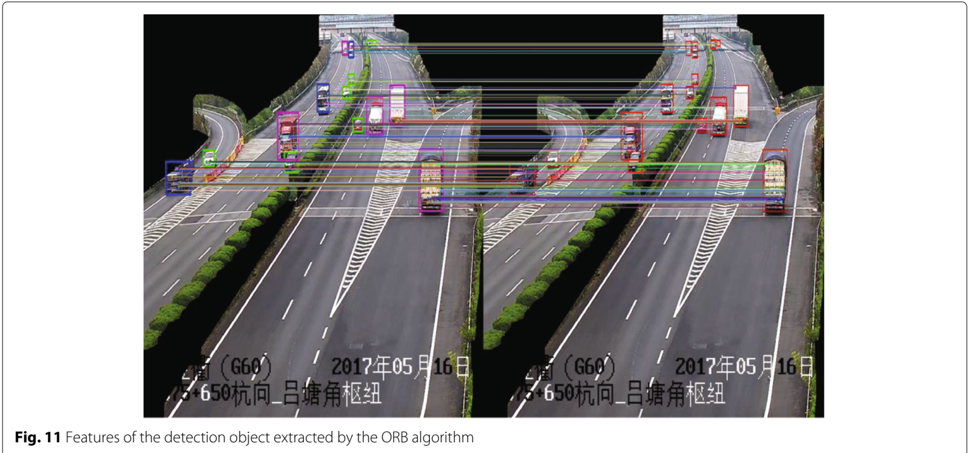
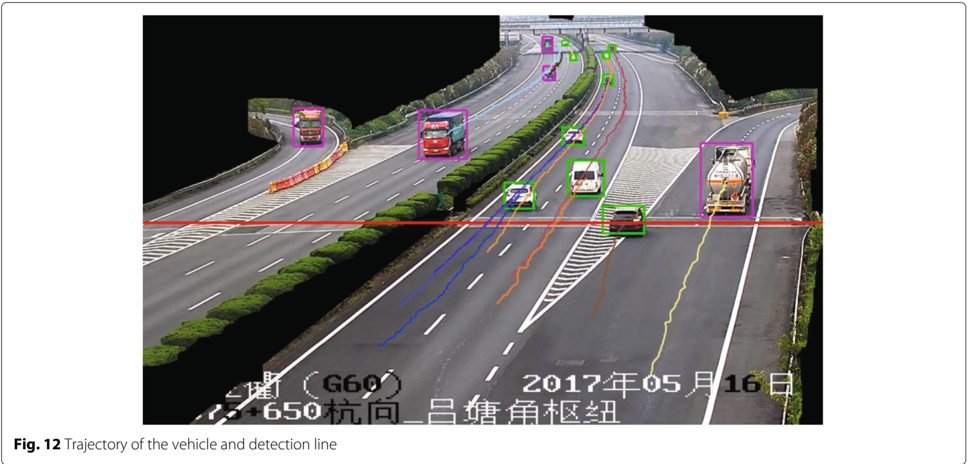
Intelligent vehicle detection and counting are becoming increasingly important in the field of highway management. However, due to the different sizes of vehicles, their detection remains a challenge that directly affects the accuracy of vehicle counts. To address this issue, this paper proposes a vision-based vehicle detection and counting system. A new high definition highway vehicle dataset with a total of 57,290 annotated instances in 11,129 images is published in this study. Compared with the existing public datasets, the proposed dataset contains annotated tiny objects in the image, which provides the complete data foundation for vehicle detection based on deep learning. In the proposed vehicle detection and counting system, the highway road surface in the image is first extracted and divided into a remote area and a proximal area by a newly proposed segmentation method; the method is crucial for improving vehicle detection. Then, the above two areas are placed into the YOLOv3 network to detect the type and location of the vehicle. Finally, the vehicle trajectories are obtained by the ORB algorithm, which can be used to judge the driving direction of the vehicle and obtain the number of different vehicles. Several highway surveillance videos based on different scenes are used to verify the proposed methods. The experimental results verify that using the proposed segmentation method can provide higher detection accuracy, especially for the detection of small vehicle objects. Moreover, the novel strategy described in this article performs notably well in judging driving direction and counting vehicles. This paper has general practical significance for the management and control of highway scenes.
Overview
CoChat Summary
## TL;DR
This paper proposes a highway-surveillance vehicle detection and counting system that combines road-surface segmentation, YOLOv3 detection, and ORB-based multi-object tracking. On the authors’ dataset of 11,129 images with 57,290 annotated instances, the system reports 87.88% mAP and near-real-time processing on tested videos.
## Key findings
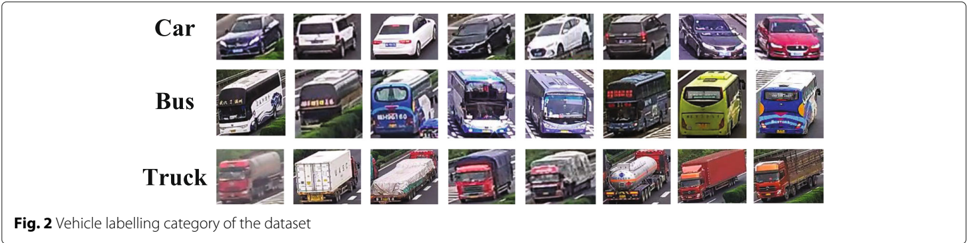
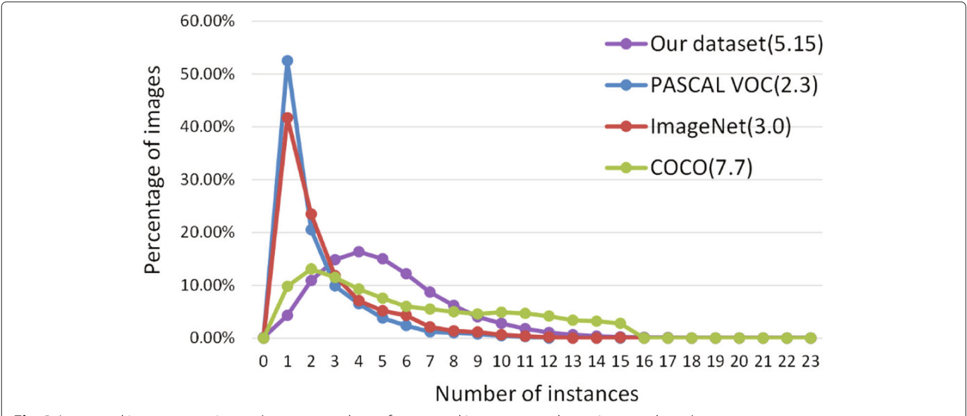
- The paper publishes a new high-definition highway vehicle dataset with 11,129 images and 57,290 annotated instances; the images are 1920 × 1080 RGB and average 5.15 instances per image.
- The proposed detection model achieved 87.88% mAP, with class APs of 86.46% (car), 88.57% (bus), and 88.61% (truck); the paper also reports 71.32% average IoU and 83.46% overall correct rate for object detection.
- For tracking/counting, the paper reports average accuracies of 92.3% for vehicle driving direction and 93.2% for vehicle counting.
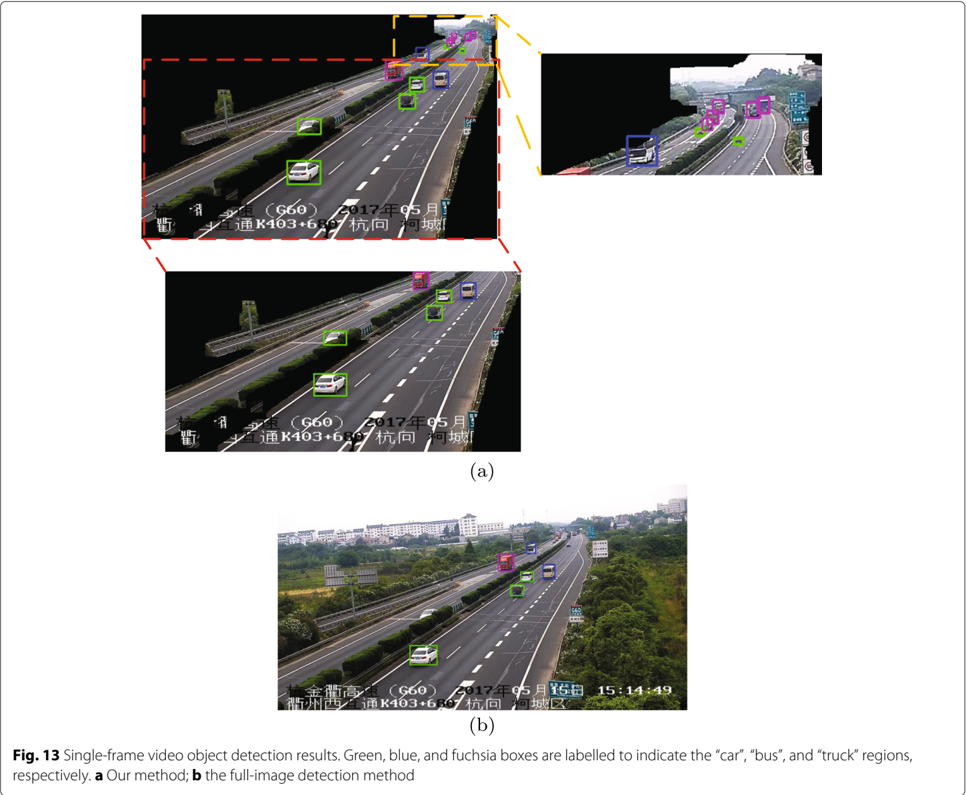
- Compared with full-image detection, the proposed road-surface segmentation approach improved small-object detection; the table reports overall correct rates of 92.14% vs 14.96% in the remote area and 97.82% vs 82.80% in the proximal area, respectively.
## Methods
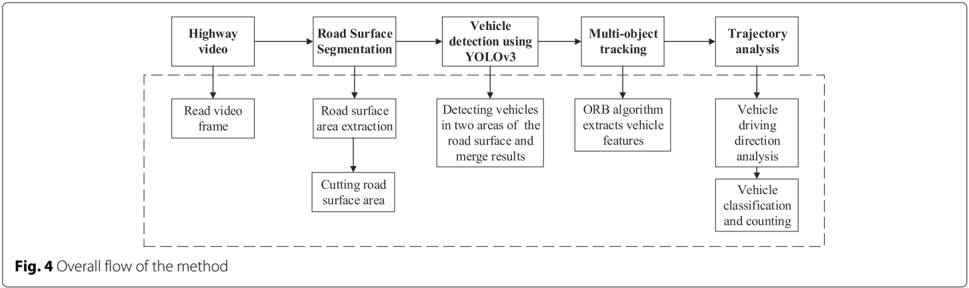
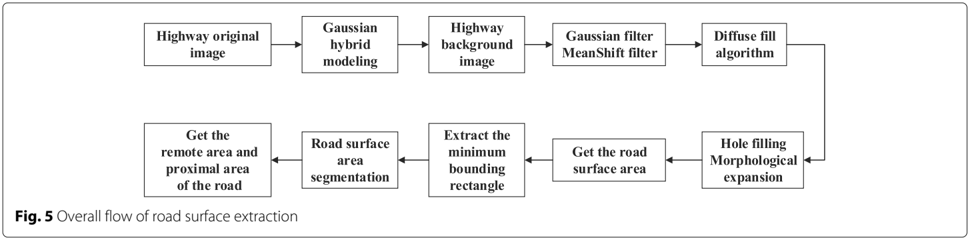
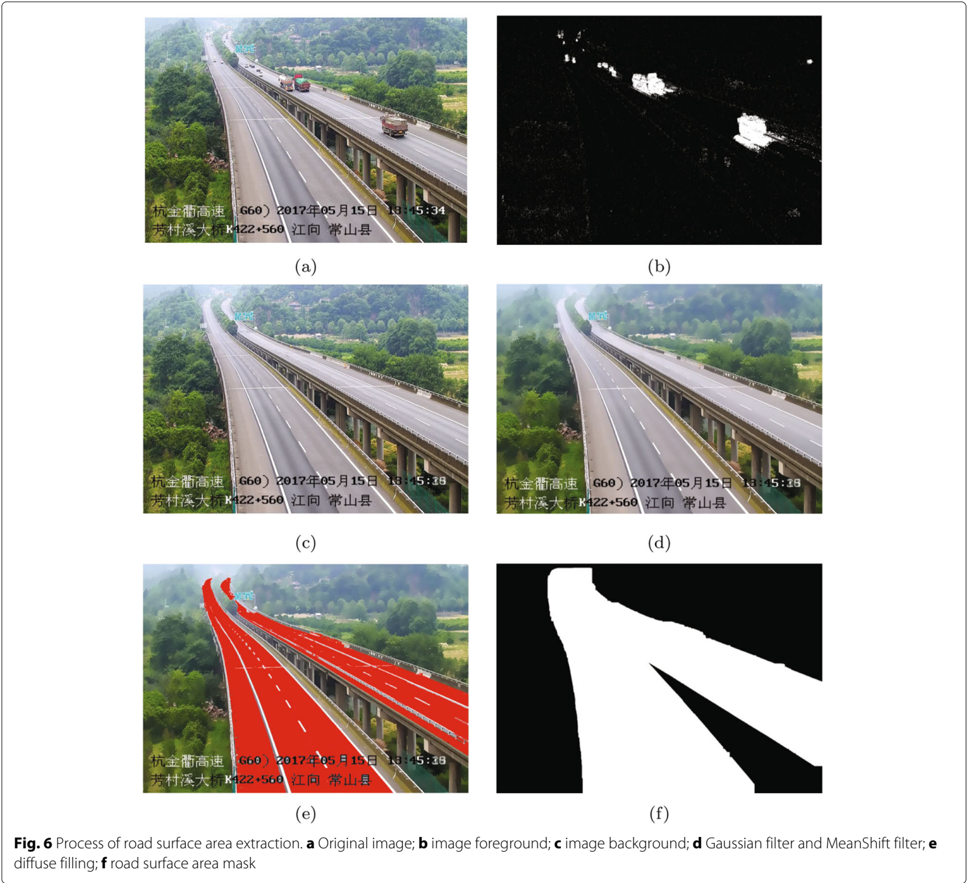
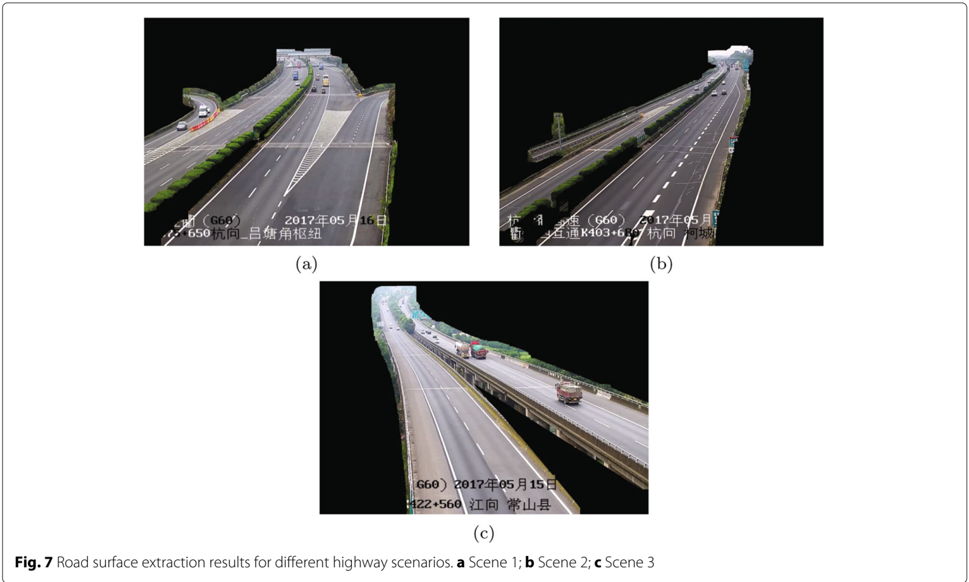
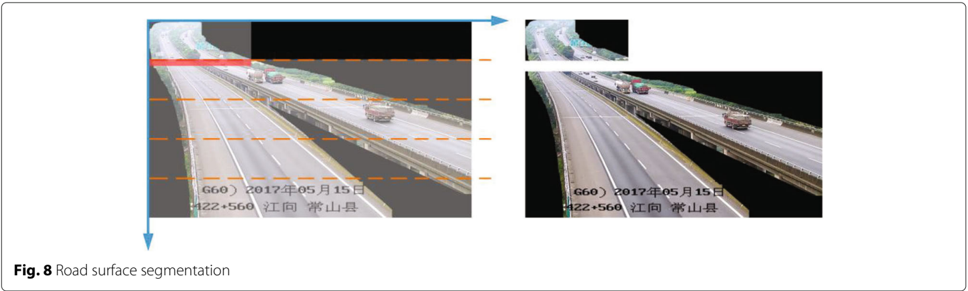
- Design: a pipeline that first extracts the highway road surface, then divides it into remote and proximal regions, detects vehicles with YOLOv3, and tracks them with ORB feature matching plus trajectory analysis.
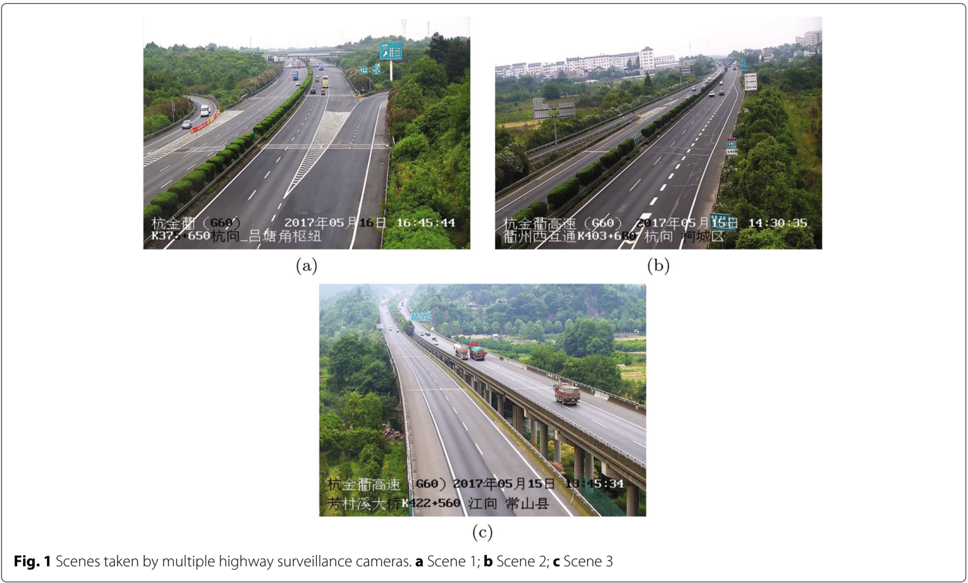
- Data/sample: a newly built dataset from highway surveillance video in Hangzhou, China, collected from 23 surveillance cameras across different scenes, times, and lighting conditions; the model was trained on an 80%/20% train-test split (8,904 training images and 2,225 test images).
- Main analysis: YOLOv3 training and evaluation using mAP/AP/precision/recall, comparison of detection counts against actual vehicle numbers, and trajectory-based counting using a detection line to infer direction and vehicle flow.
## Limitations
- The paper states that there are few public datasets for specific traffic scenes and that traffic images are often not publicly released due to copyright, privacy, and security issues.
- The authors note that the method is less effective when cars are small, occluded, or parallel in lanes, and that detection deviation in the remote area can still occur; this is stated in the paper.
- Evident from the text: the evaluation is limited to the authors’ own highway videos and dataset, so generalization beyond those scenes is not directly demonstrated in the provided text.
Model-written summary. Check it against the paper before relying on it.
Integrity signals
Registry
Cites
Statistics
Figures
Verification
Claims the paper makes
1 Valid · 2 Not valid · 1 Not checked · 56 Own results and interpretations
A result the paper reports from its own data — it cites no other source for it, so there is none to check. The quote shows it is in the paper.
In the paper
“A new high definition highway vehicle dataset with a total of 57,290 annotated instances in 11,129 images is published in this study.”
- Also stated in: § Vehicle dataset · plain
“As shown in Table 1, this dataset has a total of 11,129 images and 57,290 annotation boxes..”
§ Vision-based vehicle detection and counting system using deep learning in highway scenes > Abstract
plain- Asserted: passes — The authors put it forward as true.
- Checkable: passes — It can be checked against evidence.
- Load-bearing: passes — The paper’s conclusions depend on it.
- Based: passes — The paper gives a reason why it holds.
- Rests on an assumption not shown here.
- Also stated in: § Vehicle dataset · plain
A result the paper reports from its own data — it cites no other source for it, so there is none to check. The quote shows it is in the paper.
In the paper
“results verify that using the proposed segmentation method can provide higher detection accuracy, especially for the detection of small vehicle objects.”
§ Vision-based vehicle detection and counting system using deep learning in highway scenes > Abstract
plainstates a cause- Asserted: passes — The authors put it forward as true.
- Checkable: passes — It can be checked against evidence.
- Load-bearing: passes — The paper’s conclusions depend on it.
- Based: passes — The paper gives a reason why it holds.
- Rests on 3 assumptions not shown here.
A result the paper reports from its own data — it cites no other source for it, so there is none to check. The quote shows it is in the paper.
In the paper
“We obtained a final map value of 87.88%, which indicates that the method is a good way to locate and classify different vehicle objects.”
§ Vision-based vehicle detection and counting system using deep learning in highway scenes > Network training and vehicle detection
plain- Asserted: passes — The authors put it forward as true.
- Checkable: passes — It can be checked against evidence.
- Load-bearing: passes — The paper’s conclusions depend on it.
- Based: passes — The paper gives a reason why it holds.
A result the paper states — it cites no source for it, so there is none to check. The quote shows it is in the paper.
In the paper
“At the same time, in the proximal area of the road, our method is also better than the full-image detection method.”
§ Vision-based vehicle detection and counting system using deep learning in highway scenes > Network training and vehicle detection
plainstates an association- Asserted: passes — The authors put it forward as true.
- Checkable: passes — It can be checked against evidence.
- Load-bearing: unclear — It is unclear whether the paper’s conclusions depend on it.
- Based: passes — The paper gives a reason why it holds.
A result the paper states — it cites no source for it, so there is none to check. The quote shows it is in the paper.
In the paper
“The full-image detection method did not detect a large number of small objects in the remote area of the road.”
§ Vision-based vehicle detection and counting system using deep learning in highway scenes > Network training and vehicle detection
plain- Asserted: passes — The authors put it forward as true.
- Checkable: passes — It can be checked against evidence.
- Load-bearing: passes — The paper’s conclusions depend on it.
- Based: passes — The paper gives a reason why it holds.
19 more claims
Create a free account to see all 60 claims and every source verdict.
- It may state two separate claims as one. 24
- Probably not a substantial claim. 18
- The quote only partly states this claim. 5
Claims other papers make about this one
Each is checked against this paper’s own text: does it say what the citing paper says it does?
The source backs part of the claim, not all of it — or backs it for a different population, condition or comparison.
In the citing paper
“Some studies have also segmented the road surface to achieve higher performance [25], which requires more computation work.”
From Real-Time Vehicle Classification and Tracking Using a Transfer Learning-Improved Deep Learning Network (2022) · cites this paper as [25]
Experimental — accuracy not yet measuredThe source backs part of the claim, not all of it — or backs it for a different population, condition or comparison.
In the citing paper
“Song et al. [25] improved the accuracy of detection and classification of cars, buses, and trucks from 49% to 95% by segmenting road pixels first, before object detection, using YOLOv3.”
From Real-Time Vehicle Classification and Tracking Using a Transfer Learning-Improved Deep Learning Network (2022) · cites this paper as [25]
Experimental — accuracy not yet measured
Citations
Cites
You Only Look Once: Unified, Real-Time Object Detection
Redmon, J., Divvala, S., Girshick, R., & Farhadi, A. (2016) · 2016 IEEE Conference on Computer Vision and Pattern Recognition (CVPR) · doi:10.1109/cvpr.2016.91 · Cited by 53,803
Rich Feature Hierarchies for Accurate Object Detection and Semantic Segmentation
Girshick, R., Donahue, J., Darrell, T., & Malik, J. (2014) · 2014 IEEE Conference on Computer Vision and Pattern Recognition · doi:10.1109/cvpr.2014.81 · Cited by 32,684
(2016) · Cited by 31,590
A Computational Approach to Edge Detection
Canny, J. (1986) · IEEE Transactions on Pattern Analysis and Machine Intelligence · doi:10.1109/tpami.1986.4767851 · Cited by 30,004
SSD: Single Shot MultiBox Detector
Liu, W., Anguelov, D., Erhan, D., Szegedy, C., Reed, S., Fu, C.-Y., & Berg, A. C. (2016) · Lecture Notes in Computer Science · doi:10.1007/978-3-319-46448-0_2 · Cited by 22,128
YOLO9000: Better, Faster, Stronger
Redmon, J., & Farhadi, A. (2017) · 2017 IEEE Conference on Computer Vision and Pattern Recognition (CVPR) · doi:10.1109/cvpr.2017.690 · Cited by 19,892
YOLOv3: An Incremental Improvement
Redmon, J., & Farhadi, A. (2018) · arXiv · doi:10.48550/arxiv.1804.02767 · Cited by 17,141
Are we ready for autonomous driving? The KITTI vision benchmark suite
Geiger, A., Lenz, P., & Urtasun, R. (2012) · 2012 IEEE Conference on Computer Vision and Pattern Recognition · doi:10.1109/cvpr.2012.6248074 · Cited by 14,897
Spatial Pyramid Pooling in Deep Convolutional Networks for Visual Recognition
He, K., Zhang, X., Ren, S., & Sun, J. (2015) · IEEE Transactions on Pattern Analysis and Machine Intelligence · doi:10.1109/tpami.2015.2389824 · Cited by 11,971
ORB: An efficient alternative to SIFT or SURF
Rublee, E., Rabaud, V., Konolige, K., & Bradski, G. (2011) · 2011 International Conference on Computer Vision · doi:10.1109/iccv.2011.6126544 · Cited by 11,037
Cited by
Short Communication: Detecting Heavy Goods Vehicles in Rest Areas in Winter Conditions Using YOLOv5
Kasper-Eulaers, M., Hahn, N., Berger, S., Sebulonsen, T., Myrland, Ø., & Kummervold, P. E. (2021) · Algorithms · doi:10.3390/a14040114 · Cited by 184
Improving Multi-Agent Trajectory Prediction Using Traffic States on Interactive Driving Scenarios
Vishnu, C., Abhinav, V., Roy, D., Mohan, C. K., & Babu, C. S. (2023) · IEEE Robotics and Automation Letters · doi:10.1109/lra.2023.3258685 · Cited by 175
Smart Pothole Detection Using Deep Learning Based on Dilated Convolution
Ragab, K. (2021) · Sensors · doi:10.3390/s21248406 · Cited by 167
Humayun, M., Ashfaq, F., Jhanjhi, N. Z., & Alsadun, M. K. (2022) · Electronics · doi:10.3390/electronics11172748 · Cited by 147
A Real-Time Computer Vision Based Approach to Detection and Classification of Traffic Incidents
Basheer Ahmed, M. I., Zaghdoud, R., Ahmed, M. S., Sendi, R., Alsharif, S., Alabdulkarim, J., Albin Saad, B. A., Alsabt, R., Rahman, A., & Krishnasamy, G. (2023) · Big Data and Cognitive Computing · doi:10.3390/bdcc7010022 · Cited by 122
Metadata
- Authors
- Song, H., Liang, H., Li, H., Dai, Z., & Yun, X.
- Affiliations
- Chang'an University (CN)
- Corresponding author
- Liang, Haoxiang
- Venue
- European Transport Research Review
- Published
- 2019-12
- Volume
- 11
- Issue
- 1
- ISSN
- 1866-8887 (ISSN-L)
- 1867-0717
- OpenAlex
- W2997192890
- Cited by
- 413
- References
- 40
- Citations by year
- 2026: 23 · 2025: 65 · 2024: 79 · 2023: 93 · 2022: 81 · 2021: 46 · 2020: 26
- FWCI
- 14.75
- Type
- journal article
- Language
- en
- Open access
- gold
- doi.org
- Licence
- cc-by
- creativecommons.org/licenses/by/4.0 (tdm)
- Locations
- European Transport Research Review (publishedVersion, cc-by)
- DOAJ (DOAJ: Directory of Open Access Journals) (submittedVersion, cc-by-sa)
- Funders
- National Natural Science Foundation of China (300102248402, No.61572083, 61572083)
- Fundamental Research Funds for the Central Universities
- Topics
- Physical Sciences › Computer Science › Computer Vision and Pattern Recognition › Advanced Neural Network Applications
- Physical Sciences › Computer Science › Computer Vision and Pattern Recognition › Video Surveillance and Tracking Methods
- Physical Sciences › Engineering › Automotive Engineering › Autonomous Vehicle Technology and Safety
- Keywords
- vehicle detection, vehicle counting, highway monitoring, small object detection, road surface segmentation, YOLOv3, ORB feature matching, vehicle trajectory tracking, freeway traffic control
About these checks
Registry, retraction, Cites and statistics results are computed, not judged, with one exception: a printed reference that no index lists is read once by a model before it counts as a citation error. Claims are extracted by a model and kept only when their quote appears verbatim in the text; each cited source is then checked, with a model’s help, for whether it says what the claim relies on. Those verdicts can be wrong — read the claim’s quote and the cited source before relying on one.
A language model drew the claims from the paper on 2026-10-10, under version 3 of the claim definition (model deepseek-v4.1-flash, prompt extract-v3).
A second model labelled each claim on 2026-10-10 (model jev-1.13-20260917, definition revision gold-guideline-v0.2).
Statistics and arithmetic are recomputed, not judged.
Confidence bands are shown only for fields calibrated on our annotated test set. None is calibrated yet, so no band is shown.
What counts as a claim ›How we measure confidence ›How we check this ›
Are you an author, or do you see a problem with this page? Request a review
How to cite
Cite CoChat for the checks on this page, and the paper for its own findings.
- This page
- CoChat. (2026). Citation check: Vision-based vehicle detection and counting system using deep learning in highway scenes. https://app.cochat.ai/papers/10.1186/s12544-019-0390-4
- The paper
- Song, H., Liang, H., Li, H., Dai, Z., & Yun, X. (2019). Vision-based vehicle detection and counting system using deep learning in highway scenes. European Transport Research Review. https://doi.org/10.1186/s12544-019-0390-4
Data sources
Bibliographic data: Semantic Scholar, OpenAlex, Crossref.
Contains information from the Semantic Scholar Academic Graph Datasets, made available under the ODC Attribution License (ODC-BY 1.0).
Semantic Scholar’s data is described in: Kinney, R., et al. (2023). The Semantic Scholar Open Data Platform. arXiv:2301.10140.
