

The DOI matches its Crossref record; 1 of the 1 references it cites were found in a registry or an index.
Structure and evolution of the filaggrin gene repeated region in primates
Abstract
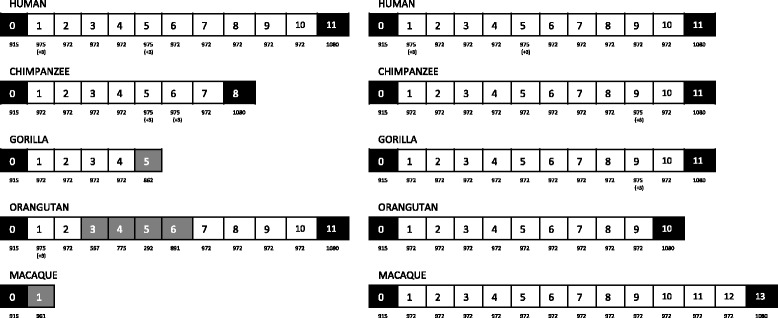
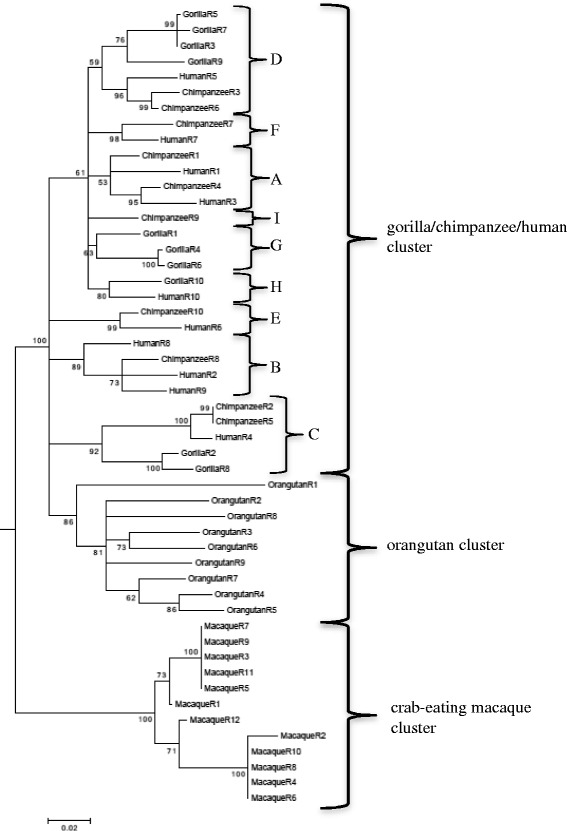
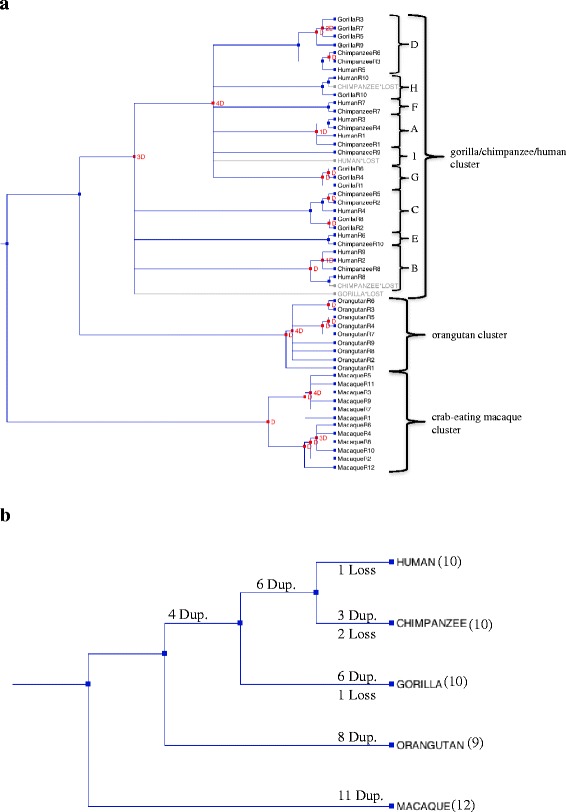
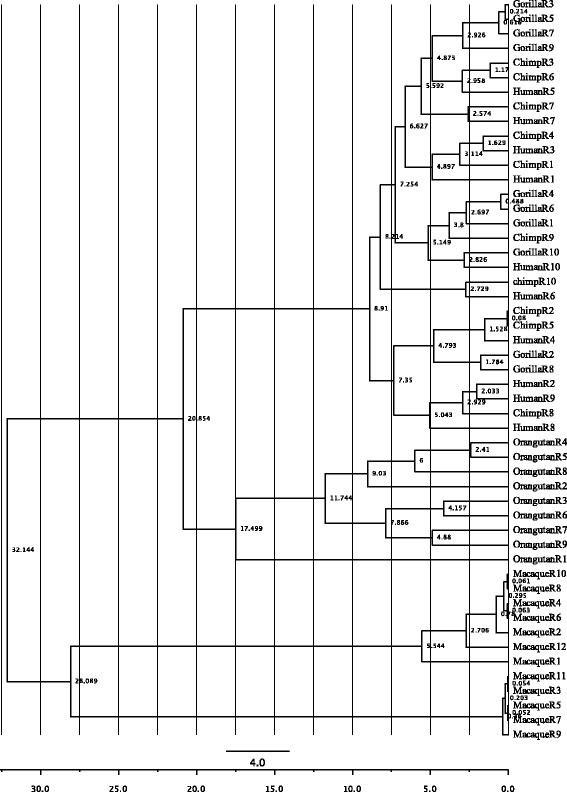
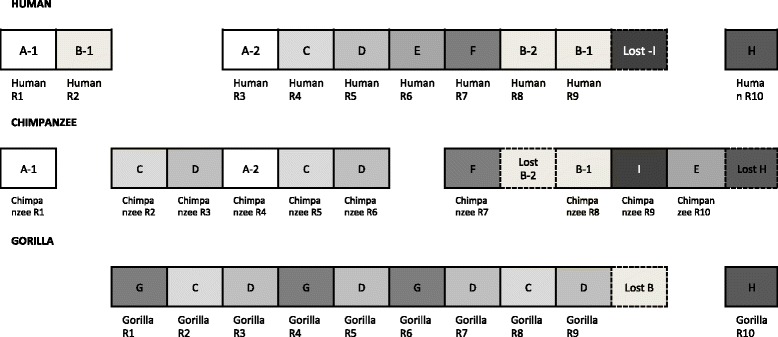
BACKGROUND: The evolutionary dynamics of repeat sequences is quite complex, with some duplicates never having differentiated from each other. Two models can explain the complex evolutionary process for repeated genes-concerted and birth-and-death, of which the latter is driven by duplications maintained by selection. Copy number variations caused by random duplications and losses in repeat regions may modulate molecular pathways and therefore affect phenotypic characteristics in a population, resulting in individuals that are able to adapt to new environments. In this study, we investigated the filaggrin gene (FLG), which codes for filaggrin-an important component of the outer layers of mammalian skin-and contains tandem repeats that exhibit copy number variation between and within species. To examine which model best fits the evolutionary pathway for the complete tandem repeats within a single exon of FLG, we determined the repeat sequences in crab-eating macaque (Macaca fascicularis), orangutan (Pongo abelii), gorilla (Gorilla gorilla), and chimpanzee (Pan troglodytes) and compared these with the sequence in human (Homo sapiens). RESULTS: In this study we compared concerted and birth-and-death evolution models, commonly used for gene copies. We found that there is high nucleotide diversity between filaggrin repeat regions, which fits the birth-and-death model. Phylogenetic analyses also suggested that independent duplication events created the repeat sequences in crab-eating macaques and orangutans, while different duplication and loss events created the repeats in gorillas, chimpanzees, and humans. Comparison of the repeat sequences detected purifying selection within species and lineage-specific duplications across species. We also found variation in the length of the repeated region within species such as chimpanzee and crab-eating macaque. CONCLUSIONS: We conclude that the copy number variation in the repeat sequences of FLG between primates may be a consequence of species-specific divergence and expansion.
Overview
The claims and statistics of this paper haven’t been checked yet.
Run the check — free, no account needed. It reads the open-access text and checks the sources it cites.
Integrity signals
Registry
Cites
Statistics
Figures
Verification
Claims the paper makes
The claims and statistics of this paper haven’t been checked yet.
Run the check — free, no account needed. It reads the open-access text and checks the sources it cites.
Claims other papers make about this one
Each is checked against this paper’s own text: does it say what the citing paper says it does?
The cited source says what the claim attributes to it.
In the citing paper
“The gene contains multiple copies (10–12) of a repeat that is 972–975 nucleotides long.”
From Tandem repeats lead to sequence assembly errors and impose multi-level challenges for genome and protein databases (2019) · cites this paper as [84]
The cited source says what the claim attributes to it.
In the citing paper
“In primates, filaggrin protein is a component of the skin, and the underlying genes have copy number variations between different species (84).”
From Tandem repeats lead to sequence assembly errors and impose multi-level challenges for genome and protein databases (2019) · cites this paper as [84]
In the citing paper
“Here, researchers found incomplete versions of the gene for chimpanzee, gorilla, orangutan and macaque in the NCBI database, but were able to reconstruct the complete genes by using a combination of PacBio and Illumina sequencing (84), again showing the importance of the choice of sequencing technology.”
From Tandem repeats lead to sequence assembly errors and impose multi-level challenges for genome and protein databases (2019) · cites this paper as [84]
Self-check
Percentages, sums and reported differences re-computed from the paper’s own numbers.
The self-check needs the paper’s full text.
Citations
Cites
One remarkable molecule: filaggrin
Brown, S. J., & Irwin McLean, W. H. (2012) · Journal of Investigative Dermatology · doi:10.1038/jid.2011.393 · Cited by 527
Research works printed but not linked: 48
- Nei M, Rooney A. Concerted and birth-and-death evolution of multigene families. Annu Rev Genet. 2005;39:121–52. · DOI · Paper page
- Austen R, Kobayashi T. Highly efficient concerte evolution in the ribosomal DNA repeats: total rDNA repeat variation revealed by whole genome shotgun sequence data. Genome Res. 2007;17:184–91. · DOI
- Eirín-López J, Rebordinos L, Rooney A, Rozas J. The birth-and-death evolution of multigene families revisited. Genome Dyn. 2012;7:170–96. · DOI
- Sabbagh A, Marin J, Vyssiére C, Lecompte E, Boukouvala S, Poloni ES, Darlu P, Crouau-Roy B. Rapid birth-and-death evolution of the xenobiotic metabolizing NAT gene family in vertebrates with evidence of adaptive selection. BMC Evol Biol. 2013;13:62. · DOI
- Kezic S, O’Regan G, Yau N, Sandilands A, Campbell L, Kroboth K, Watson R, Rowland M, McLean I. Levels of filaggrin degradation products are influenced by both filaggrin genotype and atopic dermatitis severity. Allergy. 2011;6:934–40. · DOI · Paper page
- Brown S, Kroboth K, Sandilands A, Campbell LE, Pohler E, Kezic S, Cordell H, McLean I, Irvine A. Intragenic copy number variation within filaggrin contributes to the risk of atopic dermatitis with a dose-dependent effect. J Invest Dermatol. 2012;133:98–104. · DOI
- De D, Handa S. Filaggrin mutations and the skin. Indian J Dermatol Venereol Leprol. 2012;78:545–51. · DOI
- Gan SQ, McBride W, Idler W, Markov N, Steinert P. Organization, structure and polymorphisms of the human profilaggrin gene. Biochemistry. 1990;29:9432–40. · DOI
- Redon R, Ishikawa S, Fitch K, Feuk L, Perry G, Andrews D, Fiegler H, Shapero M, Carson A, Chen W, et al. Global variation in copy number in the human genome. Nature. 2006;444:444–54. · DOI
- Smith FJ, Irvine AD, Terron-Kwiatkowski A, Sandilands A, Campbell LE, Zhao Y, Liao H, Evans AT, Goudie D, Lewis-Jone S, et al. Loss-of-function mutations in the gene encoding filaggrin cause ichthyosis vulgaris. Nat Genet. 2006;38:337–42. · DOI
- Fallon P, Sasaki T, Sandilands A, Campbell L, Saunders S, Mangan N, Callanan J, Kawasaki H, Shiohama A, Kubo A, et al. A homozygous frameshift mutation in the murine filaggrin gene facilitates enhanced percutaneous allergen priming. Nat Genet. 2009;41:602–8. · DOI
- Kanda S, Sasaki T, Shiohama A, Nishifuji K, Amagai M, Iwasaki T, Kudoh J. Characterization of canine filaggrin: gene structure and protein expression in dog skin. Vet Dermatol. 2013;24:25–32. · DOI
- Feuk L, Carson AR, Scherer SW. Structural variation in the human genome. Nat Rev Genet. 2006;7:85–97. · DOI
- Fondon JW, Garner HR. Molecular origins of rapid and continuous morphological evolution. PNAS. 2004;101:18058–63. · DOI
- Gazave E, Darre F, Morcillo-Suarez C, Petit-Marty N, Carreno A, Marigorta U, Ryder O, Blancher A, Rocchi M, Bosch E. Copy number variation analysis in the great apes reveals species-specific patterns of structural variation. Genome Res. 2011;21:1626–39. · DOI
- Paudel Y, Madsen O, Megens HJ, Frantz L, Bosse M, Bastiaansen J, Crooijmans R, Groenen M. Evolutionary dynamics of copy number variation in pig genomes in the context of adaptation and domestication. BMC Genomics. 2013;14:449. · DOI
- Sudmant P, Huddleston J, Catacchio C, Malig M, Hillier L, Baker C, Mohajeri K, Kondova I, Bontrop R, Persengiev S, et al. Evolution and diversity of copy number variation in the great ape lineage. Genome Res. 2013;23:1373–82. · DOI
- Koren S, Schatz M, Walenz B, Martin J, Howard J, Ganapathy G, Wang Z, Rasko D, McCombie R, Jarvis E, et al. Hybrid error correction and de novo assembly of single-molecule sequencing reads. Nat Biotechnol. 2012;30:693–700. · DOI
- Martin J, Wang Z. Next-generation transcriptome assembly. Nat Genet. 2011;12:671–82. · DOI
- Nei M, Rogozin I, Piontkivska H. Purifying selection and birth-and-death evolution in the ubiquitin gene family. Proc Natl Acad Sci. 2000;97:10866–71. · DOI
- Nei M. The new mutation theory of phenotypic evolution. PNAS. 2007;104:12235–42. · DOI
- Sandilands A, Sutherland C, Irvine A, McLean H. Filaggrin in the frontline: role in skin barrier function and disease. J Cell Sci. 2009;122:1285–94. · DOI
- Yang Z. PAML 4: phylogenetic analysis by maximum likelihood. Mol Biol Evol. 2007;24:1586–91. · DOI · Paper page
- Yang Z. PAML: a program package for phylogenetic analysis by maximum likelihood. Comput Appl Biosci. 1997;13:555–6.
- Hoste E, Kemperman P, Devos M, Denecker G, Kezic S, Yau N, Gilbert B, Lippens S, De Groote P, Roelandt R, et al. Caspase-14 is required for filaggrin degradation to natural moisturizing factors in skin. J Invest Dermatol. 2011;131:2233–41. · DOI
- Sandilands A, Terron-Kwiatkowski A, Hull P, O’Regan G, Clayton T, Watson R, Carrick T, Evans A, Liao H, Zhao Y, et al. Comprehensive analysis of the gene encoding filaggrin uncovers prevalent and rare mutations in ichthyosis vulgaris and atopic eczema. Nat Genet. 2007;39:650–4. · DOI
- Durand D, Halldórsson BV, Vernot B. A hybrid micro-macroevolutionary approach to gene tree reconstruction. J Comput Biol. 2006;13:320–35. · DOI
- Stolzer M, Lai H, Xu M, Sathaye D, Vernot B, Durand D. Inferring duplications, losses, transfers, and incomplete lineage sorting with non-binary species trees. Bioinformatics. 2012;28:409–15. · DOI
- Vernot B, Stolzer M, Goldman A, Durand D. Reconciliation with non-binary species trees. J Comput Biol. 2008;15:981–1006. · DOI
- Zhu L, Zhang Y, Hu Y, Wen T, Wang Q. Dynamic actin gene family evolution in primates. Biomed Res Int. 2013;2013:1–11. Article ID 630803. · DOI
- Martin D, Lemey P, Lott M, Moulton V, Posada D, Lefeuvre P. RDP3: a flexible and fast computer program for analyzing recombination. Bioinformatics. 2010;26:2462–3. · DOI
- Chen JM, Cooper D, Chuzhanova N, Férec C, Patrinos G. Gene conversion: mechanisms, evolution and human disease. Nature. 2007;8:762–75.
- Caburet S, Cocquet J, Vaiman D, Veitia RA. Coding repeats and evolutionary “agility”. BioEssays. 2005;27:581–7. · DOI
- Hosak L, Silhan P, Hosakova J. Genomic copy number variations: a breakthrough in our knowledge on schizophrenia etiology? Neuro Endocrinol Lett. 2012;33:183–90.
- Aldred P, Hollox E, Armour J. Copy number polymorphism and expression level variation of the human α-defensin genes DEFA1 and DEFA3. Hum Mol Genet. 2005;14:2045–52. · DOI
- Tamura K, Peterson D, Peterson N, Stecher G, Nei M, Kumar S. MEGA5: molecular evolutionary genetics analysis using maximum likelihood, evolutionary distance, and maximum parsimony methods. Mol Biol Evol. 2011;28:2731–9. · DOI · Paper page
- Hu T, Banzhaf W. Nonsynonymous to synonymous substitution ratio ka/ks: measurement for rate of evolution in evolutionary computation. In: R. Parallel Problem Solving from Nature - PPSN X. Dortmund: Springer; 2008.
- Librado P, Rozas J. DnaSP v5:a software for comprehensive analysis of DNA polymorphism data. Bioinformatics. 2009;25:1451–2. · DOI
- Anisimova M, Bielawski J, Yang Z. Accuracy and power of the likelihood ratio test in detecting adaptive molecular evolution. Mol Biol Evol. 2001;18:1585–92. · DOI
- Martin D, Rybicki E. RDP: detection of recombination amongst aligned sequences. Bioinformatics. 2000;16:562–3. · DOI
- Martin D, Posada D, Crandall K, Williamson C. A modified bootscan algorithm for automated identification of recombinant sequences and recombination breakpoints. A modified bootscan algorithm for automated identification of recombinant sequences and recombination breakpoints. AIDS Res Hum Retroviruses. 2005;21:98–102. · DOI
- Maynard-Smith J. Analyzing the mosaic structure of genes. J Mol Evol. 1992;34:126–9.
- Padidam M, Sawyer S, Fauquet C. Possible emergence of new geminiviruses by frequent recombination. Virology. 1999;265:218–25. · DOI
- Posada D, Crandall K. Evaluation of methods for detecting recombination from DNA sequences: computer simulations. Proc Natl Acad Sci. 2001;98:13757–62. · DOI
- Bouckaert R, Heled J, Kuhnert D, Vaughan T, Wu C, Xie D, Suchard MA, Rambaut A, Drummond AJ. BEAST2: a software platform for bayesian evolutionary analysis. PLoS Comput Biol. 2014;10:e1003537. · DOI · Paper page
- Drummond A, Suchard M, Xie D, Rambaut A. Bayesian phylogenetics with BEAUti and the BEAST 1.7. Mol Biol Evol. 2012;29:1969–73. · DOI
- Hahn M, De Bie T, Stajich J, Nguyen C, Cristianini N. Estimating the tempo and mode of gene family evolution from comparative genomic data. Genome Res. 2005;15:1153–60. · DOI
- Steiper M, Young N. Primate molecular divergence dates. ScienceDirect. 2006;41:384–94.
Cited by
Tørresen, O. K., Star, B., Mier, P., Andrade-Navarro, M. A., Bateman, A., Jarnot, P., Gruca, A., Grynberg, M., Kajava, A. V., Promponas, V. J., et al. (2019) · Nucleic Acids Research · doi:10.1093/nar/gkz841 · Cited by 347
Zhang, Y., Hu, Y., Wang, X., Jiang, Q., Zhao, H., Wang, J., Ju, Z., Yang, L., Gao, Y., Wei, X., et al. (2020) · Frontiers in Genetics · doi:10.3389/fgene.2019.01404 · Cited by 42
Immune System Promiscuity in Human and Nonhuman Primate Evolution
Brinkworth, & Babbitt (2018) · Human Biology · doi:10.13110/humanbiology.90.4.01 · Cited by 3
Metadata
- Authors
- Romero, V., Hosomichi, K., Nakaoka, H., Shibata, H., & Inoue, I.
- Venue
- BMC Evolutionary Biology
- Published
- 2017-01-11
- Volume
- 17
- Issue
- 1
- ISSN
- 1471-2148
- PMC
- PMC5225520
- Cited by
- 11
- References
- 1
- Language
- en
- Funders
- The study was funded by the basal running budget from the National Institute of Genetics-Japan”.
About these checks
Registry, retraction, Cites and statistics results are computed, not judged, with one exception: a printed reference that no index lists is read once by a model before it counts as a citation error. Claims are extracted by a model and kept only when their quote appears verbatim in the text; each cited source is then checked, with a model’s help, for whether it says what the claim relies on. Those verdicts can be wrong — read the claim’s quote and the cited source before relying on one.
Statistics and arithmetic are recomputed, not judged.
Confidence bands are shown only for fields calibrated on our annotated test set. None is calibrated yet, so no band is shown.
What counts as a claim ›How we measure confidence ›How we check this ›
Are you an author, or do you see a problem with this page? Request a review
Data sources
Bibliographic data: Semantic Scholar, OpenAlex, Crossref.
Contains information from the Semantic Scholar Academic Graph Datasets, made available under the ODC Attribution License (ODC-BY 1.0).
Semantic Scholar’s data is described in: Kinney, R., et al. (2023). The Semantic Scholar Open Data Platform. arXiv:2301.10140.
