

Population-specific, recent positive directional selection suggests adaptation of human male reproductive genes to different environmental conditions
Open accessThe DOI matches its Crossref record; 76 of the 76 references it cites were found in a registry or an index.
Abstract
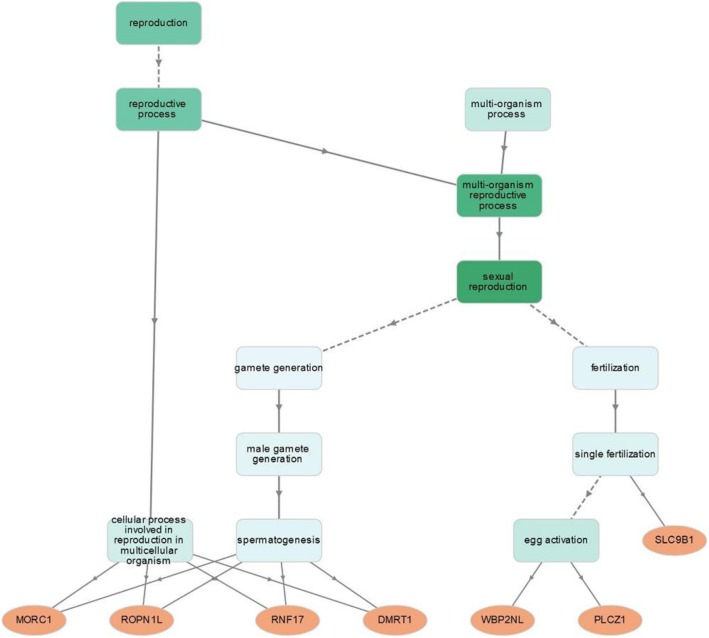
BACKGROUND: Recent human transcriptomic analyses revealed a very large number of testis-enriched genes, many of which are involved in spermatogenesis. This comprehensive transcriptomic data lead us to the question whether positive selection was a decisive force influencing the evolution and variability of testis-enriched genes in humans. We used two methodological approaches to detect different levels of positive selection, namely episodic positive diversifying selection (i.e., past selection) in the human lineage within primate phylogeny, potentially driven by sperm competition, and recent positive directional selection in contemporary human populations, which would indicate adaptation to different environments. RESULTS: In the human lineage (after correction for multiple testing) we found that only the gene TULP2, for which no functional data are yet available, is subject to episodic positive diversifying selection. Using less stringent statistical criteria (uncorrected p-values), also the gene SPATA16, which has a pivotal role in male fertility and for which episodes of adaptive evolution have been suggested, also displays a putative signal of diversifying selection in the human branch. At the same time, we found evidence for recent positive directional selection acting on several human testis-enriched genes (MORC1, SLC9B1, ROPN1L, DMRT1, PLCZ1, RNF17, FAM71D and WBP2NL) that play important roles in human spermatogenesis and fertilization. Most of these genes are population-specifically under positive selection. CONCLUSION: Episodic diversifying selection, possibly driven by sperm competition, was not an important force driving the evolution of testis-enriched genes in the human lineage. Population-specific, recent positive directional selection suggests an adaptation of male reproductive genes to different environmental conditions. Positive selection acts on eQTLS and sQTLs, indicating selective effects on important gene regulatory functions. In particular, the transcriptional diversity regulated by sQTLs in testis-enriched genes may be important for spermatocytes to respond to environmental and physiological stress.
Overview
The claims and statistics of this paper haven’t been checked yet.
Free: it reads the open-access text and checks the first 5 claims that cite a source we can check. Create a free account to check every claim.
Integrity signals
Registry
Cites
Statistics
Figures
Verification
Claims the paper makes
The claims and statistics of this paper haven’t been checked yet.
Free: it reads the open-access text and checks the first 5 claims that cite a source we can check. Create a free account to check every claim.
Claims other papers make about this one
Each is checked against this paper’s own text: does it say what the citing paper says it does?
The source backs part of the claim, not all of it — or backs it for a different population, condition or comparison.
In the citing paper
“Genes that provide even a minimal adaptive advantage can be rapidly selected, especially in small populations or those exposed to environmental stressors.”
From Origin and Evolution of Genes in Eukaryotes: Mechanisms, Dynamics, and Functional Implications (2025) · cites this paper as [59]
Experimental — accuracy not yet measuredThe source backs part of the claim, not all of it — or backs it for a different population, condition or comparison.
In the citing paper
“Selective pressure is one of the primary drivers of gene fixation.”
From Origin and Evolution of Genes in Eukaryotes: Mechanisms, Dynamics, and Functional Implications (2025) · cites this paper as [59]
Experimental — accuracy not yet measuredThe cited source says what the claim attributes to it.
In the citing paper
“Positive selection promotes the rapid expansion of genes that improve the fitness of the organism [59,60].”
From Origin and Evolution of Genes in Eukaryotes: Mechanisms, Dynamics, and Functional Implications (2025) · cites this paper as [59]
Self-check
Percentages, sums and reported differences re-computed from the paper’s own numbers.
The self-check needs the paper’s full text.
Citations
Cites
ESTIMATING F -STATISTICS FOR THE ANALYSIS OF POPULATION STRUCTURE
Weir, B. S., & Cockerham, C. C. (1984) · Evolution · doi:10.1111/j.1558-5646.1984.tb05657.x · Cited by 19,066 · cited 1×
“Pairwise FST were calculated for each SNP under positive selection using the Weir & Cockerham FST calculation [42], which is implemented in VCFtool v0.”
MethodThe variant call format and VCFtools
Danecek, P., Auton, A., Abecasis, G., Albers, C. A., Banks, E., DePristo, M. A., Handsaker, R. E., Lunter, G., Marth, G. T., Sherry, S. T., et al. (2011) · Bioinformatics · doi:10.1093/bioinformatics/btr330 · Cited by 16,200
Tissue-based map of the human proteome
Uhlén, M., Fagerberg, L., Hallström, B. M., Lindskog, C., Oksvold, P., Mardinoglu, A., Sivertsson, Å., Kampf, C., Sjöstedt, E., Asplund, A., et al. (2015) · Science · doi:10.1126/science.1260419 · Cited by 15,286
PAML 4: Phylogenetic Analysis by Maximum Likelihood
Yang, Z. (2007) · Molecular Biology and Evolution · doi:10.1093/molbev/msm088 · Cited by 13,879
Second-generation PLINK: rising to the challenge of larger and richer datasets
Chang, C. C., Chow, C. C., Tellier, L. C., Vattikuti, S., Purcell, S. M., & Lee, J. J. (2015) · Gigascience · doi:10.1186/s13742-015-0047-8 · Cited by 12,709
MUSCLE: a multiple sequence alignment method with reduced time and space complexity
Edgar, R. C. (2004) · BMC Bioinformatics · doi:10.1186/1471-2105-5-113 · Cited by 8,970
The Genotype-Tissue Expression (GTEx) pilot analysis: Multitissue gene regulation in humans
The GTEx Consortium, Ardlie, K. G., Deluca, D. S., Segrè, A. V., Sullivan, T. J., Young, T. R., Gelfand, E. T., Trowbridge, C. A., Maller, J. B., Tukiainen, T., et al. (2015) · Science · doi:10.1126/science.1262110 · Cited by 5,062
Mapping identifiers for the integration of genomic datasets with the R/Bioconductor package biomaRt
Durinck, S., Spellman, P. T., Birney, E., & Huber, W. (2009) · Nature Protocols · doi:10.1038/nprot.2009.97 · Cited by 4,197
AliView: a fast and lightweight alignment viewer and editor for large datasets
Larsson, A. (2014) · Bioinformatics · doi:10.1093/bioinformatics/btu531 · Cited by 3,640
A Map of Recent Positive Selection in the Human Genome
Voight, B. F., Kudaravalli, S., Wen, X., & Pritchard, J. K. (2006) · PLoS Biology · doi:10.1371/journal.pbio.0040072 · Cited by 2,893
Zerbino, D. R., Achuthan, P., Akanni, W., Amode, M. R., Barrell, D., Bhai, J., Billis, K., Cummins, C., Gall, A., Girón, C. G., et al. (2018) · Nucleic Acids Research · doi:10.1093/nar/gkx1098 · Cited by 2,605
Zhang, J. (2005) · Molecular Biology and Evolution · doi:10.1093/molbev/msi237 · Cited by 1,785
Nielsen, R., & Yang, Z. (1998) · Genetics · doi:10.1093/genetics/148.3.929 · Cited by 1,622
Ensembl BioMarts: a hub for data retrieval across taxonomic space
Kinsella, R. J., Kahari, A., Haider, S., Zamora, J., Proctor, G., Spudich, G., Almeida-King, J., Staines, D., Derwent, P., Kerhornou, A., et al. (2011) · Database · doi:10.1093/database/bar030 · Cited by 1,437 · cited 3×
“Kinsella RJ, Kahari A, Haider S, Zamora J, Proctor G, Spudich G, Almeida-King J, Staines D, Derwent P, Kerhornou A, et al. Ensembl BioMarts: a hub for data retrieval across taxonomic space.”
MethodInfluentialThe rapid evolution of reproductive proteins
Swanson, W. J., & Vacquier, V. D. (2002) · Nature Reviews Genetics · doi:10.1038/nrg733 · Cited by 1,299
Testis weight, body weight and breeding system in primates
Harcourt, A. H., Harvey, P. H., Larson, S. G., & Short, R. V. (1981) · Nature · doi:10.1038/293055a0 · Cited by 987
Weaver, S., Shank, S. D., Spielman, S. J., Li, M., Muse, S. V., & Kosakovsky Pond, S. L. (2018) · Molecular Biology and Evolution · doi:10.1093/molbev/msx335 · Cited by 983
Smith, M. D., Wertheim, J. O., Weaver, S., Murrell, B., Scheffler, K., & Kosakovsky Pond, S. L. (2015) · Molecular Biology and Evolution · doi:10.1093/molbev/msv022 · Cited by 811
selscan: An Efficient Multithreaded Program to Perform EHH-Based Scans for Positive Selection
Szpiech, Z. A., & Hernandez, R. D. (2014) · Molecular Biology and Evolution · doi:10.1093/molbev/msu211 · Cited by 797
PyEvolve: a toolkit for statistical modelling of molecular evolution
Butterfield, A., Vedagiri, V., Lang, E., Lawrence, C., Wakefield, M. J., Isaev, A., & Huttley, G. A. (2004) · BMC Bioinformatics · doi:10.1186/1471-2105-5-1 · Cited by 726
Rapid evolution of male reproductive genes in the descent of man
Wyckoff, G. J., Wang, W., & Wu, C.-I. (2000) · Nature · doi:10.1038/35002070 · Cited by 561
Sayers, E. W., Cavanaugh, M., Clark, K., Ostell, J., Pruitt, K. D., & Karsch-Mizrachi, I. (2019) · Nucleic Acids Research · doi:10.1093/nar/gky989 · Cited by 506
Gautier, M., Klassmann, A., & Vitalis, R. (2017) · Molecular Ecology Resources · doi:10.1111/1755-0998.12634 · Cited by 398
Seminal Plasma Proteins: What Role Do They Play?
Rodríguez‐Martínez, H., Kvist, U., Ernerudh, J., Sanz, L., & Calvete, J. J. (2011) · American Journal of Reproductive Immunology · doi:10.1111/j.1600-0897.2011.01033.x · Cited by 391 · cited 1×
“The mature and ejaculated spermatozoa are carried to the female tract in seminal plasma, which supports key sperm functions such as interactions with the various environments of the tubular genital tract, with the oocyte and with the female immune system and potentially helps modulate sperm rejection or tolerance [2].”
BackgroundCorrection: A Map of Recent Positive Selection in the Human Genome
Voight, B. F., Kudaravalli, S., Wen, X., & Pritchard, J. K. (2006) · PLoS Biology · doi:10.1371/journal.pbio.0040154 · Cited by 386
Yang, Z., & Swanson, W. J. (2002) · Molecular Biology and Evolution · doi:10.1093/oxfordjournals.molbev.a003981 · Cited by 380
Statistical Properties of the Branch-Site Test of Positive Selection
Yang, Z., & dos Reis, M. (2011) · Molecular Biology and Evolution · doi:10.1093/molbev/msq303 · Cited by 346
Homozygous Mutation in SPATA16 Is Associated with Male Infertility in Human Globozoospermia
Dam, A. H. D. M., Koscinski, I., Kremer, J. A. M., Moutou, C., Jaeger, A.-S., Oudakker, A. R., Tournaye, H., Charlet, N., Lagier-Tourenne, C., van Bokhoven, H., et al. (2007) · The American Journal of Human Genetics · doi:10.1086/521314 · Cited by 299
GOnet: a tool for interactive Gene Ontology analysis
Pomaznoy, M., Ha, B., & Peters, B. (2018) · BMC Bioinformatics · doi:10.1186/s12859-018-2533-3 · Cited by 299 · cited 1×
“org/GOnet/) to perform GO term annotation analysis and graphical presentation of the human genes found to be under positive selection [45].”
MethodSperm Competition: Mating System, Not Breeding Season, Affects Testes Size of Primates
Harcourt, A. H., Purvis, A., & Liles, L. (1995) · Functional Ecology · doi:10.2307/2390011 · Cited by 281
SLC9/NHE gene family, a plasma membrane and organellar family of Na+/H+ exchangers
Donowitz, M., Ming Tse, C., & Fuster, D. (2013) · Molecular Aspects of Medicine · doi:10.1016/j.mam.2012.05.001 · Cited by 275
The evolution of human reproduction: A primatological perspective
Martin, R. D. (2007) · American Journal of Physical Anthropology · doi:10.1002/ajpa.20734 · Cited by 247
Motility and the midpiece in primates
Anderson, M. J., & Dixson, A. F. (2002) · Nature · doi:10.1038/416496a · Cited by 242
Hughes, A. L. (2007) · Heredity · doi:10.1038/sj.hdy.6801031 · Cited by 239 · cited 1×
“Moreover, because of the stochastic nature of mutation, it is expected that dN > dS will frequently occur at certain codons merely by chance [62].”
BackgroundDorus, S., Evans, P. D., Wyckoff, G. J., Choi, S. S., & Lahn, B. T. (2004) · Nature Genetics · doi:10.1038/ng1471 · Cited by 227
The human testis-specific proteome defined by transcriptomics and antibody-based profiling
Djureinovic, D., Fagerberg, L., Hallström, B., Danielsson, A., Lindskog, C., Uhlén, M., & Pontén, F. (2014) · MHR: Basic science of reproductive medicine · doi:10.1093/molehr/gau018 · Cited by 219
Sperm competition and the evolution of sperm design in mammals
Tourmente, M., Gomendio, M., & Roldan, E. R. (2011) · BMC Evolutionary Biology · doi:10.1186/1471-2148-11-12 · Cited by 202
Fiedler, S. E., Dudiki, T., Vijayaraghavan, S., & Carr, D. W. (2013) · Biology of Reproduction · doi:10.1095/biolreprod.112.105262 · Cited by 190
The neXtProt knowledgebase on human proteins: 2017 update
Gaudet, P., Michel, P.-A., Zahn-Zabal, M., Britan, A., Cusin, I., Domagalski, M., Duek, P. D., Gateau, A., Gleizes, A., Hinard, V., et al. (2017) · Nucleic Acids Research · doi:10.1093/nar/gkw1062 · Cited by 164
Sperm Competition, Sperm Numbers and Sperm Quality in Muroid Rodents
Montoto, L. G., Magaña, C., Tourmente, M., Martín-Coello, J., Crespo, C., Luque-Larena, J. J., Gomendio, M., & Roldán, E. R. S. (2011) · PLoS ONE · doi:10.1371/journal.pone.0018173 · Cited by 151
North, M. A., Naggert, J. K., Yan, Y., Noben-Trauth, K., & Nishina, P. M. (1997) · Proceedings of the National Academy of Sciences · doi:10.1073/pnas.94.7.3128 · Cited by 147
Adaptations to new environments in humans: the role of subtle allele frequency shifts
Hancock, A. M., Alkorta-Aranburu, G., Witonsky, D. B., & Di Rienzo, A. (2010) · Philosophical Transactions of the Royal Society B: Biological Sciences · doi:10.1098/rstb.2010.0032 · Cited by 140
Human sperm competition: testis size, sperm production and rates of extrapair copulations
Simmons, L. W., Firman, R. C., Rhodes, G., & Peters, M. (2004) · Animal Behaviour · doi:10.1016/j.anbehav.2003.11.013 · Cited by 129
Causes and consequences of the evolution of reproductive proteins
Turner, L. M., & Hoekstra, H. E. (2008) · The International Journal of Developmental Biology · doi:10.1387/ijdb.082577lt · Cited by 125
Rooney, A. P., & Zhang, J. (1999) · Molecular Biology and Evolution · doi:10.1093/oxfordjournals.molbev.a026153 · Cited by 121
Myers, M., Middlebrook, B. S., Matzuk, M. M., & Pangas, S. A. (2009) · Developmental Biology · doi:10.1016/j.ydbio.2009.08.001 · Cited by 82
Transport proteins NHA1 and NHA2 are essential for survival, but have distinct transport modalities
Chintapalli, V. R., Kato, A., Henderson, L., Hirata, T., Woods, D. J., Overend, G., Davies, S. A., Romero, M. F., & Dow, J. A. T. (2015) · Proceedings of the National Academy of Sciences · doi:10.1073/pnas.1508031112 · Cited by 80
The use of optical tweezers to study sperm competition and motility in primates
Nascimento, J. M., Shi, L. Z., Meyers, S. A., Gagneux, P., Loskutoff, N. M., Botvinick, E. L., & Berns, M. W. (2007) · Journal of The Royal Society Interface · doi:10.1098/rsif.2007.1118 · Cited by 74
The neXtProt peptide uniqueness checker: a tool for the proteomics community
Schaeffer, M., Gateau, A., Teixeira, D., Michel, P.-A., Zahn-Zabal, M., & Lane, L. (2017) · Bioinformatics · doi:10.1093/bioinformatics/btx318 · Cited by 70
Fang, X., Huang, L.-L., Xu, J., Ma, C.-Q., Chen, Z.-H., Zhang, Z., Liao, C.-H., Zheng, S.-X., Huang, P., Xu, W., et al. (2019) · Developmental Biology · doi:10.1016/j.ydbio.2019.06.017 · Cited by 67 · cited 1×
“For this gene, a recent functional genetic study on mice showed its indispensable role in the integrity of the sperm flagellum and in spermatozoa maturation [54].”
BackgroundGasper, J., & Swanson, W. J. (2006) · The American Journal of Human Genetics · doi:10.1086/508473 · Cited by 64
Hamm, D. P., Mautz, B. S., Wolfner, M. F., Aquadro, C. F., & Swanson, W. J. (2007) · The American Journal of Human Genetics · doi:10.1086/518695 · Cited by 61
Evolution of protamine P1 genes in primates
Retief, J., Winkfein, R. J., Dixon, G. H., Adroer, R., Queralt, R., Ballabriga, J., & Oliva, R. (1993) · Journal of Molecular Evolution · doi:10.1007/bf00178872 · Cited by 61
Sodium–hydrogen exchanger NHA1 and NHA2 control sperm motility and male fertility
Chen, S., Chen, M., Deng, S.-L., Hao, X.-X., Wang, X.-X., & Liu, Y.-X. (2016) · Cell Death and Disease · doi:10.1038/cddis.2016.65 · Cited by 59 · cited 2×
“Indeed, experimental studies in animals showed that SLC9B1 is essential not only for male fertility, but also for survival [70, 71].”
BackgroundSousa, M. B. C., Albuquerque, A. C. S. D. R., Albuquerque, F. D. S., Araujo, A., Yamamoto, M. E., & Arruda, M. D. F. (2005) · American Journal of Primatology · doi:10.1002/ajp.20168 · Cited by 58
Fujihara, Y., Oji, A., Larasati, T., Kojima-Kita, K., & Ikawa, M. (2017) · International Journal of Molecular Sciences · doi:10.3390/ijms18102208 · Cited by 58
Identification and characterization of a novel human testis-specific Golgi protein, NYD-SP12
Xu, M. (2003) · Molecular Human Reproduction · doi:10.1093/molehr/gag005 · Cited by 55
Kashir, J., Nomikos, M., & Lai, F. A. (2017) · Advances in Biological Regulation · doi:10.1016/j.jbior.2017.10.012 · Cited by 51
Lilja, H. G., Laurell, C. ‐., & Jeppsson, J. (1984) · Scandinavian Journal of Clinical and Laboratory Investigation · doi:10.3109/00365518409083835 · Cited by 51 · cited 1×
“The expressed proteins of SEMG2 are involved in the formation of the semen coagulum [25, 53].”
BackgroundPineau, C., Hikmet, F., Zhang, C., Oksvold, P., Chen, S., Fagerberg, L., Uhlén, M., & Lindskog, C. (2019) · Journal of Proteome Research · doi:10.1021/acs.jproteome.9b00351 · Cited by 50 · cited 1×
“Many of the testis-enriched genes are related to testisspecific functions and spermatogenesis [3, 4].”
BackgroundWalters, J. R., & Harrison, R. G. (2011) · Evolution · doi:10.1111/j.1558-5646.2011.01351.x · Cited by 39
Niu, A.-L., Wang, Y., Zhang, H., Liao, C., Wang, J., Zhang, R., Che, J., & Su, B. (2011) · BMC Evolutionary Biology · doi:10.1186/1471-2148-11-298 · Cited by 33 · cited 1×
“In addition, our study provides evidence that RHOXF2, an X-linked homeobox gene, exhibits diversifying selection in the chimpanzee lineage, confirming a previous study that showed strong positive selection for the lineages leading to humans and chimpanzees [58].”
Selective constraints on protamine 2 in primates and rodents
Arévalo, L., Tourmente, M., Dopazo, H., Serra, F., & Roldán, E. R. S. (2016) · BMC Evolutionary Biology · doi:10.1186/s12862-016-0588-1 · Cited by 28
Copulatory and Postcopulatory Sexual Selection in Primates
Dixson, A. F. (2018) · Folia Primatologica · doi:10.1159/000488105 · Cited by 28
Shedding Light on Sperm pHertility
Florman, H. M., Jungnickel, M. K., & Sutton, K. A. (2010) · Cell · doi:10.1016/j.cell.2010.01.035 · Cited by 26
de Kretser, D. M., Loveland, K. L., & O’Bryan, M. K. (2015) · Elsevier eBooks · doi:10.1016/b978-0-323-18907-1.00136-0 · Cited by 25
SLC9B1 methylation predicts fetal intolerance of labor
Knight, A. K., Conneely, K. N., Kilaru, V., Cobb, D. O., Payne, J. L., Meilman, S., Corwin, E. J., Kaminsky, Z. A., Dunlop, A. L., & Smith, A. K. (2017) · Epigenetics · doi:10.1080/15592294.2017.1411444 · Cited by 24 · cited 1×
“In humans, specific methylated sites within this gene are associated with foetal distress [74].”
BackgroundSexual Selection Halts the Relaxation of Protamine 2 among Rodents
Lüke, L., Vicens, A., Serra, F., Luque-Larena, J., Dopazo, H., Roldán, E. R., & Gomendio, M. (2011) · PLoS ONE · doi:10.1371/journal.pone.0029247 · Cited by 19
The expression characteristics of FAM71D and its association with sperm motility
Ma, Q., Li, Y., Luo, M., Guo, H., Lin, S., Chen, J., Du, Y., Jiang, Z., & Gui, Y. (2017) · Human Reproduction · doi:10.1093/humrep/dex290 · Cited by 18
Rapid evolution of primate ESX1 , an X-linked placenta- and testis-expressed homeobox gene
Wang, X., & Zhang, J. (2007) · Human Molecular Genetics · doi:10.1093/hmg/ddm153 · Cited by 17 · cited 3×
“Positive diversifying selection of testis-enriched genes in the human lineage Previous studies found that the genes PRM1, PRM2, ESX1, SPATA16, CATSPER1, ZAN, and PKDREJ evolve rapidly in the human lineage [18, 20–26].”
BackgroundInfluentialBera, T. K., Walker, D. A., Sherins, R. J., & Pastan, I. H. (2012) · Biochemical and Biophysical Research Communications · doi:10.1016/j.bbrc.2011.12.125 · Cited by 16
Zhang, Q., Zhang, F., Chen, X., Wang, Y., Wang, W., Lin, A. A., Cavalli-Sforza, L. L., Li, J., Huo, R., Sha, J., et al. (2007) · Journal of Molecular Evolution · doi:10.1007/s00239-006-0127-6 · Cited by 12
Kaneko, T., Minohara, T., Shima, S., Yoshida, K., Fukuda, A., Iwamori, N., Inai, T., & Iida, H. (2019) · Molecular Reproduction and Development · doi:10.1002/mrd.23108 · Cited by 11
Liu, Y., Wang, M., Jiang, S., Lu, Y., Tao, D., Yang, Y., Ma, Y., & Zhang, S. (2014) · BMB Reports · doi:10.5483/bmbrep.2014.47.2.066 · Cited by 11
Gaspar, J. A., Srinivasan, S. P., Sureshkumar, P., Doss, M. X., Hescheler, J., Papadopoulos, S., & Sachinidis, A. (2017) · Scientific Reports · doi:10.1038/s41598-017-14561-z · Cited by 8 · cited 1×
“Recent studies suggest that at least MAGEB16 is potentially involved in spermatogenesis [48, 50], and possibly TMCO5A, as shown in the rat model [49].”
BackgroundMolecular evolution of the semenogelin 1 and 2 and mating system in gibbons
Isshiki, M., & Ishida, T. (2018) · American Journal of Physical Anthropology · doi:10.1002/ajpa.23748 · Cited by 4
Cited by
Christensen, K. A., Rondeau, E. B., Minkley, D. R., Sakhrani, D., Biagi, C. A., Flores, A., Withler, R. E., Pavey, S. A., Beacham, T. D., Godin, T., et al. (2020) · PLoS ONE · doi:10.1371/journal.pone.0240935 · Cited by 34
Genetic Affinities and Adaptation of the South-West Coast Populations of India
Kumar, L., Chowdhari, A., Sequeira, J. J., Mustak, M. S., Banerjee, M., & Thangaraj, K. (2023) · Genome Biology and Evolution · doi:10.1093/gbe/evad225 · Cited by 17
Origin and Evolution of Genes in Eukaryotes: Mechanisms, Dynamics, and Functional Implications
Saccone, S., Brancato, D., Bruno, F., Coniglio, E., Sturiale, V., & Federico, C. (2025) · Genes · doi:10.3390/genes16060702 · Cited by 17
“Positive selection promotes the rapid expansion of genes that improve the fitness of the organism [59,60].”
Wang, H., Iida‐Norita, R., Mashiko, D., Pham, A. H., Miyata, H., & Ikawa, M. (2024) · PLoS Genetics · doi:10.1371/journal.pgen.1011337 · Cited by 15
“GARINs are all conserved in humans and GARIN2 is found under positive selection in Europeans [42].”
BackgroundInterplay of RNA m6A Modification-Related Geneset in Pan-Cancer
Zhang, B., Hao, Y., Liu, H., Wu, J., Lu, L., Wang, X., Bajpai, A. K., & Yang, X. (2024) · Biomedicines · doi:10.3390/biomedicines12102211 · Cited by 14
“In addition, we gather clinical information, mutation data, and miRNA expression data for these 28 types of cancer from the TCGA database [47,48].”
Metadata
- Authors
- Schaschl, H., & Wallner, B.
- Affiliations
- University of Vienna (AT)
- Corresponding author
- Schaschl, Helmut
- Venue
- BMC Evolutionary Biology
- Published
- 2020-02-13
- Volume
- 20
- Issue
- 1
- Pages
- 27-27
- ISSN
- 1471-2148 (ISSN-L)
- PMC
- PMC7020506
- OpenAlex
- W3012684880
- Cited by
- 24
- References
- 76
- Citations by year
- 2026: 3 · 2025: 1 · 2024: 3 · 2023: 12 · 2022: 1 · 2021: 2 · 2020: 2
- FWCI
- 2.64
- Type
- journal article
- Language
- en
- Open access
- gold
- doi.org
- Licence
- cc-by
- creativecommons.org/licenses/by/4.0/ (tdm)
- creativecommons.org/licenses/by/4.0/ (vor)
- Locations
- BMC Evolutionary Biology (publishedVersion, cc-by)
- PubMed Central (publishedVersion, cc-by)
- PubMed (publishedVersion)
- Phaidra (Universität Wien) (submittedVersion, cc-by-nc-nd)
- DOAJ (DOAJ: Directory of Open Access Journals) (submittedVersion, cc-by-sa)
- Topics
- Life Sciences › Biochemistry, Genetics and Molecular Biology › Genetics › Evolution and Genetic Dynamics
- Health Sciences › Medicine › Reproductive Medicine › Sperm and Testicular Function
- Life Sciences › Biochemistry, Genetics and Molecular Biology › Genetics › Forensic and Genetic Research
- Keywords
- episodic diversifying selection, spermatogenesis, sperm competition, human adaptation, DMRT1, expression quantitative trait loci, gene regulatory evolution, primate phylogeny
- MeSH terms
- Adaptation, Physiological, Animals, Environment, Genetics, Population, Geography, Humans, Male, Phylogeny, Reproduction, Selection, Genetic, Spermatogenesis, Testis, Evolution, Molecular, Polymorphism, Single Nucleotide, Gene Expression Profiling, Seminal Plasma Proteins, Transcriptome, Gene-Environment Interaction
About these checks
Registry, retraction, Cites and statistics results are computed, not judged, with one exception: a printed reference that no index lists is read once by a model before it counts as a citation error. Claims are extracted by a model and kept only when their quote appears verbatim in the text; each cited source is then checked, with a model’s help, for whether it says what the claim relies on. Those verdicts can be wrong — read the claim’s quote and the cited source before relying on one.
Statistics and arithmetic are recomputed, not judged.
Confidence bands are shown only for fields calibrated on our annotated test set. None is calibrated yet, so no band is shown.
What counts as a claim ›How we measure confidence ›How we check this ›
Are you an author, or do you see a problem with this page? Request a review
Data sources
Bibliographic data: Semantic Scholar, OpenAlex, Crossref.
Contains information from the Semantic Scholar Academic Graph Datasets, made available under the ODC Attribution License (ODC-BY 1.0).
Semantic Scholar’s data is described in: Kinney, R., et al. (2023). The Semantic Scholar Open Data Platform. arXiv:2301.10140.
