

Integrate multi-omics data with biological interaction networks using Multi-view Factorization AutoEncoder (MAE)
Open accessThe DOI matches its Crossref record; 37 of the 38 references it cites were found in a registry or an index.
Abstract
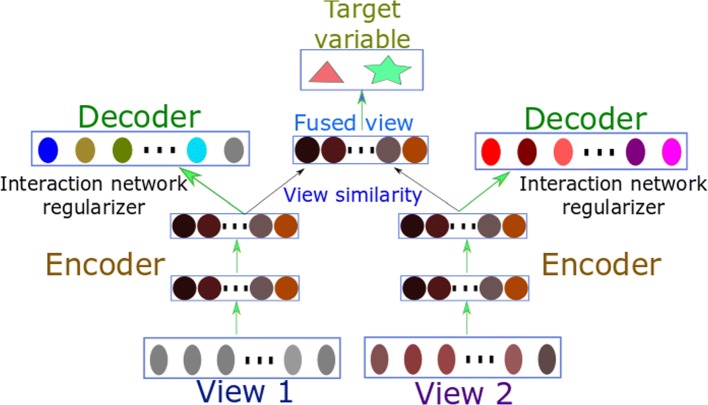
Background: Comprehensive molecular profiling of various cancers and other diseases has generated vast amounts of multi-omics data. Each type of -omics data corresponds to one feature space, such as gene expression, miRNA expression, DNA methylation, etc. Integrating multi-omics data can link different layers of molecular feature spaces and is crucial to elucidate molecular pathways underlying various diseases. Machine learning approaches to mining multi-omics data hold great promises in uncovering intricate relationships among molecular features. However, due to the “big p, small n” problem (i.e., small sample sizes with high-dimensional features), training a large-scale generalizable deep learning model with multi-omics data alone is very challenging. Results: We developed a method called Multi-view Factorization AutoEncoder (MAE) with network constraints that can seamlessly integrate multi-omics data and domain knowledge such as molecular interaction networks. Our method learns feature and patient embeddings simultaneously with deep representation learning. Both feature representations and patient representations are subject to certain constraints specified as regularization terms in the training objective. By incorporating domain knowledge into the training objective, we implicitly introduced a good inductive bias into the machine learning model, which helps improve model generalizability. We performed extensive experiments on the TCGA datasets and demonstrated the power of integrating multi-omics data and biological interaction networks using our proposed method for predicting target clinical variables. Conclusions: To alleviate the overfitting problem in deep learning on multi-omics data with the “big p, small n” problem, it is helpful to incorporate biological domain knowledge into the model as inductive biases. It is very promising to design machine learning models that facilitate the seamless integration of large-scale multi-omics data and biomedical domain knowledge for uncovering intricate relationships among molecular features and clinical features.
Overview
The claims and statistics of this paper haven’t been checked yet.
Free: it reads the open-access text and checks the first 5 claims that cite a source we can check. Create a free account to check every claim.
Integrity signals
Registry
Cites
Statistics
Figures
Verification
Claims the paper makes
The claims and statistics of this paper haven’t been checked yet.
Free: it reads the open-access text and checks the first 5 claims that cite a source we can check. Create a free account to check every claim.
Claims other papers make about this one
Each is checked against this paper’s own text: does it say what the citing paper says it does?
The cited source says what the claim attributes to it.
In the citing paper
“We have seen applications where prior biological knowledge has informed architectural decisions, such as separate branches according to chromosomal position [62], regularization terms in the training loss [49] or to encode pathways into the architecture [19, 67].”
From Multimodal deep learning for biomedical data fusion: a review (2022) · cites this paper as [49]
Self-check
Percentages, sums and reported differences re-computed from the paper’s own numbers.
The self-check needs the paper’s full text.
Citations
Cites
Deep Residual Learning for Image Recognition
He, K., Zhang, X., Ren, S., & Sun, J. (2016) · 2016 IEEE Conference on Computer Vision and Pattern Recognition (CVPR) · doi:10.1109/cvpr.2016.90 · Cited by 235,474 · cited 2×
“:3) e ( v ) (12) This idea is similar to ResNet [29].”
MethodAdam: A Method for Stochastic Optimization
Kingma, D. P., & Ba, J. (2014) · arXiv · doi:10.48550/arxiv.1412.6980 · Cited by 98,946 · cited 2×
“As our proposed model with network constraints is end-to-end differentiable, we trained it with Adam [32] with weight decay 10 − 4 .”
MethodLeCun, Y., Bengio, Y., & Hinton, G. (2015) · Nature · doi:10.1038/nature14539 · Cited by 84,126
Densely Connected Convolutional Networks
Huang, G., Liu, Z., Van Der Maaten, L., & Weinberger, K. Q. (2017) · 2017 IEEE Conference on Computer Vision and Pattern Recognition (CVPR) · doi:10.1109/cvpr.2017.243 · Cited by 48,566
Matrix Factorization Techniques for Recommender Systems
Koren, Y., Bell, R., & Volinsky, C. (2009) · Computer · doi:10.1109/mc.2009.263 · Cited by 11,673 · cited 3×
“In this paper, we present a framework called Multi-view Factorization AutoEncoder (MAE) with network constraints [3], combining multi-view learning [4] and matrix factorization [5] with deep learning for integrating multiomics data with biological domain knowledge.”
MethodInfluentialSTRING v10: protein–protein interaction networks, integrated over the tree of life
Szklarczyk, D., Franceschini, A., Wyder, S., Forslund, K., Heller, D., Huerta-Cepas, J., Simonovic, M., Roth, A., Santos, A., Tsafou, K. P., et al. (2015) · Nucleic Acids Research · doi:10.1093/nar/gku1003 · Cited by 10,436 · cited 4×
“Denote G ∈ R p × p as the interaction matrix among p genomic features, which can be obtained from biological databases such as STRING [26] and Reactome [27].”
BackgroundMethodInfluentialALGORITHMS FOR NON-NEGATIVE MATRIX FACTORIZATION
Lee, D. D., & Seung, H. S. (2000) · neural information processing systems · Cited by 10,095
Advances in Neural Information Processing Systems 14: Proceedings of the 2001 Conference
(2002) · The MIT Press eBooks · doi:10.7551/mitpress/1120.001.0001 · Cited by 8,890
The Reactome pathway Knowledgebase
Fabregat, A., Sidiropoulos, K., Garapati, P., Gillespie, M., Hausmann, K., Haw, R., Jassal, B., Jupe, S., Korninger, F., McKay, S., et al. (2016) · Nucleic Acids Research · doi:10.1093/nar/gkv1351 · Cited by 5,605
Multimodal Machine Learning: A Survey and Taxonomy
Baltrusaitis, T., Ahuja, C., & Morency, L.-P. (2019) · IEEE Transactions on Pattern Analysis and Machine Intelligence · doi:10.1109/tpami.2018.2798607 · Cited by 5,018
Cited by
Multimodal deep learning for biomedical data fusion: a review
Stahlschmidt, S. R., Ulfenborg, B., & Synnergren, J. (2022) · Briefings in Bioinformatics · doi:10.1093/bib/bbab569 · Cited by 766
“We have seen applications where prior biological knowledge has informed architectural decisions, such as separate branches according to chromosomal position [62], regularization terms in the training loss [49] or to encode pathways into the architecture [19, 67].”
MethodUtilizing graph machine learning within drug discovery and development
Gaudelet, T., Day, B., Jamasb, A. R., Soman, J., Regep, C., Liu, G., Hayter, J. B. R., Vickers, R., Roberts, C., Tang, J., et al. (2021) · Briefings in Bioinformatics · doi:10.1093/bib/bbab159 · Cited by 313
Deep learning-based approaches for multi-omics data integration and analysis
Ballard, J. L., Wang, Z., Li, W., Shen, L., & Long, Q. (2024) · BioData Mining · doi:10.1186/s13040-024-00391-z · Cited by 258
“Ma and Zhang [38] took another approach to incorporate network information into their model: rather than directly encode similarity networks into their model, as is done in graph-based models, they incorporate both domain knowledge and patient similarity networks as constraints.”
BackgroundArtificial intelligence assists precision medicine in cancer treatment
Liao, J., Li, X., Gan, Y., Han, S., Rong, P., Wang, W., Li, W., & Zhou, L. (2023) · Frontiers in Oncology · doi:10.3389/fonc.2022.998222 · Cited by 256
“For example, Ma et al. introduced a new approach that can analyze multi-omics information and related knowledge to reveal the complex relationship between molecular features and clinical characteristics (114).”
BackgroundMethodApplications of artificial intelligence in dentistry: A comprehensive review
Carrillo‐Perez, F., Pecho, O. E., Morales, J. C., Paravina, R. D., Della Bona, A., Ghinea, R., Pulgar, R., Pérez, M. D. M., & Herrera, L. J. (2022) · Journal of Esthetic and Restorative Dentistry · doi:10.1111/jerd.12844 · Cited by 251
Artificial Intelligence (AI)-Based Systems Biology Approaches in Multi-Omics Data Analysis of Cancer
Biswas, N., & Chakrabarti, S. (2020) · Frontiers in Oncology · doi:10.3389/fonc.2020.588221 · Cited by 209
“Developing the methodologies is an active area of research (21–25).”
Undisclosed, unmet and neglected challenges in multi-omics studies
Tarazona, S., Arzalluz-Luque, A., & Conesa, A. (2021) · Nature Computational Science · doi:10.1038/s43588-021-00086-z · Cited by 176
A benchmark study of deep learning-based multi-omics data fusion methods for cancer
Leng, D., Zheng, L., Wen, Y., Zhang, Y., Wu, L., Wang, J., Wang, M., Zhang, Z., He, S., & Bo, X. (2022) · Genome Biology · doi:10.1186/s13059-022-02739-2 · Cited by 162
“Specifically, Ma et al. [24] used the late fusion AEs on gene expression, miRNA expression, and DNA methylation data to develop a robust model to predict clinical target variables.”
BackgroundMethodInfluentialUnsupervised Multi-Omics Data Integration Methods: A Comprehensive Review
Vahabi, N., & Michailidis, G. (2022) · Frontiers in Genetics · doi:10.3389/fgene.2022.854752 · Cited by 158
“MAE (Multi-view factorization AutoEncoder) (Ma and Zhang, 2019) is a combination of matrix factorization and an autoencoder that enables the simultaneous embedding of both features (Omics) and samples via more complex nonlinear transformations.”
MethodGraph machine learning for integrated multi-omics analysis
Valous, N. A., Popp, F., Zörnig, I., Jäger, D., & Charoentong, P. (2024) · British Journal of Cancer · doi:10.1038/s41416-024-02706-7 · Cited by 174
“In a more recent approach [33], Ma and Zhang employed a multi-view factorization autoencoder to integrate multi-omics data (mRNA, miRNA, and protein expression; and DNA methylation) and protein-protein interaction (PPI) networks (STRING database [34]), learning feature and patient embeddings…”
BackgroundMethodInfluentialFrom Data to Cure: A Comprehensive Exploration of Multi-omics Data Analysis for Targeted Therapies
Mukherjee, A., Abraham, S., Singh, A., Balaji, S., & Mukunthan, K. S. (2024) · Molecular Biotechnology · doi:10.1007/s12033-024-01133-6 · Cited by 156
“ML models exhibit enhanced performance when trained on large datasets, making them well-suited for the intricate integration of multi-omics data in bioinformatics applications [43].”
Advances in bulk and single-cell multi-omics approaches for systems biology and precision medicine
Li, Y., Ma, L., Wu, D., & Chen, G. (2021) · Briefings in Bioinformatics · doi:10.1093/bib/bbab024 · Cited by 133
Pan, Y. F., Lei, X., & Zhang, Y. (2021) · Medicinal Research Reviews · doi:10.1002/med.21847 · Cited by 105
“And applications of autoencoder based on multi‐view matrix factorization in multi‐omics interaction network is also discussed.(107) Inspired by natural language processing (NLP), skip‐gram(108) can be applied to the randomwalk sequences, which fully”
MethodA multimodal graph neural network framework for cancer molecular subtype classification
Li, B., & Nabavi, S. (2024) · BMC Bioinformatics · doi:10.1186/s12859-023-05622-4 · Cited by 120
“Many researchers have proposed methods that incorporate multi-omics data for either cancer type classification or cell type clustering [1, 2, 3, 4, 5, 6, 7, 8, 9, 10, 11].”
BackgroundMedical-informed machine learning: integrating prior knowledge into medical decision systems
Sirocchi, C., Bogliolo, A., & Montagna, S. (2024) · BMC Medical Informatics and Decision Making · doi:10.1186/s12911-024-02582-4 · Cited by 106
“However, such approaches are expected to be even more effective in scenarios characterised by high dimensionality and small sample sizes, where purely data-driven ML models face challenges [60, 72].”
BackgroundDynamic Bayesian Networks for Integrating Multi-omics Time Series Microbiome Data
Ruiz-Perez, D., Lugo-Martinez, J., Bourguignon, N., Mathee, K., Lerner, B., Bar‐Joseph, Z., & Narasimhan, G. (2021) · mSystems · doi:10.1128/msystems.01105-20 · Cited by 76
“Deep learning approaches for integrating multi-omics (18) have also been developed, but their lack of interpretability prevents these models from providing insights into the interplay of the different omics entities, with the exception of MMvec (19), but it combines only metabolites and taxa.”
MethodAnalysis of Nanotoxicity with Integrated Omics and Mechanobiology
Shin, T. H., Nithiyanandam, S., Lee, D. Y., Kwon, D. H., Hwang, J. S., Kim, S. G., Jang, Y. E., Basith, S., Park, S., Mo, J., et al. (2021) · Nanomaterials · doi:10.3390/nano11092385 · Cited by 60
Li, J., Li, L., You, P., Wei, Y., & Xu, B. (2023) · Seminars in Cancer Biology · doi:10.1016/j.semcancer.2023.02.009 · Cited by 55
Hamamoto, R., Koyama, T., Kouno, N., Yasuda, T., Yui, S., Sudo, K., Hirata, M., Sunami, K., Kubo, T., Takasawa, K., et al. (2022) · Experimental Hematology & Oncology · doi:10.1186/s40164-022-00333-7 · Cited by 48
Metabolomics and modelling approaches for systems metabolic engineering
Khanijou, J. K., Kulyk, H., Bergès, C., Khoo, L. W., Ng, P., Yeo, H. C., Helmy, M., Bellvert, F., Chew, W., & Selvarajoo, K. (2022) · Metabolic Engineering Communications · doi:10.1016/j.mec.2022.e00209 · Cited by 60
Multimodal Fusion of Brain Imaging Data: Methods and Applications
Luo, N., Shi, W., Yang, Z., Song, M., & Jiang, T. (2024) · Machine Intelligence Research · doi:10.1007/s11633-023-1442-8 · Cited by 60
Artificial Intelligence in Epigenetic Studies: Shedding Light on Rare Diseases
Brasil, S., Neves, C. J., Rijoff, T., Falcão, M., Valadão, G., Videira, P. A., & Ferreira, V. D. R. (2021) · Frontiers in Molecular Biosciences · doi:10.3389/fmolb.2021.648012 · Cited by 55
“In RDs, the high number and variety of data obtained from different “omics” allied to a reduced sample size (“big p , small n ” problem) can hinder the application of AI tools in RDs (Mei and Wang, 2016; Ma and Zhang, 2019).”
BackgroundMulti-omics based artificial intelligence for cancer research
Li, L., Sun, M., Wang, J., & Wan, S. (2024) · Advances in cancer research · doi:10.1016/bs.acr.2024.06.005 · Cited by 58
Emerging landscape of molecular interaction networks: Opportunities, challenges and prospects
Panditrao, G., Bhowmick, R., Meena, C., & Sarkar, R. R. (2022) · Journal of Biosciences · doi:10.1007/s12038-022-00253-y · Cited by 57
“…technology, and their ease of availability have further led to improvements and advances in newer techniques and approaches as well as upgradation of the traditional network biology approaches to carry out systems-level studies (Charitou et al. 2016; Koh et al. 2019; Ma and Zhang 2019).”
BackgroundZheng, X., Wang, M., Huang, K., & Zhu, E. (2023) · Information Fusion · doi:10.1016/j.inffus.2023.102077 · Cited by 46
Application of deep learning in cancer epigenetics through DNA methylation analysis
Yassi, M., Chatterjee, A., & Parry, M. (2023) · Briefings Bioinform. · doi:10.1093/bib/bbad411 · Cited by 32
“The Multi-view Factorization Autoencoder (MFAE) method [58] was designed to improve the understanding of bladder urothelial carcinoma and brain lower grade glioma by integrating multi-omicsdataandbiologicalinteractionnetworks.”
MethodA Survey of Autoencoder Algorithms to Pave the Diagnosis of Rare Diseases
Pratella, D., Ait-El-Mkadem, S., Bannwarth, S., Paquis‐Flucklinger, V., & Bottini, S. (2021) · International Journal of Molecular Sciences · doi:10.3390/ijms221910891 · Cited by 47
Omics Data and Data Representations for Deep Learning-Based Predictive Modeling
Tsimenidis, S., Vrochidou, Ε., & Papakostas, G. A. (2022) · International Journal of Molecular Sciences · doi:10.3390/ijms232012272 · Cited by 46
“A broad range of AEs have been used in the field: regular AEs [53,125], stacked AEs [152], denoising [124] and stacked denoising AEs [76], factorization AEs [93], and even self-organizing AEs that determine their own structure according to the input data [153].”
BackgroundMethodData Interoperability and Harmonization in Cardiovascular Genomic and Precision Medicine
Chahal, C. A. A., Alahdab, F., Asatryan, B., Addison, D., Aung, N., Chung, M. K., Denaxas, S., Dunn, J., Hall, J. L., Pamir, N., et al. (2025) · Circulation Genomic and Precision Medicine · doi:10.1161/circgen.124.004624 · Cited by 46
“While the techniques, meta-analysis, 83 Bayesian methods, 84 and machine or deep learning, 85 around the integration and analysis of these data have greatly evolved over time, many obstacles still exist to effectively and meaningfully gain insights from these data.”
Park, S., Soh, J., & Lee, H. (2021) · BMC Bioinformatics · doi:10.1186/s12859-021-04146-z · Cited by 44
Plant Biosystems Design Research Roadmap 1.0
Yang, X., Medford, J. I., Markel, K., Shih, P. M., DePaoli, H. C., Trinh, C. T., McCormick, A. J., Ployet, R., Hussey, S. G., Myburg, A. A., et al. (2020) · BioDesign Research · doi:10.34133/2020/8051764 · Cited by 38
“For example, a machine learning method called Multiview Factorization AutoEncoder, which uses a deep representation learning approach to simultaneously learn feature and patient embeddings, was recently developed for seamless integration of multiomics data and biological domain knowledge such as molecular interaction…”
MethodHu, S., Ruan, C., Xu, Y., Teng, X., Fan, R., Jiang, T., Cao, M., & Song, J. (2021) · Experimental Biology and Medicine · doi:10.1177/15353702211065010 · Cited by 31
Multimodal analysis methods in predictive biomedicine
Qoku, A., Katsaouni, N., Flinner, N., Buettner, F., & Schulz, M. H. (2023) · Computational and Structural Biotechnology Journal · doi:10.1016/j.csbj.2023.11.011 · Cited by 29
Knowledge-guided learning methods for integrative analysis of multi-omics data
Li, W., Ballard, J. L., Zhao, Y., & Long, Q. (2024) · Computational and Structural Biotechnology Journal · doi:10.1016/j.csbj.2024.04.053 · Cited by 34
“More recently, Ma and Zhang [28] proposed a multi-view autoen-coder model with network constraints that can simultaneously integrate multi-omics data and biological knowledge.”
BackgroundA network embedding based method for partial multi-omics integration in cancer subtyping
Xu, H., Gao, L., Huang, M., & Duan, R. (2020) · Methods · doi:10.1016/j.ymeth.2020.08.001 · Cited by 31
Zenbout, I., Bouramoul, A., Meshoul, S., & Amrane, M. (2023) · IEEE Access · doi:10.1109/access.2023.3234294 · Cited by 29
“[17], [18].”
Non-small-cell lung cancer classification via RNA-Seq and histology imaging probability fusion
Carrillo‐Pérez, F., Morales, J. C., Castillo-Secilla, D., Molina-Castro, Y., Guillén, A., Rojas, I., & Herrera, L. J. (2021) · BMC Bioinformatics · doi:10.1186/s12859-021-04376-1 · Cited by 32
“proposed a Multi-view Factorization AutoEncoder (MAE) which not only encodes gene expression, miRNA expression, protein expression, DNA methylation and clinical information but also includes domain knowledge such as molecular integration networks for bladder urothelial carcinoma and brain lower grade glioma classifica…”
BackgroundWang, X., Hu, Z., Yu, T., Wang, Y., Wang, R., Wei, Y., Shu, J., Ma, J., & Li, Y. (2023) · Bioinformatics · doi:10.1093/bioinformatics/btad162 · Cited by 24
“Some other works propose models to align multi-omics data based on multiple autoencoders (Ma and Zhang 2019; Zhang et al. 2019; Dai Yang et al. 2021).”
BackgroundThe Trifecta of Single-Cell, Systems-Biology, and Machine-Learning Approaches
Weisskittel, T., Correia, C., Yu, G., Ung, C. Y., Kaufmann, S. H., Billadeau, D. D., & Li, H. (2021) · Genes · doi:10.3390/genes12071098 · Cited by 22
The application of multi-omics in the respiratory microbiome: Progresses, challenges and promises
Gao, J., Yi, X., & Wang, Z. (2023) · Computational and Structural Biotechnology Journal · doi:10.1016/j.csbj.2023.10.016 · Cited by 22
“…packages), support vector machine (R caret package[126]), etc., Deep learning approaches, including neural network (MOGONET[128], AutoGGN[129]), auto-encoder (MOVE[130], AIME[131], MAE[132]), etc, Network-based approaches (wSNF[42]), Cox proportional hazards regression (R survival package[133])”
MethodRobin, V., Bodein, A., Scott‐Boyer, M., Leclercq, M., Périn, O., & Droit, A. (2022) · Frontiers in Molecular Biosciences · doi:10.3389/fmolb.2022.962799 · Cited by 20
“These PPI networks can be integrated horizontally and/or vertically (Lercher and Pál, 2008; Ma and Zhang, 2019).”
BackgroundHe, X., Avril, S., & Lu, J. (2021) · Biomechanics and Modeling in Mechanobiology · doi:10.1007/s10237-020-01410-8 · Cited by 23
Ranjbari, S., & Arslanturk, S. (2023) · Journal of Biomedical Informatics · doi:10.1016/j.jbi.2023.104512 · Cited by 20
BRANEnet: embedding multilayer networks for omics data integration
Jagtap, S., Pirayre, A., Bidard, F., Duval, L. C., & Malliaros, F. D. (2022) · BMC Bioinformatics · doi:10.1186/s12859-022-04955-w · Cited by 19
Zhang, D., Bian, G., Zhang, Y., Xie, J., & Hu, C. (2025) · Frontiers in Genetics · doi:10.3389/fgene.2025.1610284 · Cited by 19
“Researchers have proposed various methods to classify cancer types or cluster cell types using multi-omics data (Li et al., 2021; Ma and Zhang, 2019; Zhang et al., 2019; Yang et al., 2019; Wang et al., 2021; Shari fi -Noghabi et al., 2019; Lotfollahi et al., 2022).”
Network-based analyses of multiomics data in biomedicine
Kumar, R., Romano, J. D., & Ritchie, M. D. (2025) · BioData Mining · doi:10.1186/s13040-025-00452-x · Cited by 19
“MAE [56]: Ma and Zhang use autoencoders across multiomics types with network constraints in a framework that they call Multi-view Factorization Autoencoder (MAE) to integrate multiple multiomics datasets together.”
Yerima, A. R. I. B., Issoufou, K. A., Adjé, C. O. A., Mamadou, A., Oselebe, H. O., Guèye, M. C., Billot, C., & Achigan-Dako, E. G. (2021) · Frontiers in Sustainable Food Systems · doi:10.3389/fsufs.2021.699549 · Cited by 15
Exploring AI tools and multi-omics for precision medicine in lung cancer therapy
Sahu, A., Nema, P., Rajak, D., Purohit, A., Rawal, R., Soni, V., & Kashaw, S. K. (2025) · Cytokine & Growth Factor Reviews · doi:10.1016/j.cytogfr.2025.06.001 · Cited by 13
Patel, J. C., Shakyawar, S. K., Sethi, S., & Guda, C. (2024) · Bioinformatics Advances · doi:10.1093/bioadv/vbaf116 · Cited by 13
“Also, autoencoders dealing with high-dimensional data are prone to overfitting, resulting in reduced generalizability for new data (Ma and Zhang 2019, Liu et al. 2021).”
Multiomics metabolic and epigenetics regulatory network in cancer: A systems biology perspective
Wang, X., Dong, Y., Zheng, Y., & Chen, Y. (2021) · Journal of genetics and genomics/Journal of Genetics and Genomics · doi:10.1016/j.jgg.2021.05.008 · Cited by 15
Knowledge-integrated autoencoder model
Lazebnik, T., & Keren, L. S. (2024) · Expert Systems with Applications · doi:10.1016/j.eswa.2024.124108 · Cited by 14
Self-Normalizing Foundation Model for Enhanced Multi-Omics Data Analysis in OncologyPreprint
Waqas, A., Tripathi, A. G., Ahmed, S., Mukund, A., Farooq, H., Johnson, J., Stewart, P., Naeini, M., Schabath, M. B., & Rasool, G. (2024) · SSRN Electronic Journal · doi:10.2139/ssrn.5055163 · Cited by 23
Labarga, A., Martínez-González, J., & Barajas, M. A. (2024) · Biology · doi:10.3390/biology13050338 · Cited by 18
“Some examples of models in the multi-omics data integration include AIME [14], MAE [15], and many others [16].”
BackgroundTemporal graphs anomaly emergence detection: benchmarking for social media interactions
Lazebnik, T., & Iny, O. (2024) · Applied Intelligence · doi:10.1007/s10489-024-05821-3 · Cited by 13
“By using deep learning models such as STGNN and STUMPY, which demonstrated superior performance in capturing complex spatio-temporal connections, these systems could more effectively identify suspicious activities such as coordinated misinformation campaigns or account hijacking attempts.”
Key genes altered in glioblastoma based on bioinformatics (Review)
Ghafari, M. A., Jaafari, N. E., Mouallem, M., Maassarani, T., El‐Sibai, M., & Abi‐Habib, R. J. (2025) · Oncology Letters · doi:10.3892/ol.2025.14989 · Cited by 17
AI-Driven Chemometrics for Multi-omics Data Integration: Advances, Challenges, and Future Directions
Polu, P. R. (2026) · Critical Reviews in Analytical Chemistry · doi:10.1080/10408347.2026.2657553 · Cited by 14
Mapping the Multiscale Proteomic Organization of Cellular and Disease Phenotypes
Cesnik, A. J., Schaffer, L. V., Gaur, I., Jain, M., Ideker, T., & Lundberg, E. K. (2024) · Annual Review of Biomedical Data Science · doi:10.1146/annurev-biodatasci-102423-113534 · Cited by 11
Multi-omics and deep learning provide a multifaceted view of cancerPreprint
Uyar, B., Ronen, J., Franke, V., Gargiulo, G., & Akalin, A. (2021) · bioRxiv (Cold Spring Harbor Laboratory) · doi:10.1101/2021.09.29.462364 · Cited by 14
“Different variants of auto-encoder architectures have been used for the analysis of multi-omics datasets [23,25,26].”
A Bayesian method to infer copy number clones from single-cell RNA and ATAC sequencing
Patruno, L., Milite, S., Bergamin, R., Calonaci, N., d’Onofrio, A., Anselmi, F., Antoniotti, M., Graudenzi, A., & Caravagna, G. (2023) · PLoS Computational Biology · doi:10.1371/journal.pcbi.1011557 · Cited by 10
Wu, Z., Fu, Z., Yu, X., & Chen, J. (2024) · Critical Reviews in Environmental Science and Technology · doi:10.1080/10643389.2024.2320753 · Cited by 7
“For the high-dimensionality problem of multi-omics data, methods such as principal component analysis, least absolute shrinkage, selection operator (Reel et al., 2021) and neural network autoencoders (Ma & Zhang, 2019) are used for feature extraction.”
Ruiz-Perez, D., Gimon, I., Sazal, M. R., Mathee, K., & Narasimhan, G. (2024) · mSystems · doi:10.1128/msystems.01303-23 · Cited by 12
“Deep learning approaches for integrating multi-omics (24, 25) have also been developed, but they are either hard to interpret or limited to predicting just one of the omic profiles.”
MOBILE pipeline enables identification of context-specific networks and regulatory mechanisms
Erdem, C., Gross, S. M., Heiser, L. M., & Birtwistle, M. R. (2023) · Nature Communications · doi:10.1038/s41467-023-39729-2 · Cited by 8
Cong, Y., & Endo, T. (2024) · Omics · doi:10.1089/omi.2024.0110 · Cited by 6
“For example, Ma et al. outlined a method framework called Multiview Factorization AutoEncoder (MAE) that integrates multiomics data with biological domain knowledge using deep learning methods, enhancing model generalization and alleviating potential over fi tting issues (Ma and Zhang, 2019).”
Strategic Multi-Omics Data Integration via Multi-Level Feature Contrasting and Matching
Zhang, J., Ren, H., Jiang, Z., Chen, Z., Yang, Z., Matsubara, Y., & Sakurai, Y. (2024) · IEEE Transactions on NanoBioscience · doi:10.1109/tnb.2024.3456797 · Cited by 8
“Recent advances in deep learning-based methods have led to the use of multi-input DGM such as an autoencoder to extract multi-omics features, providing improved capabilities [22], [28], [31], [41].”
BackgroundAlam, M. A., Qiu, C., Shen, H., Wang, Y.-P., & Deng, H.-W. (2021) · Journal of Biomedical Informatics · doi:10.1016/j.jbi.2021.103854 · Cited by 13
Benabbou, N., Abık, M., & Baichoo, S. (2026) · Cancer Treatment and Research Communications · doi:10.1016/j.ctarc.2026.101136 · Cited by 9
Abdullah, M., Wah, Y. B., Majeed, A. B. A., Zakaria, Y., Shaadan, N., Ariff, M. I. M., Wahab, J. A., Ahmad, S. B., Baharuddin, M. S., & Aziz, W. N. H. W. A. (2023) · Trends in Sciences · doi:10.48048/tis.2023.6881 · Cited by 4
“Furthermore, most high-dimensional datasets, especially multi-omics datasets, will contain noise error problems [14].”
BackgroundMulti-Omics Approaches and Radiation on Lipid Metabolism in Toothed Whales
Senevirathna, J. D. M., & Asakawa, S. (2021) · Life · doi:10.3390/life11040364 · Cited by 8
Cong, Y., Osada, N., & Endo, T. (2026) · OMICS A Journal of Integrative Biology · doi:10.1177/15578100251413812 · Cited by 3
“…masked autoencoders, and AI-based manifold embedding have been developed alongside classical methods including uniform manifold approximation and projection (UMAP) and principal component analysis (PCA) (Dorrity et al., 2020; Lei et al., 2024; Ma and Zhang, 2019; McInnes et al., 2018; Yu, 2022).”
Artificial intelligence meets epigenetics: a new frontier in precision oncology
Srivastava, R. (2026) · Epigenetics Reports · doi:10.1080/28361512.2026.2614541 · Cited by 6
Ahmed, M. I., Hossain, M. D., Rahman, M. M., Mia, M. S., Watanobe, Y., Habib, M. A., Rashid, M. M., Reza, M. S., & Alam, M. A. (2025) · Applied Sciences · doi:10.3390/app152111506 · Cited by 6
“In contrast, integrative omics approaches, although more resource intensive, are widely recognized as valuable tools for acquiring deeper insights into complex diseases [7, 9].”
Zhang, H., Liang, S., Xu, T., Li, W., Huang, D., Dong, Y., Li, G., Miller, J. P., Goedegebuure, S. P., Sardiello, M., et al. (2026) · Bioinformatics · doi:10.1093/bioinformatics/btag355 · Cited by 6
Applications of AI in Biomedical Genomics and Pharmaceuticals
Al-Remawi, M. M., & Abdel‐Rahem, R. A. (2024) · International Conference on Cyber Resilience (ICCR) · doi:10.1109/iccr61006.2024.10532792 · Cited by 3
Halawani, R., Büchert, M., & Chen, Y. P. (2024) · IEEE Reviews in Biomedical Engineering · doi:10.1109/rbme.2024.3503761 · Cited by 3
“It has been utilized successfully in various biomedical tasks [15], [16], [19], [20].”
InfluentialZhang, Z., Chen, Y., Wang, C., Guo, M., Cai, L., He, J., Liang, Y., Wong, G., & Chen, L. (2025) · Informatics · doi:10.3390/informatics12030068 · Cited by 3
Joas, M. J., Jurenaite, N., Praščević, D., Scherf, N., & Ewald, J. (2025) · Nature Computational Science · doi:10.1038/s43588-025-00916-4 · Cited by 5
“These strengths make AEs particularly valuable for integrating multimodal biological data, reflecting the complex interactions of genetic and molecular factors 9–15 .”
The progress on the estimation of DNA methylation level and the detection of abnormal methylation
Fan, S., Wang, L., Liang, L., Cao, X., Tang, J., & Tian, Q. (2022) · Quantitative Biology · doi:10.15302/j-qb-022-0289 · Cited by 4
Biomedical Applications: The Need for Multi-Omics
Li, Y., & Ning, K. (2023) · Translational bioinformatics · doi:10.1007/978-981-19-8210-1_2 · Cited by 3
Machine Learning and Omic Data for Prediction of Health and Chronic Diseases
Olenik, M., & Dönertaş, H. M. (2025) · Elsevier eBooks · doi:10.1016/b978-0-323-95502-7.00284-0 · Cited by 4
Progress of bioinformatics studies for multi-omics and multi-modal data in complex diseases
Liu, X., & Lü, Z. (2024) · Chinese Science Bulletin (Chinese Version) · doi:10.1360/tb-2024-0416 · Cited by 4
Fatima, S., Faisal, S., Batool, S. V., Faisal, M., Aamir, T., Shahid, Z. U. A., & Mahato, R. K. (2025) · Frontiers in Oncology · doi:10.3389/fonc.2025.1673586 · Cited by 2
An Interpretable Graph Neural Network for Multi-omics Data Integration and Biomarker Discovery
Labarga, A. (2026) · Lecture notes in computer science · doi:10.1007/978-3-032-10661-2_33 · Cited by 2
AI for TCM: From target identification to drug design
Wang, M., Wang, W., Shen, M., Fan, X., & Liao, J. (2026) · Journal of Pharmaceutical Analysis · doi:10.1016/j.jpha.2026.101681 · Cited by 1
Baruri, S., Batra, L., Adhikari, S., & El-Baz, A. S. (2026) · Epigenomes · doi:10.3390/epigenomes10030053 · Cited by 2
“Using a combination of matrix factorization and deep autoencoders, MAE can find statistically significant, yet biologically meaningful features based on the available knowledge bases to enhance interpretability of the results [124,127].”
Temporal and Causal Inference with Longitudinal Multi-omics Microbiome Data
Ruiz-Perez, D. (2020) · FIU - Digital Commons (Florida International University) · doi:10.25148/etd.fidc009230
Delshad, M., Omrani, M. A., Pourbagheri‐Sigaroodi, A., & Bashash, D. (2023) · Iranian Journal of Blood and Cancer · doi:10.61186/ijbc.15.3.13
Deep Learning Techniques for Gene Identification in Cancer Prevention
Lusito, E. (2024) · Wiley eBooks · doi:10.1002/9781119846567.ch4
Cao, S., Liang, C., Zhu, Q., Jiang, R., Zhang, D., Calhoun, V. D., & Qi, S. (2025) · Communications in computer and information science · doi:10.1007/978-981-96-4001-0_18
Multi-Modal ViT-Based Deep Learning Architecture for Binary Classification of Traffic Accident
Pérez, J. D. R., Torres, G. S., & Miranda, C. H. (2025) · REVISTA COLOMBIANA DE TECNOLOGIAS DE AVANZADA · doi:10.24054/rcta.v1i45.3751 · Cited by 1
Machap, L., Chan, W. H., Daud, K. M., Satam, N., & Ariffin, W. N. M. (2025) · Springer proceedings in physics · doi:10.1007/978-981-96-7679-8_21
Artificial Intelligence in Oncology
Afzal, S., Basharat, S., & Khurshid, S. (2025) · Springer eBooks · doi:10.1007/978-981-96-8176-1_13
Leng, D., Zheng, L., Wen, Y., Zhang, Y., Wu, L., Wang, J., Wang, M., Zhang, Z., He, S., & Bo, X. (2022) · Figshare · doi:10.6084/m9.figshare.20461986
Leng, D., Zheng, L., Wen, Y., Zhang, Y., Wu, L., Wang, J., Wang, M., Zhang, Z., He, S., & Bo, X. (2022) · Figshare · doi:10.6084/m9.figshare.20461983
Li, B., & Nabavi, S. (2024) · Figshare · doi:10.6084/m9.figshare.26667903
Thiyagaraj, A., Nagarajan, A. K., & Ramalingam, S. (2026) · Advances in biochemistry in health and disease · doi:10.1007/978-3-032-08824-6_23
Mao, Q., Huang, Z., Wen, X., Hu, J., Ju, X., & Meng, X. (2025) · IEEE International Conference on Bioinformatics and Biomedicine (BIBM) · doi:10.1109/bibm66473.2025.11356092
“MAE [12] integrates diverse omics data and biological interaction networks via multi-view autoencoders, offering a robust approach for elucidating gene function in disease contexts.”
Senevirathna, J. D. M. (2023) · Institutional Repositories DataBase (IRDB) · doi:10.15083/0002011574
Decision Support Systems using AI and OR Models for Cancer Prediction: A Systematic Mapping Study
Oufaska, K., Aabour, A., Belaid, K. A., Hafidi, H., & Yassini, K. E. (2026) · Procedia Computer Science · doi:10.1016/j.procs.2026.04.108
Machine Learning in Ligand-based Drug Design
Krishna, N., & Siddiqi, M. I. (2026) · Royal Society of Chemistry eBooks · doi:10.1039/9781837070206-00186
Li, J., Ye, T., Xiao, Y., Zhao, M., Jiang, L., Chen, S., Guo, F., & Tang, J. (2026) · Briefings in Bioinformatics · doi:10.1093/bib/bbag435
“Representative approaches include Autoencoders (AEs) [ 17, 18], Denoising Autoencoders (DAEs) [ 19, 20], and Variational Autoencoders (VAEs) [ 21, 22].”
Metadata
- Authors
- Ma, T., & Zhang, A.
- Affiliations
- University at Buffalo, State University of New York (US)
- University of Virginia (US)
- Corresponding author
- Zhang, Aidong
- Venue
- BMC Genomics
- Published
- 2019-12
- Volume
- 20
- Issue
- S11
- Pages
- 944-944
- ISSN
- 1471-2164 (ISSN-L)
- PMC
- PMC6923820
- OpenAlex
- W2995215286
- Cited by
- 105
- References
- 38
- Citations by year
- 2026: 14 · 2025: 15 · 2024: 23 · 2023: 14 · 2022: 12 · 2021: 21 · 2020: 6
- FWCI
- 3.23
- Type
- journal article
- Language
- en
- Open access
- gold
- doi.org
- Licence
- cc-by
- creativecommons.org/licenses/by/4.0 (tdm)
- creativecommons.org/licenses/by/4.0 (vor, 19 d)
- Locations
- BMC Genomics (publishedVersion, cc-by)
- PubMed Central (publishedVersion, cc-by)
- PubMed (publishedVersion)
- DOAJ (DOAJ: Directory of Open Access Journals) (submittedVersion)
- Funders
- National Science Foundation (1514204)
- Topics
- Life Sciences › Biochemistry, Genetics and Molecular Biology › Molecular Biology › Bioinformatics and Genomic Networks
- Life Sciences › Biochemistry, Genetics and Molecular Biology › Molecular Biology › Gene expression and cancer classification
- Life Sciences › Pharmacology, Toxicology and Pharmaceutics › Drug Discovery › Computational Drug Discovery Methods
- Keywords
- multi-omics integration, biological interaction networks, inductive bias, overfitting, patient embeddings, feature embedding, gene expression, DNA methylation, microRNA expression, clinical outcome prediction, TCGA
- MeSH terms
- Machine Learning, Algorithms, Humans, Models, Biological, Neoplasms, Bias, Genomics, Databases, Genetic, Systems Biology, Knowledge Bases, Data Mining
About these checks
Registry, retraction, Cites and statistics results are computed, not judged, with one exception: a printed reference that no index lists is read once by a model before it counts as a citation error. Claims are extracted by a model and kept only when their quote appears verbatim in the text; each cited source is then checked, with a model’s help, for whether it says what the claim relies on. Those verdicts can be wrong — read the claim’s quote and the cited source before relying on one.
Statistics and arithmetic are recomputed, not judged.
Confidence bands are shown only for fields calibrated on our annotated test set. None is calibrated yet, so no band is shown.
What counts as a claim ›How we measure confidence ›How we check this ›
Are you an author, or do you see a problem with this page? Request a review
Data sources
Bibliographic data: Semantic Scholar, OpenAlex, Crossref.
Contains information from the Semantic Scholar Academic Graph Datasets, made available under the ODC Attribution License (ODC-BY 1.0).
Semantic Scholar’s data is described in: Kinney, R., et al. (2023). The Semantic Scholar Open Data Platform. arXiv:2301.10140.
