

Integrate multi-omics data with biological interaction networks using Multi-view Factorization AutoEncoder (MAE)
Open accessThe DOI matches its Crossref record; 37 of the 38 references it cites were found in a registry or an index.
Abstract
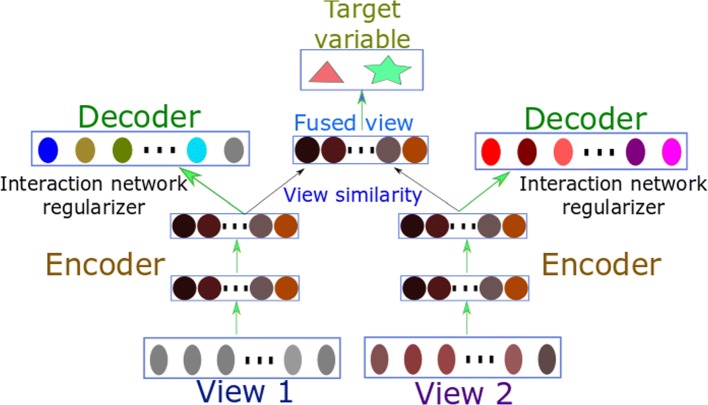
Background: Comprehensive molecular profiling of various cancers and other diseases has generated vast amounts of multi-omics data. Each type of -omics data corresponds to one feature space, such as gene expression, miRNA expression, DNA methylation, etc. Integrating multi-omics data can link different layers of molecular feature spaces and is crucial to elucidate molecular pathways underlying various diseases. Machine learning approaches to mining multi-omics data hold great promises in uncovering intricate relationships among molecular features. However, due to the “big p, small n” problem (i.e., small sample sizes with high-dimensional features), training a large-scale generalizable deep learning model with multi-omics data alone is very challenging. Results: We developed a method called Multi-view Factorization AutoEncoder (MAE) with network constraints that can seamlessly integrate multi-omics data and domain knowledge such as molecular interaction networks. Our method learns feature and patient embeddings simultaneously with deep representation learning. Both feature representations and patient representations are subject to certain constraints specified as regularization terms in the training objective. By incorporating domain knowledge into the training objective, we implicitly introduced a good inductive bias into the machine learning model, which helps improve model generalizability. We performed extensive experiments on the TCGA datasets and demonstrated the power of integrating multi-omics data and biological interaction networks using our proposed method for predicting target clinical variables. Conclusions: To alleviate the overfitting problem in deep learning on multi-omics data with the “big p, small n” problem, it is helpful to incorporate biological domain knowledge into the model as inductive biases. It is very promising to design machine learning models that facilitate the seamless integration of large-scale multi-omics data and biomedical domain knowledge for uncovering intricate relationships among molecular features and clinical features.
Overview
The claims and statistics of this paper haven’t been checked yet.
Free: it reads the open-access text and checks the first 5 claims that cite a source we can check. Create a free account to check every claim.
Integrity signals
Registry
Cites
Statistics
Figures
Verification
Claims the paper makes
The claims and statistics of this paper haven’t been checked yet.
Free: it reads the open-access text and checks the first 5 claims that cite a source we can check. Create a free account to check every claim.
Claims other papers make about this one
Each is checked against this paper’s own text: does it say what the citing paper says it does?
The cited source says what the claim attributes to it.
In the citing paper
“We have seen applications where prior biological knowledge has informed architectural decisions, such as separate branches according to chromosomal position [62], regularization terms in the training loss [49] or to encode pathways into the architecture [19, 67].”
From Multimodal deep learning for biomedical data fusion: a review (2022) · cites this paper as [49]
Self-check
Percentages, sums and reported differences re-computed from the paper’s own numbers.
The self-check needs the paper’s full text.
Citations
Cites
Deep Residual Learning for Image Recognition
He, K., Zhang, X., Ren, S., & Sun, J. (2016) · 2016 IEEE Conference on Computer Vision and Pattern Recognition (CVPR) · doi:10.1109/cvpr.2016.90 · Cited by 235,474 · cited 2×
“:3) e ( v ) (12) This idea is similar to ResNet [29].”
MethodAdam: A Method for Stochastic Optimization
Kingma, D. P., & Ba, J. (2014) · arXiv · doi:10.48550/arxiv.1412.6980 · Cited by 98,946 · cited 2×
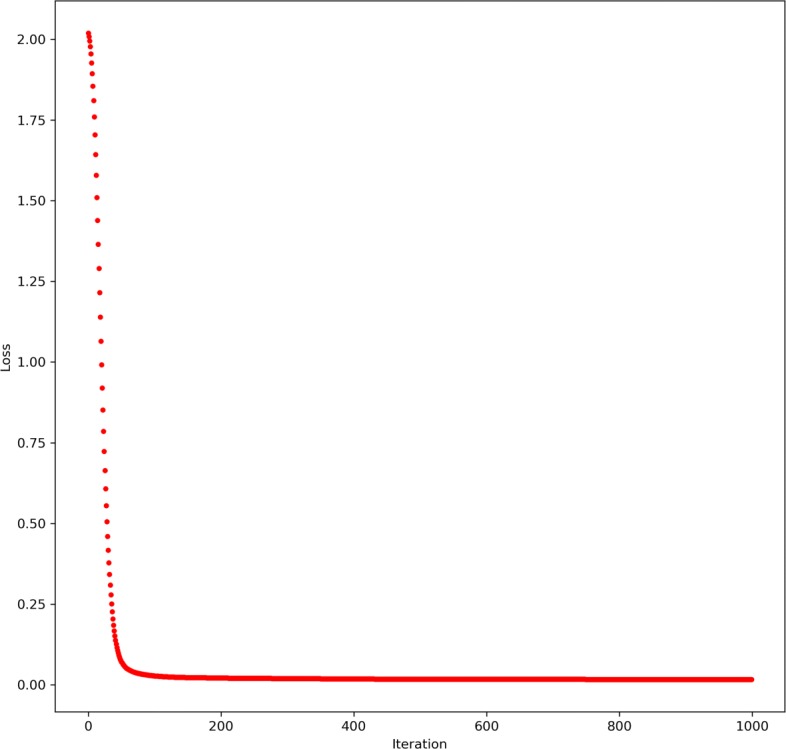
“As our proposed model with network constraints is end-to-end differentiable, we trained it with Adam [32] with weight decay 10 − 4 .”
MethodLeCun, Y., Bengio, Y., & Hinton, G. (2015) · Nature · doi:10.1038/nature14539 · Cited by 84,126
Densely Connected Convolutional Networks
Huang, G., Liu, Z., Van Der Maaten, L., & Weinberger, K. Q. (2017) · 2017 IEEE Conference on Computer Vision and Pattern Recognition (CVPR) · doi:10.1109/cvpr.2017.243 · Cited by 48,566
Matrix Factorization Techniques for Recommender Systems
Koren, Y., Bell, R., & Volinsky, C. (2009) · Computer · doi:10.1109/mc.2009.263 · Cited by 11,673 · cited 3×
“In this paper, we present a framework called Multi-view Factorization AutoEncoder (MAE) with network constraints [3], combining multi-view learning [4] and matrix factorization [5] with deep learning for integrating multiomics data with biological domain knowledge.”
MethodInfluentialSTRING v10: protein–protein interaction networks, integrated over the tree of life
Szklarczyk, D., Franceschini, A., Wyder, S., Forslund, K., Heller, D., Huerta-Cepas, J., Simonovic, M., Roth, A., Santos, A., Tsafou, K. P., et al. (2015) · Nucleic Acids Research · doi:10.1093/nar/gku1003 · Cited by 10,436 · cited 4×
“Denote G ∈ R p × p as the interaction matrix among p genomic features, which can be obtained from biological databases such as STRING [26] and Reactome [27].”
BackgroundMethodInfluentialALGORITHMS FOR NON-NEGATIVE MATRIX FACTORIZATION
Lee, D. D., & Seung, H. S. (2000) · neural information processing systems · Cited by 10,000
Advances in Neural Information Processing Systems 14: Proceedings of the 2001 Conference
(2002) · The MIT Press eBooks · doi:10.7551/mitpress/1120.001.0001 · Cited by 8,890
The Reactome pathway Knowledgebase
Fabregat, A., Sidiropoulos, K., Garapati, P., Gillespie, M., Hausmann, K., Haw, R., Jassal, B., Jupe, S., Korninger, F., McKay, S., et al. (2016) · Nucleic Acids Research · doi:10.1093/nar/gkv1351 · Cited by 5,605
Multimodal Machine Learning: A Survey and Taxonomy
Baltrusaitis, T., Ahuja, C., & Morency, L.-P. (2019) · IEEE Transactions on Pattern Analysis and Machine Intelligence · doi:10.1109/tpami.2018.2798607 · Cited by 5,018
ALGORITHMS FOR NON-NEGATIVE MATRIX FACTORIZATION
Seung, D., & Lee, L.-W. (2001) · Cited by 4,753
Liu, J., Lichtenberg, T., Hoadley, K. A., Poisson, L. M., Lazar, A. J., Cherniack, A. D., Kovatich, A. J., Benz, C. C., Levine, D. A., Lee, A. V., et al. (2018) · Cell · doi:10.1016/j.cell.2018.02.052 · Cited by 3,725
Predicting the sequence specificities of DNA- and RNA-binding proteins by deep learning
Alipanahi, B., Delong, A., Weirauch, M. T., & Frey, B. J. (2015) · Nature Biotechnology · doi:10.1038/nbt.3300 · Cited by 2,873
(2011) · Cited by 2,752
Machine Learning Identifies Stemness Features Associated with Oncogenic Dedifferentiation
Malta, T. M., Sokolov, A., Gentles, A. J., Burzykowski, T., Poisson, L., Weinstein, J. N., Kamińska, B., Huelsken, J., Omberg, L., Gevaert, O., et al. (2018) · Cell · doi:10.1016/j.cell.2018.03.034 · Cited by 2,180
Similarity network fusion for aggregating data types on a genomic scale
Wang, B., Mezlini, A. M., Demir, F., Fiume, M., Tu, Z., Brudno, M., Haibe-Kains, B., & Goldenberg, A. (2014) · Nature Methods · doi:10.1038/nmeth.2810 · Cited by 2,036
The Reactome pathway knowledgebase
Croft, D., Mundo, A. F., Haw, R., Milacic, M., Weiser, J., Wu, G., Caudy, M., Garapati, P., Gillespie, M., Kamdar, M. R., et al. (2014) · Nucleic Acids Research · doi:10.1093/nar/gkt1102 · Cited by 1,889
Proceedings of the 29th International Conference on Machine Learning (ICML-12)
Langford, J. C., & Pineau, J. (2012) · arXiv (Cornell University) · doi:10.48550/arxiv.1207.4676 · Cited by 1,618
Multi-view learning overview: Recent progress and new challenges
Zhao, J., Xie, X., Xu, X., & Sun, S. (2017) · Information Fusion · doi:10.1016/j.inffus.2017.02.007 · Cited by 1,002
The Cancer Genome Atlas: Creating Lasting Value beyond Its Data
Hutter, C., & Zenklusen, J. C. (2018) · Cell · doi:10.1016/j.cell.2018.03.042 · Cited by 871
On Deep Multi-View Representation Learning
Wang, W., Livescu, K., & Bilmes, J. (2015) · Cited by 867
Deep Learning for Identifying Metastatic Breast Cancer
Wang, D., Khosla, A., Gargeya, R., Irshad, H., & Beck, A. H. (2016) · arXiv (Cornell University) · doi:10.48550/arxiv.1606.05718 · Cited by 756 · cited 1×
“Recently, deep learning has been applied to sequencing data [16, 17], imaging data [18], medical records [19], etc.”
MethodNetwork-based stratification of tumor mutations
Hofree, M., Shen, J. P., Carter, H., Gross, A., & Ideker, T. (2013) · Nature Methods · doi:10.1038/nmeth.2651 · Cited by 737
A Survey of Multi-View Representation Learning
Li, Y., Yang, M., & Zhang, Z. (2019) · IEEE Transactions on Knowledge and Data Engineering · doi:10.1109/tkde.2018.2872063 · Cited by 524
Integrated Molecular Characterization of Testicular Germ Cell Tumors
Shen, H., Shih, J., Hollern, D. P., Wang, L., Bowlby, R., Tickoo, S. K., Thorsson, V., Mungall, A. J., Newton, Y., Hegde, A. M., et al. (2018) · Cell Reports · doi:10.1016/j.celrep.2018.05.039 · Cited by 454
Using deep learning to model the hierarchical structure and function of a cell
Ma, J., Yu, M. K., Fong, S., Ono, K., Sage, E., Demchak, B., Sharan, R., & Ideker, T. (2018) · Nature Methods · doi:10.1038/nmeth.4627 · Cited by 435
Heterogeneous Network Representation Learning: A Unified Framework With Survey and Benchmark
Yang, C., Xiao, Y., Zhang, Y., Sun, Y., & Han, J. (2022) · IEEE Transactions on Knowledge and Data Engineering · doi:10.1109/tkde.2020.3045924 · Cited by 324
DeepCare: A Deep Dynamic Memory Model for Predictive Medicine
Pham, T., Tran, T., Phung, D., & Venkatesh, S. (2016) · Lecture Notes in Computer Science · doi:10.1007/978-3-319-31750-2_3 · Cited by 269
Integrative Subtype Discovery in Glioblastoma Using iCluster
Shen, R., Mo, Q., Schultz, N., Seshan, V. E., Olshen, A. B., Huse, J., Ladanyi, M., & Sander, C. (2012) · PLoS ONE · doi:10.1371/journal.pone.0035236 · Cited by 257
DeepNano: Deep recurrent neural networks for base calling in MinION nanopore reads
Boža, V., Brejová, B., & Vinař, T. (2017) · PLOS ONE · doi:10.1371/journal.pone.0178751 · Cited by 246
OMICtools: an informative directory for multi-omic data analysis
Henry, V. J., Bandrowski, A. E., Pepin, A.-S., Gonzalez, B. J., & Desfeux, A. (2014) · Database · doi:10.1093/database/bau069 · Cited by 240
Machine Learning Detects Pan-cancer Ras Pathway Activation in The Cancer Genome Atlas
Way, G. P., Sanchez-Vega, F., La, K., Armenia, J., Chatila, W. K., Luna, A., Sander, C., Cherniack, A. D., Mina, M., Ciriello, G., et al. (2018) · Cell Reports · doi:10.1016/j.celrep.2018.03.046 · Cited by 165
Multi-omic data integration enables discovery of hidden biological regularities
Ebrahim, A., Brunk, E., Tan, J., O'Brien, E. J., Kim, D., Szubin, R., Lerman, J. A., Lechner, A., Sastry, A., Bordbar, A., et al. (2016) · Nature Communications · doi:10.1038/ncomms13091 · Cited by 155
Deep Generative Models with Learnable Knowledge ConstraintsPreprint
Hu, Z., Yang, Z., Salakhutdinov, R., Liang, X., Qin, L., Dong, H., & Xing, E. P. (2018) · arXiv (Cornell University) · doi:10.48550/arxiv.1806.09764 · Cited by 83 · cited 1×
“Besides network regularization approaches, directly encoding biological networks into the model architecture is also possible [20, 21], which usually requires subcellular hierarchical molecular networks as the prior knowledge.”
MethodDeepCare: A Deep Dynamic Memory Model for Predictive Medicine
Pham, T., Tran, T., Phung, D., & Venkatesh, S. (2016) · arXiv (Cornell University) · doi:10.48550/arxiv.1602.00357 · Cited by 74
Integrate multi-omic data using affinity network fusion (ANF) for cancer patient clustering
Ma, T., & Zhang, A. (2017) · IEEE International Conference on Bioinformatics and Biomedicine (BIBM) · doi:10.1109/bibm.2017.8217682 · Cited by 68 · cited 3×
“Moreover, since S X , and S ( v ) , v = 1, 2, · · · , V are for the same set of patients, we can fuse them together using affinity network fusion [14]: Similar to the feature interaction network regularizer (Eq.”
MethodInfluentialSelf-citationMultiplex methods provide effective integration of multi-omic data in genome-scale models
Angione, C., Conway, M., & Lió, P. (2016) · BMC Bioinformatics · doi:10.1186/s12859-016-0912-1 · Cited by 65
Multi-view Factorization AutoEncoder with Network Constraints for Multi-omic Integrative Analysis
Ma, T., & Zhang, A. (2018) · 2018 IEEE International Conference on Bioinformatics and Biomedicine (BIBM) · doi:10.1109/bibm.2018.8621379 · Cited by 30
Self-citation
Cited by
Multimodal deep learning for biomedical data fusion: a review
Stahlschmidt, S. R., Ulfenborg, B., & Synnergren, J. (2022) · Briefings in Bioinformatics · doi:10.1093/bib/bbab569 · Cited by 766
“We have seen applications where prior biological knowledge has informed architectural decisions, such as separate branches according to chromosomal position [62], regularization terms in the training loss [49] or to encode pathways into the architecture [19, 67].”
MethodUtilizing graph machine learning within drug discovery and development
Gaudelet, T., Day, B., Jamasb, A. R., Soman, J., Regep, C., Liu, G., Hayter, J. B. R., Vickers, R., Roberts, C., Tang, J., et al. (2021) · Briefings in Bioinformatics · doi:10.1093/bib/bbab159 · Cited by 313
Deep learning-based approaches for multi-omics data integration and analysis
Ballard, J. L., Wang, Z., Li, W., Shen, L., & Long, Q. (2024) · BioData Mining · doi:10.1186/s13040-024-00391-z · Cited by 258
“Ma and Zhang [38] took another approach to incorporate network information into their model: rather than directly encode similarity networks into their model, as is done in graph-based models, they incorporate both domain knowledge and patient similarity networks as constraints.”
BackgroundArtificial intelligence assists precision medicine in cancer treatment
Liao, J., Li, X., Gan, Y., Han, S., Rong, P., Wang, W., Li, W., & Zhou, L. (2023) · Frontiers in Oncology · doi:10.3389/fonc.2022.998222 · Cited by 256
“For example, Ma et al. introduced a new approach that can analyze multi-omics information and related knowledge to reveal the complex relationship between molecular features and clinical characteristics (114).”
BackgroundMethodApplications of artificial intelligence in dentistry: A comprehensive review
Carrillo‐Perez, F., Pecho, O. E., Morales, J. C., Paravina, R. D., Della Bona, A., Ghinea, R., Pulgar, R., Pérez, M. D. M., & Herrera, L. J. (2022) · Journal of Esthetic and Restorative Dentistry · doi:10.1111/jerd.12844 · Cited by 251
Metadata
- Authors
- Ma, T., & Zhang, A.
- Affiliations
- University at Buffalo, State University of New York (US)
- University of Virginia (US)
- Corresponding author
- Zhang, Aidong
- Venue
- BMC Genomics
- Published
- 2019-12
- Volume
- 20
- Issue
- S11
- Pages
- 944-944
- ISSN
- 1471-2164 (ISSN-L)
- PMC
- PMC6923820
- OpenAlex
- W2995215286
- Cited by
- 105
- References
- 38
- Citations by year
- 2026: 14 · 2025: 15 · 2024: 23 · 2023: 14 · 2022: 12 · 2021: 21 · 2020: 6
- FWCI
- 3.23
- Type
- journal article
- Language
- en
- Open access
- gold
- doi.org
- Licence
- cc-by
- creativecommons.org/licenses/by/4.0 (tdm)
- creativecommons.org/licenses/by/4.0 (vor, 19 d)
- Locations
- BMC Genomics (publishedVersion, cc-by)
- PubMed Central (publishedVersion, cc-by)
- PubMed (publishedVersion)
- DOAJ (DOAJ: Directory of Open Access Journals) (submittedVersion)
- Funders
- National Science Foundation (1514204)
- Topics
- Life Sciences › Biochemistry, Genetics and Molecular Biology › Molecular Biology › Bioinformatics and Genomic Networks
- Life Sciences › Biochemistry, Genetics and Molecular Biology › Molecular Biology › Gene expression and cancer classification
- Life Sciences › Pharmacology, Toxicology and Pharmaceutics › Drug Discovery › Computational Drug Discovery Methods
- Keywords
- multi-omics integration, biological interaction networks, inductive bias, overfitting, patient embeddings, feature embedding, gene expression, DNA methylation, microRNA expression, clinical outcome prediction, TCGA
- MeSH terms
- Machine Learning, Algorithms, Humans, Models, Biological, Neoplasms, Bias, Genomics, Databases, Genetic, Systems Biology, Knowledge Bases, Data Mining
About these checks
Registry, retraction, Cites and statistics results are computed, not judged, with one exception: a printed reference that no index lists is read once by a model before it counts as a citation error. Claims are extracted by a model and kept only when their quote appears verbatim in the text; each cited source is then checked, with a model’s help, for whether it says what the claim relies on. Those verdicts can be wrong — read the claim’s quote and the cited source before relying on one.
Statistics and arithmetic are recomputed, not judged.
Confidence bands are shown only for fields calibrated on our annotated test set. None is calibrated yet, so no band is shown.
What counts as a claim ›How we measure confidence ›How we check this ›
Are you an author, or do you see a problem with this page? Request a review
Data sources
Bibliographic data: Semantic Scholar, OpenAlex, Crossref.
Contains information from the Semantic Scholar Academic Graph Datasets, made available under the ODC Attribution License (ODC-BY 1.0).
Semantic Scholar’s data is described in: Kinney, R., et al. (2023). The Semantic Scholar Open Data Platform. arXiv:2301.10140.
